2025-03-28 06:22
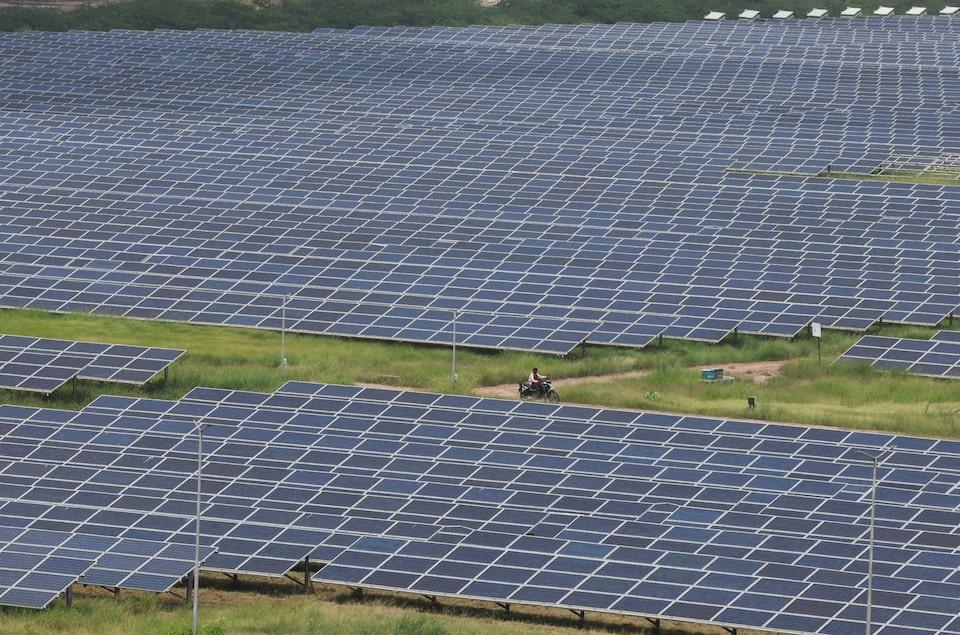
LITTLETON, Colorado, March 28 (Reuters) - The year is still young, but Asia has already built up a considerable lead over several European countries and the United States in terms of energy transition progress so far in 2025. Large Asian nations including China, India, South Korea and Japan all reduced fossil fuel use and boosted clean power output by more than their international peers in early 2025, according to data from energy think tank Ember. Sign up here. Indeed, while most of Asia made cuts to fossil fuel use for electricity production in January from the same month in 2024, the U.S. and Europe have both expanded fossil fuel-fired generation, thereby reversing their transition momentum. Asian nations also lifted clean power production by more than most of Europe's top economies, highlighting an important power generation trend that stands to impact annual emission reduction efforts if sustained for the full year. EARLY PROGRESS In terms of cuts to fossil fuel electricity generation, South Korea stands out with a 15% reduction in January from the same month in 2024. Record nuclear power output has allowed utilities to cut back on coal and gas use there. Vietnam, China, India and Asia as a whole also made year-over-year cuts to fossil fuel-fired generation in January, which is typically one of the peak demand months for power in Asia. India was the leader among clean power boosters in January over January 2024, registering a 26% rise in clean electricity production. Near-record output from solar, nuclear and bioenergy plants helped lift India's clean power total. Several other Asian nations have also registered strong clean power generation momentum in early 2025, with China, South Korea, Japan and Asia as a whole all notching up 16% or greater year-on-year increases in clean electricity output in January. SLOW START While Asian nations are making clear progress against energy transition goals, climate trackers have had less to cheer about from the generation trends in Europe and the United States. A combination of weak wind power output across Europe and strong electricity demand growth in North America has triggered a rise in utility use of fossil fuels on both continents this year. Power producers across Europe collectively raised fossil fuel-fired electricity production by 5% in January from the same month a year ago, with the Netherlands and Poland among the stand-outs with even larger fossil fuel use increases. A major driver of that higher burn rate of gas and coal was a widespread reduction in clean power generation, especially from wind farms. Cumulative wind electricity generation in Europe during January and February was down 16% year from the same months in 2024. That clean power shortfall forced the region's utilities to crank output from natural gas and coal plants, resulting in the backsliding in energy transition momentum so far this year. In the United States, strong growth in overall electricity consumption has spurred utilities to crank output from all generation assets. U.S. clean electricity production in January plus February was up 6% from the same months in 2024, thanks mainly to higher solar capacity and generation. However, U.S. utilities have also boosted output from fossil fuels, with coal-fired electricity production during the first two months of 2025 up by 20% from the same period in 2024. U.S. natural gas-fired output was down by around 1% from the start of 2024, due mainly to a rise in natural gas prices which have climbed by around 80% from year-ago levels. Going forward, continued strength in U.S. gas prices is likely to sustain the elevated use of coal for power, despite the higher emissions toll that comes with it. U.S. power firms generate around 950,000 metric tons of CO2 per unit of electricity from coal plants, and around 540,000 tons of CO2 per unit of electricity from gas plants, Ember data shows. And the peak demand period in the U.S. still lies ahead, with use of power-hungry air conditioners the highest during summer. In Europe, winter is the peak demand period, so the arrival of spring should reduce overall power needs and provide utilities with the scope to cut back on fossil fuel use. That said, as wind is Europe's third-largest source of clean power after nuclear and hydro, the sub-par wind output levels seen so far this year may mean utilities may need to keep gas and coal output higher for longer. That fossil-heavy reliance contrasts with power generation trends in Asia, where use of coal and gas plants tends to hit their annual lows during the northern hemisphere spring. If that trend plays out again while Europe and the U.S. sustain their current fossil fuel usage levels, Asia could widen its current gap in terms of energy transition progress and cement its place as the global driver of clean power momentum. The opinions expressed here are those of the author, a market analyst for Reuters. https://www.reuters.com/markets/commodities/asia-outshines-europe-us-2025-energy-transition-momentum-maguire-2025-03-28/
2025-03-28 05:59
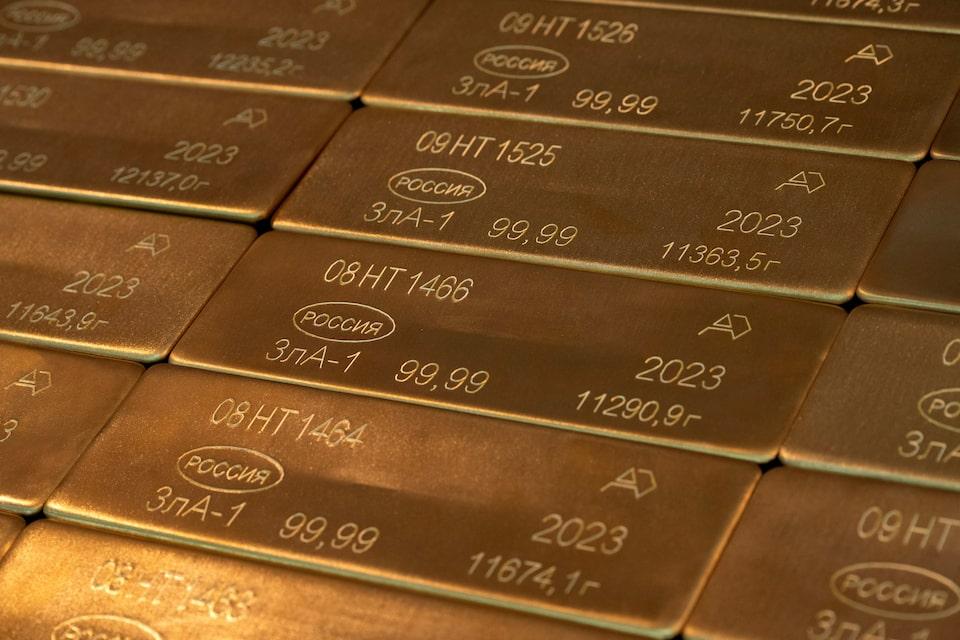
Spot gold hits 18 record highs so far this year US PCE at 0.4% in February Silver, platinum & palladium headed for weekly gain March 28 (Reuters) - Gold prices surged to a record high on Friday, as investors flocked to the safe-haven asset amid fears of a global trade war triggered by U.S. President Donald Trump's latest tariffs. Spot gold climbed 0.6% to $3,074.43 an ounce as of 02:41 p.m. EDT (1839 GMT) after hitting its eighteenth record high this year at $3,086.70 earlier in the session. Bullion is up 1.7% this week and is on track for a fourth straight weekly gain. Sign up here. U.S. gold futures settled 0.8% higher at $3,114.30. "It continues to be the safe-haven demand on ramped-up concerns about tariffs, trade and ongoing geopolitical uncertainty as well," that is supporting gold, said Peter Grant, vice president and senior metals strategist at Zaner Metals. Gold, traditionally seen as a hedge against economic and political instability, tends to thrive in a low-interest rate environment. The Personal Consumption Expenditures (PCE) price index increased 0.4% in February, compared with analysts' expectation of 0.3% rise, similar to January's increase. The data isn't likely to change rate cut expectations very much, as it is only a little hotter than expected, Grant added. The Fed has held interest rates steady so far this year after three rate cuts in 2024, but hinted at a potential half-percentage point in rate cuts later in the year. The market is currently pricing 63 bps of Fed rate cuts by the year-end, starting in July. Markets are now bracing for Trump's plans for reciprocal tariffs, which he intends to lay out on April 2. Trump's policies are perceived as inflationary, posing a risk to economic growth and escalating trade tensions, analysts say. Spot silver fell 1.4% to $33.93 an ounce, platinum eased 0.7% to $979.10, and palladium was down 0.3% to $972.13. All three were set for weekly gains. https://www.reuters.com/markets/commodities/gold-climbs-record-high-trumps-tariff-plans-spark-safe-haven-demand-2025-03-28/
2025-03-28 05:41
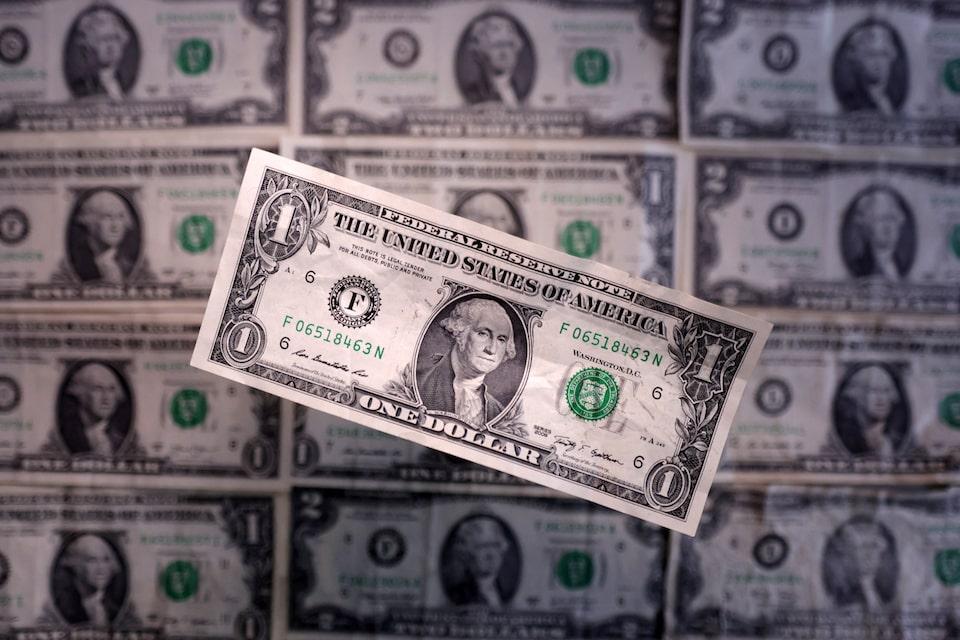
Core inflation hotter than expected in February Dollar weaker against euro and yen Reciprocal tariff announcement next week major market focus NEW YORK, March 28 (Reuters) - The dollar weakened on Friday on growth concerns ahead of a planned announcement next week by U.S. President Donald Trump on reciprocal tariffs, with the Japanese yen benefiting from safe haven flows as stocks tumbled and Treasury yields fell. Traders have had bouts of optimism that the trade levies will not be as severe as feared, but concerns remain that they will dent economic growth and reignite inflation. Sign up here. The lack of clarity over what tariffs exactly will be implemented has added to investor caution. “The one word that I keep hearing over and over from clients, and on earnings calls and things, is uncertainty. And you hear this from the central bankers as well,” said Marc Chandler, chief market strategist at Bannockburn Global Forex in New York. “The one thing we do know is that on April 2, we're going to get reciprocal tariffs. We don't know exactly what that means,” Chandler said. Trump on Wednesday announced a 25% tariff on imported cars and light trucks starting on April 3. "We see balanced risks going into next week's deadline. We believe tariffs on selective products are already what markets expect. Across-the-board tariffs would be a negative surprise," Bank of America FX analysts Athanasios Vamvakidis and Claudio Piron said in a report. "However, we would not expect sustained USD strength in this case, as markets remain concerned about the US economy slowing. Implementation of new tariffs could also take time, because of difficult logistics, which would leave room for negotiations," they said. The U.S. currency also dipped on Friday after data showed that core inflation rose 0.4% in February, more than expected, adding to fears of stagflation. Headline inflation was as expected, with a 0.3% rise. U.S. consumer spending also rebounded in the month. Separately, a survey from the University of Michigan showed consumers' 12-month inflation expectations soared to the highest level in nearly 2-1/2 years in March. The dollar was 0.69% lower against the yen at 150.01 per dollar and was on pace to post its largest daily drop against the Japanese currency since March 3. Data on Friday showed that core consumer inflation in Japan's capital stayed above the central bank's target and accelerated in March. The euro was last up 0.2% at $1.0823. The single currency is being supported by technical factors after nearing its 200-day moving average of $1.0727 and a key Fibonacci retracement level on Thursday. Data earlier in Europe showed that inflation in March came in far below forecasts in France and Spain, while consumer expectations for price growth remained muted, bolstering bets for another European Central Bank rate cut. French consumer spending also fell, while Germany's unemployment rate rose more than expected and morale among Italian businesses and consumers slumped in March. Sterling weakened 0.09% to $1.2935. British shoppers unexpectedly loosened their purse strings last month, official data showed on Friday, defying most forecasts from analysts who had predicted a fall in sales volumes against a backdrop of weak overall growth in the economy. In cryptocurrencies, bitcoin fell 4.03% to $83,783. https://www.reuters.com/markets/currencies/dollar-hovers-ahead-pce-tariff-onslaught-2025-03-28/
2025-03-28 05:36
A look at the day ahead in European and global markets from Ankur Banerjee The 25% U.S. tariff announced for auto imports is raising a ruckus across the globe, from Tokyo and Seoul to Wolfsburg to Detroit, as car makers warn of price hikes and ponder shifting their manufacturing base to deal with the upheaval. Sign up here. The shares of Japanese and South Korean automakers - pillars of the two powerhouse Asian economies - sank on Friday in a brutal end to the week. Almost 3 trillion yen ($20 billion) has been wiped from the market value of Japan's top three carmakers - Toyota (7203.T) , opens new tab, Honda (7267.T) , opens new tab and Nissan (7201.T) , opens new tab - in three trading sessions this week. Futures suggest European markets are looking at a dour Friday with the region's automakers stuck in the spotlight. The European automobiles and parts index (.SXAP) , opens new tab was at its lowest level since early December and is poised for a sixth straight week in the red. U.S. President Donald Trump's latest tariff salvo has drawn fierce criticism from politicians and industry executives across the globe. Wolfsburg, Germany-based Volkswagen (VOWG.DE) , opens new tab said the entire automotive industry as well as customers will have to "bear the negative consequences". It's decision time for car makers, who must now determine whether to localise more production in the U.S., swallow the costs of tariffs, or pass those costs on to consumers. Volvo Cars (VOLCARb.ST) , opens new tab, Volkswagen's Audi, Mercedes-Benz and Hyundai (005380.KS) , opens new tab have already said they will relocate portions of their production. Ferrari (RACE.MI) , opens new tab, which makes all of its cars in Italy, said it would raise prices of some models by as much as 10%. It seems that all big automakers are facing an uncertain future. Well, almost all. Shares of Texas-based EV maker Tesla (TSLA.O) , opens new tab largely shrugged off the worries, as its production for the U.S. market largely comes from domestic plants, with less reliance than other automakers on foreign-made parts. Investor attention is now turning to the reciprocal U.S. tariffs to be announced next week, with markets latching onto Trump's suggestion that the levies might be lenient. That leaves a lot of room for a surprise - either pleasant or nasty. Amidst all this gloom, the rally in gold prices is showing no signs of letting up, cracking through yet another record high on safe-haven flows. Gold has stayed comfortably above $3,000 per ounce since breaching that threshold in mid-March. The yellow metal has risen more than 17% in the January-March period, on course for its best quarterly performance since 1986. Key developments that could influence markets on Friday: Economic events: UK GDP data for Q4, UK retail sales for February, France inflation data for March, Germany labour data for March, euro zone sentiment survey data for March https://www.reuters.com/markets/europe/global-markets-view-europe-2025-03-28/

2025-03-28 05:07
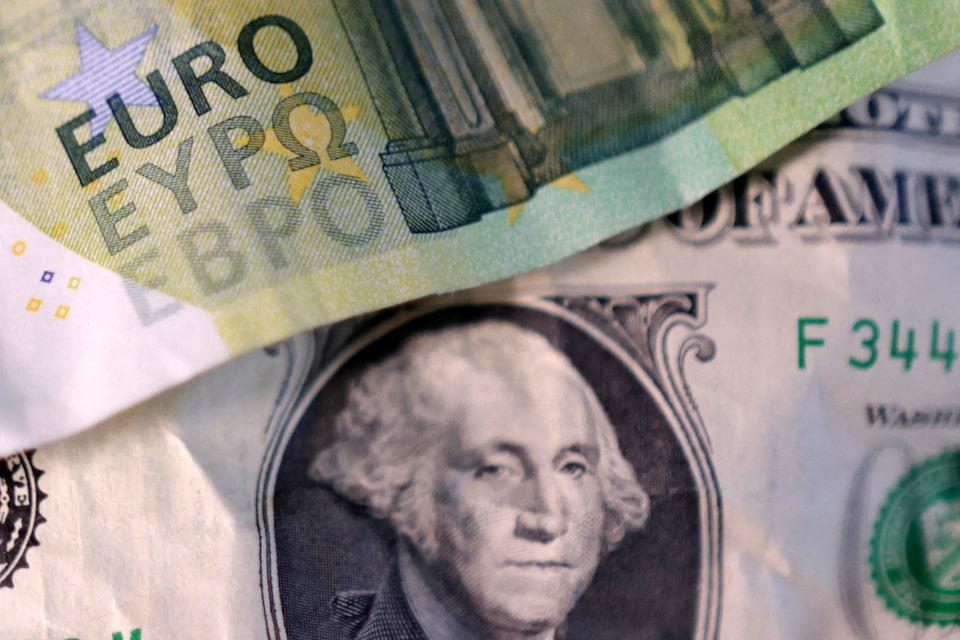
Europe's blistering Q1 rally gives way to trade war caution Asset managers holding back from further bullish bets Stimulus may not be enough to keep Europe recovering, investors say LONDON, March 28 (Reuters) - Investors are calling time on a rally in European stocks and the euro after a blistering first quarter that many fear has exaggerated how fast a planned public spending boom can revive the region's still sluggish economy and shore it up against trade war risks. Big asset managers including Amundi, Europe's largest, said they had held back or reduced bets on the euro or trimmed bullish European equity trades, as U.S. President Donald Trump prepares to announce reciprocal trade tariffs on April 2. Sign up here. Many said that the so-called Europhoria trade that propelled German shares (.GDAXI) , opens new tab to their best quarter since 2022 and the euro to a five-month high earlier in March had already factored in most foreseeable economic stimulus gains. "If the Trump administration decides to push trade partners towards a trade war it will be bearish for European equities," Edmond de Rothschild Asset Management CIO Benjamin Melman said, adding he did not expect outsized gains for European stocks from here. Global markets were roiled on Thursday following Trump's announcement of a 25% levy on car imports, with European equities (.STOXX) , opens new tab down as much as 2% as billions of euros were wiped off German automakers' shares. Pictet Asset Management's chief strategist, Luca Paolini, said more bad news on tariffs would probably hit European assets that had boomed on stimulus hopes harder than U.S. markets already depressed by the White House's erratic trade policy. "I think it makes sense not to reverse out of Europe but to take some profits," he said. "The easy wins are over." LOSE-LOSE As the market view of tariff winners and losers switched around, the euro dropped close to $1.01 in February before rebounding as high as $1.095 on March 18. Amundi's head of global FX Andreas Koenig said the group would refrain from building positions favouring the euro in case markets reverted to an expectation of tariffs supporting the dollar. "What we all have in front of us still is April 2," Koenig said, in reference to what Trump has dubbed "Liberation Day". Chris Jeffery, head of macro strategy at Britain's biggest asset manager Legal & General Investment Management, said the group had reduced a bet on the euro strengthening while Eren Osman, head of investment management at London bank Arbuthnot Latham, said he had scaled back a bet on European stocks but retained a slightly positive tilt. Although Osman called an all-out trade war a "lose-lose" situation for global equities, he said stimulus spending might help European assets to do better than others in such a scenario. "I don't think defence spending in Europe keeps it above water," he said. "But the fiscal boost is a separate narrative that provides a bit of support." 'SLOW AGONY' Former European Central Bank chief Mario Draghi said in a widely read report last year that Europe faced "slow agony" and needed a more coordinated industrial policy, speedier decision making and an innovation boost on top of massive investment. "For this rally to have a second leg, markets will need a new trigger. Hints that parts of the Draghi reports would be implemented would be key," said Rothschild's Melman, who is neutral on European stocks. Europe's economic recovery is just starting to build, with business activity in mild growth territory and Germany predicting a two-year downturn will end. Citi's euro area economic surprise index, which records whether data is surpassing market expectations, has been positive since early February. But its separate gauge of whether actual euro zone data is trending above its one-year average remains below zero, showing there is no broad-based upswing. Royal London Asset Management head of multi-asset Trevor Greetham said the UK group was considering a reduction in its U.S. equity holdings and favoured Europe. "It's not that you can see a boom coming in Europe," he said, but he favoured the region "in relative terms". Meanwhile, Russell Investments chief investment strategist Andrew Pease said the group's main global equity fund had a small positive bias to European stocks because the region's long-term prospects had improved, but was not adding more. "The big question mark around all this is April 2," he said. "If this causes a global downturn then Europe can't escape it." https://www.reuters.com/markets/trumps-erratic-tariff-policy-shakes-confidence-europes-market-bull-run-2025-03-28/
2025-03-28 05:03
US set to impose reciprocal tariffs on wide range of imports Weekly gains due to US pressure on Venezuela, Iran Q2 seen tighter than previously forecast - analyst NEW YORK, March 28 (Reuters) - Oil prices fell on Friday on worries that U.S. tariff wars could spark a global recession, but gained for a third consecutive week after Washington ratcheted up pressure on OPEC members Venezuela and Iran. Brent crude futures fell 40 cents, or 0.5% to settle at $73.63 a barrel. U.S. West Texas Intermediate crude futures (WTI) fell 56 cents, or 0.8%, to close at $69.36 a barrel. Sign up here. U.S. President Donald Trump plans to announce reciprocal tariffs targeting a wide range of imports, effective on April 2. The trade war has investors worried about a potential recession, JPMorgan analysts told clients. "Concerns about a trade war, coupled with elevated U.S. policy uncertainty, are weighing heavily on sentiment," they said. Although recession risk was elevated, high-frequency oil demand indicators have held up relatively well for now, JPMorgan noted. Mid-week data from the Energy Information Administration showed U.S. crude inventories fell by 3.3 million barrels to 433.6 million barrels last week, compared with analysts' expectations in a Reuters poll for a 956,000-barrel draw. On a weekly basis, Brent futures gained 1.9%, while WTI rose 1.6%. Since hitting multi-month lows in early March, Brent is up more than 7%, and WTI has rebounded over 6%. "The key theme this week was the Trump administration ratcheting up the pressure on the Maduro regime in Venezuela," Barclays analyst Amarpreet Singh said. Trump on Monday announced new 25% tariffs on potential buyers of Venezuelan crude, days after U.S. sanctions targeting China's imports from Iran. The measures could exacerbate an anticipated 200,000 barrel-per-day decline in Venezuelan crude oil output this year, Singh said. It has compounded uncertainty for buyers and saw trade of Venezuelan oil to top buyer China stall. Elsewhere, sources said India's Reliance Industries (RELI.NS) , opens new tab, operator of the world's biggest refining complex, will halt Venezuelan oil imports. Oil markets are readjusting global supply expectations as a result of U.S. sanctions against Venezuela and Iran, with Trump having promised to drive the latter's oil exports to zero. The U.S. has issued four rounds of sanctions targeting Iran's oil sales since Trump's return to the White House. The second quarter should be tighter than originally thought, StoneX analyst Alex Hodes said. "If there are reductions in Venezuelan or Iranian crude oil barrels on the market this would certainly be a bullish development." The OPEC+ group is set to begin its program of monthly increases to oil production in April. The group, which comprises OPEC and allies led by Russia, will likely continue to raise oil output in May, Reuters reported on Monday. https://www.reuters.com/business/energy/oil-holds-near-one-month-high-set-third-week-gains-amid-supply-woes-2025-03-28/