2025-03-28 03:32
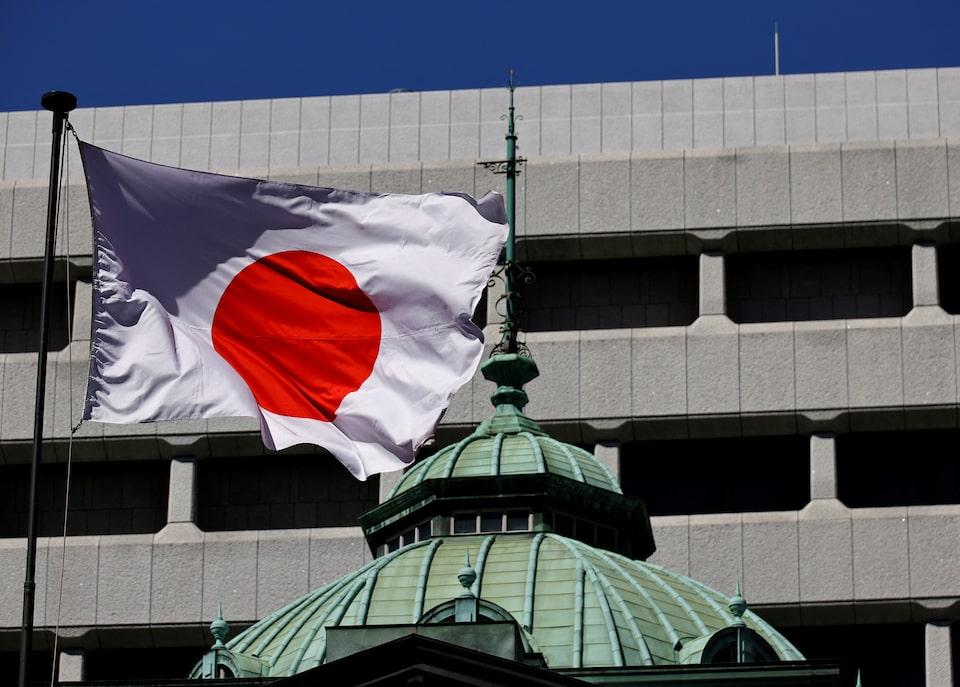
Japan close to achieving price goal, one opinion shows Downside risks from U.S. policy heightened rapidly BOJ may need to shift policy stance to neutral Uncertainty alone won't deter rate hike, one says TOKYO, March 28 (Reuters) - Bank of Japan policymakers were at loggerheads this month over how soon they should raise interest rates again as some focused on domestic inflationary pressure and others on uncertainty over U.S. tariff policy, a summary of opinions at its meeting showed. The discussion highlights how U.S. President Donald Trump's tariff hikes are complicating the BOJ's plan to raise interest rates to address broadening price increases that have kept Japan's inflation above its 2% target for nearly three years. Sign up here. Hawks on the BOJ's board warned of rising price pressures, with one saying the recent surge in food costs could persist and have a "big impact" on underlying inflation, according to the summary of discussions at the March meeting released on Friday. Several other board members pointed to bumper pay hikes offered by big firms in this year's annual wage talks with unions as evidence that conditions for further rate hikes were falling into place. "Japan's economy is at a stage where our price target is close to being achieved, mainly due to inflationary pressure stemming from domestic factors," one board member was quoted as saying. The BOJ will "enter a new phase" in fiscal 2025 where it needs to take such developments into account in communicating its policy intentions to the public, the board member added, referring to the year ending March 31, 2026. Others, however, appeared to focus more on heightening risks to the global outlook and Japan's economy from higher U.S. tariffs, the summary showed. "Downside risks stemming from the United States have rapidly heightened recently and, depending on how tariff-related issues develop, it is quite possible that these risks will have a negative impact on Japan's economy," one opinion showed. "In that case, the Bank will need to be particularly cautious when considering the timing for a rate hike." At the March 18-19 meeting, the BOJ kept interest rates steady at 0.5%. Governor Kazuo Ueda warned of heightening global economic uncertainty at a post-meeting briefing, while pointing to the risk that rising food costs and stronger-than-expected wage growth could push up underlying inflation in Japan. SHIFT TO NEUTRAL Data released on Friday showed core consumer inflation in Japan's capital hit 2.4% in March, accelerating from the previous month on steady rises in food costs. "The views of the doves and hawks were balanced, and there were no specific signals on the timing of the next rate hike," said Yusuke Matsuo, senior market economist at Mizuho Securities. "The discussions are consistent with the tone of Ueda's news conference, which signaled readiness to raise rates further but left the BOJ a free-hand on the timing," he said. The BOJ next meets for a rate review on April 30-May 1, when the board will issue fresh quarterly growth and price forecasts that will be key to how far it could eventually hike rates. "When the BOJ next hikes rates, underlying inflation may be fairly close to our price target. Therefore, the BOJ will need to consider shifting its current accommodative monetary policy stance to a neutral one," one member said. Aside from domestic price pressures, the key focus of debate in upcoming BOJ meetings is the expected hit to Japan's economy from Trump's announcement on Wednesday to impose a 25% tariff on automobile imports. But some BOJ policymakers appear unfazed. "Although uncertainties have heightened, it does not mean that the bank should always conduct monetary policy in a cautious manner. It may face a situation where it should act decisively," according to one opinion in the March summary. A Reuters poll showed many analysts expect the BOJ's next rate hike to come in the third quarter, most likely in July. The summary does not reveal the identity of the board member who made the comment. https://www.reuters.com/markets/rates-bonds/boj-debated-domestic-price-pressure-us-risks-march-meeting-summary-shows-2025-03-28/
2025-03-28 02:33
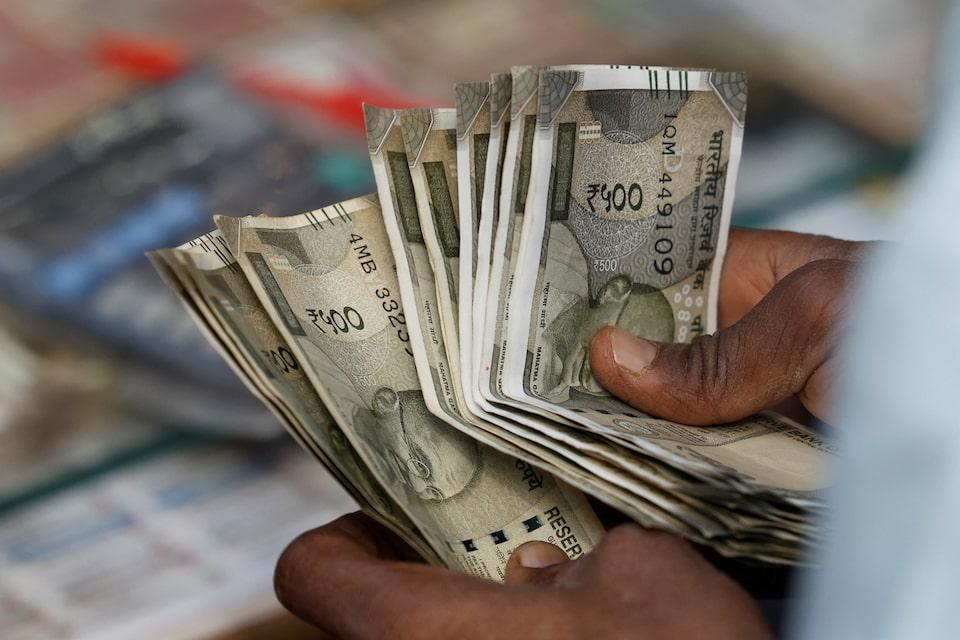
MUMBAI, March 28 (Reuters) - The Indian rupee is expected to open higher on Friday, supported by renewed foreign inflows into local equities and a decline in the bearish market sentiment. The 1-month non-deliverable forward indicated that the rupee will open at 85.68 to 85.72 versus the U.S. dollar compared with 85.78 in the previous session. Sign up here. The rupee has successfully retained its rally from last week, holding above the 86 handle, largely on the back of the return of foreign investors to the Indian equity market. On Thursday, foreign investors invested over $1.2 billion in Indian shares. This brings their total purchases of local equities over the past six sessions to $6 billion, marking a major reversal from the previous period of outflows. The rupee surpassing 86 and maintaining that level, was "definitely not what many had expected", a bank currency trader said. He emphasized the significant impact of equity inflows and the reduced prevalence of the previously "well-accepted" USD/INR dip-buying strategy. QUIET ASIA FX The rupee's Asian peers were mostly rangebound on the day, awaiting clarity on the extent of U.S. tariffs. U.S. President Donald Trump is poised to announce a slew of new tariffs next week, having already announced a 25% levy on imported cars would take effect on April 3. The announcement of auto tariffs elicited a muted response from Asian currencies, possibly because Trump suggested a more lenient approach to reciprocal tariffs scheduled for next week. "The weak reaction in FX to the tariff news could suggest the market is moving on from the announcement effect to looking at how tariffs impact business and consumer confidence and, ultimately, the hard data of consumption and business investment," ING Bank said in a note. Meanwhile, February figures for the Federal Reserve's preferred inflation gauge are due later in the day. KEY INDICATORS: ** One-month non-deliverable rupee forward at 85.88; onshore one-month forward premium at 21.75 paise ** Dollar index at 104.27 ** Brent crude futures down 0.1% at $74 per barrel ** Ten-year U.S. note yield at 4.34% ** As per NSDL data, foreign investors bought a net $286.2 million worth of Indian shares on March 26 ** NSDL data shows foreign investors sold a net $123.5 million worth of Indian bonds on March 26 https://www.reuters.com/markets/currencies/surging-equity-inflows-shift-outlook-support-rupee-upward-trend-2025-03-28/
2025-03-28 00:42
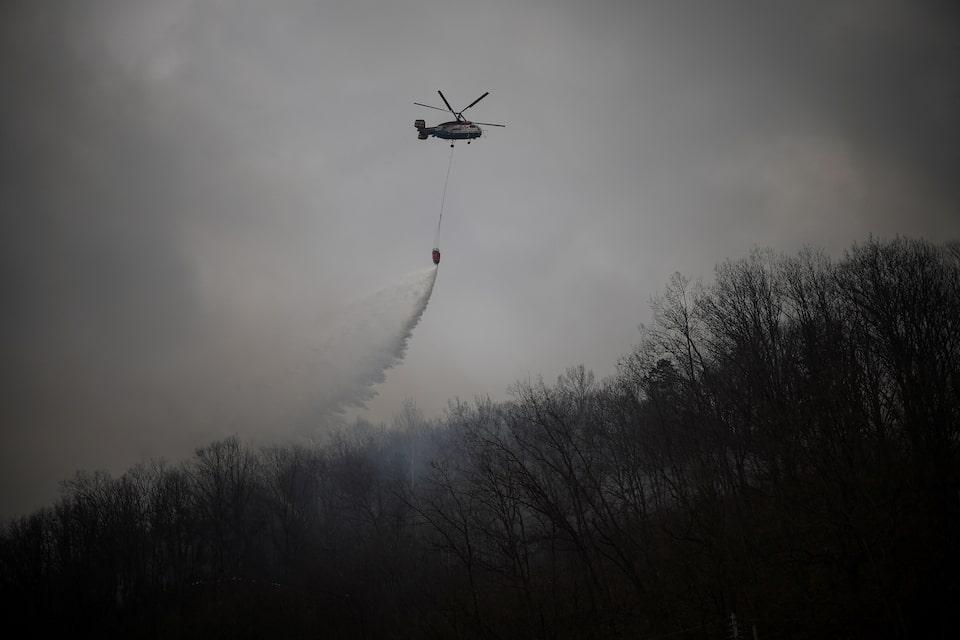
Light rain aids firefighters in South Korea's worst wildfires Main fires of five regions contained, minister says Experts link fire spread to climate change, warn of future risks Mostly elderly residents in rural areas lose homes, farms ANDONG, South Korea, March 28 (Reuters) - South Korean authorities have contained the main blazes in the country's largest forest fire on record, a minister said on Friday, as rain and better weather allowed more helicopters to fly and dump water, dousing the flames. Spread by strong winds in bone-dry conditions, the wildfires have killed at least 28 people and charred more than 45,000 hectares (111,000 acres) in the southeastern region. Sign up here. The main fires in five regions were under control by 5 p.m. (0800 GMT), said Lim Sang-seop, the minister of the Korea Forest Service. "The main fires have been contained, so we will switch to containing small ones," Lim told a briefing, thanking those who battled the fires. The wildfires in North Gyeongsang province began in Uiseong county before spreading 70 km (44 miles) east, to devastate an area equivalent to about two-thirds of the island of Singapore and much larger than the Los Angeles fires in January. "Strong, dry winds blew from the west. The wind had the biggest impact," said Lim, adding that smoke and fog reduced visibility this week, presenting a bigger challenge to helicopters seeking to douse the flames. More than 80 helicopters started flying at daybreak on Friday to dump water, the safety ministry said. South Korea relies on helicopters to fight forest fires because of its mountainous terrain. A helicopter pilot died on Wednesday after crashing while trying to tackle a blaze. Experts have said the spread of the Uiseong fire was extremely unusual in terms of scale and speed, while climate change is expected to make wildfires more frequent and deadly globally. The wildfires have displaced more than 30,000, many of them elderly, as is typical in rural areas across fast-ageing South Korea. The flames consumed everything in their path, from historic temples to homes, in mountainous North Gyeongsang. As he surveyed his burnt-out home and farm, 72-year-old Choi Jong-chan struggled to decide on his next steps. "I have to buy everything from scratch," the farmer added. "After 10, 20, 50 years of collecting things, the fire has burned it all down." The U.S. State Department offered condolences for the loss of lives and damage and said the U.S. military was ready to help, adding that South Korea had provided unwavering support in tackling wildfires in Los Angeles and Hawaii. https://www.reuters.com/world/asia-pacific/south-korea-hopes-use-break-weather-contain-deadly-wildfires-2025-03-28/
2025-03-28 00:12
BENGALURU, March 28 (Reuters) - The Reserve Bank of Australia will keep its cash rate unchanged on Tuesday as it waits for concrete signs of easing inflation, according to a Reuters poll of economists, who mostly still expect two rate cuts this year with the next likely in May. The RBA delivered its first rate cut in over four years in February but has since adopted a cautious tone on further easing, with Governor Michele Bullock and other top policymakers downplaying the likelihood of multiple cuts. Sign up here. While lower rates help ease cost-of-living pressures through cheaper loans and mortgage rates, aggressive rate cuts risk overheating an already expensive housing market, among the top issues for voters as Australia heads to a general election in May. Inflation has settled within the central bank's 2-3% target range, but core inflation at 3.2% remains a concern. With a low unemployment rate and a pickup in economic growth, the RBA is likely to opt for gradual, limited cuts compared with other peer central banks. All 39 economists in the March 24-27 poll expected the RBA to hold its official cash rate (AUCBIR=ECI) , opens new tab at 4.10% at the end of its two-day policy meeting on April 1. "When their policy rate is only slightly restrictive ... then it's a little more challenging for them to be confident they've got inflation sustainably under control. I think they're happy to take it one step at a time," said Abhijit Surya, senior Asia-Pacific economist at Capital Economics. He added that he expected two more cuts of 25 basis points each in May and August. "The risks are fairly balanced. But if push comes to shove, maybe it's possible we only get one more 25 basis point cut. Or alternatively, we do get those 25 basis point cuts, but not as quickly," he said. All major local banks — ANZ, CBA, NAB, and Westpac — expect rates to remain unchanged next week but differ on how low they will eventually go. Nearly 75% of the economists expected a 25 basis point cut to 3.85% in May after the next detailed quarterly inflation data is released. Median forecasts showed one more rate cut by end-September to 3.60% and then rates to remain there through June 2026. Interest rate futures pricing is broadly in line with the poll. "The RBA is cognizant of the fact they can't deliver too deep of an easing cycle just given the fact supply is woefully below what the demand is. If they cut too aggressively then that probably stokes inflationary pressures," said Prashant Newnaha, senior Asia-Pacific rates strategist at TD Securities. "The message is very clear and the data has been holding up reasonably well. There is no pressing need for the RBA to deliver a deep easing cycle this time around," he said. (Other stories from the March Reuters global economic poll) https://www.reuters.com/world/asia-pacific/rba-hold-rates-steady-april-cut-again-may-2025-03-28/
2025-03-28 00:04
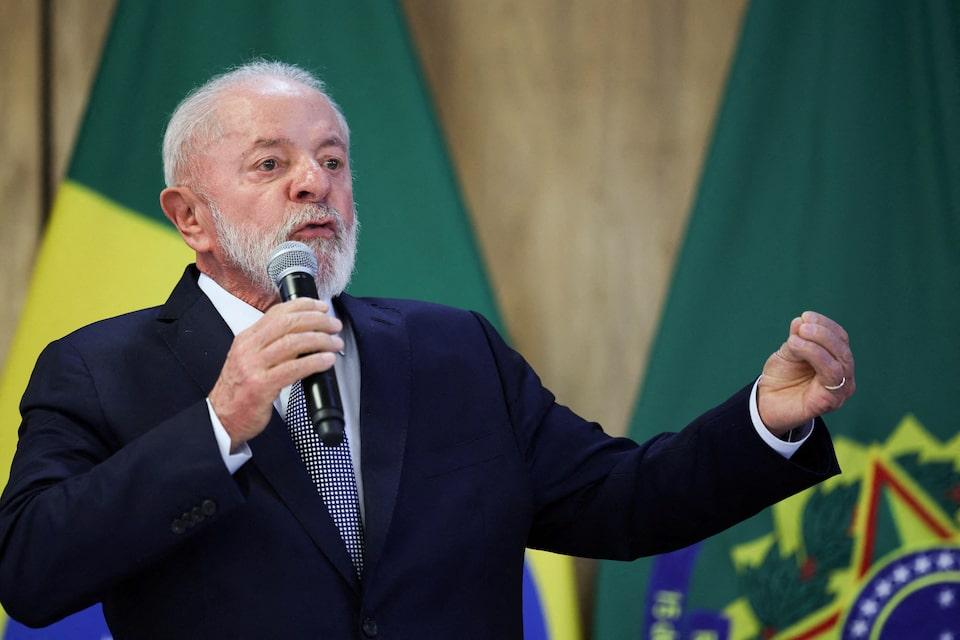
Vietnam may buy Embraer planes, Lula says Lula says Vietnam could become hub for Brazilian meat processing Vietnam considers opening its market to Brazilian beef Lula invites Vietnam to BRICS summit in July HANOI, March 28 (Reuters) - Brazil's President Luiz Inacio Lula da Silva said on Friday Vietnam may buy Embraer (EMBR3.SA) , opens new tab planes and become a regional hub for Brazilian meat processing operations, as he met Vietnam's President Luong Cuong in Hanoi. Lula also recognised the Communist-run country as a market economy, invited Vietnam to attend a BRICS summit in Brazil later this year and pledged a Mercosur trade agreement with Hanoi. Sign up here. Lula's second visit to Vietnam comes as Hanoi, under pressure from the Trump administration to reduce its large trade surplus, has promised to boost U.S. imports, including farm products such as soybeans of which Brazil is a top exporter to the country. At a media conference with Lula, Cuong said Vietnam was "seriously considering" allowing Brazilian beef into the country. "Opening the Vietnamese market to Brazilian beef would attract investment from Brazilian meat packers to make this country an export platform for Southeast Asia," Lula said. Brazilian food giant JBS (JBSS3.SA) , opens new tab is considering building a meat-processing plant in northern Vietnam, its first in Asia, if Vietnam opens its market to Brazilian beef, Reuters reported last week citing sources. Lula also said he was aware that flagship carrier Vietnam Airlines (HVN.HM) , opens new tab was "positively assessing Embraer's offer" for regional jets, noting Brazil wanted to export planes to Hanoi. The Brazilian planemaker is in talks for the possible sale of ten E190 narrow-body jets to Vietnam Airlines, one Brazilian official told Reuters last week. The two companies did not comment. Embraer and JBS are part of a large business delegation accompanying Lula on his trip to Vietnam. The two countries signed a five-year action plan, which officials said focuses on defence, agriculture, energy and technology, and other pacts, including one on football cooperation. Lula invited Vietnam to the BRICS summit Brazil will host in July. Vietnam's Prime Minister Pham Minh Chinh attended a BRICS summit as an observer for the first time last year, but Hanoi has so far not accepted an invitation to become a formal partner of the club led by Brazil, Russia, India, China and South Africa. Cuong made no comment about BRICS in his public statement. Lula said the Brazilian presidency of Mercosur in the second half of the year will seek "a balanced agreement with Vietnam", implying there will be talks on a trade deal between Vietnam and the South American bloc. He also proposed to expand technical cooperation with Vietnam on coffee crops at a time when the world's two biggest coffee producers are facing challenges from climate change. https://www.reuters.com/world/brazils-lula-meet-vietnams-leaders-boost-trade-ties-2025-03-28/
2025-03-27 23:40
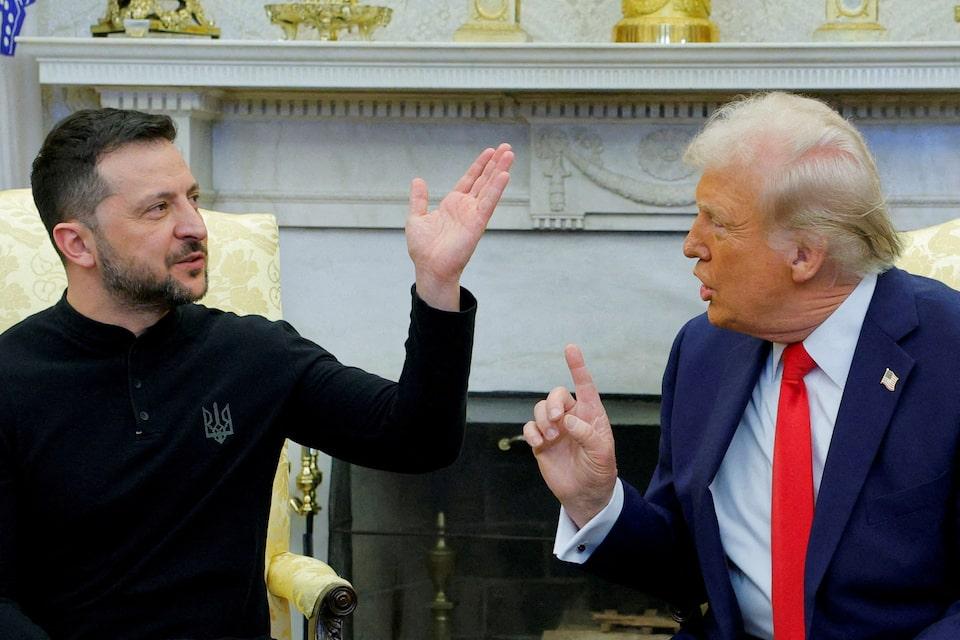
Under proposal Kyiv would contribute to joint fund all income from use of natural resources Deal would apply to Ukrainian state and private enterprises Proposal includes no security guarantees March 27 (Reuters) - The Trump administration has proposed a new, more expansive minerals deal with Ukraine, according to three people familiar with the ongoing negotiations and a summary of a draft proposal obtained by Reuters. The U.S. has revised its original proposal, said the sources, and it gives Ukraine no future security guarantees but requires it to contribute to a joint investment fund all income from the use of natural resources managed by state and private enterprises across Ukrainian territory. Sign up here. The terms put forward by Washington go well beyond the deal discussed in the days leading up to the contentious Oval Office meeting last month between U.S. President Donald Trump and Ukrainian President Volodymyr Zelenskiy. Treasury Secretary Scott Bessent has been leading negotiations for the United States, said one of the sources. Bessent did not immediately respond to a request for comment. The proposal makes no mention of the U.S. taking ownership of Ukraine’s nuclear power plants, according to the summary - something Trump had talked about. Trump has said a minerals deal will help secure a peace agreement by giving the United States a financial stake in Ukraine's future. He also sees it as America's way of earning back some of the tens of billions of dollars it has given to Ukraine in financial and military aid since Russia invaded three years ago. National Security Council spokesperson James Hewitt declined to confirm the terms of the latest proposal, but said the deal would strengthen the relationship between the U.S. and Ukraine. “The mineral deal offers Ukraine the opportunity to form an enduring economic relationship with the United States that is the basis for long term security and peace," said Hewitt. Ukraine's ministry of foreign affairs did not immediately respond to a request for comment. An earlier version of the deal proposed a joint investment fund where Ukraine would contribute 50% of proceeds from the future profits of the extraction of the state-owned natural resources. It also set out terms that the U.S. and Ukraine would jointly develop Ukraine’s mineral resources. Zelenskiy told reporters on Tuesday that the U.S. had proposed a “major” new deal and that Ukrainian officials were still reviewing its terms. Zelenskiy said on Thursday the U.S. is "constantly" changing the terms of the proposed minerals deal, but added that he did not want Washington to think Kyiv was against the deal. In an interview with Fox News earlier this week, Bessent said the U.S. had “passed along a completed document for the economic partnership” and that Washington hopes to “go to full discussions and perhaps even get signatures next week.” The new proposal stipulates that the U.S. is given first rights to purchase resources extracted under the agreement and that it recoup all the money it has given Ukraine since 2022, in addition to a 4% annual interest rate, before Ukraine begins to gain access to the fund's profits, according to the summary. The updated proposal was first reported by the Financial Times. If agreed, the joint investment fund would have a board of five people, three appointed by the U.S. and two by Ukraine, and the funds generated would be converted into foreign currency and transferred abroad, according to the summary. The fund would be managed by the U.S. International Development Finance Corporation (DFC). A separate source with knowledge of the negotiations said there had been discussions about having the DFC administer the fund. https://www.reuters.com/world/us-is-pushing-more-expansive-minerals-deal-with-ukraine-sources-say-2025-03-27/