2025-03-27 23:01
SAO PAULO, March 27 (Reuters) - Shell (SHEL.L) , opens new tab is discontinuing its solar and onshore wind power generation projects in Brazil, as part of a "portfolio adjustment", the company said on Thursday. The move comes amid an unfavorable environment for renewable power investments in Brazil, where projects have struggled to be implemented due to oversupply of energy, a slow growth in demand and regulatory questions. Sign up here. It also follows Shell's new global strategy, which included reducing spending on low-carbon and renewable businesses. "We are always exploring ways to create value from our power generation portfolio, including exiting activities that do not fit into our strategy or do not generate sufficient returns," Shell said in a statement. In recent months, the company has been seeking to revoke with Brazil energy regulator its rights to operate some solar plants in the country's center-west and northeastern regions, documents from the government official gazette showed. Shell said the operations being discontinued are from centralized power generation plants, which are the ones of large-scale. The firm added it will continue to operate Prime Energy, a firm that has smaller solar generation assets in Brazil, part of a segment called "distributed generation". https://www.reuters.com/business/energy/shell-scraps-solar-onshore-wind-power-projects-brazil-2025-03-27/

2025-03-27 22:39
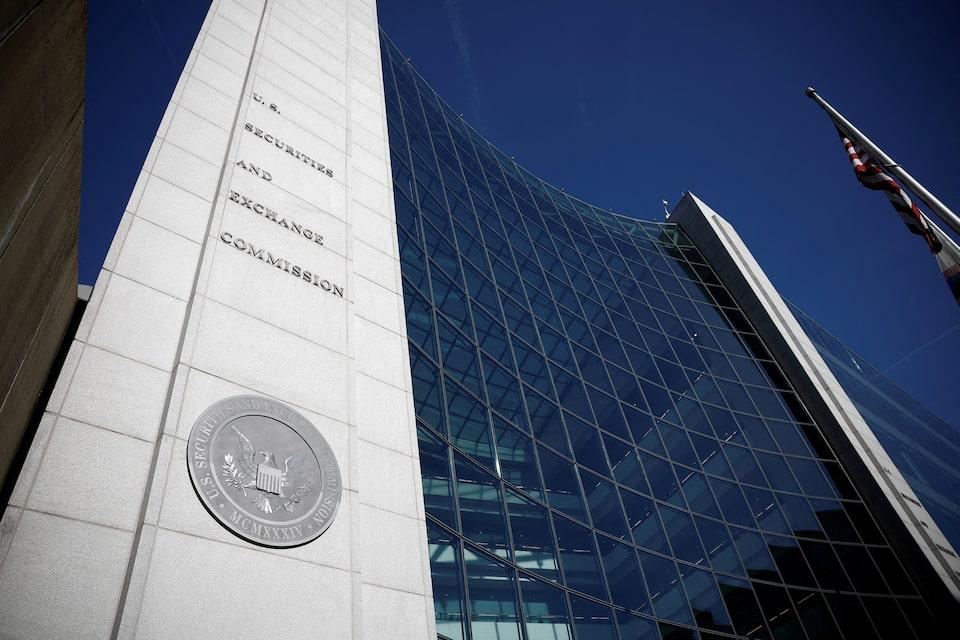
March 27 (Reuters) - Wall Street's top regulator said on Thursday it had voted to cease legal efforts to defend regulations that require companies to disclose climate-related emissions, risks and spending, and had been hotly contested by industrial lobby groups. The decision by the Republican-dominated U.S. Securities and Exchange Commission had been widely expected following public remarks last month by its acting chairman, Mark Uyeda. Sign up here. Since taking office, President Donald Trump has acted to roll back virtually all of the prior administration's efforts to address climate change. "The goal of today's Commission action and notification to the court is to cease the Commission's involvement in the defense of the costly and unnecessarily intrusive climate change disclosure rules," Uyeda said in a statement. The Commission adopted the rule last year, aiming to give investors information about the buildup of climate risk and associated costs in the financial system. The agency cited strong demand from investors for such disclosures. However, lobby groups and Republican state attorneys general immediately sued, charging that the regulations overstepped the SEC's legal authority and would burden businesses. That case is now pending before U.S. Court of Appeals for the Eighth Circuit. The SEC's lone Democratic member, Caroline Crenshaw, denounced the decision, saying it unlawfully sought to undo valid regulations by ceasing to defend them in court, rather than following procedure to change them or create new ones. "In effect, the majority of the Commission is crossing their fingers and rooting for the demise of this rule, while they eat popcorn on the sidelines," she said in a statement. "The court should not take the bait." Crenshaw called on the court to appoint lawyers to defend the rule in the SEC's absence "on behalf of investors, issuers and the markets." The SEC had been facing a self-imposed deadline of Friday to tell the court of its planned course of action. The agency had asked the court early last month not to schedule oral arguments while it considered what to do. https://www.reuters.com/business/environment/us-sec-votes-stop-defending-climate-disclosure-rules-2025-03-27/
2025-03-27 22:15
NAPERVILLE, Illinois, March 27 (Reuters) - It’s no secret that the data put out by the U.S. Department of Agriculture each year at the end of March can have serious ramifications for the market due to its unpredictable nature. In fact, industry analysts have been in the ballpark with U.S. corn plantings on maybe two occasions within the last decade. Sign up here. Since March acres and stocks have been misjudged so often, many instances make for great discussion. But just for fun, let’s review four of the worst March misses in recent years because a good lesson can be gleaned in most cases. CORN ACRES, 2016 Average trade estimate: 89.97 million acres; high of 91 million USDA actual: 93.6 million acres In March 2016, the market learned that U.S. farmers love to plant corn, especially when new-crop futures prices heavily favor the yellow grain in opening months of the year. USDA’s June survey reiterated this lesson, as the trade once again low-balled corn acres. New-crop futures had swung heavily toward a bean-favoring position during the spring. But springtime weather was favorable for corn planting, and farmers did just that. Analysts’3.9% miss on 2016 corn intentions remains the largest of the last two decades. CORN STOCKS, 2013 Average trade estimate: 5.01 billion bushels; high of 5.25 billion USDA actual: 5.4 billion bushels In March 2013, the market learned that excessively high prices kill off demand. The 2012-13 U.S. corn harvest was decimated by historic drought, and Chicago corn prices reached all-time highs in August 2012. Crop losses were captured early, as final production was extremely close to what was projected in August. U.S. corn exports suffered the most in 2012-13, the final volume falling 44% from the August prediction. In this case, both the market and USDA learned that U.S. corn is more replaceable than previously assumed. In 2011-12, combined corn output in Argentina, Brazil and Ukraine had jumped 24% on the year and exports surged 91%. The trade’s 7.1% miss on March 1, 2013 corn stocks remains by far the heaviest March corn stocks miss of the last two decades, more than double that of the runner-up. CORN AND SOY ACRES, 2021 Average trade guesses: 93.21 million corn acres, low of 92 million; 90 million soybean acres, low of 86.1 million USDA actuals: 91.14 million corn and 87.6 million soybean acres In March 2021, the market learned about acreage limitations. Crop prices reached multi-year highs in early 2021, and U.S. farmers were expected to go gangbusters, planting fence-row-to-fence-row, even in ditches. The trade wanted 183.2 million combined bean and corn acres in March 2021, though the figure landed at 178.7 million. Analysts were somewhat vindicated down the road when final acreage notched 180.1 million, just shy of 2017’s record. However, combined March acreage estimates have been more tempered ever since as the market has been more accepting of the shrinking U.S. acreage pool. The 2.7% miss on March 2021 soybean acres remains analysts’ worst since 2009. CORN ACRES, 2020 Average trade guess: 94.33 million acres with a high of 96.4 million USDA actual: 96.99 million acres In March 2020, the market learned that if both corn and bean prices are poor, farmers are likely to opt for corn. However, 2020 also demonstrated that U.S. farmers’ love for corn has a limit. U.S. farmers’ March 2020 plans of planting the largest corn area in eight years went out the window with the onset of the pandemic, which sent new-crop corn prices to 14-year spring lows. This was one of the only provable cases where a shift in prices during the spring materially impacted corn acreage plans, and this was revealed in the June survey. Farmers scrapped nearly 10 million planned crop acres in 2020 amid the plunge in prices and economic chaos. There are some parallels between 2020 and 2025, for one, the relative attractiveness of corn versus soybeans. The average trade guesses and ranges on corn acres are nearly identical, and some current corn acreage estimates reflect 13-year highs. However, the strong corn 2025 area could be placed on notice if prices take a notable downturn over the next few weeks, particularly if it is macroeconomic-related, as this introduces considerable uncertainties. U.S. tariff threats and recent global economic concerns increase the odds of such a situation in 2025. But unless it is severe enough, the default lesson learned from this study should be kept close: U.S. farmers really, really like planting corn. Karen Braun is a market analyst for Reuters. Views expressed above are her own. https://www.reuters.com/markets/commodities/hall-shame-revisiting-four-major-doozies-us-acres-stocks-braun-2025-03-27/

2025-03-27 21:48
NEW YORK, March 27 (Reuters) - Oilfield service providers will face modest hits to earnings from U.S. President Donald Trump's decision to impose tariffs on steel imports, Liberty Energy (LBRT.N) , opens new tab Chief Executive Ron Gusek said on Thursday. Trump imposed 25% tariffs on steel and aluminum on March 12, and more could be coming April 2. A Dallas Federal Reserve survey on Wednesday showed executives are concerned that the levies could drive inflation in the oilfield, and raise drilling costs. Sign up here. The tariffs have already pushed suppliers to raise costs on some components of the fracking process, such as perforating guns used to create tunnels to pump fluids and crack shale rocks, said Gusek, who took over the top job at Liberty after its former CEO Chris Wright was confirmed as U.S. Energy Secretary in February. Liberty is passing those costs on to its consumers, Gusek said on a telephone interview. "As we get a letter that says that (costs will rise), we share that letter with our customers and ask them to absorb that cost," Gusek told Reuters in a phone interview. That, in turn, could further hit Liberty and other oilfield service providers' earnings by forcing their oil-producing customers to slow drilling activity. Oil producers have already set their budgets for the year, so they could slow drilling activity to balance their expenses as costs for items like well casing and tubing climb, Gusek said. One executive quoted in the Dallas Fed survey said the Trump administration's tariffs had raised costs for casing and tubing by 25% immediately, warning the knock-on effects will force producers to drop drilling rigs and decrease employment. Gusek said he does not currently expect a slowdown in activity, noting that the guidance from Liberty's customers indicates a 2-3% hike in well completion costs. Still, industry costs are rising, and Liberty will try to offset them by targeting more efficiency in its operations, such as by completing wells faster, Gusek said. "Hopefully we can offset that, and the end result for our customers on the E&P side is that we can get somewhere close to holding well costs flat, even in the face of that bit of inflation." https://www.reuters.com/business/energy/liberty-ceo-gusek-sees-modest-impact-steel-tariffs-oilfield-services-2025-03-27/
2025-03-27 21:41
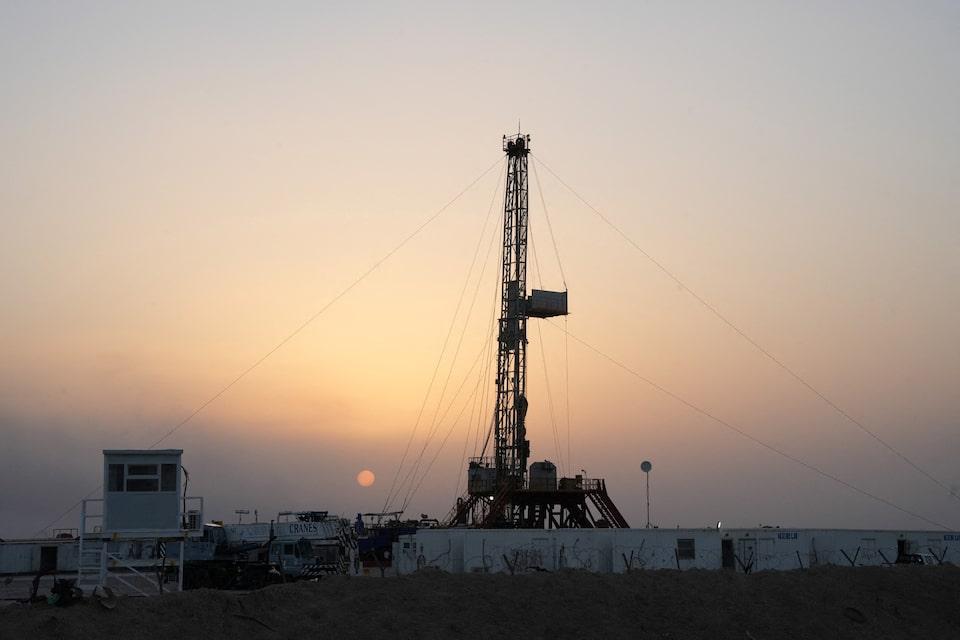
March 27 (Reuters) - Canadian miner The Metals Company (TMC.O) , opens new tab said on Thursday it had formally initiated a process under the U.S. Department of Commerce to apply for exploration licenses and permits to extract minerals from the ocean floor. The company plans to apply under the Deep Seabed Hard Mineral Resources Act of 1980 (DSHMRA) instead of the International Seabed Authority (ISA), stating the latter had not yet adopted regulations around deep seabed exploitation. Sign up here. It also added that it has requested a pre-application consultation with National Oceanic and Atmospheric Administration (NOAA). TMC's bid to become the first company to gain approval to develop deep sea minerals has been controversial. Environmental groups are calling for all activities to be banned, warning that industrial operations on the ocean floor could cause irreversible biodiversity loss. This move comes at a time when delegations from 36 countries are attending a council meeting of the U.N.'s ISA in Kingston, Jamaica this week to decide if mining companies should be allowed to extract metals such as copper or cobalt from the ocean floor. Few expect a final text for the mining code to be completed by the end of the latest round of talks on March 28, with delegates also planning to discuss potential actions if a mining application is submitted before the regulations are completed. "We believe we have sufficient knowledge to get started and prove we can manage environmental risks. What we need is a regulator with a robust regulatory regime, and who is willing to give our application a fair hearing," said Gerard Barron, CEO of The Metals Company. Advocacy group Greenpeace said the move was "desperate", accusing the company of "encouraging a breach of customary international law", by attempting to mine the international seabed under U.S. legislation. https://www.reuters.com/markets/commodities/metals-company-apply-deep-sea-exploration-license-under-us-legislation-2025-03-27/

2025-03-27 21:18
BRUSSELS, March 27 (Reuters) - The European Commission is considering changes to EU energy laws as part of its next package of proposals to cut the regulatory burden for struggling industries, sources familiar with the matter told Reuters. Brussels has launched a drive to remove layers of bureaucracy that European businesses say set them at a disadvantage against China and the United States, where the Trump administration is aggressively rolling back regulation. Sign up here. After publishing a first wave of so-called "simplification omnibus" proposals last month to pare back sustainability reporting rules, the Commission is now assessing ways to simplify EU energy policies, five sources with knowledge of the plans said. The discussions are at an early stage, but could form part of an omnibus package to curb the regulatory burden for small and mid-cap companies due in April. However, two of the sources said this package is expected to be delayed until May. Three of the sources said the EU's energy efficiency directive was among the policies being assessed. The directive sets binding targets for the bloc to curb its energy consumption. It requires companies to audit their energy use, and larger firms must put in place plans to manage their consumption. One of the sources said the Commission is also looking at potentially simplifying one of the bloc's main climate change policies, its renewable energy law, which sets binding targets for countries to expand their use of renewable energy. A European Commission spokesperson declined to comment on whether the next omnibus package would target Europe's energy rules. The drive to cut red tape has strong backing from industries, which complain that regulations are a drain on competitiveness and resources, diverting funds away from investments in innovation. But the plans have been criticised by some investors, left-leaning lawmakers and campaigners, who said the first wave of omnibus proposals would gut corporate accountability and are creating an unstable investment environment by upending recently-agreed laws. https://www.reuters.com/business/energy/eu-targeting-energy-laws-drive-cut-red-tape-sources-say-2025-03-27/