2025-03-27 21:02
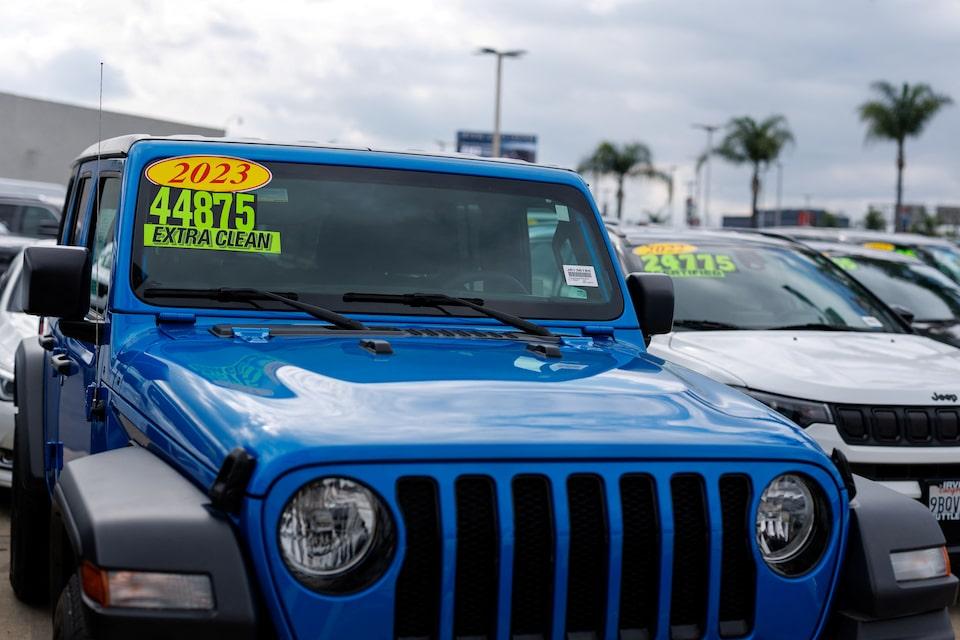
ORLANDO, Florida, March 27 (Reuters) - Trump drives global trade war up a gear. Investors went on the defensive Thursday, reducing exposure to risky assets like stocks after U.S. President Donald Trump escalated the global trade wars with his plans to slap aggressive tariffs on auto imports from next week. Sign up here. There was no uniform flight to safety, however, even though gold leaped to a new high, as mounting inflation concerns pushed up Treasury bond yields. My column below shines a light on the rather surprising resilience shown by currencies of the countries that will be hit hardest by Trump's auto tariffs. I'd love to hear from you, so please reach out to me with comments at [email protected]. You can also follow me at @ReutersJamie , opens new tab and @reutersjamie.bsky.social , opens new tab. Today's Key Market Moves Investors find automotive for caution Trump's latest tariff salvo drew widespread international criticism and weighed heavily on global markets on Thursday. It's not just tariffs grabbing U.S. equity traders' attention as the end of the quarter approaches - the S&P 500 is hovering around a key long-term trend line that technical analysts say could help determine the market's fate in the coming weeks and months. The index is trading just below the 200-day moving average, having traded above for most of the last two years, during which time the market rose more than 50%. Failure to leap back above this technical level will be seen as a bearish sign. "Nothing good happens below the 200-day moving average," a quote attributed to billionaire veteran hedge fund manager Paul Tudor Jones, is getting a lot of play right now. If the flip side of that is nothing bad happens above the 200-day moving average, look no further than gold, which rose again to a new high on Thursday. Gold has traded above its 200-day moving average every day since 17 October, 2023, and appears to be accelerating further above it. Of course, there's more driving gold higher than just technicals. Fundamental factors like concerns around inflation, growth, and geopolitics are fueling demand and driving momentum. Tariffs and global trade tensions are part of that too. The uncertainty is also beginning to affect the U.S. corporate earnings outlook. While figures on Thursday showed that corporate profits surged to a record high in the fourth quarter, analysts are lowering their forecasts for this year. Analysts at Citi estimate that a 10% increase in tariffs roughly equates to a 5%-6% decline in U.S. earnings per share, and Barclays analysts this week lowered their S&P 500 base case EPS estimate to $262 this year from $271. A lot can change between now and April 3, when the auto tariffs are set to kick in. Trump could scrap them entirely just as easily as he could increase them, so the uncertainty and lack of visibility will likely keep investors on the defensive. Perhaps one surprising element of Trump's auto tariffs is how well the currencies of the key targeted countries have stood up. Can this resilience last? Auto tariff FX pain is hitting close to home While auto company shares around the world are wilting following U.S. President Donald Trump's decision to slap aggressive tariffs on imported cars, the currencies of the most-affected countries are holding up surprisingly well. Trump said on Wednesday that a 25% tariff on imported vehicles will take effect on April 3. There will be some delays and exemptions, of course, but this could potentially add another $55 billion to the cost of finished vehicles. The United States imported $220 billion of finished cars and vehicles last year, of which 22% came from Mexico, 18% from Japan, 17% from Korea, 13% from Canada and 11% from Germany. Imports of all auto products totaled $474 billion. Given these figures, the reaction of equity markets on Thursday was unsurprising: shares of South Korea's Hyundai fell 4.3%, roughly three times more than the broader KOSPI's loss, and some $16 billion was wiped off Japan's transport index. German auto shares fell too, extending their losses to 10% over the last three weeks, a period in which the broader DAX has flat lined. Analysts at Morgan Stanley expect shares in "all exposed" European auto companies to fall a further 5-7% in the near term. But the FX market's reaction was mixed. The Mexican peso fell 1%, and both the yen and Canadian dollar slipped around 0.3%. But the euro and South Korean won rose 0.3%. Indeed, the currencies of the four largest auto-exporters to the U.S. - Mexico, Japan, Canada and South Korea - are all stronger against the U.S. dollar so far this year. And with the exception of the Korean won, they are also all up since Trump's inauguration on January 20. The euro is obviously a special case because it is shared by 20 countries and has been propelled higher in recent weeks by Germany's fiscal pivot. Regardless, the euro is also firmer against the greenback this year. On the face of it, this is a head-scratcher. The hit to these economies will be significant if the proposed tariffs are fully implemented and kept in place for some time. But zoom out a little further, and a clearer picture emerges: one of U.S. dollar weakness. A DOLLAR STORY While the 'Tariff Man's' protectionist trade agenda could have positive benefits for the U.S. economy over the long term, the short-term impact is clearly negative. The tariff talk is damaging U.S. consumer and business confidence, and market sentiment, much more than these threats are hurting other economies. And U.S. consumers have reason to be skittish. Morgan Stanley estimates that, all else being equal, the 25% tariff on auto imports equates to a price increase of more than $90 billion across the industry, or nearly $6,000 per unit on average. Arthur Wheaton, director at Cornell's School of Industrial and Labor Relations, reckons vehicle prices could shoot up by as much as $20,000. For a country that uses and loves cars as much as America, that would be extremely painful. Trump's tariffs also appear to be one reason overseas investors are reassessing their U.S. assets. Foreign investors are reducing exposure to Uncle Sam for economic, political and valuation reasons. And non-dollar currencies are benefiting in turn. "It's mostly a capital flight story. The tariffs are bad for Canada, Mexico and other countries, but investors are also fleeing U.S. assets," says Brent Donnelly, president of trading and analytics firm Spectra Markets. The auto exporters' currencies aren't immune to the escalating trade war. The Canadian dollar slumped to a four-and-a-half-year low last month, and the peso could well come under more pressure due to the auto sector's relatively large footprint in Mexico's economy. But right now, the currency feeling the whiplash most from Trump's tariffs may be the U.S. dollar. What could move markets tomorrow? If you have more time to read today, here are a few articles I recommend to help you make sense of what happened in markets today. Opinions expressed are those of the author. They do not reflect the views of Reuters News, which, under the Trust Principles , opens new tab, is committed to integrity, independence, and freedom from bias. Trading Day is also sent by email every weekday morning. Think your friend or colleague should know about us? Forward this newsletter to them. They can also sign up here. https://www.reuters.com/markets/global-markets-trading-day-2025-03-27/
2025-03-27 20:55
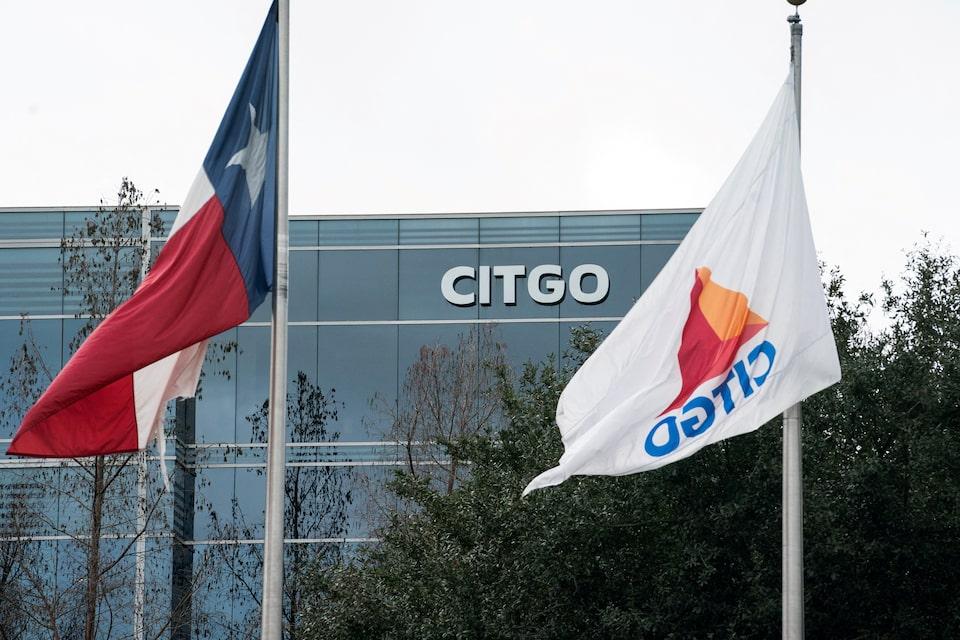
New bidding round starts after year-long auction ended in shambles Creditors' dispute over minimum bid to add more delays in 8-year-old case Bondholders pact released at Gold Reserve-consortium's request Bids by Venezuela-linked creditors turn auction into creditors game HOUSTON, March 27 (Reuters) - A U.S. federal judge trying to move ahead with an auction of shares in the parent of Venezuela-owned U.S. refiner Citgo Petroleum is dealing with a fresh dispute between creditors after a lowball starting bid was recommended in a reboot of the sale. The complex auction meant to repay 18 creditors for debt defaults and expropriations by Venezuela and state oil company PDVSA was relaunched in January after a year-long bidding process ended in shambles amid arguments over Citgo's worth and parallel legal cases. Sign up here. Lawyers representing Venezuela have also objected to the method of deciding the fate of the country's most-prized foreign asset, while claims of some $21 billion are higher than expected proceeds. The court decided this time to set a minimum bid for shares in PDV Holding, a U.S. subsidiary of PDVSA and the parent of Houston-based Citgo, following the creditors' rejection of a higher winning offer of about $7.3 billion last year by an affiliate of hedge fund Elliott Investment Management due to conditions included. A court officer overseeing the auction last week recommended a $3.7 billion bid by Contrarian Funds' affiliate Red Tree Investment as a "stalking horse" bid or a minimum offer to Delaware judge Leonard Stark. A stalking horse bid, which could secure a higher value for the shares, had not been used in previous rounds. "The base bid is lower than expected, reflecting the zigzag of this process and political risks associated to dealing with Citgo," said Jose Ignacio Hernandez from consultancy Aurora Macro Strategies. However, the group that submitted the highest bid, about $7 billion, immediately protested the court officer's choice, making an emergency request for relief to have access to a sealed pact to pay holders of a Venezuelan bond. That consortium includes miners Gold Reserve (GRZ.V) , opens new tab and Rusoro (RML.V) , opens new tab and units of conglomerate Koch, all of which are creditors in the auction. The request to have the agreement unsealed was granted by the judge on Wednesday, according to court documents. A redacted version of the pact was released on Thursday, and a hearing previously set up for Thursday to listen to the creditors' arguments was canceled. Objections to Red Tree's bid will be received through April 4 before the judge makes a decision on the recommended offer. Two other consortia including creditors and companies such as trading house Vitol (VITOLV.UL) also submitted bids, according to court filings. CREDITORS' SWIRL The 18 creditors include holders of defaulted bonds and companies whose assets were expropriated or contracts broken in Venezuela more than a decade ago during an expropriation wave by late President Hugo Chavez. The government of his successor, President Nicolas Maduro, has called the auction "the theft of the century." The case overseen by Stark was first introduced by Canadian gold miner Crystallex in 2017 after winning an arbitration case, allowing other creditors in similar situations to join. Each creditor is taking a different road to secure payment, with some companies introducing parallel lawsuits pursuing the same assets and others crafting financial moves to maximize proceeds, which has turned the auction into a creditors' game. ConocoPhillips (COP.N) , opens new tab, which holds the largest claims for almost $12 billion, last year filed a court motion to preserve the U.S. oil producer's almost top priority among the creditors and moved to seize payments to Venezuela from an offshore natural gas in neighboring Trinidad. Creditors are collectively seeking up to $21.3 billion, but Citgo was valued at up to $13 billion by experts. Bids have been even lower mainly because of the risks that competing lawsuits could prevent proceeds from being distributed. Citgo, the U.S. seventh-largest refiner, also saw profit plummet last year by nearly $2 billion to $305 million. BONDHOLDER ISSUES The Red Tree $3.7 billion bid was selected because it includes a payment provision to holders of a bond issued by Citgo's ultimate parent, PDVSA, according to a court filing, which would remove a key obstacle from the auction's way. The holders can file injunctions preventing the proceeds to be paid if their case, discussed in a New York court, is resolved. But some creditors want to make sure that Red Tree's agreement with the bondholders constitutes a firm commitment. A decision on how to proceed with the bond's default requires holders representing no less than 75% of the debt. "The failure to make public critical components of Red Tree's bid is a clear violation of the court's December 31, 2024 order," lawyers of Gold Reserve said in a filing last week. Red Tree's bid includes $3.24 billion in cash and $458 million in non-cash consideration. The group would also issue new convertible notes to some creditors junior in the priority list for a potential $1.5 billion value. Other bidders have unsuccessfully tried to reach a pact with holders of the PDVSA 2020 bond, which is collateralized with Citgo equity. The agreement, which is expected to require some $2.5 billion in payments, is seen as pivotal to get access to Citgo parent PDV Holding and its assets in the long run. https://www.reuters.com/business/energy/new-creditors-battle-emerges-citgo-auction-reboot-2025-03-27/
2025-03-27 20:49
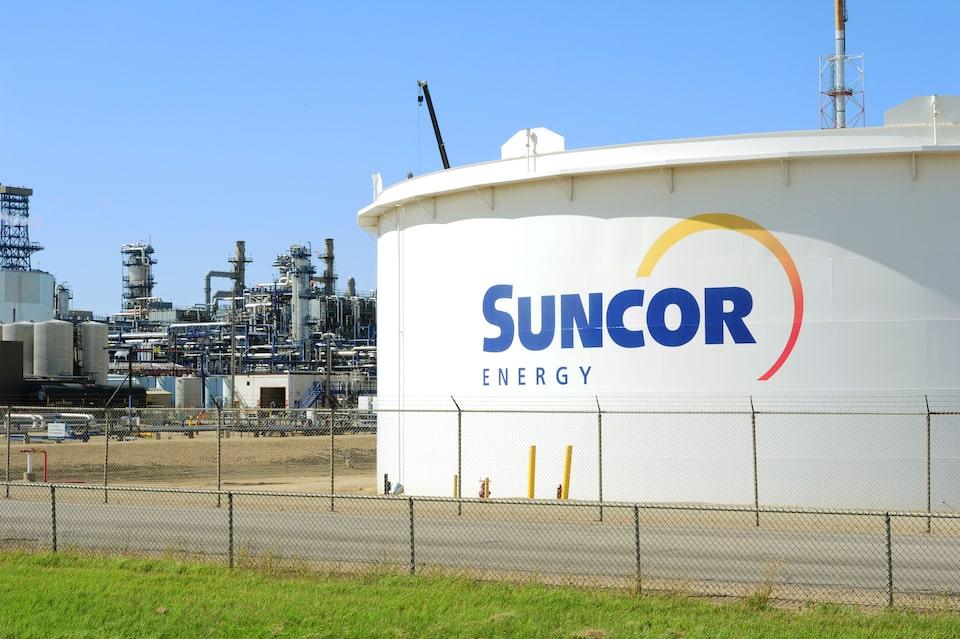
March 27 (Reuters) - Canada's Suncor Energy (SU.TO) , opens new tab said on Thursday it had identified and isolated the source of a hydrocarbon spill observed during regular monitoring at its 85,000-barrel-per-day refinery in Sarnia, Ontario. Suncor added that no injuries have been reported due to the incident. It did not specify whether the spill was of crude oil or fuel. Sign up here. The company said earlier it was responding to an incident involving the St. Clair River near the refinery, noting that community members may notice an odor. In another community alert, St. Clair Township reported a crude oil spill into the St. Clair River, which was being captured by booms deployed by Suncor and Shell (SHEL.L) , opens new tab. "St. Clair Township Water Distribution System is Safe to Drink. The spill is in the St. Clair River and has no impact on the Township drinking water," St. Clair Township said. Workers from Shell Canada's Sarnia Manufacturing Center in Corunna, a community in St. Clair, are providing mutual aid, Shell said in another community notification earlier in the day. "We are providing Shell emergency response equipment and personnel to assist." Suncor was not immediately available for further comment. https://www.reuters.com/business/environment/suncor-says-it-is-responding-incident-involving-st-clair-river-2025-03-27/
2025-03-27 20:36
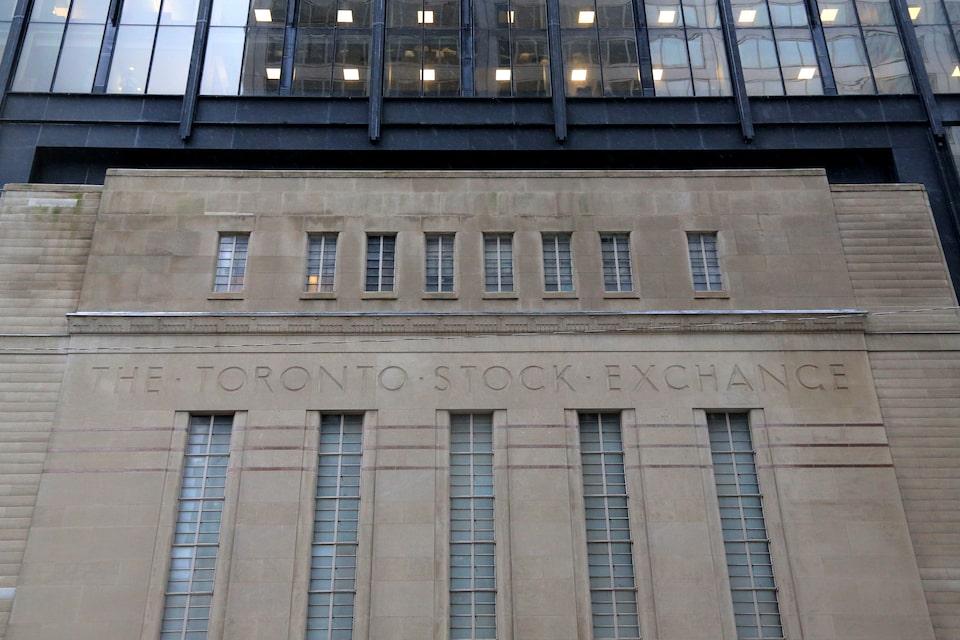
Materials add 1.7% as gold hits record high Auto parts shares slide with Magna down 6.9% Technology loses 1.1% March 27 (Reuters) - Canada's main stock index steadied on Thursday as an expanding global trade war discouraged investors from making new bets on the market, with gains for gold miners offsetting losses for auto parts and technology shares. Toronto Stock Exchange's S&P/TSX composite index (.GSPTSE) , opens new tab ended unchanged at 25,161.06, after posting on Wednesday its biggest decline in nearly two weeks. Sign up here. Canadian Prime Minister Mark Carney said that he would respond with unspecified trade actions if U.S. President Donald Trump imposes new auto tariffs that have expanded a global trade war. Trump on Wednesday unveiled a 25% tariff on imported vehicles. Tariffs have "caused a lot of uncertainty and led to investors sitting on their hands," said Greg Taylor, a portfolio manager at Purpose Investments. "Gold has been a big winner in this environment and that speaks to the uncertainty that we're seeing." The price of gold scaled a record peak as investors flocked to the safe-haven asset. The materials sector, which includes gold mining shares, added 1.7%, taking its gain since the beginning of the year to roughly 21%, the best performance by far among the TSX's 10 major sectors. Shares of auto parts company Magna International Inc (MG.TO) , opens new tab fell 6.9%, approaching the near four-year low it hit earlier this month. Linamar Corp (LNR.TO) , opens new tab shares were down 2.7% Technology was also a drag, losing 1.1%, and heavily weighted financials ended 0.3% lower. Royal Bank of Canada (RY.TO) , opens new tab will look to expand its foothold in capital markets and wealth management globally, CEO Dave McKay said, setting the stage for fiercer competition with its peers on Wall Street. Shares of the bank were down 1.3%. https://www.reuters.com/markets/tsx-futures-rise-investors-assess-tariff-developments-2025-03-27/
2025-03-27 20:23
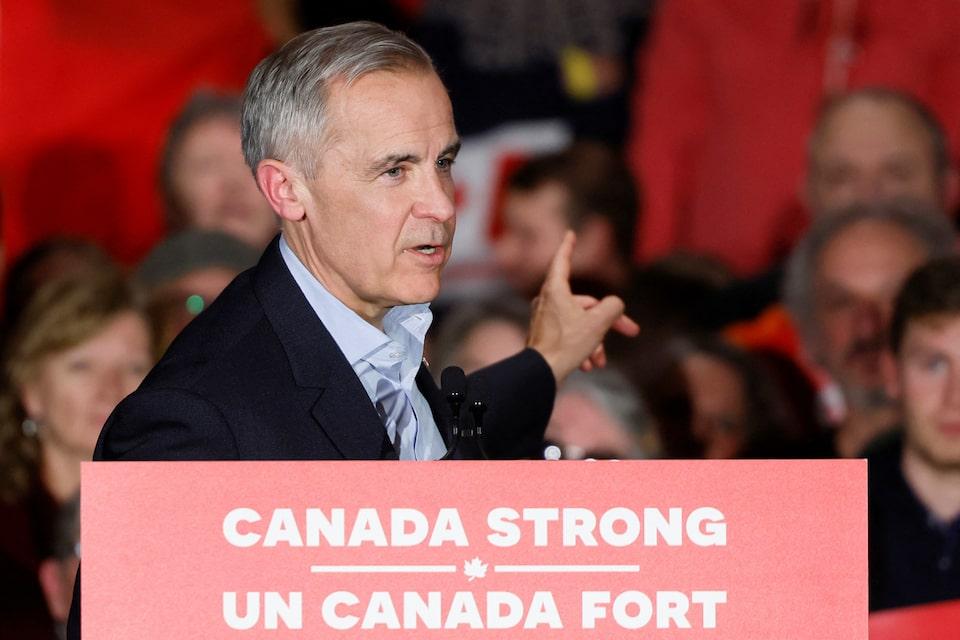
Carney warns of tough times, end of US-Canada traditional economic relationship Canada plans retaliatory trade actions with maximum US impact Carney seeks strong mandate for Liberals to counter Trump's tariffs OTTAWA, March 27 (Reuters) - Canada will wait until next week to strike back against the latest U.S. threat of tariffs and nothing is off the table regarding possible countermeasures, Prime Minister Mark Carney said on Thursday. Carney, warning Canadians that tough times lay ahead, also lamented what he said was the end of a long, mutually beneficial economic and security relationship with the United States. Sign up here. "We will fight the U.S. tariffs with retaliatory trade actions of our own that will have maximum impact in the United States and minimum impacts here in Canada," he told a press conference. A trade war would be extremely damaging for Canada, which sends 75% of its exports to the United States. Carney said he would speak to provincial premiers and business leaders on Friday to discuss a coordinated response to the auto sector tariffs that U.S. President Donald Trump announced on Wednesday. "It doesn't make sense when there's a series of U.S. initiatives that are going to come in relatively rapid succession, to respond to each of them. We're going to know a lot more in a week, and we will respond then," he said. "Nothing is off the table to defend our workers and our country," said Carney. One option for Canada is to impose excise duties on exports of oil, potash and other commodities. Carney broke off from campaigning ahead of an April 28 general election to make the announcement. He is calling on voters to give his Liberal Party a strong mandate to deal with Trump. Recent polls indicate he will win a comprehensive victory. "When President Trump threatens us again, we will fight back ... with everything we have to get the best deal for Canada," said Carney, reiterating calls for Canada to build up its own auto sector to reduce reliance on the United States and to diversify its trade. "It is clear that the United States is no longer a reliable partner. It is possible that with comprehensive negotiations, we will be able to restore some trust, but there will be no turning back," he said. Carney said he would speak to Trump in the coming days and stress the need for cooperation and respect for Canada's sovereignty. Trump often speaks about annexing Canada. Trump said on Thursday that larger tariffs could be placed on the European Union and Canada if they both work together "to do economic harm to the USA." Asked for a response, Carney said: "I take note of the President's comment. I don't take direction from it." https://www.reuters.com/world/americas/carney-speak-media-about-canadas-response-tariffs-2025-03-27/
2025-03-27 20:20
NEW YORK, March 27 (Reuters) - Cenovus (CVE.TO) , opens new tab will begin planned maintenance work on multiple units at its 160,000-barrel-per-day refinery in Toledo, Ohio in mid April, a source familiar with plant operations said on Thursday. Roughly a third of the facility will be down for maintenance as early as the second week of April, the source said. The refiner's reformer, hydrotreater, hydrocracker, crude unit and coker unit will undergo maintenance. Sign up here. The planned work is expected to last around six weeks. The Toledo refinery can produce around 3.8 million gallons of gasoline, 1.3 million gallons of diesel fuel and 600,000 gallons of jet fuel per day. Cenovus did not immediately respond to Reuters' request for comment. https://www.reuters.com/business/energy/cenovus-refinery-toledo-ohio-plans-shut-multiple-units-6-weeks-work-source-says-2025-03-27/