2025-03-27 11:53
LONDON, March 27 (Reuters) - What matters in U.S. and global markets today By Mike Dolan , opens new tab, Editor-At-Large, Financial Industry and Financial Markets Sign up here. Donald Trump's 25% auto tariff announcement late on Wednesday ripped across world stock markets overnight, but Wall Street futures held the line ahead of today's bell as investors questioned just how much more tariff pain is coming next week. I'll discuss this and the rest of the market news below before looking at one of the scariest numbers in global finance. Today's Market Minute * Global auto stocks tumbled on Thursday after U.S. President Donald Trump unveiled a 25% tariff on imported vehicles, expanding a global trade war and testing already strained ties with allies. * Trump said on Wednesday he would be willing to reduce tariffs on China to get a deal done with TikTok's Chinese parent ByteDance to sell the short video app used by 170 million Americans. * France's public sector budget deficit widened last year but not quite as much as the government had expected, official data showed on Thursday. * Norway's central bank kept interest rates on hold at a 17-year high of 4.50% on Thursday, in line with most forecasts, as an unexpected resurgence of inflation led policymakers to postpone their previously stated plan for a cut. * A court order blocking Trump's freeze on trillions of dollars in government financial assistance will remain in place for now, a federal appeals court said on Wednesday. Auto tariffs jump the gun U.S. President Donald Trump jumped the gun on the April 2 "reciprocal" tariff plan, announcing a 25% import levy on all autos and auto parts not made in the United States. He said another wave of tariff announcements was due next week, adding that these would be "very lenient", but that is likely only relative to the tariffs other countries charge on U.S. exports. That leaves markets with another week to guess what's next. But the auto sector announcement has predictably caused auto and transport stocks to tumble around the world on Thursday, including a 6% after-hours drop in General Motors (GM.N) , opens new tab and a 3% drop in Ford (.F.N) , opens new tab. Counter-threats of retaliatory tariffs have also streamed in, upping the risk of a full-blown trade war. The U.S. imported $474 billion worth of automotive products in 2024, including passenger cars worth $220 billion. Mexico, Japan, South Korea, Canada and Germany, all close U.S. allies, were the biggest suppliers. Japanese (.N225) , opens new tab and European stock (.STOXXE) , opens new tab indexes retreated 0.6% each, the latter hitting two week lows. Chinese stocks (.CSI300) , opens new tab, (.HSI) , opens new tab bucked the trend, aided by Trump's suggestion that he would be willing to reduce tariffs on China to get a deal done with TikTok's Chinese parent ByteDance to sell the short video app. Chinese markets were also boosted by a rally in vehicle giant BYD after it said it would assemble more cars in destination countries. S&P 500 futures were steady ahead of Thursday's bell, despite a bruising trading session on Wednesday. But the index's failure to hold gains back above its 200-day moving average this week has been seen as a worrying sign for trend followers. In currency markets, the dollar (.DXY) , opens new tab retreated after an initial burst to a three-week high, with the euro rallying after euro zone data showed credit growth accelerating last month. The dollar was slightly firmer against Japan's yen , Canada's dollar and Mexico's peso . China's yuan and British sterling inched up, with UK gilt yields climbing to two-month highs following Wednesday's release of the latest government budget forecasts and plans. Long-term U.S. Treasury yields climbed to their highest in a month, with the gap between 2- and 10-year yields reaching its widest since mid-January. While the potentially inflationary impact of tariff rises is the central concern, the Congressional Budget Office also warned that the U.S. government will probably risk defaulting on some of its $36.6 trillion in debt as soon as August - or possibly even by late May - unless Congress acts to raise the nation's debt ceiling. And now for today's deep dive, I'll look into the latest update on the yawning U.S. investment deficit with the rest of the world. High-water mark for scary U.S. investment deficit? One of the scariest numbers in world finance got even more frightening at the end of last year as America's skyrocketing investment deficit hit new highs. Whether it's now peaked is perhaps the most important question facing global markets today. The main thrust of Trump's global economic policies is clearly directed toward the U.S.'s yawning trade deficit, as he seeks to stop "freeloading" foreign countries from undercutting U.S. producers by overvaluing the dollar, frustrating U.S. exports and relying on American consumers. Valid or not, next week's sweeping U.S. import tariff hikes are aimed at correcting that. Less talked about is the accounting flipside of the U.S. trade and current account shortfalls: the country's massive capital surplus. America, with its large, liquid capital markets, effectively imports more of the world's savings than U.S. savers send abroad to Europe, Asia or the developing world. Put another way, the U.S. Net International Investment Position (NIIP) - or the difference in value between overseas holdings of U.S. assets and all the assets held overseas by Americans - has been ballooning for more than a decade. According to Wednesday's update from the U.S. Bureau of Economic Analysis , opens new tab, that NIIP gap hit yet another record high at the end of 2024: $26.2 trillion, a whopping 88% of annual U.S. GDP. While the bulk of that increase was driven by relative price effects, it also involved almost $1.3 trillion of additional net flows to the United States. The NIIP has been inflated over the past decade not only by insatiable foreign appetite for U.S. stocks, bonds and real estate but also by the massive appreciation of those assets versus smaller gains in the rest of the world. These stellar returns have, in turn, drawn ever more inflows in a virtuous loop, bolstered by the attraction of U.S. tech innovation alongside the traditional safe-haven allure of U.S. Treasuries. And it's been these capital flows rather than the trade gap that have been chiefly responsible for dollar appreciation in the past decade. Reversing these flows could be painful for Americans as it could seriously undermine the asset price inflation that has supported and enriched many. $30 TRILLION TSUNAMI Under the hood, the numbers are even more eye-popping. Total overseas holdings of U.S. assets - or America's overall liabilities to the rest of the world - increased by almost $8 trillion in the final quarter of last year to a gobsmacking $62.12 trillion. That's almost twice what it was a decade ago and nearly double the entire U.S. government debt pile. And it was equities that were doing all the heavy lifting here, not U.S. debt prices that were going in the opposite direction. The value of portfolio equity and investment fund shares jumped by another $676 billion in the final quarter of 2024 to some $18.4 trillion. Of course, this is all three months out of date, and we know what's happened since. The early post-election euphoria around U.S. stocks wore off amid trade war angst, rising geopolitical tensions, surprising German and European defence-related fiscal stimulus and an artificial intelligence breakthrough in China. The upshot has been that U.S. equities have underperformed the rest of the world by more than 10% in early 2025, having fallen behind European and German benchmarks by almost 20%. In turn, the dollar index has dropped by around 4% since the start of the year. It will be another three months before we get the full NIIP data for this quarter, but these recent price impacts suggest that we may well see the first turn in the NIIP since the interest rate shocks of 2022. Even though mutual fund data shows flows into U.S. equities held up reasonably well in the quarter despite Wall Street's price swoon, there was clearly greater demand for European and Asian stock funds. Of course, there's always a chance that any turn in the U.S. investment deficit will be short-lived. The 2022 reversal lasted three quarters before the NIIP started truly exploding. Next week's tariff announcements will clearly impact all of this and it's unclear what plans are actually coming. What's not in doubt is the degree to which U.S. markets are knee-deep in foreign investment that's been increasingly in more volatile equities rather than traditionally stickier fixed income assets. According to numbers compiled by Apollo Chief Economist Torsten Slok, some 60% of all foreign holdings of U.S. assets are now in equities compared to just 15% in Treasuries. Fifteen years ago, those equivalent shares were 33% and 22%, respectively. If foreign money continues to turn tail, it could be a rough year ahead for Wall Street. If the NIIP has hit a historic peak, hold on to your hat. Chart of the day The Atlanta Federal Reserve on Wednesday updated its closely watched "GDPNow" model , opens new tab. It now shows the U.S. gross domestic product contracting by 1.8% in the first quarter. That's slightly less of a downturn than prior readings that had spooked Wall Street. The Atlanta Fed also published an adjusted version that accounts for distortions related to an unusual surge in gold bar imports, something that exaggerated the early-year trade deficit. That gold-adjusted GDPNow model shows a marginal expansion this quarter of 0.2%. Today's events to watch * U.S. Q4 corporate profits, final Q4 GDP revision, weekly jobless claims, February retail/wholesale inventories, February pending home sales, March Kansas City Federal Reserve business survey * Mexico central bank policy decision * Boston Fed President Susan Collins and Richmond Fed President Thomas Barkin speak; European Central Bank Vice President Luis de Guindos and ECB policymaker Jose Luis Escrivsa speak * Ukraine President Volodymyr Zelenskiy meets European leaders in Paris. German Chancellor Olaf Scholz speaks in Paris; German Finance Minister Joerg Kukies speaks in Berlin * U.S. corporate earnings: Lululemon Athletica * U.S. Treasury sells $44 billion of 7-year notes Opinions expressed are those of the author. They do not reflect the views of Reuters News, which, under the Trust Principles , opens new tab, is committed to integrity, independence, and freedom from bias. https://www.reuters.com/markets/us/global-markets-view-usa-2025-03-27/
2025-03-27 11:50
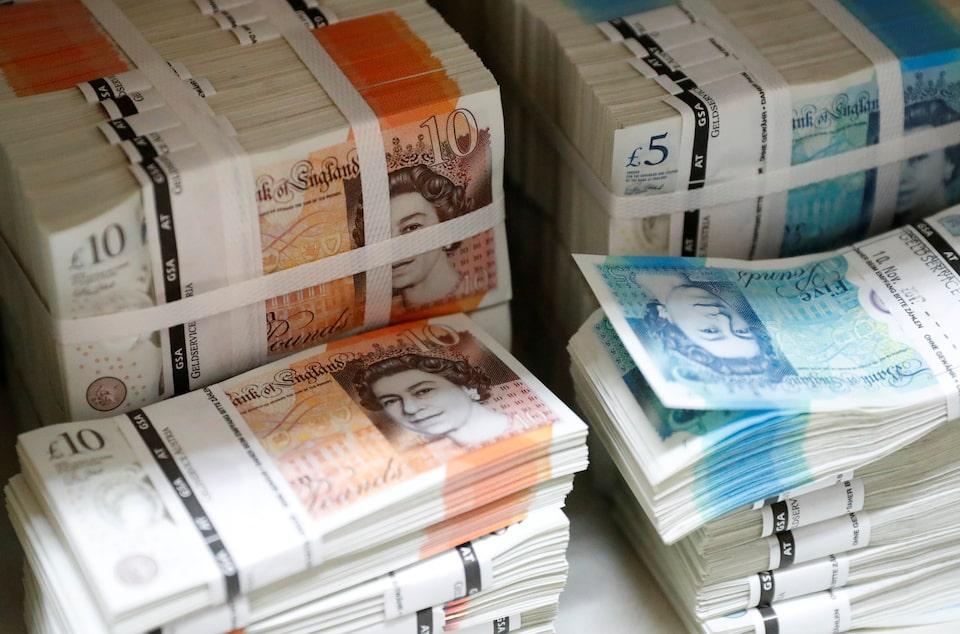
Sterling fell on Wednesday after UK fiscal update UK seeking exemption from US autos tariffs UK 'relatively insulated' from US tariffs, analyst says March 27 (Reuters) - The British pound strengthened against the dollar and the euro on Thursday, as traders turned their attention to U.S. tariffs and the risk of an intensifying global trade dispute, a day after finance minister Rachel Reeves' fiscal update. U.S. President Donald Trump on Wednesday unveiled a 25% tariff on imported vehicles to be implemented on April 3, expanding a global trade war and testing already strained ties with allies. Sign up here. Sterling rose 0.28% to $1.2922 against the greenback and was a touch stronger against the shared European currency, with the euro easing to 83.39 pence per pound. Reeves said on Thursday that Britain was working intensively with Washington to secure an exemption from U.S. autos tariffs and could review subsidies enjoyed by Elon Musk's Tesla (TSLA.O) , opens new tab to better support its industry. The United States is Britain's second-largest car export market after the European Union, with passenger car exports to the U.S. worth 7.6 billion ($9.8 billion) in 2024, mainly made up of premium and luxury cars, according to data from the Society of Motor Manufacturers and Traders. The impact of the auto tariffs was muted in the currency market, with global auto stocks suffering the brunt of the fallout. British luxury carmaker Aston Martin's (AML.L) , opens new tab shares dropped to a record low on Thursday. 'RELATIVELY INSULATED' Sterling hit its lowest since March 11 on Wednesday after Reeves announced spending cuts and the UK's Debt Management Office said it would issue fewer bonds than expected in 2025/26. The negative impact on sterling from the budget update has been unwound, not on a reconsideration of what Reeves said, but the UK being "relatively insulated" from tariff impacts, said Nick Rees, head of macroeconomic research at Monex Europe. Apart from sectoral tariffs, Trump is also expected to announce country-specific reciprocal tariffs on global trading partners on April 2. Trump's reciprocal tariffs could cut the size of the British economy by up to 1% and wipe out most of its fiscal buffer, the government's fiscal watchdog said on Wednesday. Britain has hoped to avoid U.S. tariffs, arguing that both countries report trade surpluses with each other - including goods and services - owing to measurement differences. ($1 = 0.7730 pounds) https://www.reuters.com/markets/currencies/sterling-gains-traders-eye-us-tariffs-2025-03-27/
2025-03-27 11:29
BRUSSELS, March 27 (Reuters) - The head of global airlines body IATA has welcomed a call by Europe's top carriers for a delay to a 2030 target for sustainable aviation fuel use in Europe, saying Brussels policymakers need to face reality. "We can't just stand back and pretend that these targets are meaningful and can be achieved. They were never going to be capable of being achieved," Willie Walsh, director general of the International Air Transport Association, told Reuters. Sign up here. Under European Union rules, suppliers must ensure that 2% of fuel available at EU airports is SAF in 2025, rising to 6% in 2030 and gradually to 70% in 2050. Airlines say SAF is barely available and that they are being blamed for shortfalls in availability from the energy industry, while insisting they remain committed to a broader industry goal of reaching net zero emissions by 2050. "There's fantastic ambition, but you can only achieve it if everybody plays their part and others aren't playing their part," Walsh said on the sidelines of an annual event hosted by the A4E European airline association. European airline leaders earlier issued their bluntest warning yet that the near-term EU fuel mandates, which IATA has opposed, were beyond reach and urged the new European Commission to focus on the sector's competitiveness. https://www.reuters.com/sustainability/climate-energy/iata-backs-call-by-european-airlines-soften-green-fuel-mandate-2025-03-27/
2025-03-27 11:25
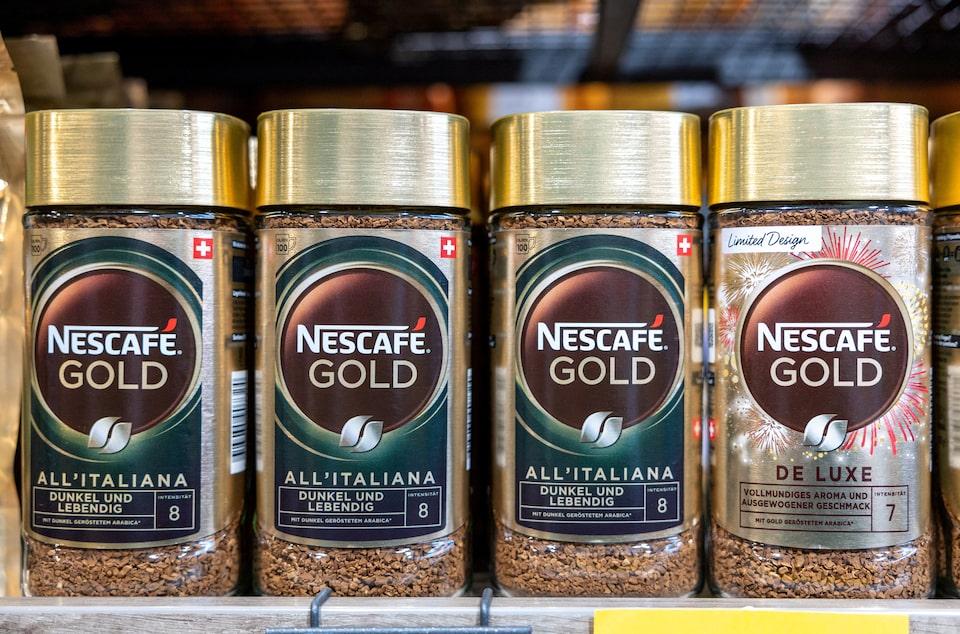
Consumers face price hikes of about 20% in next weeks Roasters reeling as raw bean prices double After 21% hike, Brazil's 3 Coracoes raises prices by 14% - document Supermarkets pushing back against hikes as shop shelves emptying LONDON/NEW YORK, March 27 (Reuters) - If your favourite coffee beans have vanished from the shelves, don't worry - they will return soon. The bad news is they will be up to 25% more expensive. Roasters such as Lavazza, Illy, Nestle (NESN.S) , opens new tab and Douwe Egberts maker JDE Peet's (JDEP.AS) , opens new tab are currently in talks with retailers about passing on costs from a near doubling of arabica coffee prices over the past year, according to eight industry sources. Sign up here. Raw arabica prices have spiked due to four successive seasons of deficit as adverse weather makes it harder to grow enough of the delicate beans to meet consumer demand. As roasters press for price hikes, grocery stores and supermarkets push back, postponing signing new supply deals to the point where some have run out of coffee stock. In one such example Dutch supermarket chain Albert Heijn, the country's largest, ran out of coffee products like Douwe Egberts and Senseo. The products returned to the shelves on March 20, albeit at higher prices, a spokesperson for Albert Heijn said after the firm concluded talks with JDE Peet's, one of the world's top coffee roasters. "JDE's purchase prices have increased significantly. We will absorb part of this price increase to keep the products affordable," the Albert Heijn spokesperson said. JDE Peet's, which has warned of a profit decline this year due to surging coffee costs, said the stand-off with buyers in the Netherlands and Germany resulted in some of its products missing from the shelves. It added, however, that it has since concluded 90% of its price negotiations globally. Global prices for arabica , typically used in roast and ground blends, have gained more than 20% this year after soaring 70% last year as Brazil - producer of nearly half the world's arabica - suffered one of its worst droughts on record. On average, the raw beans account for about 40% of the wholesale cost of a bag of roast and ground coffee. That means that if last year's raw bean price jump was passed through in full this year, it would equate to a 28% price rise to the consumer, said Reg Watson, director of equity research at Dutch Bank ING. Watson believes prices will rise 15%-25% and that in some markets consumers may feel the hike in one shot. RATIONING Even steeper rises are taking place in countries whose currencies have weakened significantly against the dollar. These include Brazil , the world's second largest consumer of the beverage as well as the top grower. According to documents sent to clients and seen by Reuters, 3 Coracoes, a large Brazilian roaster, raised roast and ground prices by 14.3% on March 1, having previously hiked them by 11% in January and 10% in December. 3 Coracoes did not respond to requests for comment. Brazilian coffee roasters association ABIC said price rises in the country are steep because in local currency terms, raw bean prices rose 170% in Brazil last year. In response, Brazilian shop shelf prices have surged 40%, with more increases coming as early as this month, said ABIC. "People are already rationing, changing their habits. If before they used to make a big thermos at home for the family, sometimes throwing what was left down the sink, now they cut the waste," ABIC President Pavel Cardoso told Reuters. Data prepared for Reuters by market research firm Nielsen shows the volume of roast and ground coffee sold in North America and Europe, by far the world's biggest consuming regions, fell 3.8% last year as prices rose 4.6%. With price rises this year expected to be far steeper, the decline in sales volumes should widen. Folgers coffee maker J M Smucker (SJM.N) , opens new tab, which sells to U.S. retailers such as Walmart (WMT.N) , opens new tab and Target (TGT.N) , opens new tab, expects a decline in volumes in its fiscal year starting in May as it raises prices again, its chief financial officer Tucker Marshall said at a conference call earlier this month. The firm, which also sells Dunkin and Cafe Bustelo coffee, already raised prices last June and October. LIVING HAND TO MOUTH Of equal concern for roasters is the fact that cash strapped consumers are pushing back against higher priced goods by bargain hunting or trading down to supermarket brands like Tesco's finest. These brands, which the industry calls "private label", include many products beyond coffee and are produced in-house by supermarkets in order to cut on costs and provide consumers with cheaper alternatives. Data prepared for Reuters by Chicago-based market research firm Circana shows that in terms of volumes sold, U.S. private label coffee's share of the total market grew by 13% between 2021 and 2024, from 20.51% of the total market to 23.12%. Roasters are, as such, in a bind. They can absorb some cost increases and hope consumers keep buying, or they can raise their prices so that their profit margins don't fall. Either way the result is a hit to overall profits that hasn't even spared coffee house chains such as Starbucks (SBUX.O) , opens new tab - far less exposed than the likes of JDE Peet's as raw beans account for less than 2% of the cost of a cup of coffee in a cafe. Roasters and traders are meanwhile buying as little coffee as possible as they struggle to pass on costs to supermarkets. An executive at a large storage sector firm said coffee depots close to U.S. ports currently have half their normal volumes. https://www.reuters.com/markets/commodities/coming-store-near-you-double-digit-coffee-price-hikes-2025-03-27/
2025-03-27 11:20
Billionaire Moshkovich appears in court cage Court sends him to pre-trial detention for two months Founder Moshkovich detained for fraud - court documents Rusagro says it complies with the law MOSCOW, March 27 (Reuters) - Russian farming billionaire Vadim Moshkovich was remanded in custody for two months by a Moscow court on Thursday after his detention on suspicion of large-scale fraud, the highest-profile arrest in years of a major businessman in Russia. Moshkovich, who Forbes says has a fortune of $2.7 billion, appeared in a glass cage in Moscow's Meshchansky court, handcuffed and carrying a copy of David Eagleman's book "The Brain" and a bottle of water. Sign up here. Court documents showed that Moshkovich is accused of large-scale fraud and could face up to 10 years in jail if convicted. Moshkovich pleaded not guilty to the charges. "Vadim Moshkovich, the founder of Rusagro, was sent to the pre-trial detention centre," Moscow's court service said, adding that the court had dismissed appeals from his lawyers for him to be granted house arrest or bail. The arrest of Moshkovich, who started out selling computers amid the chaos of post-Soviet Russia before building one of Russia's most powerful agricultural holdings, sent shockwaves through Russia's business elite. There was no comment from the Kremlin on the arrest. It is the highest-profile arrest of a Russian businessman since the 2018 arrest of Summa shipping and logistics group founder Ziyavudin Magomedov and the 2014 house arrest of AFK Sistema shareholder Vladimir Yevtushenkov. The market capitalisation of Rusagro, Russia's leading producer of sugar, pork, oil and fats, tumbled by a third over two days on the news, according to data from the Moscow Stock Exchange. BILLIONAIRE IN JAIL The Kommersant newspaper said officers from the Federal Security Service (FSB) and anti-corruption police raided company offices in Moscow and other cities, as well as the homes of senior managers, and took away files, phones and servers. It was not immediately clear what prompted the arrest, though Russia's top media outlets noted that he had been involved in a long legal conflict with the founders of a major supplier of vegetable oils and fats whose assets were bought in 2018 by Rusagro. Rusagro changed its domicile from Cyprus to Russia this year, following a Russian court decision in a case brought by the Agriculture Ministry against Rusagro's Cyprus-based parent company. Rusagro issued a statement on Wednesday confirming several of its offices had been searched but saying the operation was not related to its "current activities". It said all company activities were continuing as normal, and all obligations were being met. "We are confident in the transparency of our work and expect the procedures to be completed as soon as possible." The European Union sanctioned Moshkovich in 2022 after he attended a meeting of businessmen with President Vladimir Putin on the day that Russia invaded Ukraine. The EU said he had Russian and Cypriot passports. Following the sanctions, Moshkovich resigned as chairman of Rusagro in 2022 and cut his stake below 50%. Rusagro, which is not under Western sanctions, is Russia's only major listed agricultural company. Rusagro changed its domicile from Cyprus to Russia, following a Russian court decision in a case brought by the Agriculture Ministry against Rusagro's Cyprus-based parent company. A group of members of the lower house of Russia's parliament asked the Justice Ministry in 2024 to designate Moshkovich as a "foreign agent", a legal status often assigned to opposition activists, due to the company's Cyprus domicile. https://www.reuters.com/markets/europe/russias-rusagro-loses-third-its-value-after-moshkovich-detained-2025-03-27/

2025-03-27 11:15
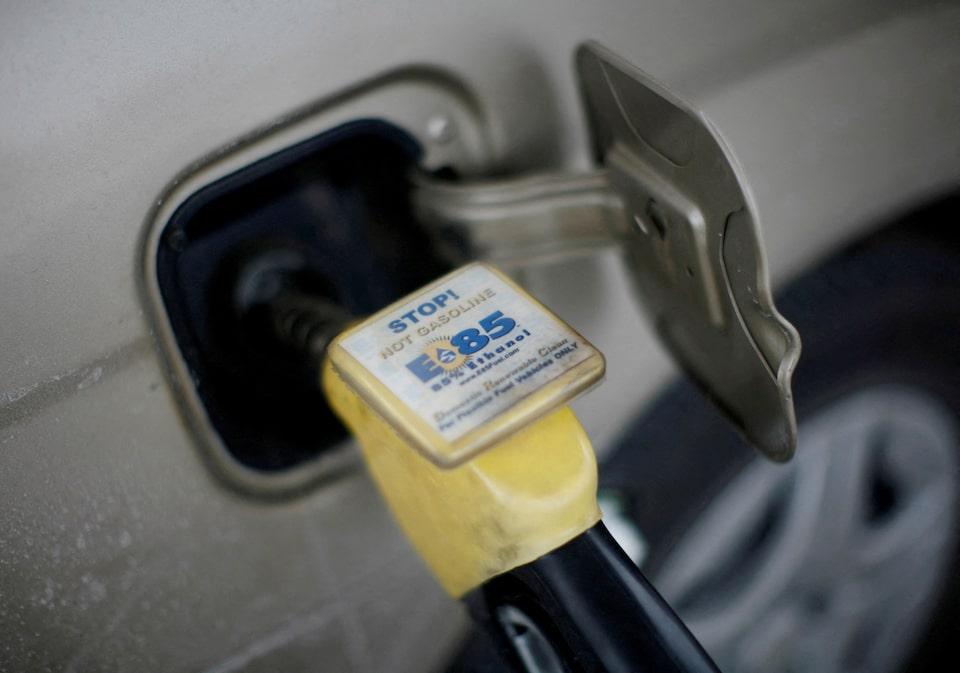
Trump administration asks Big Oil and Farm Belt to come to a consensus on biofuel policy Two meetings held so far, with consensus to seek higher biomass-based diesel volumes Other key issues still under discussion NEW YORK, March 27 (Reuters) - U.S. President Donald Trump's administration has asked oil and biofuels producers to hash out a deal on the next phase of the nation's biofuels policy to avoid the kind of political clashes that marked his first term, according to four people familiar with the matter. Big Oil and the Farm Belt's biofuels makers are traditional competitors for share in the multibillion-dollar U.S. gasoline market. They have repeatedly fought over details of the U.S. Renewable Fuel Standard, a program that requires billions of gallons of corn-based ethanol and other biofuels to be blended into the country's fuel supply. Sign up here. The White House directive has already yielded at least two bilateral meetings, including one hosted last week by the American Petroleum Institute, said the sources, who include Will Hupman, API's vice president of downstream policy, and three others who asked not to be named. At that meeting, representatives discussed issues like the size of future mandated biofuel blending volumes, exemptions for small refiners, and biofuel tax policy, Hupman and the other sources said. Any agreement reached between the two powerful industries could be adopted by the Trump administration. "It makes it easier for (the Trump administration) to arrive at whatever number they arrive at if they are hearing from groups that have historically been at the opposite sides of this," said Hupman. BLENDING VOLUMES AND WAIVERS Among the most important issues discussed, the U.S. Environmental Protection Agency is preparing new blending mandates under the RFS that will govern volumes for the next two to three years, along with the program's multibillion-dollar compliance credit market. Three of the sources said the group has already agreed in principle to ask that the EPA significantly raise the mandate for renewable diesel and biodiesel from its current level of 3.35 billion gallons, which the biofuel industry says is far below production capacity. The range discussed was between 4.75 billion and 5.5 billion gallons, with some wanting higher volumes in 2026 and others pushing for a more gradual rise, the three sources said. Blending mandates for ethanol, meanwhile, have capped out at 15 billion gallons, and the parties saw little growth prospect due to plateauing demand for gasoline, the sources said. The groups were also split over small refinery exemptions to the RFS, one of the most controversial and divisive issues, the sources said. In Trump's first administration, the EPA approved a record number of such exemptions, letting small refiners sidestep their blending obligations, and triggering political backlash from his Republican allies in the Farm Belt who said it punished farmers. Former President Joe Biden sought to do away with the exemptions, triggering legal challenges that reached the U.S. Supreme Court earlier this month. Several exemption requests are pending before the EPA. The groups were split over whether the administration should force other refiners to make up for any exempted blending volumes, a position opposed by the U.S. refining industry, the sources said. Another crucial issue discussed at last week's meeting was the fate of a new tax credit created for biomass-based diesel under the Biden administration but was not finalized. The program, known as 45Z, replaced a flat $1 per gallon blenders credit and instead rewards producers based on the carbon intensity of their fuels. Trump and Republicans have not said whether they would move forward with 45Z. Some at the meeting, including the National Association of Truck Stop Operators, or NATSO, backed a return to the blenders credit while others wanted to support the new 45Z tax credit, according to the sources. "There was no consensus other than a consensus to keep talking," said one attendee. The discussions marked a new phase of cooperation between the Farm Belt and Big Oil, according to Hupman. He said the divide between the industries has softened in recent years as major refiners like Marathon Petroleum and Valero have invested in biofuels production. "Our companies have evolved as the fuels landscape has evolved," said Hupman. "We have a realization that the RFS is here to stay and we want to make sure it functions as efficiently as intended." https://www.reuters.com/business/energy/trump-administration-tells-oil-biofuels-groups-hash-out-new-biofuel-policy-2025-03-27/