2026-01-13 11:31
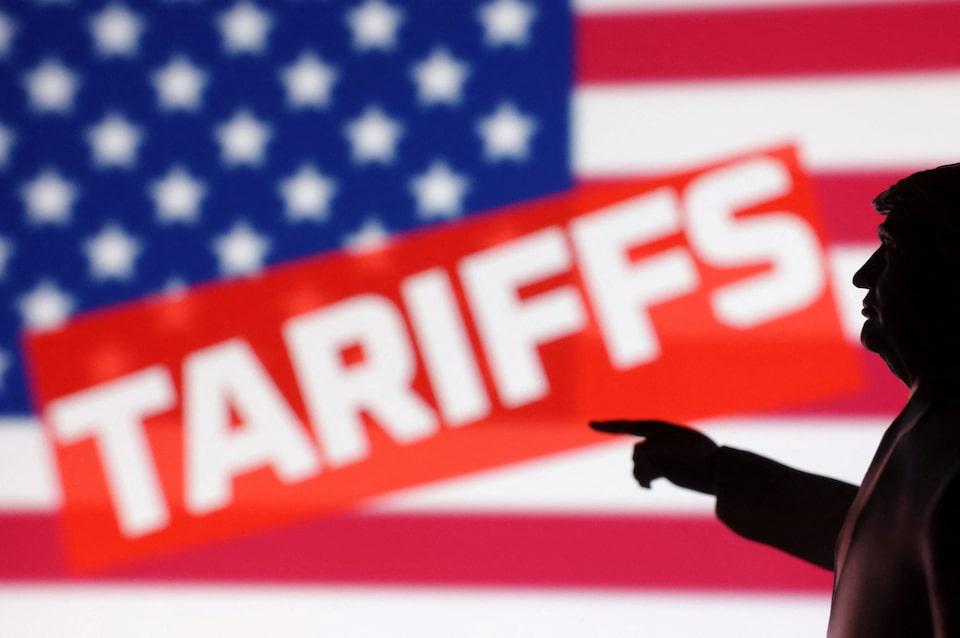
Jan 13 (Reuters) - U.S. President Donald Trump on Monday said any country that does business with Iran will face a 25% tariff on trade with the U.S., as Tehran grapples with its most substantial anti-government protests in years. Iran, a member of the OPEC oil producers group, exported products to 147 trading partners in 2022, according to the most recent data from the World Bank. Sign up here. Fuel is Iran's biggest export item by value, while major imports include intermediate goods, vegetables, machinery and equipment. CHINA China is Iran's largest trading partner. Iranian exports to China amounted to $22 billion in 2022, with fuels accounting for more than half of the total, according to the World Bank. Imports from China stood at $15 billion. In 2025, China bought more than 80% of Iran's shipped oil, according to data from Kpler, an analytics firm. Iranian oil has a limited pool of buyers because of U.S. sanctions that seek to cut off funding to Tehran's nuclear programme. INDIA India's total bilateral trade with Iran stood at $1.34 billion for the first 10 months of 2025, according to India's commerce ministry. Major Indian exports to Iran include basmati rice, fruits, vegetables, drugs and other pharmaceutical products. TURKEY Turkish exports to Iran were $2.3 billion in full-year 2025, while imports were $2.2 billion over 11 months of the year, according to sector and official data sources. GERMANY Iran's exports to Germany stood at around 217 million euros in the first eleven months of 2025, an increase of 1.7%, according to data from the state-owned international economic promotion agency Germany Trade & Invest. German exports to Iran fell by a quarter to 871 million euros over the period. SOUTH KOREA South Korea's exports to Iran between January and November 2025 were marginal at $129 million, while imports stood at $1.6 million during the same period, according to data from the Korea International Trade Association. JAPAN Japan imported modest amounts of fruit, vegetables and textiles from Iran and shipped some machinery and vehicle engines there, according to the latest trade data from Japan that goes through November 2025. https://www.reuters.com/world/china/irans-trading-partners-that-face-25-us-tariffs-2026-01-13/
2026-01-13 11:31
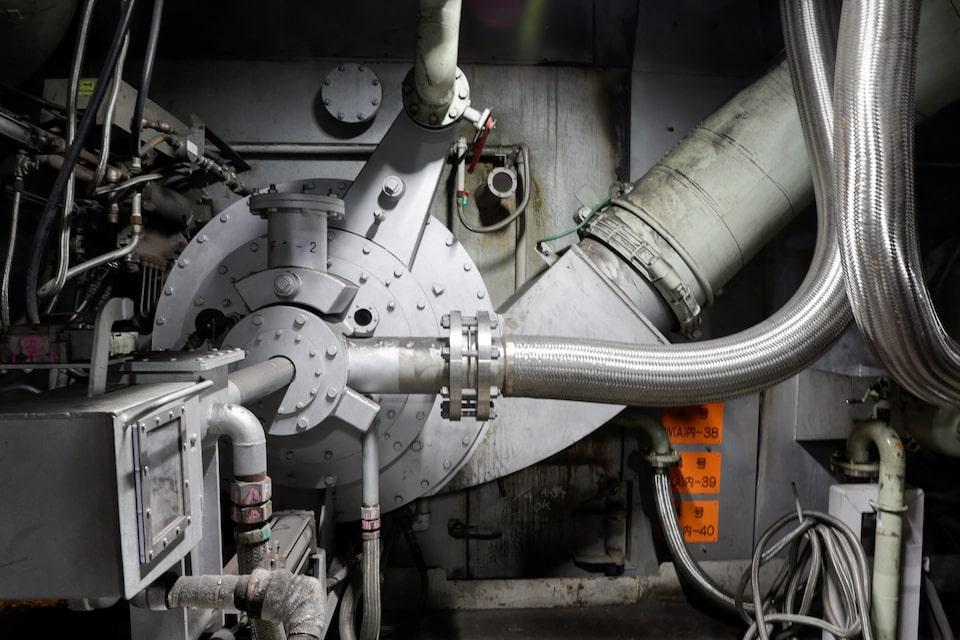
JERA plans 20% ammonia co-firing at Hekinan in fiscal year starting in April 2029 Project aimed at reducing carbon emissions JERA partners with CF Industries, Mitsui for ammonia production in Louisiana HEKINAN, Japan, Jan 13 (Reuters) - Japan's biggest power generator JERA is on track to achieve 20% ammonia co-firing at a unit of its Hekinan thermal power station in fiscal 2029, marking the world's first commercial use of ammonia as a fuel, the plant's head said on Tuesday. Mitsutaka Ban, head of Japan's largest coal-fired power station, was speaking to reporters at a presentation of facilities at the 4.1-gigawatt plant in central Japan, including four large ammonia fuel storage tanks being built as part of the project. Sign up here. The project, aimed at reducing carbon emissions, is moving ahead despite weakening momentum in global energy transition, as high costs for hydrogen, ammonia and other materials have led energy firms to scale back or delay investments. "It's undeniable that the investment environment for hydrogen, ammonia, and renewable energy has become extremely stagnant," Ban told reporters. "But we believe continuing decarbonisation efforts is the best way to prepare for the future." AMMONIA, HYDROGEN ARE KEY FOR JAPAN'S CLIMATE EFFORTS Hydrogen and ammonia, which emit no CO2 when burned, are key to Japan's strategy to tackle climate change. JERA plans to begin commercial co-firing of 20% ammonia at the plant's 1-GW No. 4 unit and has secured a 15-year government subsidy to cover the cost difference between ammonia and coal. It aims to start importing ammonia in 2029 from a planned U.S. production facility. The company has formed a joint venture with CF Industries (CF.N) , opens new tab and trading house Mitsui (8031.T) , opens new tab to build one of the world's largest low-carbon ammonia plants in Louisiana, the $4 billion Blue Point project. JERA, jointly owned by Tokyo Electric Power (9501.T) , opens new tab and Chubu Electric Power (9502.T) , opens new tab, plans to offtake 490,000 metric tons annually, most of it for Hekinan, where 500,000 tons annually are needed for 20% co-firing at one unit. After achieving that goal at the No. 4 unit, JERA aims to extend the technology to another unit and is considering demonstrations targeting over 50% blending, as part of its goal to reach net-zero emissions from domestic operations by 2050. Electricity generated from the project could be sold with a premium via wholesale markets or directly to customers through power purchase agreements, Ban said. https://www.reuters.com/sustainability/climate-energy/jera-track-20-ammonia-co-firing-hekinan-coal-power-plant-fy29-2026-01-13/
2026-01-13 11:27
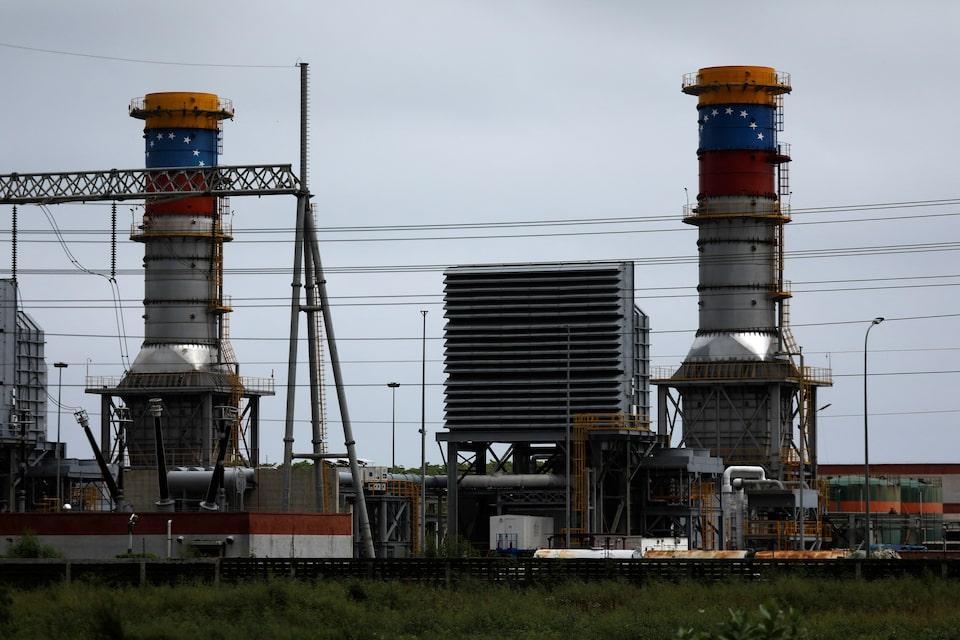
Trump claims control over Venezuela's oil reserves Roszarubezhneft took over Rosneft's Venezuelan holdings in 2020 Roszarubezhneft says it will continue working in Venezuela MOSCOW, Jan 13 (Reuters) - Oil assets that Russia develops in Venezuela belong to Russia, which will continue working there, Moscow said on Tuesday, after U.S. President Donald Trump's claims of control over the South American country. Russia's Roszarubezhneft firm said that all the company's assets in Venezuela were the property of Russia and it would stick to its commitments to international partners there, TASS news agency reported. Sign up here. Roszarubezhneft, owned by a unit of the Russian Ministry of Economic Development, was incorporated in 2020 and soon afterwards acquired the Venezuelan holdings of Russian state-run oil company Rosneft (ROSN.MM) , opens new tab after Washington imposed sanctions at the time on two Rosneft units for trading Venezuelan oil. All Roszarubezhneft assets in Venezuela "are the property of the Russian state," in compliance with the laws of Venezuela, international law and agreements between the two countries, it said in a statement, according to TASS. PUTIN HASN'T PUBLICLY COMMENTED ON MADURO CAPTURE Trump has openly spoken of controlling Venezuela's vast oil reserves, the world's largest, in conjunction with U.S. oil companies, after arresting and jailing Venezuelan President Nicolas Maduro, whom he has described as a drug-trafficking dictator in league with Washington's foes. Maduro has pleaded not guilty. The U.S. has also seized a Venezuela-linked, Russian-flagged oil tanker after a weeks-long pursuit. Russian President Vladimir Putin has not commented publicly on the U.S. operation in Venezuela but Russia's foreign ministry has urged Trump to release Maduro and called for dialogue. Russia has long maintained close ties with Venezuela, spanning energy cooperation, military links and high-level political contacts, and Moscow has backed Caracas diplomatically for years. In November, Venezuela's National Assembly approved a 15-year extension of the joint ventures between state company PDVSA and a unit of Russia's Roszarubezhneft that operate two oilfields in the South American country's western region. https://www.reuters.com/business/energy/russia-counters-trumps-assertion-over-oil-venezuela-2026-01-13/
2026-01-13 11:08
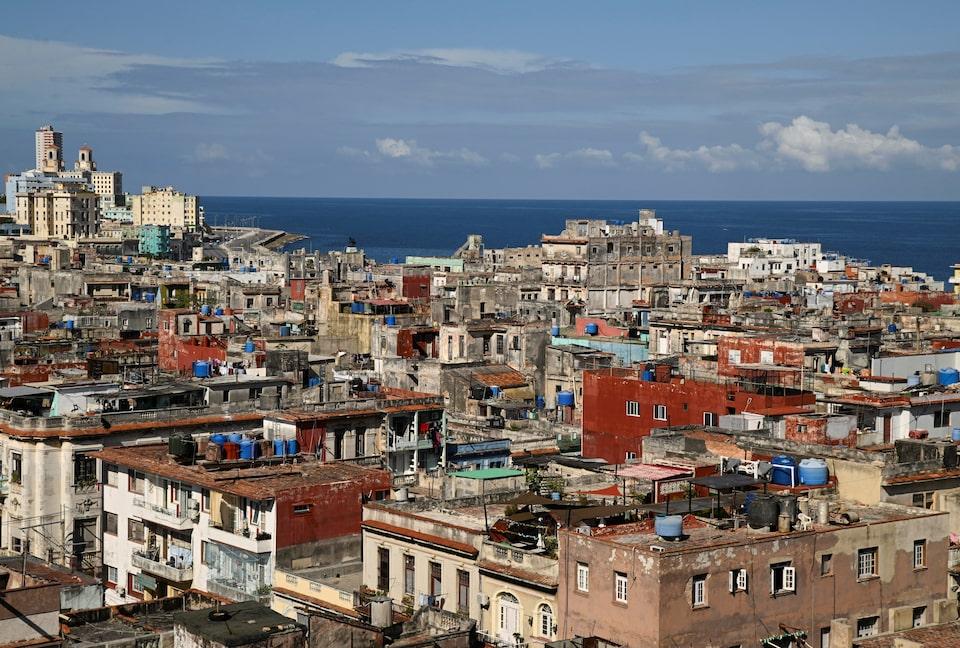
HAVANA/HOUSTON, Jan 13 (Reuters) - Cubans are bracing for impact after U.S. President Donald Trump vowed to cut off a lifeline of Venezuelan oil from reaching Cuba, setting up a siege scenario for an island already reeling from crippling blackouts and shortages. Venezuela, once the island's top supplier, has not sent crude or fuel to Cuba for about a month, according to shipping data and internal documents from state company PDVSA, with cargoes falling off due to a U.S. blockade even before the U.S. capture of Venezuelan leader Nicolas Maduro in early January. Sign up here. The last cargo for refining on the island was sent from PDVSA's Jose port in mid-December onboard a tanker that sailed with its transponder off, carrying some 600,000 barrels of Venezuelan crude. In 2025, Venezuela was Cuba's largest oil supplier with 26,500 barrels per day (bpd), or roughly one third of the island's daily needs, followed by Mexico with some 5,000 bpd, the data and documents showed. "I just don't see any light at the end of the tunnel for Cuba to survive the next few months facing zero deliveries of oil from Venezuela," said Jorge Pinon, an energy researcher at the University of Texas at Austin. "The situation is going to be catastrophic." Trump has made no secret of his expectation that the recent U.S. intervention in Venezuela could push Cuba over the edge, but in recent days he has doubled down on the communist-run island, pushing the neighboring nation on Sunday to strike a deal "before it is too late." The question of how long Cuban President Miguel Diaz-Canel and the country's communist-run government can hold out in the face of vastly reduced oil imports is now top of mind for the island's struggling residents, who already face daunting hurdles to find food, medicine and fuel. "It's very stressful because we don't know what decision the Cuban government will make or what actions the United States government will take," said 75-year-old former state worker Victor Romero, of Havana. Diaz-Canel has made clear his government will stand firm against U.S. threats. "Nobody tells us what to do," he said Sunday after Trump vowed to shut off Venezuelan oil. "Cuba is...prepared to defend the homeland until the last drop of blood." Much of rural Cuba, in far-flung provinces with little economic output, already resembles a caricature of 19th-century life. Horse-drawn carriages and bicycles provide transportation in many villages and even in urban areas. The internet falters often, if it works at all, and electricity is fleeting, with more hours without power than with it. Deyanira Gonzalez, a 57-year-old housewife who lives in Havana's countryside, already prepares her morning coffee and her children's lunch over charcoal, she says, with electricity spotty and liquefied gas largely unavailable or too expensive. "What will happen now? If Donald Trump doesn't let fuel into Cuba we'll be in the dark with our kids suffering," she said. Cuba's capital Havana has not yet felt the impacts of the plummeting Venezuelan fuel cargoes, observations backed by Cuba's daily generation deficit tallies. Many city residents report that blackouts have subsided somewhat in early January amid decreased power demand since a peak in December, and gasoline and diesel service at the pump, while rationed in the peso currency, continues unabated. FEW OPTIONS There is no public information about how much oil Cuba may be holding in reserve. It is also unclear whether Cuba's political allies would be willing to risk Trump's ire to help bail out Cuba. "We have not seen any support whatsoever from Cuba's political allies, who are also exporters of oil, like Angola, Algeria, Brazil," said energy expert Pinon. "No one is coming to Cuba's aid, with the exception of maybe Mexico, in limited amount, and also Russia, in limited amount." A tanker bound from Mexico, the Ocean Mariner, arrived in Havana on Friday, carrying some 85,000 barrels of fuel from the state company Pemex's terminal of Pajaritos/Coatzacoalcos, according to a Reuters witness and ship tracking data. But Mexico's contribution, albeit a fraction of Venezuela's former exports, is far from enough to keep the lights on across the island of around 10 million inhabitants, a concern not lost on many Cubans. "It's the uncertainty of not knowing what's going to happen," said Ivet Rodriguez, a 39-year-old entrepreneur in Havana. "I try not to even think about it." https://www.reuters.com/business/energy/clock-ticks-cuba-trump-cuts-off-venezuelan-oil-2026-01-13/
2026-01-13 11:06
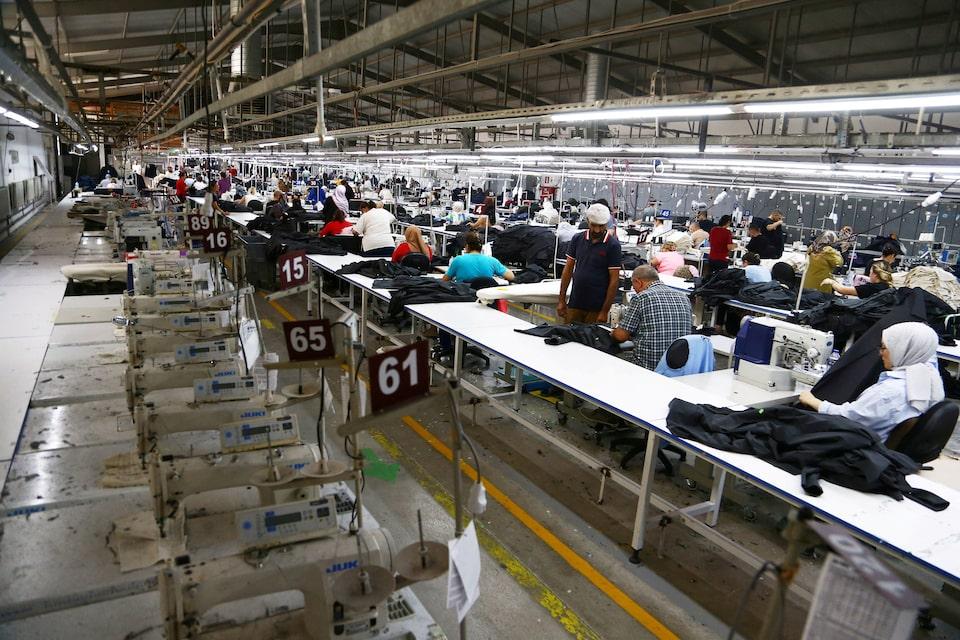
High interest rates and strong lira hurt sector competitiveness Rate cuts to help recovery, executives and analysts say Weak demand in Europe and Asia adds to local challenges ISTANBUL, Jan 13 (Reuters) - Turkey's industrial powerhouses including Vestel, SASA and Arcelik, are poised to leave years of poor results and high costs behind by the end of 2026, as the painful taming of high inflation brings them and the broader economy some relief. The big makers of electronics, appliances and other goods have borne the brunt of the central bank's tight policies since mid-2023, and high interest rates, a strong lira currency and weak domestic demand have led to losses and hurt international competitiveness. Sign up here. More than half of the 238 companies in the Istanbul bourse's industrials index (.XUSIN) , opens new tab reported losses in the first nine months of last year, Reuters data shows. The manufacturing industry has shed some 600,000 jobs in three years, underlining the economic troubles that have hurt President Tayyip Erdogan's standing in opinion polls. With inflation at 31% and interest rates at 38% - and both declining only gradually - pain for industrial companies is set to continue in the first half of the year at least, according to executives and analysts. Some relief is seen towards the end of the year, as both rates and the lira are expected to settle lower. "We expect demand to increase in 2026 as interest rates fall, having a positive impact on our domestic sales," said Bulent Yilmazel, financial affairs and investor relations group manager at SASA (SASA.IS) , opens new tab, among the largest global polyester producers. "High inflation and interest rates in Turkey led to a contraction in domestic demand, which was a major problem in 2025," Yilmazel told Reuters. SECTOR NEEDS RATE CUTS Beginning with the first of a series of lira crashes in 2018, big exporters benefited for a while from currency devaluation and relatively low borrowing costs under Erdogan's easy-money policies. But that changed in the last two years as interest rates were hiked as high as 50%, and as the central bank also largely stabilised the currency to contain import inflation. The bank is now cutting rates, which according to a Reuters poll are seen falling to 28% by year end - which would spell some cost relief for industrialists. Cemal Demirtas, head of research at Ata Invest, said rates need to fall below 30% for these companies to recover. "We expect to feel a little more relief starting in the second half of 2026," he said. After a meeting with Central Bank Governor Fatih Karahan last week, Turkey's main exporters group TIM said the bank was poised to support the sector more, including possibly with incentives for converting FX earnings. CHALLENGES AT HOME AND ABROAD Among the hardest hit industrials are Vestel Elektronik (VESTL.IS) , opens new tab, the consumer electronics company, and Arcelik (ARCLK.IS) , opens new tab, the home appliance maker and top player in Europe with its Beko brand. In the first nine months of last year, Vestel topped the list of all loss-making Istanbul-listed industrials with an 18.3 billion lira ($430 million) loss, followed by SASA's nearly 10-billion lira loss and Arcelik's 6.4-billion lira loss. In their latest results assessments, all three companies cited weak demand in Europe and Asia as another major challenge. Vestel said the lira's real appreciation "led to higher labor costs in euro terms, weighing on profitability" in the first three quarters of 2025, while Arcelik cited pricing pressures. Arcelik and Vestel declined to comment on the outlook for 2026. Yilmazel of SASA said it was not easy coping with the high financing expenses, which he called the main reason for last year's loss. This year, he said SASA will likely refinance a large portion of loans to take advantage of falling rates. "As the interest rates keep falling, recovery will be felt more. The second half of the year looks set to be much better than the first half," Yilmazel said. ECONOMIC TROUBLES, ELECTION ON HORIZON Wall Street bank JPMorgan said last December, Arcelik had been expected to begin recovering in the second half of 2025 - until the central bank was forced to delay, and temporarily reverse, its easing cycle earlier in 2025 due to political risks. Years of high inflation and the added pressure of high borrowing costs have left Turkish consumers under pressure, constraining pricing power, JPMorgan said. As Erdogan prepares for a vote in the next two years, economic worries have weighed on his re-election prospects and kept the main opposition level with his ruling party, opinion polls show. Analysts say the government's inflation forecasts - 16% by end-2026 and 9% by end-2027 - are too optimistic, suggesting a slower and riskier path to recovery for the industrial companies. Imer Ozer, general manager of chemical products manufacturer at Kocaeli-based Koruma Temizlik, said costs rose 20-30% annually over the last two to three years and sales couldn't keep up. "With inflation falling moderately, interest rates declining at a steady pace and with predictability increasing, a recovery for industrials will be more apparent in the second half of the year," Ozer said in an interview. ($1 = 42.7329 liras) https://www.reuters.com/world/middle-east/turkeys-hobbled-industrial-giants-eye-relief-2026-inflation-battle-eases-2026-01-13/
2026-01-13 10:35
Jan 13 (Reuters) - Japanese investors were net sellers of foreign debt in December with U.S. Treasury yields rising, and also sold foreign equities as elevated stock valuations prompted profit-taking. According to Japan's Ministry of Finance data, local investors sold a net 374.2 billion yen in foreign long-term bonds last month, partly reversing the prior month's net 718.9 billion yen investment. They also ditched 350.4 billion yen in foreign stocks. Sign up here. The Federal Reserve cut rates last month, but indicated borrowing costs are likely to stay restrictive for longer as it expects economic growth to strengthen next year. Despite the net selling last month, Japanese investors pumped approximately 13.59 trillion yen into foreign bonds in 2025, over a threefold increase from 4.16 trillion yen in net purchases in 2024. They also added foreign equities of 1.71 trillion yen in 2025, snapping two successive years of net sales. Last month, life insurers sold 254.3 billion yen worth of foreign long-term bonds, the most since March. Trust accounts also shed 151.9 billion yen worth of foreign long-term debt securities. Meanwhile, data from the Bank of Japan revealed that Japanese investors offloaded 342.67 billion yen worth of British bonds in November, the most since September 2021, on concerns over the fiscal outlook. They meanwhile pumped 10.6 trillion yen into U.S. bonds last year to November, and 2.74 trillion yen into European debt securities. https://www.reuters.com/business/finance/japanese-investors-sell-foreign-assets-december-2026-01-13/