2025-03-27 06:00
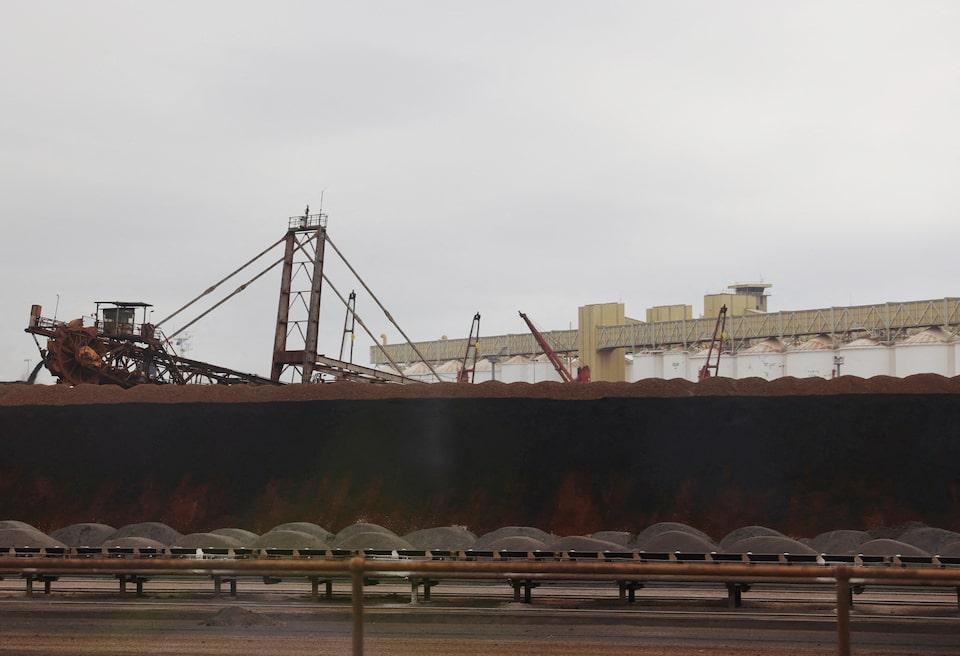
PERTH, March 27 (Reuters) - (The views expressed here are those of the author, a columnist for Reuters.) Decarbonising the steel industry is one of the massive challenges in meeting climate goals, but could end up being extremely profitable for companies and governments prepared to take the risks. Sign up here. The steel value chain accounts for 7% to 9% of global carbon emissions, the largest single industrial contributor and thus a prime target for the net-zero by 2050 goals of many countries and companies. The problem is that about 80% of steel emissions come from a single step in the process, namely turning iron ore into pig, or crude, iron by removing oxygen and other impurities, a process that now involves using vast quantities of coal. The good news is there are available technologies to take coal largely out of the mix, and while the eventual finished steel will not be emissions-free, it is possible to get the carbon intensity down to around 300 kg (661 lb) per ton of steel, about one-seventh of the current 2.2 tons of emissions. The bad news is that adopting these technologies at the necessary scale requires not only huge capital investments, but massive amounts of cheap green energy and coordinated government regulations and incentives across all countries, from resource producers like Australia to steel makers like China and Japan. Australia is the world's largest producer of iron ore, exporting almost 1 billion metric tons a year, of which more than 80% goes to China, the world's biggest importer and maker of half of global steel. Iron ore is Australia's biggest resource export, and metallurgical coal used to make steel is in the top five, meaning the country is extremely exposed to any sustained shift in global steel production to lower emissions. At the Green Iron and Steel Forum held this week in Perth, the scale of the challenge and value of the potential shift to low-emission steel was front and centre. Australia's iron ore exports are worth about $85 billion a year and metallurgical coal a further $34 billion, but the potential increase in value by switching to producing green iron for export was put as high as $252 billion a year. That assumes converting most of the current iron ore volumes to green iron through a process of using hydrogen made from renewable energies such as solar and wind. A more realistic view of converting 40% of iron ore output to green iron by 2050 still yields an impressive value of around $110 billion per year, to which would be added the value of the other 60% of iron ore still being shipped. But building the energy and processing infrastructure to achieve this will require massive amounts of capital, running into hundreds of billions of dollars. It is likely that the cost of solar panels, wind turbines and battery storage will continue to decline, especially if the massive volumes being demanded result in increasing economies of scale in China. But even so, before such huge amounts of capital are deployed, investors will need a fairly high degree of certainty. COMMITMENTS NEEDED Steel mills in existing heavyweights like China, Japan and South Korea will need to commit to actually buying green iron. This means they will have to commit capital to switching steel production from the coal-intensive basic oxygen furnace-blast furnace method to using electric arc furnaces, which can process green iron into steel without using coal for smelting. Steel makers will also have to agree to invest in Australian green iron plants and share the up-front capital costs. Miners are good at digging and shipping iron ore, so they will have to learn how to process the raw ore into pig iron using green hydrogen, which effectively means finding partners with expertise in building firmed renewable power plants and hydrogen production plants. The problem is aligning all the various parties together in order to kick start what is effectively a new industry, albeit one using an existing raw material. There is also probably a major role to be played by governments in Australia and across Asia. Low-emissions steel is going to be more expensive to produce than the current high-emissions product. Experience suggests consumers are unlikely to voluntarily pay more for a low-emissions product, meaning that the steel sector has to either be punished by carbon taxes or incentivised by subsidies in order to switch. Some Asian countries are introducing carbon taxes and some have incentives for green projects, but there is no sign of a coordinated regional framework that would provide investor certainty and drive investment. At the Perth conference it became apparent that the technology and the willingness to embark on the green iron journey exist in Australia. It is likely that shifting from the dig-and-ship model of iron ore in Australia to adding in the additional step of beneficiating to green iron will be like a proverbial snowball. Right now the green iron dream is like a small snowball at the top of a mountain. To start rolling downhill and gaining size and speed it needs some initial momentum. Even once it starts rolling it will take some time to build speed and size, but if it can avoid hitting too many obstacles it can turn into an avalanche by the time it gets to the bottom of the mountain. The views expressed here are those of the author, a columnist for Reuters. https://www.reuters.com/markets/commodities/green-iron-is-prize-worth-billions-winning-is-trick-russell-2025-03-27/
2025-03-27 05:46
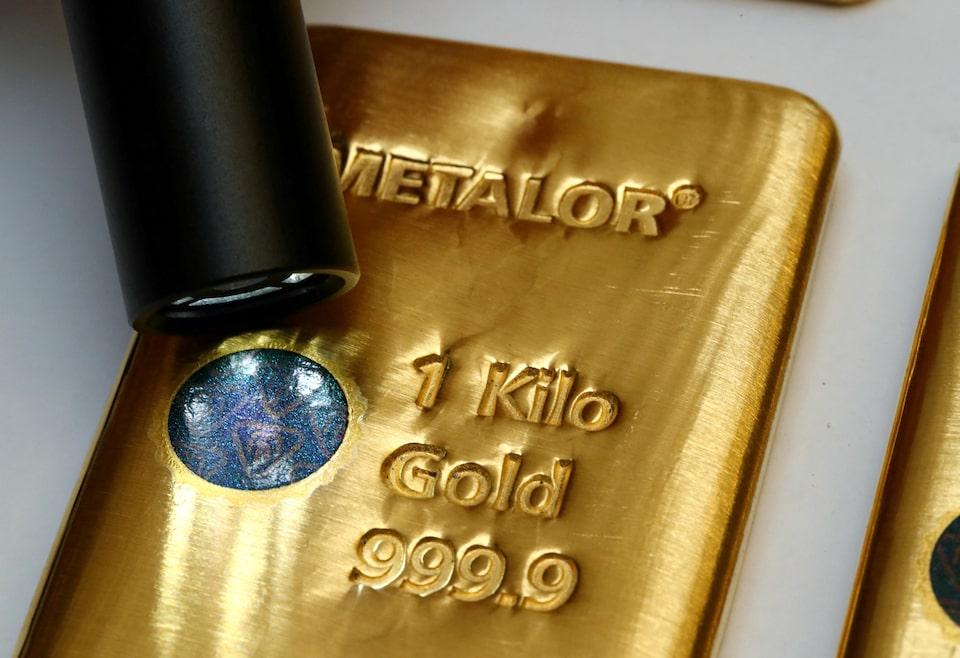
Trump unveiled 25% auto tariffs on Wednesday Gold hits its highest since March 20 record U.S. PCE data due on Friday March 27 (Reuters) - Gold prices climbed back towards last week's record high on Thursday after U.S. President Donald Trump announced new tariffs on auto imports starting next week, escalating global trade tensions that have been driving safe-haven demand for gold. Spot gold had jumped more than 1% to $3,053 an ounce as of 1215 GMT, just a few dollars away from the all-time high of $3,057.21 hit on March 20. U.S. gold futures climbed 1.3% to $3,062. Sign up here. Gold, traditionally seen as a hedge against uncertainty and inflation, has risen more than 15% this year. "Policymaking coming from the U.S. is driving huge amounts of uncertainty and gold, being the defensive, anti-fragile asset, is largely going up because of those uncertainties," Nitesh Shah, commodities strategist at WisdomTree, said. Trump on Wednesday unveiled a 25% tariff on imported cars and light trucks, set to come into effect the day after he plans to announce reciprocal tariffs aimed at the countries responsible for the bulk of the U.S. trade deficit. Traders are now looking to Friday's U.S. personal consumption expenditures data, the Federal Reserve's preferred inflation measure, to shed more light on the U.S. central bank's rate cut path. The Fed held its benchmark interest rate steady last week but indicated it could cut rates later this year. Non-yielding bullion tends to thrive in a low interest-rate environment. "We maintain our bullish stance on gold, though a consolidation is possible after the recent swift rally towards $3,040/oz," ANZ analysts said in a note. Goldman Sachs on Wednesday raised its end-2025 gold price forecast to $3,300 per ounce from $3,100, citing stronger-than-expected ETF inflows and sustained central bank demand. Spot silver rose 1.2% to $34.10 an ounce, platinum steadied at $973.75 and palladium added 0.7% to $974.51. https://www.reuters.com/markets/commodities/gold-rises-fears-mount-over-trumps-reciprocal-tariff-plans-2025-03-27/
2025-03-27 05:35
A look at the day ahead in European and global markets from Ankur Banerjee Investors will be fixated on European auto stocks on Thursday after Trump's announcement of duties on imported cars and light trucks, which hit Asian car makers' shares and drew a strong rebuke from the auto industry. Sign up here. German automakers Mercedes Benz, BMW (BMWG.DE) , opens new tab and Porsche (P911_p.DE) , opens new tab are all likely to come under heavy pressure. The European automobiles and parts index (.SXAP) , opens new tab hit a seven-week low on Wednesday and is poised to fall further. The region's top carmaker, Volkswagen , is particularly exposed, with 43% of its U.S. sales sourced from Mexico, according S&P Global Mobility. Europe's carmakers exported around 800,000 vehicles to the United States last year, according to official U.S. trade data, about four times the number of cars exported by the U.S. to Europe. Chrysler parent Stellantis (STLAM.MI) , opens new tab and Volvo Cars (VOLCARb.ST) , opens new tab will also be in focus. Automakers aside, market moves during Asian hours were muted as investors take a wait-and-see approach, although futures point to a lower open in Europe. The euro hit a three-week low in early Asian hours but has since inched back up. The Canadian dollar was steady and the Mexican peso was 0.5% weaker. The yen was a tad stronger. Still, the spectre of a wide-ranging trade war looms large, leaving investors skittish and risk-averse. The European Commission said it would assess Trump's tariffs and continue to seek negotiated solutions, while safeguarding its economic interests. The auto tariffs, if left in place for an extended period, could add thousands of dollars to the cost of an average U.S. vehicle purchase. Nearly half of all cars sold in the U.S. last year were imported, according to research firm GlobalData. Investor attention will also focus on reciprocal tariffs due to be announced next week. Trump indicated the measures may not be the like-for-like levies he has been saying he would impose. Key developments that could influence markets on Thursday: Possible responses to Trump's auto tariffs https://www.reuters.com/markets/europe/global-markets-view-europe-2025-03-27/

2025-03-27 03:02
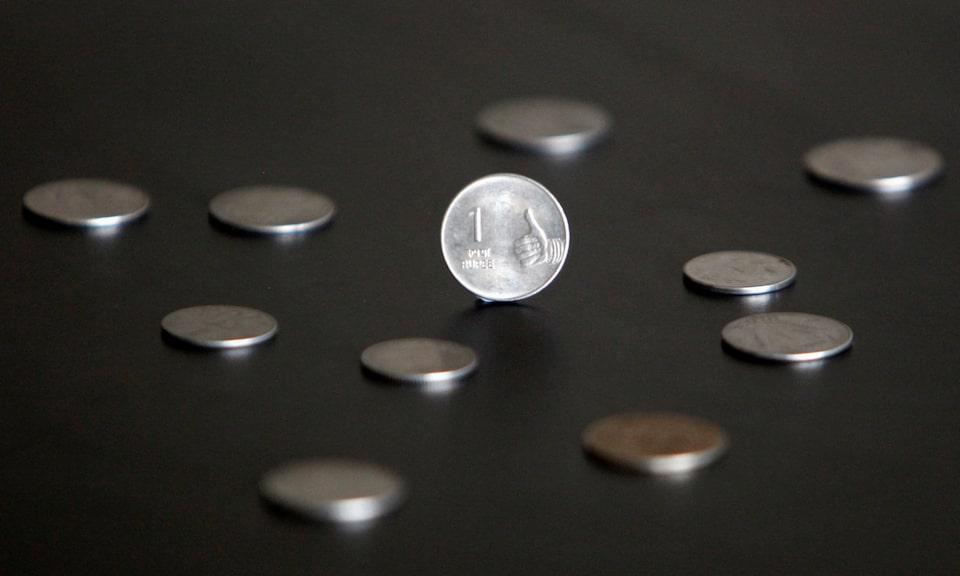
MUMBAI, March 27 (Reuters) - The Indian rupee is set to fall at open on Thursday, pegged back by risk aversion fuelled by the U.S. auto tariffs and the shift in the spot date to the next fiscal year beginning April 1. The 1-month non-deliverable forward indicated that the rupee will open at 85.80-85.88 to the U.S. dollar compared with 85.7050 in the previous session. Sign up here. Asian shares dropped, and U.S. equity futures extended losses after U.S. President Donald Trump announced new tariffs on all auto imports, intensifying the ongoing trade conflict. U.S. equities had already experienced a sell-off before Trump's announcement. The dollar index reached a three-week high on Wednesday before partially retracing. The rupee's anticipated weakening due to the shift in the spot shift has been amplified by the souring of the risk appetite, a currency trader at a Mumbai-based bank said. With India's money markets shut on March 31 and April 1 for a local holiday, Thursday's spot trades will be settled on April 2. Wednesday's spot date was March 28. The rupee at open will have to adjust for the carry cost - around 10/12 paisa - between this fiscal's last day and the next fiscal's first day, opening on a weaker note. Interbank traders who went short on the dollar/rupee on Wednesday for the carry trade will be looking to buy the pair at open. FOCUS ON APRIL 2 Trump's comments on Wednesday suggesting the reciprocal tariffs set to be implemented on April 2 will be "lenient", would be a relief for the rupee and other emerging market currencies. "Until clarity emerges on the magnitude and scope of tariffs and their implementation, risk appetite is likely to remain muted," ANZ Bank said in a note. The tariff uncertainty has meant that a measure of U.S. consumer confidence plunged to its lowest level in more than four years in March, with households fearing a recession in the future and higher inflation. KEY INDICATORS: ** One-month non-deliverable rupee forward at 86.12; onshore one-month forward premium at 29.5 paisa ** Dollar index at 104.32 ** Brent crude futures up 0.2% at $73.9 per barrel ** Ten-year U.S. note yield at 4.35% ** As per NSDL data, foreign investors bought a net $664.7 million worth of Indian shares on March 25 ** NSDL data shows foreign investors sold a net $56 million worth of Indian bonds on March 25 https://www.reuters.com/markets/currencies/rupee-decline-risk-aversion-spurred-by-us-tariffs-spot-date-shift-2025-03-27/
2025-03-27 00:50
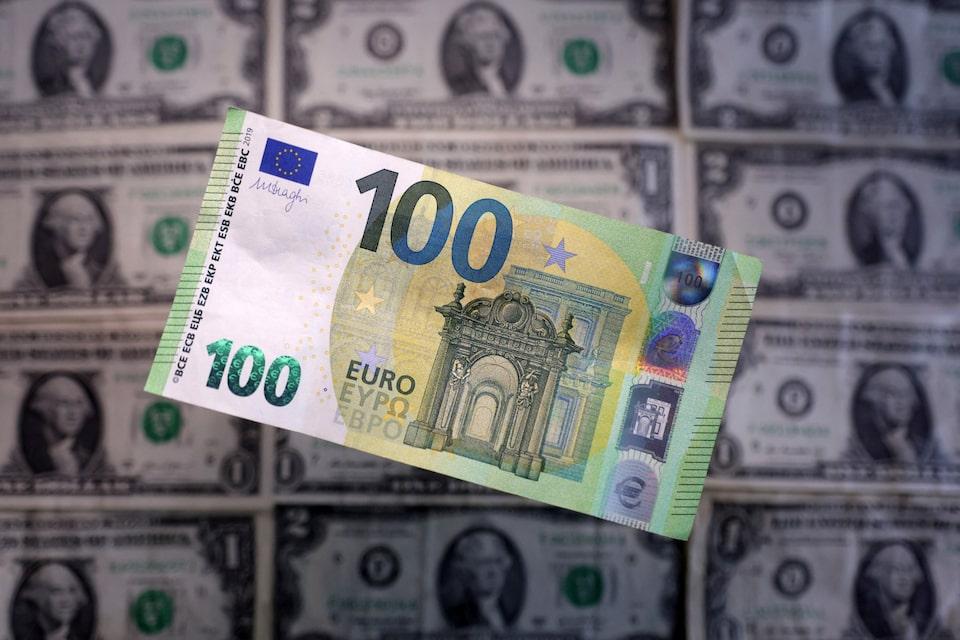
Euro rebounds after hitting three-week low Mexican peso, Canadian dollar fall on auto tariffs Investor focus on next week's reciprocal duties NEW YORK, March 27 (Reuters) - The dollar was mixed on Thursday as traders mulled how severe tariffs scheduled to be revealed by U.S. President Donald Trump next week are likely to be, while the Canadian dollar and Mexican peso weakened after Trump announced auto trade levies. Rising optimism that Trump will be flexible in determining tariffs boosted risk sentiment and the greenback earlier this week, but traders remain nervous ahead of his planned April 2 announcement on reciprocal tariffs. Sign up here. “The pendulum that seems to be swinging right now for markets is initially having a knee-jerk reaction to the worst possible kind of expression of whatever's announced, and then slowly digesting the fact that it might not be as bad as feared and it might not even be as announced because it's part of a broader negotiation,” said Eric Theoret, FX strategist at Scotiabank in Toronto. Trump on Wednesday placed a 25% tariff on imported cars and light trucks due to take effect next week and governments from Ottawa to Paris threatened retaliation. The Mexican peso weakened 1.03% to 20.329 per U.S. dollar. The Canadian dollar fell 0.33% to C$1.43 per dollar. The U.S. imported $474 billion of automotive products in 2024, including passenger cars worth $220 billion. Mexico, Japan, South Korea, Canada and Germany were the biggest suppliers. Ontario expects the U.S. administration to significantly ease the impact of auto tariffs on Canada, following a phone call from U.S. Commerce Secretary Howard Lutnick to Premier Doug Ford, the Globe and Mail reported on Thursday. Mexico is also working to carve out an exemption for its autos industry, the economy minister said on Thursday. The euro, meanwhile, was stronger on the day and is on track to end a bearish streak of six consecutive days of losses against the dollar. It was last up 0.38% at $1.0793, after earlier dropping to a three-week low of $1.0731. The single currency got technical support after it fell near its 200-day moving average at $1.0726. The euro bounced earlier this month as German government debt yields surged on German plans to increase spending and overhaul borrowing limits. The euro has retraced some of that gain in the past week. Central banks including the European Central Bank are also signalling that they are less likely to cut rates in the near term as they gauge the economic impact of tariffs, which could hurt growth but also increase inflation. “The ECB is getting a little more forceful in terms of wanting to move to a pause. I think they're starting to communicate that they're done with easing for now in the absence of major developments,” said Theoret. A trade war with the United States could have a fleeting impact on euro zone inflation but a far more detrimental effect on economic growth, ECB Vice President Luis de Guindos said on Thursday. Economists at Wells Fargo on Thursday said they now expect the ECB to cut rates to a low of 2.0% by September, up from their previous forecast for 1.75%, citing "brightened prospects" for Germany and the eurozone from Germany's fiscal stimulus. The dollar gained 0.35% to 151.1 Japanese yen, a three-week high, as benchmark 10-year U.S. Treasury yields also reached a one-month high of 4.40%. There was little reaction to U.S. data on Thursday showing that the number of Americans filing new applications for unemployment benefits slipped last week. Other data showed that the U.S. economy grew at a slightly more solid clip in the fourth quarter than previously estimated. Sterling strengthened 0.52% to $1.2953, recovering from the previous session's fall as traders weighed the spring statement from finance minister Rachel Reeves. Reeves said on Thursday that Britain was working to secure an exemption from U.S. auto tariffs and could review subsidies offered to Tesla (TSLA.O) , opens new tab, owned by top Trump adviser Elon Musk, to better support its industry. Elsewhere, the Norwegian crown strengthened after the central bank kept interest rates on hold, as an unexpected resurgence of inflation led policymakers to postpone their previously stated plan for a cut. The U.S. currency fell 0.41% to 10.48 crown . In cryptocurrencies, bitcoin fell 0.02% to $87,256. https://www.reuters.com/markets/currencies/euro-three-week-low-trump-imposes-auto-tariffs-2025-03-27/
2025-03-27 00:26
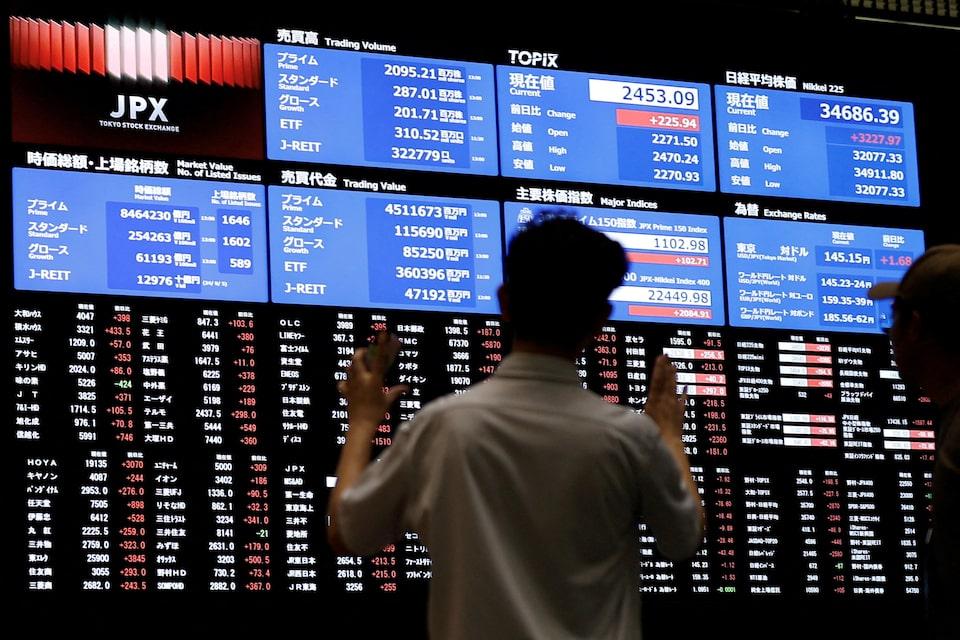
Auto stocks fall on latest Trump tariff shot Dollar up against Canadian dollar, Mexican peso Gold hits record high NEW YORK, March 27 (Reuters) - Global stocks fell for a second straight session and gold hit a record high on Thursday after the latest tariffs from U.S. President Donald Trump's administration that expanded the trade war to autos. Trump on Wednesday announced 25% tariffs on vehicles and foreign-made auto parts imported into the United States. This weighed on Japan's Nikkei (.N225) , opens new tab and South Korea's KOSPI (.KS11) , opens new tab. Sign up here. Countries around the globe threatened retaliatory levies. U.S. stocks oscillated between gains and losses while automakers slumped, although electric vehicle makers Tesla (TSLA.O) , opens new tab and Rivian (RIVN.O) , opens new tab climbed as their production is located within the U.S. General Motors (GM.N) , opens new tab tumbled 7.36%, while Ford (F.N) , opens new tab lost 3.88%, reflecting concerns about the impact on their supply chains. U.S.-listed shares of Stellantis dipped 1.25%. "Investors are really cautious and wary of Trump and his policies. Even more than the policies, just the constant flip-flopping," said Jed Ellerbroek, a portfolio manager at Argent Capital in St. Louis, Missouri. "That makes people really nervous to make long-term investment decisions, whether we're talking about companies or about investors." The Dow Jones Industrial Average (.DJI) , opens new tab fell 155.09 points, or 0.37%, to 42,299.70, the S&P 500 (.SPX) , opens new tab fell 18.89 points, or 0.33%, to 5,693.31 and the Nasdaq Composite (.IXIC) , opens new tab fell 94.98 points, or 0.53%, to 17,804.03. The major U.S. indexes are on track for their first back-to-back monthly declines since the two-month period that ended in October 2023. European stocks closed lower, with weakness in shares of the continent's top carmakers. Volkswagen (VOWG.DE) , opens new tab was down 1.26%, BMW (BMWG.DE) , opens new tab was off 2.55% and Mercedes-Benz (MBGn.DE) , opens new tab was 2.69% lower. MSCI's gauge of stocks across the globe (.MIWD00000PUS) , opens new tab fell 2.77 points, or 0.33%, to 843.19. The pan-European STOXX 600 (.STOXX) , opens new tab index fell 0.44% to 546.31, a two-week closing low. Tariffs and their effect on the global economy, as well as their potential to delay Federal Reserve rate cuts, have weighed on stocks in recent weeks, though shares have shown signs of stabilizing lately. Reflecting investors' caution, spot gold was 1.26% higher at $3,057.35 an ounce, after hitting a record $3,059.30. Goldman Sachs raised its gold price forecast on Wednesday to $3,300, citing stronger-than-expected exchange-traded fund inflows and sustained central bank demand. The dollar index , which measures the greenback against a basket of currencies, dipped 0.33% to 104.29, with the euro up 0.4% at $1.0795. Versus the dollar, the Mexican peso weakened 0.86% to 20.295 while the Canadian dollar softened 0.29% to C$1.43 as both countries are expected to be heavily impacted by the auto tariffs. Trump has announced plans to impose reciprocal tariffs on all countries on April 2. Canadian Prime Minister Mark Carney said on Thursday he would respond with unspecified trade actions if Trump imposes the new auto tariffs. U.S. data showed the labor market remains on solid footing, although the impact of Trump's tariff policy and the aggressive cutting of federal workers by billionaire Elon Musk's Department of Government Efficiency has yet to show an outsized impact. Other data showed the economy grew at a slightly more solid pace in the fourth quarter than previously estimated. The benchmark U.S. 10-year Treasury note yield rose 2.7 basis points to 4.365%. While the yield on the seven-year note was higher after a soft auction of $44 billion of the paper. U.S. crude settled 0.39% higher at $69.92 a barrel and Brent settled at $74.03 per barrel, up 0.33% on the day, as investors assessed the ramifications of the latest escalation in the trade war. https://www.reuters.com/markets/global-markets-wrapup-1-2025-03-27/