2025-03-27 00:00
LONDON, March 26 (Reuters) - U.S. President Donald Trump's executive order on boosting domestic minerals production is intended to blast a path through the thicket of mine permitting in the United States. It takes an average of nearly 29 years for a new mine to go from discovery to production in the United States, the second-longest lead time in the world after Zambia, according to S&P Global. Sign up here. Permitting on Federal Land in particular is a big problem and one that the U.S. government is uniquely qualified to solve. The Joe Biden administration struggled to reconcile its ambition to produce more "green" metals for the energy transition with its environmental and social credentials. Trump has no such qualms. The Secretary of the Interior is instructed to "prioritize mineral production activities over other types of activities on Federal lands". But there is a danger that the political pendulum will swing too far the other way. There is also the problem that new mines still take many years to build and the U.S. lacks the processing capacity to convert raw materials to metal. Copper is a case in point. STALLED COPPER PROJECTS Copper is not on the U.S. critical minerals list but gets a special mention in Trump's executive order , opens new tab, along with gold, uranium, potash and, if the chair of the National Energy Dominance Council so determines, any other element "such as coal". Copper has come to epitomise the problem of getting new mines up and running in the United States. Big copper projects such as Resolution , opens new tab in Arizona, Pebble , opens new tab in Alaska and Twin Metals , opens new tab in Minnesota have been stalled for years at the federal permitting stage. All three could benefit from the change of political wind in Washington. But opposition from Native Americans and environmental protection groups is not going to magically disappear at the stroke of a presidential pen. Indeed, it might well become more entrenched. Big mining companies such as Rio Tinto (RIO.L) , opens new tab, which owns a majority stake in Resolution, have learnt the hard way that mining without community consent is highly problematic. The company has buy-in from both Serbian and European Union policy-makers for its giant Jadar lithium mine but progress has ground to a halt due to mass protests. EXTENDED TIME-LINE The Resolution mine has the potential to become the biggest copper producer in North America, capable of meeting up to 25% of the United States' annual copper demand. The copper will come with by-products such as bismuth, indium and tellurium, all of which are on the critical minerals list. But even assuming accelerated permitting, the mine will still take around 10 years to construct, meaning the first copper concentrates would be produced only around the middle of the next decade. Resolution is located in Arizona, which has a long history of mining and associated infrastructure. The Pebble and Twin Metals projects face extra challenges in the form of physical remoteness and potential impact on salmon spawning grounds and the Boundary Waters Wilderness respectively. Fast-tracking permitting for such projects doesn't mean they'll be ready to generate copper any time soon. PROCESSING GAP Rio's Resolution mine could be integrated into the company's existing Kennecott smelting and refining operations in Utah. Kennecott, however, is only one of two active primary copper smelters in the United States. The other one is Miami in Arizona operated by Freeport-McMoRan (FCX.N) , opens new tab. There has been speculation but so far no confirmation that Grupo Mexico might re-open its Hayden smelter in the same state. The United States is already a net exporter of copper concentrates for want of sufficient processing capacity. Some 320,000 tons of contained metal in concentrates were shipped overseas last year, according to the U.S. Geological Survey. The three main destinations were Mexico, China and Canada. Clearly there is enough North American smelting capacity to absorb extra U.S. mine production but the Biden administration's policy of "friend-shoring" has been replaced with Trump's tariff threats against the United States' two neighbours. Moreover, every copper smelter is currently competing with China, where smelting and refining capacity is huge and still growing. Smelter margins are being squeezed in the form of historically low treatment charges for converting raw material into metal at historic lows. Building sufficient domestic capacity to process extra U.S. mine production could be a thornier problem than building the new mines in the first place. URBAN SOLUTION The fixation on headline-grabbing mega mine projects to reduce U.S. import dependency misses a far easier and lower-cost solution. U.S. processing capacity for recycling copper is growing. Germany's Aurubis AG (NAFG.DE) , opens new tab has invested $800 million in a new smelter , opens new tab in Georgia for treating up to 180,000 metric tons of complex recyclables such as circuit-boards. The United States is the world's largest exporter of copper scrap to the tune of almost a million tons each year. Much of it is sent to China for processing. Recycling all that lost metal at domestic facilities wouldn't eliminate U.S. copper import dependency but it would significantly close the gap. Recycling comes with the benefits of an existing resource, low capital expenditure relative to new mines, shorter lead-times to production and lower carbon footprint. The Trump administration's rush to ditch anything associated with Biden's green agenda risks overlooking the one part of the domestic copper supply chain that is already attracting investment and increasing capacity. If "mine baby mine" is the mantra, channelling more federal funds into "urban mining" is going to reap faster rewards than any big new conventional mine. The opinions expressed here are those of the author, a columnist for Reuters https://www.reuters.com/markets/commodities/can-trumps-critical-minerals-drive-pass-copper-test-andy-home-2025-03-26/

2025-03-26 22:57
March 26 (Reuters) - Goldman Sachs (GS.N) , opens new tab on Wednesday raised its end-2025 gold price forecast to $3,300 per ounce from $3,100, citing stronger-than-expected ETF inflows and sustained central bank demand. Goldman Sachs also raised its forecast range to $3,250-$3,520 from $3,100-$3,300 earlier, according to its research note. Sign up here. The investment bank expects large Asian central banks to continue their aggressive gold purchases for the next three to six years, aiming to reach projected gold reserve targets. The bank raised demand assumptions by central banks to 70 tonnes a month from 50 tonnes earlier amid heightened U.S. policy uncertainty and on expectations that China may continue purchasing at rapid pace for another three to six years. "On the gold ETF side, our U.S. economists continue to expect two 25bp (basis points) Fed cuts in 2025 and one additional cut in H1 (first half of) 2026, which underpins our baseline for ETF inflows," Goldman Sachs said. Goldman Sachs sees two potential upside risks for ETFs: a recession-induced Fed cutting cycle raising end-2025 gold prices to $3,410 per ounce, and increased investor demand for gold as a hedge pushing ETF holdings back to pandemic levels, supporting prices toward $3,680 per ounce by the end of 2025. The bank reiterates its long gold trade recommendation, but recognized two potential events that may offer more attractive entry points. The first event would be the potential Russia-Ukraine peace agreement, which might trigger temporary speculative selling. However, it is unlikely to have a lasting impact on global gold demand or supply, the bank said. Another event would be a sharp equity sell-off triggering margin-driven gold liquidation. However, it expects this to be short-lived as speculative positioning recovers amid uncertainty, with structural demand from central banks and ETFs remaining intact. https://www.reuters.com/markets/commodities/goldman-sachs-raises-end-2025-gold-price-forecast-3300-per-ounce-2025-03-26/

2025-03-26 22:38
General is third security chief removed recently Analyst says president is wary of potential coup Mnangagwa denies he plans to extend time in power Former backers plan countrywide protests on March 31 HARARE, March 26 (Reuters) - Zimbabwe President Emmerson Mnangagwa acted to consolidate his hold on power with Tuesday's dismissal of a senior general, political analysts say, amid growing fears of a possible coup by former allies. Mnangagwa, who took charge after a military coup that ousted longtime ruler Robert Mugabe in 2017, is facing growing dissent within his ZANU-PF party, which has ruled Zimbabwe since independence from Britain in 1980. Sign up here. Some veterans of the Southern African country's war of independence have called for countrywide protests on March 31 to force Mnangagwa to step down. They accuse him of deepening the country's economic crisis and plotting to extend his rule beyond 2028 when his second term is due to end. Mnangagwa denies those accusations and on Wednesday warned against "people who want to disturb our peace" during a ZANU-PF meeting in the capital Harare. Analysts say Mnangagwa appears to be increasingly worried about his grip on power has been trying to bolster his position by shaking up the military, police and intelligence leadership. Tuesday's removal of Anselem Sanyatwe, Zimbabwe's second most powerful general and head of the army, was the third such reshuffle by Mnangagwa in recent months. Mnangagwa also removed the chief of police and head of Zimbabwe's intelligence service. Political analyst Eldred Masunungure told the privately owned Newsday newspaper that Mnangagwa appeared to be "protecting himself against a potential coup". The anti-Mnangagwa war veterans want to replace him with Constantino Chiwenga, a retired general who led the coup against Mugabe and is now the country's vice president. Although diminishing in number and advancing in age, the independence war veterans remain influential in Zimbabwe's politics and retain strong ties with its security chiefs, after fighting alongside them during the liberation struggle. In his previous role as head of the presidential guard under Mugabe, Sanyatwe played a key role in the 2017 coup. He also oversaw the deployment of soldiers who shot dead six people and injured many others during post-election unrest in August 2018. Sanyatwe, a close ally of Chiwenga, has been appointed sports minister, replacing Kirsty Coventry, who was elected president of the International Olympic Committee on March 20. https://www.reuters.com/world/africa/zimbabwe-president-fires-army-chief-ahead-planned-protests-2025-03-26/

2025-03-26 22:06
NAPERVILLE, Illinois, March 26 (Reuters) - The drama is upon us. We're not talking about college basketball, but rather the incoming U.S. grain stocks and acreage data that is just as notorious for "upsets" to the general consensus. Sign up here. Although it is the most hotly discussed item set to appear in Monday’s reports from the U.S. Department of Agriculture, U.S. corn planting intentions have without a doubt been the most difficult to predict in recent years. But analysts’ ideas on March 1 corn and soybean stocks are alarmingly narrow, which could ultimately reveal that the market is off base on its recent supply assumptions. This means that both corn acres and quarterly stocks must be put on notice for possible surprises. STOCKS On average, analysts peg U.S. March 1 corn stocks at 8.151 billion bushels, down 2.4% from last year. The estimates sit in a 261-million-bushel range, which is the smallest for this report since 2009. In fact, that range is about half the average size of the last five years, greatly increasing the possibility of a miss. The last time March 1 corn stocks fell outside the range of guesses was 2018, though they did remain in-bounds in 2009. March 1 corn stocks have landed below the average trade guess for five consecutive years now. But analysts have been too conservative on soybean stocks in seven of the last eight Marches (not 2023). March 1 soybean stocks are seen at 1.901 billion bushels, up 3% on the year. The 192 million-bushel cushion in the estimates is also very narrow, the smallest since 2016. However, March 1 soybean stocks have not missed the estimate range since 2013. USDA in January slashed both the 2024 U.S. corn and soybean harvest estimates. Some market participants felt this was too extreme, and that the extra supply could be unexpectedly ‘found’ again in future quarterly stock surveys, particularly for corn. However, there is no evidence that a shrinking corn crop necessarily leads to bearish outcomes in subsequent stock reports. CORN ACRES On average, the trade expects 2025 U.S. corn plantings at 94.361 million acres, up 4.2% on the year and slightly above USDA’s month-ago target of 94 million. Analysts have given themselves a wider-than-normal range of estimates at 4.1 million acres, with a high of 96.6 million. This could come in handy because March corn intentions have missed or nearly missed the range of trade estimates in eight of the last nine years. Six were complete misses, though corn acres landed on the ends of the ranges in both 2023 and 2024. It has been a decade since March corn acres have come within less than 1% of the average trade guess, meaning the market frequently misses by more than a million acres. Bulls won’t like this nugget. Over the last two decades, March corn acres have never landed below the average trade guess when the new-crop Chicago soybean-corn futures ratio averaged 2.3 or below during February. This year notched a corn-favoring 2.24. Bearish March corn acres are also more common when estimates for the previous corn harvest shrank as they did this year. But sometimes trends are made to be broken, so is 2025 sufficiently unique? That is unclear, though the acreage pool is limited as farmland has been lost to development over the last decade-plus. Also, new-crop corn prices so far this year have averaged below the breakeven costs that USDA forecast last autumn, which was not the case in most recent years. But corn profitability prospects still look much better relative to soybeans. Analysts expect U.S. farmers will plant 83.762 million soybean acres in 2025, down 3.8% on the year. That is the biggest year-on-year decline in soy acres that the trade has predicted in March since 2007, emphasizing the bleak sentiment around the oilseed. March soybean acres last missed the range of trade estimates in 2018, though if anything, the bias could be for bean plantings to be friendly on Monday. Soybean intentions came in higher than the average trade guess only three times in the last 16 years (2022, 2017, 2014). Both CBOT corn and soybean futures have drifted lower over the past several sessions. But if grain traders' so-called brackets were to be busted on Monday, prices could make a quick U-turn – or be sent further off the cliff. Karen Braun is a market analyst for Reuters. Views expressed above are her own. https://www.reuters.com/markets/commodities/usdas-march-madness-will-be-no-slam-dunk-grain-analysts-braun-2025-03-26/

2025-03-26 21:56
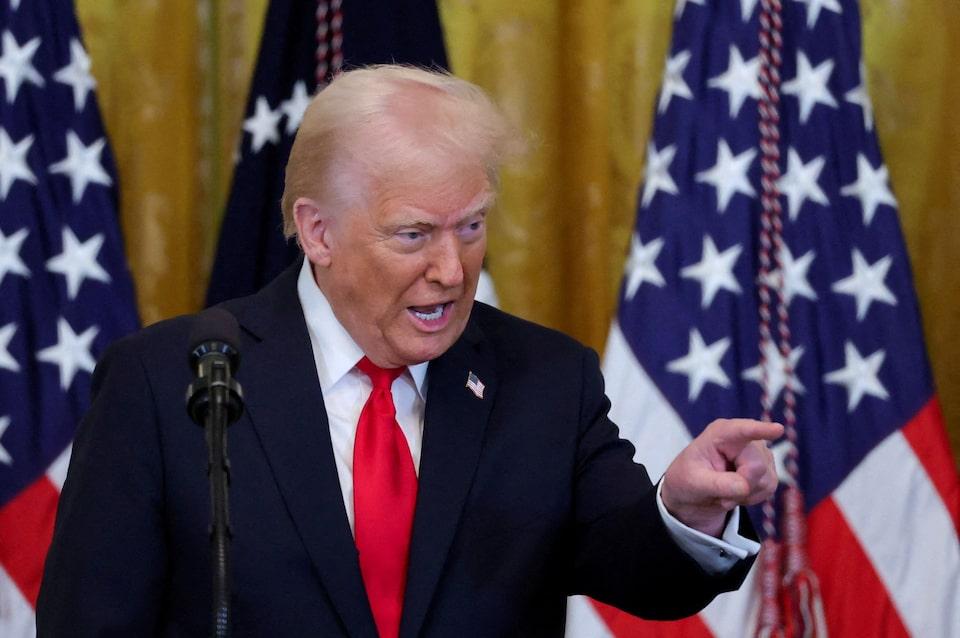
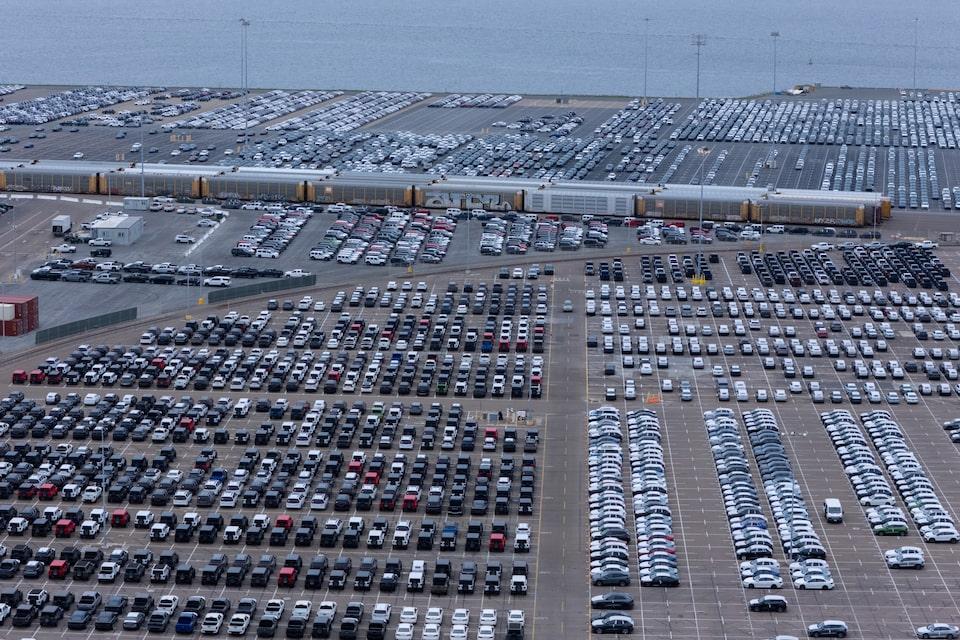
Long-promised duties on autos seen driving up prices, slowing production Auto stocks fall on tariff worries; Tesla gains Allies consider retaliatory action Canada's Carney pledges to fight US tariffs OTTAWA/BERLIN, March 27 (Reuters) - Canadian Prime Minister Mark Carney said on Thursday that he would respond with unspecified trade actions if U.S. President Donald Trump imposes new auto tariffs that have expanded a global trade war and hammered stocks. Carney said he had not yet determined what actions Canada might take if Trump follows through with his plan to impose new 25% levies on imported cars and light trucks. He said he would respond next week, when the auto tariffs and a separate set of reciprocal tariffs on U.S. trading partners are due to take effect. Sign up here. "We will fight the U.S. tariffs with retaliatory trade actions of our own that will have maximum impact in the United States and minimum impacts here in Canada," Carney said at a news conference. European countries have threatened retaliation as well. The tariffs could add thousands of dollars to the cost of an average vehicle in the United States, contradicting Trump's campaign promise to lower consumer prices. Ferrari (RACE.MI) , opens new tab announced price hikes of up to 10% for cars sold in the U.S., and other automakers also warned they might raise prices as well. Dealers raised fears of job losses. The S&P 500 ended lower on Thursday, with auto stocks falling. General Motors (GM.N) , opens new tab tumbled over 7% and Ford (F.N) , opens new tab slid 3.9%. Car parts manufacturers Aptiv and BorgWarner (BWA.N) , opens new tab each lost around 5%. Tesla (TSLA.O) , opens new tab edged up 0.4%, with investors betting the electric vehicle maker will be hurt less by tariffs because of its largely domestic production. The tariffs are a sucker punch for some of the United States' most important allies and would come atop other trade penalties Trump has already put in place. Mexico, Japan, South Korea, Canada and Germany are the biggest suppliers of automotive imports to the United States that were worth $474 billion in 2024. Carney said Canada would transform its economy to become less dependent on its southern neighbor, which has long been a close ally and important trading partner. "We will need to reduce our reliance on the United States," he said at the press conference. That may prove difficult. Vehicles are the second-largest Canadian export by value (after oil) at $51 billion in 2023 - of which 93% was exported to the United States. With billions of euros wiped from German auto shares on Thursday, officials in Europe's biggest economy called for a tough response. "The U.S. has chosen a path at whose end lie only losers, since tariffs and isolation hurt prosperity for everyone," German Chancellor Olaf Scholz said. In neighboring France, which is hosting a Ukraine summit without the U.S. on Thursday, Finance Minister Eric Lombard called Trump's plan "very bad news," and said the only solution was for the EU to raise its own tariffs. Britain, which has struggled to expand its economy, was scrambling to secure an exemption but also threatened to review subsidies given to Tesla, which is headed by top Trump adviser Elon Musk. Canada froze rebate payments for the car maker on Tuesday. The company, which faces declining sales, increased competition and a political backlash, is less exposed to Trump's tariffs than its rivals, but Musk said on X that the impact is "still significant." JP Morgan said the tariffs would raise new car prices by $4,000 to $5,300. "None of this leads to more jobs or better wages. It leads to sluggish sales, costlier credit, and potential layoffs - exactly what a fragile economy doesn't need," said Nigel Green, CEO of global financial advisory deVere Group. TRUMP THREATENS FURTHER ESCALATION Sources said the Trump administration also has paused contributions to the World Trade Organization, further hobbling the global trade watchdog as it yanks support for international institutions it sees at odds with its "America First" agenda. China's foreign ministry said the U.S. approach undermines the multilateral trade system and was "not conducive to solving its own problems." With shares falling, Japanese Prime Minister Shigeru Ishiba said Tokyo will put "all options on the table" and South Korea said it would put in place an emergency response by April. Trump sees tariffs as a tool to raise revenue to offset his promised tax cuts and to revive a long-declining U.S. industrial base. Many trade experts, however, expect prices to initially rise and demand to fall, hurting a global auto industry that is already reeling from uncertainty caused by Trump's rapid-fire tariff threats and occasional reversals. Trump said he might hit the EU and Canada with larger tariffs if they teamed up to retaliate. "If the European Union works with Canada in order to do economic harm to the USA, large scale Tariffs, far larger than currently planned, will be placed on them both in order to protect the best friend that each of those two countries has ever had," he said in a post on Truth Social. https://www.reuters.com/world/us/trump-ratcheting-up-trade-war-presses-ahead-with-auto-tariffs-2025-03-26/
2025-03-26 21:39
ORLANDO, Florida, March 26 (Reuters) - TRADING DAY Making sense of the forces driving global markets Sign up here. By Jamie McGeever, Markets Columnist Nasdaq slumps 2%, tariff fears intensify It was really only a matter when, not if, tariff fears cast a pall over Wall Street and global markets again, and so it proved on Wednesday as investors braced for U.S. President Donald Trump's latest announcement on auto tariffs. The Nasdaq fell 2% and the MSCI World index shed 1% for their biggest declines in two weeks. Earlier, British finance minister Rachel Reeves delivered an update on the country's fiscal and economic health, and as I will explore below, it's a challenging outlook for sterling and UK bonds. I'd love to hear from you, so please reach out to me with comments at [email protected]. You can also follow me at @ReutersJamie , opens new tab and @reutersjamie.bsky.social , opens new tab. Today's Key Market Moves "Tariff Man" flexes muscles, markets cower "We're going to go with the tariffs on cars," Trump said on Wednesday ahead of the formal announcement in the Oval Office later in the day. It's a reminder that the self-styled "Tariff Man" isn't bluffing, or at least appears not to be. If he presses ahead with these and other tariffs, like the reciprocal ones planned for April 2, investors face the lousy prospect of faster inflation and slower growth. With that April 2 deadline and the quarter-end looming into view, investors may choose to trim risk exposure and play it safe. It would be an understandable approach, given current levels of economic and policy uncertainty. After some surprisingly high U.S. consumer inflation expectation surveys recently, it was the turn of UK consumers on Wednesday. A Citi/YouGov survey showed the public's inflation expectations rose to 4.2%, the highest in two and a half years. Consumer inflation expectations are a notoriously poor barometer for actual inflation outcomes. But policymakers cannot afford to be complacent, and on Wednesday Bank of Japan Governor Kazuo Ueda reiterated that interest rates will go up if needed to prevent rising food prices from fueling broader inflation. Minneapolis Fed President Neel Kashkari was more measured, noting the counter forces of low growth and high inflation should keep the Fed on hold a while longer. What's increasingly clear is tariffs and trade wars are bad news for stocks. Early signs from the handful of U.S. companies that have reported first quarter results show earnings per share growth has plunged, and on Wednesday Barclays became the latest brokerage to slash its year-end target for the S&P 500. Meanwhile, British finance minister Rachel Reeves blamed swirling global uncertainty for the deteriorating growth outlook, as the independent fiscal watchdog halved its 2025 GDP growth forecast to 1%. It's an increasingly challenging backdrop for holders of UK assets. Sterling may be vulnerable to foreigners' gilt trip The overriding message from British finance minister Rachel Reeves on Wednesday was simple: the challenges facing UK policymakers are mushrooming, and their margin for error is rapidly shrinking. The UK spring fiscal update made it clear that Britain faces dismal growth prospects this year and still needs to boost public borrowing. This means investors may start demanding higher returns for lending to the government, or the exchange rate may need to weaken to draw them in. This raises the risk that a weaker pound could fuel even greater inflation, creating something of a doom loop. So Reeves has to navigate a very challenging environment for sterling and the UK bond market, to put it mildly. SHORT-TERM REPRIEVE Markets got some short-term relief on Wednesday, as the UK budget update included more spending cuts than had been flagged and slightly lower debt issuance plans than investors had expected. But the reality is that UK public finances will be under heavy strain in the years ahead. Government borrowing over the next five years is set to be 47.6 billion pounds ($61.4 billion) more than what was expected only five months ago, according to new forecasts from the independent Office for Budget Responsibility. And it doesn't look like growth is coming to the rescue, at least not any time soon, as the OBR halved its 2025 GDP growth forecast to just 1%. On top of this are growing concerns that UK inflation will rise toward 4% later this year, further above the Bank of England's 2% target. And then, of course, there is the looming threat of tariffs from Washington and a global trade war. Put it all together, and risks to growth in the coming years are skewed to the downside with no guarantee that borrowing costs will fall commensurately. KINDNESS OF STRANGERS This is hardly the most attractive offering for the overseas investors who play a critical role in funding Britain's twin trade and budget deficits. Official figures show that foreign investors owned 32% of the British government's 2.08 trillion pound debt pile at the end of the third quarter last year. That's the biggest share since 2009 and, excluding the Global Financial Crisis, the largest percentage on record. On the one hand, that suggests overseas investors aren't too worried about Britain's fiscal health. But it's also a risk, as foreign investors are likely to be the first to sell in the event of a shock or crisis, and therefore demand an attractive premium to stick around. As former Bank of England Governor Mark Carney famously said in 2016, Britain relies heavily on "the kindness of strangers" for its funding. And as the gilt selloff in late 2022 showed, that kindness can't be taken for granted. Right now, owners of gilts are enjoying the highest bond yields in the G7 group of countries, a reflection more of Britain's testing inflation and public debt dynamics than a positive growth outlook. Vikram Aggarwal, fixed income investment manager at Jupiter Asset Management, says this suggests the gilt market is cheap and represents an attractive buying opportunity. But this "cheapness" has persisted for a long time, and the weight of borrowing requirements on the market is getting heavier. "The deterioration in UK public finances can't be underestimated," Aggarwal said on Wednesday. Reeves won't be underestimating it, that's for sure. What could move markets tomorrow? If you have more time to read today, here are a few articles I recommend to help you make sense of what happened in markets today. Opinions expressed are those of the author. They do not reflect the views of Reuters News, which, under the Trust Principles , opens new tab, is committed to integrity, independence, and freedom from bias. Trading Day is also sent by email every weekday morning. Think your friend or colleague should know about us? Forward this newsletter to them. They can also sign up here. (This story has been corrected to change the day to Wednesday, in paragraph 1) https://www.reuters.com/markets/global-markets-trading-day-2025-03-26/