2025-03-26 21:13
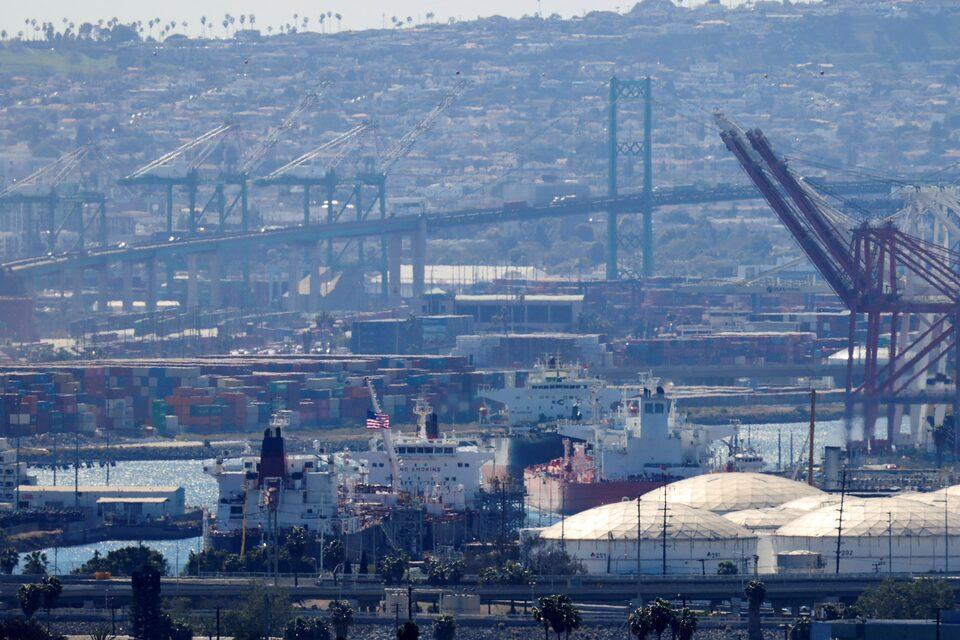
US industries oppose $3 million fees on China-linked ships US shipping fees on China vessels face industry backlash Study finds fees could spark double-digit percentage drops in energy and agriculture exports Banana supplier Dole says makes 300 U.S. port calls a year China-linked ship fees spark US industry concerns WASHINGTON, March 26 (Reuters) - Fossil fuel and agriculture industry executives on Wednesday criticized a plan by President Donald Trump's administration for big fees on China-linked ships entering U.S. ports, arguing at a hearing in Washington that the move would hobble their ability to export everything from coal to soybeans. The proposed fees on China-built vessels could top $3 million per U.S. port call. Sign up here. The administration says the fees would curb China's commercial and military dominance on the high seas and promote a U.S. shipbuilding renaissance. Opponents say the plan could backfire on farmers, miners and other groups that Trump hopes would drive orders at domestic shipyards. Few vessels would be exempt, making U.S. export prices unattractive, and foisting up to $30 billion of annual import costs on American consumers. "The suggested policies do not punish China as intended, but rather punish American industry and will put American laborers out of work," said Gregory Kravitz, senior vice president of transportation at Oxbow, a South Texas-based oil and gas company, at the congressional hearing. Groups have asked the U.S. Trade Representative for exemptions to the plan or phased-in fees, since it will take several years for U.S. shipbuilders that turn out around five ships per year to compete with China's output of more than 1,700 annually. The energy industry is the top U.S. exporter by value and is at risk because, like most others, it relies on fleets that own or have ordered ships from China. Aaron Padilla, vice president of corporate policy at the powerful American Petroleum Institute, said the proposals will add significant costs to shipping. "As a consequence, the proposed actions would harm the U.S. position as a net energy exporter and undermine President Trump's energy dominance agenda," he told the hearing. The move also threatens Trump's goals of revitalizing the U.S. industrial base, protecting American jobs and leveling the global playing field, said Veronika Shime, vice president of international policy and sustainability at the National Mining Association. The issue, along with the administration's escalating trade wars with China, Europe, Canada and Mexico, has revealed an unlikely fault line between Trump and executives from industries he promised to support. Coal and agriculture officials had told Reuters last week the proposed levies already were making it difficult to charter ships for exports and causing some products to pile up stateside. A study by Trade Partnership Worldwide found the fees could send exports of oil down as much as 18.6%, and coal down as much as 24.5%. It said exports of soybeans, the top U.S. agriculture export, could tumble as much as 42.2% and wheat could dive 64.4%. BYE-BYE BANANAS? Foes of the port fees likened them to a tax that will cascade costs throughout global supply chains. The fees already have sent the bulk shipping costs for critical exports like wheat, corn and soybeans up 40%, United Grain Corp said in a letter last week. MSC, the world's largest container shipping company, warned it would likely reduce U.S. port calls to contain costs - a disruptive move that could spark the return of early pandemic-era product delays and shortages. Bananas, the No. 1 consumed U.S. fruit, could get more expensive or scarce, Jared Gale, chief legal officer of banana supplier Dole Plc (DOLE.N) , opens new tab, testified. Dole makes 300 U.S. port calls annually and higher port fees would either make bananas too expensive for consumers or financially unaffordable for the company to import, Gale said. The fees would be a double whammy for Perdue AgriBusiness, hitting both the animal feed it imports and the chickens it exports, the Maryland-based company said in a letter to USTR this week. "We can't tax our way into a competitive ocean shipbuilding program," said Peter Friedmann, executive director of the Agriculture Transportation Coalition. He recently alerted maritime executives that exports of high-value, U.S. perishables like almonds and fresh beef would be devastated if vessel owners bypass the small ports they rely on for speedy exports. The hearing on Wednesday will be the last before the administration makes a decision on the proposal. During a hearing on Monday, U.S. ship operators notified USTR that the fees would hurt their businesses, while representatives of the domestic steel industry expressed support. https://www.reuters.com/world/fossil-fuel-agriculture-officials-rail-against-trump-port-fee-plan-2025-03-26/
2025-03-26 20:58
SAO PAULO, March 26 (Reuters) - Brazilian power company Eletrobras has signed an agreement with the nation's government to end a legal dispute over government voting power in the company, it said in a filing on Wednesday. The two parties had been trying to reach an agreement since 2023 as the government of President Luiz Inacio Lula da Silva pushed to regain influence in Eletrobras more equivalent to its stake in the firm, which was privatized in 2022. Sign up here. Under the fresh agreement, which still lacks shareholder approval, the government would nominate three of Eletrobras' 10 board members. Currently, the government holds no seat on the board. The deal, the initial terms of which were disclosed earlier this year, also frees Eletrobras from previously planned investments in the controversial Angra 3 nuclear plant. https://www.reuters.com/business/energy/brazils-eletrobras-government-sign-agreement-end-lawsuit-over-voting-power-2025-03-26/

2025-03-26 20:45
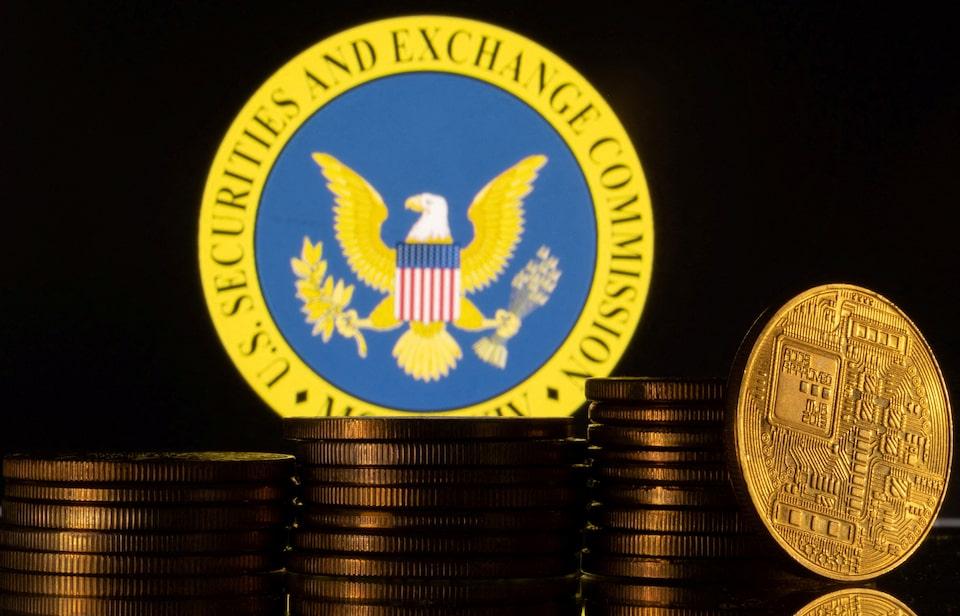
March 26 (Reuters) - Paul Atkins, President Donald Trump's pick to run the U.S. Securities and Exchange Commission, pledged on Wednesday that regulations under his leadership would benefit the crypto sector and prevent politics from "stifling" capital formation, according to prepared testimony made public by the Senate. "A top priority of my chairmanship will be to work with my fellow Commissioners and Congress to provide a firm regulatory foundation for digital assets through a rational, coherent, and principled approach," Atkins said in written remarks. Sign up here. Atkins is due to appear for a Senate confirmation hearing on Thursday. https://www.reuters.com/world/us/trumps-sec-pick-pledges-rational-crypto-regulations-2025-03-26/
2025-03-26 20:37
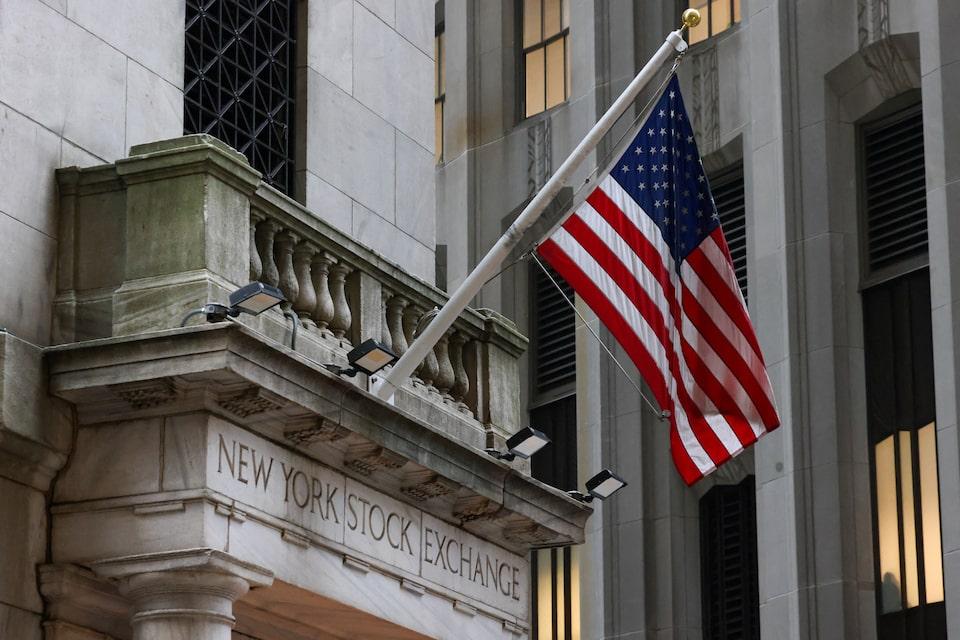
Trump preparing auto tariff announcement soon, report says Dollar Tree up on sale of Family Dollar business GameStop climbs on bitcoin bet, higher Q4 profit Barclays cuts S&P 500 2025 target S&P 500 -1.12%, Nasdaq -2.04%, Dow -0.31% March 26 (Reuters) - Wall Street stocks ended sharply lower on Wednesday, dragged down by losses in Nvidia and Tesla as investors awaited information about long-promised U.S. tariffs on automotive imports. U.S. President Donald Trump was set to announce plans for car-industry tariffs at a press conference on Wednesday, widening the global trade war he kicked off this year. Auto industry experts expect the move to drive up prices and stymie production. For weeks, Trump has promised to announce a swath of reciprocal tariffs on April 2. Sign up here. Shares of Tesla (TSLA.O) , opens new tab dropped 5.6% and General Motors (GM.N) , opens new tab lost 3.1%, with investors uncertain about the scale of tariffs, retaliatory measures from trading partners and potential ripple effects on the global economy and businesses. "Markets hate the tariff uncertainty, especially when it pertains to autos. Autos are ground zero for the negative economic impacts of tariffs," said Jamie Cox, managing partner at Harris Financial Group. Heavyweight chipmakers Nvidia (NVDA.O) , opens new tab slid almost 6% and Broadcom (AVGO.O) , opens new tab fell almost 5%, pushing the PHLX chip index (.SOX) , opens new tab down 3.3%. The S&P 500 declined 1.12% to end the session at 5,712.20 points. The Nasdaq declined 2.04% to 17,899.02 points, while the Dow Jones Industrial Average declined 0.31% to 42,454.79 points. Of the 11 S&P 500 sector indexes, six declined, led lower by information technology (.SPLRCT) , opens new tab, down 2.46%, followed by a 2.04% loss in communication services (.SPLRCL) , opens new tab. A survey revealed a decline in optimism among top business executives in the first quarter. Businesses wary of tariff-related price hikes scrambled to build up inventories. Data showed an unexpected increase last month in orders for durable U.S. manufactured goods. Barclays revised its S&P 500 target downward to 5,900 points from 6,600. The S&P 500 has lost 3% so far in 2025, while the Nasdaq is down over 7%. The main focus later this week will be the personal consumption expenditures price index - the Federal Reserve's favored inflation gauge - due on Friday. Minneapolis Fed President Neel Kashkari said he was uncertain about the effect of Trump's tariffs, with the possibility they could push up prices, arguing for higher interest rates. Dollar Tree (DLTR.O) , opens new tab rose 3.1% after the discount-retail chain said it was nearing a sale of its Family Dollar business to a consortium of private equity investors for about $1 billion. GameStop (GME.N) , opens new tab jumped nearly 12% following its board's unanimous approval to incorporate bitcoin as a treasury reserve asset. Advancing issues outnumbered falling ones within the S&P 500 (.AD.SPX) , opens new tab by a 1.1-to-one ratio. The S&P 500 posted 16 new highs and 6 new lows; the Nasdaq recorded 33 new highs and 197 new lows. Volume on U.S. exchanges was relatively light, with 15.5 billion shares traded, compared to an average of 16.2 billion shares over the previous 20 sessions. https://www.reuters.com/markets/us/wall-st-futures-dip-tariff-uncertainty-weighs-2025-03-26/
2025-03-26 20:34
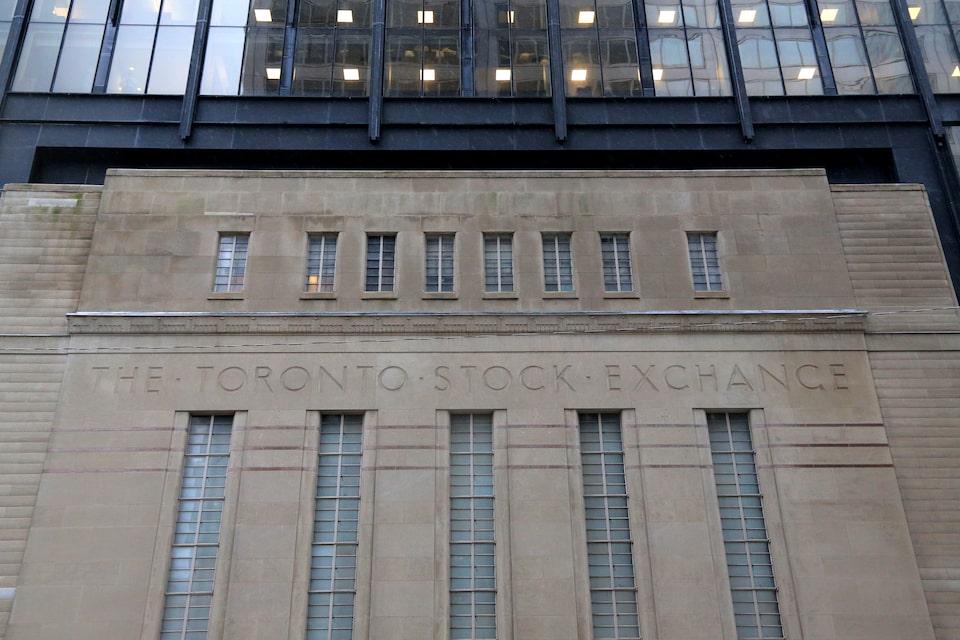
TSX ends down 0.7% at 25,161.06 Technology sector falls 3.2% Materials group ends 1.5% lower Energy gains 0.6% as oil settles 0.9% higher March 26 (Reuters) - Canada's main stock index gave back some recent gains on Wednesday, including declines for technology and metal mining shares, as expected U.S. auto tariffs threatened to widen a global trade war. Toronto Stock Exchange's S&P/TSX composite index (.GSPTSE) , opens new tab ended down 178.45 points, or 0.7%, at 25,161.06, after notching its highest closing level in nearly one month on Tuesday. Sign up here. "The market's down because Trump's threatening auto sector tariffs," said Colin Cieszynski, chief market strategist at SIA Wealth Management. U.S. President Donald Trump said he plans to announce tariffs on imported autos during an event later in the day. The S&P 500 was down more than 1% ahead of the press conference. Canadian Prime Minister Mark Carney said if the ruling Liberals won an April 28 election, his government would create a C$2 billion ($1.40 billion) fund to boost the auto sector's competitiveness. The technology sector fell 3.2%, with electronic equipment company Celestica (CLS.TO) , opens new tab tumbling 9.9%. The materials group, which includes fertilizer and metal mining shares, was down 1.5%. U.S. copper futures hit a record high amid rising bets on the level of U.S. import tariffs that may be imposed on the metal. Shares of First Quantum Minerals (FM.TO) , opens new tab dropped 5.7% after Panama said it has not authorized visits to the company's shuttered Cobre Panama mine. On Monday, First Quantum announced a program of visits to the mine. Energy was one of just two major sectors to notch gains, rising 0.6%. The price of oil settled 0.9% higher at $69.65 a barrel after a larger-than-expected drop in U.S. crude inventories. https://www.reuters.com/markets/tsx-futures-flat-markets-await-clarity-tariffs-2025-03-26/
2025-03-26 20:32
Bolivia declares national emergency due to severe floods Over 370,000 families affected, 100,000 displaced Congress to approve $75 million loan for disaster relief LA PAZ, March 26 (Reuters) - Bolivian President Luis Arce declared a national emergency on Wednesday after torrential rains and severe floods left more than 50 dead and displaced more than 100,000 across the country. All nine of Bolivia's departmental regions have been affected by the heavy rains, with one being designated in a state of disaster and three others in a state of emergency. Sign up here. "These natural disasters are forcing us to declare a national emergency," Arce said during a press conference, adding that over 370,000 families have been affected by rains. Bolivia, with a population of over 12 million, typically has its rainy season from November to March. Lucia Walper, from Bolivia's Senamhi meteorological service, said several orange and red alerts for river overflows, that are typically issued in February, have been issued in March this year and extended until April. The state of emergency will allow the government to purchase supplies and facilitate the deployment of resources. Thousands of soldiers have been deployed around the country to help distribute aid to heavily impacted areas. Congress is also expected to approve a $75 million loan from the CAF Development Bank of Latin America and the Caribbean to help deal with fallout from natural disasters, including floods. https://www.reuters.com/world/americas/bolivia-declares-emergency-after-floods-kill-over-50-2025-03-26/