2025-03-26 11:59
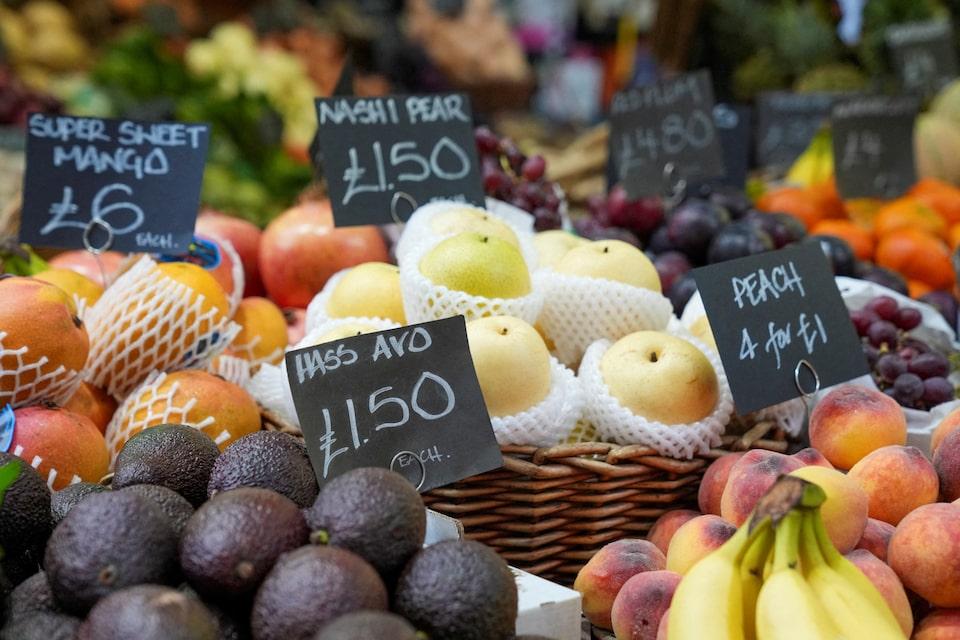
LONDON, March 26 (Reuters) - The British public's expectations for inflation over the longer term have risen this month to their highest since October 2022, when surging energy prices had pushed headline inflation to double digits, a Citi/YouGov survey showed on Wednesday. Longer-term inflation expectations rose to 4.2% in March from 3.9% in February, while year-ahead expectations rose to their highest since October 2023 at 4.0%, up from 3.9%. Sign up here. "For the (Bank of England) MPC, this survey will warrant continued caution with quarterly cuts the likely outcome for now," Citi economists Callum McLaren-Stewart and Michel Nies said. Official data earlier on Wednesday showed British consumer price inflation slowed more than expected in February to 2.8% from 3%. However, the BoE expects inflation to gather steam and reach around 3.75% later this year and not return to its 2% target until late 2027. Citi said other surveys, including one conducted by the BoE, had shown much lower long-term public inflation expectations and that its latest results should be treated "with a degree of caution". The rise in long-term inflation expectations in the Citi survey was most marked in the 18-29 age group. The survey was based on polling of 2,141 adults on March 20 and March 21. https://www.reuters.com/world/uk/uk-publics-inflation-expectations-rise-highest-since-oct-2022-citiyougov-survey-2025-03-26/
2025-03-26 11:56
KYIV, March 26 (Reuters) - Russia has attacked at least eight Ukrainian energy facilities since March 18 when Moscow says it halted such attacks, a senior Ukrainian presidential official said on Wednesday. Ihor Zhovkva, speaking on national television, also said that, contrary to Russian statements, no preconditions were discussed with U.S. officials as they agreed a Black Sea truce with Russia during talks in Saudi Arabia this week. Sign up here. The Kremlin said earlier that a number of conditions must be met before the Black Sea maritime security deal negotiated with the United States can be activated. https://www.reuters.com/world/europe/russia-has-attacked-eight-ukrainian-energy-facilities-since-announcing-halt-kyiv-2025-03-26/

2025-03-26 11:46
PARIS, March 26 (Reuters) - GravitHy, a low-carbon French iron producer which is planning to build a plant in southern France, said on Wednesday it had raised 60 million euros ($65 million). The company, founded in 2022, said its latest fundraising had brought in new investors such as Rio Tinto (RIO.L) , opens new tab and Siemens (SIEGn.DE) , opens new tab, along with money from existing shareholders Engie New Ventures (ENGIE.PA) , opens new tab and InnoEnergy. Sign up here. Europe is keen to develop more of its own steel. The European Commission also plans to tighten import restrictions to make the steel sector more competitive. The company is planning to build its plant in Fos-sur-Mer, near Marseille, and get it commissioned by the end of 2028. It says the new plant will create 500 jobs and represent a total investment of 2.2 billion euros. Investment banks Rothschild and Societe Generale (SOGN.PA) , opens new tab advised GravitHy on the fundraising round. ($1 = 0.9262 euros) https://www.reuters.com/markets/commodities/french-low-carbon-iron-producer-gravithy-raises-65-million-2025-03-26/

2025-03-26 11:36
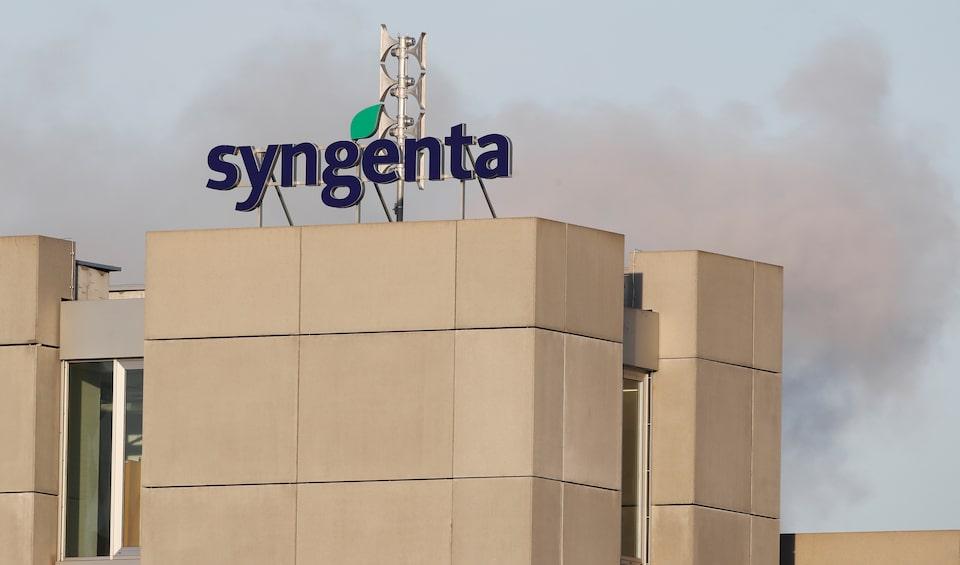
ZURICH, March 26 (Reuters) - Syngenta Group expects the crop protection market to stabilize this year after it posted a decline in sales and profit during 2024, the agrochemicals company said on Wednesday. The Swiss-based company, which is controlled by China's Sinochem (600500.SS) , opens new tab, said inventory reductions in crop protection products, unfavourable weather conditions and weaker currencies in emerging markets hurt sales last year. Sign up here. Group sales slipped in 2024 by 10% to $28.8 billion, while operating profit (EBITDA) decreased 15% to $3.9 billion. Still, Syngenta said it expected crop protection and seeds markets to stabilise this year, vowing to maintain a balanced focus on investments in R&D and innovation, cost discipline, and cash flow generation to drive long-term profitable growth. https://www.reuters.com/markets/commodities/syngenta-expects-crop-protection-market-stabilise-2025-2025-03-26/
2025-03-26 11:34
LONDON, March 26 (Reuters) - What matters in U.S. and global markets today By Mike Dolan , opens new tab, Editor-At-Large, Financial Industry and Financial Markets Sign up here. The darkest U.S. consumer confidence outlook in 12 years is sobering, to say the least, but the big question for investors is whether consumers actually rein in spending to match their apparent gloom. Today, I'll discuss this, give you an update on what else is happening in markets and then take a look at how much of next week's potential U.S. tariff sweep is being priced into currency markets. Today's Market Minute * The European Union's trade commissioner Maros Sefcovic met with U.S. President Donald Trump's top trade officials on Tuesday to try to avoid steep U.S. tariffs on EU goods next week. * The United States reached separate deals on Tuesday with Ukraine and Russia to pause their attacks at sea and against energy targets, with Washington agreeing to push to lift some sanctions against Moscow. * British finance minister Rachel Reeves is expected to announce cuts to her spending plans on Wednesday in a bid to reassure investors that she can be trusted to fix the public finances as growth falters. * The Bank of Japan must raise interest rates if persistent increases in food costs lead to broad-based inflation, Governor Kazuo Ueda said on Wednesday. * China wields significant policy room to stimulate its economy this year while some reform is needed to boost consumption, Huang Yiping, an advisor to China's central bank, said on Wednesday. Consumer gloom or feint? With the fog thickening over next week's big U.S. tariff announcement, financial markets are mostly in a holding pattern as the final week of a volatile first quarter limps to a close. But the jury is still out on how the real economy is absorbing the prospect of a global trade war. On Tuesday, the Conference Board's March consumer survey more than matched the worrying University of Michigan's version for this month. Overall sentiment dropped to its lowest since 2021, and short-term expectations came in at their weakest since 2013. The latter reading - which reflects the short-term outlook for income, business, and labor market conditions - is typically consistent with a wider economic downturn. But like so many economic signals of late, this one wasn't entirely negative. The so-called labor market differential, derived from data on respondents' views on whether jobs are plentiful or hard to get, actually ticked up, indicating a still-robust employment picture. Markets now have to wait to see whether hard data on actual spending shows a pullback commensurate with the drop in confidence. Investors have taken something of a jaundiced view of surveys recently because the results have not yet been matched by real world activity. On the trade front, it's still not entirely clear which U.S. tariffs are coming next week, with multiple 'ifs' and 'buts' being put forward as last minute talks continue. Wall Street stocks ended mixed on Tuesday. Tech stocks outperformed again, but the S&P 500 (.SPX) , opens new tab barely eked out a gain. Futures are back slightly in the red today. Treasury yields were steady this morning after a sharp retreat backed by Tuesday's dour confidence report and the decent 2-year note auction. The dollar index (.DXY) , opens new tab was flat. Overseas stocks were also a mixed bag on Wednesday, with European (.STOXXE) , opens new tab and mainland Chinese (.CSI300) , opens new tab stocks in the red but Hong Kong (.HSI) , opens new tab and South Korea (.KS11) , opens new tab up. Chinese markets and the yuan were sideswiped by news that the U.S. added six subsidiaries of China's leading cloud computing and big data provider Inspur Group to the U.S. export restriction list along with dozens of other Chinese entities. But the offshore yuan's drift to three-week lows is still mostly down to tariff trepidation and expectations of further domestic credit easing in China. In Europe, the big set piece of the day is Britain's latest government budget and forecasting update, which gilt markets have been awaiting with some anxiety. However, both UK bond yields and sterling slipped today after news of a surprising drop in UK inflation last month. Now, let's stay in the FX markets and consider what may or may not be priced in ahead of next week's big U.S. tariff announcement. FX markets still suspect Trump is bluffing It's been a lousy start to the year for Wall Street, but any notion that a global trade war is fully priced by investors seems fanciful. Just look at currency markets. If you've lost track of what the U.S. administration's trade plan is currently, then rest assured that you're not alone. President Donald Trump's strategy ebbs and flows by the day amid periodic insistence that every country is going to pay, only to revert to seemingly random exclusions or added complexity via sectoral and national caveats. Slightly punch drunk, financial markets have reverted to behaving like a metronome: "risk on" with any suggestion that Trump is hesitating and "risk off" with every social media post calling for blanket U.S. trade retribution. As it stands, the latest nods and winks suggest the momentous April 2 announcement will be messier than first billed - and the pressure on stocks and bond yields has lifted a bit to reflect that. Whether the administration's more equivocal stance is a result of the market's tantrum in recent weeks is an open question. But it's anyone's guess what measures will eventually show up and it's a pretty safe bet that whatever is announced will not be the end of it. So is the trade war risk fully priced in? How could it be? MODELLING THREATS Barclays FX strategist Themos Fiotakis and team have been brave enough to attempt to build a framework showing how currency markets might react in a full trade war scenario. And they reckon very little of the outsize risk is currently priced into foreign exchange rates, either from tariffs already announced or from those coming down the pike. The Barclays model works off the basic idea that tariffs will inflate the globally-cleared price of imports in the U.S. and that the dollar should nominally appreciate to offset the resulting real exchange rate effects. They judge the extent to which it has done so since Trump was elected for a second term last year by the size of moves since then that cannot be explained by economic considerations embedded in interest rate differentials. Needless to say, the matrix of what's already announced, what might be announced and what retaliatory measures are in place or expected gets pretty complicated. Numerous "ifs" and "buts" apply. Just one of many unknown wrinkles for the Canadian dollar and Mexican peso, for example, is the extent to which some imports will be exempt due to the USMCA agreements struck during Trump's first term. Barclays' conclusion is that of the four major currencies under the gun, the Canadian dollar is reflecting the most risk, with a 6% tariff premium already priced in. However, the strategists argue this is still less than half of the move that would be expected given the tariffs already in place, and even less based on those that might yet come. The euro's tariff-related loss since the election of some 4% is almost half of what might be expected given potential tariffs, insulating it to some degree. And if you take all of the worst-case scenarios, Barclays thinks the peso could be at risk for further depreciation of 38%, with a risk of a 21% decline for China's yuan from here, 19% for the Canadian dollar and 9% for the euro . Deutsche Bank emphasises differences in relative hits to the U.S. economy and rival markets of similar-sized tariffs, pointing out that a U.S. tariff on the euro zone would impact a greater share of the U.S. economy than that of Europe, whereas the opposite was true with the impact on Mexico. Complications aside, if you at least accept that currency markets are far from fully priced for what's coming, then it's unlikely stock or bond markets are much more prepared. To be sure, U.S. growth forecasts have been downgraded and full-year 2025 earnings growth forecasts for S&P 500 firms have been dragged lower. Year-end S&P 500 index (.SPX) , opens new tab targets have been cut too - even though consensus forecasts remain 15% above current levels. But if currency markets are any guide, the full blast of what's to come has yet to be absorbed. While it's still possible the Trump trade threats are mostly bluster - that's a nervy stance to cling on to as next Tuesday's "Liberation Day" approaches. Chart of the day Government budget day in Britain is rarely good news for the UK government bond market, and finance minister Rachel Reeves is under pressure again to slash government spending as economic growth forecasts get cut again and defense requirements rise. A Reuters poll of primary dealers projected 'gilt' issuance of around 304 billion pounds in the next financial year - the second-largest remit on record. Worryingly this month, 10-year gilt yields have edged up relative to the U.S. and European equivalents. But the market received some relief on Wednesday from an unexpected drop in UK inflation in February. Today's events to watch * U.S. February durable goods orders * St. Louis Federal Reserve President Alberto Musalem and Minneapolis Fed President Neel Kashkari to speak; European Central Bank board member Piero Cipollone and Bank of France Governor Francois Villeroy de Galhau to speak * UK finance minister Rachel Reeves announces half-yearly fiscal forecasts and updated budget * U.S. corporate earnings: Dollar Tree, Cintas, Paychex * U.S. Treasury sells $70 billion of 5-year notes, $28 billion of two-year floating rate notes Opinions expressed are those of the author. They do not reflect the views of Reuters News, which, under the Trust Principles , opens new tab, is committed to integrity, independence, and freedom from bias. https://www.reuters.com/markets/us/americas-temporary-consumer-gloom-or-economic-doom-2025-03-26/
2025-03-26 11:19
March 26 (Reuters) - Goldman Sachs on Wednesday maintained its London Metal Exchange copper price forecasts for the next year, and said it expected the implementation of U.S. tariffs on copper imports to prevent a U.S. stock glut in the third quarter. Goldman forecasts three-, six-, and twelve-month LME copper prices at $9,600, $10,000 and $10,700 per metric ton respectively. The bank flagged a near-term downside risk to prices from a trade policy update due to take effect on April 2. Sign up here. Benchmark three-month copper on the LME was down 1.7% at $9,944 a metric ton as of 1048 GMT. U.S. copper futures hit a record high on Wednesday, expanding their premium over the London prices with rising bets on the level of import tariffs that U.S. President Donald Trump may impose on the metal. Last month Trump ordered a probe into potential new tariffs on copper imports to rebuild U.S. production of the metal critical to electric vehicles, military hardware, power grids and many consumer goods. "With the possibility of earlier tariff implementation, we now expect U.S. stocks to decline by 30-40 kt/month from mid-to-late Q2 onwards," the note said. "Thus, we avoid a stock glut in the U.S. in Q3 2025, when we expect global copper market tightness to be most pronounced." It added that greater certainty on copper tariffs means COMEX is likely to trade at a higher premium to LME. https://www.reuters.com/markets/commodities/goldman-maintains-copper-price-forecasts-says-tariffs-will-avert-us-glut-2025-03-26/