2025-03-26 05:48
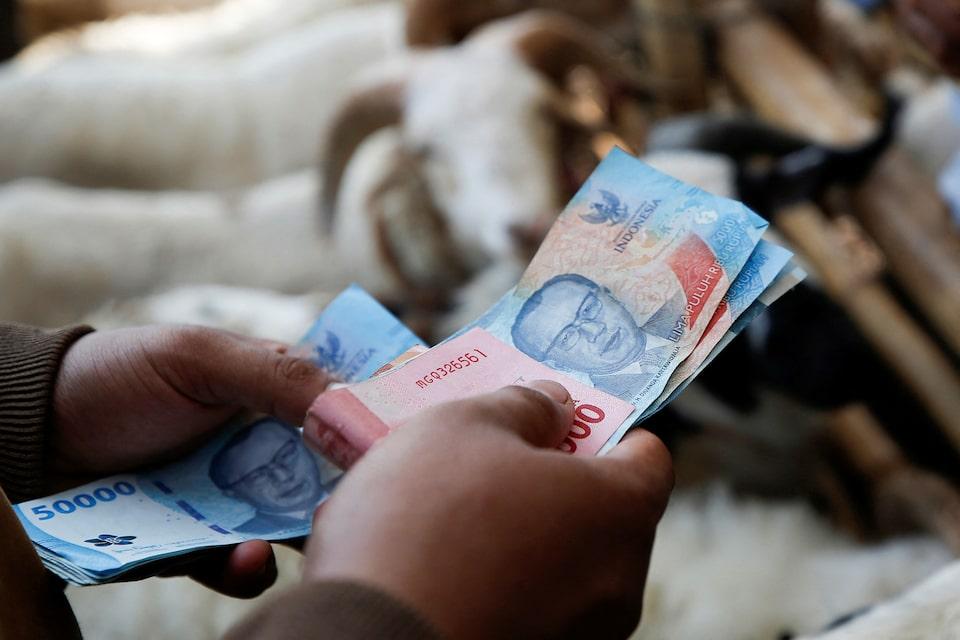
TAIPEI, March 26 (Reuters) - Taiwan's central bank on Wednesday defended the island's trade and currency record ahead of possible tariffs from U.S. President Donald Trump, saying the high current account surplus was a structural problem and Washington understood that. Trump officials, including Treasury Secretary Scott Bessent, have said that much of the reciprocal tariff focus, to be announced on April 2, will be on 15 countries that have the highest trade surpluses, which Bessent has referred to as the "Dirty 15." Sign up here. They did not name these, but according to U.S. Census Bureau data, Taiwan is one of those 15 with the largest trade surpluses with the United States, along with countries like China and South Korea plus the European Union. In a report to lawmakers, Taiwan's central bank noted that the island's current account surplus last year was 14.3% of GDP. "It reflects the structural problem of the sharp increase in U.S. demand for Taiwan's technological products and the expansion of our trade surplus with the United States. The U.S. side understands this point of view," the central bank said. Taiwan runs a large trade surplus with the United States, which surged 83% last year, with the island's exports to the U.S. hitting a record $111.4 billion, driven by demand for high-tech products such as semiconductors, a sector Taiwan dominates. "As Taiwan's trade surplus with the United States is relatively large, the risk of bilateral trade disputes between Taiwan and the United States must be carefully managed," the central bank said. Taiwan has previously been put on a foreign exchange "monitoring" list by the U.S. Treasury Department given its trade surplus and outsized current account surplus. The central bank said its exchange rate policy aims to maintain an "orderly" foreign exchange market and financial stability, and that it never intended to gain an unfair competitive advantage in trade. It also expressed concern about Trump's frequent economic and trade policy flip-flops and lack of clarity about his plans on tariffs in particular. "Especially, the impact of the tariff increase policy is the most significant, which is detrimental to the growth of the global economy and may push up inflation," the central bank said. https://www.reuters.com/markets/taiwan-defends-trade-currency-record-ahead-possible-us-tariffs-2025-03-26/
2025-03-26 05:43
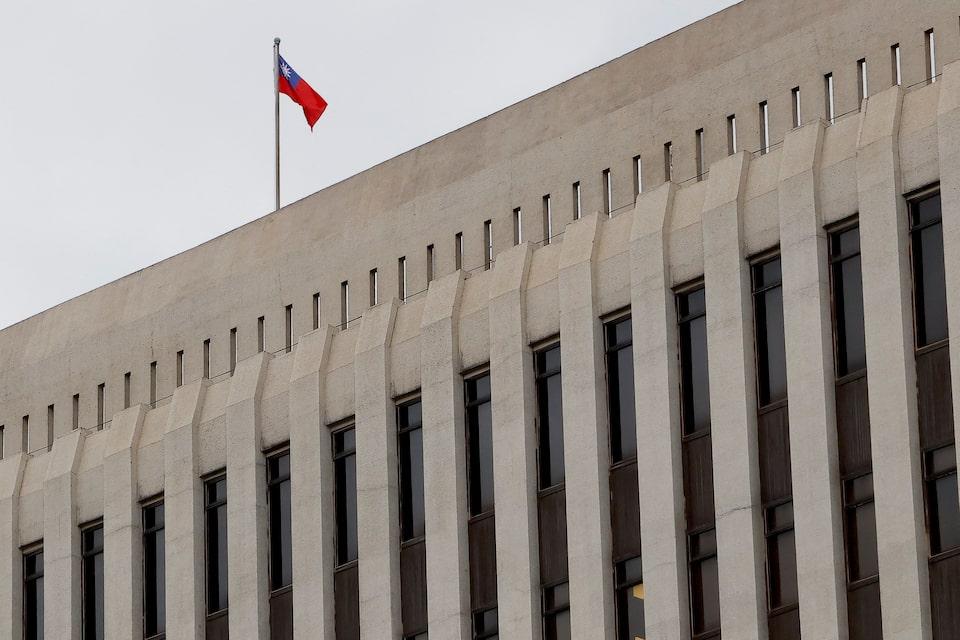
March 26 (Reuters) - Chicago Federal Reserve Bank President Austan Goolsbee said he expected interest rates to be "a fair bit lower" in 12-18 months but added that it may take longer than anticipated for the next cut because of economic uncertainty, according to a Financial Times interview published Wednesday. Goolsbee, a voting member of Fed's rate-setting committee this year, told the FT that if markets start factoring higher inflation then he would view that as "a major red flag area of concern" for policymaking decisions. Sign up here. "My view is that when there’s dust in the air, 'wait and see' is the correct approach when you face uncertainty,” he told the FT in an interview. Fed policymakers left the central bank's benchmark interest rate in the 4.25%-4.50% range earlier in March and signaled they still expect to lower it at some point later this year. Fed Chair Jerome Powell later said that President Donald Trump's tariff increases would delay progress in bringing down inflation this year, but the Fed's base case is that tariff-related price impacts will be transitory, working through the economy quickly. https://www.reuters.com/markets/rates-bonds/feds-goolsbee-sees-lower-interest-rates-years-time-warns-uncertainties-ft-2025-03-26/

2025-03-26 05:42
KAMPALA, March 26 (Reuters) - The volume of Uganda's coffee exports rose 27.9% in February, compared to the same month a year ago, as high prices pushed traders to release larger quantities from their inventories, the agriculture ministry has said. Uganda is Africa's largest coffee exporter followed by Ethiopia, and primarily cultivates the robusta variety. Sign up here. In February, the east African country shipped 555,756 60-kilogram bags of coffee, which was 27.9% more than the same month last year, the ministry of agriculture said in a report published late on Tuesday. Uganda earned $167.7 million from coffee exports in February, more than double received during the same period last year, the ministry said. "The prevailing high prices at the international scene prompted exporters to release their stocks," the report said. Uganda earned $1.7 billion from exports in the twelve months to February, compared to around $1 billion in the previous year, according to the ministry. https://www.reuters.com/markets/commodities/ugandas-february-coffee-exports-jump-28-yy-high-prices-2025-03-26/
2025-03-26 05:32
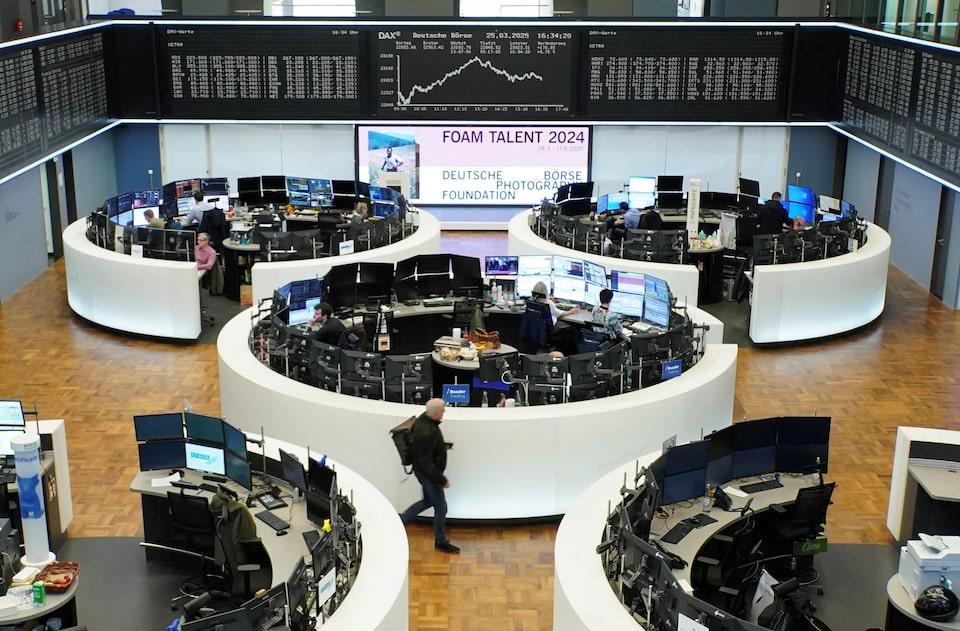
A look at the day ahead in European and global markets from Kevin Buckland The relief rally in global stocks was still in place on Wednesday in Asia, but with dwindling conviction. Sign up here. It's not that there was any news - or late social media posts from POTUS himself - to change the market's outlook. It's more that the rally has been built on optimism for a softer, more flexible stance from President Donald Trump, but the uncertainty remains - the tariff deadline is still April 2, and there's still no clarity on what will or won't happen that day. As everyone knows, there's nothing markets hate more than uncertainty. MSCI's index of world equities (.MIWO00000PUS) , opens new tab started the week with a 1.2% rally, narrowing to a 0.3% rise on Tuesday, and just barely staying above water very early in the latest session. Japan's Nikkei (.N225) , opens new tab, for example, began brightly with gains of 1%, but those were halved by midday. Likewise, Hong Kong's Hang Seng (.HSI) , opens new tab rose more than 1% early on, but was only up 0.3% just after noon. U.S. equity futures flipped from small gains to small losses. For now, pan-European STOXX 50 futures are signalling a 0.1% rise. To recap, Trump suggested on Monday that not all the levies he's threatened will be implemented on April 2, and "a lot of countries" could get some exemptions, without giving further details. At the same time, investors got a reminder of how erratic the trade situation can be, with the announcement of 25% tariffs on buyers of Venezuelan oil and gas. And considering Trump has dubbed next Wednesday "Liberation Day", you would think it would bring at least some fireworks. Certainly for markets, the day could be a crucial one, either signalling a more flexible approach to tariffs going forward, or confirming a hard line, and how difficult it is to read Trump's intentions. On the European data calendar, UK CPI will be closely watched, with the outlook for Bank of England interest rate cuts looking increasingly cloudy under Trump's trade war. British Finance Minister Rachel Reeves also delivers a fiscal update to parliament later today, and is set to announce an additional 2.2 billion pounds ($2.84 billion) for defence spending. France releases consumer confidence and jobs figures, and Bank of France Governor Francois Villeroy de Galhau will be quizzed about the economy by the lower house's finance commission. In the U.S., Minneapolis Fed President Neel Kashkari and St. Louis Fed boss Alberto Musalem both have public speaking engagements. Key developments that could influence markets on Wednesday: -UK CPI (February) -France consumer confidence (March), employment figures (February) -UK fiscal update -Minneapolis Fed's Kashkari, St. Louis Fed's Musalem speak at separate venues ($1 = 0.7733 pounds) https://www.reuters.com/markets/europe/global-markets-view-europe-2025-03-26/
2025-03-26 05:21
Lawmaker sees yen's real value at 120-130 per dollar Eyes inheritance tax exemption for Japanese stock holdings Popularity of foreign stocks seen as weak yen factor TOKYO, March 26 (Reuters) - Japan's economic fundamentals suggest the yen's real value is closer to 120-130 per dollar rather than the current 150 levels, senior lawmaker told Reuters, as the ruling party considers steps to help reverse capital outflows. "I believe 120 to 130 levels to the dollar are seen as the value reflecting Japan's economic strength," Satsuki Katayama, who chairs the ruling Liberal Democratic Party's (LDP) research commission on the finance and banking systems, said in an interview on Tuesday. Sign up here. She declined to comment specifically where she believes the yen should trade. The Japanese currency fell past 150 to the dollar this week on solid U.S. data, cautious optimism on U.S. tariff policies and expectations that the Bank of Japan will go slow on monetary tightening. A weak yen has been a headache for Japanese policymakers because it accelerates inflation by pushing up import costs, weighing on consumption. Katayama said U.S. President Donald Trump's administration also does not want excessive yen weakness versus the dollar, but noted there are limits to what monetary policies of both countries can do to change the tide. "While currency interventions could serve as a trigger (for currency moves), their long-term impact tends to be limited, so we need measures that fundamentally address the issue," Katayama said. For example, the LDP is set to propose an expansion in a tax-free investment programme to encourage individual investors to own domestic stocks, she said. This could help stem the flow of household funds overseas, in turn supporting the yen. Specifically, holdings of domestic stocks held by elderly investors for an extended period of time under the programme should be exempt from inheritance tax when they are succeeded by younger generations, Katayama said. The Nippon Individual Savings Account (NISA) programme, which exempts retail investors from paying capital gains taxes on stock holdings, expanded significantly in 2024. But high-yielding overseas stocks have dominated the popular investment product rankings so far, which analysts see as one factor behind the yen's persistent weakness. "We want to create benefits for long-term investors in domestic stocks," Katayama said, adding that the LDP aims to include those measures in the government's annual policy guidelines for budget planning to be released around June. https://www.reuters.com/markets/currencies/japan-lawmaker-says-yen-undervalued-eyes-steps-reverse-outflows-2025-03-26/

2025-03-26 05:05
Rupiah down 3% this year vs dollar, worst performer in Asia Investors worry about Prabowo's spending plans Indonesian stocks loiter near lowest in over three years SINGAPORE, March 26 (Reuters) - Indonesia's currency neared a record low against the U.S. dollar on Wednesday as worries over slowing growth and rising government spending shook investor confidence in Southeast Asia's biggest economy. The rupiah was flat at 16,580 per U.S. dollar at 0645 GMT, hovering near the all-time low of 16,800 touched in June 1998, during the Asian Financial Crisis and just after the fall of Indonesia's authoritarian leader, General Suharto. Sign up here. On Tuesday, the rupiah hit a post-crisis low of 16,640, before the central bank intervened to defend the currency. "Sentiment is very poor whether you're looking at equities or the rupiah," said Pauline Ng, head of equities for Southeast Asian nations at JPMorgan Asset Management. "With the new administration coming in, there was a market expectation that it would be business as usual. Miscommunication and some of the policies have led to uncertainty in the market." The rupiah has lost 3% against the dollar this year, making it the worst performing Asian currency and prompting the central bank to step into the market regularly to steady the declines. A central bank official said on Wednesday Bank Indonesia stood ready to stabilize the currency, although he would not comment on whether the central bank had intervened on the day. Indonesia's benchmark index (.JKSE) , opens new tab has also suffered, and hit its lowest level in over three years on Monday, although it has recovered somewhat, up 3.5% on Wednesday ahead of a long holiday. Indonesian markets are closed from Friday till April 7. ECHOES OF PAST Investor confidence in Indonesia has been waning as worries grow about Prabowo's massive social spending plans, budget cuts and the cancellation of a tax hike. Prabowo's ambitious programme to provide free meals to more than a quarter of his people at a cost of 71 trillion rupiah ($4.29 billion) has brought scrutiny from investors. Markets have been concerned about the cost of the programme, worried that additional debt to fund it could affect the country's hard-won reputation in recent years for fiscal prudence. The launch of a new sovereign fund Danantara Indonesia has also raised concerns over potential political interference despite Prabowo's insistence the fund could be audited anytime and by anyone. The rupiah's 1998 nadir followed the collapse of Suharto's 32-year rule in the face of mass street protests and, in the markets, an attack on Southeast Asia's highly leveraged economies. There are echoes of the past as foreigners pull more than $2 billion out of the stock market this year and Prabowo, Suharto's former son-in-law and a special forces commander under his rule, expands the military's role in government. Aninda Mitra, head of Asia macro strategy at BNY Investment Institute, said the rupiah would remain relatively fragile until greater clarity emerges on the specifics of fiscal needs and sources of funding and how these affect growth. "Local authorities may have to utilise a broader array of tools over a longer period of time to smooth any adjustment in the onshore rupiah market," he said. ($1 = 16,555.0000 rupiah) https://www.reuters.com/markets/asia/indonesian-rupiah-stalks-record-low-fiscal-worries-rattle-investors-2025-03-26/