2025-03-25 12:10
MOSCOW, March 25 (Reuters) - Russia's Defence Ministry said on Tuesday that Ukraine had launched three attacks on Russian civilian energy infrastructure on Monday as Russian and U.S. officials held talks in Saudi Arabia about a possible ceasefire agreement. The ministry said in a statement that Ukraine on Monday had launched attacks on infrastructure owned by the Rosseti state-owned company, on the Svatovo gas distribution station in Russia-controlled eastern Ukraine, and on an underground gas storage facility in Crimea. Sign up here. Russia says it has agreed to a moratorium on its own attacks on Ukrainian energy infrastructure after a phone call between Russian President Vladimir Putin and U.S. President Donald Trump on Tuesday last week. Ukraine has not declared a similar moratorium, but has said it would be willing to do so if a formal agreement setting out the precise terms for such a deal was reached. "By continuing his daily attacks on Russia's energy infrastructure, (Ukrainian President) Zelenskiy is confirming his unwillingness to reach a deal and the impossibility of trusting any guarantees he might give to observe any possible agreements," the Defence Ministry said in its statement. https://www.reuters.com/world/europe/russian-army-says-kyiv-launched-three-attacks-civilian-energy-infrastructure-2025-03-25/

2025-03-25 11:57
March 25 (Reuters) - ArcelorMittal has been indicted for endangering the lives of others, forgery and environmental damages in connection to industrial pollution in the Fos-sur-Mer region, France, the Marseille public prosecutor's office told Reuters on Tuesday. The world's second largest steelmaker has been placed under judicial supervision, subject to a 250,000 euro ($270,450) deposit and a 1.75 million euro bank guarantee, the prosecutor's office said in an emailed statement. Sign up here. The Luxembourg-based group was sued in November 2018 by French environmental NGO Association de Défense et Protection du Littoral du Golfe de Fos (ADPLGF), some 250 local residents, unions and other non-governmental organisations. They were represented by Julie Andreu, a Marseille environmental lawyer, who filed the complaint. "ADPLGF welcomes these historic indictments, targeting not only the corporate entity but also single individuals," the NGO said in a press release. ArcelorMittal "firmly contests the accusations", the Luxembourg-based group said in a statement emailed to Reuters, adding that it "fully cooperates with the authorities responsible for handling complaints filed by residents and environmental associations related to the Fos-sur-Mer site." The company said it has done "everything possible to ensure that emissions from the Fos-sur-Mer site comply with the prescribed annual limit values. There has been no falsification of data." It added that "since 2014 it has invested more than 735 million euros, notably to modernize its facilities or innovate to reduce emission levels, whose regulatory thresholds are increasingly stringent." These actions have allowed ArcelorMittal to reduce atmospheric emissions from the site by 70% compared with 2002, the group added. ($1 = 0.9244 euros) https://www.reuters.com/business/environment/arcelormittal-indicted-fos-sur-mer-pollution-case-france-2025-03-25/

2025-03-25 11:44
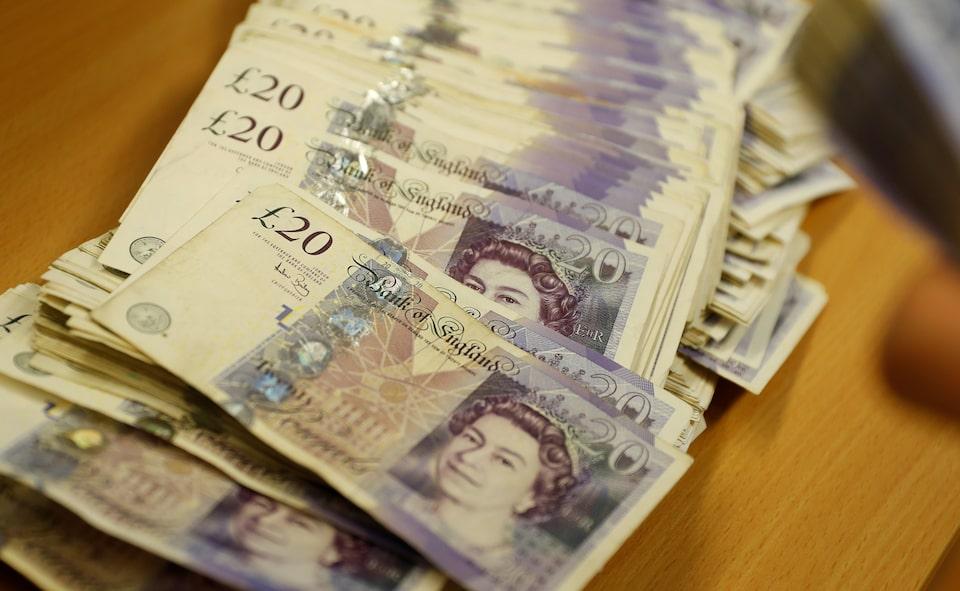
LONDON, March 25 (Reuters) - The pound rose slightly on Tuesday after falling to a two-week low the previous day, as investors continued to try to gauge the impact of tariffs on the global economy and looked ahead to Wednesday's UK spring statement. Sterling was last up 0.2% at $1.295. The euro slipped 0.1% against the pound to 83.53 pence. Sign up here. Finance minister Rachel Reeves is expected to lay out spending cuts and lower growth forecasts when she presents the spring statement, which comes during a period of lower-than-expected growth and rising government borrowing costs. The pound climbed to a more than four-month high last week as the U.S. dollar fell on concerns about the impact of President Donald Trump's stop-start tariffs on American growth. Signs the Bank of England remains cautious about further rate cuts amid sticky inflation and global tariff uncertainty have also supported the pound. However, sterling fell to a two-week low on Monday of $1.2283 as the dollar found a footing on hopes that Trump's April 2 tariff announcements may be less wide-ranging than initially expected. It ticked up in relatively subdued trading on Tuesday as investors waited for further signals from the Trump administration on tariffs. Francesco Pesole, currency strategist at ING, said the spring statement posed a risk for sterling, particularly if UK government bond markets reacted badly to the announcements. "There's a very fine line not to unnerve the gilt market," he said, which could knock confidence in the UK and weigh on the pound. "If they want to go a bit bigger on spending cuts to prevent that gilt market instability, then the risk is markets will have to reprice growth (lower) quite sharply. If that happens, that's still a negative for sterling." Britain's benchmark 10-year government bond yield - a proxy for government borrowing costs - was up 3 basis points at 4.75% on Tuesday around its highest in two weeks. Yields move inversely to prices. https://www.reuters.com/markets/currencies/sterling-inches-higher-with-tariffs-spring-statement-focus-2025-03-25/
2025-03-25 11:44
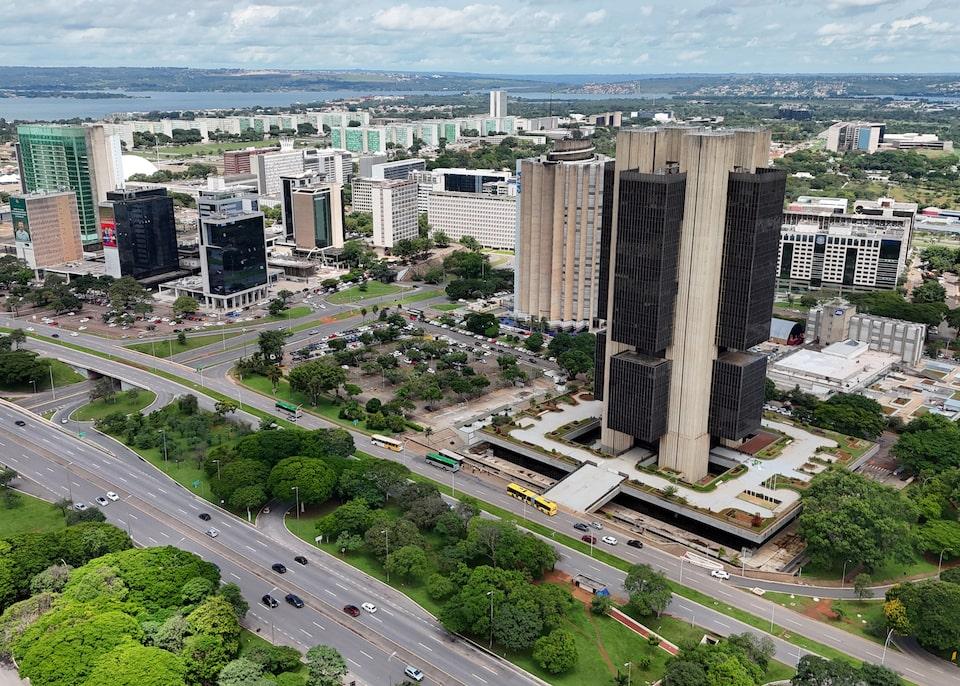
BRASILIA, March 25 (Reuters) - Brazil's central bank said on Tuesday that given heightened uncertainty, it chose to signal only the direction of its next move, emphasizing that due to monetary policy lags, it was appropriate to indicate a smaller interest rate hike. In the minutes of its March 18-19 policy meeting, where it raised interest rates by 100 basis points to 14.25% and signaled a smaller increase in May, policymakers also stressed that, given the adverse scenario for inflation dynamics, it was appropriate to indicate that the cycle has not come to an end. Sign up here. According to the central bank, monetary tightening was deemed necessary to bring inflation back to the 3% target amid deanchored expectations, high inflation forecasts, and resilient economic activity. The central bank noted that if its reference scenario projections hold, 12-month inflation will stay above the target's upper tolerance limit of 4.5% for six consecutive months starting in January, leading to a target breach in June under the new inflation-targeting framework. Looking ahead, the central bank said it would monitor economic activity as well as exchange rate pass-through following recent volatility and inflation expectations, which have shown further deanchoring and influence future price dynamics. After President Luiz Inacio Lula da Silva's government recently announced a series of measures aimed at boosting middle-class disposable income, including new rules to expand payroll-deductible credit for formal workers, the minutes stressed the importance of keeping monetary policy channels unobstructed. "Monetary policy acts through different channels, including credit, leading the volume of loans to react to financial conditions and to expectations, as prospective assessments impact current consumption and investment," policymakers wrote. "In order to fulfill its mandate and the convergence of inflation to the target at the lowest cost, monetary policy must be able to act with all channels unobstructed." https://www.reuters.com/world/americas/brazil-central-bank-says-high-uncertainty-prevents-guidance-beyond-next-meeting-2025-03-25/
2025-03-25 11:30
SINGAPORE, March 25 (Reuters) - Trade of Venezuelan oil to top buyer China stalled on Tuesday after U.S. President Donald Trump's order threatening tariffs on countries buying from Caracas created fresh uncertainty, days after U.S. sanctions targeting China's imports from Iran. Trump's order, which caught traders and refiners in China by surprise, states that the U.S. may impose 25% tariffs on goods from any country importing Venezuelan oil, at the discretion of the secretary of state, starting on April 2. Sign up here. Chinese traders and refiners said they were waiting to see how the order would be implemented and whether Beijing will direct them to stop buying, although several industry insiders said they expect flows ultimately would continue, noting the frequent shifts in Trump's tariff threats. A top executive with a regular Chinese trader of Venezuelan oil said the firm will refrain from buying any April shipments. "The worst thing in the oil market is uncertainty. We won't dare touch the oil for now," he told Reuters. Another trading executive, at an independent refiner that occasionally buys Venezuelan oil, said the order creates significant confusion and would also affect Singapore-based buyers of Venezuelan fuel oil. "It's a total mess," the executive said. "China is already in a tariff war with the U.S. So be it." A third trader also said the independent refiners known as teapots that are the main Chinese buyers of Venezuelan crude were pausing as they sought information on whether supply would continue to be available and at what price. China is Venezuela's largest oil buyer, directly and indirectly taking in 503,000 barrels per day (bpd) of Venezuelan crude and fuel, or 55% of its exports, that is mostly rebranded as Malaysian after transshipment. Most Venezuelan oil imported to China is processed by a group of teapots favouring the heavy Merey grade that is cheaper than U.S.-sanctioned Iranian and Russian oil. BEIJING SIGNAL? Beijing on Tuesday reiterated its long-standing opposition to unilateral sanctions, and said it firmly opposed the latest U.S. move. "The United States has long abused illegal unilateral sanctions and so-called long-arm jurisdiction to grossly interfere in the internal affairs of other countries," foreign ministry spokesperson Guo Jiakun told a press briefing. Trump has hit Chinese goods with 20% additional tariffs since February and potentially more could be announced as soon as early April. In response, China has imposed counter tariffs, implemented curbs on exports of certain critical minerals and launched probes into foreign companies. Unless Beijing orders refiners to stop purchasing Venezuelan oil, which traders and analysts said they believed was unlikely, teapots squeezed by narrow margins and in need of cheap feedstock would probably look to find ways to continue buying once they have more clarity, they said. An official at an independent refinery that does not buy Venezuelan oil said he expects the U.S. move to have "minimal" impact on Chinese purchases. "Refiners do not care about the 25% tariffs. It's up to China's stance - what the U.S. does is a violation of free trade and China will clearly remain against it," the person said. In addition to teapot buyers, Reuters reported in 2022 that China had been bringing in direct shipments of about 42,000-bpd through a trading arm of a state defense firm as part of a deal to offset Caracas' billions of dollars in debt to Beijing. That arrangement continues, the executive and a trader close to Merey deals said. Last week, Washington imposed new sanctions on entities including Shouguang Luqing Petrochemical, a teapot refiner, and vessels that supplied oil to such plants in China, the top buyers of Iranian crude. https://www.reuters.com/business/energy/trade-venezuelan-oil-china-stalls-after-new-trump-order-2025-03-25/

2025-03-25 11:09
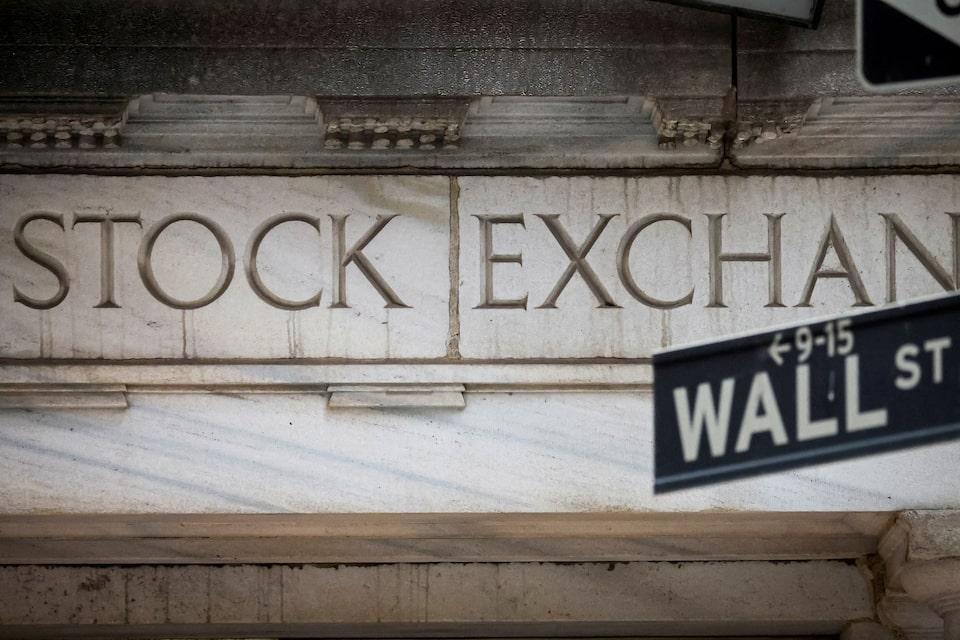
LONDON, March 25 (Reuters) - What matters in U.S. and global markets today By Mike Dolan , opens new tab, Editor-At-Large, Financial Industry and Financial Markets Sign up here. Wall Street stocks jumped on Monday, spurred by hopes that the White House is hesitating in its plan for sweeping "reciprocal" tariff hikes next week. The rally was also helped along by news that S&P Global's flash U.S. business survey for March showed overall corporate activity well above forecasts, calming fears about a brewing tariff-related downturn. But under the hood, the survey results were perhaps less impressive than they seemed. I'll discuss this below and then explore why declining U.S. private sector debt may not be such a good thing. Today's Market Minute * U.S. President Donald Trump said on Monday that automobile tariffs are coming soon even as he indicated that not all of his threatened levies would be imposed on April 2 and that some countries may get breaks. * Trump on Monday issued an executive order declaring that any country buying oil or gas from Venezuela will pay a 25% tariff on trades with the U.S., while his administration extended a deadline for U.S. producer Chevron to wind down operations in the South American country. * Atlanta Federal Reserve President Raphael Bostic said he anticipates slower progress on inflation in the coming months and thus now sees the Fed cutting its benchmark interest rate only once more by the end of this year. * India is open to cutting tariffs on more than half of U.S. imports worth $23 billion in the first phase of a trade deal the two nations are negotiating, two government sources said. * Top Trump administration officials mistakenly disclosed war plans in a messaging group that included a journalist shortly before the U.S. attacked Yemen's Iran-aligned Houthis, the White House said on Monday. Reality check on household confidence While S&P Global showed that the dominant U.S. service sector has rebounded much faster than expected, U.S. manufacturing, which is more vulnerable to tariff hikes, surprised by slipping back into contractionary territory this month. Investors will now turn their attention to the household sector on Tuesday to see if the Conference Board's consumer confidence reading shows any sign of recovery this month from February's eight-month low. As to the seemingly endless "will they, won't they" guessing game on tariffs, President Trump said on Monday that auto tariffs are coming soon. But he added that not all of his threatened levies will be imposed on April 2 and some countries may get breaks. The upshot for stock markets was that the S&P 500 (.SPX) , opens new tab rose almost 2% on Monday to end at its highest point in over two weeks, led by Big Tech, including chip giant Nvidia (NVDA.O) , opens new tab and Elon Musk's Tesla (TSLA.O) , opens new tab, which enjoyed a 12% surge. Wall Street futures slipped back in the red first thing on Tuesday. But much of this week's trading will likely be influenced by the end of the first quarter on Friday. To the extent that the recent plunge in stocks drew short sellers, there may be some degree of short covering to close out the month. Overseas stocks were mixed, with a 2% drop in Hong Kong (.HIS) , opens new tab but a 0.5% gain for euro zone stocks (.STOXXE) , opens new tab, as the Ifo Institute's gauge of German business confidence climbed. The dollar (.DXY) , opens new tab was largely subdued, falling back against the yen and yuan. Treasuries were influenced by the stock market moves and positive business polls, as 10-year yields hit their highest in a month early on Tuesday. Adding a spur to that move was a rise in crude prices to three-week highs on Trump's push for tariffs on countries buying Venezuelan crude and on comments from Atlanta Federal Reserve boss Raphael Bostic that he sees just one rate cut coming from the Fed this year. And now I'll turn to a few reasons why the Fed may cut interest rates more than Bostic and the markets are currently expecting. US debt reduction may become a drag, not a brag The rude health of U.S. household and corporate balance sheets is partially responsible for the exceptional resilience of the U.S. economy in recent years - but U.S. de-leveraging may start to become a drag that could amplify recession risk. This month's release of the Federal Reserve's , opens new tab quarterly statistics on U.S. financial accounts highlighted the rising asset wealth and modest debt load of households and businesses at the end of 2024. But when you strip away the impact of the ongoing expansion of the federal government's mountainous debt pile, a potentially pernicious trend emerges - or so says Morgan Stanley's Matthew Hornbach and the firm's U.S. fixed-income team. Slicing and dicing the data, they reckon the U.S. private sector debt load shrank by 2.4% of gross domestic product in the final three months of last year - the steepest de-leveraging of the private sector since the banking crash of 2008. The last period of equivalent quarterly debt declines was in the second quarter of 2023 after the regional banking crisis, the team noted, but that was much more modest and reduced leverage in the financial sector accounted for the entire drop. The drivers of the debt rundown today are all in the non-financial parts of the economy: households, non-financial businesses, and state and local governments. And that's the first time on record that all three segments reduced leverage in the same quarter. The catalyst may have been trepidation surrounding November's U.S. election and Trump'sreturn to the White House. But there's good reason to believe the trend has not improved much in early 2025, given subsequent developments including trade uncertainty, planned reciprocal U.S. tariff hikes and related stock market volatility. "We suspect that the trade tensions arising after the presidential inauguration may limit any rebound – as evidenced by subdued capital market activity," Morgan Stanley told clients. "A sustained pullback in private sector debt growth could present a challenge for the U.S. economy," it added. "At a minimum, a sustained private sector de-leveraging would not be emblematic of a normally functioning U.S. economy." The upshot is that the Federal Reserve may be more ready to ease monetary policy than many assume and may be willing to go further than market pricing suggests, making today's elevated Treasury yields look attractive. PUT DOWN JPMorgan's team also believes the likelihood of further substantial Fed easing long term may be underestimated as the bank now sees the chance of a U.S. recession over the next 12 months as high as 40%. The JPM strategists question the market's assumption of a so-called "Trump put" with a higher strike price than the long-assumed "Fed put". In other words, many investors thought a stock market swoon on the scale of the one seen so far this year would have caused the new administration to reverse some of its more disruptive plans. But that assumption seems wide of the mark. JPM's analysts reckon the government is digging its heels in by signaling an inevitable "adjustment phase" for the economy and markets. "The damage from sentiment as a result of extreme policies could trigger more Fed easing than in our baseline, especially if the U.S. labor market weakens," it added. "The path remains narrow with limited room for errors, but the strike of the Fed put could be higher than the one of the Trump put." All this talk of backstops is one reason why the stock market seems keen to bounce as the dire first quarter comes to a close. After all, many in the market may still believe in those "puts" - and the temptation to "buy the dip" is well entrenched in market psychology. Two big problems remain, though. One is that U.S. equity and corporate debt markets are nowhere close to pricing in heightened recession risk. High-yield corporate debt spreads are still far too slim to account for any danger ahead. The other is the chance that neither of the two mooted "puts" materialises at all. Chart of the day The University of Michigan consumer sentiment reading for March dropped to its lowest level in more than two years, suggesting that U.S. households may be anxious about the turbulent mix of trade shifts and federal job cuts alongside heightened stock market volatility. The Conference Board's equivalent survey for this month released on Tuesday could offer a reality check, with its sentiment indicator already at an eight-month low in February. Today's events to watch * U.S. March consumer confidence, March Richmond Federal Reserve business survey, February U.S. new home sales, January U.S. house prices * Federal Reserve Board Governor Adriana Kugler and New York Fed President John Williams speak * U.S. Treasury sells $69 billion of 2-year notes * U.S. Secretary of State Marco Rubio to meet Turkish foreign minister Hakan Fidan in Washington Opinions expressed are those of the author. They do not reflect the views of Reuters News, which, under the Trust Principles , opens new tab, is committed to integrity, independence, and freedom from bias. https://www.reuters.com/markets/us/global-markets-view-usa-2025-03-25/