2025-03-25 11:06
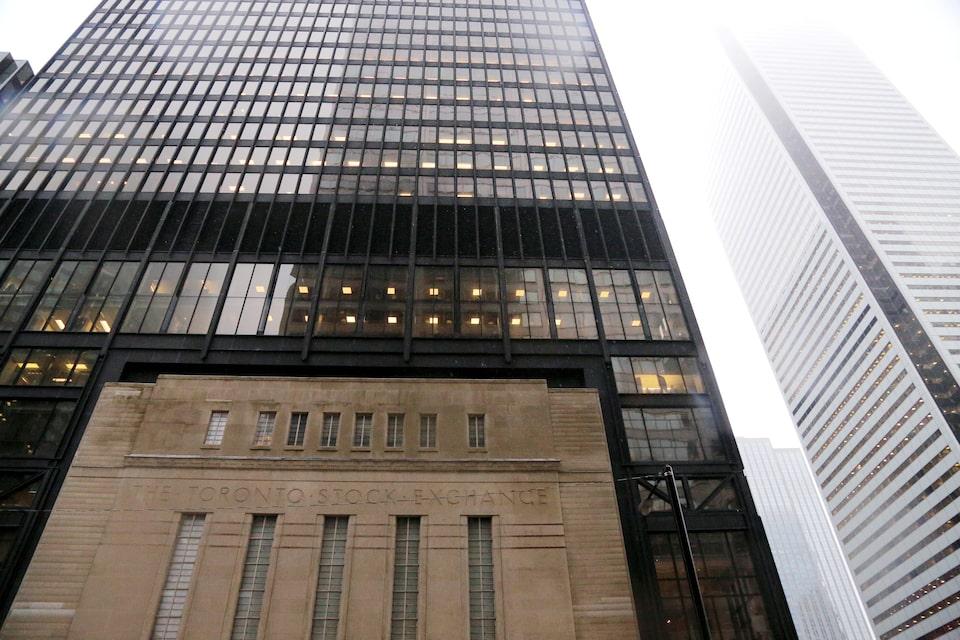
TSX ends up 0.1% at 25,339.51 Posts highest close since February 28 Consumer staples sector adds 0.9% Nutrien shares end 4.8% lower March 25 (Reuters) - Canada's main stock index edged up to a near one-month high on Tuesday as investors set aside lingering uncertainty about U.S. trade tariffs and bet that seasonality could soon begin working in the market's favor. Toronto Stock Exchange's S&P/TSX composite index (.GSPTSE) , opens new tab ended up 35.40 points, or 0.1%, at 25,339.51, its highest closing level since February 28. Sign up here. Concern that U.S. tariffs would fuel inflation and hurt economic growth has weighed on investor sentiment globally this year. "After several months of tariff headlines, interest rate and geopolitical uncertainty, many investors are sitting on the sidelines or defensively positioned," said Brandon Michael, senior investment analyst at ABC Funds. "The fewer people positioned for upside, the more explosive the move can be when things start to turn. So we believe the recent pullback in equities is providing a great opportunity for long-term investors." Wall Street also ended higher as investors assessed consumer sentiment data and bet on a more flexible trade policy stance from the Trump administration next week. "The positive momentum we’re experiencing could lead into April, which is historically the best month of the entire year." Michael said. The consumer staples sector added 0.9%, helped by a gain of nearly 4% for the shares of specialty food manufacturing company Premium Brands Holdings Corp (PBH.TO) , opens new tab. The materials group was up 0.7% as copper prices climbed and despite a decline in the shares of fertilizer producer Nutrien Ltd (NTR.TO) , opens new tab. Nutrien's shares ended 4.8% lower as the United States said it will help restore Russia's access to the world market for agricultural and fertilizer exports. https://www.reuters.com/markets/tsx-futures-rise-higher-oil-gold-prices-2025-03-25/
2025-03-25 11:03
BERLIN, March 25 (Reuters) - Accelerated climate action could boost global GDP by 0.2% by 2040 compared with current policies, a study showed on Tuesday, as delegates from 40 countries meet in Berlin to shape the agenda for the COP30 summit in Brazil later this year. An analysis by the Organisation for Economic Co-operation and Development (OECD) and United Nations Development Programme said that well-designed climate policies not only cut emissions but could enhance efficiency, productivity and innovation -potentially raising output by an amount equivalent to the size of Sweden’s economy. Sign up here. Investing in clean energy and efficiency drives productivity and innovation, offsetting the economic impact of policy-driven price and consumption changes, the study found. Reinvesting carbon revenues could further boost GDP and build public backing for climate action, it said. As countries prepare to submit updated Nationally Determined Contributions (NDCs) by September - the national plans each country makes towards global climate goals - the study said NDCs provided policy certainty, giving markets the confidence to mobilise resources toward sustainable growth. Unclear climate policies could delay private investment and cut GDP by 0.75% as early as 2030, the study warned. The study comes as ministers from around 40 countries gather in Berlin for the Petersberg Climate Dialogue, which will focus on preparations for the UN climate conference in Belem, Brazil in November. The Petersberg conference will be the first major ministerial climate meeting since the Trump administration withdrew the U.S. from the Paris Agreement. "Anyone who dismisses climate action in these turbulent times as being expensive, onerous or superfluous cannot count," German Foreign Minister Annalena Baerbock said in a statement. Baerbock said the Petersberg conference would focus on implementing the global goals set at the 2023 Dubai climate summit, including the summit's deal to transition away from fossil fuels, and an agreement to triple global renewable energy capacity by 2030. https://www.reuters.com/sustainability/climate-energy/ambitious-climate-action-could-boost-global-2040-gdp-by-02-says-oecd-study-2025-03-25/

2025-03-25 11:00
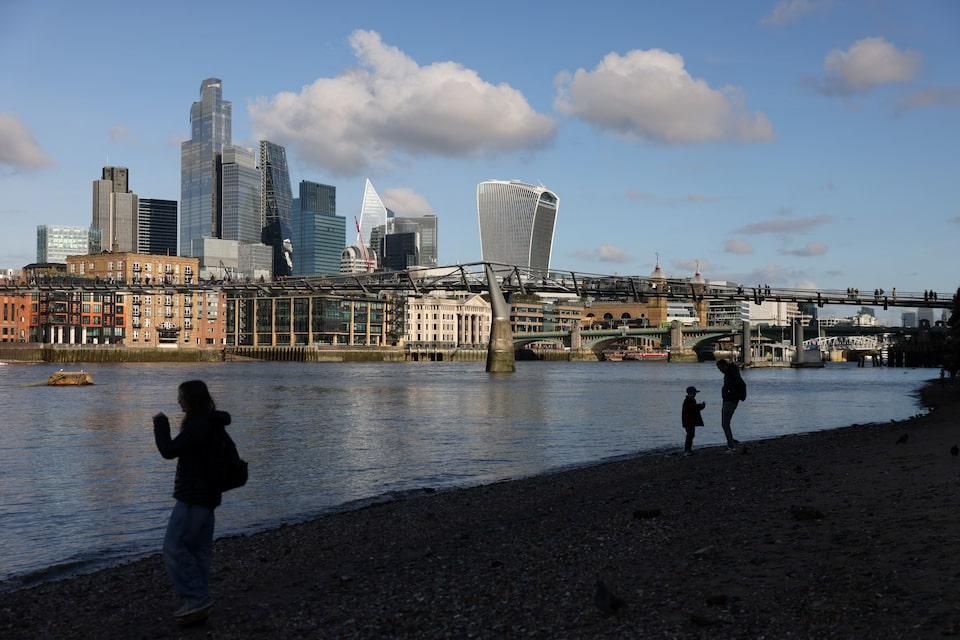
LONDON, March 25 (Reuters) - Britain gave the green light to a new 10 billion pound ($13 billion) road tunnel for the River Thames in southeast England on Tuesday, in its latest backing for an infrastructure project to help revive a sluggish economy. Britain's Labour government has put speeding up planning processes to deliver new energy and transport projects at the heart of its growth agenda since it was elected last year, backing expansion at London's Heathrow and Gatwick airports. Sign up here. The Lower Thames Crossing, consisting of a tunnel and roads 23 kilometres (14.5 miles) in length, was granted development consent by the transport minister Heidi Alexander, the Planning Inspectorate said. The tunnel will connect Kent, south of the river, to Essex, on the north side, improving connectivity and providing more road capacity for goods to travel between ports and central and northern England. Finance minister Rachel Reeves said in January that the government was committed to the Lower Thames Crossing, adding that it was exploring options to privately finance the project. The estimated cost of the project has now risen to 10 billion pounds from 5-7 billion pounds in 2017. It is expected to take six years to build. The idea for an additional crossing in this part of the river to the east of London was first mooted as far back as 1989. Formally proposed by the government in 2009, the crossing has been held up as an example of the difficulties faced in trying to get infrastructure projects off the ground in Britain. ($1 = 0.7734 pounds) https://www.reuters.com/world/uk/uk-gives-go-ahead-new-thames-tunnel-2025-03-25/
2025-03-25 10:57
March 25 (Reuters) - Slovakia declared an emergency situation on Tuesday, making it easier to enact measures to prevent the spread of cases of foot-and-mouth disease after infections were detected in the southern part of the country, the government office said on its website. Officials discovered the cases at three farms last week. The infections were the first in half a century, and come after neighbouring Hungary reported cases earlier in March. Sign up here. Foot-and-mouth disease poses no danger to humans but causes fever and mouth blisters in cloven-hoofed ruminants such as cattle, swine, sheep and goats, and outbreaks often lead to trade restrictions. https://www.reuters.com/business/healthcare-pharmaceuticals/slovakia-declares-emergency-situation-stop-spread-foot-and-mouth-cases-2025-03-25/

2025-03-25 10:18
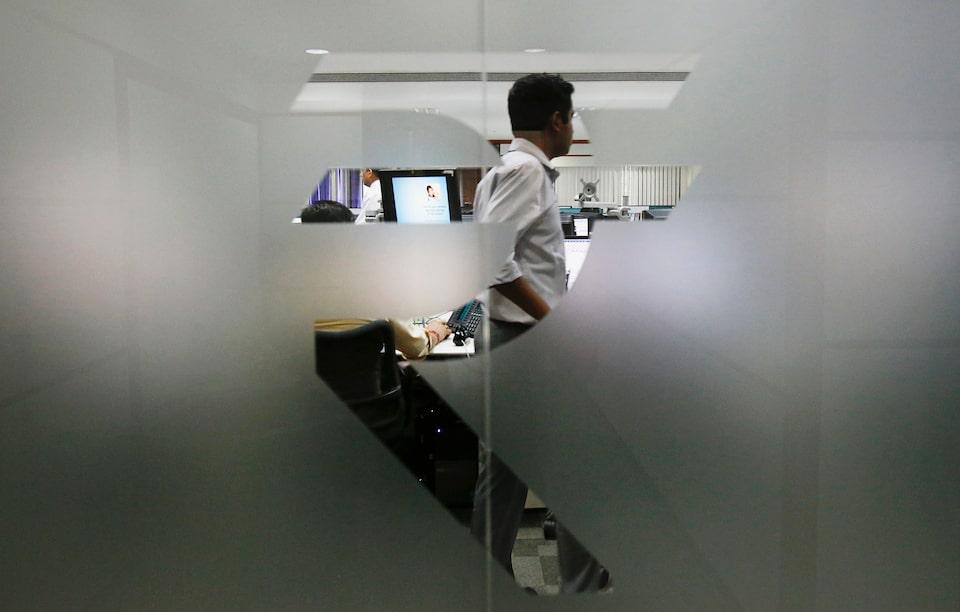
MUMBAI, March 25 (Reuters) - The Indian rupee closed lower to halt a nine-day winning run on Tuesday as importers stepped in to hedge liabilities at favourable levels, dollar inflows moderated and the local currency's regional peers slipped. The rupee ended at 85.7550 against the U.S. dollar, down 0.14% on the day. It had risen to a year-to-date peak of 85.49 on Monday and is up about 2% on the month so far. Sign up here. Intermittent inflows from overseas portfolio investors and the repatriation of corporate dollar-based earnings ahead of the fiscal year ending March 31 have helped the rupee outpace its Asian peers this month. The recent string of gains has come as a relief for the local unit after it hit a string of record lows till mid-February. MUFG has revised its view on the rupee to 'neutral' from 'cautious', and now expects it to end calendar year 2025 at 87.50, stronger than its earlier forecast of 88.50, it said in a note. From current levels though, risks on the rupee are tilted lower, it added, pointing to likely underpricing of India's vulnerability to U.S. tariffs, relatively soft growth, possibility of an inflation uptick and lingering pressure on Asian currencies. "Lastly, RBI should, at some point, come in to build FX reserves, even as it has been more hands-off than we anticipated so far," the note added. On the day, the dollar index was a tad higher at 104.3 while Asian currencies were down between 0.1% to 0.3%. Dollar-rupee forward premiums rose, with the 1-year implied yield touching a more than one-month high of 2.23% after the results of the Reserve Bank of India's $10 billion FX swap auction were announced after market hours on Monday. U.S. consumer confidence data and remarks from Federal Reserve officials will be in focus later in the day. https://www.reuters.com/markets/currencies/rupees-winning-streak-halts-importers-step-asian-peers-slip-2025-03-25/
2025-03-25 10:09
Convexity buying started as yields hit lowest since October, analysts say Mortgage players shift hedges to balance portfolios amid rate changes Convexity hedging tightens spread between 10-year swap and Treasury yield NEW YORK, March 25 (Reuters) - The recent drop in U.S. yields has raised speculation that a wave of buying of Treasury securities and derivative products called interest rate swaps by mortgage portfolio managers and insurance companies was partly responsible for their decline. These purchases are for "convexity" buying that helps offset the effects of mortgage refinancing to take advantage of lower interest rates. They could amplify the decline in Treasury yields that has taken place in recent weeks due to concerns about economic growth. Sign up here. Convexity is a term describing how small changes in interest rates can have a disproportionate impact on an asset manager's portfolio or an insurer's balance sheet. Convexity buying looks to have started early this month, as yields slid to the lowest since late October, from 15-month highs in February, analysts said. The benchmark U.S. 10-year yield , which influences the cost of borrowings on homes, cars, and businesses, has not moved much since bottoming around 4.10% on March 4, after a 56-basis point decline since February 6. But the yield fell 18 bps from March 13 to 4.17% on March 20. "There's always convexity hedging going on," said Gennadiy Goldberg, head of U.S. rates strategy at TD Securities in New York, citing the amount of uncertainty in markets from mid-January to the end of February and early March. "It varies in intensity. But it's a large enough move for folks to position their portfolios." When rates fall, mortgage players including originators, servicers, and investors in mortgage-backed securities (MBS) - insurance companies and real estate investment trusts (REITs) -typically shift hedges on mortgage holdings to balance their portfolios. Mortgages and MBS allow borrowers to refinance or prepay their loans when rates fall. These prepayments shorten the average life of the mortgage bond, reducing its yield, with the price increasing less than expected when rates fall. This is called "negative convexity" and leaves investors with lower portfolio duration than their benchmark. While 64% of outstanding mortgages are locked into interest rates below 4%, about 16% have rates above 6%, which could be refinanced quickly when rates fall, Goldman Sachs, in a research note, said. To keep their portfolio duration in line with their benchmarks, MBS investors will buy either Treasuries, or Treasury futures. They can also buy an interest rate swap, wherein they would receive a fixed rate while paying a floating one, a trade that protects against falling rates. Investors also hedge against negative MBS convexity by buying so-called "receivers" in the swaptions market, in which the buyer pays a premium for the right to receive a fixed rate on a swap. Analysts said the swaptions market has been skewed toward more receivers, as participants brace for further rate declines. "There has been a lot of convexity receiving. Investors also want to buy duration because they are concerned lower rates will lead to an imbalance in their portfolios," said Guneet Dhingra, head of U.S. rates strategy at BNP Paribas. For insurance companies, lower rates could erode profitability for both policyholders and shareholders. To be sure, active MBS hedgers have dwindled, falling from a peak of 27% of all investors who hold mortgages in their portfolios in 2002 to 6% currently, so the impact of convexity moves is likely limited, Goldman wrote in a research note. SIGNS OF CONVEXITY HEDGING Convexity hedging was evident recently in the tightening spread between a 10-year interest rate swap and the 10-year Treasury yield. Tighter swap spreads meant that the differential between the two assets has become more negative, with swap rates falling because of increased demand for fixed-rate payments during bouts of convexity buying. In fixed-income debt, a rise in price leads to a fall in yield. U.S. 10-year swap spreads fell to minus 44 bps on Monday from minus 38.30 bps on February 14. In addition, the short-term implied volatility on longer-dated swaptions such as those on 10-year and 30-year swap rates, has increased. Implied vols of three-month options on 10-year swap rates had risen to a four-month high on March 10 of 27.71 bps, before stabilizing to 25 bps late Monday. Amrut Nashikkar, managing director and head of derivatives strategy, at Barclays in New York, said volatility in short-dated options such as those with one-year maturities has been elevated given the level of policy uncertainty on trade and tariffs under the Trump administration. But "expectations of underlying convexity needs may...have caused implied vols to become elevated in longer tenors," he said. https://www.reuters.com/markets/wealth/us-bond-investors-weigh-convexity-risk-recent-treasury-yield-decline-2025-03-25/