2025-03-24 21:02
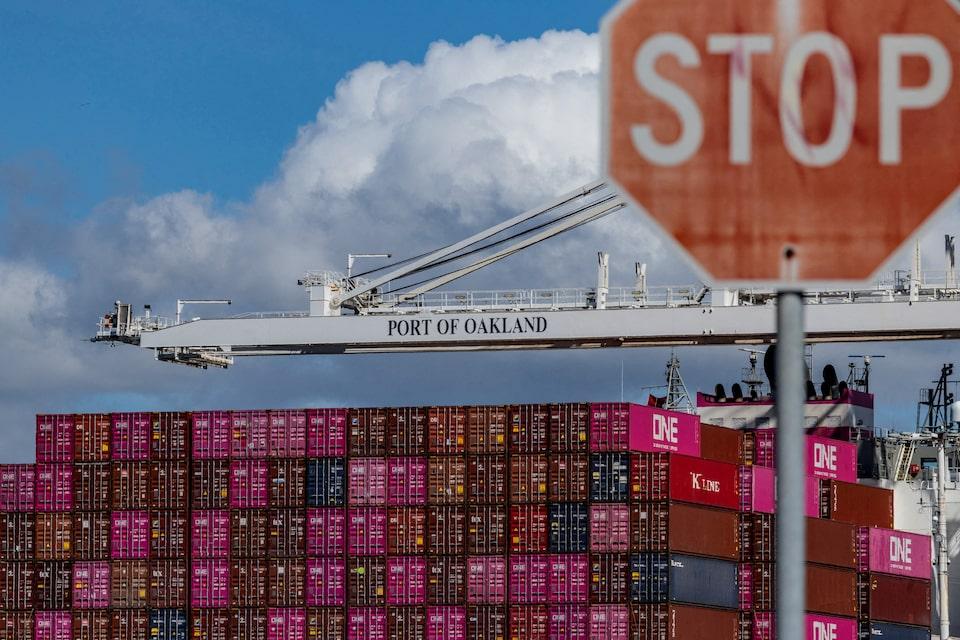
ORLANDO, Florida, March 24 (Reuters) - Nasdaq notches third-biggest rise this year The last full trading week of the quarter got off to a roaring start across most major stock markets on Monday, with investors buoyed by reports that the Trump administration's tariff blitz scheduled for April 2 may not be as heavy as feared. Sign up here. A solid pick-up in U.S. business activity helped cement the positive tone on Wall Street, and investors bought back some of the shares they'd aggressively sold off recently like Big Tech. Europe ended largely flat, but benchmark Asian, U.S. and global equity indices all rose sharply. Bond yields spiked higher, while 'safe-haven' gold fell for a third day to clock its longest losing streak since November. All 10 sectors in the S&P 500 rose, led by a 4% surge in consumer cyclicals on hopes that a more targeted approach to tariffs means goods prices won't rise so much. That was the sector's biggest rise since November 2022. Some of the biggest individual gainers on Wall Street were in tech, led by a 12% surge in Tesla. If trade tensions cool, could investors look at U.S. assets in a more positive light? I'll dig into broader U.S. capital flows trends below, but first, a round-up of Monday's markets. Today's Key Market Moves. Trade war fears haven't dissipated completely and the situation remains extremely fluid. While Trump said on Monday he may give a "lot of countries" breaks on tariffs, he still plans to announce more in the next few days on cars, and then on lumber and chips further down the line. And any hopes of inflation relief from less of a blanket approach to tariffs from Washington may be tempered by another rise in oil prices after Trump said he will impose a 25% tariff on countries that buy oil and gas from Venezuela. The price of Brent and WTI crude futures rose more than 1% on Monday to the highest in three weeks. That was the fourth daily increase in a row. If Monday was a slightly more optimistic day for investors regarding global trade tensions, it was less encouraging on the interest rate front. Atlanta Federal Reserve President Raphael Bostic said on Monday he now only sees the central bank delivering one quarter percentage point rate cut this year because he expects inflation won't come down as quickly as hoped. Bostic had previously expected the Fed would cut rates twice this year. That remains the median view across the Fed's 19 policymaking officials as last week's revised projections showed, but the underlying weight of views is shifting. In Asia, meanwhile, details emerged of Beijing's latest attempts to maintain strong relations with many of the world's biggest businesses. China's economy tsar, Vice Premier He Lifeng, met with the heads of Apple, Pfizer, Mastercard, Cargill and others on Sunday. There's no doubting the huge improvement in investor sentiment towards China following the fiscal and monetary measures announced by Beijing since September, and China's markets look set to end the quarter on a high note. Foreign demand for U.S. assets might not be dead yet As the first quarter draws to a close, financial markets are at a crossroads. We could be seeing the early stages of a tectonic shift in global investment flows, with a dramatic decline in demand for U.S. assets from abroad. But it's also possible that this is simply a pause and that the 'U.S. exceptionalism' narrative has more chapters to go. Net sales of U.S. equities by foreign central banks reached $28 billion in January, and net sales of all U.S. assets by the private sector totaled $74.8 billion, according to official Treasury International Capital flows data. These were, respectively, the fastest-ever pace of U.S. equity selling by the official sector in a single month, and the biggest monthly outflow of U.S. assets by private sector investors in a year. This abrupt reversal in flows goes a long way to explaining the eye-opening underperformance of U.S. stocks against the rest of the world so far this year. This gap has approached 15 percentage points in the past few weeks. Of course, one month does not a trend make, and it will take many more months of similar flows to reverse the tide – or more accurately, the tsunami - of foreign capital that flooded into U.S. markets in recent years. TIC data shows that private sector net capital inflows into U.S. stocks and bonds last year totaled $980 billion, following a net inflow of $668 billion the year before and $1.6 trillion in 2022. That's net purchases from overseas investors and net selling of foreign assets by U.S. investors. The total figure is worth repeating. In the last three calendar years, private sector investors poured a net $3.25 trillion into U.S. assets. Little wonder that foreign investors at the end of last year owned 18% of U.S. stocks, according to Goldman Sachs. That's a record-high share going back to 1945. At an average of more than $1 trillion a year, that pace of net inflows was unlikely to be maintained. But does that mean that January's pace of selling will persist? Not necessarily. PARADIGM SHIFT? Goldman Sachs' chief U.S. equity strategist David Kostin and his team estimate that foreign investors will remain buyers of U.S. equities this year, lured by the weaker dollar, attractive prices due to the recent correction, and the unparalleled liquidity of U.S. markets. They reckon overseas investors will be just as committed this year as they were last year, buying a net $300 billion compared with $304 billion in 2024. They do note, however, that "elevated political and economic uncertainty also create elevated uncertainty around that forecast." Appetite for U.S. assets will remain strong as long the U.S. maintains an innovation-friendly tax system, flexible financial system, commitment to property rights and a relatively low regulatory burden, agrees Standard Chartered's head of G10 FX strategy Steven Englander. "Cyclical ups and downs in equity and other asset prices would not erase this attractiveness in the long term, even if the correction in U.S. equities continues, provided the underlying positives remain in place," he says. It is important to note that TIC flows reports are released with a lag, meaning January's outflows don't account for the notable market shifts seen in recent weeks. The February and March reports could show massive outflows too. There are good reasons why foreign investors have backed away from U.S. assets in recent weeks - stretched valuations, market concentration, the emergence of China's DeepSeek artificial intelligence model, Germany's watershed fiscal U-turn, and concern surrounding the Trump administration's trade and foreign policy agendas. This is all to say it remains unclear whether the recent shift in investment flows is temporary or represents a true paradigm shift. The next few months will be critical. What could move markets tomorrow? If you have more time to read today, here are a few articles I recommend to help you make sense of what happened in markets today. I'd love to hear from you, so please reach out to me with comments at [email protected]. You can also follow me at [@ReutersJamie and @reutersjamie.bsky.social.] Opinions expressed are those of the author. They do not reflect the views of Reuters News, which, under the Trust Principles , opens new tab, is committed to integrity, independence, and freedom from bias. Trading Day is also sent by email every weekday morning. Think your friend or colleague should know about us? Forward this newsletter to them. They can also sign up here. https://www.reuters.com/markets/global-markets-trading-day-2025-03-24/
2025-03-24 21:01
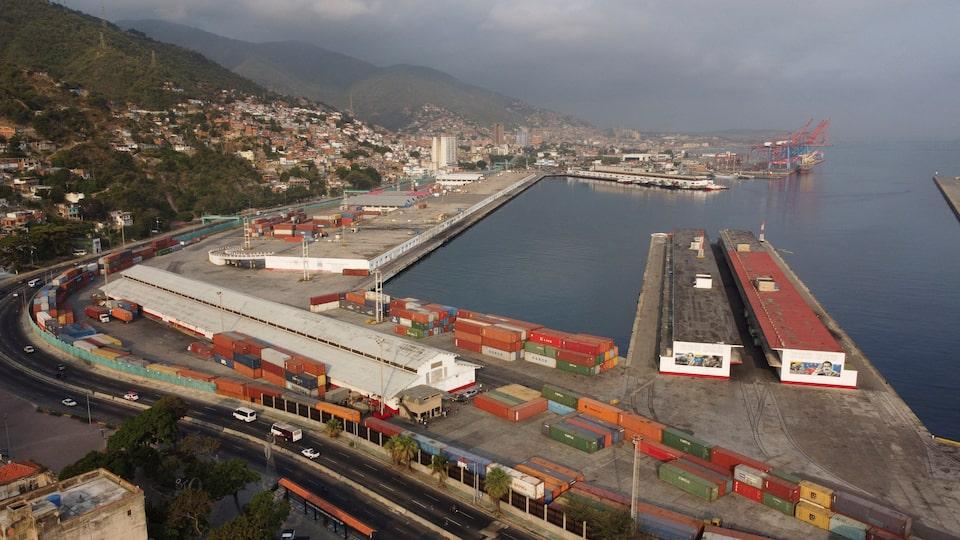
Trump imposes 25% tariff from April 2 on countries buying Venezuela oil Oil futures jump nearly 1.5% on planned tariff China is biggest consumer of Venezuelan oil Trump extends Chevron's wind-down period in Venezuela to May 27 WASHINGTON/HOUSTON March 24 (Reuters) - U.S. President Donald Trump on Monday issued an executive order declaring that any country buying oil or gas from Venezuela will pay a 25% tariff on trades with the U.S., while his administration extended a deadline for U.S. producer Chevron (CVX.N) , opens new tab to wind down operations in the South American country. Trump's new policy relieves some pressure on Chevron to quickly exit Venezuela after the U.S. Treasury Department on March 4 gave it 30 days to wind down operations. Trump had issued the initial wind-down after he accused President Nicolas Maduro of not making progress on electoral reforms and migrant returns. Sign up here. Treasury said on Monday it would wait seven more weeks until May 27 before terminating a license that the U.S. has granted to Chevron since 2022 to operate in sanctioned Venezuela and export its oil to the United States. Chevron's extension came hours after Trump announced the new tariff, saying Venezuela has sent "tens of thousands" of people to the United States who have a "very violent nature." The two moves temporarily focus Trump's pressure on buyers of Venezuelan crude oil other than the United States, such as China, though it is uncertain how his administration will enforce the tariff. "The United States has long abused illegal unilateral sanctions and so-called long-arm jurisdiction to grossly interfere in the internal affairs of other countries," said Guo Jiakun, spokesperson at the Chinese foreign ministry, on Tuesday. "China firmly opposes this." David Goldwyn, president of consultancy Goldwyn Global Strategies, said the moves allow a compromise between those in the Trump administration who were concerned about pushing Western companies out of Venezuela and those, including Secretary of State Marco Rubio, who are concerned about enriching Maduro's administration. "This potentially provides a sweet spot for both of them," Goldwyn said. Punishing foreign buyers of Venezuela's oil with tariffs could hit its crude exports, forcing price discounts, and have a similar effect to secondary sanctions on the country that Trump imposed during his first term in 2020. The extension of Chevron's wind-down period would secure payments to the company for oil cargoes delivered to U.S. customers, while avoiding a collapse in crude volumes exported from Venezuela in coming weeks, especially to the U.S., according to analysts and sources. Trump, who has made illegal migration one of the top priorities of his administration, earlier this month invoked the 1798 Alien Enemies Act to justify the deportation of alleged members of Venezuelan gang Tren de Aragua without final removal orders from immigration judges. Chevron said it had no comment. Venezuela's government said it firmly and categorically rejected the "new aggression" announced by Trump. "This arbitrary, illegal, and desperate measure, far from weakening our resolve, confirms the resounding failure of all sanctions imposed against our country," the Venezuelan government said in a press release. SWITCH TO RUSSIAN? The 25% tariff to be imposed on buyers of Venezuelan oil will take effect on April 2 and would be combined with any existing tariffs, according to the executive order. The tariff will expire one year after the country last imported Venezuelan oil, the order said. The tariff would apply to countries that buy Venezuela oil through third parties, the order said. Oil prices rose 1% on Trump's tariff announcement, although the gains were capped as the U.S. extended the wind down period of the Chevron license. Oil is Venezuela's main export and China, which is already the subject of U.S. tariffs, is the largest buyer. In February, China received directly and indirectly some 503,000 barrels per day of Venezuelan crude and fuel, some 55% of total exports. "We call on the United States to stop interfering in Venezuela's internal affairs and abolish illegal unilateral sanctions against Venezuela," said the Chinese foreign ministry spokesperson. India, Spain, Italy and Cuba are other consumers of Venezuelan oil. Tariffs imposed by China on imports of certain types of Venezuelan oil in past years led to a decline in the volume of Venezuelan crude received by Chinese buyers, which ultimately forced state company PDVSA to widen price discounts to its most important market. Rubio this month said foreign buyers of Venezuelan oil would be notified of a policy change, but many joint-venture partners of PDVSA continued taking cargoes, according to company documents. PDVSA is also readying a plan to reorganize operations at its largest joint venture with Chevron, the Petropiar project at the Orinoco Belt, and secure oil exports from there. Maduro has rejected U.S. sanctions, saying they are illegitimate measures that amount to an "economic war" designed to cripple Venezuela. But he has cheered what his government says is the country's resilience despite the measures. Goldwyn said the new tariffs could have the ironic effect of increasing global demand for Russian oil. "China and India are unlikely to risk additional tariffs to access Venezuelan heavy oil, when they can buy Russian crude." https://www.reuters.com/business/energy/trump-impose-25-tariff-countries-that-buy-oil-gas-venezuela-2025-03-24/
2025-03-24 20:58
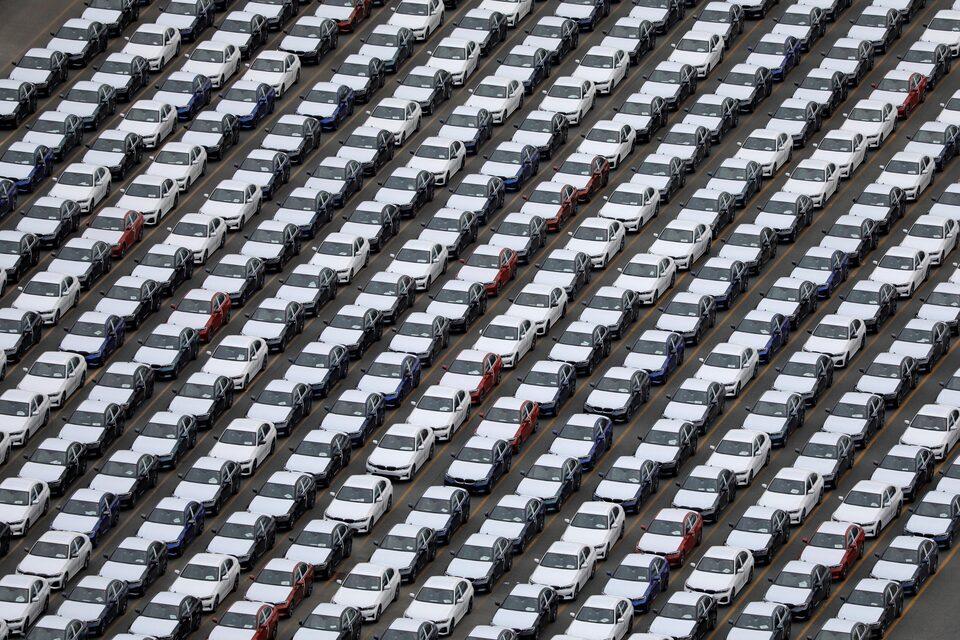
Trump calls April 2 tariff announcements 'Liberation Day' US expects to raise significant amounts in tariffs Stocks gained broadly on optimism for flexibility on tariffs Trump announces 25% tariff on imports from countries that buy Venezuelan oil, gas White House to announce $20 bln Hyundai investment WASHINGTON, March 24 (Reuters) - U.S. President Donald Trump said on Monday automobile tariffs are coming soon even as he indicated that not all of his threatened levies would be imposed on April 2 and some countries may get breaks, a move Wall Street took as a sign of flexibility on a matter that has roiled markets for weeks. At the same time, Trump opened another front in a global trade war by slapping 25% secondary tariffs on any country that buys oil or gas from Venezuela, a directive that sent oil prices climbing. Sign up here. At the White House, Trump told reporters not all the new tariffs would be announced on April 2, and said he may give "a lot of countries" breaks on tariffs, but provided no details. A White House official declined to say exactly when sector-specific tariffs on autos, pharmaceuticals or semiconductor chips would come into effect, noting that was still "TBD (to be determined) and at the president's discretion." The official cautioned against expecting a tariff reprieve, adding, "The president is determined to implement reciprocal tariffs that are very strong. People should expect that." Bloomberg and the Wall Street Journal reported earlier that the administration was narrowing its approach to the broad batch of levies Trump has been saying for weeks would be imposed on April 2, and could delay sector-specific tariffs. U.S. stocks ended Monday broadly higher on optimism that the tariffs set to be detailed next week may not be as extensive as expected. The S&P 500 index gained nearly 1.8% to close at its highest in more than two weeks. Meanwhile, Trump said the U.S. would impose tariffs on autos, pharmaceuticals and aluminum in "the very near future," arguing that the U.S. would need all those products in the event of wars or other problems. The auto tariffs would come in the next few days, Trump said later in the day, adding that tariffs on lumber and semiconductor chips would follow "down the road." "We've been ripped off by every country," Trump said after a meeting of his cabinet, predicting that the expected tariffs would raise "rather astronomical" amounts of money for U.S. coffers, allowing tax rates to remain low or come down. Trump, who has said countries can still avoid levies if they lower their tariffs or move manufacturing to the U.S., also announced on Monday a $21 billion investment by South Korea's Hyundai Motor Group (005380.KS) , opens new tab in the United States. The investment would include a $5.8 billion new steel plant in Louisiana, he said at the White House alongside Hyundai Chairman Euisun Chung and Louisiana Governor Jeff Landry. 'LIBERATION DAY' Trump said the April 2 tariffs will mark a "Liberation Day" for the U.S. economy. They are aimed at shrinking a $1.2 trillion global goods trade deficit by raising U.S. levies to levels charged by other countries and counteracting their non-tariff trade barriers. Trump said in February he intended to impose auto tariffs "in the neighborhood of 25%" and similar duties on semiconductors and pharmaceutical imports, but he later agreed to delay some auto tariffs after the three largest U.S. automakers pushed for a waiver. Trump's whirlwind tariff offensive since his January inauguration has been marked by threats, reversals and delays, sometimes within hours of imposition deadlines, as his trade team formulates policy on the fly. So far, he has imposed new 20% duties on Chinese imports, fully restored 25% duties on global steel and aluminum imports and slapped 25% tariffs on imports from Canada and Mexico that do not comply with a North American trade agreement over the U.S. fentanyl overdose crisis. 'DIRTY 15' Two senior Trump officials - Treasury Secretary Scott Bessent and top White House Economic Adviser Kevin Hassett - said last week the administration is expected to focus the April 2 reciprocal tariff news on a narrower set of countries with the biggest trade surpluses and high tariff and non-tariff barriers. Bessent referred to these as the "Dirty 15," a reference to 15% of countries, while Hassett told Fox Business the focus would be on 10-15 countries. Ryan Majerus, a former senior U.S. Commerce Department official now at law firm King & Spalding, said no matter if sectoral tariffs came on April 2 or later, the administration would remain aggressive with Section 232 investigations, as already seen with lumber and copper. "Given that the administration has already signaled concern over exemptions and exclusions, it seems clear that at least some countries will likely face new tariffs in early April," he said. "But countries like the UK and India are certainly trying to avoid the tariffs through visits to the White House." A second White House official said countries rushing for early talks were unlikely to make sufficient progress to avoid tariffs completely, given the calculation also factors in non-tariff barriers that are harder to remove quickly. In a request for public comments , opens new tab on reciprocal tariffs, the Office of the United States Trade Representative expressed particular interest in submissions for the largest U.S. trade partners, and those with the highest goods trade surpluses. USTR named Argentina, Australia, Brazil, Canada, China, the European Union, India, Indonesia, Japan, Korea, Malaysia, Mexico, Russia, Saudi Arabia, South Africa, Switzerland, Taiwan, Thailand, Turkey, Britain and Vietnam as being of particular interest, adding that they cover 88% of total goods trade with the U.S. Trump on Monday also announced that any country buying oil or gas from Venezuela will pay a 25% tariff on any trades made with the United States. This "secondary tariff" will take effect on April 2, Trump said in a Truth Social post, noting that Venezuela has sent "tens of thousands" of people to the United States who have a "very violent nature." https://www.reuters.com/world/us/trump-widens-trade-war-he-targets-venezuelas-energy-sector-eyes-sectoral-tariffs-2025-03-24/
2025-03-24 20:33
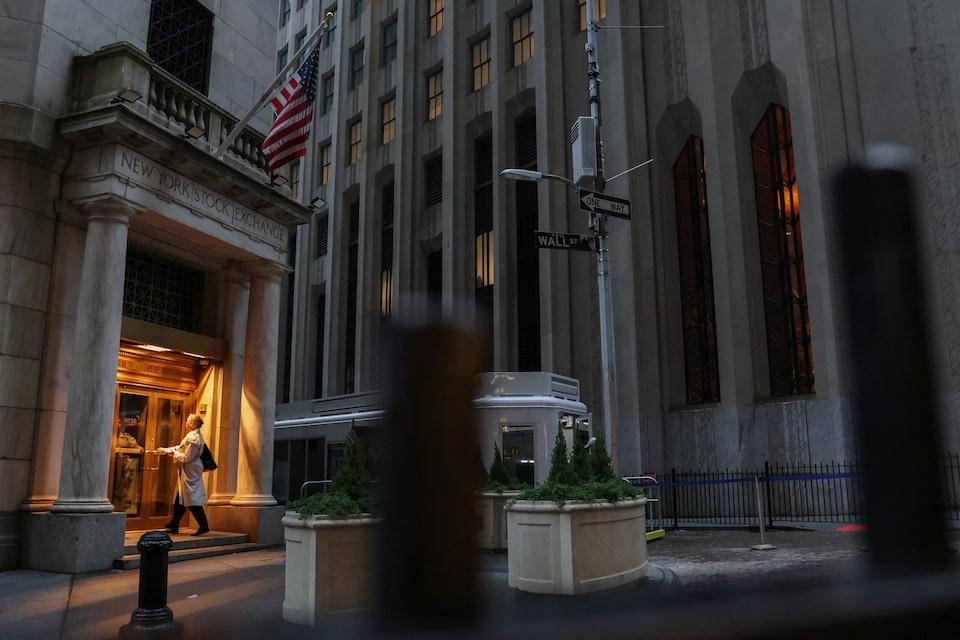
S&P March flash Composite PMI at 53.5 vs 51.6 in February Lockheed Martin drops after brokerage downgrade Crypto stocks gain as bitcoin rallies S&P 500 +1.76%, Nasdaq +2.27%, Dow +1.42% March 24 (Reuters) - The S&P 500 rose sharply to end at its highest in over two weeks on Monday, lifted by Nvidia and Tesla following signs that the Trump administration might take a more measured approach on tariffs against U.S. trading partners. U.S. President Donald Trump said automobile tariffs are coming soon, and said he may give "a lot of countries" breaks on tariffs, but provided no details. Sign up here. Investors scooped up battered technology shares, with Nvidia (NVDA.O) , opens new tab rallying over 3% and Advanced Micro Devices (AMD.O) , opens new tab jumping 7%, sending the PHLX chip index (.SOX) , opens new tab 3% higher. Tesla (TSLA.O) , opens new tab surged almost 12% in its biggest one-day gain since early November, recovering some of its recent steep decline, helped by optimism about scaled-back U.S. tariffs. Financial markets have been volatile in recent weeks due to fears of inflation and an economic downturn after Trump announced a series of tariffs last month on major U.S. trading partners, including China, Mexico and Canada. The S&P 500 has recovered about 4% from its recent low on March 13, and it remains down around 6% from its February 19 record high close. "Investors are experiencing a slight sigh of relief, but at the same time they are cynical about how long this may last," said Sam Stovall, chief investment strategist at CFRA Research. "The causes of this manufactured correction have not evaporated. They are tariffs and what the impact of tariffs could be on economic growth, inflation and corporate profits." Several companies have cited tariff uncertainty as they lowered their forecasts for upcoming quarters. Data compiled by LSEG as of Friday showed earnings of companies in the S&P 500 are expected to grow by 10.5% in 2025, down by 3.5 percentage points since the beginning of the year. The S&P 500 climbed 1.76% to end the session at 5,767.57 points. The Nasdaq gained 2.27% to 18,188.59 points, while the Dow Jones Industrial Average rose 1.42% to 42,583.32 points. The domestically focused Russell 2000 index (.RUT) , opens new tab rose 2.55% to a two-week high, while the CBOE Volatility Index (.VIX) , opens new tab, known as Wall Street's fear gauge, dropped 1.8 points to a one-month low. Volume on U.S. exchanges was relatively light, with 13.6 billion shares traded, compared to an average of 16.5 billion shares over the previous 20 sessions. Ten of the 11 S&P 500 sector indexes rose, led by consumer discretionary (.SPLRCD) , opens new tab, up 4.07%, lifted by Tesla, followed by a 2.1% gain in communication services (.SPLRCL) , opens new tab. A survey showed U.S. business activity picked up in March, while growing fears over import tariffs and deep government spending cuts continued to weigh on sentiment. Investors are awaiting data this week, including the Personal Consumption Expenditure price index - the Federal Reserve's preferred inflation gauge - on Friday. Dun & Bradstreet (DNB.N) , opens new tab climbed 3% after the data and analytics provider agreed to be acquired by private equity firm Clearlake Capital in a $7.7 billion deal. Lockheed Martin (LMT.N) , opens new tab fell over 1% after BofA Global Research downgraded the weapons maker to "neutral" from "buy." Crypto stocks rallied with a 4% rise in bitcoin prices , with MicroStrategy (MSTR.O) , opens new tab surging 10% and Coinbase (COIN.O) , opens new tab adding 7%. Advancing issues outnumbered falling ones within the S&P 500 (.AD.SPX) , opens new tab by a 5.4-to-one ratio. The S&P 500 posted 5 new highs and 1 new low; the Nasdaq recorded 46 new highs and 97 new lows. https://www.reuters.com/markets/us/futures-jump-hopes-measured-us-tariffs-2025-03-24/
2025-03-24 18:58
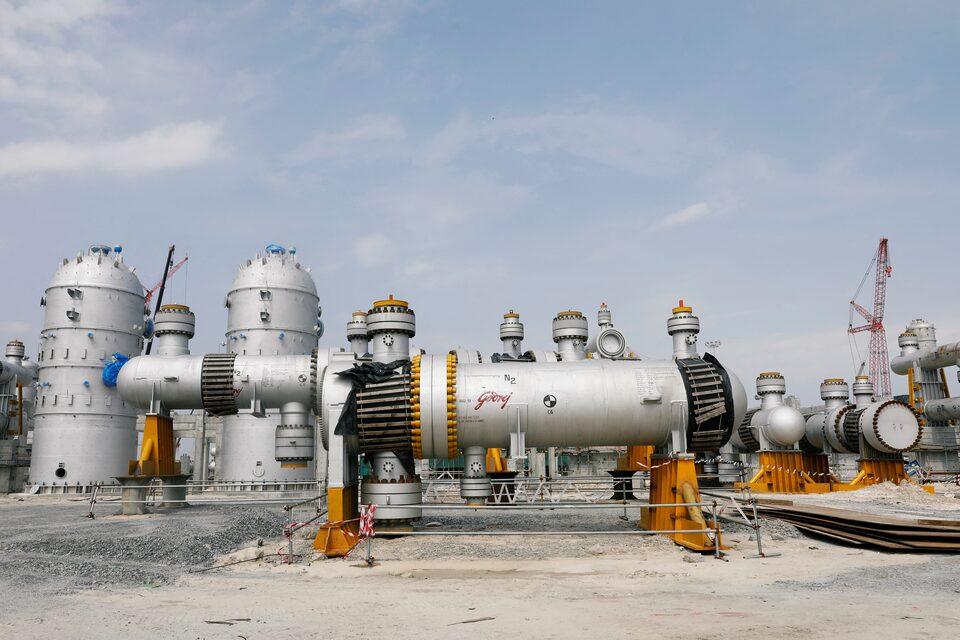
US jet fuel imports hit highest rate so far in March since February 2023 Nigeria's Dangote refinery sent six jet fuel cargoes to U.S. ports in March US jet fuel prices likely to be hit by rising storage, weak demand US jet fuel storage demand for April five to six times above usual - TankTiger NEW YORK, March 24 (Reuters) - U.S. jet fuel imports are set to hit a two-year high in March after Nigeria's Dangote refinery pushed barrels to North America, which should lower prices of the aviation fuel in the peak summer travel season, trade analysts and storage brokers said. The shipments by the 650,000 barrels-per-day (bpd) Dangote refinery, Africa's largest, highlight its potential to reshape global fuel trading dynamics by creating a new swing supplier in the Atlantic Basin. Sign up here. It has already shown signs of success in competing with European refiners on gasoline exports, and the jet fuel shipments to the United States could challenge domestic producers' economics in the largest fuel consuming nation. Six vessels carrying about 1.7 million barrels of jet fuel from the Dangote refinery arrived at U.S. ports this month, data from ship-tracking service Kpler showed. Another vessel, Hafnia Andromeda, is set to arrive at the Everglades terminal on March 29 with a load of about 348,000 barrels of jet fuel, the data showed. Total U.S. jet fuel imports so far in March stood at around 226,000 bpd, the most since February 2023, the data showed. The Dangote refinery started production last January after years of construction delays, and ramped up to about 85% of capacity in early February, allowing it to sell more fuel to international markets. Dangote is unlikely to be a regular jet fuel supplier to the U.S., but a maintenance-related shutdown of the Phillips 66 (PSX.N) , opens new tab Bayway refinery in New Jersey helped open a rare arbitrage opportunity for flows from Nigeria to the U.S., Sparta Commodities analyst James Noel-Beswick said. The window is likely to close soon or shrink significantly due to elevated U.S. inventories of the aviation fuel, Noel-Beswick added. Demand to lease storage tanks for jet fuel in Houston and New York Harbor in April is averaging around 700,000 barrels on storage broker TankTiger's platform, five to six times the average monthly demand, TankTiger Chief Operating Officer Steven Barsamian said. The surge in demand, partly due to the influx of supply from Nigeria, is likely to lower jet fuel prices in the U.S. ahead of peak summer travel season, Barsamian said. Despite lower prices, air travel over the summer could be dampened by economic headwinds from a stock market selloff and waning consumer confidence, Sparta's Noel-Beswick said. U.S. jet fuel stocks ended February at 45.2 million barrels, the highest for the month since 1999, data from the U.S. Energy Information Administration showed. U.S. refiners' yield of jet fuel hit a record , opens new tab last year, reflecting stronger demand relative to other transportation fuels, the EIA said on Monday. The agency expects U.S. jet fuel consumption to touch a record in 2026. https://www.reuters.com/business/energy/us-jet-fuel-imports-surge-nigerias-dangote-refinery-pushes-barrels-west-2025-03-24/
2025-03-24 18:58
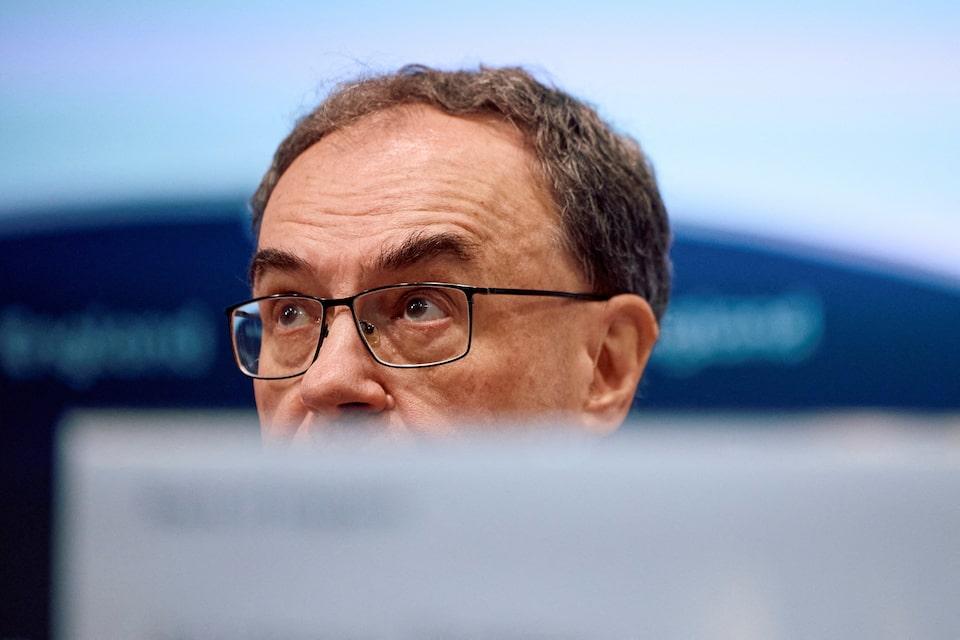
LEICESTER, England, March 24 (Reuters) - Bank of England Governor Andrew Bailey said on Monday that artificial intelligence had the potential to be a game-changer for Britain and the global economy just as electricity was around the start of the 20th century. Bailey said technologies that were transformative continuously improved, lowered costs and made innovation easier, boosting productivity. Sign up here. "AI appears to me to have that potential, and so it could over time lift growth rates and per capita national income," Bailey said in a speech at the University of Leicester. Britain, like many other rich economies, is struggling to grow at the kind of that was normal before the global financial crisis of 2008-08. That has added to the strain on government budgets. British finance minister Rachel Reeves is expected to announce cuts to her plans for spending increases on Wednesday. Bailey said ageing populations in much of the world meant the need to use technology was all the more pressing. "We must facilitate the growth of AI as the most likely general purpose technology which can move the needle on growth in the economy," he said, adding that investment in human skills to take advantage of AI was also needed. Also in his speech on Monday, Bailey reiterated his call for cooperation between the world's major economies to resolve strains in the global trading system, which is facing upheaval from the policies of U.S. President Donald Trump. "These two points - domestic macroeconomic forces and trade policy - are not incompatible. They sit together. So to solve these issues we need authorities to come together and strengthen the rules of engagement in a multilateral setting rather than set tariffs bilaterally," he said. https://www.reuters.com/business/finance/boes-bailey-calls-again-joint-action-address-trade-strains-2025-03-24/