2025-03-24 10:47
LONDON, March 24 (Reuters) - What matters in U.S. and global markets today By Mike Dolan , opens new tab, Editor-At-Large, Financial Industry and Financial Markets Sign up here. The final week of a bruising quarter for U.S. stocks looks set to start on an upbeat note amid signs of equivocation in Washington on its long-threatened April 2 tariff hikes. Anxiety over a looming trade war has been one of the biggest drags on stocks all year, so weekend reports suggesting next week's moves may exclude a set of sector-specific tariffs gave stock futures a lift ahead of Monday's bell. Today's deep dive looks at how a breakdown in security relations between Washington and the European Union may cause global reserve managers to reexamine their currency of choice. Find this and more market analysis below. Today's Market Minute * U.S. President Donald Trump's administration is likely to exclude a set of sector-specific tariffs when applying reciprocal levies on April 2, Bloomberg News and the Wall Street Journal reported, citing officials. * New Canadian Prime Minister Mark Carney on Sunday called a snap election for April 28, saying he needed a strong mandate to deal with the threat posed by U.S. President Donald Trump, who "wants to break us so America can own us." * China sought to reassure foreign corporate chiefs of the country's business potential when Vice Premier He Lifeng met with the heads of Apple, Pfizer, Mastercard, Cargill and others on Sunday. *A U.S. delegation will seek to make progress toward a Black Sea ceasefire and a broader cessation of violence in the war in Ukraine when it meets for talks with Russian officials on Monday. , opens new tab * Britain will stick to its fiscal rules despite global upheaval, finance minister Rachel Reeves said on Sunday, raising the prospect of thousands of public sector job cuts. Tariff exclusion hopes prop up markets President Donald Trump said last month that he intended to impose auto tariffs "in the neighborhood of 25%" and similar duties on semiconductors and pharmaceutical imports, but he later agreed to delay some auto tariffs after a push by the three largest U.S. automakers for a waiver. Reports suggest other exclusions are now in the pipeline, although the final design of the measures remains highly uncertain. S&P 500 futures were up about 1% on Monday, looking to cut losses in the index, which was on course for its worst quarter in almost three years and its worst first quarter since the pandemic hit in 2020. European (.STOXXE) , opens new tab and Chinese (.CSI300) , opens new tab stocks were higher too as a result of the tariff reports. Treasury yields also rose, in part due to the rebound in stock futures, as markets wait for the U.S. personal consumption expenditures gauge due on Friday. As has been the case for the past few weeks, the dollar (.DXY) , opens new tab went the opposite direction against the euro but nudged higher against Japan's yen and China's yuan . The euro was enlivened by flash March business surveys that showed regional business activity growing at its fastest pace in seven months as a long-running manufacturing downturn eased and hopes rose for a German fiscal boost. The U.S. equivalent from S&P Global is due out later. In emerging markets, the focus remained on Turkey after courts on Sunday jailed Istanbul Mayor Ekrem Imamoglu, President Tayyip Erdogan's main political rival, pending trial for corruption charges. The move sparked the country's biggest protests in more than a decade. Turkish stocks stabilised, however, rising 3% to claw back some of the previous week's hefty losses as the capital markets board banned short selling. The lira held steady after last week's swoon, which was met by central bank intervention and a two percentage point interest rate rise. Let's stay on geopolitics but move back to the U.S. and consider how splintering Transatlantic ties could eventually alter the make-up of the world's reserve holdings. Transatlantic rift might spur euro reserve holdings If military and diplomatic alliances help determine where countries bank hard currency reserves, the fraying of transatlantic ties raises big questions about the future balance between global dollar and euro holdings. Perennial doubts about the dollar's long-dominant world reserve status are back in the spotlight as President Donald Trump's administration sets about rewiring America's trade and military ties. While the discussion about geopolitics and reserve holdings has usually centered on major developing countries, such as China, little consideration has typically been given to the accounts of traditional U.S. allies, especially Europe. The countless studies , opens new tab about the dollar's role as the world's reserve currency almost always conclude that the greenback - which still commands 57% of known global central bank reserves - is unlikely to be unseated any time soon. The reasoning is usually that dollar alternatives lack markets with the same size, transparency and liquidity as the U.S. And the pervasive presence of the dollar in global offshore centers and in world trade invoicing further entrench its use. But a 2022 paper from Federal Reserve , opens new tab Board economist Colin Weiss - examining the impact on dollar holdings of the decision to freeze Russia's assets after it invaded Ukraine - homed in on the fact that roughly three-quarters of foreign official holdings of U.S. assets are with countries that have military ties to Washington. "While U.S. dollar reserves are no longer exclusively held by political allies reliant on U.S. military support, as they were from the 1960s through the 1980s, these countries are still the most important set of reserve holders." Weiss broke down the countries between those with formal military alliances with the U.S., those with informal ones involving arms agreements or joint exercises with the U.S. military, and those with specific economic and financial ties such as dollar currency pegs. He suggests that in scenarios involving highly fractious geopolitics, the risk of dollar reserve divestment represents about $800 billion - or just over 6% of the dollar's share of total reserve holdings. "Even a geopolitically-motivated move away from the U.S. dollar in trade invoicing would only diminish the dollar’s role as a reserve currency and not destroy it," he concludes. RESERVES AND COERCION But this study was done long before this year's dramatic splintering of transatlantic relations over the Russia-Ukraine conflict, which has prompted a significant rethink of Europe's defence relationship with Washington and led to a re-armament push across the entire continent. Germany's gigantic defense and fiscal reboot this month is well-documented, and increases in defense spending across the European Union both at a national and central EU level are under way - even if replacing the U.S. will likely take years. The Financial Times reported last week that Europe's big military powers are drawing up plans to take over responsibility for the continent's defence from the U.S. through a managed transfer spanning five to 10 years. That shifting landscape raises questions about how European allies will view their dollar reserve holdings going forward - or indeed their exposure to the dollar payment systems more generally in light of U.S. retrenchment. And if Europe's combined military clout eventually assumes some of the characteristics of the U.S.' current military power, might that not affect where reserve holdings around the world are located too? Pointedly last week, European Central Bank chief economist Philip Lane said Europe's dependence on American payment providers left it open to "economic pressure and coercion," outlining risks in deteriorating transatlantic relations. "We are witnessing a global shift towards a more multipolar monetary system, with payments systems and currencies increasingly wielded as instruments of geopolitical influence," he said, adding that the development of a "digital euro" was one promising option. The euro's 20% share of world reserves remains the second-largest, by some distance, and the percentage has remained fairly constant at this level for the past 10 years, even as the dollar's share has fallen by seven percentage points over the decade. While there has been much debate about the potential rise of the Chinese yuan's tiny 2% share of world reserves, the prospect of greater euro use has often been dismissed - in part due to concerns about the fragmented underlying debt markets and incomplete aspects of the euro currency and banking unions. But the expected expansion of European public debt and likely boost to joint EU borrowing may help meet some of the demand for top-rated "safe" assets from regional and overseas reserve managers. In a world where Washington's international relations are increasingly unpredictable and its trade and economic policies more inward-looking, the second-largest reserve asset may well find itself gaining ground on the longtime frontrunner. Chart of the day The Trump administration is soon due to implement reciprocal tariffs on countries with which the United States has large trade deficits or places where it faces high tariffs and non-tariffs barriers. This chart shows how those deficits stack up. The latest news reports say the April 2 moves are likely to exclude a set of sector-specific tariffs, though the details of next week's moves remain sketchy. Today's events to watch * US March flash business surveys from S&P Global, Chicago Federal Reserve February business survey * Federal Reserve Board Governor Michael Barr speaks; Bank of England Governor Andrew Bailey speaks Opinions expressed are those of the author. They do not reflect the views of Reuters News, which, under the Trust Principles , opens new tab, is committed to integrity, independence, and freedom from bias. https://www.reuters.com/markets/us/global-markets-view-usa-2025-03-24/
2025-03-24 10:38
MUMBAI, March 24 (Reuters) - The Reserve Bank of India's (RBI) $10 billion, 3-year dollar/rupee buy-sell swap auction on Monday to boost rupee liquidity was oversubscribed by a little over two times, with the cutoff rate set at 5.86 rupees. Under the swap, the central bank will inject liquidity amounting to $10.04 billion equivalent of rupees into the banking system on Wednesday. The transaction will be reversed in three years. Sign up here. The swap is part of series of measures that the RBI has taken to ease a liquidity crunch in the banking system. The liquidity deficit stood at about 2 trillion rupees ($23.27 billion) last Friday. The central bank injected about $64 billion worth of rupee liquidity into the system through open market bond purchases, longer-tenor repo operations, and FX swaps, before Monday's auction. The RBI set the swap's cutoff premium at 5.86 rupees, lower than the 6.55 rupees set for a similar-sized and duration auction held late last month. The weighted average premium of the bids accepted was 5.92 rupees, it said, compared to 6.73 rupees in the previous auction. ($1 = 85.9650 Indian rupees) https://www.reuters.com/world/india/india-central-banks-10-billion-fx-swap-oversubscribed-cut-off-586-rupees-2025-03-24/
2025-03-24 10:16
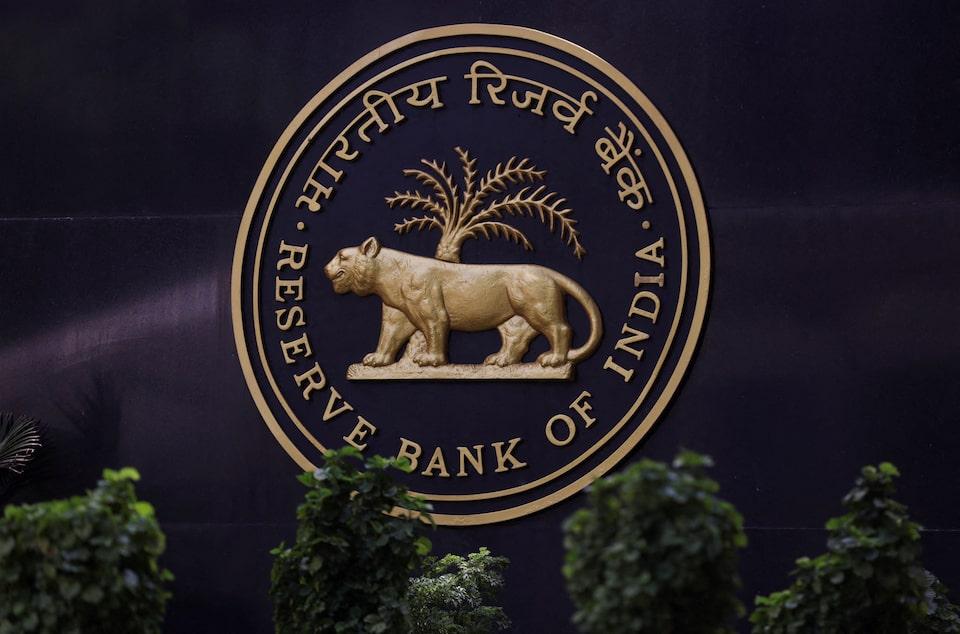
MUMBAI, March 24 (Reuters) - The Indian rupee leaped higher on Monday, with persistent dollar sales from foreign banks helping the local unit claw back all of its losses in 2025 so far. The rupee rose to a peak of 85.50 during the session, strengthening past levels last seen at the end of 2024. Sign up here. The currency closed at 85.6350 against the U.S. dollar, up 0.4% on the day. A nine-day streak of gains has boosted the rupee, as the currency benefited from dollar inflows related to inter-company borrowings and repatriation of corporate profits, which are usual in March, the last month of India's financial year. Inflows into Indian bonds - about $3 billion over March so far - and a pickup in foreign buying of Indian stocks over the last couple of trading sessions have also helped the currency, which was teetering near record-low levels as recently as last month. On the day, "offers (on USD/INR) were dominated by foreign banks but what is also surprising is that the Reserve Bank of India doesn't seem to be very active on bid," a trader at Mumbai-based bank said. The sharp gain in the rupee also likely took exporters by surprise, prompting dollar sales and adding to the momentum, the trader said. The currency is up 2.1% on the month so far, outpacing all of its major Asian peers. The benchmark Indian equity index, Nifty 50 (.NSEI) , opens new tab, rose nearly 1.5% on Monday, also wiping out all of its losses seen over 2025. The rupee could extend its gains a little more but that is likely to be capped around 85.15-85.20 as importers may jump in to pick up dollars at a bargain, said Dilip Parmar, a foreign exchange research analyst at HDFC Securities. While the local unit has logged a string of gains recently, some analysts reckon that the rally is underpricing India's vulnerability to reciprocal U.S. tariffs, slated to be introduced on April 2. https://www.reuters.com/markets/currencies/rupee-soars-wipe-out-years-losses-strong-dollar-inflows-2025-03-24/
2025-03-24 09:24
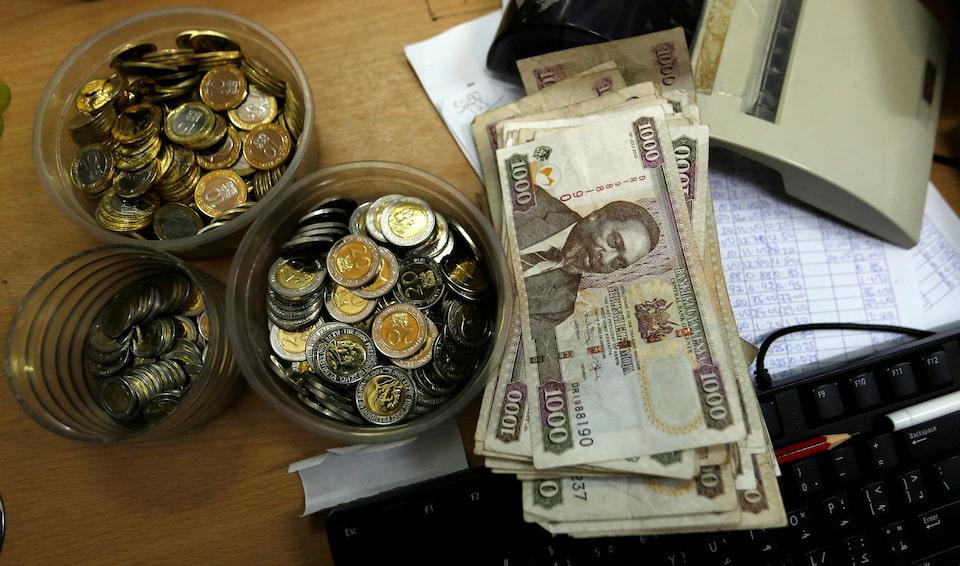
NAIROBI, March 24 (Reuters) - Kenya's shilling was broadly stable against the dollar on Monday, data from the London Stock Exchange Group showed. At 0918 GMT, the shilling traded at 129.20/50 per dollar, compared to 129.15/45 at the close of Friday's session, the data showed. Sign up here. https://www.reuters.com/markets/currencies/kenyan-shilling-broadly-stable-lseg-data-shows-2025-03-24/
2025-03-24 09:01
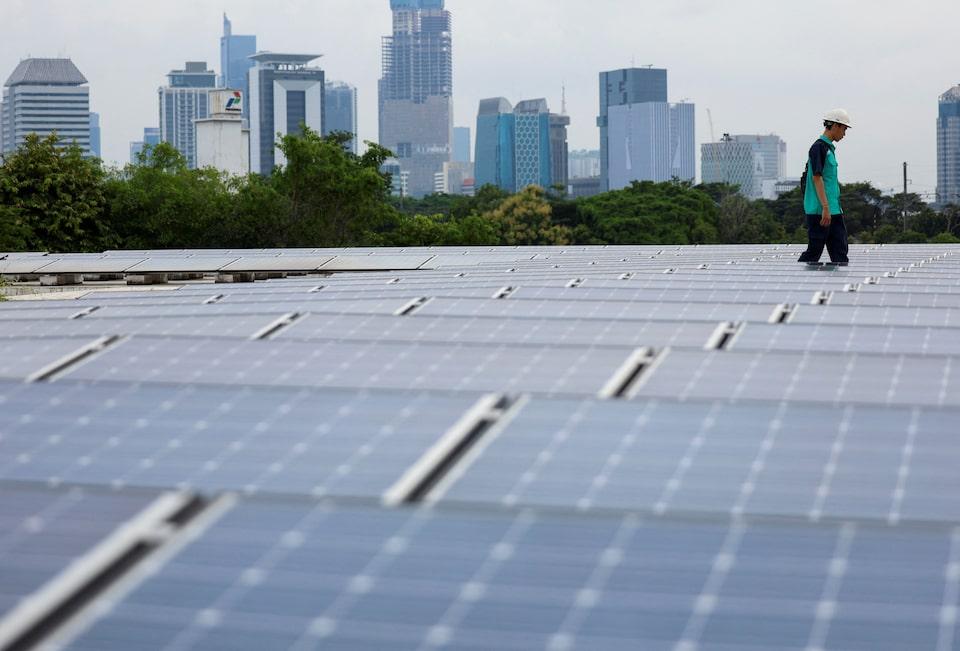
JAKARTA, March 24 (Reuters) - The United States' decision to pull out of the Just Energy Transition Partnership, an energy transition funding commitment by developed countries, will not impact the other partners' commitment to it, a senior Indonesian minister said on Monday. JETP, a financing commitment from rich nations and global lenders to help poorer nations adopt cleaner energy, has earmarked $20 billion to help Indonesia cut its emissions. Sign up here. Earlier this month the U.S. said it had withdrawn from its JETP deals with Indonesia, South Africa and Vietnam. The U.S. commitment in Indonesia was over $2 billion, made up of non-concessional loans, MDB guarantees, and grants. Chief economic minister Airlangga Hartarto told reporters the JETP financing commitments are now co-led by Japan and Germany. "The U.S. exit will not reduce the commitment of nine countries to support Indonesia's net-zero emissions push," he said, reiterating the net-zero target date was 2060 or earlier. Under the JETP framework, Indonesia is aiming to cut annual carbon emissions by more than 50 million tons to 250 million tons of carbon dioxide equivalent from its on-grid power sector by 2030. It also plans to increase the share of renewable energy in its power mix to 44% by 2030, from around 12% in 2022. Airlangga said JETP has made funding commitments worth $1.1 billion across 54 projects, including the expansion of the Muara Laboh geothermal plant, and he said the country will find other modes of funding. Indonesia, the world's top thermal coal exporter, currently sources 60% of its energy from coal, the most carbon-intensive fossil fuel. https://www.reuters.com/sustainability/climate-energy/indonesia-minister-says-others-wont-follow-us-exit-jetp-energy-transition-2025-03-24/
2025-03-24 07:48
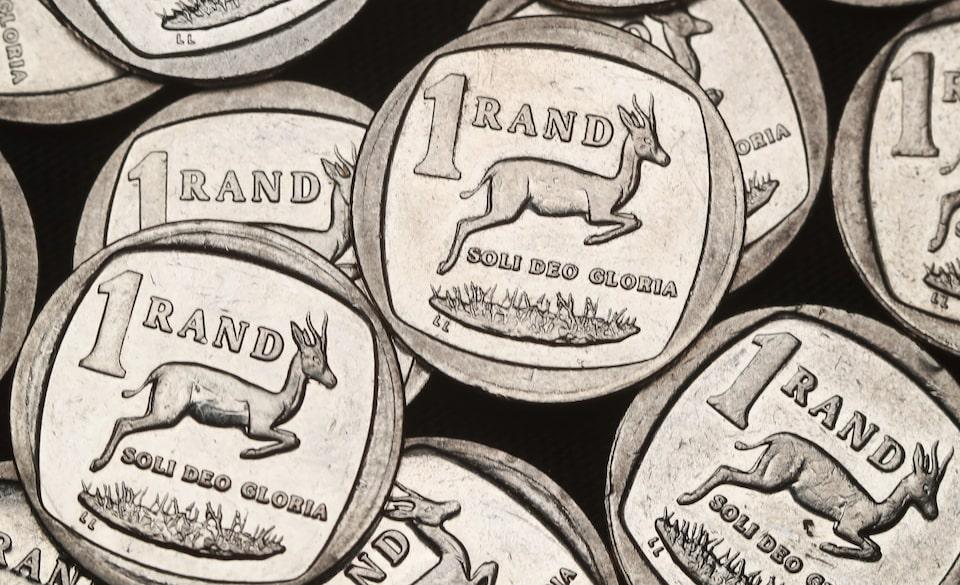
JOHANNESBURG, March 24 (Reuters) - South Africa's rand gained on Monday as investors awaited clarity on the next round of tariffs from U.S. President Donald Trump. At 1413 GMT, the rand traded at 18.1275 per dollar , about 0.5% stronger than its previous close. Sign up here. "The rand is gaining support from uncertainty surrounding U.S. tariff developments and elevated gold prices," said Zain Vawda, market analyst at MarketPulse by OANDA. Vawda said markets will likely maintain their current trajectory until there is more clarity on the Trump administration's proposed universal tariffs. While the rand has gained about 4% against the dollar this year, trade in the local currency has often been volatile as both domestic and international factors weigh. South Africa's central bank kept its main interest rate unchanged last week despite cooling inflation amid risks stemming from Trump's global trade war and the country's deadlocked national budget. The next round of tariffs is due on April 2, when the White House will announce reciprocal levies on many countries. "There is a possibility of volatile moves for the rand as more tariff chatter arrives during the course of the week," Vawda said. On the stock market, the Top-40 (.JTOPI) , opens new tab index was last down about 0.5%. South Africa's benchmark 2030 government bond was weaker, with the yield up 6.5 basis points to 9.125%. https://www.reuters.com/markets/currencies/south-african-rand-firms-markets-await-us-tariff-clarity-2025-03-24/