2025-03-24 06:04
Trump hints at some flexibility regarding tariffs US and Russia discuss Black Sea maritime ceasefire US dollar hit its highest level since March 6 March 24 (Reuters) - Gold prices dropped on Monday as the dollar touched an over two-week high, while investors took stock of U.S. President Donald Trump's more cautious stance on tariffs against trading partners. Spot gold fell 0.6% to $3,006.84 an ounce at 01:42 p.m. (1742 GMT). U.S. gold futures settled 0.2% lower at $3,015.60. Sign up here. "We've hit a record after record and now the market is just consolidating these gains and this is enforced by somewhat higher U.S. dollar," said Bart Melek, head of commodity strategies at TD Securities. Gold, traditionally seen as a hedge against geopolitical and economic uncertainties and often thriving in a low-interest-rate environment, has hit 16 record highs this year and reached an all-time peak of $3057.21 last week. The U.S. dollar (.DXY) , opens new tab rose 0.2%, hitting an over two-week high and making greenback-priced bullion more expensive for overseas buyers. Trump hinted on Friday that there would be some flexibility regarding reciprocal tariffs that are set to take effect on April 2 and are expected to drive inflation and hinder economic growth. Meanwhile, the Federal Reserve held its benchmark interest rate steady last week and indicated two quarter-percentage-point cuts this year. Investors now await U.S. Personal Consumption Expenditures data due on Friday, the Fed's preferred inflation measure. "We're looking at a level of about $3,150 plus, later in the year that gold will likely strive to as the Fed starts loosening monetary policy," Melek said. Meanwhile, U.S. and Russian officials held talks in Saudi Arabia aimed at making progress towards a broad ceasefire in Ukraine, with Washington eyeing a separate Black Sea maritime ceasefire deal before securing a wider agreement. "If over the week the talks in Saudi Arabia do materialize and there is a dip in gold based off that, I expect it will be bought up fairly quickly," said Bob Haberkorn, senior market strategist at RJO Futures. Spot silver fell 0.3% to $32.94 an ounce, platinum fell 0.5% to $969.77, and palladium was down 0.7% at $951.10. https://www.reuters.com/markets/commodities/gold-edges-lower-dollar-strength-traders-await-fresh-catalysts-2025-03-24/

2025-03-24 06:02
TOKYO, March 24 (Reuters) - Nippon Steel's (5401.T) , opens new tab negotiations with the U.S. government regarding its planned acquisition of U.S. Steel (X.N) , opens new tab are still ongoing, President Tadashi Imai said on Monday. Imai said a mutual understanding is developing that the deal would bolster the U.S. steel industry. Talks will continue and aim to reach an agreement on conditions for equity purchase and capital spending, among other aspects, he added. Sign up here. (This story has been refiled to correct a typographical error in the word 'still' in the headline) https://www.reuters.com/markets/deals/nippon-steel-chief-says-us-steel-takeover-talks-sill-ongoing-with-washington-2025-03-24/

2025-03-24 05:52
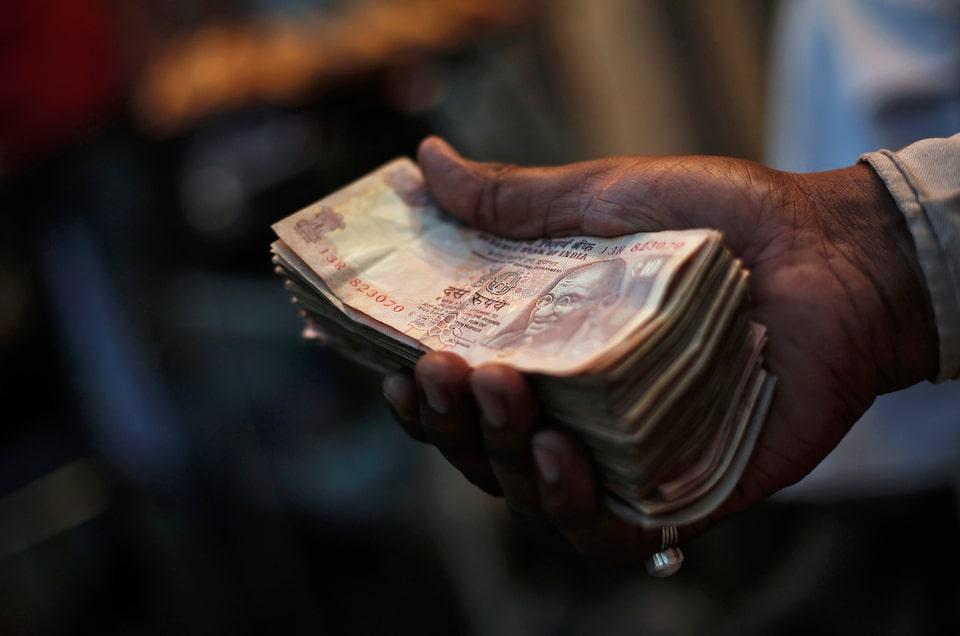
MUMBAI, March 24 (Reuters) - The rupee's rally, which has made it the best-performing major Asian currency this month, is underestimating India's vulnerability to reciprocal U.S. tariffs, analysts said. Foreign inflows and position unwinding have boosted the rupee, which is on track for its best monthly performance in nearly four years. Sign up here. On Monday, the rupee rose slightly to 85.90 against the U.S. dollar, bringing its month-to-date advance to just under 2%. However, the rally does not factor in the volatility that possible U.S. tariffs slated for next week might unleash, analysts said. The dollar/rupee pair is underpricing the risk from U.S. President Donald Trump’s reciprocal tariffs specifically for India, MUFG Bank said in a note, adding that the risk-reward may be tilted towards a weaker rupee. The White House is set to announce reciprocal levies on many countries on April 2. President Trump said in a recent interview that India will face the same level of tariffs that it imposes on imports from the United States. U.S. manufacturing exports to India, valued at nearly $42 billion in 2024, face high tariff rates ranging from 7% on wood products and machinery to 15% to 20% on footwear and transport equipment, and nearly 68% on food items. In a worst-case scenario of a uniform tariff hike of 10% on all goods and services imported from India by the United States, India's economy could take a hit of 50 basis points to 60 basis points, per estimates by Standard Chartered Bank economists. "You have big uncertainty looming and I think the market, for the moment, is brushing it aside," a senior treasury official at a bank said. "At this price point (on the dollar/rupee), it just makes a lot of sense to buy." https://www.reuters.com/markets/currencies/rupee-rally-underestimates-impact-us-reciprocal-tariffs-analysts-say-2025-03-24/
2025-03-24 05:35
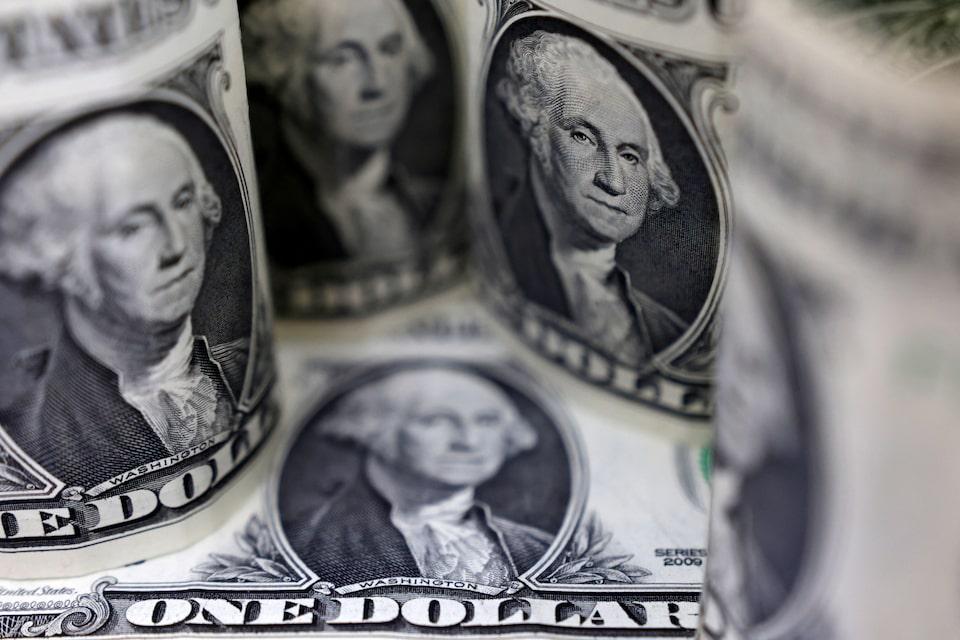
Reports of tariff flexibility improves risk sentiment US business activity picked up in March New round of reciprocal levies due April 2 Dollar hits three-week high against Japanese yen NEW YORK, March 24 (Reuters) - The dollar jumped to multi-week highs against the euro and yen on Monday after data showed U.S. business activity picked up in March and reports that U.S. President Donald Trump will be flexible with upcoming tariffs. In cryptocurrencies, bitcoin was also bolstered by improving risk sentiment and reached $88,772, the highest since March 7. Sign up here. S&P Global's flash U.S. Composite PMI Output Index, which tracks the manufacturing and services sectors, increased to 53.5 this month from 51.6 in February. A reading above 50 indicates expansion in the private sector. The services sector accounted for the rise in the PMI, partly attributed to a thaw in temperatures as spring sets in. Manufacturing slid back into contraction territory after two straight months of growth. "Overall, the services side is a much more important component of the U.S. economy so I take this as good news," said Adam Button, chief currency analyst at ForexLive in Toronto. The greenback also rose against the Japanese yen earlier on Monday after Bloomberg News and the Wall Street Journal reported that the Trump administration was likely to exclude a set of sector-specific tariffs while applying reciprocal levies on April 2. Trump said on Monday he will in the very near future announce tariffs on automobiles, aluminum and pharmaceuticals. "Everyone was initially shocked by the scope and size of tariff talk, but lately markets are taking a more measured view," Button said. The dollar was last up 0.82% on the day against the Japanese currency at 150.54 yen . It earlier reached 150.75, the highest since March 3. The currency pair moved in sync with rising Treasury yields, with 10-year yields gaining 8.3 basis points on the day to 4.335%. "A wave of cautious optimism is washing across foreign exchange markets on hopes that next week's U.S. tariff announcement will prove less extreme than had previously been feared," said Karl Schamotta, chief market strategist at Corpay in Toronto. That said, "traders are avoiding big directional positions, given that the U.S. administration's tariff plans are still likely to touch off another round of retaliatory strikes from major trading partners - damaging the U.S. and global economies, and triggering more turbulence in currency markets. Volatility levels look likely to remain elevated," Schamotta said. The dollar has been under pressure for most of this year as the market's assumptions that Trump would quickly usher in pro-growth policies transformed into worries about the implementation and ultimate impact of trade levies. Traders fear the tariffs may increase inflation and weigh on growth in the near-term. Data from the Commodity Futures Trading Commission on Friday showed that speculators turned net bearish on the U.S. currency last week for the first time since October. The euro fell 0.09% to $1.0804 and slid as low as $1.078, its weakest since March 7. Euro zone business activity grew at its fastest pace in seven months in March, supported by an easing in the long-running manufacturing downturn despite slower growth in services, a survey showed. The single currency had been buoyed last week to its highest level since early October to $1.0955 on optimism over Germany's move to loosen fiscal constraints in order to boost military and infrastructure spending. However, the euro slipped back in recent days in the run-up to the actual ratification of the change, with Germany's upper house of parliament passing the bill on the so-called debt brake on Friday. Sterling gained 0.04% to $1.292 ahead of British finance minister Rachel Reeves' spring budget update later this week. The Turkish lira slightly weakened to about 38 per dollar after a Turkish court on Sunday jailed Istanbul Mayor Ekrem Imamoglu, President Tayyip Erdogan's main political rival, pending graft charges, which Imamoglu denies. The lira briefly lurched to a record low of 42 per dollar last week, when Turkey's central bank said it had suspended one-week repo auctions and hiked its overnight lending rate to 46%, a move that economists say amounts to a tighter policy stance. Markets also have an eye on a potential Black Sea ceasefire deal as U.S. and Russian officials began talks in Saudi Arabia on Monday. https://www.reuters.com/markets/currencies/dollar-drifts-traders-await-trump-tariff-clarity-2025-03-24/
2025-03-24 05:34
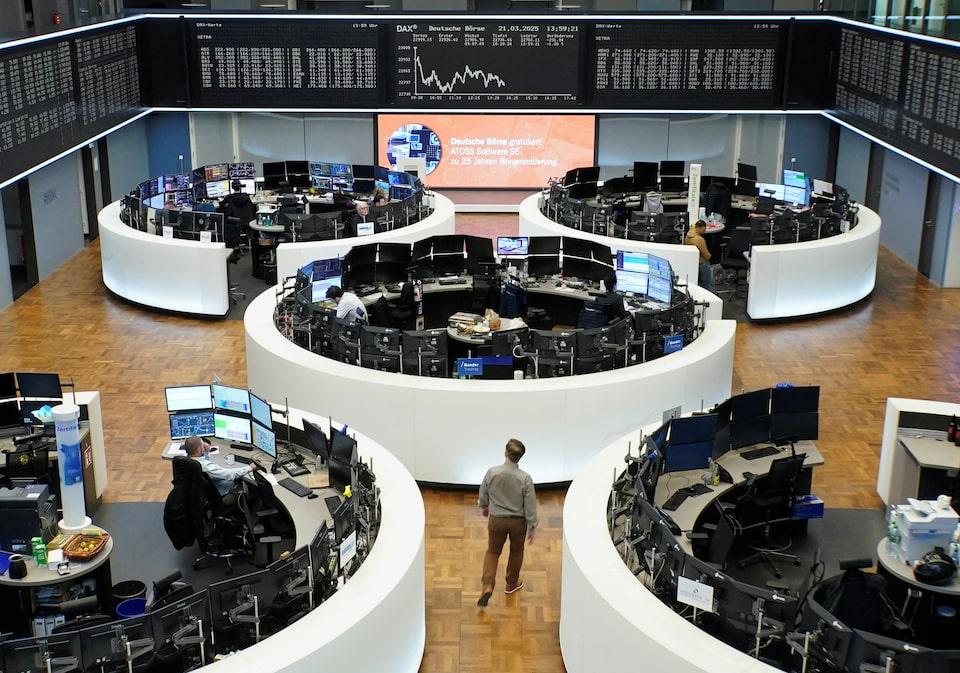
A look at the day ahead in European and global markets from Vidya Ranganathan It's too soon to say "Salud" but the week begins with somewhat conciliatory messages from U.S. President Donald Trump on tariffs, coming right after the Fed's cheery assessment of the economy. Sign up here. The S&P 500 (.SPX) , opens new tab, futures are up after a light gain on Friday when Trump hinted at flexibility. But after a roller-coaster first two months in power - including tariff hits on China, Mexico and Canada - traders are shy about betting that Trump is ready to cut deals. Trump said that he planned to speak with Chinese President Xi Jinping and that the U.S. trade chief would speak with his Chinese counterpart this week. U.S. Republican Senator Steve Daines and heads of several foreign firms including Apple (AAPL.O) , opens new tab and Pfizer (PFE.N) , opens new tab met Chinese Vice Premier He Lifeng on Sunday and were assured of the country's business potential. Monday will see the release of global purchasing managers index (PMI) gauges, probably validating the sudden fiscal policy-spurred impetus for the German, French and other European economies. And, in weekend news, Bloomberg reported that the U.S. hopes to reach a Russia-Ukraine truce agreement by April 20, while Trump said efforts to temper the conflict were "somewhat under control". Yet, despite all that, markets remain hung up on Trump's proposed reciprocal tariffs on trading partner countries. By latest accounts, tariffs are imminent and effective immediately, particularly on the 15% of countries that have the highest tariffs and large trading volumes with the U.S., which Treasury Secretary Scott Bessent refers to as the "Dirty 15". The European Union is in a placatory mood and has delayed its first counter-measures against the United States until mid-April. That means the 50% tariffs on U.S. bourbon, wine, toilet paper and other goods are under review. France and Italy, the largest exporters of wine to the United States, are keen to avoid a trade war, as is Prime Minister Micheal Martin of whiskey-exporter Ireland, who was pleased Europe has decided to "wisely and strategically respond". Besides PMIs, the rest of the week holds the U.S. Federal Reserve's preferred inflation reading, inflation data in Australia and Japan, a budget update in Britain and major earnings in China. Fed officials said last week the U.S. economy was strong but backed a cautious policy approach due to economic uncertainty. In emerging markets, Turkey's lira is on a knife's edge as the jailing of President Tayyip Erdogan's main rival unsettles investors. Key developments that could influence markets on Monday: SPEAKERS: Fed Governor Michael Barr, Bank of England Governor Andrew Bailey EARNINGS: Hargreaves Lansdown PLC, Travis Perkins PLC DATA: Flash PMIs for France, Germany, UK, Euro Zone DEBT AUCTIONS: France - reopening of 3-month, 6-month and 1-year auctions, Germany -reopening of 3-month and 9-month government debt auctions https://www.reuters.com/markets/europe/global-markets-view-europe-2025-03-24/
2025-03-24 05:23
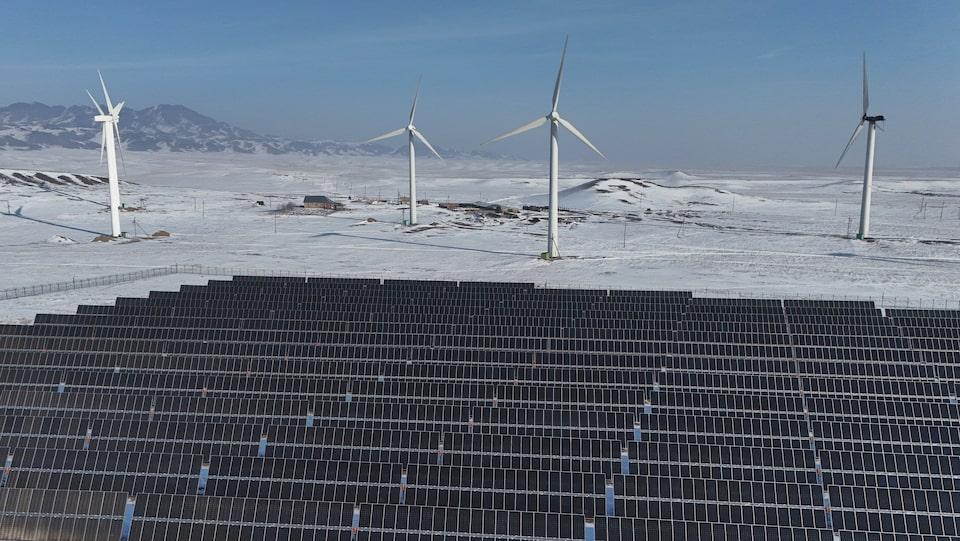
LAUNCESTON, Australia, March 24 (Reuters) - There is something positive for every type of energy in the International Energy Agency's latest global review, but the loudest cheers will be from renewables and natural gas. The world's energy demand grew at 2.2% in 2024, a pace described as "faster than average" by the IEA in its Global Energy Review, released on Monday. Sign up here. The acceleration was led by emerging and developing economies, which accounted for more than 80% of the growth, while the leading sector was electricity, which grew by 4.3% in 2024, or nearly double the annual average of the past decade. The IEA report showed renewable power capacity rose by about 700 gigawatts (GW) in 2024, setting an annual record for the 22nd consecutive year. Along with an increase in nuclear energy it resulted in 80% of the rise in global electricity coming from low-emission sources. Two broad themes emerge from the IEA's review. The first is that renewable energy is the driving force in new electricity capacity. The second is that emerging economies, and especially those in Asia, will determine what energy sources see the most growth, and the most decline, in coming years. Global electricity generation rose by 1,200 terawatt hours (TWh) in 2024, an increase of 4%, with solar climbing by about 480 TWh and wind up by 180 TWh, the IEA said. Hydropower also rose by 190 TWh, but the IEA said this was largely due to wet weather in several major markets rather than capacity additions. China, the world's second-largest economy, again dominated renewable capacity additions, accounting for two-thirds of the global total of renewables connected to the grid, with 340 GW of solar and 80 GW of wind. India, the world's most populous country, also added about 30 GW of solar capacity, which was triple the growth of the previous year. But India's solar additions were less than 10% of what China achieved in 2024, underscoring just how rapidly China is forging ahead with renewable energy. STEADY COAL It's perhaps ironic that China and India are also the lynchpins of global coal demand, with China getting about 60% of its electricity from the fuel and India nearly three-quarters. Coal demand increased by a modest 1% in 2024 to a record high, with China consuming 40% more coal than the rest of the world combined. Coal's share of the global electricity mix dropped to 35% in 2024, the lowest figure since the IEA was founded in 1974. While coal remains a significant source of energy, its use is increasingly limited to China, India, some Southeast Asia countries and to some nations in Africa, such as South Africa. This concentration doesn't bode well for the global seaborne market, as the main coal consumers are also now the major producers of the fuel, and all have some form of policy or commitment to favour domestic sources rather than imports. China and India are also the world's two biggest importers of coal, but both are seeking to rely more on domestic fuel, with the exception being India's increasing reliance on imported metallurgical coal for steel-making. GAS LESSONS In addition to renewables, the other big winner in 2024 was natural gas, with the IEA saying demand reached an all-time high, rising 2.7% in 2024 to reach 115 billion cubic metres, rebounding from the 1% growth rate between 2019 and 2023. Once again, the main driver was Asia, with demand in China from heatwaves and the switch to liquefied natural gas (LNG) trucks fuelling growth. But within the positive story, there is a note of caution, with the IEA noting that China's growth rate of more than 7% in 2024 was built around the first part of the year, and demand turned negative in the last two months of the year. This was largely due to higher spot LNG prices toward the end of the year that curbed China's appetite for the fuel. The lesson here is that countries in Asia are keen to use more LNG but they will only do so if the price is competitive, meaning LNG producers must choose between volume growth or strong prices. If there was a loser in the IEA report it was crude oil, with the agency noting that demand only rose 0.8% in 2024, and was driven mainly by the petrochemical sector. Much of the deceleration in oil demand seems structural, due to the ongoing shift to electric vehicles, especially in China, growth in LNG trucks and increasing high-speed rail for intercity transport. Proponents of fossil fuels will point out that the IEA report shows that their demand is still growing. But that ignores the main trend, which is renewables are expanding far quicker and also increasing penetration in the world's fast-growing regions. The views expressed here are those of the author, a columnist for Reuters. https://www.reuters.com/markets/commodities/renewables-natural-gas-surge-ahead-oil-coal-russell-2025-03-24/