2026-01-13 00:39
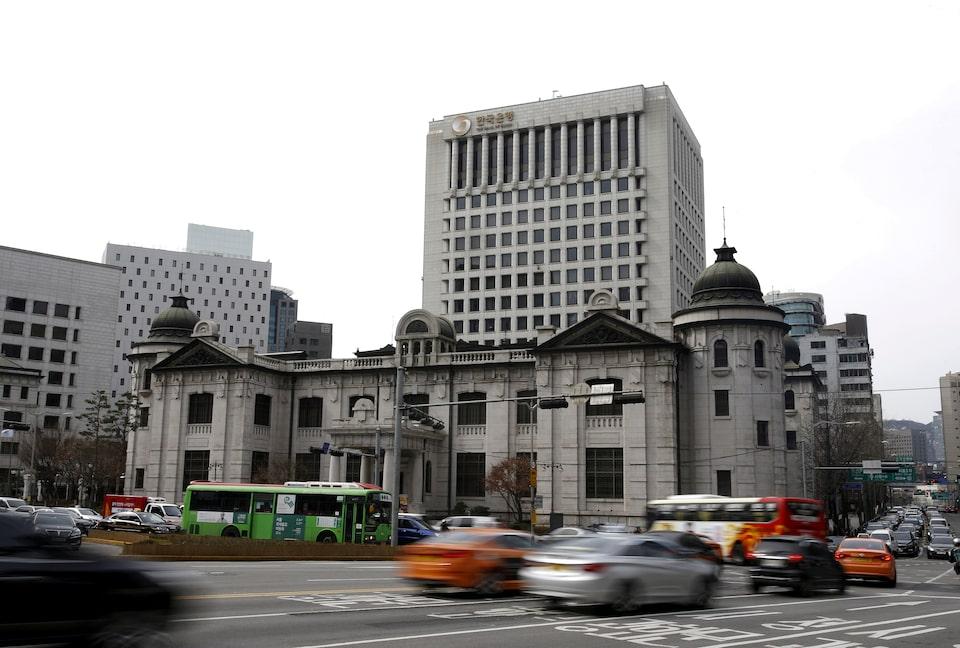
Economists expect no rate change due to won's fall and inflation concerns BOK signals end of easing cycle, revises guidance on rate cuts Seoul apartment prices rise, complicating BOK's decision on rate cuts BENGALURU, Jan 13 (Reuters) - South Korea’s central bank will keep its key interest rate unchanged at 2.50% on Thursday, as the won's fall has limited room for easing, according to economists in a Reuters poll, who have pushed expectations for the next cut to early next year. The Korean won has weakened nearly 2% during the first two weeks of the year, increasing the risk of higher consumer prices and stoking inflation concerns, an issue flagged by the Bank of Korea (BOK) at its November meeting. Sign up here. Asia’s fourth-largest economy recorded inflation of 2.1% in 2025, slightly lower than 2.3% in 2024 but still above the BOK’s 2% target. The central bank has also signalled it may be nearing the end of its current easing cycle, revising its guidance from “maintain its rate cut stance” to “the Board will decide whether and when to implement any further Base Rate cuts,” strengthening the case for a longer pause. All 34 economists polled from January 6 to 12 forecast the BOK would keep its base rate (KROCRT=ECI) , opens new tab unchanged at 2.50% on January 15. "Given the volatility in the FX market, it is too soon for the BOK to cut rates right now," said Kelvin Lam, senior economist at Pantheon Macroeconomics. "Despite the government's efforts in controlling supply, expectations for house prices, particularly for Seoul apartment prices, are still elevated at the moment. So the focus for the BOK is now turned to having a stable currency and also looking at instability stemming from the overheating apartment prices." Apartment prices in Seoul increased by 0.18% in the week ending January 5, according to data released by the Korea Real Estate Board on Thursday. Prices climbed 8.7% over the course of 2025, underscoring challenges for the BOK as it considers whether to resume easing. The survey also showed no change to rates through 2026, marking a shift from the November 2025 poll, when more than 60% of respondents expected at least one additional rate cut in the first quarter of this year. In the latest poll, only 22%, seven of 32 respondents, expected another cut this quarter. South Korea’s economy was forecast to expand 2.0% this year, slightly above the BOK’s forecast of 1.8%, and by 1.9% in both 2027 and 2028. Inflation was expected to average 1.9% this year, slightly below the central bank's forecast of 2.1%. (Other stories from the Reuters global economic poll) https://www.reuters.com/world/asia-pacific/bank-korea-hold-rates-250-january-15-next-cut-delayed-2027-2026-01-13/
2026-01-13 00:30
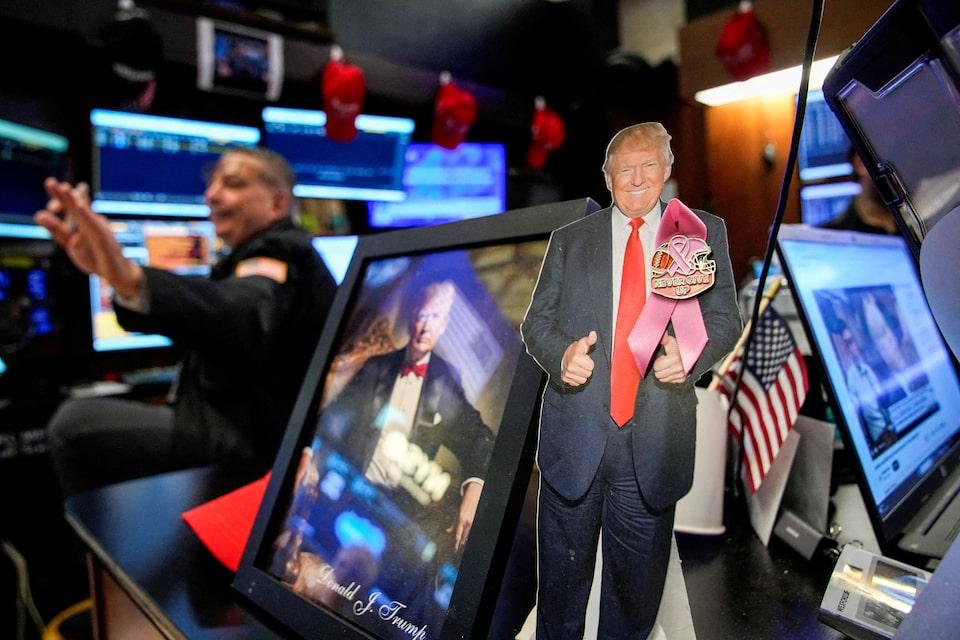
ORLANDO, Florida, Jan 12 (Reuters) - If record-high U.S. stock prices accurately reflect investors' assessment of the first year of Trump 2.0, then it's a glowing scorecard for the most interventionist government in decades. It's yet another example of the topsy-turvy economic world where the global norms and orthodoxies of the last 40 years are being questioned and sometimes discarded by the U.S. president - who is rapidly becoming the market activist-in-chief. Sign up here. Under Donald Trump's direction, the U.S. government has taken direct equity stakes in companies, called for the firing of CEOs, attempted to dictate CEO compensation, ensured the government cuts from Big Tech chip exports, and sought to fire Federal Reserve officials. On top of that, Trump has ordered the purchase of $200 billion of mortgage-backed securities, directed U.S. oil companies' activities in Venezuela, tried to ban defense firms from buying back shares unless they speed up production, and called for a one-year cap on all credit card interest rates as his Justice Department has threatened to indict Fed Chair Jerome Powell. And that's just in the past week. INEFFICIENT MARKET HYPOTHESIS? Consider an alternate reality in which Kamala Harris won the 2024 U.S. presidential election and was now approaching her first year in office, having pursued a similarly controversial clutch of unorthodox policies. Would markets be shrugging this off so easily? We will never know, but it's reasonable to assume that there would have been notable pushback from investors. In the real world, apart from the brief turmoil following Trump's "Liberation Day" tariff announcement in April, there has been virtually none. Indeed, last year was a record year for stocks and many other asset classes. Hedge funds - no friend of government meddling in the free market and private sector - saw assets under management soar above $5 trillion, as they recorded their best year since 2009, according to HFR. William Henagan, research fellow at the Council on Foreign Relations, agrees it's something of a "conundrum" that the Trump administration's highly interventionist approach to Wall Street and Main Street hasn't triggered more lasting damage to public markets. "Investors don't necessarily see the series of market interventions as substantively eroding the rule of law and property rights that underpin financial markets and the economic system," Henagan says. "Perhaps public markets are not all-seeing, all-knowing, or the most efficient." But if the rule of law, property rights, and constitutional protections are key to what has made the U.S. financial system the biggest and most dynamic in the world, then investors ignore the erosion of these foundations at their own risk. CASE FOR THE DEFENSE But the question of market confidence is often binary. Investors have confidence in market structure and the financial system until they don't. Of course, government intervention in a market economy is nothing new, nor is it a bad thing. Indeed, many sectors welcome it, and it can be necessary for reasons such as national security, energy security, or the provision of a social safety net. But a year into Trump's second term, the "visible hand" of the president is being felt by many parts of USA Inc, shoving aside the invisible hand of the free market posited by the eighteenth-century economist Adam Smith. Trump's capriciousness can still ignite volatility in certain stocks and sectors, of course. Defense giant Lockheed Martin's (LMT.N) , opens new tab shares slumped 7% late last Wednesday after Trump said he would block defense firms' dividend payments or buybacks, then rebounded 8% in after-hours trading when Trump called for a 50% increase in the defense budget to $1.5 trillion. But the broader market continues to rise on the back of short-term exuberance and momentum, seemingly unaffected by the most interventionist administration in decades. To be sure, Wall Street lagged its global peers last year by some margin. Perhaps this is a sign that Trump's visible hand is unnerving investors, but, for now, the warning signal is certainly not flashing red. (The opinions expressed here are those of the author, a columnist for Reuters) Enjoying this column? Check out Reuters Open Interest (ROI), your essential source for global financial commentary. ROI delivers thought-provoking, data-driven analysis of everything from swap rates to soybeans. Markets are moving faster than ever. ROI can help you keep up. Follow ROI on LinkedIn , opens new tab and X , opens new tab. https://www.reuters.com/markets/us/how-long-can-wall-street-shrug-off-trumps-visible-hand-2026-01-12/
2026-01-13 00:25
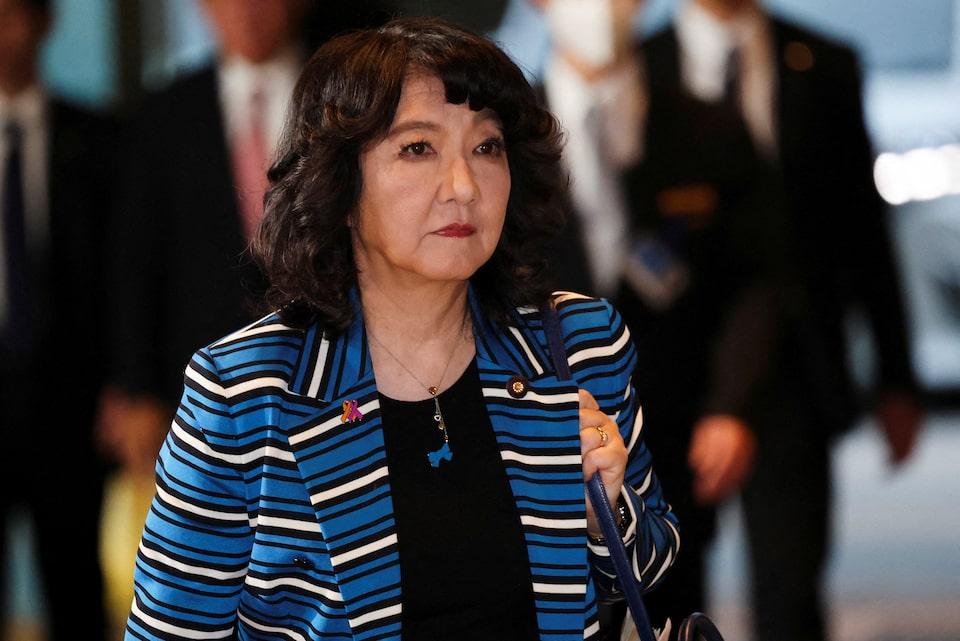
Yen crosses 158 per dollar to hit one-year lows on snap election reports Japan has said it has a 'free hand' in dealing with excessive moves in the yen Analysts on high alert for Tokyo's yen-buying intervention Jan 13 (Reuters) - Japan's Finance Minister Satsuki Katayama said she and U.S. Treasury Secretary Scott Bessent shared concerns over what she called the yen's recent "one-sided depreciation", as Tokyo stepped up threats of intervention to stem the currency's fall. Katayama's comments reflect Japan's rising unease over a slide in the yen, which crossed the key 158-yen-per-dollar mark for the first time in about a year following reports that Japanese Prime Minister Sanae Takaichi may call a February snap election. Sign up here. The reports pushed down the yen as they stoked speculation that an election win would help Takaichi secure a mandate for her expansionary fiscal policy. But the weak yen has been a headache for policymakers as it inflates import costs, weighs on households and possibly affects Takaichi's popularity ratings. "I conveyed my deep concern over the one-sided depreciation of the yen, seen also on January 9, and Secretary Bessent shared this view," Katayama told reporters in Washington, hinting at tacit U.S. approval for market intervention. Katayama was speaking after a bilateral meeting with Bessent on the sidelines of a multilateral meeting on critical mineral supply chains. A U.S. Treasury spokesperson did not immediately respond to a request for comment on the Bessent-Katayama bilateral meeting. A senior Japanese government official who briefed reporters on the meeting said Katayama instructed him to closely coordinate with the U.S. if necessary. The dollar briefly dipped below 158 yen after Katayama's comments, but later bounced back to hit 158.925 yen, its highest since July 2024. In a separate news conference, Deputy Chief Cabinet Secretary Masanao Ozaki warned of potential action. "The government will take appropriate steps on excessive currency moves, including speculative ones," he said. Ozaki declined to comment on the reports about an election, saying it is the Prime Minister's prerogative to dissolve parliament. "Japan's argument is that yen-buying interventions should be justified as the yen's recent weakness, despite the narrowing interest rate gap between the U.S. and Japan, deviates from fundamentals," said Hiroyuki Machida, director of Japan FX and commodities sales at ANZ. But the latest yen selling would continue until the outcome of the reported election and the direction of fiscal policy become clear, meaning the need for massive firepower to keep supporting the yen, Machida said. "So intervention is possible anytime now, but my guess is that wouldn't happen till the yen hits 160 per dollar." Japan last intervened in the currency market in July 2024, when the yen fell to a 38-year low of around 161.96 to the dollar. Also on Tuesday, Economic Revitalisation Minister Minoru Kiuchi told a press conference that Takaichi's fiscal policy alone should not be blamed for the weak yen. "Exchange rates and interest rates are determined in the market based on a wide range of factors, so it is difficult to single out fiscal policy and say it has a specific impact on markets," he said. SEPTEMBER'S JAPAN-US STATEMENT Katayama has said Tokyo has "a free hand" in dealing with excessive moves in the yen, citing a joint Japan-U.S. statement issued in September. The joint statement said Japan and the U.S. reaffirmed their commitment to "market-determined" currency rates, while agreeing that foreign exchange interventions should be reserved for combating excess volatility. Japanese policymakers have cited the statement as giving them the right to intervene when yen moves deviate from economic fundamentals and make excessively big swings. On the multilateral rare earths meeting, Katayama said she told the participants about Tokyo's stance on Beijing's ban on exports of items destined for Japan's military that have civilian and military uses, potentially including some critical minerals. "I told the meeting that it's highly problematic because it covers an extremely broad range of items with vague wording and includes re-export restrictions that affect third countries, including the members present in the meeting," she said. https://www.reuters.com/world/asia-pacific/japan-finance-minister-says-us-treasurys-bessent-shares-concerns-over-weak-yen-2026-01-13/
2026-01-13 00:24
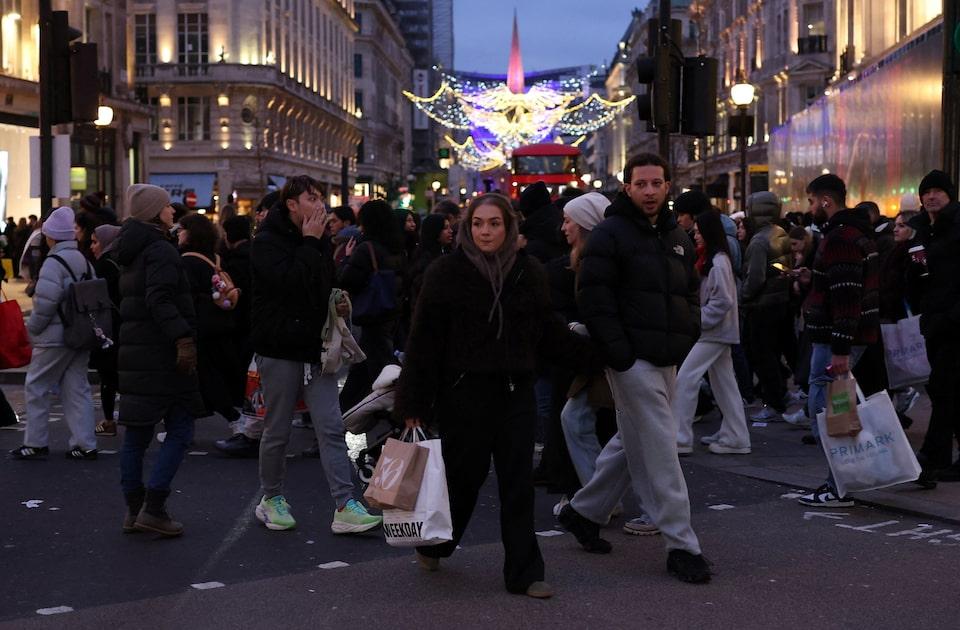
LONDON, Jan 13 (Reuters) - Britain's consumers reined in their spending in December by the most in almost five years, according to debit and credit card data from Barclays published on Tuesday, adding to other signs of household caution before Christmas. Separate figures from the British Retail Consortium also painted a weak picture with sales growth among retailers slowing for the fourth month in a row in December as shoppers waited for post-Christmas discounts. Sign up here. Britons turned cautious about their spending at the end of last year with worries about tax increases in finance minister Rachel Reeves' budget added to concerns about inflation and a slowing economy. Leading supermarket chain Sainsbury's (SBRY.L) , opens new tab last week reported weak non-food sales in the holiday season. Barclays said overall consumer card spending fell by 1.7% in December from the same month in 2024, the biggest such drop since the 12 months to February 2021, during the COVID pandemic. Spending on essential items dropped for the eighth consecutive month, Barclays said. Reflecting worries about inflation, more than half of the people surveyed by Barclays said they planned to reduce spending on food and discretionary items this year. "These numbers suggest 2025 ended with a whimper," Jack Meaning, chief UK economist at Barclays, said. "However, we expect inflation to ease significantly in the first half of 2026, which, alongside a further easing of interest rates, should provide consumers with respite, unlocking real spending power." Barclays' measure of consumer confidence rose slightly in December but remained below its 2025 average level. The BRC's data showed sales among leading retailers - a narrower measure of spending than that of Barclays - rose by 1.2% year-on-year in December, slowing from an increase of 1.4% in November and the weakest improvement since May. "Many people were clearly holding out for discounts, with the last week showing significant growth off the back of Boxing Day and beginning of the January sales," BRC Chief Executive Helen Dickinson said. Food sales rose by 3.1% but the increase was driven largely by higher prices. Non-food sales were almost flat with fewer Christmas gifts sold than expected, the BRC said. The Barclays spending data covered card spending between November 25 and December 24. The BRC survey covered the five weeks to January 3. https://www.reuters.com/business/retail-consumer/uk-consumers-cut-spending-december-by-most-since-2021-barclays-says-2026-01-13/
2026-01-13 00:23
Jan 12 (Reuters) - U.S. President Donald Trump said on Monday that Microsoft (MSFT.O) , opens new tab will make "major changes" this week to ensure U.S. consumers do not pay more for electricity because of data centers' power consumption, and his administration was working with other technology companies on the issue of high utility bills. "I never want Americans to pay higher Electricity bills because of Data Centers. Therefore, my Administration is working with major American Technology Companies to secure their commitment to the American People, and we will have much to announce in the coming weeks," Trump said on social media. Sign up here. https://www.reuters.com/world/us/trump-says-microsoft-make-changes-curb-data-center-power-costs-americans-2026-01-13/
2026-01-12 23:48
Jan 12 (Reuters) - At least two supertankers, not under sanctions, were departing Venezuelan waters on Monday carrying crude, according to monitoring service Tankertrackers.com and shipping records from state-run company PDVSA seen by Reuters. Venezuela's oil exports had remained at an almost complete standstill since mid-December, when U.S. President Donald Trump announced a blockade of all sanctioned vessels going in and out the OPEC country's waters. Sign up here. U.S. forces intercepted and seized five Venezuela-linked vessels as a way to pressure the government, and captured President Nicolas Maduro in an audacious raid in early January. In recent days, Washington has started to draft a $100 billion reconstruction plan for Venezuela's oil industry, beginning with a 50-million-barrel deal to supply Venezuelan crude to the U.S. and other markets. The Panama-flagged very large crude carriers Kelly and Marbella, controlled by PDVSA as part of its ships under lease, set sail from PDVSA's Amuay anchorage area on Venezuela's western coast. They are carrying about 1.8 million barrels each of Venezuelan Merey heavy crude, the shipping records showed. Their intended destinations and whether the cargoes were part of the flagship supply deal announced by Trump were not immediately clear. PDVSA did not immediately reply to a request for comment. Global traders Vitol and Trafigura last week received U.S. licenses to negotiate and trade Venezuelan oil cargoes as part of the deal, estimated to be worth some $2 billion. https://www.reuters.com/business/energy/least-two-supertankers-depart-venezuelan-waters-carrying-oil-2026-01-12/