2025-03-21 12:29
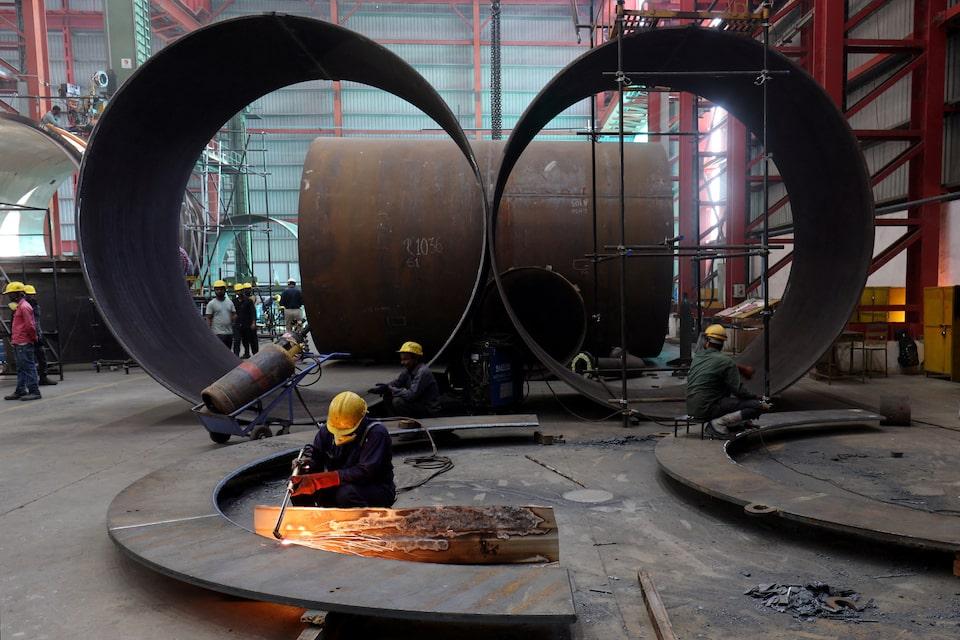
India issued less than 8% of funds allocated for manufacturing incentives as of Oct. 2024 - govt document Delhi will not expand plan or extend deadlines for participating companies Mobile-phone and pharmaceuticals production bright spots while other sectors disappoint Delhi mulls new plan to help firms recover investment costs faster NEW DELHI, March 24 (Reuters) - Indian Prime Minister Narendra Modi's government has decided to let lapse a $23 billion program to incentivize domestic manufacturing, just four years after it launched the effort to woo firms away from China, according to four government officials. The scheme will not be expanded beyond the 14 pilot sectors and production deadlines will not be extended despite requests from some participating firms, two of the officials said. Sign up here. Some 750 companies, including Apple supplier Foxconn and Indian conglomerate Reliance Industries, signed up to the Production-Linked Initiative scheme, public records show. Firms were promised cash payouts if they met individual production targets and deadlines. The hope was to raise the share of manufacturing in the economy to 25% by 2025. Instead, many firms that participated in the program failed to kickstart production, while others that met manufacturing targets found India slow to pay out subsidies, according to government documents and correspondence seen by Reuters. As of October 2024, participating firms had produced $151.93 billion worth of goods under the program, or 37% of the target that Delhi had set, according to an undated analysis of the program compiled by the commerce ministry. India had issued just $1.73 billion in incentives - or under 8% of the allocated funds, the document said. News of the government's decision to not extend the plan and specifics about the lag in payouts are being reported by Reuters for the first time. Modi's office and the commerce ministry, which oversees the program, did not respond to requests for comment. Since the plan's introduction, manufacturing's share of the economy has decreased from 15.4% to 14.3%. In a separate statement on Saturday, the commerce ministry said participating firms had produced $163 billion worth of goods as of November 2024. The ministry did not say if the program would be allowed to expire but said PLIs have "incentivized domestic manufacturing, leading to increased production, job creation, and a boost in exports." Foxconn, which now employs thousands of contract workers in India, and Reliance didn't return requests for comment. Two of the government officials told Reuters the end of the program did not mean Delhi had abandoned its manufacturing ambitions and that alternatives were being planned. The government last year defended the program's impact, particularly in pharmaceuticals and mobile-phone manufacturing, which have seen explosive growth. Some 94% of the nearly $620 million in incentives disbursed between April and October 2024 were directed to those two sectors. In some instances, some food-sector companies that applied for subsidies weren't issued them due to factors such as "non compliance of investment thresholds" and companies "not achieving stipulated minimum growth," according to the analysis. The document did not provide specifics, though it found production in the sector had exceeded targets. Reuters could not determine which companies the analysis referred to. But Delhi had previously acknowledged problems and agreed to extend some deadlines and increase payment frequency after complaints from PLI participants. One of the Indian officials, who spoke on condition of anonymity to discuss confidential matters, said that excessive red tape and bureaucratic caution continued to stymie the scheme's effectiveness. As an alternative, India is considering supporting certain sectors by partially reimbursing investments made to set up plants, which would allow firms to recover costs faster than having to wait for production and sale, another official said. Trade expert Biswajit Dhar at the Delhi-based Council for Social Development think-tank, who has said Modi's government needs to do more , opens new tab to attract foreign investment, said the country might have missed its moment. The incentives program was "possibly the last chance we had to revive our manufacturing sector," he said. "If this kind of mega-scheme fails, do you have any expectation that anything is going to succeed?" The stalling of manufacturing comes as India tries to circumvent the trade war unleashed by U.S. President Donald Trump, who has criticised Delhi's protectionist policies. Trump's threat of reciprocal tariffs on countries like India that have a trade surplus with the U.S. means the export sector is increasingly challenged, said Dhar. "There was some amount of tariff protection ... and all that is going to be slashed." HITS AND MISSES The program was introduced at an opportune time for India: China, which for decades had been the world's factory floor, was struggling to maintain production amid Beijing's zero-COVID policy. The U.S. was also seeking to reduce its economic reliance on an increasingly assertive Beijing, prompting many multinationals to pursue a "China plus one" policy of diversifying production lines. With its large youthful population, lower costs and a government regarded as relatively friendly to the West, India seemed set to benefit. India has become a global leader in pharmaceutical and mobile-phone production in recent years. The country produced $49 billion worth of mobiles in the 2023-24 fiscal year, up 63% from 2020-21, government data show. Industry leaders like Apple now manufacture their newest and most sophisticated cellphones in India, after having started with low-cost models. Similarly, pharmaceutical exports nearly doubled to $27.85 billion in 2023-24 from a decade ago. But the success was not repeated in the other sectors, which include steel, textiles and solar panel manufacturing. India faces fierce competition from cheaper rivals like China in many of those fields. In the solar industry, for instance, eight of the 12 companies that signed up to PLI are unlikely to meet their targets, according to a December 2024 analysis of the sector prepared by the renewable energy ministry and seen by Reuters. The eight firms included units of Reliance, Adani Group and the Indian conglomerate JSW. The analysis found that the Reliance entity would only meet 50% of the production target it had been set for the end of the 2027 fiscal year, when the solar PLI scheme will expire. It also said that the Adani business had not ordered equipment it needed to manufacture the solar panels and that JSW had not "done anything yet." JSW declined to comment, while Adani did not respond to questions. The commerce ministry said in a January letter to the renewables ministry seen by Reuters that it would not agree to its counterpart's request to extend the scheme beyond 2027 as doing so "will result in unfair benefit for non-performers." The renewables ministry said in response to Reuters' questions that it was committed to "fairness and accountability," as well as "ensuring that only those who meet their targets are rewarded." In the steel sector, investment and production also lag targets. Fourteen of the 58 projects approved for PLIs have been withdrawn or removed due to lack of progress, according to the undated program-wide analysis. ($1 = 86.4425 Indian rupees) https://www.reuters.com/markets/emerging/indias-23-bln-plan-rival-china-factories-lapse-after-it-disappoints-2025-03-21/
2025-03-21 12:28
March 21 (Reuters) - German steel producer Salzgitter (SZGG.DE) , opens new tab said on Friday it was too early to tell if its HKM joint venture with Thyssenkrupp (TKAG.DE) , opens new tab and Vallourec (VLLP.PA) , opens new tab would be closed, after a potential buyer dropped out in February. Previously, German conglomerate Thyssenkrupp said HKM would have to be shuttered if no buyer is found. Sign up here. "We are aware of Thyssenkrupp's thinking. That might be one scenario, but I think it's too early to say that is the future of HKM," Salzgitter CEO Gunnar Groebler said in a press conference to discuss full-year results on Friday. If HKM were to close, a solution would have to be found as to where the material it produces would come from in future, Groebler added. Salzgitter, which holds 30% of HKM, with Thyssenkrupp holding 50% and Vallourec 20%, in February said that no solution had been found to meet the interests of all stakeholders, including the stable continued supply of input material by HKM. https://www.reuters.com/markets/commodities/salzgitter-says-future-steel-joint-venture-with-thyssenkrupp-is-uncertain-2025-03-21/
2025-03-21 12:20
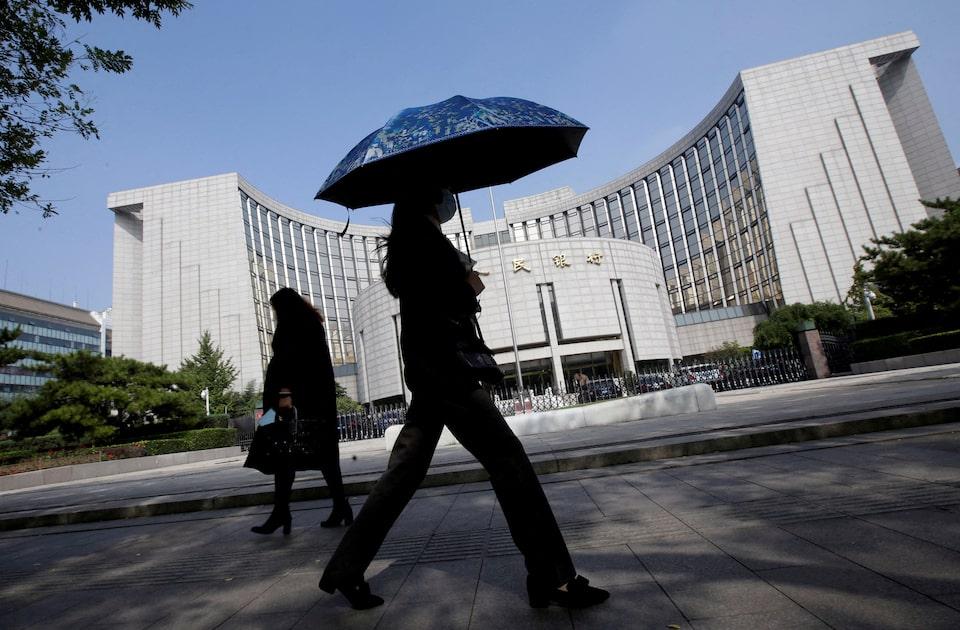
BEIJING, March 21 (Reuters) - China's central bank will cut banks' reserve requirement ratio and interest rates at the "appropriate time" and strengthen the resilience of its forex market, it said on Friday during a quarterly meeting of its monetary policy committee. The committee of the People's Bank of China (PBOC) suggested stepping up monetary policy adjustment and control, and improving monetary policy to be more forward-looking, targeted and effective, according to a statement of the bank's quarterly meeting of its monetary policy committee, which was held on Tuesday. Sign up here. The remarks, similar to PBOC Governor Pan Gongsheng's comments earlier this month, came after modest economic growth in the first two months of the year, thanks to government policy support. But U.S. President Donald Trump's tariff hikes may bring more headaches to policymakers in coming months. "China's economy is generally stable, making progress while maintaining stability... However, it still faces difficulties and challenges including insufficient domestic demand and many hidden risks," said the PBOC statement. The bank will keep liquidity ample and push forward to lower social financing costs, the statement added. "Behaviours that disrupt forex market order will be resolutely dealt with, and the bank will prevent currency overshooting risks," the statement said, adding the PBOC will keep yuan reasonably stable. In addition, the bank will study creating new structural monetary policy tools and support the investment and financing of technology innovation, consumption boosting and foreign trade stabilisation. China held benchmark lending rates steady for the fifth straight month in March on Thursday, matching market expectations. Analysts say pressures to stabilise the yuan has eased, while short-term economic stabilisation suggests a loosening monetary policy is not very urgent at present, but expectations for it still remains. https://www.reuters.com/markets/currencies/chinas-central-bank-says-it-will-boost-forex-market-resilience-2025-03-21/
2025-03-21 12:19
LONDON, March 21 (Reuters) - British Police said there was no indication of foul play behind the fire which shut down Heathrow Airport on Friday, but added that its counter terrorism unit was leading inquiries given the critical nature of the incident. Huge orange flames and plumes of black smoke shot into the sky west of London at 2300 GMT on Thursday as a blaze engulfed a power substation about a mile and a half from the airport, forcing the sudden closure of Europe's busiest hub and disrupting global flights. Sign up here. "While there is currently no indication of foul play we retain an open mind at this time," London's Metropolitan police service (Met) said in a statement. "Given the location of the substation and the impact this incident has had on critical national infrastructure, the Met’s Counter Terrorism Command is now leading enquiries." The specialist unit have the resources and capabilities to progress the investigation at pace, the statement said, adding that the police were working together with London firefighters to establish the cause of the blaze. Energy minister Ed Miliband said earlier on Friday there was no suggestion that there was foul play involved. https://www.reuters.com/world/uk/uk-police-say-no-indication-foul-play-heathrow-fire-counter-terrorism-police-2025-03-21/
2025-03-21 12:01
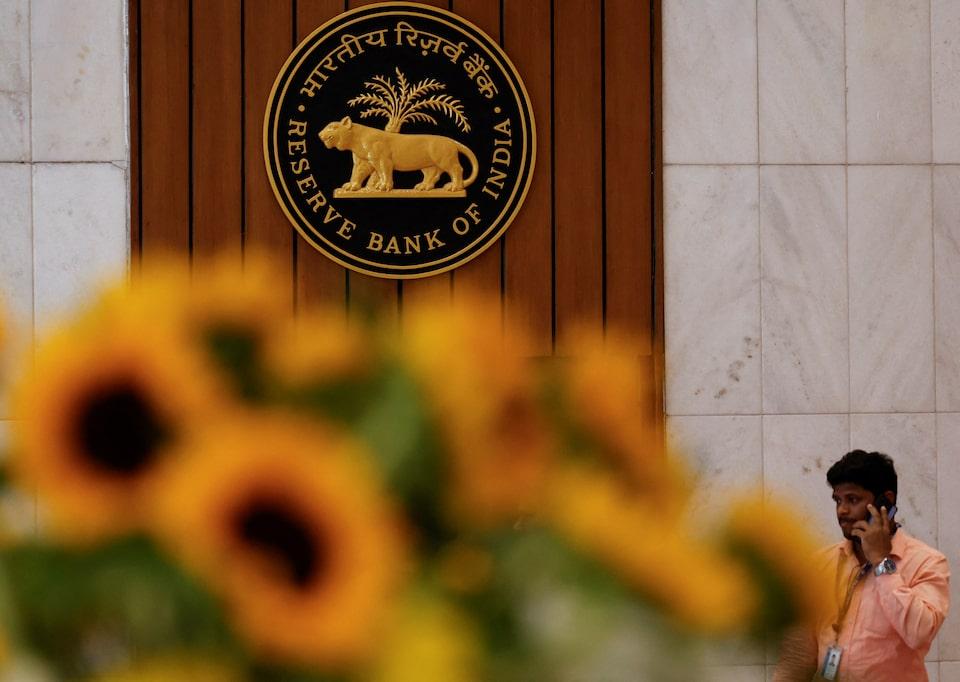
MUMBAI, March 21 (Reuters) - India's foreign exchange reserves (INFXR=ECI) , opens new tab rose by $300 million to a more than three-month high of $654.27 billion as of March 14, data released by the central bank on Friday showed. They had risen by $15.3 billion in the prior week, the biggest jump since August 2021. Sign up here. Changes in foreign currency assets are caused by the central bank's intervention in the forex market as well as the appreciation or depreciation of foreign assets held in the reserves. The rupee and most Asian currencies have been volatile due to an uncertain global risk environment, gripped by uncertainties surrounding global trade and growth from constant changes in U.S. tariff plans. The RBI has repeatedly curtailed volatility in the forex market through dollar sales in the spot market and has also conducted dollar-rupee buy-sell swaps to help boost rupee liquidity in the banking system. In the week to which the reserves data pertains, the rupee depreciated 0.1% week-on-week. The currency ended at 85.9725 on Friday. It rose to a 10-week high of 85.9375 during Friday's session and gained 1.2% in the week. INR= Foreign exchange reserves include India's Reserve tranche position at the International Monetary Fund. FOREIGN EXCHANGE RESERVES (in million U.S. dollars) --------------------------------------------------------- March 14 March 07 2025 2025 --------------------------------------------------------- Foreign currency assets 557,186 557,282 Gold 74,391 74,325 SDRs 18,262 18,210 Reserve Tranche Position 4,431 4,148 ---------------------------------------------------------- Total 654,271 653,966 ---------------------------------------------------------- Source text: (https://www.rbi.org.in/scripts/BS_PressReleaseDisplay.aspx , opens new tab) https://www.reuters.com/markets/currencies/indias-foreign-exchange-reserves-rise-over-three-month-high-2025-03-21/
2025-03-21 11:56
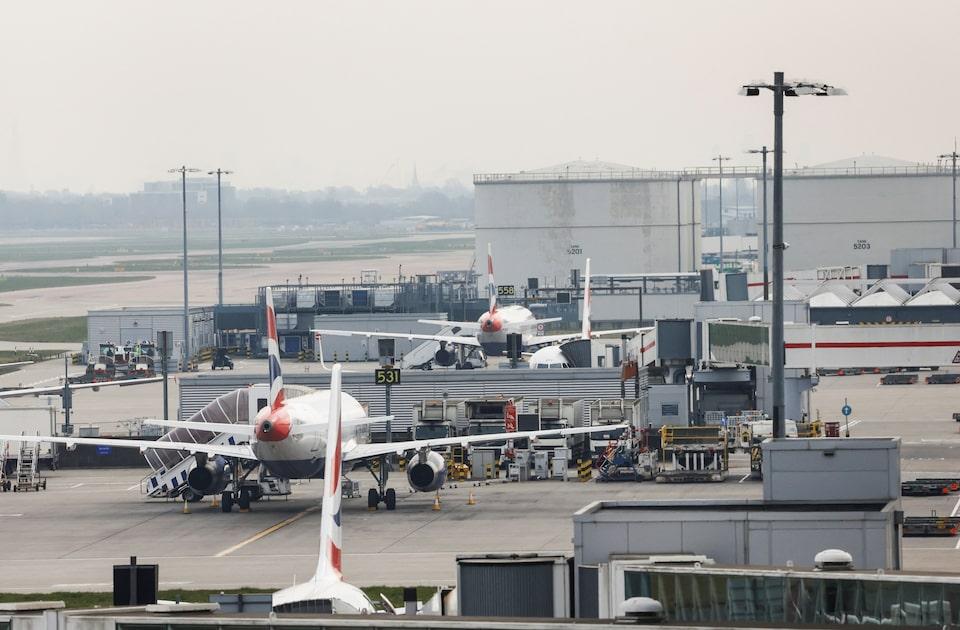
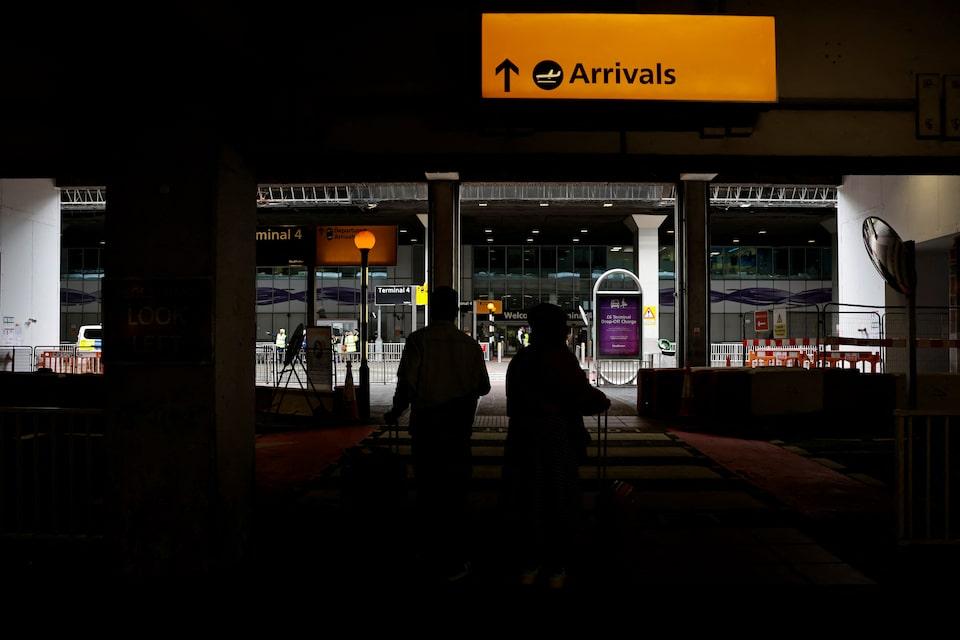
Fire at electrical substation causes Heathrow shutdown Thousands of travellers face days of disruptions Airlines advise passengers to avoid Heathrow Global flight schedules affected, incoming flights rerouted LONDON, March 21 (Reuters) - Thousands of travellers stranded by a huge fire near London's Heathrow, Europe's busiest airport, scrambled to find ways to get home and reunite with their families on Friday as they faced what could be days of disruptions. Heathrow was shut after a blaze that erupted overnight at a substation in the west of London, knocking out power to the airport and surrounding area. Sign up here. Airlines advised passengers not to travel to Heathrow. Waiting at central London's Paddington station, which normally offers express train services to Heathrow, U.S. citizen Tyler Prieb was contacting airlines to find a way back home to Nashville, Tennessee. "I'm sure everybody is going to need a new flight somewhere, somehow. So I'm just trying to get ahead of that the best I can," said Prieb, 36, who was in London for work and to see friends. "Hopefully, it will just take me an extra day to get back to my wife and my daughter," he said. In the meantime, Prieb said he had asked OpenAI's chatbot ChatGPT for ways to pass the time. "I thought maybe I'd go explore another city somewhere," he said. Heathrow was due to handle 1,351 flights on Friday, flying up to 291,000 passengers. John Moriarty, another U.S. traveller, listened attentively to his phone's speaker, hoping to get through to customer service and book a new flight home to Boston to see his daughter, who had travelled from New York to visit him. "All the lines are busy, so I might be here another day. Not the worst thing in the world. (London) is my favourite city, but I need to be home," 75-year-old Moriarty said. 'PRETTY STRESSED OUT' Travel experts said the disruption would extend far beyond Heathrow, and global flight schedules would be affected more broadly. "I'm pretty stressed out," Robyn Autry, 39, from New York, said. "I do have animals back home that I need to get to." The university professor said she was looking at "very, very expensive" flights out of other London airports and considering departures from cities including Bristol and Manchester. "I think I'm going to have to pay a lot of money out of pocket today," she said. Chicago couple Anna Schiferl, 26, and Charlie Katt, 27, said they were experiencing the latest episode in a long history of holiday adversity, including out-of-season hurricanes, illnesses and apartment rental misadventures. "We're engaged, and we've had just horrible travel luck ... our whole relationship," Schiferl said. "We are with each other so that's good. We have enough clothes, enough underwear. We're going to be fine." Mahmoud Ali, 40, an employee of Domino's Pizza in London, had been due to fly to his native Pakistan to be with his wife and children, who he has not seen since last summer. "They are waiting for me. I'm trying to call the airline and Heathrow (to find out) what time the situation will be resolved," he said. The fire also forced the rerouting of incoming flights, leaving some passengers unsure of where they would land. Adrian Spender, who works at British retailer Tesco, said in a post on X that he was on an Airbus A380 that had been headed for Heathrow. "#Heathrow no idea where we are going yet. Currently over Austria," he wrote. https://www.reuters.com/world/uk/i-need-be-home-stranded-heathrow-passengers-separated-loved-ones-2025-03-21/