2025-03-21 11:56
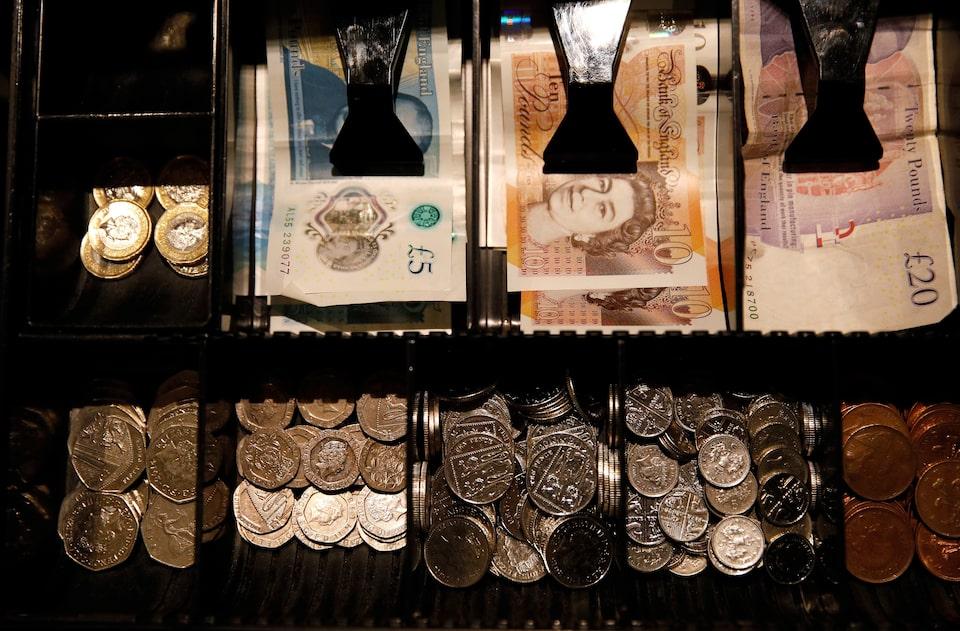
March 21 (Reuters) - The British pound extended its decline against the dollar on Friday but was poised to end the week higher, a day after the Bank of England kept interest rates unchanged and raised concerns about a rise in global trade tensions. Sterling was down 0.2% at $1.29405 after hitting as high as $1.301 earlier this week. It was on track for its third-consecutive week of gains. Sign up here. Against the euro, the British currency was little changed at 83.695 pence to the common currency. On Thursday, BoE governor Andrew Bailey, echoing other central bankers around the world, highlighted the sudden lack of visibility about the outlook due largely to U.S. President Donald Trump's tariffs against global trading partners. "There's just a general sense of caution. We don't really know what are the implications of the trade war on growth and inflation," said Kenneth Broux, head of corporate research FX and rates at Societe Generale. Even though Britain has so far escaped most of the tariff rhetoric from Trump, the next round of U.S. reciprocal tariffs in early April and their potential implications and spillover to the UK economy remain to be seen, Broux said. Upcoming UK inflation and wage growth data are the key things to watch, Broux said. The UK economy is also at risk of rising inflation as a tax hike for employers kicks in next month. The BoE predicted a peak in British inflation of 3.75% in the third quarter of this year, up slightly from a February estimate of 3.7%. It nudged up its estimate for economic growth in the first three months of 2025 to 0.25% from 0.1%. Meanwhile, data on Friday showed that Britain borrowed a lot more than expected last month, underlining the scale of the challenge facing finance minister Rachel Reeves, who is expected to announce cuts to her spending plans next week. https://www.reuters.com/markets/currencies/sterling-edges-down-set-another-weekly-gain-after-boe-meeting-2025-03-21/
2025-03-21 11:36
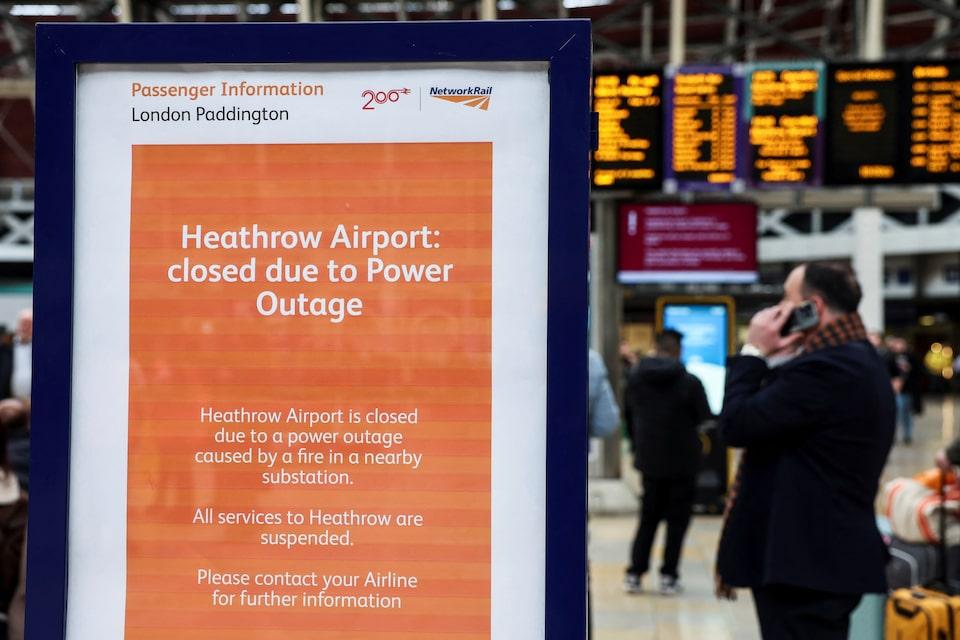
LONDON, March 21 (Reuters) - London firefighters are working with police to investigate the cause of a huge fire at an electrical sub-station which shut down Heathrow Airport on Friday, a fire-fighting chief told reporters. Huge orange flames and plumes of black smoke shot into the sky around 11 p.m. (2300 GMT) on Thursday as a blaze engulfed the substation. Sign up here. "The fire involved a transformer comprising 25,000 litres of cooling oil fully alight," Jonathan Smith deputy commissioner at the London Fire Brigade. "This created a major hazard due to the still live high voltage equipment and the nature of the oil-fueled fire." That forced Heathrow, Europe's busiest airport, to shut, disrupting flight schedules around the world and prompting speculation as to what had caused the blaze. British energy minister Ed Miliband said earlier on Friday there was no suggestion that there was foul play involved. Asked whether the police were investigating the cause of the fire as a possible terrorist incident, Smith said he was unable to comment. "All I can say, is the Metropolitan Police are investigating the cause of this fire, ably assisted by our fire investigation officers," he said. Smith said 10% of the original fire remained alight and his officers were working to safely resolve the incident, adding that they would work with National Grid as they assess the site and attempt to restore power. https://www.reuters.com/world/uk/heathrow-shutdown-firefighters-police-investigating-cause-fire-2025-03-21/
2025-03-21 11:30
NAPERVILLE, Illinois, March 20 (Reuters) - Food. It has unfortunately been used as a pawn in past and present trade disputes given its essentiality to human life. U.S. President Donald Trump earlier this month suggested that American farmers are hurt by agricultural imports and that tariffs could help them sell more product domestically. Sign up here. It is true that the United States is increasingly importing farm goods. Those imports have been outpacing exports for the last decade, and by a widening degree. Countries typically import products when domestic demand exceeds domestic production, or if domestic production is non-existent. But what the United States exports differs widely from what it imports, and it is important to examine those trends to understand where opportunities or threats may lie for U.S. producers. BIG PICTURE The United States in 2024 imported a record $263 billion in agricultural and related products. The export side was valued at $191 billion, down from 2022’s record $213 billion. This import-export gap was an all-time high. However, inflation-adjusted trade figures reveal a potential sore spot for U.S. producers as exports have stagnated while imports are up. Increasing global competition and shifting trade policies could be among the contributing factors. Adjusted to 2025 dollars, last year’s U.S. agricultural and related exports were among the lowest of the last decade-plus by value, with only 2019 falling lower. But inflation-adjusted imports were the third highest on record in 2024, behind only 2021 and 2022. PARTNERS Trump this week said that the April 2 deadline for reciprocal U.S. tariffs is still on, presumably including those on Canada and Mexico that have been paused. When it comes to farm goods, these are the United States’ top two trading partners. Last year, Canada and Mexico accounted for a third of all U.S. agricultural and related exports, and they supplied 40% of all imports. China was the third largest U.S. export destination with 14% of last year’s total and Japan was fourth at 7%. On the agricultural import side, Brazil and China were the United States’ third and fourth largest suppliers last year, each accounting for just under 4%. PRODUCT TYPES Consumer-oriented goods dominate both sides of U.S. agricultural trade. On average over the last three years, those accounted for 42% of exports and 54% of imports by value. This includes items such as meat, dairy, fruits, vegetables and alcoholic beverages, as well as baked and prepared goods. Bulk commodities are where imports and exports vary drastically, accounting for about 32% of all U.S. agricultural and related exports but only 6% of imports. This includes the top two farm exports, soybeans and corn, which combined for 20% of all such exports last year. U.S. farmers of bulk commodities, which also include wheat, sorghum and cotton, are often trade war targets due to the relatively high export volumes. China earlier this month slapped additional tariffs on $21 billion in U.S. agricultural products, including soybeans, the top U.S. export of any kind to China. KEY IMPORTS The bulk commodities imported by the United States are ones that it largely does not produce, including coffee, sugar and cocoa. Coffee, a staple and arguably essential American beverage, accounted for 3% of all farm imports last year. Fresh fruits and vegetables imports are increasingly necessary. In the early 1980s, some 30% of U.S. fresh fruit availability was supplied by imports, but that is now closer to 60%. The United States last year exported $7.7 billion in fresh fruit and vegetables, apples being a mainstay. Imports, however, totaled $33 billion, and 27% of that owed to avocadoes, bananas and blueberries alone. Mexico is vital to U.S. fruit and vegetable access, while lumber is Canada’s top offering. By value, Europe’s contribution to U.S. agricultural imports is comparable to those of Canada and Mexico. But trade tensions with Europe are threatening to disrupt a favorite American indulgence. Trump has floated steep tariffs on European libations in response to Brussels’ tariff threats on U.S. whiskey and other spirits. The United States exported $1.77 billion of beer, wine and spirits to Europe last year, but the equivalent imports exceeded $12 billion, topped by wine. While a nice glass of California Cabernet can be perfectly enjoyable, European wine enthusiasts may want to immediately head to their local retailer to snag a few extra bottles of Chianti for their cellars, just in case. Karen Braun is a market analyst for Reuters. Views expressed above are her own. https://www.reuters.com/markets/commodities/by-numbers-stacking-up-us-farm-imports-exports-braun-2025-03-21/

2025-03-21 11:25
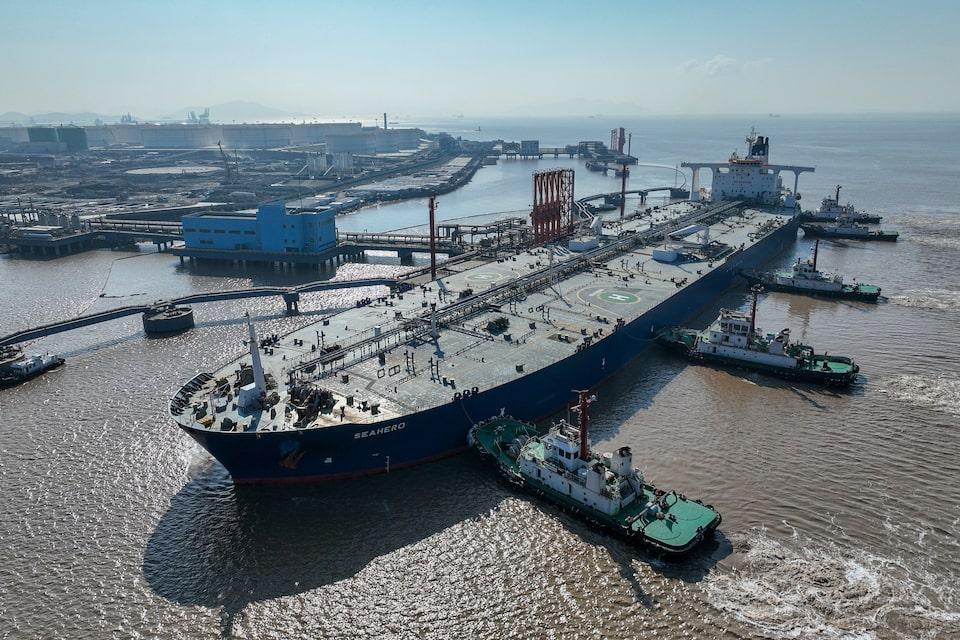
Sanctions target Shouguang Luqing Petrochemical and tankers, raising shipping costs Chinese traders expect workarounds to maintain some Iranian oil imports China opposes sanctions, pledges to protect its enterprises' rights SINGAPORE, March 21 (Reuters) - Iranian oil shipments into China are set to fall in the near-term after new U.S. sanctions on a refiner and tankers, driving up shipping costs, but traders said they expect buyers to find workarounds to keep at least some volumes flowing. Washington on Thursday imposed new sanctions on entities including Shouguang Luqing Petrochemical, a "teapot," or independent refinery in east China's Shandong province, and vessels that supplied oil to such plants in China, the top buyers of Iranian crude. Sign up here. It was the fourth round of sanctions on Iran's oil sales since President Donald Trump's February call for "maximum pressure" on Tehran, including efforts to drive its crude exports to zero. Iranian oil flows to China had already dropped due to rising freight costs as earlier sanctions hit shipping capacity, said traders, including three directly involved in the business. A Chinese trading executive involved in Iranian oil business said the latest sanctions did not come as a surprise and expects that more plants or terminals could be targeted. "But once companies re-adjust their business structures, imports would continue," said the executive, referring to measures such as changing entities for oil payments. Still, imports may be curbed as the sanctions give larger private refiners pause, said a second Chinese trader. Freight costs for a Very Large Crude Carrier, or VLCC, sailing from waters near Malaysia, a key transshipment point for Iranian oil, to China's refining hub Shandong have more than doubled since late 2024 to $3-$4 per barrel, the first executive added. China's Iranian oil imports recovered in February to 1.43 million bpd, from 898,000 bpd in January, data from analytics firm Kpler showed. About 33 million barrels have been delivered this month, with volumes forecast to reach 1.7 million bpd before the latest sanctions, senior Kpler analyst Muyu Xu said, adding that discharge volumes for the rest of March could decline sharply due to the sanctions. Most Iranian oil shipments to China, which make up over 10% of its crude imports, are rebranded by traders as sourced from Malaysia. "This marks a clear escalation in sanctions policy, though not as severe as if a Chinese port had been designated," said Brian Leisen, commodities strategist at RBC Capital. 'INDISCRIMINATE AND ILLEGAL' China, which defends its trade with Iran as legitimate, on Friday reiterated its opposition to "indiscriminate and illegal" unilateral sanctions and pledged to protect the rights of Chinese enterprises, which one trader said buyers would take comfort from. Luqing, which operates a 160,000 bpd refinery, is among the larger regular buyers of discounted Iranian oil, according to traders. It is the second teapot sanctioned by the U.S. after Haiyou Petrochemical was designated in 2022. A person answering the phone at Luqing did not have immediate comment on Friday. The company did not immediately respond to an email seeking comment. Oil from Iran, Venezuela and Russia shunned by many Western buyers has saved Chinese refineries billions of dollars in recent years as flagging economic growth and stagnant fuel demand depress margins. One trader dealing in Iranian oil said a teapot operator seemed unfazed by Thursday's announcement. "Our regular client appeared nonchalant when I shared the sanction document translated into Chinese late last night and carried on asking for the latest Iranian oil quotes," the trader said. https://www.reuters.com/business/energy/new-us-sanctions-slow-not-stop-chinas-iranian-oil-imports-traders-say-2025-03-21/
2025-03-21 11:23
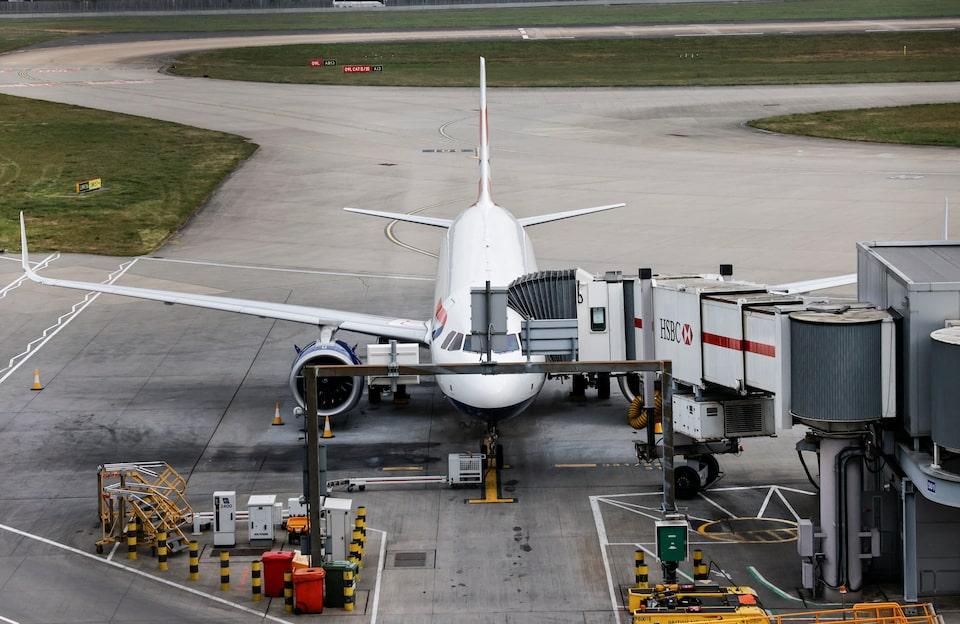
Travel consultant estimates cost of closure at $26 million a day Airport handles around 1,300 flights a day Minister says government is looking at infrastructure lessons Airlines chief blasts Heathrow over contingency planning LONDON, March 21 (Reuters) - The closure of Britain's Heathrow is set to affect the global aviation system for days and cost tens of millions of dollars, experts say, raising questions over why better contingency planning was not in place at the world's fifth-largest airport. Experts were stunned at the scale of the disruption - the largest since the Icelandic ash cloud of 2010 - as they tried to estimate the cost and breadth of the repercussions caused by a fire at a nearby electrical substation that knocked out the airport's power supply and its back-up power. Sign up here. "It is a clear planning failure by the airport," said Willie Walsh, head of global airlines body IATA, who, as former head of British Airways, has for years been a fierce critic of the crowded hub. Heathrow is the busiest airport in Europe in terms of the aircraft capacity or total number of seats flying in and out each day, according to data firm OAG. All of Friday's 1,332 scheduled flights were initially cancelled, the airport said earlier. The blaze, which was reported just after 2300 GMT on Thursday, forced planes to divert to airports across Britain and Europe, with many long-haul flights simply returning to their point of departure. The shutdown comes less than a year after Heathrow told Britain's Civil Aviation Authority in a filing that it was "a leader in airfield resilience". But several experts pointed to potential weakness in its back-up plans. Travel consultant Paul Charles said Heathrow's closure could cost the aviation sector around 20 million pounds ($26 million) a day. Heathrow said there would be a limited number of flights on Friday, mostly focused on relocating aircraft, before operations resumed on Saturday, though analysts said the knock-on effect could be felt for days. "Heathrow is such a vital piece of the UK's infrastructure that it should have fail-safe systems," said Charles. Tony Cox, an international risk management consultant, said: "I can't remember a piece of critical infrastructure being wholly shut down for at least a day because of a fire. I can't think of anything comparable." The chaos also exposed the potential vulnerability of critical infrastructure at a time when security has risen to the top of the European agenda. British police said counter-terrorism officers were investigating, but there was no initial indication of foul play in the substation blaze. Energy Minister Ed Miliband said the fire had disabled back-up power and that engineers were working to deploy a third source. Like most large airports, Heathrow has what's called an operational resilience plan, which sets out to identify risks that could upset operations. It was not immediately clear, however, whether the unit involved in the fire had been singled out as a vulnerability. The airport also has emergency generators and uninterruptable supplies for critical systems. In 2023, Heathrow completed a new energy strategy, pledging more renewable energy "whilst protecting the resilience of our energy network," according to its latest annual report. The CAA said its rules require Heathrow to have a resilience plan and work with others to manage and recover from any disruption. "There will of course be lessons learned from this event," a spokesperson for the regulator said. Heathrow did not immediately respond to a request for comment on its contingency planning. CLEARING THE BACKLOG The closure is set to have days-long knock-on effects globally, leaving many passengers stranded as carriers reconfigure their networks to move planes and crews around. British Airways has warned in the past that Heathrow is so overstretched that recovering from disruption can cause even more chaos, as planes and staff must be properly repositioned even as the facility continues to run at full capacity. "There will be impact running on several days, because once aircraft are grounded somewhere away from an operation, they are stuck there with the crews operating the flights," said aviation consultant and network planning expert John Strickland. Britain's airspace is among the busiest in Europe, and technical outages have raised concern in the past. An outage of Britain's air traffic control system NATS in 2023 cost over 100 million pounds, according to the CAA. Heathrow's shutdown has brought into focus contingency planning at other global airports as well. Pittsburgh International Airport CEO Christina Cassotis told Reuters the airport's own microgrid helped it operate smoothly two weeks back when fires broke out at two separate substations. Tim Green, head of department for electrical and electronic engineering at Imperial College, London, saw his UK-bound flight forced to turn back to North Carolina on Friday. Speaking to Reuters, he described the complex arteries feeding into Heathrow, which consumed 271,080 MWh of grid electricity in 2023, according to its annual report. "There's a lot going on at an airport," he said. Heathrow must supply power to shops, restaurants, public spaces and emergency lighting, he said, while a separate category of electricity supply feeds safety systems like radars, navigation equipment and landing lights. "Some of that will, of course, be backed up by emergency generators. But I think the airport would rather shut down some of its operations than accept more aircraft when it's in a compromised state like that," Green said. ($1 = 0.7730 pounds) https://www.reuters.com/business/aerospace-defense/heathrow-shutdown-raises-concerns-over-contingency-planning-2025-03-21/
2025-03-21 11:10
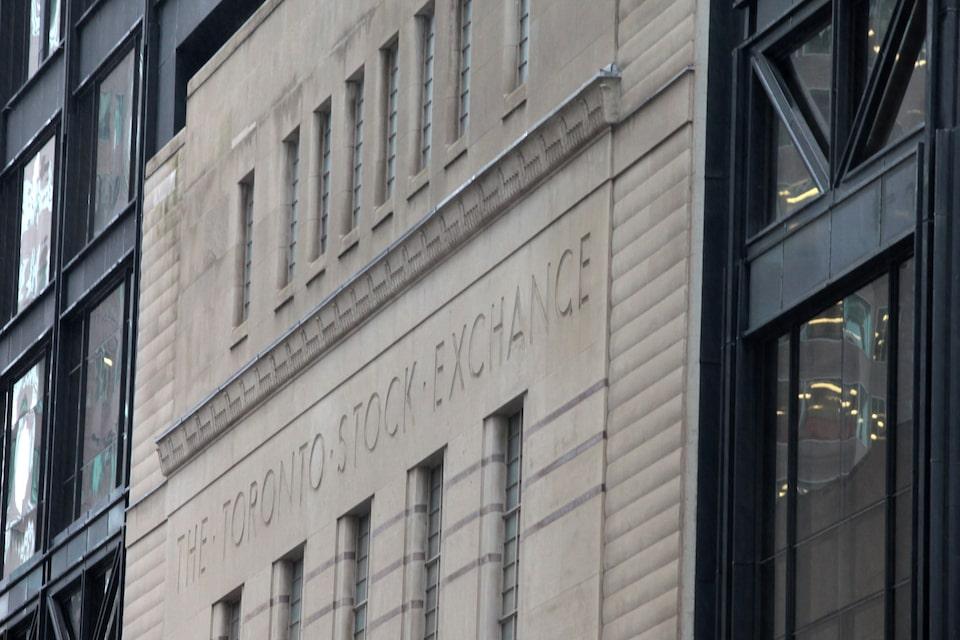
TSX ends down 0.4% at 24,968.49 For the week, the index adds 1.7% Materials group falls 1% as gold retreats Canada cancels capital gains tax hike March 21 (Reuters) - Canada's main stock index gave back some of its weekly gains on Friday, including declines for mining and industrial shares, as the focus returned to U.S. tariff uncertainty after some recent policy decisions from a number of major central banks. Toronto Stock Exchange's S&P/TSX composite index (.GSPTSE) , opens new tab ended down 91.75 points, or 0.4%, at 24,968.49. For the week, the index was up 1.7%, its biggest weekly gain since November. Sign up here. U.S. stocks clawed back losses to end slightly higher after comments from U.S. President Donald Trump provided hope that previously announced tariffs expected to begin in early April may not be as onerous as feared. U.S. tariffs on steel and aluminum have already been raised. Canada is a major producer of both. "We are selectively adding to risk assets," said Joseph Abramson, co-chief investment officer at Northland Wealth Management, adding that the firm particularly likes U.S. banks, which could benefit from a domestic focus and U.S. financial deregulation, but is more hesitant about jumping into Canadian stocks. "We are still very much in a policy-driven market and that is particularly true for Canada because battling a trade war with somebody much bigger than you is difficult when you're in a weak bargaining position," Abramson said. The Federal Reserve left interest rates on hold on Wednesday but policymakers indicated they still anticipate reducing borrowing costs this year. The materials group, which includes metal mining shares, fell 1% as the price of gold pulled back from a record high. Consumer discretionary lost 0.8% as data showed Canadian retail sales falling 0.6% in January and likely declining a further 0.4% in February. Industrials ended 1% lower. Technology helped limit the TSX's decline, adding 0.7%. Canada will cancel a proposed hike in the capital gains inclusion rate, ending an increase in the tax on investment profits that had been widely criticized by industry. https://www.reuters.com/markets/tsx-futures-fall-tariff-jitters-ahead-retail-sales-data-2025-03-21/