2025-03-21 11:07
A look at the day ahead in U.S. and global markets from Mike Dolan It's Friday, so today I'll provide a quick overview of what's happening in global markets and then offer you some weekend reading suggestions away from the headlines. Sign up here. Today's Market Minute * Britain's Heathrow Airport was shut on Friday after a huge fire at a nearby electrical substation knocked out its power, disrupting flight schedules around the world. * President Donald Trump said on Thursday the United States will sign a minerals and natural resources deal with Ukraine shortly and that his efforts to achieve a peace deal for the country were going "pretty well" after his talks this week with the Russian and Ukrainian leaders. * Motorists have traded in a record number of Tesla electric vehicles this month, Edmunds data showed, amid a wave of protests against CEO Elon Musk's work as an adviser to U.S. President Donald Trump. * Japan's core inflation hit 3.0% in February and an index stripping away the effect of fuel rose at the fastest pace in nearly a year, a sign of broadening price pressure that reinforces market expectations of further interest rate hikes. * Germany's Bundesrat upper house of parliament is set to vote on Friday on a spending splurge aiming to revive growth in Europe's largest economy and scale up the military for a new era of European collective defence. Markets end week on glum note as tariffs loom World markets turned gloomy again on Friday, now that the week's big central bank meetings have passed and April's planned U.S. tariffs have moved front and center. The week's main economic data releases were fairly benign, with existing home sales for February and weekly jobless claims showing no major disruptions. The Philadelphia Federal Reserve's March business survey showed sentiment ebbing, though by less than forecast. New orders readings fell sharply, however, and prices paid jumped. But with much uncertainty about what lies ahead, the investment mood remains downbeat and upcoming first quarter corporate earnings and guidance may be a nervy affair. FedEx (FDX.N) , opens new tab dropped 5% overnight after it cut its full-year profit and revenue forecasts, with the parcel delivery giant fretting about tariff-related impacts and "continued weakness and uncertainty in the U.S. industrial economy". Micron Technology's (MU.O) , opens new tab revenue beat on strong demand for AI-related chips struck a more positive note, bumping its shares up 2% in after-hours trading. But S&P 500 futures were in the red overall first thing on Friday after clocking another down day yesterday. Treasury yields were slightly lower, and the dollar (.DXY) , opens new tab was broadly firmer. Overseas markets were in the red too, with Europe (.STOXX) , opens new tab impacted by a disruption to travel stocks after a fire near London's Heathrow airport shut down traffic for all of Friday. Germany's upper house of parliament is set to vote on Friday on a spending boost aimed at reviving growth in Europe's largest economy and scaling up the military for a new era of European collective defence. Chinese stocks (.CSI300) , opens new tab, (.HSI) , opens new tab lost more than 1%, but Japan's Topix (.TOPX) , opens new tab index ended the day at an eight-month high as banks gained on the country's above-forecast inflation data. Meanwhile, Turkey's markets remained under pressure. Trading on the Istanbul bourse (.XU100) , opens new tab was halted for a second time on Friday as a market-wide circuit breaker kicked in after heavy declines of up to 7%. Turkey's lira , stocks and bonds have weakened sharply since Wednesday when authorities detained Istanbul Mayor Ekrem Imamoglu, who is widely considered the main political rival of President Tayyip Erdogan. Protests erupted and thousands marched nationwide. Turkey's central bank sold $10 billion in foreign currency, according to economists' calculations, following the lira decline. Weekend reading suggestions Here are some articles away from the day-to-day headlines that you may find interesting. * Shot by both sides? With fresh murmurs about a challenge to Federal Reserve independence, economists Pei Kuang, Michael Weber and Shihan Xie examine how political polarisation affects public attitudes toward the Fed and inflation expectations , opens new tab. * Beneath the gloomy seas off southern England, 400 million mussels encrust ropes hanging from buoys dotted over an area the size of the country’s biggest airport. But, as Reuters Kate Holton reports, they're not immune from Britain's alarming sewage overspill and are just one example of a problem that's now difficult to control. * Seismic geopolitical shifts are challenging many standing economic assumptions - nowhere more than in the energy world. Carlyle strategists Jeff Currie and James Gutman write about "The New Joule Order". Driven by the quest for security, nations are creating a diversified energy mix of joules across multiple sources from renewables to nuclear and carbon. , opens new tab * 18th century blues. U.S. President Donald Trump invoked the Alien Enemies Act of 1798 in a proclamation made public last Saturday as part of his pledge to deport millions of people who are in the country illegally. Reuters' Tom Hals explains what the act is and how it has been used in the past. * How should we read the dollar's retreat and understand a potential 'Mar-a-Lago Accord'? Two articles on Project Syndicate this week tackle these subjects head on. Former chairman of Goldman Sachs Asset Management Jim O'Neill wonders if this year's dollar slide will prove to be more than a cyclical recoil , opens new tab and Harvard Professor Jeffrey Frankel tries to make sense of 'Plaza II' speculation. , opens new tab * Big Tech faces Big Power. Reuters Tim McLaughlin examines the growing demands on the U.S. grid from the datacenter boom. Data Center Alley, a 30-square-mile stretch outside Washington D.C., is home to more than 200 data centers and consumes roughly the same electricity as Boston. So power company officials were alarmed when a big chunk of those centers suddenly dropped off the grid one day last summer and switched to on-site generators. * The Organisation for Economic Cooperation and Development's latest forecasts show how Trump's tariff hikes could slow growth in Canada, Mexico and the United States while driving up inflation. The Paris-based OECD also pointed out this week that outstanding government and corporate bonds globally exceeded $100 trillion last year, adding that funding the net-zero emissions transition would be an "immense challenge". If new investment needed for the transition is financed publicly, that could send debt-to-GDP ratios 25 percentage points higher in advanced economies by 2050 and 41 points higher in China, the OECD said. , opens new tab Chart of the day: The U.S. current account deficit narrowed slightly in the fourth quarter of 2024, according to data out on Thursday. But this may be a temporary blip as trade numbers for January have already shown the goods deficit exploded to record levels early this year. Trade numbers have become a bit challenging to interpret, however, with imports likely jumping to frontrun tariff increases, while huge imports of gold bars are also believed to have pushed up the number. This matters because these distortions will affect Q1 GDP calculations. Some GDP models are signalling a sharp contraction for the current quarter as a result of the widening net trade gap. However, many economists assume the gold factor is fleeting and will be removed from official data. Today's events to watch: * Canada February house prices, January retail sales * New York Federal Reserve President John Williams speaks; European Central Bank policymaker Jose Luis Escriva speaks * US corporate earnings: Carnival https://www.reuters.com/markets/us/global-markets-view-usa-2025-03-21/
2025-03-21 11:04
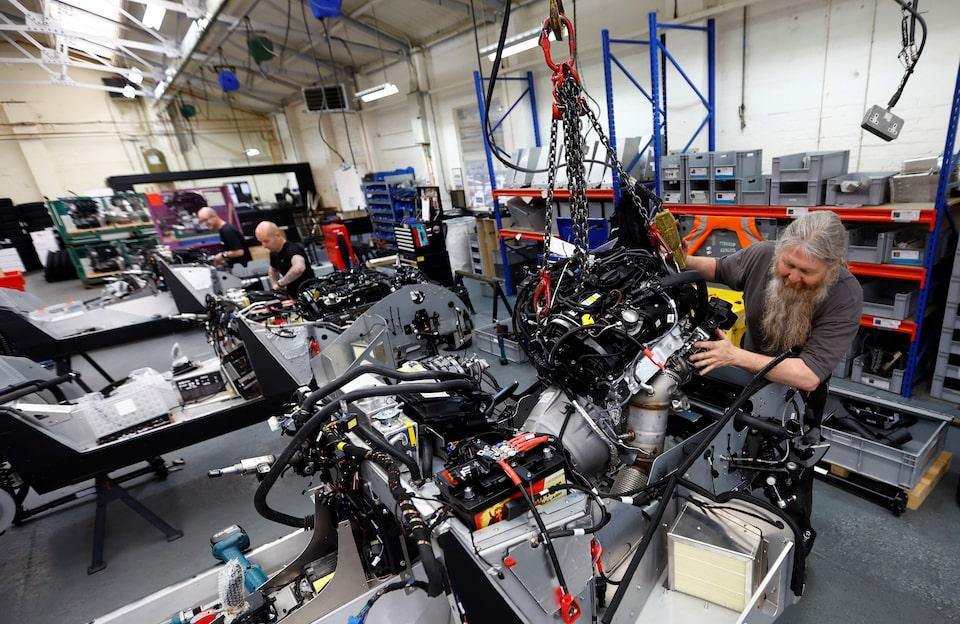
LONDON, March 21 (Reuters) - British factories have reported a downturn this month with April's increases in tax and wages weighing on the mood but some firms are seeing a boost from an expected rise in defence spending in Europe, the Confederation of British Industry said. The CBI's monthly balance for manufacturers' output expectations over the next three months dipped back into negative territory at -2 in March after climbing to a three-month high of +8 in February. Sign up here. "Conditions in the UK’s manufacturing sector remain subdued," CBI lead economist Ben Jones said. "Although there are some pockets of strength, notably in the aerospace and defence sectors, many firms continue to report that their order books remain weak," Jones said. Manufacturers said their customers were nervous about proceeding with capital investments ahead of increases in April to social security contributions paid by employers and Britain's minimum wage, he said. The CBI's headline industrial orders index slipped to -29 from -28 in February, well below its long-run average of -13. The export order balance improved to a four-month high of -29 from -36 but also remained below average. https://www.reuters.com/world/uk/uk-manufacturers-are-subdued-about-outlook-costs-mount-cbi-says-2025-03-21/
2025-03-21 10:12
MUMBAI, March 21 (Reuters) - The Indian rupee posted its best day against the dollar in more than a month on the back of dollar inflows and an unwinding of speculative long-dollar positions, which also helped it log its best week in more than two years. The rupee ended at 85.9725 against the U.S. dollar from 86.3675 in the previous session. It rose to a 10-week high of 85.9375 during the session and gained 1.2% in the week. Sign up here. A revival in domestic equities has lifted market sentiment for the rupee, Sugandha Sachdeva, founder of SS WealthStreet, a New Delhi-based research firm, said. If the rupee fails to breach the 85.90 mark, it is likely to face depreciation pressure, with an immediate support expected in the 86.80 to 87.00 range, she said. Traders said that large foreign banks were "privy" to a major flow this week and have been on offer for the dollar/rupee pair consistently. Equity inflows related to the rebalancing of the FTSE's All-World Index are also likely to have boosted the rupee. The rebalancing, which will take effect from Friday, is expected to garner inflows of about $1.5 billion. India's benchmark Nifty 50 index (.NSE) , opens new tab ended 0.7% higher on Friday. Foreign portfolio investors, who have been sellers of Indian equities since late last year, turned buyers in two of the last four sessions, per provisional data. The flows helped the rupee sidestep the weakness in Asian currencies. Most Asian currencies declined, while the dollar index inched up tentatively. The primary focus for traders remains on U.S. trade policy and the trajectory of U.S. economic growth. The flash U.S. services and manufacturing data due Monday will help investors assess how the world's largest economy is holding up. https://www.reuters.com/markets/currencies/rupee-posts-largest-weekly-rise-more-than-two-years-inflows-2025-03-21/

2025-03-21 10:03
Dow transports index down over 17% from November high Struggles as investors worry about growth slowdown Reports next week on consumer sentiment, inflation NEW YORK, March 21 (Reuters) - Even as U.S. stocks seek to regain their footing, weakness in a closely followed index of transportation shares is a sign of growing investor worries about the economy. The S&P 500 (.SPX) , opens new tab posted a modest weekly gain, snapping a four-week streak of declines. The benchmark index was clawing back after it marked a correction last week by ending down over 10% from its February record high. Sign up here. The Dow Jones Transportation Average (.DJT) , opens new tab edged lower on the week, compounding the slide for the 20-stock index. The gauge of airlines, truckers, rail companies, package delivery giants and other transport firms has slumped over 17% from its November all-time closing peak. "The transports are an important tell on future economic activity," said Chuck Carlson, chief executive officer of Horizon Investment Services. "The fact that they have significantly underperformed ... gives me pause." The Dow Transports is struggling as investors are concerned about an economic slowdown, driven in part by uncertainty over the fallout from U.S. President Donald Trump's back-and-forth tariff policies. The Federal Reserve on Wednesday downgraded its U.S. economic growth forecast this year to 1.7% from 2.1%, with central bank Chair Jerome Powell pointing to "unusually elevated" uncertainty. So far in 2025, the Dow Transports are down 8%, doubling the drop for the S&P 500 index in that time. Weakness within the index has been broad. This year, shares of package delivery companies FedEx (FDX.N) , opens new tab and United Parcel Service (UPS.N) , opens new tab are down 18% and about 9%, respectively. FedEx shares tumbled on Friday after the firm cut its annual financial forecasts. Trucking stocks Landstar (LSTR.O) , opens new tab and JB Hunt Transport Services (JBHT.O) , opens new tab are both off over 12%. Shares of airlines, some of which recently cut their earnings estimates, have been hit particularly hard. Delta Air Lines (DAL.N) , opens new tab and United Airlines Holdings (UAL.O) , opens new tab have tumbled over 20% in 2025, while American Airlines (AAL.O) , opens new tab has dropped about 35%. With many companies in the index involved in shipping products around the country, the Dow transports index offers insight into consumer spending, said Matt Maley, chief market strategist at Miller Tabak. "It's still an important indicator for the strength of the economic growth because it's an indicator of the level of strength of the consumer," Maley said. The index's slide is "supporting a lot of the weaker data that we've been seeing and supporting the lowering of expectations of economic growth around Wall Street," Maley said. Some investors track the transports index in concert with the Dow Jones Industrial Average (.DJI) , opens new tab to determine the overall trend of the market, known as "Dow Theory." The Dow industrials index is down 1% in 2025 and about 7% from its December record high. Aside from the Dow Transports, other indexes that investors cite as signals for the broader market or economy have posted steep declines. The Russell 2000 (.RUT) , opens new tab, an index of smaller companies generally seen as particularly sensitive to the domestic economy's strength, is down over 15% from its 52-week high in November. The Philadelphia SE Semiconductor index (.SOX) , opens new tab is down more than 22% from its July record peak. Semiconductors are key components in a broad array of products, so chipmakers are closely followed for insight into the economy. "They are all telling you the same message: There is potentially weakness underneath the hood of the U.S. economy," said Matthew Miskin, co-chief investment strategist at John Hancock Investment Management. A number of reports in the coming week will give a fresh read into the economy, including releases on consumer sentiment and consumer confidence. A key gauge of inflation, the monthly personal consumption expenditures price index, is due on March 28. Tariffs will remain in the spotlight for Wall Street, with the Trump administration planning reciprocal tariffs on April 2 to rebalance the global trading system. Heading into that deadline, the transportation stocks could be particularly volatile, said Rick Meckler, partner at Cherry Lane Investments. "They're at the center of the concerns investors have over tariffs and the potential for a slowing economy." https://www.reuters.com/markets/us/wall-st-week-ahead-dow-transports-index-slump-poses-trouble-spot-investors-seek-2025-03-21/
2025-03-21 09:16
March 24 (Reuters) - The first three months of 2025 promised to be bumpy, but few expected the world to be on the verge of a full-on trade war and for investors to be fleeing Wall Street quite so fast after U.S. President Donald Trump's return to the White House. Investors in emerging markets have been rattled by a spate of domestic crises and UK markets are facing a reckoning of their own as the impact of Trump's tariffs becomes apparent in global economic data. Sign up here. Here's a look at what's coming for markets from Rae Wee in Singapore; Lewis Krauskopf in New York; Naomi Rovnick, Karin Strohecker and Amanda Cooper in London. 1/TIARA TIME? U.S. equities are bleeding money at one of the fastest weekly rates on record, and the cash is finding a home in previously neglected markets. Europe's STOXX 600 (.STOXX) , opens new tab is set for a gain of 9.3% in the first quarter, against the S&P's (.SPX) , opens new tab 4.5% loss, its strongest performance against the U.S. benchmark in the first 12 weeks of the year since 2015. Defence stocks have led the charge higher as European leaders have sought ways to fund spending on security, with U.S. support no longer seeming to be a given. Chinese tech stocks have shot up, with a regional index over 30% higher, while a basket of Wall Street's Big Tech stocks is down 15%. World stocks (.MIWU00000PUS) , opens new tab minus the United States are heading for their best first-quarter performance since 2019. Move over, TINA - There Is No Alternative -. Investors are considering TIARA - There Is A Real Alternative - to U.S. stocks. 2/ROUGH RIDE Selloffs in Turkey, Indonesia and Colombia in recent days have focused investors' minds on slow-burning issues plaguing some developing economies. A return to orthodox monetary policy over the past two years had seen investors warm to Turkey again. But authorities detaining Istanbul Mayor Ekrem Imamoglu, President Tayyip Erdogan's main political rival, caused a lira rout and sent stocks and bonds sharply lower, prompting the central bank to raise overnight lending rates. Worries over Indonesia's fiscal strategy and growth outlook roiled the rupiah and stocks, prompting central bank intervention. Also, Colombia's finance minister resigned amid clashes over budget cuts, hours after lawmakers rejected a labour reform by leftist President Gustavo Petro, who has already replaced 12 of his 19 ministers. 3/DATA DIVE Investors wary of signs of slowing growth and tariff uncertainty get a raft of fresh U.S. data in the coming week, including a key inflation gauge. February's personal consumption expenditures (PCE) price index, a closely watched measure of inflation, is due on March 28. The Federal Reserve on Wednesday lifted its expectation for PCE, projecting it would end the year at 2.7%, up from a previous forecast of 2.5% - above its 2% target for annual inflation. Fed Chair Jerome Powell has signalled the U.S. central bank will wait for more clarity on Trump administration policies as it assesses when to resume rate cuts. Measures of consumer confidence and consumer sentiment will also be in the spotlight after U.S. retail sales rebounded marginally in February. 4/BLEAK BRITAIN UK investors are about to discover whether weak growth and unexpectedly high borrowing have blown the Labour government's budget goals far enough off course for markets to call for a return to austerity measures. Alongside finance minister Rachel Reeves' March 26 Spring Statement, the Office for Budget Responsibility (OBR) is expected to reduce forecasts that, back in October, assumed the government would just meet its self-imposed spending rules. The Institute for Fiscal Studies has warned that even a minor OBR downgrade would force Reeves to choose between tax increases, spending cuts or months of "damaging speculation" about what she will do in the Autumn budget. Long-term UK debt costs set by the gilt markets are about 15 basis points (bps) below January's multi-decade highs after Labour's welfare cut pledges, but bond investors are on high alert for a rule breach the government cannot fix. 5/PULSE CHECK Australia and Tokyo will get their inflation report cards in the week ahead, as central bankers around the world try to assess the impact of Trump's tariff policies on global price pressures. Australian consumer prices on Wednesday are expected to have held steady in February. This could support the still-cautious Reserve Bank of Australia's patient approach to future rate cuts. Tokyo inflation is due on Friday, as the Bank of Japan (BOJ) continues to monitor mounting domestic price pressures that could warrant further monetary tightening. The BOJ kept rates unchanged at its March meeting and offered few hints on the timing of its next rate hike. But Governor Kazuo Ueda suggested the central bank could deliver one even before the dust settles on the impact of U.S. tariffs. https://www.reuters.com/business/take-five/global-markets-themes-graphic-2025-03-21/
2025-03-21 07:38
Gold hit record high of $3,057.21/oz on Thursday Silver, platinum, palladium poised for weekly declines US dollar hit its highest level since March 7 March 21 (Reuters) - Gold fell 1% on Friday due to a stronger dollar and profit-taking, although lingering geopolitical and economic uncertainties, and U.S. Federal Reserve rate cut prospects kept bullion on track for a third consecutive weekly rise. Spot gold was down 1% at $3,015.43 an ounce at 01:43 p.m. ET (1743 GMT). U.S. gold futures settled 0.7% lower at $3,021.40. Bullion has gained 1% so far this week. Sign up here. Gold, traditionally viewed as a safe-haven investment during times of geopolitical and economic uncertainty, and typically thriving in a low-interest-rate environment, has hit 16 record highs this year, reaching an all-time peak of $3,057.21 per ounce on Thursday. "The market is taking a bit of a breather. There's some profit-taking at these levels and also the dollar is stronger today," said Marex analyst Edward Meir. The U.S. dollar (.DXY) , opens new tab rose 0.3%, hitting a two-week high and making greenback-priced bullion more expensive for overseas buyers. "Ongoing safe-haven demand, both based on trade concerns and geopolitical risks, continues to be the primary driving force," said Peter Grant, vice president and senior metals strategist at Zaner Metals. U.S. President Donald Trump still intends for new reciprocal tariff rates to take effect on April 2. The Fed held its benchmark interest rate steady on Wednesday as widely expected, but indicated two quarter-percentage-point cuts before the end of the year. Traders are pricing in 71 basis points of easing this year from the Fed with at least two rate reductions of 25 bps each, with a cut in July fully priced in, LSEG data showed. Israel announced an escalation in air, land and sea strikes against Hamas in Gaza to pressure the release of remaining hostages, effectively abandoning a two-month ceasefire and launching an all-out air and ground campaign against the dominant Palestinian militant group. Spot silver slid 1.7% to $32.97 an ounce, platinum lost 1.1% to $973.45 and palladium rose 0.1% to $953.14. All three metals were poised for weekly losses. https://www.reuters.com/markets/commodities/gold-set-third-week-gains-global-uncertainties-rate-cut-hopes-2025-03-21/