2025-03-21 06:23
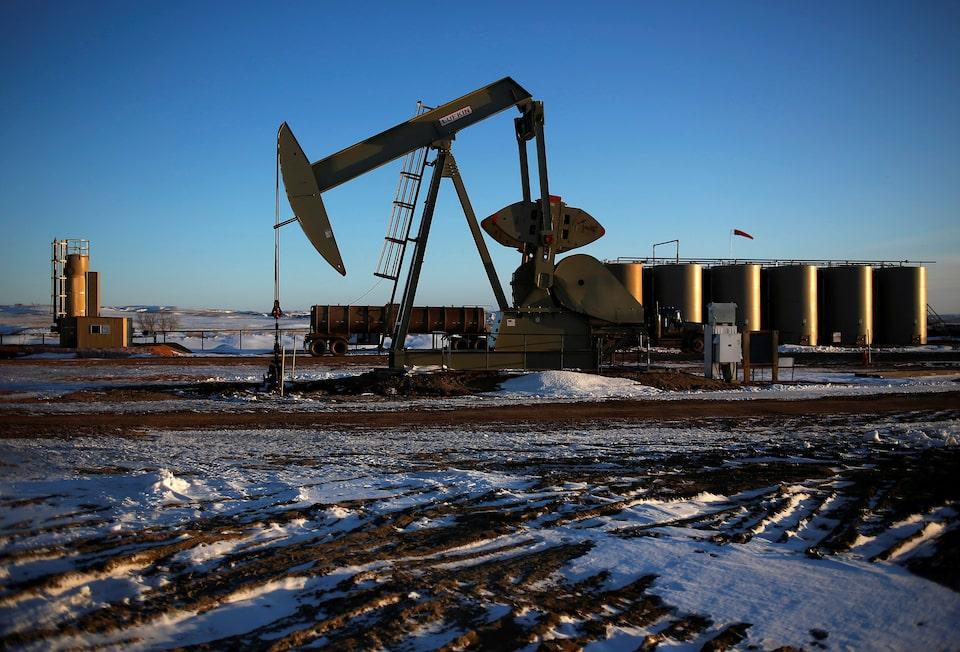
LITTLETON, Colorado, March 21 (Reuters) - After scaling two-year highs in early February, Europe's benchmark gas prices have been on a down-slope that may now steepen as the traditionally weakest period for gas-fired power demand approaches. The early-year strength in gas prices was driven largely by winter heating demand and below-normal wind power generation that forced utilities to balance system needs with elevated gas-fired generation. Sign up here. Europe's gas-fired electricity production climbed to the highest since 2021 over the first two months of 2025, according to energy think tank Ember, and remains above year-earlier levels in key markets so far in March, LSEG data shows. However, gas use for power generation tends to slump sharply from the end of March, as heating demand wanes and combined power supplies from solar and wind farms near their annual peak during the so-called spring shoulder season. If that pattern unfolds again in 2025, Europe's gas prices could gain fresh downward momentum even though they have already fallen by more than a quarter from their 2025 peak. DOWNTURN Europe's natural gas-fired generation has historically plunged during the April to June quarter from the opening quarter of the year as heating demand subsides. From 2015 through 2024, the April to June quarter was the lowest period of the year for gas-fired electricity production, dropping by an average of 25% from the January to March quarter. In 2024, the second quarter gas generation total was 31% less than the first quarter, and an outsized decline in gas use could be on the cards again in 2025 if mild conditions hit the brakes on heating demand from the end of this month. The latest weather forecasts from LSEG indicate that above-normal temperatures are expected across most of mainland Europe from March 20 onwards, which could put a chill on regional heating demand from as soon as this week. INDUSTRIAL WOES Regional gas demand is also impacted by industrial applications, with chemical plants and cement producers among the top European gas consumers outside the power sector. However, enduring economic malaise has stifled much industrial activity across Europe, with output of chemicals, fertilizers, steel and plastics all holding near multi-year lows in Germany at the start of the year. In Italy, which is Europe's second-largest industrial gas user, industrial activity expanded in January from the month before, but remained below the year-earlier total due to lingering weakness in its manufacturing sector. PRICE PROBLEMS A key cause of Europe's industrial headwinds are the region's power prices, which have started 2025 sharply above year-earlier levels. Wholesale power prices in Germany - Europe's largest industrial product manufacturer - have averaged 127 euros per megawatt hour (MWh) during the first three months of 2025, according to LSEG. That average is 49% more than the average for 2024 as a whole, and means that major energy consumers continue to face severe cost challenges this year. Power prices in the Netherlands, Italy, France and Poland are also sharply above year-before levels. A key driver of that power cost inflation has been the rise in regional natural gas prices, as gas accounts for over a quarter of Europe's electricity supplies. If gas prices start to trend lower as power use contracts, regional power costs could follow suit and create a little breathing room for power consumers. However, industrial gas users will still likely find themselves in competition with gas storage operators, who are on the hook to replenish regional stockpiles following the steep draw on Europe's gas inventories so far this year. Typically, gas storage firms start to rebuild stockpiles in earnest from late spring, so that their buying flows are spread out across the lowest consumption months and so stocks are filled again by winter. This year, gas buyers may need at least 100 more cargos than in recent years to make up for the steep drop in inventories so far in 2025, which could drag replenishment purchases earlier in the year. However, European nations are currently discussing making the region's gas storage goals more flexible, following disputes over binding targets that threatened to run up the cost of gas stockpiles for the region. The current requirement is for regional tanks to be 90% of capacity by November 1, but member states are now considering widening that time frame from October 1 to December 1. Such a wider fill target would give tank operators more scope to time their purchases, and could result in reduced orders from the storage sector over the coming months. And if that slower pace of storage orders overlaps with reduced gas demand from the power sector, regional gas prices could slide significantly from current levels before the restocking orders likely shore up the market in the summer. The opinions expressed here are those of the author, a market analyst for Reuters. https://www.reuters.com/markets/commodities/europes-gas-prices-may-get-fresh-dunk-spring-shoulder-maguire-2025-03-21/
2025-03-21 06:19
March 21 (Reuters) - Ukraine's military, quoting media, reported a strike early on Friday on a recently closed gas pumping and measuring station in western Russia's Kursk region, where Ukrainian forces have been under pressure seven months after a cross-border incursion. A Ukrainian military Telegram channel posted a picture of a fireball rising skyward with the caption: "Media are reporting a successful strike on the Sudzha gas transport system through which the enemy used to transport gas to Europe." Sign up here. There was no official word on the incident from government officials in Kyiv. Authorities in Moscow also did not report the incident. The station at Sudzha was the only point through which Russian gas had passed on its way through Ukraine and on to Europe until Ukraine declined to prolong a transit agreement in January this year. A second crossing point was closed in 2022. Ukrainian media also reported the strike and posted video footage of the blaze as did Telegram channels in the Kursk region. Unofficial Russian military blogs said they believed Ukrainian forces had staged the attack. The Baza Telegram channel, close to the Russian security services, said the pipeline had been damaged. Russia's foreign ministry said on Thursday that Ukraine had already violated a proposed ceasefire on energy sites in the three-year-old war by attacking an oil depot in the southern Russian region of Krasnodar. Sudzha was one of the first towns to be captured by Ukrainian forces in the mass cross-border attack last August. Ukrainian forces held large swathes of the region, but Russian forces have been taking back territory in recent weeks and Moscow's military last week said it had recaptured Sudzha. Russian bloggers reported that Moscow's forces had crept for several kilometres (miles) through the pipeline as part of the operation to retake the area. https://www.reuters.com/world/europe/ukraine-military-cites-media-reports-gas-pumping-station-attack-russias-kursk-2025-03-21/

2025-03-21 05:32
A look at the day ahead in European and global markets from Vidya Ranganathan Britain's government gets another report card on its efforts to curtail spending while Germany, in contrast, goes for a final vote on its big borrow-to-spend splash on Friday. Sign up here. The UK government finances report should show how deeply in the red the government is as the financial year draws to a close and just days ahead of finance minister Rachel Reeves's budget update on March 26. Government departments have been tightening their purse strings to help Reeves meet her budget reduction goals, which have been trammelled by rising gilt yields and a slowing economy. Last week, British Prime Minister Keir Starmer pledged to "hack back the thicket of red tape" suffocating the economy and the British government abolished NHS England, bringing the health service back under direct ministerial control. Reeves has set herself an ambitious target of balancing day-to-day spending and tax revenues by the 2029-30 financial year. She is expected to announce she has rebuilt a 9.9 billion pound ($12.83 billion) fiscal buffer, Bloomberg reported on Wednesday citing an unnamed source. In Germany, on the other hand, investors have been celebrating the almost certain passage on Friday of legislation to create a 500 billion euro ($542 billion) fund for infrastructure and higher spending on defence. The plan was approved this week in the lower house Bundestag, giving conservative leader and chancellor-in-waiting Friedrich Merz a huge boost and investors reason to hope for a recovery in Europe's largest economy. The legislation goes today to the Bundesrat upper house but appears certain to pass there. Meanwhile in broader markets, Wall Street's (.SPX) , opens new tab bullish momentum earlier this week, inspired by Federal Reserve Chair Jerome Powell's view that the economy is in good shape and tariff-related price rises will be transitory, seems to have fizzled out. Treasuries and the dollar are up, indicating a broader "risk-off" tone at play, as is gold, which has already rocketed 16% this year to record highs. Policymakers across the globe have struck a cautious note in a week filled with central bank meetings as uncertainty in global economics and politics grew. The U.S. Federal Reserve, the Bank Of Japan and the Bank of England all held rates steady. Key developments that could influence markets on Friday: DATA: UK public finances (February), Euro zone current account (January), Euro zone consumer confidence (March, flash estimate), Canada retail sales (February) SPEAKERS: Chicago Fed President Austan Goolsbee, New York Fed President John Williams, European Central Bank's Jose Luis Escriva at an event in Barcelona. ($1 = 0.9221 euros) ($1 = 0.7719 pounds) https://www.reuters.com/markets/europe/global-markets-view-europe-2025-03-21/
2025-03-21 05:05
Trump's tariff campaign keeps policymakers, investors cautious Euro set for first weekly drop this month New round of reciprocal tariffs expected April 2 NEW YORK, March 21 (Reuters) - The dollar edged up against the euro on Friday, on pace for its first weekly gain this month, as investors booked profits from the euro's recent advance ahead of the April 2 deadline for reciprocal U.S. tariffs. The euro was 0.3% lower at $1.08223, on pace to finish the week down 0.6%, its first weekly loss since February 28. Sign up here. The dollar, under pressure this year from worries over the hit to U.S. economic growth from the Trump administration's trade policies, found some respite this week as the Federal Reserve indicated it was in no rush to cut interest rates. The euro softened as investors booked gains, even as Germany's Bundesrat, the upper house of parliament, passed a reform of the country's borrowing rules and a 500-billion-euro fund to revamp its infrastructure and revive Europe's largest economy. "It's really been a huge rally in EUR/USD this quarter ... so, naturally, we're seeing some profit-taking ahead of the April 2 tariff deadline," said George Vessey, lead FX and macro strategist at Convera. "Given the lack of reaction to the German Bundestag's approval of the debt break constitutional change this week, perhaps we're near peak optimism regarding the fiscal tailwind," he added. This week the Fed, Bank of England and Bank of Japan left interest rates unchanged as they assessed the economic impact of U.S. President Donald Trump's trade tariffs against global trading partners. Fed policymakers signaled two quarter-point cuts later this year, the same median forecast as three months ago. "We're not going to be in any hurry to move," Fed Chair Jerome Powell said, underscoring the challenge policymakers face in navigating Trump's tariffs policy, and the potential impact on the domestic economy. It remains an open question for the Fed whether tariff plans will lead to persistent inflation, with taxes on intermediate goods, retaliation by other nations, and other factors feeding into whether the central bank will have to respond, Chicago Fed President Austan Goolsbee said on Friday. "While it is impossible to know exactly what the administration has in mind for its next move (never mind its next U-turn), our base case remains that tariff rates are likely to go up significantly and that this will drive a rebound in the dollar," Jonas Goltermann, deputy chief markets economist at Capital Economics said in a note. The dollar rose 0.3% to 149.21 yen. . On Wednesday, the Bank of Japan refrained from raising rates and warned of heightening economic uncertainty in the wake of ramped-up U.S. tariffs on trading partners. Sterling was 0.3% lower at $1.293, a day after the BoE warned that investors should not assume further cuts were guaranteed, given the uncertainty hanging over the global and UK economies. Bitcoin, the world's largest cryptocurrency by market cap, was down about 1% at $83,973. https://www.reuters.com/markets/currencies/us-dollar-stands-tall-after-fed-signals-no-rush-cut-rates-2025-03-21/
2025-03-21 02:52
MUMBAI, March 21 (Reuters) - The Indian rupee is likely to show limited reaction on Friday to the dollar index's recovery, with inflows from foreign banks expected to sustain its weekly upward trend. The 1-month non-deliverable forward indicated that the rupee will open flat-to-marginally higher to the U.S. dollar from 86.3675 in the previous session. Sign up here. This week, the rupee has appreciated by 0.7%, bringing its March advance to more than 1%, making it the leading major Asian currency this month. Dollar sales by foreign banks, driven by client flows, have propelled the rupee to the top of the pack. The recent performance represents a shift for the Indian currency, which had been under considerable strain due to equity outflows and hedging activities by importers. The rupee touched an all-time low of 87.95 against the U.S. dollar in February. The rupee's "good run-up most likely will not have much legs", a currency trader at a Mumbai-based bank said. "For me, 86 marks the absolute floor (for dollar/rupee pair) and I will be very surprised if we have a sustained dip below that." DOLLAR INDEX RECOVERS The dollar index rose on Thursday and inched up in Asia trade towards the 104 level. The dollar has largely struggled recently amid worries over a U.S. economic slowdown and a rally in the euro. The Federal Reserve's updated economic projections, released this week, include reduced U.S. growth forecasts for 2025 and 2026. The Fed reaffirmed its intention to implement two rate cuts in 2025, mirroring its December guidance. KEY INDICATORS: ** One-month non-deliverable rupee forward at 86.56; onshore one-month forward premium at 24.5 paisa ** Dollar index up at 103.86 ** Brent crude futures up 0.3% at $72.2 per barrel ** Ten-year U.S. note yield at 4.24% ** As per NSDL data, foreign investors sold a net $119.2 million worth of Indian shares on March 20 ** NSDL data shows foreign investors bought a net $352.8 million worth of Indian bonds on March 20 https://www.reuters.com/markets/currencies/rupee-withstand-recovery-dollar-index-hold-weekly-advance-2025-03-21/

2025-03-21 00:51
Benchmarks record highest weekly gains since early January Fresh US sanctions on Iran include Chinese independent refiner Prices also supported by latest OPEC+ production plans NEW YORK, March 21 (Reuters) - Oil prices settled higher on Friday and recorded a second consecutive weekly gain as fresh U.S. sanctions on Iran and the latest output plan from the OPEC+ producer group raised expectations of tighter supply. Brent crude futures rose 16 cents, or 0.2%, to settle at $72.16 a barrel. U.S. West Texas Intermediate crude futures rose 21 cents, or 0.3%, to $68.28. Sign up here. On a weekly basis, Brent rose 2.1% and WTI about 1.6%, their biggest gains since the first week of the year. On Thursday, the U.S. Treasury announced new Iran-related sanctions, which for the first time targeted an independent Chinese refiner among other entities and vessels involved in supplying Iranian crude oil to China. That probably sent a message to the market that Chinese companies, the largest buyers of Iranian oil, are not immune to sanctions pressure from the U.S., said Scott Shelton, energy analyst at TP ICAP. It was Washington's fourth round of sanctions against Tehran since President Donald Trump in February promised "maximum pressure" and pledged to drive Iran's oil exports down to zero. The tightening U.S. sanctions regime will probably keep some market participants involved in shipping Iranian crude more cautious going forward, UBS analyst Giovanni Staunovo said. Analysts at ANZ Bank said they expect a 1 million barrels per day (bpd) reduction in Iranian crude oil exports because of tighter sanctions. Vessel tracking service Kpler estimated Iranian crude oil exports above 1.8 million bpd in February. Oil prices were also supported by the new OPEC+ plan for seven members to cut output further to compensate for producing more than agreed levels. The plan would represent monthly cuts of between 189,000 bpd and 435,000 bpd until June 2026. The plan likely caps the upside in OPEC+ production over the coming months, UBS's Staunovo said. OPEC+ this month confirmed that eight of its members would proceed with a monthly increase of 138,000 bpd from April, reversing some of the 5.85 million bpd of output cuts agreed in a series of steps since 2022 to support the market. Oil market participants will want more proof of Iraq, Kazakhstan and Russia complying with cuts announced on Thursday to gain more support from the plan, StoneX oil analyst Alex Hodes said. Kazakhstan's oil output has reached a record high in March on the back of oilfield expansion, further exceeding OPEC+ production quotas, two industry sources told Reuters. https://www.reuters.com/business/energy/oil-set-weekly-gain-iran-sanctions-opec-plan-rein-overproduction-2025-03-21/