2025-03-20 06:40
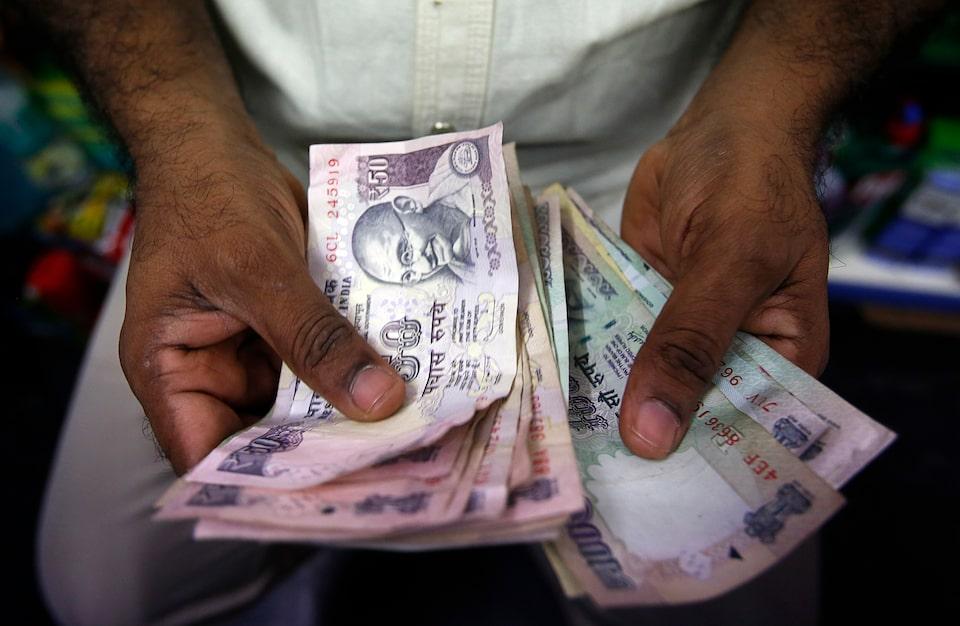
MUMBAI, March 20 (Reuters) - The Indian rupee hit a near two-month high on Thursday, boosted by dollar sales by foreign banks and the culling of bearish wagers as seasonal inflows propped up the currency. The rupee touched a high of 86.2075, its best since January 24, marking a 1.2% appreciation over the past seven trading sessions. The currency was last quoted at 86.29, up 0.2% on the day. Sign up here. Traders have attributed the rupee's recent rally primarily to dollar sales by foreign banks, likely on behalf of their clients. While specific inflows were not identified, March typically sees corporate flows related to intercompany loans and profit repatriation. The recent inflows likely triggered the unwinding of 'structural' long dollar/rupee positions in the onshore over-the-counter and in the non-deliverable forward market, further strengthening the Indian currency, a currency trader at a Mumbai-based bank said. This marks a significant reversal for the rupee, which was under sustained pressure until mid-February due to equity outflows and a slowdown in domestic growth. DOLLAR'S STRUGGLES The rupee has also benefited from a weaker dollar, fuelled by concerns of a U.S. economic slowdown. The Federal Reserve on Wednesday lowered 2025 GDP projections while increasing its inflation expectations. The dollar index is currently near its lowest level this year. Concerns about U.S. President Donald Trump's tariff policies have dented investor confidence about the U.S. economy and the dollar. Fed Chair Jerome Powell said on Wednesday that uncertainty at present is "unusually elevated" amid new rapid-fire policies by Trump. He made these remarks at a press conference following the Fed meeting where the central bank held interest rates steady, as expected. Fed policymakers projected two rate cuts for the year, consistent with their December forecast. https://www.reuters.com/markets/currencies/bears-bail-inflows-boost-indian-rupee-near-two-month-high-2025-03-20/
2025-03-20 06:38
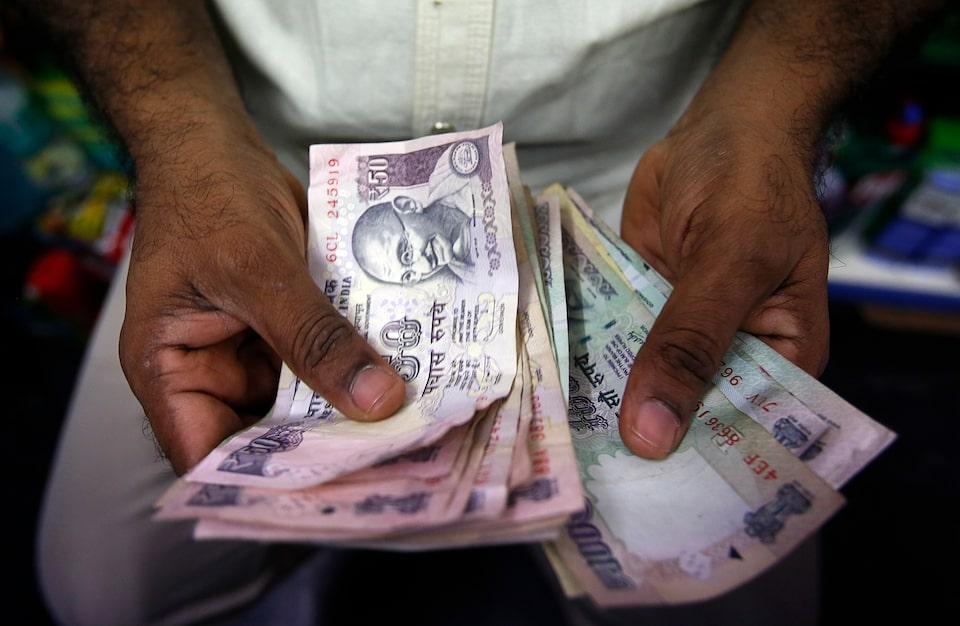
MUMBAI, March 20 (Reuters) - The Indian rupee is likely to strengthen further on Thursday boosted by the dip in U.S. Treasury yields after the Federal Reserve decided to slow the pace of balance sheet runoff and indicated that it remained on pace to cut rates twice this year. The 1-month non-deliverable forward indicated that the rupee will open at 86.34-86.36 to the U.S. dollar compared with 86.4425 in the previous session. The rupee is on a six-session winning run, during which it has rallied by over 1%. Sign up here. The extent of the ongoing "against-the-trend" rally in the rupee has "definitely been a surprise", a currency trader at a Mumbai-based bank said. "I would not bet on this going any further from here." The 2-year U.S. Treasury yield declined about 6 basis points on Wednesday to slide below 4%. The Fed said that beginning next month it will slow the pace of its balance sheet reduction (quantitative tightening) and the dot plot indicated that the U.S. central bank will cut rates twice this year, boosting demand for Treasuries. Morgan Stanley in a note said the decision to slow the pace of balance sheet runoff was a surprise. Goldman Sachs said it expected the Fed to slow the pace of runoff at a later meeting in May. ING Bank said the Fed's decision was "big news" and U.S. Treasuries are considering this early move on quantitative to be bullish. On the Fed's median dot plot, which was unchanged from December, analysts pointed out before the meeting there were worries that policymakers would take a more hawkish tone amid the risk of higher inflation posed by the new U.S. tariffs. The Fed did raise its forecasts for inflation, while cutting its projections on growth. KEY INDICATORS: ** One-month non-deliverable rupee forward at 86.65; onshore one-month forward premium at 24 paise ** Dollar index down at 103.36 ** Brent crude futures up 0.4% at $71.1 per barrel ** Ten-year U.S. note yield at 4.25% ** As per NSDL data, foreign investors bought a net $82mln worth of Indian shares on Mar. 18 ** NSDL data shows foreign investors sold a net $14.5mln worth of Indian bonds on Mar. 18 https://www.reuters.com/markets/currencies/rupee-rise-drop-us-yields-after-fed-tweaks-balance-sheet-runoff-2025-03-20/
2025-03-20 06:32
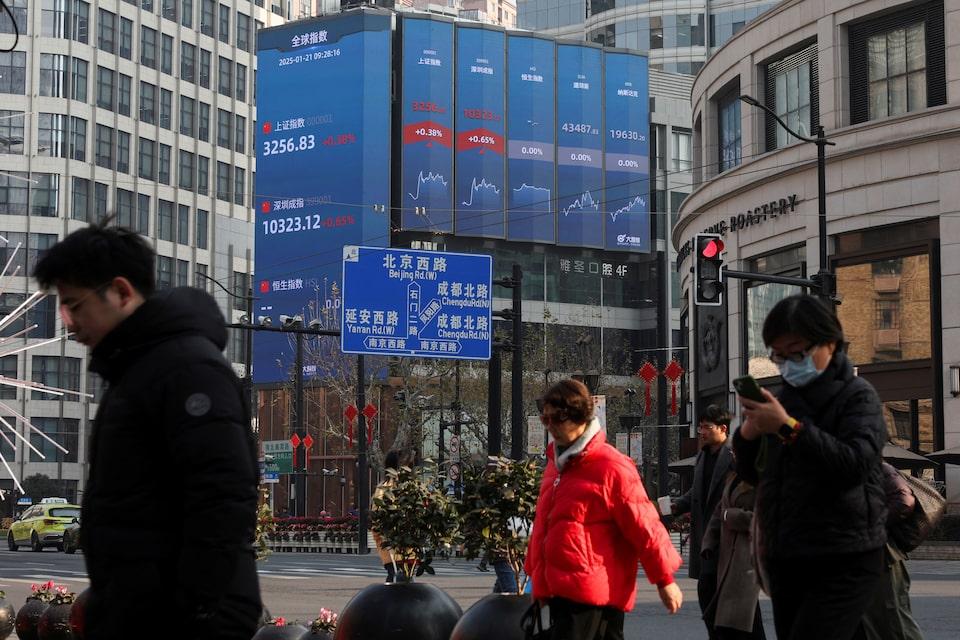
U.S. jobless claims subdued, home sales strong Ukraine attack on Russian airfield boosts crude prices European stocks soften as central banks flag concerns PBOC, BoE and Riksbank hold rates, Switzerland cuts NEW YORK, March 20 (Reuters) - U.S. stocks posted modest losses and the dollar strengthened on Thursday as investors weighed solid data against notes of caution about trade from world central bank leaders. Gold eased from record highs and crude prices advanced as the afternoon progressed. Sign up here. Geopolitical tensions heated up with reports of Israeli airstrikes on Gaza and a huge blast triggered by a Ukrainian drone attack on a Russian airfield. U.S. data showed jobless claims holding steady and an unexpected increase in existing home sales, which helped calm fears that the economy is softening, despite the U.S. Federal Reserve's lowered economic projections released on Wednesday. "It's a pretty odd day," said Robert Pavlik, senior portfolio manager at Dakota Wealth in Fairfield, Connecticut. "There's a lot of noise out there. Sitting on your hands might be the best thing to do right now." Straight on the heels of the Fed's decision to hold rates, the Bank of England (BoE) followed suit while also cautioning against assumptions it would cut rates in the near future as it grapples with economic uncertainties. The Swiss National Bank cut its rate to near zero but flagged increasing worries over the global impact of U.S. President Donald Trump's trade policies. Sweden's central bank predicted it would keep current rates in place in the near term and remain agile in its response to global economic developments. "(Central banks are) probably right to feel cautious," Pavlik added. "The Trump team has instituted a playbook that no one can quite figure out yet and they're all playing defense." Turkey's central bank hiked its overnight lending rate to 46% on an interim basis after the lira plunged in the wake of the arrest of President Tayyip Erdogan's main political rival. The Dow Jones Industrial Average (.DJI) , opens new tab fell 11.31 points, or 0.03%, to 41,953.32, the S&P 500 (.SPX) , opens new tab fell 12.40 points, or 0.22%, to 5,662.89 and the Nasdaq Composite (.IXIC) , opens new tab fell 59.16 points, or 0.33%, to 17,691.63. European stocks closed lower after central banks across the continent flagged economic uncertainty amid a looming possibility of global trade war. MSCI's gauge of stocks across the globe (.MIWD00000PUS) , opens new tab fell 1.84 points, or 0.22%, to 843.53. The pan-European STOXX 600 (.STOXX) , opens new tab index fell 0.43%, while Europe's broad FTSEurofirst 300 index (.FTEU3) , opens new tab fell 9.08 points, or 0.41%. Emerging market stocks (.MSCIEF) , opens new tab fell 3.16 points, or 0.28%, to 1,140.13. MSCI's broadest index of Asia-Pacific shares outside Japan (.MIAPJ0000PUS) , opens new tab closed lower by 0.14%, to 593.12, while Japan's Nikkei (.N225) , opens new tab fell 93.54 points, or 0.25%, to 37,751.88. The greenback advanced and the euro softened after the Fed indicated it was in no rush to cut its key policy rate. The dollar index , which measures the greenback against a basket of currencies including the yen and the euro, rose 0.41% to 103.80, with the euro down 0.44% at $1.0853. Against the Japanese yen , the dollar strengthened 0.06% to 148.77. U.S. Treasury yields pared early losses as traders remained cautious about the U.S. economic outlook. The yield on benchmark U.S. 10-year notes fell 1.9 basis points to 4.237%, from 4.256% late on Wednesday. The 30-year bond yield fell 1 basis point to 4.5565% from 4.567% late on Wednesday. The 2-year note yield, which typically moves in step with interest rate expectations for the Federal Reserve, fell 1.8 basis points to 3.962%, from 3.979% late on Wednesday. Oil prices rose after the United States imposed new Iran-related sanctions and as renewed tensions in the Middle East fueled supply concerns. U.S. crude rose 1.64% to settle at $68.26 per barrel, while Brent settled at $72.00 per barrel, up 1.72% on the day. Gold prices paused after the safe-haven metal touched all-time highs earlier in the session, but the outlook remained bullish due to potential rate cuts signaled by the Fed, as well as ongoing geopolitical and economic uncertainties. Spot gold fell 0.07% to $3,044.90 an ounce. U.S. gold futures rose 0.15% to $3,040.60 an ounce. https://www.reuters.com/markets/global-markets-wrapup-1-2025-03-20/
2025-03-20 06:29
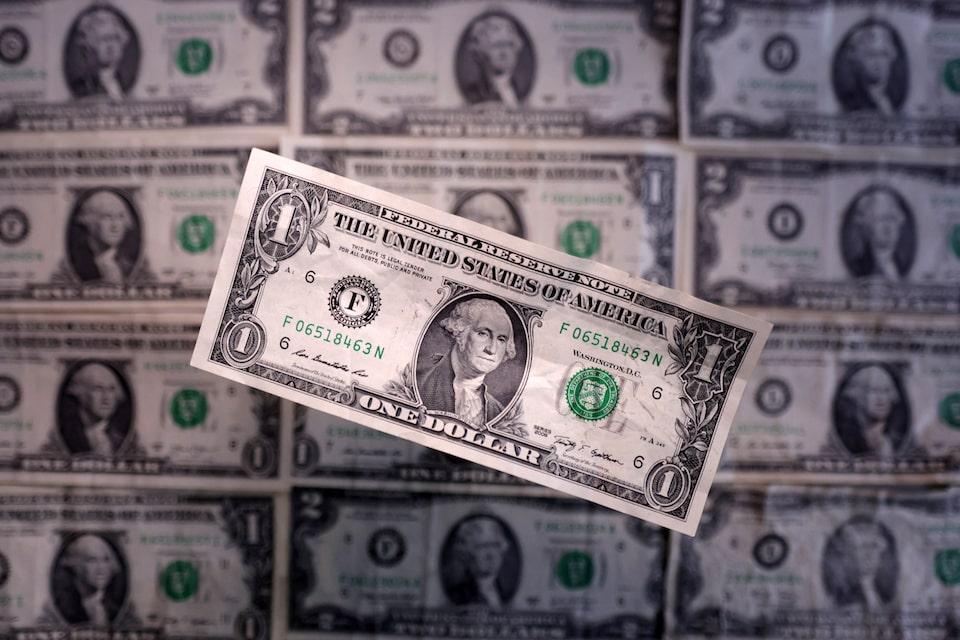
US labor market remains stable, but job opportunities limited Sterling slips after hitting four-month high, BoE on hold SNB cuts, Riksbank on hold Aussie down after soft labor data, kiwi slips NEW YORK, March 20 (Reuters) - The dollar appreciated broadly on Thursday, a day after the Federal Reserve indicated it was in no rush to cut interest rates further this year due to uncertainties around U.S. tariffs. The Swiss franc weakened after the Swiss National Bank lowered its policy rate to 0.25%, while the Swedish krona was soft after its central bank maintained its interest rate. Sign up here. The euro was 0.46% lower against the dollar at $1.0852 after U.S. policymakers, on Wednesday, held interest rates steady and signaled two quarter-point interest rate cuts for later this year, the same median forecast as three months ago. "We're not going to be in any hurry to move," Fed Chair Jerome Powell said. Powell's comments and the Fed statement underscored the challenge faced by policymakers as they navigate President Donald Trump's plans to levy duties on imports from U.S. trading partners and the impact on the economy. Data on Thursday showed the number of Americans filing new applications for unemployment benefits increased slightly last week, suggesting the labor market remained stable in March. Recent U.S. data have helped temper worries over slowing U.S. growth that prompted the dollar to sag as much as 7% against the euro since mid-January, Jayati Bharadwaj, a global FX strategist at TD Securities, said. "A lot of the bad news was already priced in, but none of the hard data is collapsing the way markets were fearing it would, and even the Fed is not indicating to you that they're in a hurry to ease rates again," she said. "All of that is leading markets to reassess some of the bearishness that they have been pricing into the dollar," Bharadwaj, who expects the dollar to strengthen in the near term, said. Traders are pricing in about 63 basis points of Fed easing this year, LSEG data showed. With President Donald Trump still expected to implement new reciprocal tariff rates against major trading partners on April 2, investors were skittish about pressing bearish bets on the dollar. On Thursday, strategists at Morgan Stanley recommended investors close their long EUR/USD and GBP/USD positions ahead of the April 2 deadline. "We think that it is better to consider re-entering USD shorts at more attractive levels rather than holding the positions here," they wrote in a note. EUROPE'S CENTRAL BANK BONANZA The dollar's broad strength weighed on the pound though the British currency pared some losses briefly after the Bank of England held interest rates at 4.5% and warned against assumptions that they would be cut over its next few meetings as it grappled with deep uncertainty hanging over the British and world economies. With UK inflation stuck firmly above its 2% target, the BoE has cut borrowing costs by less than the European Central Bank and the Fed since last summer, contributing to the country's sluggish growth rate. Sterling had earlier risen to a more than four-month high of $1.3015 in early Asian hours before retreating to trade down 0.3% on the day at $1.29665. In a busy day for central banks, the Swiss franc fell 0.5% against the dollar after the Swiss National Bank cut its main interest rate to just above zero and flagged increased uncertainty over the global impact of U.S. President Donald Trump's trade policies. Sweden's central bank meanwhile kept its policy rate at 2.25%, as expected, pushing the krona 0.2% lower against the dollar . The yen was a shade weaker at 148.79 per dollar, a day after the Bank of Japan held rates and warned of heightening global economic uncertainty, suggesting the timing of further hikes will depend on the fallout from U.S. tariffs. The Australian dollar was 0.9% lower at $0.6303 after Australian employment unexpectedly fell in February, ending a strong run of impressive gains, as the red-hot labor market loosened a little, although the jobless rate remained steady. The New Zealand dollar dropped 0.9% to $0.5758 even as data showed the economy crawled out of a recession and grew at a faster-than-expected pace of 0.7% last quarter, although underlying details were soft. Bitcoin, the world's largest cryptocurrency by market cap, was down about 1.5% on the day at $84,056. https://www.reuters.com/markets/currencies/dollar-wobbles-fed-soothes-market-nerves-with-rate-cut-projection-2025-03-20/
2025-03-20 06:25
BEIJING, March 20 (Reuters) - China has not shipped any antimony to European Union countries since October, customs data showed on Thursday, after the dominant supplier imposed export controls that have fuelled a surge in global prices for the strategic metal. Accounting for almost half of global supply in 2023, China's restrictions since last year have upended supply chains for antimony, which used in semiconductors, flame retardants, solar power equipment and munitions. Sign up here. Critically low stock levels in Europe have further fuelled the surge in prices, with regulus grade II material up over 300% compared to a year ago, said Cristina Belda, senior analyst at information agency Argus. In August, Beijing announced plans to impose export limits on antimony and related elements, citing national security. With initial restrictions taking effect in September, the rules triggered a stockpiling rush that caused shipments to surge in August and September. In December, China imposed an outright ban on exports to the U.S. of three critical minerals including antimony, with no antimony exports to the U.S. since then. China's Ministry of Commerce did not immediately respond to a request for comment. The Netherlands was the top EU importer of antimony from China in 2023, bringing in 3,011.98 metric tons that year before shipments dropped to 1,016.65 tons in 2024 with no shipments since October, the Chinese customs data showed. The already five-month pause in Chinese antimony exports to Europe differs from previous rounds of Beijing's critical mineral restrictions, when exports tended to slowly resume within a few months as exporters were granted newly required licenses. China's total antimony exports in 2024 slid 24.1% to 38,632 tons, according to customs data. Antimony exports to other countries including Brazil, Thailand and Russia, have continued since the September restrictions. https://www.reuters.com/markets/commodities/china-export-controls-freeze-antimony-shipments-eu-october-2025-03-20/
2025-03-20 06:13
LONDON, March 20 (Reuters) - BP (BP.L) , opens new tab activist investor Follow This plans to call for a vote against Chair Helge Lund's reappointment at its April 17 shareholder meeting, claiming he should have offered investors a say on scrapping energy transition targets. In a strategy revamp in February, CEO Murray Auchincloss said BP would slash spending on renewables and boost investment in oil and gas, an overhaul of the group's 2020 strategy which had foreseen a 40% cut to its oil and gas output by 2030. Sign up here. Shareholders have not been offered a direct vote on the new strategy, which is Follow This's main point of critique. Follow This, which won 20% support for its climate resolutions at BP's 2021 annual general meeting and 17% in 2023, this year swapped filing a resolution for urging a vote against Lund on governance grounds. "We don't want the chair to resign," the group said in a statement on Thursday. "We want him to heed the message that he has crossed a governance line and retrace his steps by offering shareholders a vote." A BP spokesperson said: "We engage extensively across our shareholder base – and have done so following 26 February. Based on our engagement, the majority of shareholders are not calling for an advisory vote on our plans. "In the meantime, we will continue to engage and provide disclosure on our plans through our annual reporting materials. Our ambition remains to be a net zero company by 2050 or sooner." More than 88% of the group's shareholders backed former CEO Bernard Looney's plan to cut oil and gas output and invest billions in renewable power at a 2022 vote offered by BP. Most of these goals have been all but dropped, raising complaints from other shareholders that they were not given a say. A group of investors with around 5 trillion pounds ($6.48 trillion) under management or engagement sent a public letter to Lund in February to demand a vote on BP’s approach to climate governance and capital expenditure. While climate-focused investors are unhappy at BP abandoning most of Looney's plans, BP's share price has shown that the 2020 strategy had failed to convince a broader investor base. Over the last five years, BP's shares have risen around 88%, while Exxon (XOM.N) , opens new tab had soared 246% and Shell (SHEL.L) , opens new tab 168% as of Wednesday. Pressure is also rising since Elliott Management, which has led campaigns at companies including Marathon Petroleum (MPC.N) , opens new tab, Hess (HES.N) , opens new tab and Honeywell (HON.O) , opens new tab, built a near 5% stake to become one of BP's largest shareholders, Reuters has reported, citing sources. ($1 = 0.7718 pounds) https://www.reuters.com/business/energy/bp-activist-investor-follow-this-urges-vote-against-chair-lund-over-energy-2025-03-20/