2026-01-12 22:08
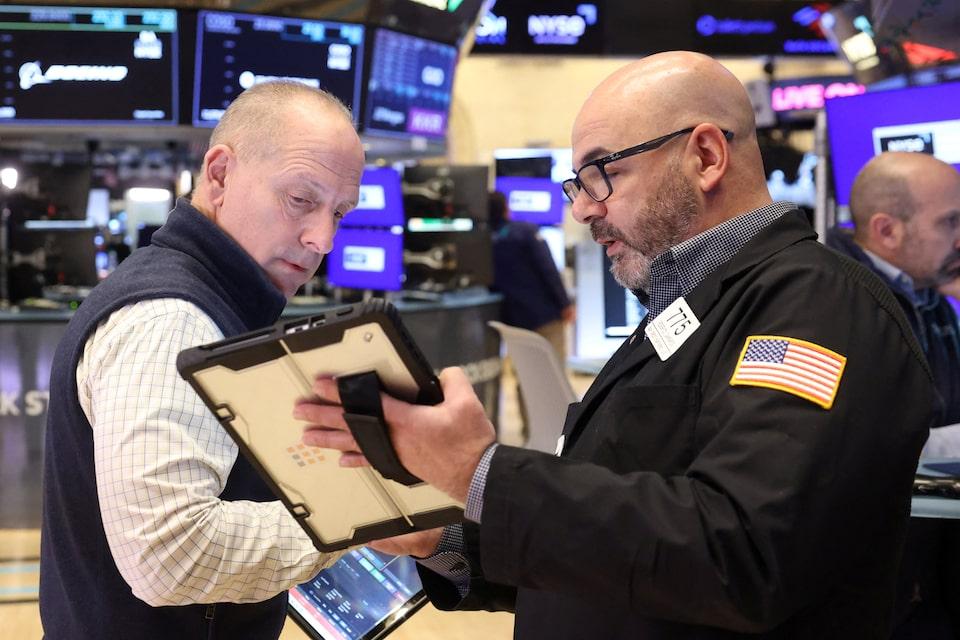
ORLANDO, Florida, Jan 12 (Reuters) - Investors on Monday brushed aside the dramatic news of the Trump administration's threat to criminally indict Fed Chair Jerome Powell, lifting the S&P 500 to an all-time high, while precious metals also soared to new peaks. I dig into this in my column today, asking the question how long Wall Street can shrug off the 'visible hand' of U.S. President Donald Trump, who is increasingly playing the role of 'activist investor in chief' in corporate America. Sign up here. If you have more time to read, here are a few articles I recommend to help you make sense of what happened in markets today. Today's Key Market Moves Today's Talking Points * Testing dependence on independence The Trump administration has rapidly escalated its war on the Fed, threatening Chair Jerome Powell with criminal charges related to the Fed building renovation saga. Powell has fired back with an unprecedented rebuttal. The gloves are off. While this is uncharted territory, the direction of travel has been clear for a long time. The question now for investors is do they think an independent Fed is in the dustbin of history or can it still be saved? If it's the former, it has yet to show up in asset prices. * Precious metals maintain momentum If doubts over the Fed's independence do deepen, where will investors seek safety? Traditional harbors like Treasuries, the dollar, Swiss franc or Japanese yen seem flawed to varying degrees for various reasons. The clear winners appear to be gold and precious metals. Last year was so historic - gold, silver and platinum rose between 65% and 150% to record highs - that momentum must surely slow this year, right? Ordinarily, yes. But this is shaping up to be no ordinary year. Annual gains of 150% will be hard to replicate, but new peaks look certain. And lots of them, too. * Putting money to work Despite the challenges and risks facing markets at the start of this year - see my latest column below - investors are putting their money to work. And not just in perceived 'safe havens' like gold and precious metals. Industrial bellwether metal copper is at a record peak, U.S. corporate debt issuance last week topped $90 billion and global issuance exceeded $300 billion, U.S. high-yield spreads are the tightest since September, M&A activity is bubbling up, and stocks are hitting all-time highs. Buy the dip? What dip? How long can Wall Street shrug off Trump's 'visible hand'? If record-high U.S. stock prices accurately reflect investors' assessment of the first year of Trump 2.0, then it's a glowing scorecard for the most interventionist government in decades. It's yet another example of the topsy-turvy economic world where the global norms and orthodoxies of the last 40 years are being questioned and sometimes discarded by the U.S. president, who is rapidly becoming the market activist-in-chief. Under Donald Trump's direction, the U.S. government has taken direct equity stakes in companies, called for the firing of CEOs, attempted to dictate CEO compensation, ensured the government cuts from Big Tech chip exports, and sought to fire Federal Reserve officials. On top of that, Trump has ordered the purchase of $200 billion of mortgage-backed securities, directed U.S. oil companies' activities in Venezuela, tried to ban defense firms from buying back shares unless they speed up production, and called for a one-year cap on all credit card interest rates as his Justice Department has threatened to indict Fed Chair Jerome Powell. And that's just in the past week. INEFFICIENT MARKET HYPOTHESIS? Consider an alternate reality in which Kamala Harris won the 2024 U.S. presidential election and was now approaching her first year in office, having pursued a similarly controversial clutch of unorthodox policies. Would markets be shrugging this off so easily? We will never know, but it's reasonable to assume that there would have been notable pushback from investors. In the real world, apart from the brief turmoil following Trump's "Liberation Day"tariff announcement in April, there has been virtually none. Indeed, last year was a record year for stocks and many other asset classes. Hedge funds - no friend of government meddling in the free market and private sector - saw assets under management soar above $5 trillion, as they recorded their best year since 2009, according to HFR. William Henagan, research fellow at the Council on Foreign Relations, agrees it's something of a "conundrum" that the Trump administration's highly interventionist approach to Wall Street and Main Street hasn't triggered more lasting damage to public markets. "Investors don't necessarily see the series of market interventions as substantively eroding the rule of law and property rights that underpin financial markets and the economic system," Henagan says. "Perhaps public markets are not all-seeing, all-knowing, or the most efficient." But if the rule of law, property rights, and constitutional protections are key to what has made the U.S. financial system the biggest and most dynamic in the world, then investors ignore the erosion of these foundations at their own risk. CASE FOR THE DEFENSE But the question of market confidence is often binary. Investors have confidence in market structure and the financial system until they don't. Of course, government intervention in a market economy is nothing new, nor is it a bad thing. Indeed, many sectors welcome it, and it can be necessary for reasons such as national security, energy security, or the provision of a social safety net. But a year into Trump's second term, the "visible hand" of the president is being felt by many parts of USA Inc, shoving aside the invisible hand of the free market posited by the eighteenth-century economist Adam Smith. Trump's capriciousness can still ignite volatility in certain stocks and sectors, of course. Defense giant Lockheed Martin's shares slumped 7% late last Wednesday after Trump said he would block defense firms' dividend payments or buybacks, then rebounded 8% in after-hours trading when Trump called for a 50% increase in the defense budget to $1.5 trillion. But the broader market continues to rise on the back of short-term exuberance and momentum, seemingly unaffected by the most interventionist administration in decades. To be sure, Wall Street lagged its global peers last year by some margin. Perhaps this is a sign that Trump's visible hand is unnerving investors, but, for now, the warning signal is certainly not flashing red. What could move markets tomorrow? Want to receive Trading Day in your inbox every weekday morning? Sign up for my newsletter here. Opinions expressed are those of the author. They do not reflect the views of Reuters News, which, under the Trust Principles , opens new tab, is committed to integrity, independence, and freedom from bias. https://www.reuters.com/sustainability/sustainable-finance-reporting/global-markets-trading-day-graphic-2026-01-12/
2026-01-12 21:53
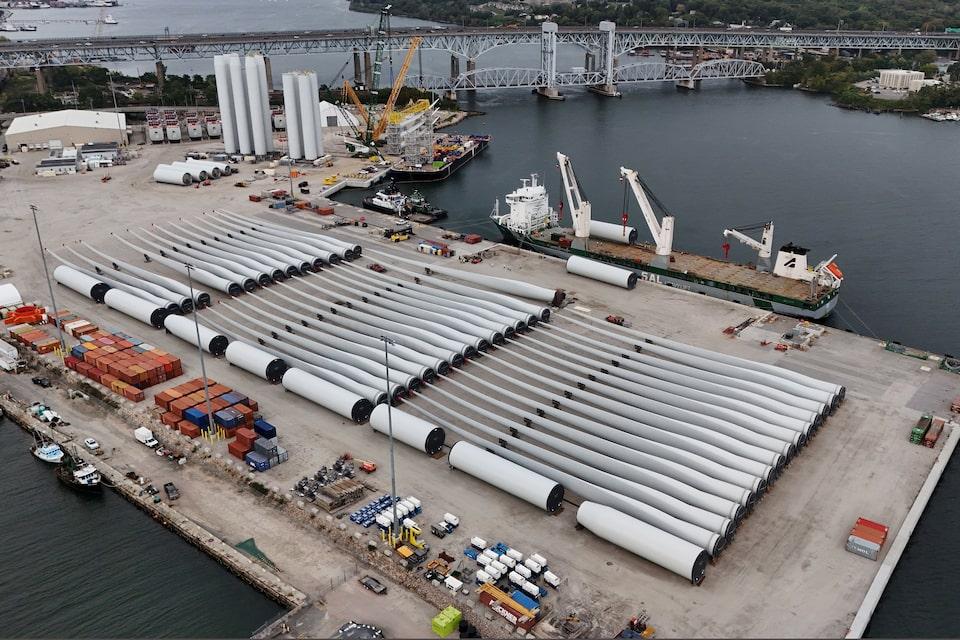
Judge rejects national security concerns as justification for project halt Orsted plans to resume work on Revolution Wind immediately Interior Department's pause criticized for lack of transparency and due process Jan 12 (Reuters) - A federal judge on Monday cleared Danish offshore wind developer Orsted (ORSTED.CO) , opens new tab to resume work on its nearly finished Revolution Wind project, which U.S. President Donald Trump's administration halted along with four other projects last month. The ruling by U.S. District Judge Royce Lamberth is a legal setback for Trump, who has spent the last year seeking to block expansion of offshore wind in federal waters. It was the second time in four months the $5 billion Revolution Wind project has sought, and won, a temporary court order to block a government stop-work order. Sign up here. Orsted's Revolution Wind lawsuit is one of several filed by offshore wind companies and states seeking to reverse the Interior Department's December 22 suspension of five offshore wind leases over what it said were national security concerns around radar interference. Monday's hearing was the first of three that will be held this week. The others involve Equinor's (EQNR.OL) , opens new tab Empire Wind, off the coast of New York, and Dominion's Coastal Virginia Offshore Wind facility. There was no immediate comment from the Interior Department. Orsted said it would resume work on Revolution Wind as soon as possible while its lawsuit progresses. "Revolution Wind will determine how best it may be possible to work with the US Administration to achieve an expeditious and durable resolution," the energy company said in a statement. Government attorneys had argued that the pause was justified by new, classified information regarding offshore wind's impacts on national security revealed to Interior officials by the Defense Department in November. Lamberth rejected the administration's argument that national security concerns justified halting the project, which he said would be irreparably harmed without an injunction. "You want to stop everything in place, costing them one-and-a-half million a day, while you decide what you want to do?” Lamberth, who was appointed by former President Ronald Reagan, asked Justice Department attorney Peter Torstensen during the hearing. Lamberth also said he was troubled by Interior Secretary Doug Burgum's recent criticism of offshore wind for reasons unrelated to national security. In television interviews on the day Interior ordered the pause, Burgum said offshore wind was expensive, unreliable, reliant on foreign-made equipment and harmful to ocean life. Revolution Wind attorney Janice Schneider argued the government's pause had violated federal laws governing administrative procedure and due process, adding that the developer had not been able to review the classified assessment on offshore wind. "This Court should be very skeptical of the government's true motives here," Schneider said. Offshore wind developers including Orsted have faced repeated disruptions to multi-billion dollar projects under U.S. President Donald Trump, who has said he finds wind turbines ugly, expensive and inefficient. The project is about 87% complete and is expected to begin generating power this year, Orsted has said. Revolution Wind LLC is a 50-50 joint venture between Orsted and Global Infrastructure Partners' Skyborn Renewables. Orsted has also sued on behalf of its Sunrise Wind project off the coast of New York. https://www.reuters.com/sustainability/boards-policy-regulation/us-judge-consider-orsteds-challenge-trump-offshore-wind-pause-2026-01-12/
2026-01-12 21:47
The ships were intended to load oil for paying debt service to China Vitol, Trafigura readying first cargoes of $2 billion supply deal China last year accounted for three-quarters of Venezuela's total oil exports HOUSTON, Jan 12 (Reuters) - Two China-flagged supertankers that were sailing to Venezuela to pick up debt-paying crude cargoes made U-turns and were headed back to Asia, LSEG shipping data showed on Monday, a sign that the U.S.-blocked South American country might not be directly exporting oil to its main buyer any time soon. Following the U.S. announcement last week of a deal to export up to 50 million barrels of Venezuelan oil stuck in storage, U.S. President Donald Trump said China would not be deprived of Venezuela's crude. He did not elaborate on the supply mechanism. Sign up here. But the Asian nation, the biggest market for Venezuela's oil, has not received any cargoes from state-run PDVSA since last month as Washington says the oil embargo remains in force. Global trading houses Vitol and Trafigura are instead readying the first cargoes of the announced $2 billion deal, to be sent to the U.S. and other destinations, including India and China, a negotiation that can ultimately benefit China's refiners if the traders negotiate cargoes with them. The very large crude carriers Xingye and Thousand Sunny, which have not been the subject of sanctions, had remained anchored in the Atlantic Ocean for weeks, waiting for directions amid the blockade and Venezuela's political crisis, triggered by the U.S. capture of President Nicolas Maduro. PDVSA did not immediately reply to a request for comment. The vessels are part of a group of three supertankers that cover only the Venezuela-China route to carry crude that pays Venezuela's debt service to the Asian country. The loans are part of Venezuela's overall debt to China, which used to be its first lender. Shortly after Venezuela was put under U.S. energy sanctions in 2019, China granted a grace period to receive capital payments and negotiated a temporary deal with Caracas so debt service would be compensated with crude cargoes. China last year was the first destination of Venezuela's oil with some 642,000 bpd exported, which accounted for three-quarters of total exports of 847,000 bpd, according to internal documents from state-run PDVSA. The lion's share of those exports to China ended up at Chinese independent refineries traded by little-known middlemen, while oil cargoes sent to China for debt service payment represented a small fraction of the total, the documents showed. https://www.reuters.com/world/china/supertankers-that-would-pick-up-debt-paying-venezuelan-oil-cargoes-china-make-u-2026-01-12/

2026-01-12 21:18
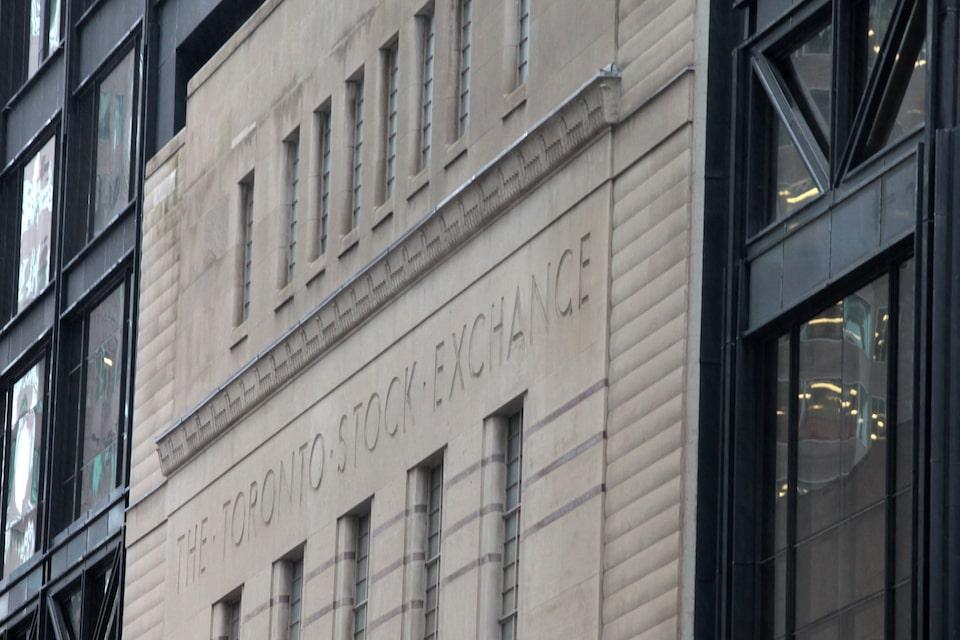
TSX ends up 0.8% at 32,874.70 Index eclipses Friday's record closing high Materials sector jumps 2.4% as gold climbs Technology sector adds 1.7% TORONTO, Jan 12 (Reuters) - Canada's main stock index rose to another record high on Monday as a jump in gold prices, driven by increased uncertainty about the independence of the U.S. Federal Reserve, boosted metal mining shares. The S&P/TSX Composite Index (.GSPTSE) , opens new tab ended up 261.77 points, or 0.8%, at 32,874.70, surpassing the record closing high on Friday. Sign up here. "The best thing that Canada has to offer to the world are the materials and energy sectors, so we are really leaning heavily into that," said Victor Kuntzevitsky, a portfolio manager at Stonehaven, Wellington-Altus Private Counsel. "Whatever the outcome is for the Canadian economy specifically, those are sectors that are more tied to global growth and global geopolitics." Gold hit a record above $4,600 per ounce and silver reached a fresh peak as investors piled into safe-haven assets after uncertainty deepened over a Trump administration criminal probe into Fed Chair Jerome Powell. "It feels that the Canadian economy is at a crossroads ... There are a lot of balls up in the air, so you want to be very careful with asset allocation," Kuntzevitsky said. Analysts say Canadian immigration cuts could slow potential GDP growth, while the United States-Mexico-Canada Agreement, a continental trade pact that has shielded much of Canada's exports from U.S. tariffs, is up for joint review this year. Canadian Prime Minister Mark Carney has vowed to make Canada's economy less reliant on exports to the U.S. market. He is set to visit China this week. The materials sector (.GSPTTMT) , opens new tab, which includes metal mining companies, climbed 2.4%. It was led by a 12% gain for the shares of Aya Gold & Silver Inc (AYA.TO) , opens new tab. The price of oil also rose, settling 0.6% higher at $59.90 a barrel, as concerns that Iran may reduce crude exports during a crackdown on the biggest anti-government demonstrations in years offset expectations that supplies could rise from Venezuela. Energy added 0.5% and technology was up 1.7%. https://www.reuters.com/business/tsx-futures-gain-gold-rallies-fed-independence-concerns-2026-01-12/
2026-01-12 21:15
Jan 12 (Reuters) - A federal judge on Monday cleared Danish offshore wind developer Orsted (ORSTED.CO) , opens new tab to resume work on its nearly finished Revolution Wind project, which U.S. President Donald Trump's administration halted along with four other projects last month. The ruling by U.S. District Judge Royce Lamberth is a legal setback for Trump, who has sought to block expansion of offshore wind in federal waters. Government attorneys had argued that the pause was justified by new, classified information regarding offshore wind's impacts on national security. Sign up here. https://www.reuters.com/legal/litigation/us-judge-rules-orsted-can-continue-work-rhode-island-offshore-wind-project-2026-01-12/
2026-01-12 21:02
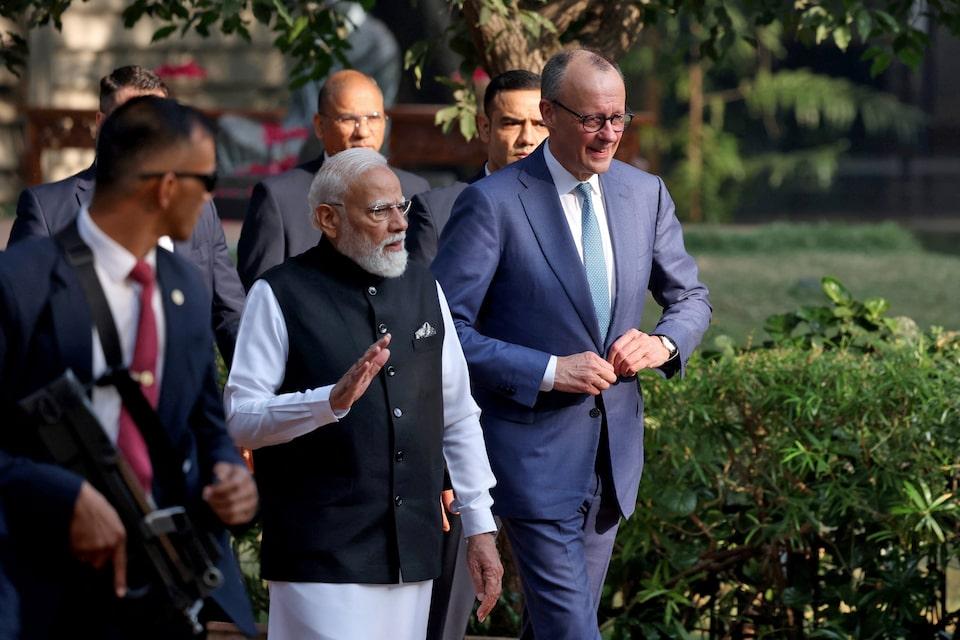
EU seeks tariff cuts on cars, medical devices, wine, spirits, and meat India aims for duty-free access for labour-intensive goods in EU trade deal Germany urges India to reduce reliance on Russian energy and arms AHMEDABAD, India, Jan 12 (Reuters) - German Chancellor Friedrich Merz floated on Monday the possibility that the European Union and India could sign a landmark free trade agreement by the end of January, a move that could reshape global trade ties as protectionism rises and U.S.-India talks remain stalled. Top EU leaders would travel to India to seal the deal if negotiations wrap up in time, Merz told reporters in the western Indian city of Ahmedabad on Monday after meeting Indian Prime Minister Narendra Modi. Sign up here. "In any case, they will take another major step forward to ensure that this free trade agreement comes into being," Merz said during his first trip to India since becoming chancellor. European Union officials have yet to comment. A trade deal, under discussion for years, is seen as a chance for both sides to strengthen economic ties and cut reliance on China and Russia. Bilateral trade between India and the EU totalled 120 billion euros ($140.21 billion) in 2024, making the bloc India's biggest trading partner. URGENCY GROWS Talks have gathered pace since the United States, under President Donald Trump, raised tariffs on Indian goods and pressured New Delhi to stop buying Russian oil. A separate India-U.S. trade deal collapsed last year after a breakdown in communication between the two governments. The EU-India pact would follow on the heels of the European Union's recent agreement with South America's Mercosur group and support Europe's push to build new trade networks as global rules shift. Indian Trade Minister Piyush Goyal, speaking at a separate event in the western state of Gujarat, said an agreement was almost at its final stages. German officials told Reuters the latest talks between Merz and Modi were "very intensive", raising hopes for a breakthrough. The EU is pushing for steep tariff cuts on cars, medical devices, wine, spirits and meat, along with stronger intellectual property rules, while India is seeking duty-free access for labour-intensive goods and faster recognition of its growing autos and electronics sectors. An Indian official familiar with the talks told Reuters last month that disputes over steel, carbon levies and market access would need further compromise. The two countries signed agreements on minerals, healthcare and artificial intelligence during Merz's visit. 'RENAISSANCE OF UNFORTUNATE PROTECTIONISM' Germany, which relies on India as a growing market, is also urging New Delhi to reduce its dependence on Russian energy and arms. India still works closely with Russia, where much of its military equipment originates, on security policy, and it is one of the largest buyers of Russian gas and oil alongside China. "We are in complete agreement in our assessment of Russia's war of aggression against Ukraine," Merz said. At the same time, he understood how dependent India still is on Russian oil and gas. "Obviously, it is not that simple in India, and I am the last person to visit other countries wagging my finger at them." Merz chose India for his first Asian trip as chancellor, highlighting a shift in strategy among European leaders, who previously focused on China. The German chancellor said the world is experiencing "a renaissance of unfortunate protectionism" that harms Germany and India. He did not name any countries. While the United States has imposed tariffs on trading partners, China introduced export controls on minerals used in areas such as autos, causing months of supply chain disruption last year due to the U.S.-China trade war and affecting German carmakers. Beijing also slapped restrictions on some semiconductors widely used in the car industry after the Dutch government's decision to seize control of Chinese-owned chipmaker Nexperia. ($1 = 0.8559 euros) https://www.reuters.com/world/india/merz-germany-wants-closer-security-cooperation-with-india-reduce-russia-reliance-2026-01-12/