2025-03-20 00:35
March 20 (Reuters) - Russian authorities dispatched more firefighters to extinguish a blaze which broke out at an oil depot in southern Krasnodar region, officials said, after a drone attack on the facility. Authorities in the region said a total of 406 firefighters and 157 pieces of equipment had been sent to the site near the village of Kavkazskaya. Sign up here. "Specialists are continuing to battle the fire over an area of 4,250 sq. metres (45,750 sq. ft)," the statement on the Telegram messaging app late on Wednesday said. The fire focused on burning petroleum products around a tank and shut-off valves. The region's administration said on Tuesday that 30 employees had been evacuated from the depot and operations had been suspended. https://www.reuters.com/world/europe/russian-authorities-send-more-firefighters-put-out-fire-southern-oil-depot-2025-03-20/

2025-03-20 00:08
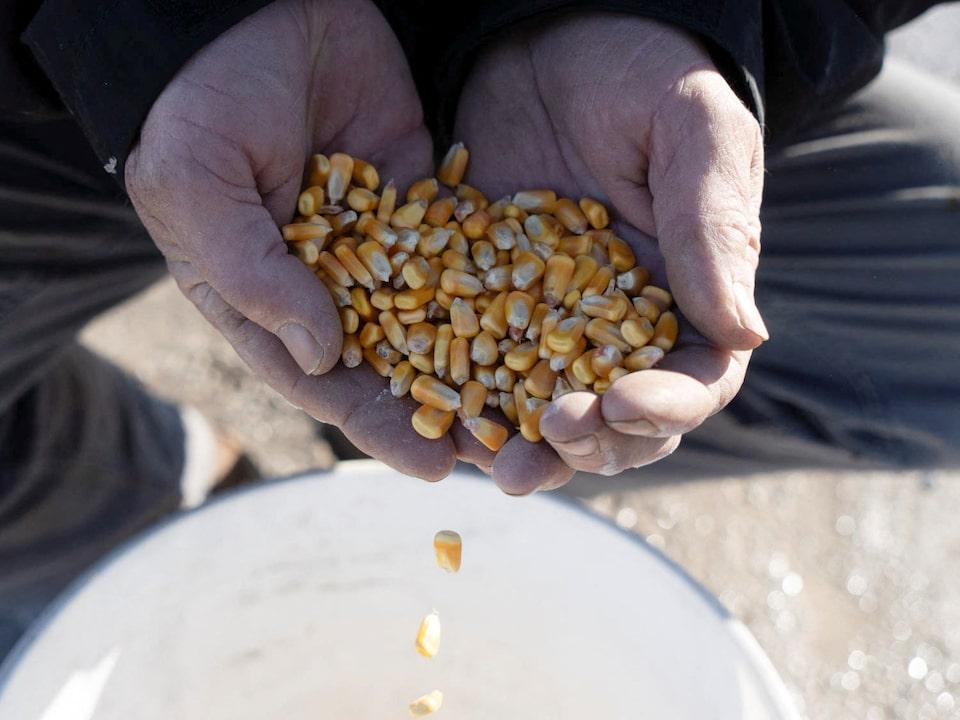
CHICAGO, March 19 (Reuters) - If the recent tariff-fueled selloff in Chicago corn futures felt extreme, that’s because it was, especially given the season. Huge swings in new-crop corn prices are not typically seen in the beginning months of the year due to upcoming harvest uncertainties across the Americas. Sign up here. Corn trade has been relatively muted over the last several trading sessions as the market awaits month-end data from the U.S. Department of Agriculture as well as further U.S. tariff news. But CBOT December corn futures , which represent the approaching U.S. corn crop, plunged nearly 7% over an eight-session span that ended on March 4. That marked the worst eight-session downturn for the first three months of the year since an 11% loss in March 2011, when an earthquake in major commodity importer Japan threw global markets into chaos. The latest dive was even steeper than during the pandemic onset in March 2020, when new-crop corn shed 6.2% over eight sessions. Global economic concerns in early 2008 and 2009 also led to sharp early-year, eight-session losses of nearly 10%. South American weather sometimes spurs selloffs in new-crop soybeans at this time of year. But the tariff threats drove CBOT November soybeans 5.4% lower in the eight-session stretch ended on March 4. Bigger eight-session losses for new-crop beans were recorded in January 2021 and March 2023, and an 8% tumble in March 2020 remains the month’s largest since 2011. 42-YEAR STREAK Seasonality trends often take the backseat to widespread economic and geopolitical concerns, so the realm of possibilities is wide open. But it would be a big deal if new-crop corn does not eventually take out its year-to-date high of $4.79-3/4 per bushel, set on February 20. December corn futures have not set their year-of-expiration high in February since 1982. February is the second least common month for new-crop corn to mark yearly highs, tied with September at two instances apiece since 1973. October is the rarest, occurring just once in 1974. November soybeans also marked their yearly high in February of 1982, though they did so during the month twice since, in 1998 and 2019. April and October are the least typical month for soybeans’ high with two cases each since 1973. June is the most popular month for new-crop contracts to notch their annual highs followed by July. These two months featured corn’s high in 16 of the last 52 years, and they hosted a few more for soybeans at 20. Both corn and soybeans are currently about 6% below their February highs. December corn on Wednesday settled at $4.51-1/2 per bushel, roughly 28 cents off the February top, and November soybeans ended at $10.10, down almost 66 cents from last month’s high. ALREADY BUCKING TRENDS? Large speculators built mega-bullish corn views earlier this year but rapidly reduced them in recent weeks, much against the norm. In the five weeks ended on March 11, money managers were net sellers of nearly 218,000 CBOT corn futures and options contracts, by far a record selloff from a fund net long above 300,000 contracts. As of March 11, money managers’ CBOT corn net long stood at 146,541 contracts, down from 364,217 on February 4. U.S. drought concerns are already brewing for the Corn Belt, which could certainly create price volatility over the next few months. But if that doesn’t unfold, there is at least one mildly savory nugget for the bulls. At some point before expiration, December corn is extremely likely to return to at least $4.70 per bushel, which was last month’s average price and equal to the 2025 insurance guarantee for U.S. farmers. Since at least 1973, more than 50 years, December corn has never failed to return to the average February price at some point after February. But with the currently elevated degree of uncertainty across all global markets, this year could be as good as any to challenge such a longstanding streak. Karen Braun is a market analyst for Reuters. Views expressed above are her own. https://www.reuters.com/markets/commodities/chicago-corn-prices-set-challenge-decades-long-streaks-braun-2025-03-20/
2025-03-20 00:06
LONDON, March 20 (Reuters) - German sulfur battery startup theion said on Thursday it has raised 15 million euros ($16.4 million) from investors to scale up battery cells it says store more energy but cost much less than conventional lithium-ion batteries that power electric vehicles today. The Series A funding round was led by technology holding company Team Global, the Geschwister Oetker Beteiligungen group and German renewables firm Enpal. Sign up here. Theion says its batteries have three times the energy density of conventional lithium-ion batteries, but cost only a third as much and emit a third of the carbon dioxide. CEO Ulrich Ehmes told Reuters that theion's batteries could be used for electric vehicles, flying taxis or energy storage and that in theory those cells could be in electric vehicles on the road before the end of the decade. Ehmes said that theion has successfully developed small coin cell batteries and the funding will be used to develop the larger pouch cells needed to power EVs or airplanes. "We are under observation of car companies, stationary storage companies, companies in the electric aerospace sector," he said. "Everyone is now waiting for our first pouch cells because with the coin cell you cannot fly an aircraft." The company is among a number of startups in the United States and Europe trying to make a breakthrough with sulfur. The main challenges facing sulfur battery cells are historically they have tended to corrode quickly and also tend to "breathe" - where they expand and destroy battery packs. Ehmes said theion has overcome these challenges by using crystalline sulfur to avoid corrosion and pre-expanding the battery's cathode. ($1 = 0.9162 euros) https://www.reuters.com/technology/german-sulfur-battery-startup-theion-raises-164-mln-scale-up-2025-03-20/

2025-03-19 23:32
NEW YORK, March 19 (Reuters) - Top U.S. oil major ExxonMobil (XOM.N) , opens new tab asked regulators to block changes proposed by the Colonial Pipeline to its fuel shipping terms, citing potential harm to shippers and consumers, a filing with the Federal Energy Regulatory Commission (FERC) showed. The Colonial Pipeline, a key 5,500-mile (8,851 km) artery for shipping fuel from the U.S. Gulf Coast to the East Coast, this month sought approval from FERC to stop shipping different grades of gasoline at the same time and to reduce the total number of grades it moves on the pipeline. Sign up here. The changes would mark one of the most significant overhauls on the longest U.S. fuel pipeline, which Colonial says will help it ship more fuel by streamlining operations and minimizing slowdowns. That benefits shippers, the public and the pipeline itself, a company spokesperson said. However, a number of shippers earlier told Reuters on the condition of anonymity that they were preparing to challenge the proposals. Exxon, which operates refineries in the U.S. Gulf Coast from which it ships fuel on Colonial, is the first to file a formal protest. It said the changes would severely disrupt the efficiency of the gasoline supply chain, and argued that Colonial's proposals would directly hit its fuel supply economics by ending shipments of a grade it supplies and by raising costs to meet new specifications for gasoline to be put on the pipeline. At the same time that Colonial is limiting shippers to supplying more expensive gasoline grades, another change it has sought would allow the pipeline to blend that fuel and supply cheaper grades at destination markets, Exxon argued. "Only Colonial benefits from this proposal," Exxon said in its filing. In response, a Colonial spokesperson reiterated that the changes would increase pipeline capacity and gasoline supplies, while reducing operational stress and optimizing Colonial's system. The price consumers pay at the pumps is decided mainly by supply and demand, Colonial said. "If minor fluctuations occur as other parties in the supply chain seek to protect their margins, we would expect such impacts to be limited to a small number of markets for a short part of the year," Colonial added. The company intends to file a response with FERC about Exxon's protest on Monday, it said. https://www.reuters.com/business/energy/exxon-challenges-colonial-pipeline-proposed-changes-fuel-shipping-terms-2025-03-19/

2025-03-19 23:16
FY new business profit rises 11% Estimates 2025 new business profit to grow over 10% Expects dividends to increase by at least 10% in 2025 March 20 (Reuters) - Prudential PLC (PRU.L) , opens new tab, posted a solid increase in annual profit on Thursday, propelled by strong growth in most of its segments, and robust demand for insurance products in Hong Kong and Singapore. The London- and Hong Kong-listed insurer expects to grow new business profit and basic earnings per share, based on adjusted operating profit and operating free surplus, by more than 10% in 2025 on a constant exchange rate basis, it said. Sign up here. "In our view, the most important development is that Prudential is guiding to more than 10% growth in 2025 for all key metrics," analysts at Jefferies said in a note. Prudential also estimated that dividends per share would increase by at least 10% this year, after declaring a second interim cash dividend of 16.29 cents per share, and a total dividend of 23.13 cents per share for 2024. The company posted an adjusted operating profit before tax of $3.13 billion for the 12 months ended December 31, a 10% increase compared with the previous year, on a constant exchange rate basis. Total new business profit grew 11% to $3.08 billion. CEO Anil Wadhwani highlighted growing demand for long term savings and protection products across the company's markets, and a need for wealth management and retirement planning, particularly in the higher income Asian markets. "Insurance penetration rates in Asia are low. We have seen good progress in 2024 with improved cash signatures for new business, growth in the number of active agents in the second half (of the year), and actions undertaken to improve our variances," Wadhwani said. The annual premium equivalent (APE) sales, a gauge of sales volume, for Hong Kong grew 5%, while the Singapore segment posted a 10% jump. The company registered growth in 18 of its 22 markets. However, it highlighted a challenging macroeconomic environment in China, with a substantial reduction in long-dated government bond yields, which it expects to continue through 2025. Hong Kong-listed shares were up 0.2% to HK$78.00 as of 0539 GMT. https://www.reuters.com/business/insurer-prudentials-annual-operating-profit-rises-8-2025-03-19/

2025-03-19 23:10
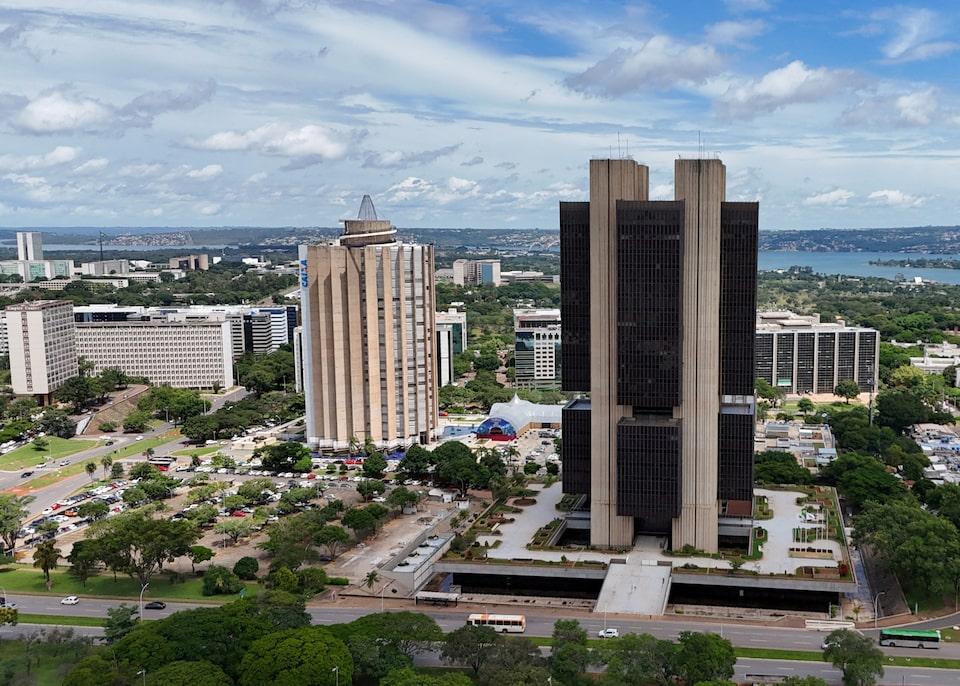
Policymakers point to signals of incipient moderation in growth Central bank's inflation projections now marginally lower Economists differ on how far the tightening cycle will go BRASILIA, March 19 (Reuters) - Brazil's central bank raised interest rates by 100 basis points on Wednesday for the third consecutive time, sticking to previous guidance, and signaled a smaller rate hike at its next policy meeting as it monitors signs of an economic slowdown. The bank's rate-setting committee, known as Copom, lifted the benchmark Selic rate to 14.25% — a level last seen in 2016 — in a unanimous decision, meeting the expectations of all 37 economists polled by Reuters. Sign up here. "The Committee anticipates an adjustment of lower magnitude in the next meeting, if the scenario evolves as expected," policymakers wrote in a statement announcing their decision. More than the widely expected rate hike, markets were focused on the central bank's message about its next steps, now seen fully in the hands of its new governor, Gabriel Galipolo. Flavio Serrano, chief economist at Banco BMG, said the central bank's communication reinforced his view that the pace of monetary tightening would slow by half at the next meeting. "We believe a 50-basis-point hike in May will be the final move of this tightening cycle," he said. Galipolo, a close ally of President Luiz Inacio Lula da Silva, took over in January as the central bank chief from Roberto Campos Neto, who was a frequent target of criticism from the leftist president. In the two monetary policy meetings held under his leadership so far, Galipolo has closely followed guidance set in December, when Campos Neto was at the helm, which had penciled in 200 basis points of tightening in this year's first quarter. Attention has now centered on Galipolo's signals about bringing inflation back to target, as Lula grapples with low approval ratings and ramps up stimulus to spur consumption - at odds with the central bank's efforts to cool economic activity. The Brazilian central bank's decision came on the same day the U.S. Federal Reserve held rates steady, assessing the new Trump administration's policies before moving ahead with lower borrowing costs. In its policy statement later on Wednesday, Brazil's central bank said the global environment remains challenging due to U.S. economic policy and outlook, particularly the uncertainty surrounding trade policy and its effects. Although Brazil's currency has gained more than 9% against the U.S. dollar so far this year, longer-term inflation expectations have continued to deteriorate, underscoring doubts about a sustained convergence toward the 3% official target. Brazil's economic activity, which policymakers have been closely tracking for signs of a slowdown, weakened more than expected last quarter. However, early data from this year still showed some resilience, as central bank officials noted in recent remarks. "The set of indicators on economic activity and labor market has been exhibiting strength, even though we observe signals that suggest an incipient moderation in growth," Copom said in its policy statement on Wednesday. Reflecting updated economic conditions, the central bank lowered its 2025 inflation forecast to 5.1%, from 5.2% projected in January. For the third quarter of 2026, the period most influenced by current monetary policy decisions, it now expects 12-month inflation of 3.9%, compared with a previous estimate of 4.0%. JP Morgan analysts noted the central bank made only slight changes to its inflation outlook, despite weaker-than-expected fourth-quarter growth and sharp currency appreciation, describing the statement as hawkish. "We continue to expect two additional 50 basis-point hikes in the upcoming meetings in May and June, concluding the tightening cycle at 15.25%," they wrote. https://www.reuters.com/markets/rates-bonds/brazil-raises-interest-rates-100-bps-sees-smaller-hike-ahead-2025-03-19/