2025-03-19 11:40
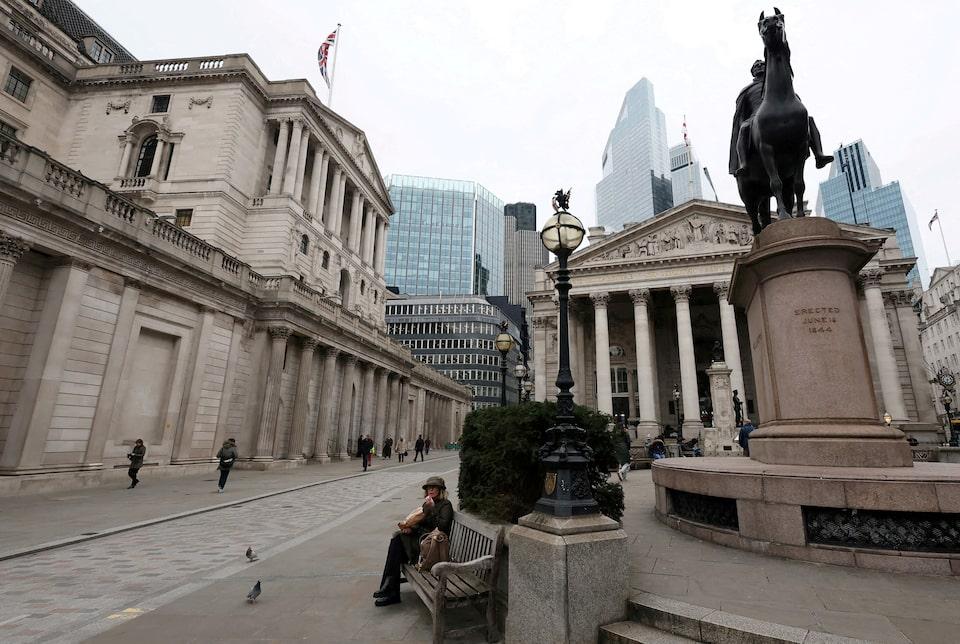
LONDON, March 19 (Reuters) - Britain's Prudential Regulation Authority on Wednesday proposed reforms to rules governing recognised exchanges, with a view to ensuring the continued safety and soundness of trading and clearing activities in the UK. The PRA proposals mainly address the conditions under which an overseas exchange can be defined as a recognised exchange in the UK, and form part of the regulator's broader aims to boost the global competitiveness of Britain's financial sector by replicating some rules in place internationally and increasing asset eligibility. Sign up here. It has also proposed that firms should undertake their own exchange and asset liquidity risk assessments, which could then be evaluated by the regulator via post-implementation thematic reviews. The PRA has invited feedback on its proposals from firms that use, or accept, assets traded on non-UK exchanges for credit risk mitigation, liquidity risk, and market and counterparty credit risk purposes. https://www.reuters.com/world/africa/bank-englands-pra-sets-out-recognised-exchange-policy-proposals-2025-03-19/
2025-03-19 11:26
SINGAPORE, March 19 (Reuters) - Eastern China-based independent refiner Hongrun Petrochemical has agreed to acquire a bankrupt oil refinery operated by state-run Sinochem Group in Shandong province, according to four sources familiar with the matter and an auction document. Changyi Petrochemical, a Sinochem-owned plant in China's refining hub of Shandong, drew a top bid of about 2.98 billion yuan ($411.82 million) from an unidentified party in an auction that closed on March 14, the document showed. Sign up here. Hongrun Petrochemical, a private refiner based in Weifang city, where Changyi is located, was the winning bidder, the sources said, declining to be identified as they were not authorised to speak with media. Sinochem and Hongrun did not immediately respond to requests for comment. The refinery, which can process about 160,000 barrels per day and has been mothballed since last year, is one of three Sinochem plants in Shandong that were declared bankrupt by local courts last year amid debts and taxes owed. The sale price is less than half the 6.4 billion yuan that Sinochem had initially sought last October, although the three refineries did not have crude oil import quotas at the time, Reuters has reported. Hongrun, one of the larger independent refineries, known as "teapots", in Shandong, is expected to assume Changyi's crude oil import quota, which was allotted to Sinochem under the first issue of 2025 permits Beijing released late last year, the sources said. Changyi's unpaid taxes are expected to be written off, two of them said. China's fiercely competitive independent refining sector faces consolidation amid sluggish demand, overcapacity, and tighter regulatory scrutiny. The acquisition will boost Hongrun's crude processing capacity to nearly 20 million tons annually, or 400,000 bpd, said one of the sources. Sinochem acquired the troubled Shandong refineries in a Beijing-orchestrated merger in 2021 with their previous operator, state-owned ChemChina. Sources said Sinochem is in discussions with two separate Shandong private refiners to potentially offload the other two bankrupt plants, Huaxing Petrochemical and Zhenghe Petrochemical. ($1 = 7.2362 Chinese yuan renminbi) https://www.reuters.com/business/energy/sinochem-selling-bankrupt-plant-independent-shandong-refiner-sources-say-2025-03-19/

2025-03-19 11:22
LONDON, March 19 (Reuters) - What matters in U.S. and global markets today By Mike Dolan , opens new tab, Editor-At-Large, Financial Industry and Financial Markets Sign up here. Like most of its central banking peers, the Federal Reserve will likely sit on its hands at this week's meeting, blinded by the multiple crosswinds from U.S. economic policy upheaval and plans for sweeping tariff hikes. Despite all the policy fog and market shifts, though, one thing hasn't changed over the past month: investors still think the big tech trade is too crowded. I'll discuss this and the rest of today's market news below. Today's Market Minute * Several U.S. national security agencies have suspended certain efforts to counter Russian sabotage, disinformation and cyberattacks, potentially lifting some pressure off Moscow, according to Reuters exclusive reporting. * A U.S. federal judge has blocked billionaire Elon Musk and DOGE from taking any more steps to shut down the U.S. Agency for International Development, saying their efforts to close the foreign aid agency were likely unconstitutional. * Tumbling stock markets and signs of tightening credit may make the Federal Reserve's job even more difficult as policymakers zero in on consumer spending. * Russian President Vladimir Putin has agreed to a temporary halt to attacks on Ukrainian energy facilities, but stopped short of backing a 30-day ceasefire following a phone call with Donald Trump. * The Bank of Japan has kept interest rates steady, as its policymakers buy themselves time to figure out how the prospect of higher U.S. tariffs might affect their country's export-focused economy. Policy fog forces Fed to the sidelines Wall Street stocks had another bruising day on Tuesday, led by further sharp losses for the Big Tech megacaps. This contrasted with the strong gains in Europe and Hong Kong, as global investors continue to frantically rotate their equity portfolios. Germany's defence push and gigantic fiscal stimulus got the green light from the Bundestag on Tuesday and is set to pass the upper house of parliament by the weekend. But most markets around the world stalled out on Wednesday, likely because investors are waiting to hear if central banks can see anything through the fog. While Fed watchers expect no policy change from Chair Jerome Powell and team later on Wednesday, all eyes will be on the updated quarterly economic and rate projections. Right now, futures have little more than two Fed rate cuts priced by yearend - essentially what the Fed had indicated three months ago - and the next move is not expected until June or July. Investors will also keep close tabs on Fed statements about the ongoing balance sheet rundown, which it may pause temporarily amid the debt ceiling wrangling in Congress. Ahead of the Fed decision, U.S. stock futures , Treasury yields and the dollar (.DXY) , opens new tab all steadied. Worries about an economic downturn were partially calmed by the release of positive U.S. industry and housing starts numbers for February on Tuesday that contrasted with more worrying business survey data. Ebbing oil prices , now tracking 20% year-on-year losses, also helped soothe nervy investors. Japan's yen slipped as the Bank of Japan held the line on its policy 'normalisation', putting off another rise in its key rate, citing uncertainties around a potential looming global trade war. Tuesday's much-vaunted phone call between President Donald Trump and his Russian counterpart Vladimir Putin on Ukraine disappointed, with Putin only offering a partial ceasefire around Ukrainian energy infrastructure. Elsewhere, Turkey's currency, stocks and bonds tumbled after authorities detained President Tayyip Erdogan's main political rival on charges including corruption and aiding a terrorist group, in what the opposition called "a coup attempt." Meanwhile, Gold prices continued to climb. And now onto today's deep dive about the crowded trade that is still keeping investors up at night. U.S. big tech still too crowded Stock corrections are often just reality checks that ultimately allow bull markets to live on as investors "buy the dip", but this time around, global asset managers seem wary of jumping back into Wall Street's Big Tech behemoths. Investors' heads may be spinning after a turbulent month of tariff angst, U.S. recession fears, a 10% recoil in the S&P 500 (.SPX) , opens new tab and Europe's fiscal reboot. The scale of the portfolio upheaval was captured on Tuesday by Bank of America's monthly fund manager survey. The closely-watched poll of global asset managers showed the biggest one-month reduction in U.S. equity exposure in the 25-year history of the survey - a whopping 40 percentage point drop, leaving a net 23% of respondents now underweight. And if you're wondering where that money's gone, look across the pond. Allocations to euro zone stocks jumped 27 points, with 39% now overweight - the highest in four years. So far, so Transatlantic. But for those who think U.S. downturn jitters are overblown, or that the hand-wringing in business and consumer surveys is not matched by hard factory or retail data, this may seem like a good moment to load back up. However, the March survey offered a lot more to chew on, highlighting a smorgasbord of other concerns about erratic U.S. trade and economic policies, global growth risks, stagflation fears and a persistent aversion to bonds given interest rate and debt worries. And most alarmingly for stock market optimists, investors still think the so-called "Magnificent Seven" U.S. mega caps are over-owned - even after one of their worst four-week periods with a near 20% plunge in the collective valuation of Apple, Nvidia, Microsoft, Amazon, Meta and Tesla. For the 24th straight month, asset managers identified "Long Big Tech" as the most crowded trade on the planet. CROWDED HOUSE An easy retort is that being repeatedly identified as the "most crowded trade" over the past two years didn't stop a near doubling of the overall "Mag 7" price in that period. And even if forward price/earnings valuations for the tech-heavy Nasdaq composite (.IXIC) , opens new tab remain historically frothy, they are their lowest in five years relative to the overall S&P 500. And yet there's a tipping point for everything, and there are two key reasons why Big Tech may still reasonably be considered too crowded. The first is that U.S. economic disruption is forcing unprecedented stimulus in Europe and China, where stock market valuations are far cheaper than on Wall Street. For many, the global "value trade" may simply be too tempting to ignore. Europe's STOXX 600 (.STOXX) , opens new tab is still trading at a whopping 36% discount to the S&P 500, even after the recent rotation, and its forward PE remains almost 50% cheaper than the Nasdaq 100's (.NDX) , opens new tab. And even though China's DeepSeek development this year has electrified Hong Kong stocks (.HSI) , opens new tab, they are still some 55% cheaper than the S&P 500. The second reason Big Tech may be primed to fall further is what's happening over at the Federal Reserve. Big Tech stocks have historically been insulated from recession fears due to their interest rate sensitivity. They are "long duration" equities, meaning their valuations benefit disproportionately from falling equity discount rates. But the tariff threats driving the downturn fear this time around could aggravate already hot inflation as much as growth. In turn, the Fed's hands may be tied more so now than in the past, thereby eliminating one of the tech sector's potential recession buffers. What's not in doubt is how much these mega caps flattered the bull market due to the sheer size of their index weightings. Mag 7 stocks collectively still represent almost 30% of the S&P 500's market cap. So a drag on tech now risks being an equally large drag on the whole complex. Global asset mangers have voted with their feet already - and may reasonably see the U.S. picture as too messy for the foreseeable future. Chart of the day U.S. President Donald Trump still intends for new reciprocal tariff rates to take effect on April 2, the White House said on Tuesday, despite earlier comments from Treasury Secretary Scott Bessent that indicated a possible delay in their activation. U.S. Trade Representative Jamieson Greer and his staff have been wrestling with how to design the reciprocal tariffs given that each of the 186 members of the World Customs Organization has different duty rates. Today's events to watch * U.S. Federal Reserve's Federal Open Market Committee's policy decision, statement and updated quarterly economic projections, with press conference from Fed Chair Jerome Powell * U.S. January TIC data on foreign holdings of Treasury securities * European Central Bank Vice President Luis de Guindos speaks in Madrid * U.S. corporate earnings: General Mills, Progressive Opinions expressed are those of the author. They do not reflect the views of Reuters News, which, under the Trust Principles , opens new tab, is committed to integrity, independence, and freedom from bias. https://www.reuters.com/markets/us/global-markets-view-usa-2025-03-19/
2025-03-19 11:22
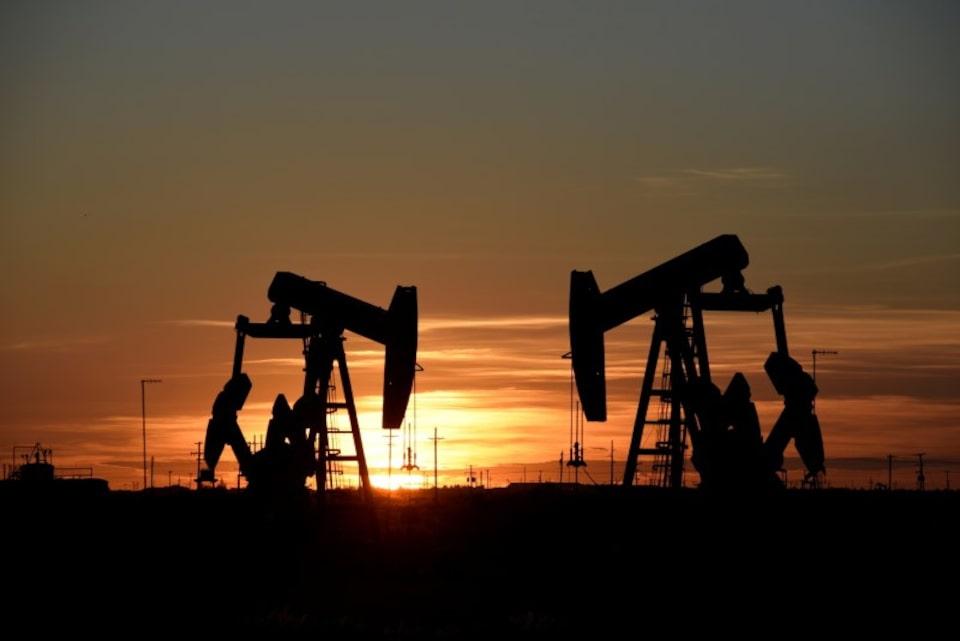
NdrewSINGAPORE, March 19 (Reuters) - Brent crude futures flipped to a discount against Dubai swaps on Wednesday, the first time since November 2023, LSEG data showed, underscoring the strength of Middle East sour oil versus the global sweet crude benchmark. The Brent-Dubai Exchange of Futures for Swaps (EFS) was assessed at minus 2 cents a barrel at Wednesday's market close at 0430 GMT, LSEG data showed. Sign up here. The discount has since widened further to 14 cents a barrel, two trade sources said. Sweet, or low-sulphur oil, is typically more expensive than those with higher sulphur content as they are easier to process. "We recently saw a lot of bidding activity in the Dubai window by trade houses, which supports the Middle East benchmark," said Harry Tchilligurian, head of research at Onyx Capital Group. "Brent, on the other hand, is drawing less support as refiners in Europe are still undergoing scheduled maintenance and refining margins in Northwest Europe are subdued." Brent crude futures also came under pressure on Wednesday after Russia agreed to U.S. President Donald Trump's proposal that Moscow and Kyiv temporarily stop attacking each other's energy infrastructure, a move that could eventually pave the way for Russian oil to enter global markets. Brent's weakness against Dubai has opened up arbitrage opportunities for sweet crude produced in the Atlantic Basin to head to Asia, another trader said. The price spreads between dated Brent and Dubai are also in discounts for April to June contracts, he added. https://www.reuters.com/business/energy/brent-crude-flips-discount-against-dubai-first-time-since-nov-2023-data-shows-2025-03-19/
2025-03-19 11:19
March 19 (Reuters) - The Democratic Republic of Congo intends to impose export quotas on cobalt following a four-month export ban, and plans to partner with Indonesia, another key producer, to manage global supply and pricing, according to DRC's prime minister. The announcement was made during a cabinet meeting on Friday. Sign up here. In a bid to curb a global supply glut, the quotas will be enforced in two parts, one focusing on exports and the other on local mineral transformation, according to the cabinet meeting minutes seen by Reuters on Wednesday. Sources told Reuters in February that DRC, the world's leading cobalt producer, was contemplating export quotas following the imposition of an export ban. Cobalt, a crucial component in batteries for electric vehicles and mobile phones, has seen its prices fall to historically low levels due to weak demand from automakers and increased copper production, from which cobalt is a by-product. Prime Minister Judith Suminwa Tuluka said that plans were afoot to collaborate with Indonesia, another significant cobalt producer, to better regulate the supply and price of cobalt on the global market. https://www.reuters.com/markets/commodities/congo-plans-cobalt-export-quotas-partnership-with-indonesia-tackle-glut-2025-03-19/

2025-03-19 11:13
Louis Dreyfus sees EBITDA drop 15% from 2023 Subdued prices weigh on firm's grains and oilseeds business Crop giants face uncertainty on U.S. trade, biofuel policies PARIS, March 19 (Reuters) - Louis Dreyfus Company (LDC) on Wednesday reported a drop in annual profit, the latest global crop merchant to see earnings curbed by subdued prices last year in staple grains caused by ample harvests and easing demand in China. LDC, whose competitors include ADM, Bunge and Cargill, said in a results statement that its earnings before interest, taxes, depreciation, and amortisation reached $1.88 billion, down 15% compared with 2023. Net income fell 28% to $726 million. Sign up here. Net sales were stable at $50.6 billion, supported by a 17% rise in volumes. The group's grains and oilseeds business recorded lower operating profit after strong 2023 performance, with its corn and soybean activities affected by a context of low volatility, LDC added in an annual report. Like its peers, it also pointed to reduced oilseed crushing margins in China and the United States, with the U.S. market affected by uncertainty over biofuel policy. Global prices of corn, wheat and soybeans last year slipped to their lowest since 2020 amid rising supplies and signs of slowing demand from China, a turnaround from high prices in the wake of Russia's invasion of Ukraine in 2022. ADM and Bunge both reported lower fourth-quarter earnings. Crop traders also face international trade volatility as U.S. President Donald Trump pushes tariffs as an economic and diplomatic tool. Bunge warned that its 2025 earnings could sink to the lowest in six years, partly due to trade tensions. Tougher market conditions have led Cargill to embark on a push to lower its headcount by 5% and ADM to plan a reduction of up to 700 jobs. LDC said its coffee business recorded higher earnings, supported by increased margins and volumes against a backdrop of weather setbacks to crops, while its sugar division's profits declined as prices were more range-bound than the previous year. LDC has partly shifted its focus towards the consumer end of the food chain to be less reliant on commodity trading. Last year, it bought an ingredients business from chemicals maker BASF (BASFn.DE) , opens new tab, launched a juice brand and created a unit trading in pulses, which include beans, lentils and peas. The group said it increased capital expenditure sharply last year to $1 billion from $636 million in 2023. https://www.reuters.com/markets/commodities/crop-merchant-louis-dreyfus-posts-drop-annual-profit-2025-03-19/