2025-03-19 11:08
BEIJING, March 19 (Reuters) - China has lifted a two-year ban on poultry imports from Argentina, reopening a key supply channel amid a tit-for-tat trade war with the United States that has led to steep tariffs on U.S poultry. Argentina suspended poultry exports in February 2023 after detecting Highly Pathogenic Avian Influenza (HPAI) in commercial poultry, prompting China to impose a ban in March of that year. Sign up here. Imports of poultry and related products from the South American producer will be allowed from March 17 following a risk analysis, the General Administration of Customs said in a statement dated March 17. It did not elaborate on the results of the risk analysis. Prior to the import ban, Argentina was China's third-largest supplier of chicken products, according to U.S. Department of Agriculture data. The lifting comes amid a trade standoff between Beijing and Washington. China has imposed a 15% import duty on U.S chicken as part of tariffs covering $21 billion worth of American agricultural and food products. The U.S. was China's third largest meat supplier last year after Brazil and Argentina, accounting for 590,000 tons or 9% of total imports. https://www.reuters.com/markets/commodities/china-ends-two-year-ban-argentina-poultry-imports-2025-03-19/

2025-03-19 11:04
NEW DELHI, March 19 (Reuters) - India's proposed 12% tax on steel imports was less than the industry had expected, but will give some relief from an influx of cheap Chinese imports, executives said on Wednesday. Despite being the world's second-biggest crude steel producer, India shipped in record quantities of steel from China, South Korea and Japan in the first 10 months of the financial year that started in April. Sign up here. Its Directorate General of Trade Remedies, part of the federal trade ministry, said late on Tuesday it had proposed a 12% safeguard duty on steel imports for 200 days to "eliminate the serious injury and threat thereof to the domestic industry". With Steel Minister H.D. Kumaraswamy saying last month the country could impose a 15%-25% tax on steel from China because of the "serious challenge" to domestic producers from cheap imports, that missed industry expectations. "The industry was hoping that it would be more than 15%," one executive at a leading steelmaker, who declined to be named, said. "But at least the government has decided to move in the direction of acting on imports." India is yet to formally decide on the imposition of the tax, but the steel industry is hopeful the measure will rein in unbridled imports. "This proposed duty is half of what we were expecting, but something is better than nothing," said a senior executive at a major mill, also declining to be named. India became a net importer of finished steel in the fiscal year ending March 2024, and shipments from China have steadily risen since then. Some of India's smaller mills have had to scale down operations and consider job cuts as a result of the import surge, Reuters reported in December. The new tax will help producers of long steel products to raise prices by 2-3%, said Nitin Kabra, director of marketing at Maharashtra-based producer Bhagyalaxmi Rolling Mill. The DGTR said the measures would be at a level adequate to ward off trade diversion following the imposition of import barriers from the U.S. and other countries. "This safeguard duty, if implemented, will bring some relief from imports and help us be competitive," said Adarsh Garg, chairman and managing director at northern Indian state Punjab's Jogindra Group. https://www.reuters.com/world/india/indias-proposed-steel-import-tax-smaller-than-hoped-better-than-nothing-2025-03-19/

2025-03-19 11:01
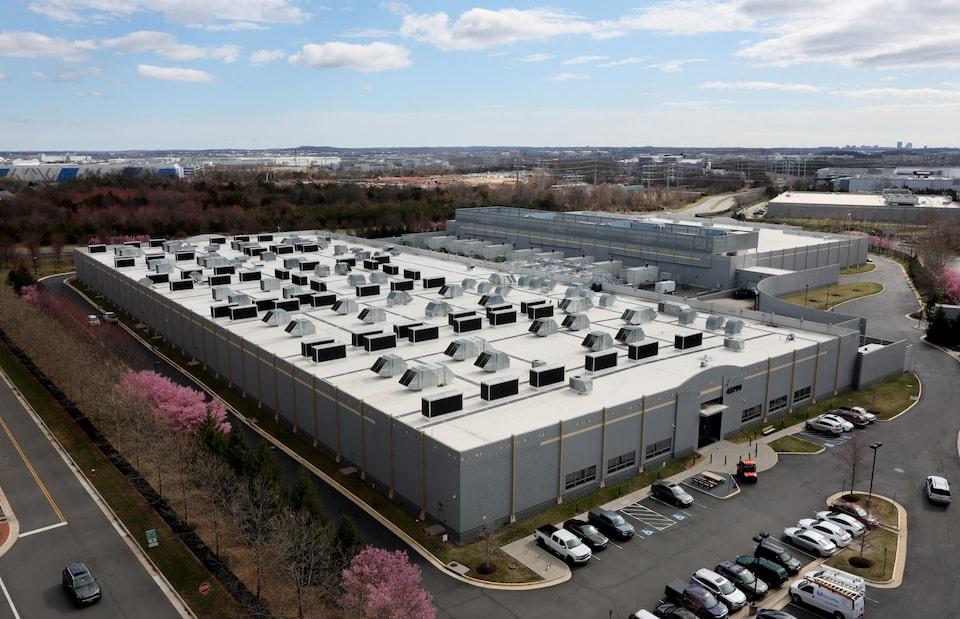
Data center disconnections threaten grid stability, regulator says Grid operators face resistance from data centers on proposals for a fix Texas incidents highlight risks of sudden disconnections by crypto miners BOSTON, March 19 (Reuters) - Data Center Alley, a 30-square-mile stretch outside Washington D.C. and home to more than 200 data centers, consumes roughly the same electricity as Boston. So power company officials were alarmed when a big chunk of those centers - 60 of them - suddenly dropped off the grid one day last summer and switched to on-site generators. The mass reaction was triggered by a standard safety mechanism across the data center industry, intended to protect computer chips and electronic equipment from damage caused by voltage fluctuations. But it caused a huge surge in excess electricity, according to federal regulators and utility executives. Sign up here. The magnitude of the imbalance forced grid operator PJM and local utility Dominion Energy (D.N) , opens new tab to scale back output from power plants to protect grid infrastructure and avoid a worst-case scenario of cascading power outages across the region. The near-miss - reported here in detail for the first time - forced federal regulators to recognize a new vulnerability of America’s electrical grid: unannounced disconnections by data centers. "As these data centers get bigger and consume more energy, the grid is not designed to withstand the loss of 1,500-megawatt data centers," John Moura, Director of Reliability Assessment and System Analysis for NERC, told Reuters in an interview. "At some level it becomes too large to withstand unless more grid resources are added." Historically, grid operators have planned for large power plants tripping offline. But the rapid expansion of data centers processing the vast amounts of information used for AI and crypto mining is forcing grid operators to plan for new contingencies and complicating the already difficult task of balancing the country’s supply and demand of electricity. "What it tells us is that the behavior of data centers has the potential to cause cascading power outages for an entire region," said Alison Silverstein, a former senior adviser to the chairman of the U.S. Federal Energy Regulatory Commission. The event last July 10 occurred near the D.C. suburb of Fairfax, Virginia, an area known as Data Center Alley for its concentration of facilities serving Microsoft, Google and Amazon. About 70% of the world's internet traffic flows through the area. A month after the incident, the North American Electric Reliability Corporation (NERC), the federal regulator for grid reliability, founded a taskforce to study en masse disconnections by data centers and crypto miners. For this story, Reuters examined thousands of pages of regulatory documents and interviewed about a dozen industry executives to determine the origins of the fault - a failed surge protector on Dominion's Ox-Possum 230-kilovolt line near Fairfax, Virginia – and its spread across the area. NERC reviewed the incident in a report in January but did not disclose the exact location of the fault, the number of data centers involved, or how PJM and Dominion worked to rebalance the grid’s supply and demand of electricity. NEAR-MISS EVENTS INCREASING The number of near-miss events like the one in Data Center Alley has grown rapidly over the last five years as more data centers come online. The amount of power used by data centers has tripled over the past decade and could triple again by 2028, according to a report produced by the Lawrence Berkeley National Laboratory for the Department of Energy in December. A Reuters review of disclosure filings by the Electric Reliability Council of Texas (ERCOT), the state’s main grid operator, identified more than 30 near-miss incidents since 2020, triggered by big energy users like data centers and crypto miners switching offline. In December 2022, a failed transformer at a substation in west Texas caused nearly 400 crypto miners, data centers and oil and gas production facilities to unplug without warning. The mass exodus produced an oversupply of nearly 1,700 megawatts of electricity – equivalent to about about 5% of the grid's total demand - and forced 112 megawatts of power generation to shut down, according to ERCOT. The risk of power outages will only grow as new data centers come online, the NERC forecast in a December report. Nearly all of the United States will face higher risks of energy shortfalls over the next 5 to 10 years, the report said. The regulator urged utilities to consider updating federal reliability standards for data centers and crypto miners. A CONTROVERSIAL FIX Many data centers are engineered by their operators to switch to local generators at the smallest hint of a problem on the grid to minimize the risk of an interruption to services like Google search or crypto mining, according to NERC. Some grid operators have proposed requiring data centers to “ride through” routine voltage dips without disconnecting. But data center operators are opposed because of the risk of damaging electronic equipment and cooling systems. ERCOT last year withdrew a proposal that would have imposed ride-through restrictions on data centers and crypto miners after facing pushback from an industry group, the Data Center Coalition. The group, whose members include Amazon, Google, and Meta, cited costs and the risk of damaging computer chips and cooling systems exposed to fluctuating voltage levels. "Data center hardware and power supplies, similar to other electronics, are very sensitive to power supply stability," the coalition said in January 2024 comments filed with ERCOT. "Deviating from this range will deteriorate the optimal performance, reduce longevity, or damage the components beyond repair." The coalition said in a statement to Reuters that it intended to be a helpful partner to grid operators. "We fully recognize grid planning and management is the responsibility of utilities and grid operators, but DCC is committed to leaning in as an active and engaged partner to be helpful and ensure we collectively meet this moment," said Aaron Tinjum, the coalition's Vice President of Energy. Amazon, Google and Meta did not return messages seeking comment. ERCOT did not return messages seeking comment. There is "high potential" for the magnitude of these disconnection events to grow as larger operations plug into the Texas grid, ERCOT operations engineer Patrick Gravois said in a December presentation to NERC’s Large Load Task Force. Gravois said the grid operator is still working to determine exactly what prompts big users of electricity to unplug from the grid, so that it can avoid surprises. Ari Peskoe, director of the Electricity Law Initiative at Harvard Law School, said regulators could require data centers to ride through voltage dips - but that could risk Big Tech decamping for states with more relaxed rules. Jim Simonelli, chief technology officer for Schneider Electric’s secure power division, said utilities and the data center industry have a lot of lessons to be learned from what happened outside Washington DC this past July. "One thing that doesn’t exist yet for the data center industry is how to be grid-friendly,” Simonelli said. https://www.reuters.com/technology/big-techs-data-center-boom-poses-new-risk-us-grid-operators-2025-03-19/
2025-03-19 10:08
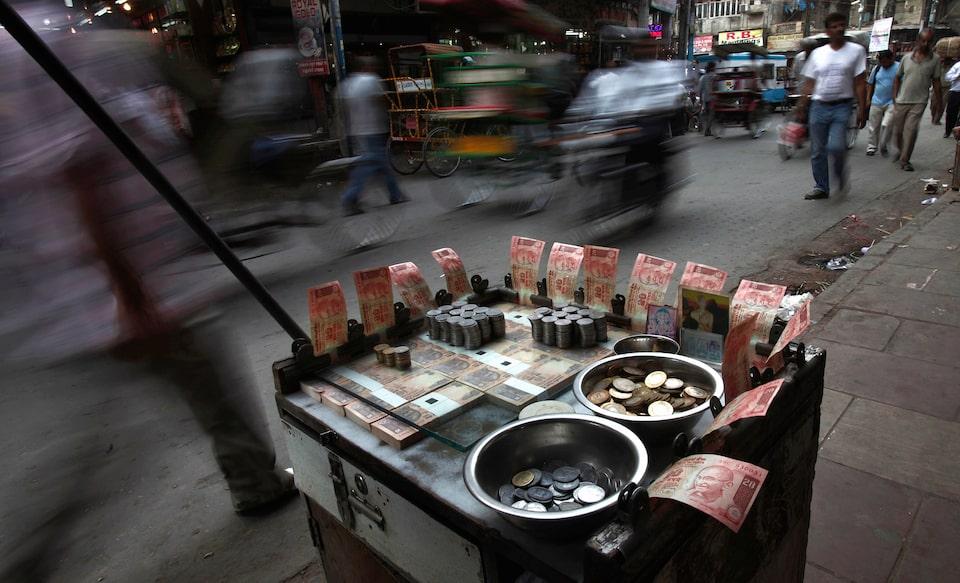
MUMBAI, March 19 (Reuters) - The Indian rupee strengthened on Wednesday, touching a near two-month high, supported by dollar sales from foreign banks and seasonal inflows even as its regional peers dipped ahead of the U.S. Federal Reserve's policy decision. The rupee ended the session at 86.4425 against the U.S. dollar, slightly higher than Tuesday's close at 86.57. Earlier in the day, the currency hit 86.4250, a peak since January 27. Sign up here. While the rupee has been on a winning run this week, traders have also pointed to likely passive absorption of dollar inflows by the central bank, probably to replenish the forex reserves expended on supporting the rupee over the past few months. Inflows related to inter-company borrowings and repatriation of corporate profits are usual in March, the last month of the financial year. Such inflows have aided the rupee over recent trading sessions. The inflows also likely helped the rupee weather a pickup in dollar strength on Wednesday. The greenback was up about 0.3% against major peers, while Asian currencies were mostly lower with the Indonesian rupiah down 0.3% and leading losses. On the day, the rupee was also supported by likely cutting of short bets once the currency rose above 86.50, a trader at a state-run bank said. The Fed is widely expected to make no changes to its policy rate later in the day but the focus will be on the central bank's guidance and updated economic and policy rate forecasts. "Markets will be sensitive to growth and inflation forecasts too, but if we are right with our dot plot call and Fed Chair Jay Powell retains a cautious tone on easing, the dollar should be able to rebound," ING Bank said in a note. https://www.reuters.com/markets/currencies/rupee-hits-near-two-month-peak-even-asia-fx-slips-ahead-fed-decision-2025-03-19/
2025-03-19 10:00
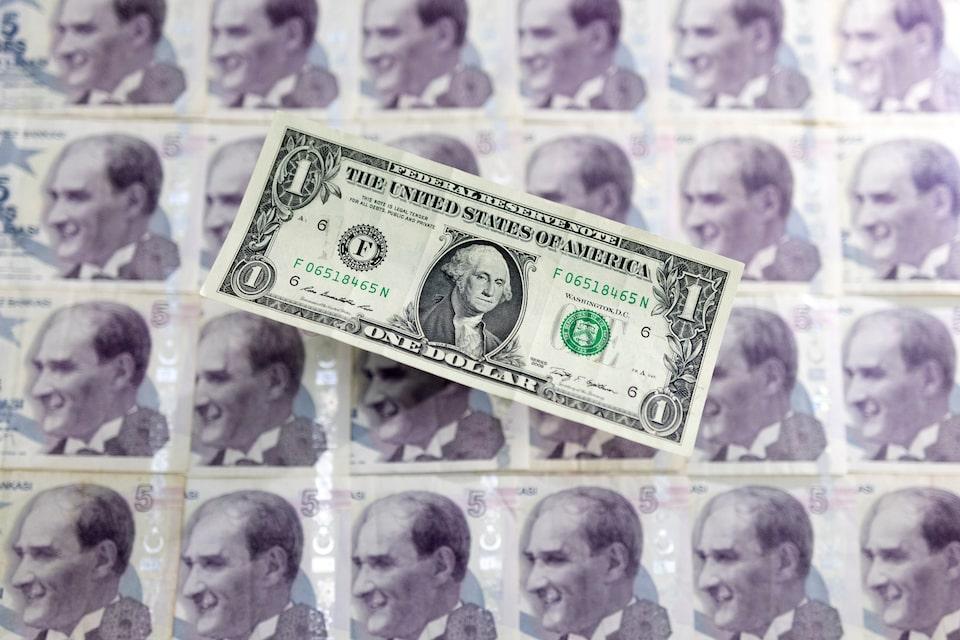
ANKARA, March 19 (Reuters) - Turkey's central bank sold a record amount of foreign currency on Wednesday after the lira dropped more than 12% following the detention of Istanbul's mayor, according to calculations by three bankers. Bankers say at least nearly $10 billion in foreign currency was sold by the central bank on Wednesday. Sign up here. The Turkish central bank declined to comment. The bankers said that the central bank did not directly intervene in the exchange rate but that the transactions it carried out through existing foreign exchange buying and selling methods via public banks indicated a record level of foreign exchange sales. The central bank carries out FX transactions through many channels such as purchases from exporters and FX-protected scheme payments. These purchase and sale transactions have contributed more than $140 billion in reserves in the last 1.5 years. https://www.reuters.com/markets/currencies/turkish-cenbank-sells-record-amount-fx-after-lira-plunges-bankers-say-2025-03-19/
2025-03-19 08:08
MUMBAI, March 19 (Reuters) - The Reserve Bank of India has likely been "opportunistically" absorbing dollar inflows over the past few sessions, probably to replenish the forex reserves expended on supporting the rupee over the past few months, four traders said on Wednesday. The rupee, supported by these inflows and the dollar's decline, climbed past 86.50 to a one-month high on Wednesday. It has gained just over 1% this month, after having slid 2% over January and February as the greenback rallied. Sign up here. The Indian currency would likely have appreciated further if not for the RBI's dollar purchases, as evidenced by state-run banks bidding for dollars in recent sessions, the traders said. Inflows related to inter-company borrowings and repatriation of corporate profits are usual in March, the last month of the financial year. The central bank has been "opportunistically absorbing these flows" without having a specific level in mind, a senior trader at a bank said. "They have a large gap to fill given how much (forex) reserves have been spent" to support the rupee as it plumbed lifetime lows frequently in the past two months, the trader added. India's forex reserves declined to a nine-month low of about $624 billion in late January. While they have recovered to $654 billion through March 7, they are still about $50 billion less than the peak hit in October. "The last few days, they (RBI) are doing (the dollar buying) passively," a chief FX dealer at a private sector bank said. "It's to be expected that they will take advantage of any counter-cyclical dips (on dollar/rupee) to buy into reserves." The traders spoke on the condition of anonymity since they are not authorised to speak to the media. The RBI did not immediately respond to an email seeking comment. https://www.reuters.com/markets/currencies/india-central-bank-likely-passively-mopping-dollar-inflows-traders-say-2025-03-19/