2025-03-19 06:29
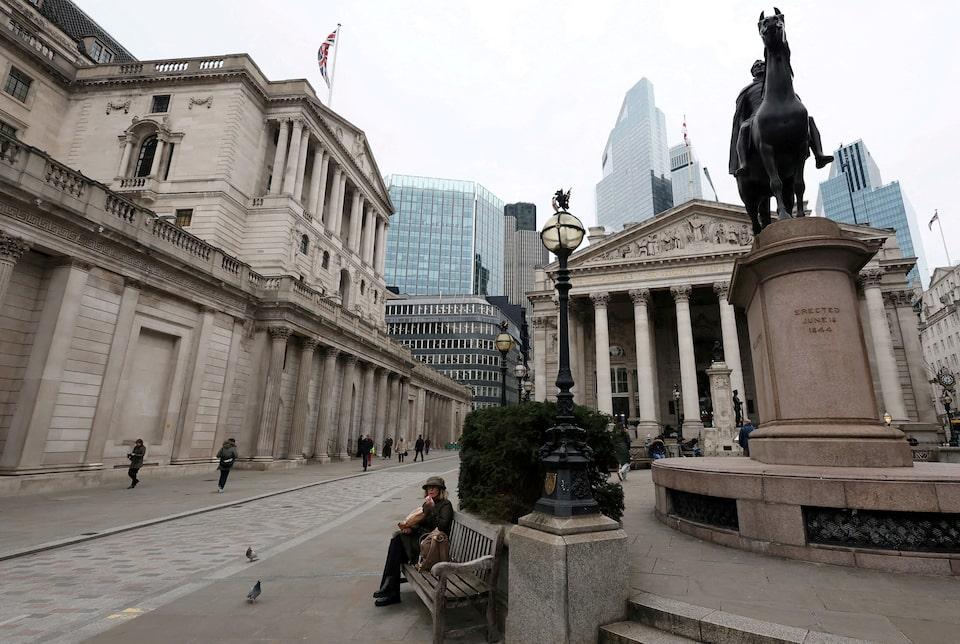
Trade body recommends 12% tax on certain steel imports for 200 days Analysts forecast steel price hikes and earnings growth May counter diversions from Japan, South Korea after US tariffs March 19 (Reuters) - Shares of Indian steel companies rose on Wednesday, a day after a government body recommended a temporary tax on some steel products in a bid to curb cheap imports amid rising global trade tensions, raising hopes of a boost to the firms' earnings. Metal shares (.NIFTYMET) , opens new tab rose as much as 1.6% in early trade in Mumbai. Industry leader JSW Steel (JSTL.NS) , opens new tab and Tata Steel (TISC.NS) , opens new tab rose about 3% to be among the top ten gainers on the benchmark Nifty 50 index (.NSEI) , opens new tab, which advanced 0.3%. State-run SAIL (SAIL.NS) , opens new tab rose 3.7%. Sign up here. In December 2024, India launched a probe after record imports, largely from China, forced top steel mills to petition the government. On Tuesday, India's Directorate General of Trade Remedies, which functions under the federal trade ministry, recommended a 12% temporary tax for 200 days on certain steel product imports in a bid to curb "serious injury" to the domestic industry. The tax is proposed to be levied on products including hot-rolled coils, steel sheets and plates, as well as cold-rolled coils and sheets. Analysts at J.P. Morgan see scope for raising estimates on steel companies' earnings as the tax "opens up ample room for imagination around profitability improvement." "The tax can potentially lead to more room for price hikes in the next few months after rising to 1,500 rupees to 2,000 rupees in the near term," Parthiv Jhonsa, lead analyst for metal and mining at brokerage Anand Rathi, said. "Earnings of steel companies are expected to increase in the next one to two quarters," he said. The tax is expected to help Indian steel mills counter any potential trade diversions from countries like Japan and South Korea into the South Asian country after U.S. President Donald Trump imposed 25% import tariffs on the alloy, as per commodities consultancy BigMint. The two Asian countries account for 15% of steel shipments to the U.S. https://www.reuters.com/markets/commodities/steel-stocks-gain-indias-plan-tax-imports-2025-03-19/

2025-03-19 06:14
Fed leaves interest rates unchanged, lowers economic outlook Central bank forecasts 50 basis points of rate cuts in 2025 European stocks nab fourth straight day of gains Turkish assets drop after arrest of Erdogan rival NEW YORK, March 19 (Reuters) - U.S. stocks bounced on Wednesday after the U.S. Federal Reserve left its key interest rate unchanged but hinted it would reduce borrowing costs by half a percentage point by the end of the year. Gold flipped positive, touching a record high, and U.S. Treasury yields pared gains after the central bank lowered its economic outlook for the year and marked up its inflation expectations in view of U.S. President Donald Trump's tariff rollouts. Sign up here. All three major U.S. stock indexes gained upward momentum after the announcement, with tech-related megacaps boosting the Nasdaq to a 1.4% advance on the day. "Given growing worries around tariffs and how they could affect U.S. growth and inflation, the Fed took a widely expected 'wait and see' approach on rates," said Matthias Scheiber, head of the multi-asset solutions team at Allspring Global Investments in London. "We believe the next likely window for the Fed to lower rates will be May or later, and market analysts expect two cuts in 2025." At his subsequent Q&A session, Fed Chair Jerome Powell acknowledged inflation is still elevated and uncertainties related to policy changes persist, but he provided reassurance that the economy remains strong and the labor market is solid. International investors had been focused on Turkey after President Tayyip Erdogan's main political rival was detained in what the main opposition party called "a coup against our next president," battering Turkish stocks and sending the lira plunging as much as 14.5% against the dollar, before paring those losses. Ukrainian President Volodymyr Zelenskiy spoke with U.S. President Donald Trump on Wednesday, with the leaders agreeing to work to end the war in Ukraine. "We live in such a global society, there's always going to be something happening out there in the world," said Matthew Keator, managing partner in the Keator Group, a wealth management firm in Lenox, Massachusetts. "But long-term investors, I believe, have the ability to kind of look through some of that day-to-day noise." The Dow Jones Industrial Average (.DJI) , opens new tab rose 383.32 points, or 0.92%, to 41,964.63, the S&P 500 (.SPX) , opens new tab gained 60.63 points, or 1.08%, to 5,675.29 and the Nasdaq Composite (.IXIC) , opens new tab rose 246.67 points, or 1.41%, to 17,750.79. European stocks closed higher, notching their fourth consecutive session of gains buoyed by Germany's debt overhaul as investors focused on the Fed. Europe's broad FTSEurofirst 300 index (.FTEU3) , opens new tab rose 4.30 points, or 0.20%. MSCI's gauge of stocks across the globe (.MIWD00000PUS) , opens new tab rose 6.53 points, or 0.78%, to 846.06. The pan-European STOXX 600 (.STOXX) , opens new tab index rose 0.19%, while Emerging market stocks (.MSCIEF) , opens new tab fell 1.94 points, or 0.17%, to 1,143.23. MSCI's broadest index of Asia-Pacific shares outside Japan (.MIAPJ0000PUS) , opens new tab closed lower by 0.14%, to 594.18, while Japan's Nikkei (.N225) , opens new tab fell 93.54 points, or 0.25%, to 37,751.88. The dollar gave back some gains in the wake of the central bank's decision to keep rates unchanged, but the Fed indicated that policymakers expect to reduce borrowing costs by half a percentage point this year. The dollar index , which measures the greenback against a basket of currencies including the yen and the euro, rose 0.18% to 103.49, with the euro down 0.39% at $1.09. Against the Japanese yen , the dollar weakened 0.26% to 148.87. The Turkish lira weakened by 3.62% at 38.00 per dollar. Cryptocurrencies gathered some momentum in the wake of the Fed's downgraded economic outlook. Bitcoin gained 4.33% to $85,561.91. Ethereum rose 6.69% to $2,032.87. U.S. Treasury yields pared their earlier advance after policymakers indicated they anticipate the Fed funds target rate will be reduced by 50 basis points this year. The yield on benchmark U.S. 10-year notes fell 3.3 basis points to 4.249%, from 4.281% late on Tuesday. The 30-year bond yield fell 2 basis points to 4.5593% from 4.579% late on Tuesday. The 2-year note yield, which typically moves in step with interest rate expectations for the Federal Reserve, fell 6.3 basis points to 3.979%, from 4.042% late on Tuesday. Crude prices gained ground after U.S. data showed an inventory drawdown, while markets kept an eye on the limited Russia-Ukraine ceasefire. U.S. crude rose 0.39% to settle at $67.16 per barrel, while Brent settled at $70.78 per barrel, up 0.31% on the day. Gold prices turned positive and touched a record high in the wake of the Fed's lowered economic projections. Spot gold rose 0.43% to $3,047.00 an ounce. U.S. gold futures rose 0.24% to $3,042.30 an ounce. https://www.reuters.com/markets/global-markets-wrapup-1-2025-03-19/

2025-03-19 06:08
LITTLETON, Colorado, March 19 (Reuters) - Until 2020, commodities traders and economists needed only a handful of data points to gauge the health and direction of China's economy, and the volumes of raw materials needed to fuel the world's largest trading partner and goods producer. But over the past five years, the make-up of China's economy has shifted from being mainly reliant on construction and heavy industry to being driven more by goods manufacturing and services that are far less materials and energy-intensive. Sign up here. Here's a guide to the key old and new-ish data points needed to keep a read on the world's second-largest economy, and how Beijing's latest push to boost domestic consumption may have global repercussions. OLD TIMERS In the good old days, commodity traders needed only a quick glance at China's imports of crude oil and iron ore to discern the health of its overall economy. For most of the current century, the import trends of both of those commodities climbed steadily to sequential records, and acted as a leading indicator of the appetite of the country's transportation, industrial and construction sectors. Within the current decade, however, two important trends have collided to render oil and iron ore import data significantly less pertinent: the electrification of China's vehicle fleets and the debt crisis within its property sector. Electric vehicles have jumped from a 1% share of China's car sales in 2015 to a 40% share in 2024, International Energy Agency data shows, heavily denting fuel demand in the process. China's massive property sector once accounted for as much as a quarter of its total economy, while the makers of steel, cement, ceramics, glass, wiring and plumbing materials all relied on it for sales of their products and services. So far this decade, however, a series of debt defaults by major construction firms has chilled the broader property sector, sending home prices lower and stalling construction. This in turn has stifled China's demand for iron ore - a critical steelmaking ingredient - and made iron ore trade volumes a less reliable indicator of China's overall economy. China's output of cement, crude steel, insulating glass and welded steel pipes has also trended lower since 2020 as the broader construction sector downshifted. Data on China's property sector has continued to trend lower in 2025, with prices, sales and investments all contracting in February. ON THE UP While many of China's construction sites have become ghost towns, production lines of electric vehicles, solar panels and rechargeable batteries have bustled, underscoring how manufacturing has now emerged as a key economic driver. China's production of key manufacturing-centric ingredients has also exploded, in contrast to the output trends of inputs used on building sites. Output of copper, aluminum and ethylene - used on most production lines for appliances, cars, and tech gadgets - is at record highs, along with the output of sulphuric acid, used in metal refining. To fuel the continuing rise in manufacturing activity, China's output of power, electricity, power generating equipment and electric motors is also soaring. SHIPPING OUT China's exports of key manufactured items have also scaled new highs within the past year, but may face stiffer headwinds going forward under the new tariff regime set by U.S. President Donald Trump. Exports of EVs, rechargeable batteries, microchips and solar cells are all vulnerable to setbacks in 2025 if purchases around the world decline due to the higher costs triggered by the tariffs and the resulting reduced consumer demand. At the heart of Trump's tariff push is the United States' persistent trade gap with China, which has been in deficit territory since the mid-1980s. The deficit briefly narrowed in 2020 to the smallest in 14 years due to Trump's earlier tariffs during his first term, and because of the steep drop in U.S. goods imports from China during the early lockdowns caused by COVID-19. However, the monthly deficit has still averaged around $70 billion over the past two years, and remains a sore point within Trump's second administration. Just how China's policymakers and businesses navigate the latest tariff landscape and adjust product output, export and import flows as a result will remain a key point of interest for commodity traders and economists in 2025 and beyond. But accurately tracking those product flows and the impact thereof on the U.S.-China deficit requires more granular and different data points than the favored crude oil and iron ore import trends of yore. The opinions expressed here are those of the author, a market analyst for Reuters. https://www.reuters.com/markets/asia/tracking-chinas-economy-commodity-needs-is-getting-harder-2025-03-19/

2025-03-19 06:03
MUMBAI, March 19 (Reuters) - The Indian rupee is likely to open marginally weaker on Wednesday as traders await the U.S. Federal Reserve's policy decision, with focus on its updated forecasts and guidance. The one-month non-deliverable forward indicates that the rupee will open at 86.62-86.64 to the U.S. dollar, compared with its previous close of 86.57. Sign up here. The rupee is near at its highest levels in nearly a month, largely on the back of the dollar's decline due to worries over an U.S. economic slowdown and a rally in the euro. The Indian currency has climbed just over 1% so far in March. March tends to be seasonally favourable for the rupee, providing an added tailwind. Inflows related to intercompany borrowings of corporations alongside repatriation of profits are usually seen in the final few weeks of the month. However, a senior FX trader at a mid-sized private sector bank reckons that the rupee's positive run is likely to halt. "We are near to levels were it is will be very attractive for importers to increase their hedge ratio," he said. Further, "at a point" the Reserve Bank of India will be stepping in to buy dollars to build up FX reserves, he said. Asian currencies were mixed and the dollar index was mostly flat before the Fed's decision, due during U.S. market hours. The U.S. central bank is widely expected to make no changes to its policy rate. The market's focus will be on the guidance and the updated forecast, said Julien Lafargue, chief market strategist at Barclays Private Bank and Wealth Management. "On the guidance, the Fed could use the recent weakness in soft data to pre-empt a possible dovish tilt. This should transpire into the central bank's updated macroeconomic forecast which are likely to show lower GDP growth ahead," he said. KEY INDICATORS: ** One-month non-deliverable rupee forward at 86.86; onshore one-month forward premium at 23.25 paisa ** Dollar index largely unchanged at 103.26 ** Brent crude futures down 0.2% at $70.4 per barrel ** Ten-year U.S. note yield at 4.29% ** As per NSDL data, foreign investors sold a net $427.1 million worth of Indian shares on March 17 ** NSDL data shows foreign investors bought a net $44.3 million worth of Indian bonds on March 17 https://www.reuters.com/markets/currencies/rupee-likely-dip-feds-updated-forecasts-loom-2025-03-19/
2025-03-19 05:55
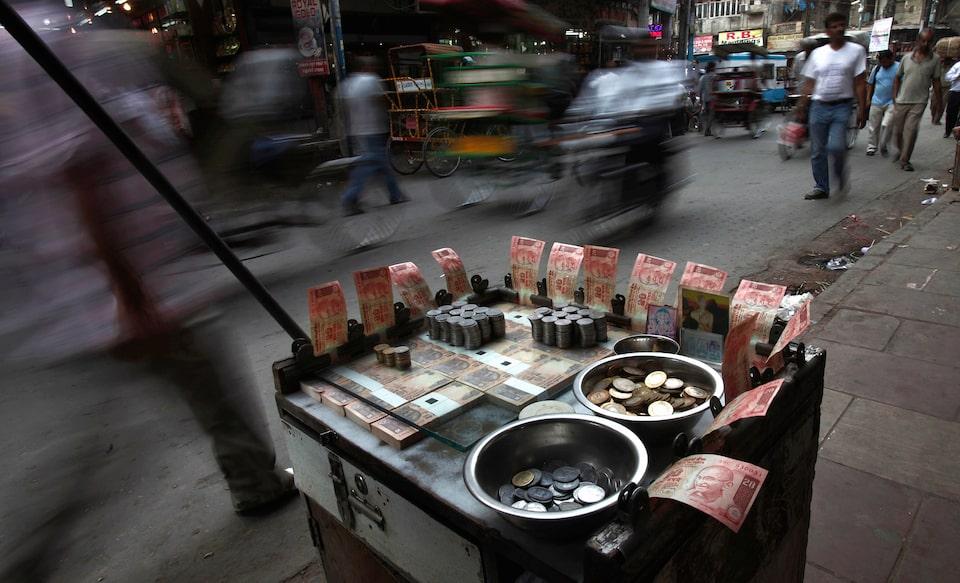
Spot gold hits an all-time high of $3,051.99/oz US rate futures price in two rate cuts in 2025 Fed likely to resume rate cuts in June March 19 (Reuters) - Gold prices soared to an all-time high on Wednesday, following remarks from Fed Chair Jerome Powell and as the U.S. Federal Reserve held interest rates steady as anticipated, but signaled a possible reduction in borrowing costs by half a percentage point by the end of this year. Spot gold rose 0.5% to $3,047.80 per ounce as of 03:57 p.m. ET (1957 GMT), after hitting an all-time high of $3,051.99 earlier in the session. Sign up here. U.S. gold futures settled mostly unchanged at $3,041.20. "Gold rallies to another historic high after a truly virtuoso performance by Chair Powell - as stocks and bonds also rally," said Tai Wong, an independent metals trader. "Gold is in a bull market after surging strongly above $3000 and will continue to move higher on 'elevated' uncertainty and fear of higher inflation." "The market is thinking, buy gold no matter what," he added. The Fed maintained its policy rate between 4.25% and 4.50%. Officials adjusted their inflation outlook upward for this year, while simultaneously downgrading the forecast for economic growth, following the Trump administration's implementation of tariffs. Powell said on Wednesday that inflation could face delays in progress this year, partly due to tariffs from the Trump administration. U.S. President Donald Trump raised tariffs on imports of steel and aluminium to 25%, effective last week, and has said he intends for new reciprocal and sectoral tariffs to take effect on April 2. Gold, traditionally viewed as a safe-haven investment during times of inflation or economic volatility, has climbed over 15% so far this year. Fed fund futures imply traders see a 66% chance of the Fed resuming rate cuts in the June meeting, up from 57% before the decision. Gold becomes more attractive when interest rates are low, as it is a non-yielding asset. On the geopolitical front, Russia and Ukraine accused each other of violating a new agreement to refrain from attacks on energy targets just hours after U.S. President Donald Trump spoke by phone with Russia's Vladimir Putin. Spot silver fell 0.7% to $33.79 an ounce, platinum slipped 0.3% to $994.15 and palladium fell 0.8% to $959.54. https://www.reuters.com/markets/commodities/gold-hovers-near-record-high-safe-haven-demand-fed-decision-focus-2025-03-19/
2025-03-19 05:37
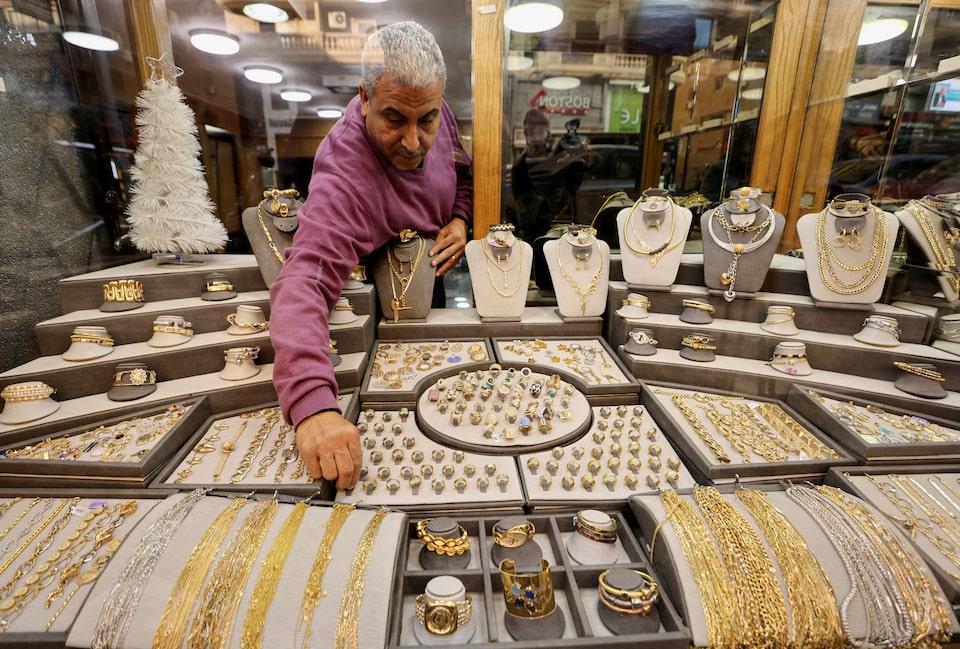
A look at the day ahead in European and global markets from Tom Westbrook Investors' attention looks set to switch, briefly, to monetary policy for the rest of the week, from its usual recent fixation with trade and politics. Sign up here. The Federal Reserve is up first, later today, followed on Thursday by the Bank of England, Sweden's Riksbank and Swiss National Bank. All but the SNB are expected to leave rates on hold, as the Bank of Japan did earlier in the day. The focus will fall on how far they might signal their policy intentions or their sensitivity to the recent market gyrations around U.S. tariffs and the prospect of slowing growth. Ten-year Treasury yields have fallen 25 basis points since the Fed last met in January, barely a week after Donald Trump's inauguration as president. The S&P 500 (.SPX) , opens new tab is down about 7% and gold is notching record highs almost daily - the latest at $3,038 an ounce. Markets are priced at zero chance of a rate cut today, followed by about a 15% chance for a cut in May and a 65% chance for June. The Bank of Japan kept interest rates steady, playing for time, and markets had little immediate reaction. It's not as though things are quiet on the geopolitical front. Israeli airstrikes have shattered the relative calm in Gaza, killing more than 400 people on Tuesday. Trump's phone call with Russia's Vladimir Putin drew agreement to stop attacking Ukrainian energy facilities - short of the 30-day ceasefire the U.S. has been pressing for. Political intrigue has also deepened around the high-profile sale of CK Hutchison's (0001.HK) , opens new tab ports business. The company, owned by billionaire Li Ka-shing, agreed to sell assets, including those near the strategically important Panama Canal, to a group led by BlackRock (BLK.N) , opens new tab in a deal cheered by Trump but attacked in Chinese state-owned media. Indonesian stocks stabilised after a sudden selloff on Tuesday. Ahead of the Fed, final European inflation data is due. Earnings reports are expected for financial services firms in London as well as Tencent (0700.HK) , opens new tab and Ping An - in focus as China's markets have surged. Key developments that could influence markets on Wednesday: - Earnings: Tencent, Ping An, Hargreaves Lansdown, Prudential, M&G - Economics: Final Eurozone CPI - Policy: Federal Reserve policy decision https://www.reuters.com/markets/europe/global-markets-view-europe-2025-03-19/