2025-03-19 03:06
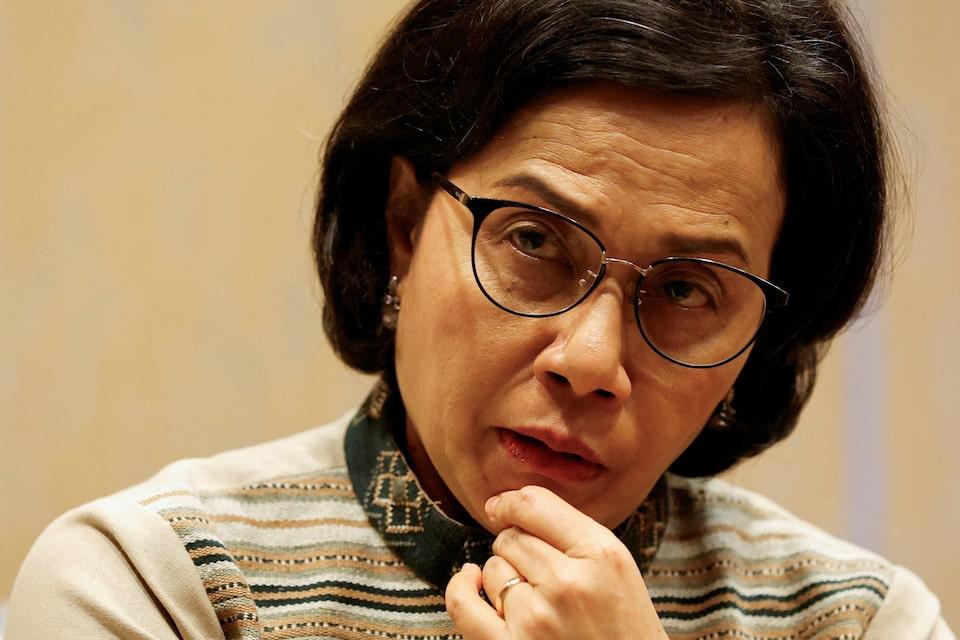
Foreigners flee Indonesian stocks over fiscal, political concerns Bank Indonesia again faces growth vs currency trade-off Another rate cut will crush rupiah and bonds, analysts say SINGAPORE, March 19 (Reuters) - As Indonesia's government plays fast and loose with its spending plans, a slow exit of foreign investors is turning into a tide that risks engulfing the relatively stable rupiah and bonds. Bank Indonesia (BI) holds the key to whether the slump in the country's stocks turns into a wider, ugly selloff. The central bank meets on Wednesday and is expected to stand pat on rates. Sign up here. "If BI were to surprise with a cut ... that's going to cause further weakness in the rupiah as investors will be worried that the trade-off is for BI to sacrifice the rupiah and tolerate further weakness in order to shore up growth," said Khoon Goh, head of Asia research at ANZ. BI's decision comes at a time when investors' confidence in Southeast Asia's largest economy has been waning, as worries grow about Indonesian President Prabowo Subianto's massive social spending plans, budget cuts and cancellation of a tax hike. The proposals have raised concerns about Indonesia's fiscal health, despite the government maintaining its budget deficit forecast at a modest 2.53% of economic output. Moreover, high interest rates have eroded business earnings and led to a steep selloff in stocks as foreigners, who hold half of listed stocks, pull out. They have sold $3.85 billion worth of stocks since October to be on course for six straight months of selling, a run last seen in 2017. Jakarta's benchmark stock index (.JKSE) , opens new tab is down 12% for the year so far, putting it near the bottom of the pack in Asia. "Indonesia's fiscal policy shifts are raising a great deal of uncertainty amidst global macro volatility and unattractive local valuations," said Aninda Mitra, head of Asia macro strategy at BNY Investment Institute. Also stoking concerns is news that Indonesia is set to pass contentious revisions to a military law this week that will allow armed forces personnel to hold more civilian posts, which investors say could be damaging to the country's business-friendly environment. Dealing a one-two punch to sentiment is speculation that finance minister Sri Mulyani Indrawati could be resigning, though she denied those rumours on Tuesday. Rong Ren Goh, a portfolio manager in the fixed income team at Eastspring Investments, said Mulyani's future matters a great deal to investors, given her reputation for fiscal discipline that sharply contrasts with Prabowo's approach. "It’s no surprise that the rumours triggered such a market reaction, given that they have been teetering on an unstable equilibrium for months." Spreads on five-year Indonesian credit default swaps (CDS), which measure the risk of a bond issuer not paying its creditors, hit 86 bps on Tuesday based on S&P Global Market Intelligence data, marking their highest for the year thus far. The selloff in Indonesia's currency and bonds has been more muted, helped in part by the attractiveness of the 7%-plus yields on the bond. The rupiah has so far fallen less than 2% for the year, while the yield on the 10-year Indonesian government bond (IndoGB) is up just about 60 basis points from its September low, before Prabowo took office. But this "carry trade" could unwind swiftly, resulting in a vicious selloff loop between the rupiah and bonds, as has been the case in past episodes of market turmoil. For instance, when the coronavirus first spread to Indonesia in March 2020, the 10-year IndoGB yield climbed nearly 180 bps in less than three weeks. That raises the stakes for BI's rate decision later on Wednesday as investors assess how far the central bank, which has a heavy currency stability mandate, will prioritise economic growth over supporting the rupiah via higher rates. "Intuitively, the rupiah could be under some pressure, but if BI elects to cut, they will probably be ready to smoothen any FX volatility," said Eastspring's Goh, who is neutral on the bonds and "positioned defensively" on the rupiah too. Traders say BI has been intervening heavily to stem the currency's losses. The volatility comes at a nervous time for global markets as U.S. President Donald Trump's tariffs on trading partners raise risks of a broader economic downturn. "So it's just a combination of a perfect storm, which is resulting in foreign investors taking a very cautious view of Indonesian assets," said ANZ's Goh. https://www.reuters.com/markets/asia/bank-indonesia-could-tip-scales-its-shaky-markets-2025-03-19/
2025-03-19 00:38
US central bank keeps policy rate in 4.25%-4.50% range US crude stocks rose more than expected, gasoline and distillate inventories fell last week, EIA says Russia and Ukraine accuse each other of violating new ceasefire agreement Israeli military resumed ground operations in the central and southern Gaza March 19 (Reuters) - Oil prices edged up on Wednesday after U.S. government data showed a draw in fuel inventories, but the Federal Reserve's decision to hold interest rates steady capped gains. Brent crude futures settled up 22 cents, or 0.31%, to $70.78 a barrel. U.S. West Texas Intermediate crude (WTI) closed 26 cents, or 0.39%, higher at $67.16. Sign up here. U.S. crude stocks rose by 1.7 million barrels last week to 437 million barrels, U.S. government data showed, exceeding the 512,000-barrel rise analysts had expected. However, distillate inventories, which include diesel and heating oil, fell by 2.8 million barrels last week to 114.8 million barrels, far surpassing expectations for a 300,000-barrel drop. "The EIA showed a net draw including products, which is incrementally bullish," said Josh Young, chief investment officer at Bison Interests. The Israeli military resumed ground operations in the central and southern Gaza Strip, a day after local health workers said more than 400 Palestinians were killed in airstrikes that shattered a ceasefire. U.S. President Donald Trump this week vowed to continue his country's assault on Yemen's Houthis and said he would hold Iran responsible for any attacks carried out by the group that has disrupted shipping in the Red Sea. "Traders are being forced to refocus on Mideast geopolitical risks as Israel and the United States launch attacks on Gaza and Yemen, respectively," said Clay Seigle, senior fellow for energy security at the Center for Strategic and International Studies. The Fed held rates steady at the 4.25%-4.50% range as expected, but policymakers signaled they still anticipate reducing borrowing costs by half a percentage point by the end of this year in the context of slowing economic growth and a downturn in inflation. U.S. tariffs on Canada, Mexico and China have raised fears of recession, and worries of slower energy demand weighed on oil prices. Investors also watched Ukraine ceasefire talks. Russia agreed to Trump's proposal that Moscow and Kyiv temporarily stop attacking each other's energy infrastructure, a move analysts say increases chances for peace and eventually for Russian oil to re-enter global markets. However, the prospect of a full ceasefire remained uncertain. Russia and Ukraine accused each other of violating a new agreement to refrain from attacks on energy targets, hours after it was agreed by Trump and Russian President Vladimir Putin. A prisoner swap went ahead. "Even if a deal is struck, it will likely take some time before Russian energy exports increase in a significant way, with the short-term impact being around diversion of flows in order to attract better pricing," said Panmure Liberum analyst Ashley Kelty. Russia is among the world's top oil suppliers, but its output has waned during the war, which resulted in sanctions on Russian energy. https://www.reuters.com/business/energy/oil-prices-ease-after-us-russia-agreement-30-day-energy-ceasefire-2025-03-19/
2025-03-19 00:11
March 19 (Reuters) - Mining major Rio Tinto (RIO.AX) , opens new tab on Wednesday backed its dual-listed structure and asked shareholders to vote against London-based hedge fund Palliser Capital's resolution to review the firm's two listings in London and Sydney. The world's largest iron-ore miner said it had already conducted a robust and comprehensive review of the structure and had engaged with a number of stakeholders, including Palliser. It had previously recommended its London shareholders to vote against the resolution. Sign up here. "A dual-listed companies (DLC) structure unification is not required to provide the group with strategic flexibility," Rio Tinto said on Wednesday. A unification would be value destructive for the group and its shareholders, Rio flagged. Rio will have its London annual shareholder meeting on April 3 and its Australian meeting in Perth on May 1. Activist investor Palliser Capital and more than 100 other shareholders in December sought a shareholder resolution calling for Rio's dual-listed model to be reviewed and urged the miner to keep only its listing in Australia. Their reasoning is that such a move would bolster the company's share price. However, Australian shareholders are not keen for the move, as they say it would erode value. Rival BHP (BHP.AX) , opens new tab ended a similar dual-listing structure in 2022 after pressure from activist investors and now has a primary listing in Australia. https://www.reuters.com/markets/commodities/rio-tinto-backs-dual-listed-structure-asks-shareholders-reject-pallisters-bid-2025-03-19/
2025-03-19 00:03
LONDON, March 19 (Reuters) - Pay increases granted by British employers have fallen back in line with inflation for the first time since October 2023, according to data from human resources data firm Brightmine that is likely to be welcomed by the Bank of England. Brightmine said employers were cautious before April's rise in payroll taxes and the median pay award in the three months to the end of February held at 3% for the third consecutive rolling quarter, the joint lowest pace of increase since December 2021. Sign up here. Britain's consumer price index rose by 3% in the 12 months to January the latest month for which data is available. "The stabilisation of pay awards reflects a more cautious approach from employers as they balance wage growth and rising costs," Brightmine's senior content manager Sheila Attwood said. A quarter of firms planned a hiring freeze or a restructuring of their teams in response to April's increase in employers' social security contributions, with some considering pay freezes and delays to increases. Britain's minimum wage is also due to go up in April by almost 7% and almost three-quarters of employers expected a squeeze in the difference between their basic and higher pay levels, Brightmine said. The BoE is watching for signs that inflation pressure in Britain's jobs market is abating sufficiently for it to carry on cutting interest rates. It is widely expected to keep borrowing costs on hold on Thursday after its March meeting. Brightmine analysed 102 pay settlements effective in the three months to February 28 covering around 135,000 employees. https://www.reuters.com/world/uk/uk-pay-rises-fall-back-line-with-inflation-brightmine-says-2025-03-19/
2025-03-18 23:35
GUAYAQUIL, Ecuador, March 18 (Reuters) - Ecuador's state oil company Petroecuador declared on Tuesday force majeure on its SOTE pipeline due to what it described as a landslide that provoked an oil spill, according to a statement from the firm. Petroecuador added that the emergency measure will not last more than 60 days and that the size of the spill had not yet been determined. Sign up here. https://www.reuters.com/business/energy/petroecuador-declares-force-majeure-sote-pipeline-after-oil-spill-2025-03-18/

2025-03-18 23:28
White House official says tariffs to take effect April 2 Negotiations to lower tariffs needed ahead of April 2Countries to get tariff number on April 2, Bessent says Bessent sees opportunity to negotiate tariffs lower USTR wrestling with design of complex reciprocal tariff plan WASHINGTON, March 18 (Reuters) - U.S. President Donald Trump still intends for new reciprocal tariff rates to take effect on April 2, the White House said on Tuesday, despite earlier comments from Treasury Secretary Scott Bessent that indicated a possible delay in their activation. "The intent is to enact tariffs on April 2," the official said when asked to clarify Bessent's comments that countries would get an opportunity to avoid higher tariffs by reducing their own trade barriers. Sign up here. "Unless the tariff and non-tariff barriers are equalized, or the U.S. has higher tariffs, the tariffs will go into effect," the White House official said. Bessent told Fox Business Network's "Mornings with Maria" program that Trump on April 2 would give trading partner countries a reciprocal tariff number that reflects their own rates, non-tariff trade barriers, currency practice and other factors, but could negotiate to avoid a "tariff wall." "On April 2, each country will receive a number that we believe represents their tariffs," Bessent said. "For some countries, it could be quite low, for some countries, it could be quite high." "We are going to go to them and say, 'Look, here's where we think the tariff levels are, non-tariff barriers, currency manipulation, unfair funding, labor suppression, and if you will stop this, we will not put up the tariff wall,'" Bessent said of trading partners. "I'm optimistic that (on) April 2, some of the tariffs may not have to go on because a deal is pre-negotiated, or that once countries receive their reciprocal tariff number, that right after that they will come to us and want to negotiate it down," Bessent said. Countries that fail to reduce their trade barriers will face steeper tariffs aimed at protecting the U.S. economy, its workers and industries, Bessent added. His remarks were taken to mean that while the proposed duties would be announced on April 2, their implementation could be delayed to allow time for negotiations. But the White House official said any such deals would need to be negotiated in advance to avoid the new tariffs. DETAILED WORK The dueling comments illustrate the developing nature of Trump's new reciprocal tariffs just two weeks out from the April 2 activation deadline. Details of the plan are still being worked out, one White House official said, with much of the technical work on the expected tariffs being led by the U.S. Trade Representative’s office, headed by Jamieson Greer, and his staff of some 200 people at USTR. Vice President JD Vance has also played a more active role in the discussions in recent weeks, the official said. A spokesperson for USTR did not immediately respond to a request for comment on the reciprocal tariff plan. Greer and his staff have been wrestling with how to design the reciprocal tariffs given each of the 186 members of the World Customs Organization has different duty rates, sources familiar with the process said. Calculating the tariff rates is complicated by Trump's vow to reflect the impact of non-tariff barriers, including taxes and other measures that U.S. officials argue give other countries’ firms an unfair advantage. At the Commerce and Treasury departments, political appointees have also run into hiring delays linked to vetting, which has created some negotiating bottlenecks, the same sources familiar with the process said. Financial markets have become increasingly nervous about the impact of Trump's tariffs and retaliation from trading partners will have on inflation and economic growth. U.S. stocks fell on Tuesday ahead of the Federal Reserve's rate decision on Wednesday. TRIGGERING TALKS The Trump administration expects the tariff announcements to trigger offers by affected countries to reduce their own tariffs or non-tariff measures, the official said, noting that India, for one, was already trying to get ahead of the U.S. moves. After Indian Prime Minister Narendra Modi and Trump met last month, the two nations agreed to resolve tariff rows and work on the first segment of a deal by the fall of 2025, aiming to reach two-way trade of $500 billion by 2030. Trump often singles out India as the country with the highest average tariff rates, among top trading partners, while European Union countries are criticized for their high 10% car tariff rate, which is four times the 2.5% U.S. passenger car rate, but less than the 25% U.S. tariff on pickup trucks. Bessent said that the Trump administration is particularly focused on the 15% of countries that have the highest tariffs and large trading volumes with the U.S., which he referred to as the "Dirty 15." These countries also often have regulations governing domestic content or food safety that conspire to keep U.S. products out of their markets, he said. British business and trade minister Jonathan Reynolds came to Washington this week to meet in person with Lutnick and Greer, with both sides talking up the prospects of a bilateral trade deal focused on technology. https://www.reuters.com/world/us/countries-can-avoid-trumps-april-tariffs-by-cutting-trade-barriers-bessent-says-2025-03-18/