2025-03-18 23:07
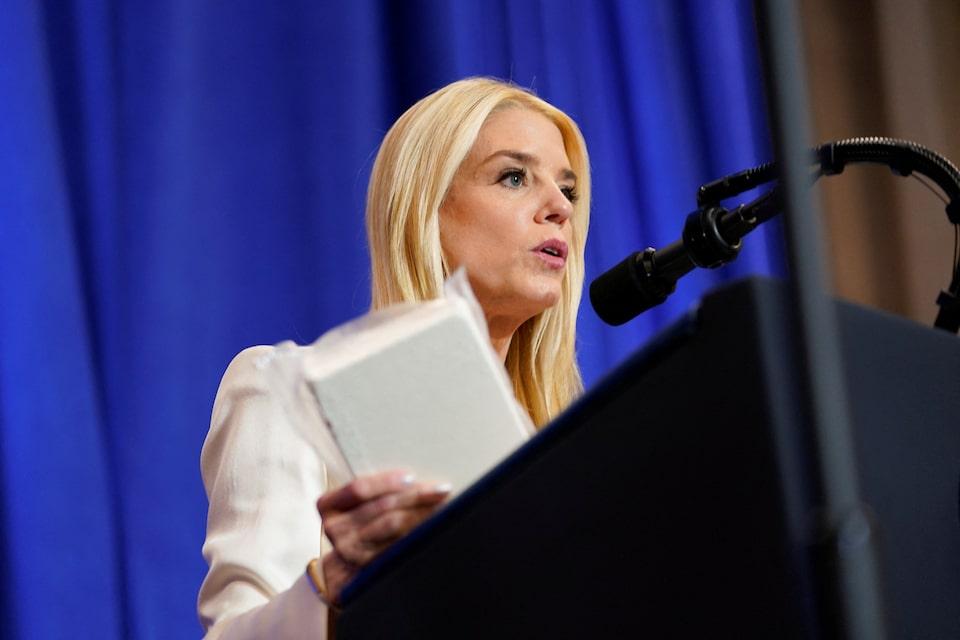
March 18 (Reuters) - U.S. Attorney General Pam Bondi on Tuesday condemned recent violent attacks on Tesla property, adding the Department of Justice has already charged several perpetrators. "The swarm of violent attacks on Tesla property is nothing short of domestic terrorism," Bondi said in a statement. Sign up here. "We will continue investigations that impose severe consequences on those involved in these attacks, including those operating behind the scenes to coordinate and fund these crimes." Activists have lately staged so-called Tesla Takedown protests to voice displeasure over Tesla CEO Elon Musk's role in sweeping cuts to the federal workforce and cancellation of contracts related to humanitarian programs since President Donald Trump took office on January 20. https://www.reuters.com/world/us/us-attorney-general-calls-attacks-against-tesla-property-domestic-terrorism-2025-03-18/
2025-03-18 22:49
March 18 (Reuters) - Summit Nanotech said on Tuesday it had secured $25.5 million in funding from a consortium of investment funds, bolstering its work on direct lithium extraction (DLE) technologies. Lithium, the metal used to make electric vehicle batteries, has been produced using water-intensive evaporation ponds or open-pit mines. However, DLE technologies intend to change that. Sign up here. DLE is described as a faster, more efficient and eco-friendlier process of extracting lithium, contrasting with traditional methods known to cause habitat disruption. Privately-held Summit Nanotech is developing DLE projects in South America and has BHP as an investor. The funding round was led by Canadian clean technology investment fund Evok Innovations, BDC Capital's Climate Tech Fund, Xora Innovation and Capricorn Investment Group, with participation from Mitsui Kinzoku – SBI Material Innovation Fund and LG Technology Ventures (003550.KS) , opens new tab. "The demand for electric vehicles will soon outpace growth in lithium supply. Summit's technology addresses this challenge by optimizing lithium extraction from brine to produce high-quality lithium at a lower cost," said Cheri Corbett, partner at BDC Capital's Climate Tech Fund. https://www.reuters.com/technology/summit-nanotech-receives-255-million-funding-lithium-extraction-tech-2025-03-18/

2025-03-18 22:45
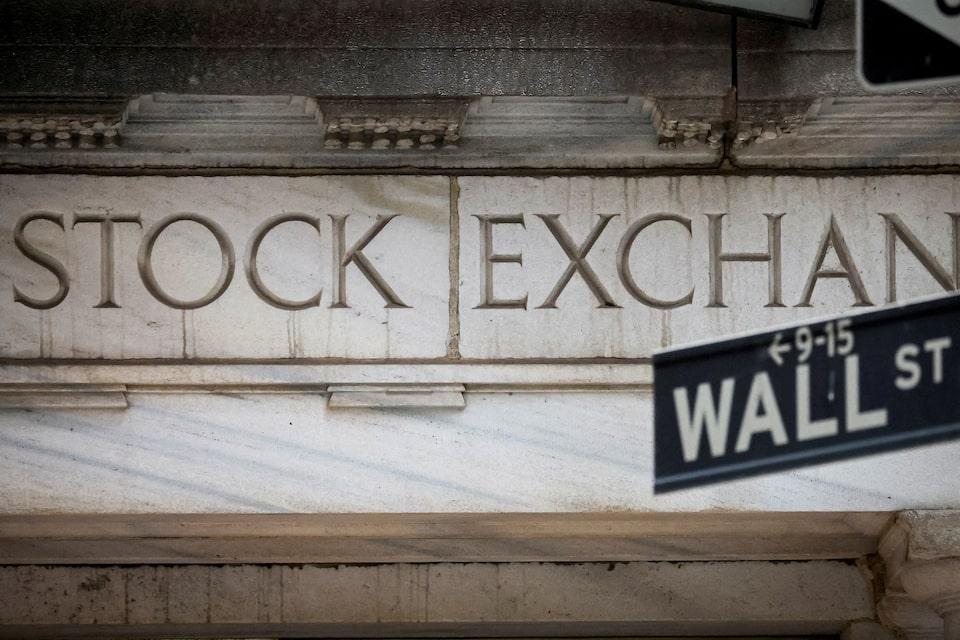
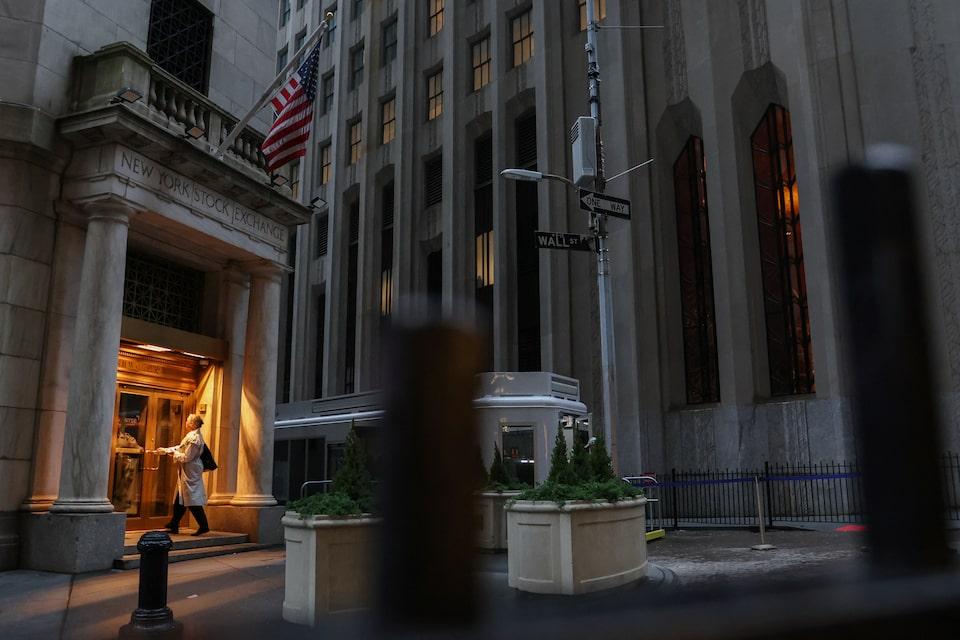
Nvidia falls as annual software developer conference gets underway Tesla drops after RBC lowers price target Alphabet declines after $32 billion deal to buy Wiz Indexes down: Dow 0.62%, S&P 500 1.07%, Nasdaq 1.71% NEW YORK, March 18 (Reuters) - U.S. stocks fell on Tuesday to snap a two-session streak of gains, as investors exercised caution ahead of a monetary policy decision from the Federal Reserve, while gauging the potential impact of President Donald Trump's tariff policies. The Fed will release its latest policy statement on Wednesday, where the central bank is widely expected to keep interest rates unchanged, along with its updated summary of economic projections (SEP). Sign up here. Markets are currently pricing in about 60 basis points (bps) of cuts from the Fed this year, although several U.S. central bank officials have cautioned against the Fed moving too quickly on rates and said they would wait to see the impact of tariffs in economic data before making any policy shifts. "There's just great uncertainty here about the tariffs, how extensive they are going to be, how that's going to economically impact us, how much the Fed might ease eventually and the economy in general," said Tim Ghriskey, senior portfolio strategist at Ingalls & Snyder in New York. "There is a lot of confusion out there, and when there's confusion, when there isn't a real opportunity for stocks to go up and for companies to expand and make more money, there's fear." The Dow Jones Industrial Average (.DJI) , opens new tab fell 260.32 points, or 0.62%, to 41,581.31, the S&P 500 (.SPX) , opens new tab lost 60.46 points, or 1.07%, to 5,614.66 and the Nasdaq Composite (.IXIC) , opens new tab lost 304.55 points, or 1.71%, to 17,504.12. Adding to inflation concerns, U.S. import prices unexpectedly rose in February amid higher costs for consumer goods. Stocks had recently shown some signs of stabilizing after several weeks of declines that sent the S&P 500 and Nasdaq down more than 10% from their recent highs, also known as correction territory. The blue-chip Dow is slightly more than 2% away from reaching correction levels. Growth stocks were among the hardest hit, with the S&P 500 growth index (.IGX) , opens new tab as much as 2.2% during the session. Communication services (.SPLRCL) , opens new tab, down 2.14% was the worst performing of the 11 major S&P sectors. Russian President Vladimir Putin and U.S. President Donald Trump agreed to seek a limited 30-day ceasefire against energy and infrastructure targets in Ukraine, while talks aimed at advancing toward a broader peace plan will begin "immediately," the White House said. Alphabet (GOOGL.O) , opens new tab fell 2.2% after the company said it would buy Wiz for about $32 billion in its biggest deal as the Google parent doubles down on cybersecurity. Nvidia (NVDA.O) , opens new tab shares declined 3.35%. CEO Jensen Huang said the chipmaker was well placed to navigate a shift in the artificial intelligence industry, in which businesses are moving from training AI models to getting detailed answers from them. Tesla (TSLA.O) , opens new tab stumbled 5.34% after brokerage RBC slashed its price target on the EV maker's stock to $120 from $320, citing reduced expectations for its full self-driving pricing and robotaxi market share. Its shares are now down nearly 45% on the year. Reflecting the defensive tone, investors moved to safe-haven assets, with gold trading at a record high, after crossing $3,000 per ounce for the first time last week. Declining issues outnumbered advancers for a 1.69-to-1 ratio on the NYSE and a 1.93-to-1 ratio on the Nasdaq. The S&P 500 posted four new 52-week highs and four new lows, while the Nasdaq Composite recorded 32 new highs and 142 new lows. Volume on U.S. exchanges was 13.40 billion shares, compared with the 16.41 billion average for the full session over the last 20 trading days. https://www.reuters.com/markets/us/futures-struggle-direction-ahead-fed-meeting-2025-03-18/
2025-03-18 22:36
WASHINGTON, March 18 (Reuters) - The Trump administration still intends for reciprocal tariffs to take effect on April 2, a White House official said, clarifying comments from Treasury Secretary Scott Bessent which suggested countries could negotiate before the U.S. government begins collecting new import duties. "The intent is to enact tariffs on April 2," the official said. "Unless the tariff and non-tariff barriers are equalized, or the U.S. has higher tariffs, the tariffs will go into effect." Sign up here. https://www.reuters.com/world/us/white-house-says-reciprocal-tariffs-still-intended-take-effect-april-2-2025-03-18/
2025-03-18 22:25
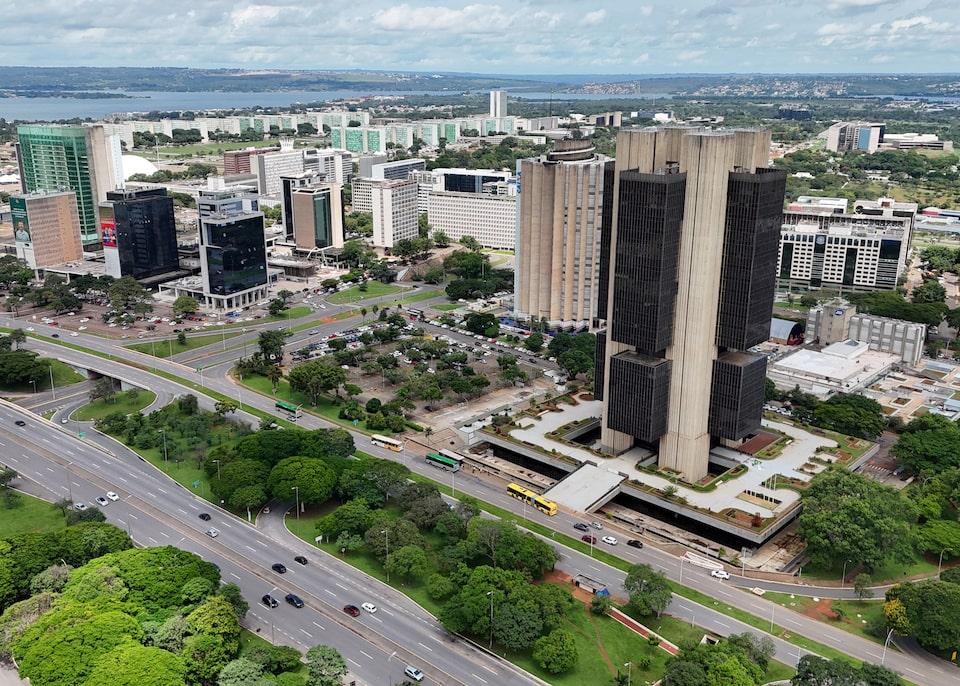
SAO PAULO, March 18 (Reuters) - The Brazilian central bank announced on Tuesday it will offer a total of up to $4 billion through dollar auctions with repurchase agreement on Wednesday and Thursday, selling a maximum of $2 billion on each day. The bank said in statements that the deals aim to roll over contracts expiring on April 2. Sign up here. The bank's previous currency intervention took place last month, and also aimed to roll over contracts. The auctions - two each day - will be held between 10:30 a.m. and 10:35 a.m. local time, according to the bank, while the repurchase is scheduled for August 4 or September 3, depending on the auction. https://www.reuters.com/markets/currencies/brazil-central-bank-offer-4-bln-dollar-auctions-with-repurchase-deal-2025-03-18/
2025-03-18 21:09
ORLANDO, Florida, March 18 (Reuters) - Another wild one on Wall Street as Fed, BOJ decisions loom. U.S. stocks fell on Tuesday, buckling under the weight of worry building on multiple fronts from geopolitical tensions to the outlook for Big Tech, from economic uncertainty to deepening unease around President Donald Trump's trade wars. Sign up here. The selloff is a reminder, as if one were needed, of how fragile market sentiment is right now - visibility on the economic, policy, and geopolitical outlooks is minimal. No wonder investors are jittery. Treasuries failed to catch much of a safe-haven bid, perhaps because investors wanted to keep positioning light ahead of the Fed's policy decision on Wednesday. But gold did, leaping 1% to a new high above $3,000 an ounce. Wall Street's losses on Wednesday, coupled with Europe's rally after Germany's parliament approved plans for a massive spending surge, highlight the degree of America's equity underperformance against the 'Rest of the World'. It's a trend that seems more likely to continue than reverse. More on that below, but first, here are how world markets stacked up on Tuesday. Today's Key Market Moves. U.S. President Donald Trump and Russian President Vladimir Putin on Tuesday discussed a potential 30-day ceasefire in the Russia-Ukraine war. But while Moscow agreed to stop attacking Ukraine's energy infrastructure, it did not agree to a blanket 30-day ceasefire. This helped keep the selling pressure bearing down on Wall Street, and maintain the bid under gold and the Swiss franc. Barring unforeseen developments on the geopolitical or trade war fronts - a brave assumption these days - investors' attention now switches to the big central banks. First up on Wednesday is the Bank of Japan, then the Federal Reserve. It's probably no surprise, given the volatile global climate, that hawkish expectations for the BOJ are fading. No one was expecting another rate hike on Wednesday anyway, but rates markets are not fully pricing in the next 25 bps hike until September. And that's it for the year. This could explain why the yen has eased off lately, failing to get much support from safe-haven demand or surging Japanese bond yields. Investors' attention on the Fed, meanwhile, will be split between policymakers' new economic projections, what they say about the central bank's balance sheet rundown, and the signals drawn from Chair Powell's press conference. Markets, especially the bond market, could be coiled for a big move, and there are several lines of questioning to Powell that could provide the trigger - tightening financial conditions, Wall Street's weakness, the impact of Trump's tariffs on growth and inflation, recession risks, or spiking consumer inflation expectations. It's shaping up to be a fascinating day across U.S. and world markets. Investors RoW back on Wall Street exceptionalism As the end of the first quarter approaches, world stock markets are in a curious position. They are benefiting from capital flowing out of Wall Street, but they also face major risks if the U.S. selloff turns into a rout. As President Donald Trump's trade war has snuffed out the "U.S. exceptionalism" narrative, a yawning gap has opened between U.S. equities and those in the 'Rest of the World'. The selloff abated briefly and the S&P 500 notched its first consecutive daily rises in a month. But Wall Street was back in the red on Tuesday, and U.S. underperformance - the widest in more than 20 years, by some measures - shows little sign of reversing course. Indeed, history suggests this gap could widen further, although only if the U.S. economy avoids tipping into a serious recession. CORRECTION THRESHOLD As the S&P 500 flirted with 10% correction territory last week, 'RoW' markets were outperforming by as much as 9 percentage points, the biggest such gap since 2002, according to strategists at Citi. Historically, when U.S. corrections eclipse the 10% mark but don't breach the 20% 'bear market' threshold, Wall Street underperforms over the entire downturn, Citi noted. In U.S. bear markets and recessions, however, no country or market is immune - growth and asset prices everywhere suffer. This scenario appears to be unfolding. Most economists agree that U.S. growth will slow this year, but few think it will fall off a cliff. While the Atlanta Fed's GDPNow model is signaling a 2.1% contraction in Q1, that remains an outlier. Contrast that with the sudden improvement in Germany's growth outlook thanks to Berlin's proposed fiscal bazooka. Beijing also appears ready to do whatever it takes to support China's economy and markets – call it the 'Xi put'. Indeed, the tailwinds for RoW outperformance seem to be building. CROWDED OUT The rotation out of Wall Street to the rest of the world has been underway all year. Bank of America's March fund manager survey shows that allocations to euro zone markets are the highest since 2021, while U.S. allocations plunged at the fastest rate on record. This might suggest the switch has run its course. But the same survey also showed that the most crowded trade is still 'long' the Magnificent Seven shares of America's biggest tech firms. And even though U.S. earnings multiples have fallen to the lowest point since September, they remain lofty by historical standards due to Big Tech's still-rich valuations. Indeed, U.S. stock valuations remain well above those in other developed markets, so this rotation may be far from over. FINE LINE "Corrections are healthy, they're normal," Treasury Secretary Scott Bessent told 'Meet The Press' on Sunday, adding: "I'm not worried about the markets. Corrections are indeed normal and healthy, occurring roughly once every couple of years with an average decline of 14%. As Mark Riepe at Charles Schwab points out, of the 27 corrections since 1974 including the current one, only six have gone on to become bear markets. But Bessent's remarks could also be interpreted as a sign of how relaxed the Trump administration is about the current decline, suggesting they won't act to prevent a further slide. It's a risky stance to take at such a delicate juncture for the economy. And the RoW needs to watch out, because its outperformance will likely only continue if the U.S. doesn't implode. As Dario Perkins at TS Lombard notes, "Make no mistake – a U.S. recession would bring down the entire world." That would quickly wipe out Wall Street's underperformance, but unfortunately, also a whole lot more. What could move markets tomorrow? If you have more time to read today, here are a few articles I recommend to help you make sense of what happened in markets today. I'd love to hear from you, so please reach out to me with comments at [email protected]. You can also follow me at [@ReutersJamie and @reutersjamie.bsky.social.] Opinions expressed are those of the author. They do not reflect the views of Reuters News, which, under the Trust Principles , opens new tab, is committed to integrity, independence, and freedom from bias. Trading Day is also sent by email every weekday morning. Think your friend or colleague should know about us? Forward this newsletter to them. They can also sign up here. https://www.reuters.com/markets/global-markets-trading-day-2025-03-18/