2025-03-18 17:14
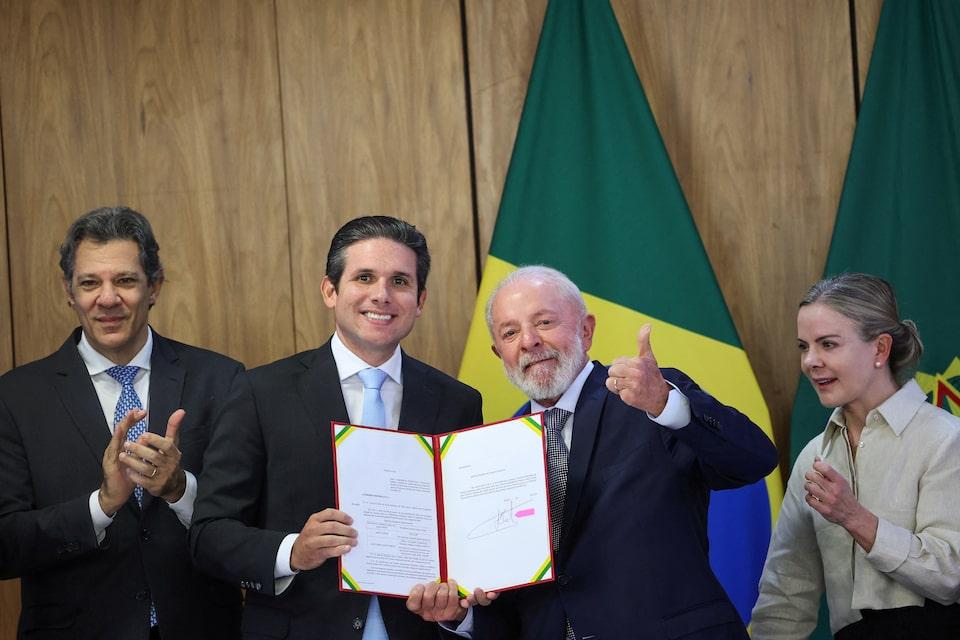
Government aims to tax dividends remitted abroad to offset fiscal impact Remaining compensation will come from a tax on the gross revenue of the wealthiest Officials say the bill will not affect investor sentiment toward Brazil BRASILIA, March 18 (Reuters) - Brazil's government on Tuesday unveiled a long-promised plan to exempt individuals earning up to 5,000 reais ($881.27) per month from income tax, with the revenue gap set to be covered by new levies on high earners and profits and dividends sent abroad. The proposal, initially announced late last year when it triggered a negative market reaction over fiscal concerns, was one of President Luiz Inacio Lula da Silva's key campaign promises, and is now seen as crucial for the president to regain popularity amid declining approval ratings. Sign up here. The initiative is the strongest in a series of measures announced in less than a month by the leftist administration to boost disposable income for Brazil's middle class, including a new system for releasing payroll-deducted credit for formal workers and relaxed rules for disbursements from workers' severance fund FGTS. When asked if these efforts were at odds with the central bank's push to cool the economy and control inflation through its aggressive rate-hike cycle, Economic Policy Secretary Guilherme Mello said it is difficult to determine whether a single measure would generate inflationary pressure. "Improvements in income distribution can boost growth potential without inflationary pressures," he added at a press conference on Tuesday. The Lula administration has consistently stated that the proposal to raise income tax exemptions would be fiscally neutral, with the president himself underscoring it at an event on Tuesday where he also said the move seeks to promote tax justice. The measure must be approved by Congress this year to take effect in 2026, when Brazil will hold presidential elections. But its path forward remains unclear. The heads of the Senate and the lower house released statements saying lawmakers would swiftly analyze the bill. House Speaker Hugo Motta, however, stressed that lawmakers would likely amend the text, which contradicts the interests of wealthy individuals and companies with great lobbying power in Congress. "Changes will certainly aim to improve the proposal," Motta said at the event where the measure was announced. As first reported by Reuters on Monday, the bill includes a 10% withholding tax on profits and dividends remitted overseas, whether to individuals or legal entities. According to a presentation released by the government, the measure would increase revenues by 8.9 billion reais a year. Tax Revenue Secretary Robinson Barreirinhas told reporters that the measure should not hurt investors, as most countries allow taxpayers to offset taxes paid in Brazil against their local liabilities. Dividend remittances are currently exempt from income tax in Latin America's largest economy. "We are bringing to Brazil a portion that would otherwise be paid in the taxpayer's home country," said Barreirinhas. Government officials also noted that foreign investors could be fully reimbursed for the tax paid in the year following the withholding if the company distributing the dividends meets its income tax obligations by paying the standard 34% corporate rate. The distribution of profits through "interest on equity" (JCP) payments, a common instrument in Brazil, will not be subject to the 10% withholding tax, they added. A government source, speaking on condition of anonymity, said the plan to tax dividends sent abroad could lead companies to remit more dollars this year before the measure takes effect, but "the volume would not be significant enough to impact" the foreign exchange market. The Brazilian real reversed early session losses to close up nearly 0.2% against the U.S. dollar on Tuesday, the strongest since late October, in a sign that investors did not immediately react to the measure's announcement. WEALTHIEST TO PAY MORE To compensate for the tax exemption for Brazil's middle class, the government also aims to introduce a minimum effective tax on high-income Brazilians, which will apply to annual earnings above 600,000 reais. This compensation mechanism had been announced late last year. The proposed tax rate would rise gradually, capping at 10% for gross income exceeding 1.2 million reais per year, and is estimated to increase revenues by 25.22 billion reais a year. Currently, individuals earning up to two minimum wages are exempt from income tax. The government stressed on Tuesday it plans to raise this threshold from 2,824 reais per month to 3,036 reais this year to reflect a recent adjustment to the federal minimum wage. While Finance Minister Fernando Haddad said that the bill is "balanced" in fiscal terms, the government's presentation detailed that the impact of tax exemptions will amount to 25.84 billion reais next year, less than the total revenue gains officials expect. That means the proposal could provide a boost to public finances. However, Finance Ministry Executive Secretary Dario Durigan denied that this was the bill's purpose, stating that it includes room for negotiation in Congress. ($1 = 5.6736 reais) https://www.reuters.com/world/americas/brazil-unveils-broader-income-tax-exemption-plan-lula-seeks-regain-popularity-2025-03-18/
2025-03-18 14:02
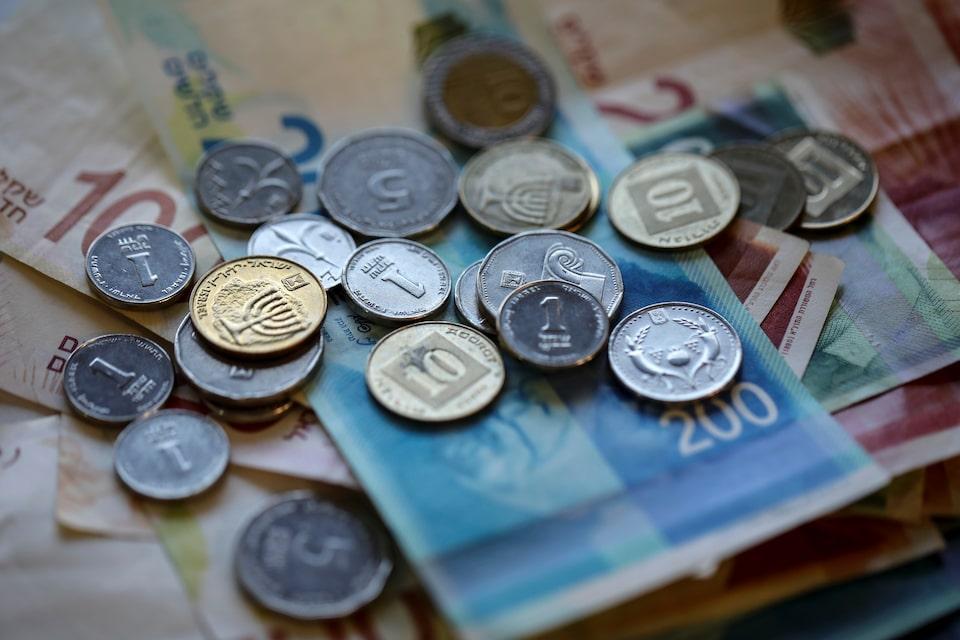
LONDON/TEL AVIV, March 18 (Reuters) - Israel's currency fell alongside its bonds and stock market on Tuesday as a wave of deadly airstrikes by its military in Gaza threatened the complete collapse of an already fragile two-month ceasefire with Hamas. Concerns about both the humanitarian and economic costs of a return to intense fighting spiked as Israel's resumption of bombing of Gaza, which it said was a "preemptive offensive" to try to force the release of its remaining hostages, prompted anger from Hamas. Sign up here. Israel's shekel dropped as much as half a percent against both the dollar and euro , while many of its government bonds, which suffered a wave of rating downgrades last year due to the war, had their biggest falls in over a month. , Ronen Menachem, chief markets economist at Mizrahi Tefahot Bank, said a resumption in the conflict could see further falls in the shekel and a renewed rise in Israel’s bond market risk premium. "The market will react based on whether this is perceived as a defined and limited operation or the opening of a broader campaign," he said. Israel's Prime Minister Benjamin Netanyahu said he had instructed the military to take Tuesday's "strong action" in response to Hamas's refusal to release the remaining 59 hostages it holds following its October 7, 2023 attacks and its rejection of other ceasefire proposals. The Palestinian militant group accused Netanyahu of breaching the ceasefire deal and jeopardising efforts by mediators to secure a permanent truce. Negotiating teams from Israel and Hamas had been in Doha as mediators from Egypt and Qatar sought to bridge the gap between the two sides after the end of an initial phase in the ceasefire, in which 33 Israeli hostages and five Thais were released in exchange for some 2,000 Palestinian prisoners. REMAINING HOSTAGES With the backing of the United States, Israel had been pressing for the return of the remaining hostages in exchange for an extended truce until after the Muslim fasting month of Ramadan and the Jewish Passover holiday in April. However, Hamas has insisted on moving to negotiations for a permanent end to the war and a full withdrawal of Israeli forces from Gaza, in accordance with the terms of the original ceasefire agreement. Tuesday's market reaction also saw the main Tel Aviv stocks index (.TA125) , opens new tab fall 1.2%. It is currently on a record run of monthly gains, however, having racked up nine in a row and significantly outperformed nearly all international markets. Jordan and Lebanon's government bonds also ticked lower due to their links to the conflict, although Egypt's bonds were almost all up. The United States on Saturday launched large-scale military strikes against Yemen's Iran-aligned Houthis over the group's attacks on cargo ships in the Red Sea. Egypt lost $7 billion - more than 60% - of its Suez Canal revenues last year as shippers diverted around Africa rather than risk Houthi ambush. "The resumption of even half of regular Suez shipping volumes would significantly de-risk the improvement in (Egypt's) current account deficit," Hasnain Malik at Tellimer Research said. https://www.reuters.com/world/middle-east/israels-shekel-bonds-slide-gaza-ceasefire-buckles-2025-03-18/
2025-03-18 13:46
Inflation in February was at 2.6% from 1.9% in January On a month-on-month basis, inflation shot up to 1.1% Core inflation measures inch up to 2.9% in February Markets bet 62% chance of pause in April rate cut OTTAWA, March 18 (Reuters) - Canada's annual inflation rate showed a surprise jump to 2.6% in February, surpassing expectations as a sales tax break that ended in the middle of last month pushed prices higher amid an already broad-based increase, data showed on Tuesday. Higher-than-expected inflation highlights the difficult position Canada's economy is in as U.S. tariffs take effect. The central bank had cut interest rates last week amid economic uncertainty. Sign up here. This is the first time in seven months that the rate of increase of consumer prices has crossed the 2% mark, the mid-point of the Bank of Canada's target range of 1% to 3%. In January, inflation was at 1.9%. The February inflation figure was the highest in eight months, Statistics Canada said. Without the tax break, inflation in February would have been 3%, it said. The inflation number expanded currency market bets for a pause in the interest-rate-cutting cycle next month to over 62% from 58% before the numbers were released. The Canadian dollar firmed after the data and was trading up 0.06% at 1.4283 to the U.S. dollar, or 70.01 U.S. cents. Yields on the two-year government bond surged by 5.7 basis points to 2.596%. On a month-on-month basis, prices rose by 1.1% in February from 0.1% the prior month, Statscan said. Analysts polled by Reuters had forecast the yearly inflation at 2.2% and 0.6% on a monthly basis in February. The BoC had said last week that it expected inflation to reach 2.5% in March amid price pressures due to tariff-related uncertainty. Economists, analysts and businesses expect prices to keep rising further due to U.S. tariffs and retaliation from Canada, making the Bank of Canada's job difficult. "The unexpected pickup in core measures isn't good news as this doesn't yet reflect the impact of tariffs," Katherine Judge, economist at CIBC Capital Markets wrote in a note. In an interview with Reuters after announcing a seventh consecutive cut in interest rate to 2.75%, BoC Governor Tiff Macklem said that the BoC cannot let the "tariff problem become an inflation problem," underscoring the need to tread carefully with interest rates. Royce Mendes, Managing Director and Head of Macro Strategy said in a note that the BoC should take a pause in interest rate cuts "driving home the point that containing inflation remains the central bank's number one job." While prices increased across almost the entire CPI basket, the major jump was in food purchased at restaurants, some clothing items and alcohol after the tax reprieve was lifted. "Restaurant food prices contributed the most to the acceleration in the all-items CPI in February," Statscan said. Food prices increased 1.3% year over year while clothing and footwear increased by 1.4% on a yearly basis. Other items that added to price pressures in the CPI basket were transportation, which jumped by 3%, and shelter costs, which were up 4.2%. Economists have said that the sales tax break had distorted overall inflation numbers, and that core inflation was a more accurate gauge of consumer price trends. The BoC has two preferred measures of core inflation: CPI-median and CPI-trim. CPI-median, or the centermost component of the CPI basket when arranged in an order of increasing prices, rose to 2.9% in February. CPI-trim, which excludes the most extreme price changes, was also up to 2.9%. Both were at 2.7% in January. https://www.reuters.com/world/americas/canadas-inflation-shoots-up-26-sales-tax-break-ends-2025-03-18/

2025-03-18 13:45
Extreme net long positioning in Treasuries -J.P. Morgan US rate futures price in 62 bps of cutrs this year Focus on quantitative tightening, 'dot plot' NEW YORK, March 18 (Reuters) - Bond investors are bracing for a U.S. economic downturn, as they pare back risky exposures, while many are extending duration in their fixed-income portfolios, taking in to account a Federal Reserve that is in no rush to resume cutting interest rates. In the run-up to this week's two-day Federal Open Market Committee meeting, investors have been extending duration. That entails buying longer-dated assets in anticipation of a further decline in yields and suggests that the bond market is positioning for a deeper than anticipated rate-cutting cycle. Investors have been lengthening duration for the last month at least, market participants said. Sign up here. J.P. Morgan's latest Treasury Client Survey showed bond investors having the largest net-long position on Treasuries since the autumn of 2010. The extreme overbought situation could be a contrarian indicator, however, suggesting a possible technical bounce for bond yields in the near term. The bond market's long positioning is likely due in part to fears of recession, analysts said, as the Trump administration continued to pummel the United States' trading partners with aggressive import tariffs that set the stage for a global trade war. "We have been heavier on duration and lighter on credit relative to our previous positioning and for a month or two, it was hard for people to imagine why we might be positioned like that," said Christian Hoffmann, head of fixed income and portfolio manager at Thornburg Investment Management in Santa Fe, New Mexico. "The economy today ... still seems OK. But it's really concerns about the future and people wondering how these policies - that change not just daily but intra-day - might impact prices and geopolitical trade." Futures traders in U.S. federal funds, which measure the cost of unsecured overnight loans between banks, expect the Fed to hold interest rates steady in the 4.25%-4.50% range at the end of its meeting on Wednesday. They have also priced in about 62 basis points of easing in 2025, or about two rate reductions of 25 bps each, LSEG calculations showed. The next rate cut is expected to occur in June, unchanged from what traders priced in after the January policy meeting. Fed Chair Jerome Powell, at his press briefing on Wednesday, will probably signal that the committee will remain patient in cutting rates as the economy does not seem to be falling off a cliff. The U.S. central bank can hold off indefinitely, analysts said, as it seeks more clarity about the Trump administration's economic policies. Investors will also focus on Fed policymakers' quarterly economic projections. Included in that are interest rate forecasts and what is known as the "dot plot," which reflects how much easing is expected. The December dot plot called for two rate cuts this year, which would leave the fed funds rate at 3.9%. MORE JUICE LEFT FOR LONG DURATION? Market players think the Fed will probably maintain its December guidance of two rate reductions this year. Since December, U.S. inflation, as measured by both consumer and producer prices, has surprised to the downside, although other indicators point to lingering price pressures. The labor market, on the other hand, remained resilient. But bond investors' reach for duration is partly driven by fears the economy may worsen further. Barclays in a research note pointed out that consumer and manufacturing sentiment has worsened amid concerns about tariffs, and this uncertainty has grown significantly from what happened in 2018-19, when President Donald Trump launched tariffs under his first administration. Barclays has recommended taking a long position in five-year Treasuries. "I think the concern is that we have a policy-induced recession, or we talk ourselves ... in to some sort of recession just based on the fact that ... corporate America and even the consumer doesn't necessarily want to spend or take on additional risks until we get greater clarity," said George Catrambone, head of fixed income in the Americas at DWS in New York. DWS, however, has reduced duration in its bond portfolio to a more neutral stance, having captured the move lower in yields. Brij Khurana, senior managing director, partner and portfolio manager at Wellington Management in Boston, thinks long-duration Treasuries are still attractive from a valuation perspective, believing bond yields have further room to decline. But at the same time, he is looking at opportunities elsewhere, in countries such as Australia and New Zealand, which have higher rates than the United States. Fixed-income investors will also pay attention to comments by the Fed's Powell on the future path for quantitative tightening, which refers to the U.S. central bank's efforts to reduce its Treasury debt and mortgage bond holdings. In the minutes of the January policy meeting, Fed officials contemplated slowing or pausing bond drawdowns amid uncertainty over how the U.S. Treasury will manage debt issuance over the next few months. Some banks and researchers are now seeing a good chance the central bank may slow further or pause QT at this week's policy meeting. Goldman Sachs, for instance, believes the Federal Open Market Committee statement is likely to announce a pause in QT beginning in April. It also expects "forward guidance indicating that QT is expected to resume once the debt ceiling is resolved and the liability composition of the balance sheet normalizes." https://www.reuters.com/markets/wealth/bond-investors-brace-us-slowdown-shed-risk-fed-seen-hold-2025-03-18/
2025-03-18 12:44
Kazakhstan wants to convince oil majors to cut output Country's oil output exceeds OPEC+ target Former minister moved to newly created nuclear agency March 18 (Reuters) - Kazakhstan's energy minister will stand down from his role, the country's presidential office said on Tuesday, as the government struggles to convince U.S. and European oil companies to lower production that exceeds OPEC+ targets. Almasadam Satkaliyev will become the head of the country's newly created atomic energy agency, the presidential office said in a decree published on Tuesday. It remains unclear who will succeed Satkaliyev as the head of the energy ministry. Sign up here. Satkaliyev led the ministry since April 2023. OPEC has said Kazakhstan was the biggest contributor to a jump in February crude output by OPEC+. Last week, he travelled to the United States for talks with oil majors Chevron, ExxonMobil, Shell, Eni and Honeywell, all of which operate in Kazakhstan. Satkaliyev said discussions were aimed at reducing oil output to align the country's supply with OPEC+ targets. The ministry did not disclose the outcome of the talks. The Central Asian country produced 1.767 million barrels per day (bpd) in February, up from 1.570 million bpd in January. Its OPEC+ quota is 1.468 million bpd. The ministry has said the increase was due to the expansion of the Tengiz field, led by Chevron, and pledged to comply better with its quota. Kazakhstan does not have nuclear power plants but sits on large uranium reserves, which account for about 15% of the world's total and are second only to Australia's. https://www.reuters.com/business/energy/kazakhstan-removes-energy-minister-amid-tensions-with-opec-oil-majors-2025-03-18/

2025-03-18 12:41
WASHINGTON, March 18 (Reuters) - U.S. single-family homebuilding rebounded sharply in February, but rising construction costs from tariffs and labor shortages threaten the recovery. Single-family housing starts, which account for the bulk of homebuilding, surged 11.4% to a seasonally adjusted annual rate of 1.108 million units last month, the Commerce Department's Census Bureau said on Tuesday. Data for January was revised to show homebuilding declining to a rate of 995,000 units instead of the previously reported pace of 993,000 units. Sign up here. President Donald Trump this month imposed and later suspended a 25% tariff on most goods from Canada and Mexico, which would have pushed up U.S. duties on Canadian lumber to nearly 40%. But tariffs on Chinese goods were raised to 20% and levies on steel and aluminum went into effect this month. A survey on Monday showed the National Association of Home Builders/Wells Fargo Housing Market Index tumbled to a seven-month low in March, with builders saying they "continue to face elevated building material costs that are exacerbated by tariff issues," also noting "other supply-side challenges that include labor and lot shortages." There have been anecdotes of workers not reporting for duty at construction sites for fear of deportation as the Trump administration cracks down on illegal immigration. Undocumented immigrants account for 23% of construction labor, the Center for American Progress estimated in 2021. Though the average rate on the popular 30-year fixed-rate mortgage has declined from 7% at the start of the year, economic jitters emanating from tariffs and an unprecedented campaign by the Trump administration to shrink the federal government through mass firings of public workers and deep spending cuts are discouraging some potential home buyers. With new housing inventory at levels last seen since December 2007, builders might have no incentive to break new ground on single-family housing projects. Permits for future construction of single-family housing fell 0.2% to a rate of 992,000 units in February. https://www.reuters.com/markets/us/us-housing-starts-rebound-strongly-february-2025-03-18/