2025-03-18 12:20
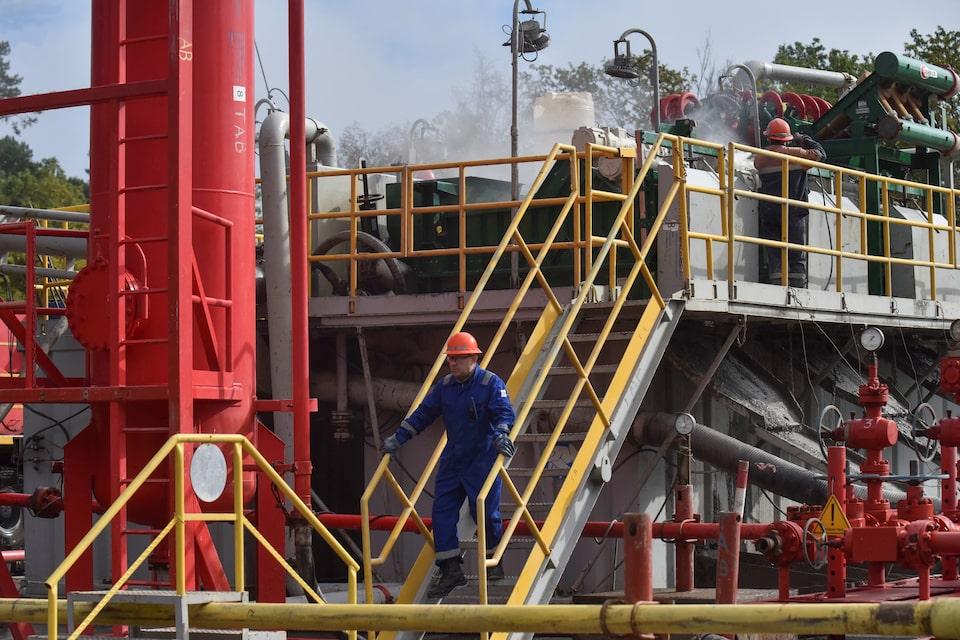
Sarasin says board strategy not aligned with climate goal Cites Europe's largest gas supplier rolling back efforts Sarasin says has sold stock, stepped back from CA100+ role Equinor says its strategy remains firm Says energy transition slow, company must adapt LONDON/OSLO, March 18 (Reuters) - One of the asset managers co-leading climate talks with Equinor (EQNR.OL) , opens new tab on behalf of more than 600 investors said it has sold its stock because the oil major's board failed to align its strategy with the world's goal of limiting global warming. After first investing in Equinor in 2021, Britain's Sarasin & Partners helped lead talks with the company as part of the Climate Action 100+ , opens new tab initiative, whose members push the world's largest listed corporate polluters to cut emissions. Sign up here. Despite originally seeing Equinor as a "potential leader in the energy transition" that would "set a standard for the industry", a March 14 letter to the company seen by Reuters said it had failed to align its strategy with the Paris Agreement. That landmark deal, agreed by countries including Equinor's majority owner Norway, seeks to limit the global average temperature increase to well below 2 degrees Celsius above the pre-industrial average by mid-century, and ideally 1.5 degrees. Despite making statements supporting such a pathway, "Equinor has not revised its strategy to deliver on these", the letter to Equinor Chairman Jon Erik Reinhardsen said. "Instead of leading the transition, Equinor has followed other oil and gas majors in rolling back its efforts," it said, including by lobbying to expand oil and gas production, and cutting its renewable energy target in February. Equinor said its strategy remained firm, but as the energy transition was moving slower than it expected, it had to adapt its speed of transition to markets and opportunities. "Our ambition is to be a leading company in the energy transition, and as an example of this leadership, we are now preparing to receive the first shipment of CO2 at the Northern Lights transport and storage facility," said an Equinor spokesperson. Northern Lights is a carbon, capture and storage (CCS) facility on Norway's west coast, Equinor completed last year, jointly with Shell (SHEL.L) , opens new tab and TotalEnergies (TTEF.PA) , opens new tab. PARIS AGREEMENT Sarasin co-filed a shareholder resolution in 2024 asking Europe's biggest supplier of natural gas to align with a 1.5-degree pathway, yet it was successfully opposed by the board. The asset manager said in its letter that it was particularly troubled by Equinor's view that it was already aligned with the 1.5 degrees Celsius climate goal, calling the claims "not credible". "It is clear from public statements that Equinor assumes it could become aligned if the world transitions more quickly, but this is a fundamentally different position from actually supporting such a pathway today," it said. Sarasin's holding peaked at around 9.5 million shares in March 2024, making it among the company's 20-biggest investors, before it began reducing its position in May. When it sold out in January, it had around 3 million shares. Equinor said it considered its strategy was compatible with the transition to a sustainable economy in line with the goals of the Paris Agreement. "We reduce emissions from our operations in line with science-based trajectories, we invest and take actions to advance decarbonisation and transformation," said the Equinor spokesperson. Equinor did not immediately reply to a question on where it precisely disagreed with Sarasin. https://www.reuters.com/business/environment/investor-co-leading-climate-talks-with-equinor-calls-time-sells-out-2025-03-18/

2025-03-18 12:13
Seeks to help companies maintain climate ambition Comes amid backlash in the United States No plans to allow broader use of carbon offsets LONDON, March 18 (Reuters) - A leading assessor of company climate goals on Tuesday proposed new rules to better help companies set high-quality emissions-reduction plans, but said it had no plans to further loosen its rules around the use of carbon credits. The Science-Based Targets initiative was last year at the centre of a row over the issue, with opponents saying its stance was holding back billions of dollars of investment in projects that remove and store carbon. Sign up here. The latest proposal maintains an ability for companies to offset their 'residual' emissions, the small slice left after the company has made best efforts to cut them, but stops short of endorsing their more widespread use. It does, however, encourage companies to buy carbon credits not directly linked to their supply chains to contribute to broader climate efforts. Supporters of carbon credits argue they are essential to fund projects like tree-planting that lock emissions away, while critics say the impact of the projects is difficult to measure and in many cases inaccurate, meaning some do not deliver the environmental benefits they claim. Other proposed changes include new options for tackling Scope 3, or supply chain, emissions by allowing companies to factor in their procurement strategy; by focusing on the most carbon-intensive activities; and by making targets optional for smaller companies. The changes by the SBTi come amid signs of waning climate ambition from many companies, led by those in the United States, where businesses are facing political and legal pressure to drop climate-friendly policies and activities. SBTi, though, said it has seen exceptional growth in the number of companies setting science-based targets and the proposed rule changes would help more smaller companies and those from emerging markets join the nearly half of organisations listed on G7 stock markets that had their targets validated by the end of 2024. https://www.reuters.com/sustainability/climate-energy/climate-group-sbti-proposes-new-rules-holds-line-carbon-offsets-2025-03-18/

2025-03-18 12:12
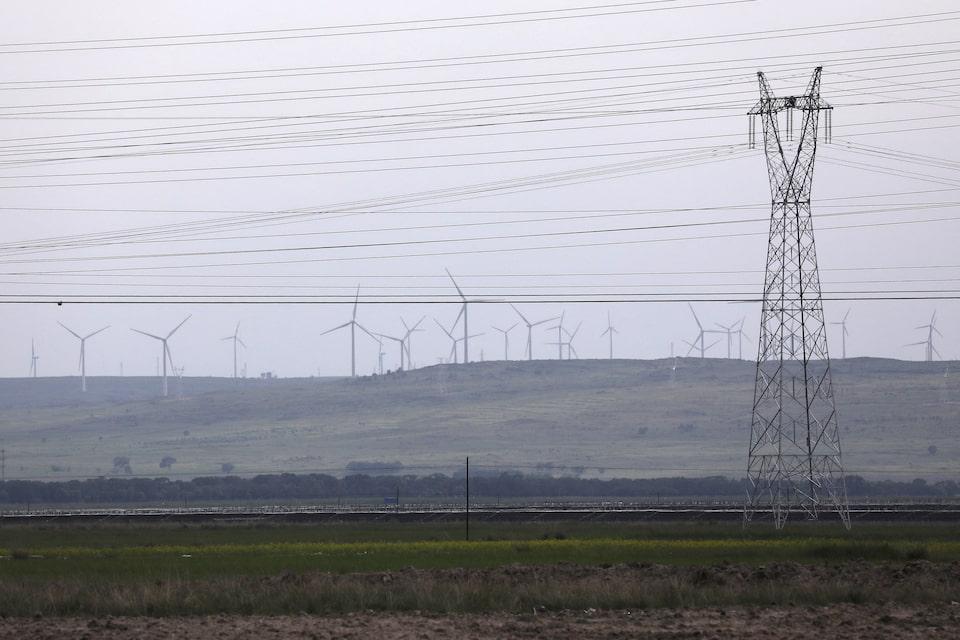
BEIJING, March 18 (Reuters) - China's power consumption ticked up by a sluggish 1.3% in the first two months of the year because of an unseasonably warm winter, although the growth rate recovered to some 9% in February, National Energy Administration (NEA) data showed on Tuesday. February power consumption was 743.7 billion kWh while that for the two months was 1.56 trillion kWh, according to the NEA data. Sign up here. Data from China's National Bureau of Statistics (NBS) on Monday had reported that China's power generation fell 1.3% for the first two months of the year - only the third dip for power generation during the January-February period since the 1990s. Power generation and power demand tend to grow at a similar rate, although there can be discrepancies because of transmission loss, curtailment and other issues, analysts say. The NBS and NEA data samples also vary because the NBS reports omit a portion of generation from China's small-scale renewables, such as distributed solar. For example, NBS data showed power generation grew 6.4% in the first half of 2024, but London-based think tank Ember, using data from the National Energy Administration, said that electricity output rose 7.3% in the same period. The slower power consumption growth at the beginning of 2025 was partly down to China's warmer than usual winter, which cut into power demand for heating, said S&P Global Commodities senior research analyst Bing Han, speaking in an online seminar on Tuesday, adding that base effects also played a role. That was backed up by the Tuesday NEA data showing that residential power consumption fell 4.2% in February, while primary industry such as agriculture and mining used 10% more power and secondary industry - which encompasses manufacturing - used 12% more. Weaker demand for heating this winter weighed on coal-fired generation in particular, Han said, because of its use in the heating system. That led China's thermal power generation to fall 6% in the two months, according to the NBS data, which it did not break out by month. "As we enter the second and third quarter we believe power demand will rebound strongly," Han said. https://www.reuters.com/business/energy/chinas-jan-feb-power-consumption-up-13-year-energy-administration-says-2025-03-18/
2025-03-18 12:10
NEW DELHI, March 18 (Reuters) - India and New Zealand aim to sign a free trade agreement in the next two months, New Zealand's Prime Minister Christopher Luxon said on Tuesday, a move that could expand bilateral trade in agricultural, aerospace and renewable energy sectors. India and New Zealand have restarted negotiations for a trade pact after a decade-long hiatus, following a meeting between Prime Minister Narendra Modi and Luxon, who is on a visit to India. Sign up here. "Let's drive this relationship forward, and I look forward to signing that agreement with Prime Minister Modi in 60 days,” Luxon told a gathering of business leaders. Talks are taking place against a backdrop of mounting global trade tensions, after U.S. President Donald Trump's decision to impose reciprocal tariffs on imported goods from several countries, including India. Looking to cushion the effect of U.S. policy, India is also accelerating efforts to secure trade agreements with the European Union and the United Kingdom. Bilateral trade between India and New Zealand grew by over 30% year-on-year to reach $1.2 billion in 2024, according to data from India's trade ministry. A proposed free trade agreement with New Zealand could bolster bilateral ties significantly in areas such as farm products, critical minerals, pharmaceuticals, and tourism, India's Trade Minister Piyush Goyal said, suggesting trade could grow 10-fold in just a decade. "The huge amount of opportunity in innovation that comes out of New Zealand can reach the whole world through India," Goyal said. "Manufacturing (and) producing in India for the world at competitive prices can help us take this partnership to greater heights." However, analysts warn that trade negotiations could face delays due to differences over tariffs on dairy products and non-trade issues. Indian negotiators have resisted pressure to lower tariffs ranging from 30% to 60% on agricultural products, particularly dairy, in free trade talks with several partners including the European Union and New Zealand, arguing it could threaten the livelihood of millions of small farmers. Goyal said both countries plan to accelerate negotiations while "respecting each other's sensitivities". "I've always said that no free trade agreement is ever negotiated with a gun on anybody's head," he said. Luxon said New Zealand expected an enhanced partnership with India in the fields of aerospace and renewable energy, among others. https://www.reuters.com/world/asia-pacific/pact-with-new-zealand-could-boost-trade-10-fold-10-years-says-india-trade-2025-03-18/

2025-03-18 12:07
ORLANDO, Florida, March 18 (Reuters) - It's widely believed that the biggest issue with U.S. consumers' balance sheets is indebtedness, but the Federal Reserve's latest financial accounts – and the volatile stock market – suggest that larger risks may be on the other side of the ledger. This seems counterintuitive. Household wealth has never been higher, rising some $163 billion in the fourth quarter of last year to a record net $169.4 trillion, as gains in stocks and 'other' assets more than offset declines in bonds and home prices, according to the Fed's latest report. Sign up here. And when looking at assets as a share of gross disposable income, considered a more accurate barometer of wealth, households have rarely ever been richer. But cracks are starting to appear in the edifice. Households directly or indirectly owned $56 trillion worth of stocks at the end of last year, a record amount. As a share of total gross wealth, equity exposure is at a historically high level, and vulnerable to a significant decline if markets slide. The market is wobbling. With only two weeks left of the current quarter, the S&P 500 is heading for a fall of 4% and the Nasdaq is down 8%. Some $5 trillion has been wiped off the U.S. stock market in the last month, the sharpest dose of wealth destruction since the bear market of 2022. This has potentially profound implications for a consumption-based economy where the top income decile – the owners of nearly all of the country's financial assets – is responsible for roughly half of the nation's consumer spending. So while it's famously been said that "the stock market is not the economy," that may not be strictly true. Oxford Economics' chief U.S. economist Ryan Sweet – one of many who have recently cut their 2025 growth forecasts – has warned that household net wealth matters more for the consumer spending outlook than ever before. "A stronger wealth effect has proven to be a tailwind for overall consumer spending, but it could just as easily turn into an outsize drag in the event of a bear market," he wrote last week. HIGH WATER MARK He's right. One of the most remarkable statistics in recent years is that the U.S. economy has grown 50% in nominal terms since the post-pandemic low in 2020, less than five years ago. Household wealth has played a key role in this via a virtuous cycle of strong consumer spending, high corporate profits, soaring stock markets and resilient economic activity. But what if one part of that cycle – asset prices – has reached its high-water mark? What was a virtuous cycle when asset prices were rising could quickly flip to a vicious cycle when they fall. We may already be seeing the beginnings of this. Consumer sentiment is now at a two-and-a-half-year low, University of Michigan surveys show, and tepid monthly retail sales reports are offering reasons to be concerned. ON THE OTHER SIDE Meanwhile, the other side of the household balance sheet is actually in relatively good shape. Total nominal debt fell slightly in the fourth quarter to $20.79 trillion, the first decline in nearly five years. And if you exclude a few quarters in the pandemic distorted by government stimulus checks, debt as a share of gross disposable income is now the lowest since 1999. Applying the same criteria, mortgage debt - households' biggest single debt burden - as a share of GDI is the lowest since 1998. So overall, debt levels appear relatively low and stable, while asset values are high and primed for a fall. (The opinions expressed here are those of the author, a columnist for Reuters.) https://www.reuters.com/markets/us/houston-we-may-have-an-asset-problem-not-debt-problem-mcgeever-2025-03-17/

2025-03-18 11:52
KYIV, March 18 (Reuters) - Ukraine has bought 100 million cubic metres of U.S. liquefied natural gas in a deal between state firm Naftogaz and Poland's Orlen (PKN.WA) , opens new tab, days after Kyiv declared its plan to buy large volumes of U.S. gas this year, Naftogaz said on Tuesday. U.S. President Donald Trump said he would speak to Russia's Vladimir Putin on Tuesday about ending the Ukraine war, with territorial concessions by Kyiv and control of the Zaporizhzhia nuclear power plant likely to feature prominently in the talks. Sign up here. U.S. imports of gas into Ukraine have the potential to strengthen an economic partnership with Washington and the presence of U.S. gas in Ukraine's storage facilities could deter Russian attacks. Ukraine agreed to raise purchases of U.S. gas to meet its energy demand after Russia damaged its gas production and storage facilities. The move would have been unthinkable just 10 years ago as Ukraine was 100% reliant on Russian gas, which was also covering nearly 40% of the European Union gas needs. But three years of war have ruptured decades of economic relationships between Russia and the EU and Ukraine and the replacement of Russian gas with supplies from the U.S. A senior Ukrainian energy official told Reuters this month that Ukraine may import large volumes of U.S. gas this year via terminals in Germany, Greece, Lithuania and Poland. "The fuel will come from a shipment of U.S. LNG. After regasification, the gas will be transported to the Polish-Ukrainian border," Naftogaz said regarding the latest deal, adding the gas was due to arrive in April. It added the gas would be used to "create strategic gas reserves", crucial for Ukraine's energy security. MISSILE ATTACKS The Ukrainian gas transmission system operator said Ukraine could receive LNG from the cheapest Polish and Lithuanian routes, but the Polish interconnector allowed the import of only up to 7 million cubic metres per day, compared with demand of 20-25 million. The U.S. is the world's largest exporter of LNG and has played a major role in supplying Europe since Russia's invasion of Ukraine in 2022. Ukraine's gas imports increased almost tenfold in February after a series of Russian missile attacks on its gas production. Naftogaz and DTEK, Ukraine's largest private energy firm, said Russian forces had targeted Ukraine's energy infrastructure, damaging gas production facilities. Russia denies targeting civilian infrastructure, but views the Ukrainian power system as a legitimate target in its war. "Stable gas supplies remain our top priority. Cooperation with Orlen expands Ukraine's LNG import capacity and enhances energy security," said Roman Chumak, Naftogaz's acting chairman of the board. "We are diversifying supply sources to ensure a reliable and accessible gas supply, especially amid ongoing Russian attacks on our infrastructure," he added. The latest deal is the second under a memorandum of understanding between Naftogaz and Orlen and follows an earlier delivery, also of 100 mcm. https://www.reuters.com/business/energy/ukraine-buys-us-lng-deal-with-polands-orlen-2025-03-18/