2025-03-18 11:46
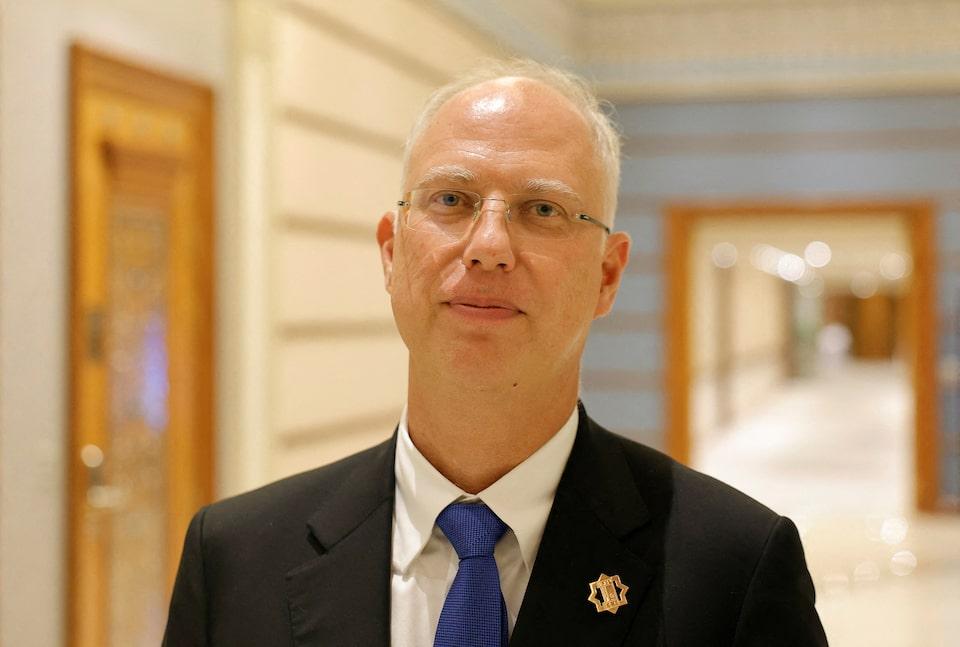
MOSCOW, March 18 (Reuters) - Russia’s sovereign wealth fund is eyeing the development of rare earth deposits in the country and wants to partner with U.S. companies, Kirill Dmitriev, CEO of the Russian Direct Investment Fund (RDIF), said on Tuesday. Dmitriev, who has also been appointed President Vladimir Putin's envoy on international economic cooperation, was part of Russia's negotiating team at talks with U.S. officials in Saudi Arabia in February, where he focused on economic issues. Sign up here. "Russia's reserves of rare earth metals exceed the amount in Ukraine by several fold, and we are looking at a number of Russian deposits," Dmitriev told reporters. Rare earths and other critical metals, essential for high-tech industries, have gained global attention in recent months due to U.S. President Donald Trump's efforts to counter China's dominance in the sector. President Vladimir Putin has offered the U.S. the opportunity, under a future economic deal, to jointly explore Russia's rare earth metal deposits. "We would like to involve American companies in these projects, there is significant interest, but Russia must also be interested," Dmitriev said. Russia has the world's fifth-largest reserves of rare earth metals, according to U.S. Geological Survey (USGS) data, following China, Brazil, India, and Australia. USGS estimates Russia's reserves total 3.8 million metric tons. Russian estimates of its overall rare earth reserves are higher. According to the Natural Resources Ministry, Russia has reserves of 15 rare earth metals totalling 28.7 million tons as of January 1, 2023. Of that 3.8 million tons is either under development or ready for development, it says. https://www.reuters.com/business/russias-sovereign-wealth-fund-is-eyeing-rare-earth-projects-with-us-companies-2025-03-18/
2025-03-18 11:44
March 18 (Reuters) - Global investment firm Avenue Capital Group said on Tuesday it will sell a portfolio of energy transition-focused assets in California to Partners Group for $2.2 billion. The assets, which include 11 natural gas-fired power plants, will be sold by Avenue Golden Continuation Fund, a fund managed by Avenue and operated by Middle River Power. Sign up here. Avenue, which has over $11 billion in assets under management, said Guggenheim Securities and Morgan Stanley & Co. acted as financial advisers on the deal for the company. https://www.reuters.com/markets/deals/avenue-capital-group-sell-some-assets-california-22-billion-2025-03-18/

2025-03-18 11:39
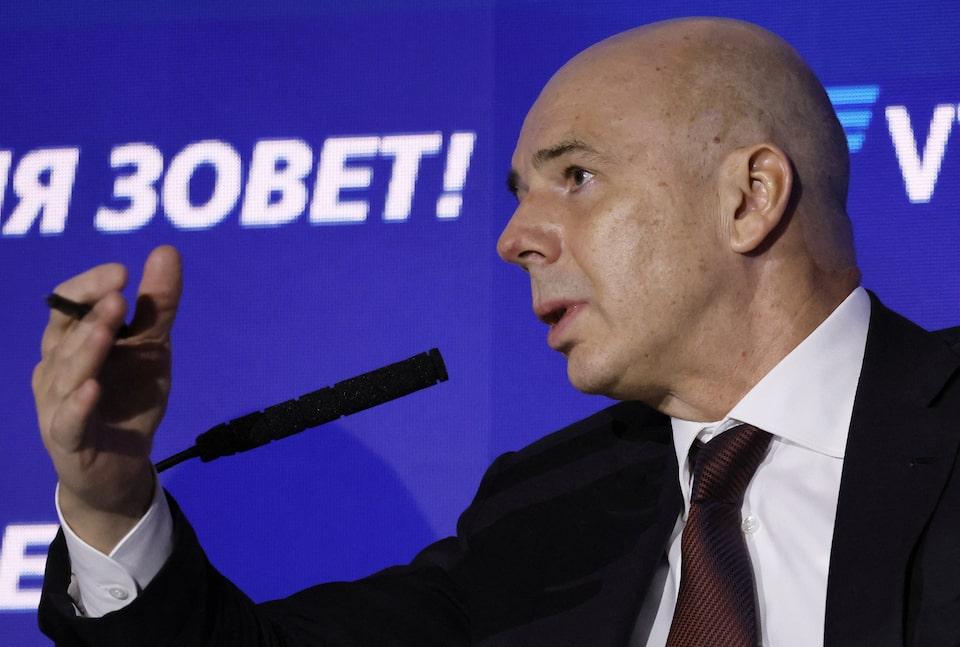
Russian finance ministry to revive privatisation drive Stakes in seven large firms up for sale in 2026, ministry says Ministry eyes $1.2 bln from sales of assets seized in court Russia has picked up pace of domestic assets seizures this year March 18 (Reuters) - Russia's finance ministry on Tuesday said it intends to revive plans for privatisations of state assets and hopes to sell stakes in seven large companies next year to raise up to 300 billion roubles ($3.66 billion) for the federal budget. Shunned by Western capital since launching the conflict in Ukraine, Moscow has been seeking ways to foster more domestic private investment, increase economic efficiency and, ultimately, bolster budget revenue as Russia spends heavily on the war. Sign up here. "We have had proposals for big privatisation," Finance Minister Anton Siluanov said at a meeting with Rosimushchestvo, Russia's federal property management agency. "In our view, now is the time when we can put this issue on the agenda once again." In 2010, the finance ministry, then led by reformist Alexei Kudrin, first launched a multi-year privatisation campaign to dispose of state assets, but the scheme ultimately stalled. The state sale of a stake in oil major Rosneft (ROSN.MM) , opens new tab was the main deal from that time. In late 2023, Siluanov suggested resurrecting the privatisation drive. He submitted to the government a list of 30 large state-owned companies and proposed to sell shares in them with the state keeping a controlling stake, as part of an effort to reduce pressure on the domestic borrowing market. The ministry did not name the proposed companies and no major deals happened. The head of VTB Bank (VTBR.MM) , opens new tab Andrei Kostin, had suggested oil pipeline monopoly Transneft, Russian Railways and Russian Post as potential candidates. COURT SEIZURES Russian news agencies cited Deputy Finance Minister Alexei Moiseev as saying the 2023 list was no longer relevant and that discussions were now centred around about seven large companies, with deals set for 2026 that could bring in 100-300 billion roubles ($1.23-$3.67 billion). Moiseev declined to name which industries the companies were in and said the overall process would take about 18 months as some are not traded on the market and investors need time to familiarise themselves with the assets on offer. Siluanov said privatisations would intensify this year, including through court decisions on seized assets. "In 2025, the receipt of revenues from the sale of such property is envisaged at no less than 100 billion roubles," Siluanov said. Russia has already quickened the pace of domestic asset seizures in 2025, with courts ruling early this year that a leading grain trader, Moscow's Domodedovo airport and strategic warehouse assets be handed over to the state. Businesses are concerned at the scope of possible nationalisations. Alexander Shokhin, head of major business lobby RSPP, said on Tuesday he remained concerned about the ongoing uncertainty and lack of means to challenge the state seizure of property. Rosimushchestvo, meanwhile, has stepped in to run foreign-owned assets that Moscow has unilaterally seized in the last three years, such as those formerly held by Danish brewer Carlsberg (CARLb.CO) , opens new tab and French yoghurt maker Danone (DANO.PA) , opens new tab. ($1 = 81.7500 roubles) https://www.reuters.com/markets/europe/russian-finance-ministry-plans-revive-mass-privatisation-drive-2025-03-18/
2025-03-18 11:30
LONDON, March 18 (Reuters) - What matters in U.S. and global markets today By Mike Dolan , opens new tab, Editor-At-Large, Financial Industry and Financial Markets Sign up here. U.S. stocks stabilised for the second day on Monday, as details of the February U.S. retail sales report calmed some of the worst fears about American consumers. Meanwhile, global stocks pushed higher on European stimulus bets. Today, I'll take a look at the Bank of England, one of the big central banks meeting this week. While the BoE is expected to hold tight at the upcoming meeting, I'll discuss why it could be set to surprise investors. For this and more market news, keep on reading. Today's Market Minute * Allocations to U.S. stocks saw the biggest drop ever in March with concerns over stagflation, trade wars and end of U.S. exceptionalism driving a "bull crash" in sentiment, a survey of investors from BofA Global Research showed on Tuesday. * Canadian Prime Minister Mark Carney says Trump has to stop making "disrespectful" comments about his country before the two sides can start serious talks about future ties. * Donald Trump and Vladimir Putin will hold a call today to discuss power plants and land concessions by Kyiv as part of their talks to end war in Ukraine. * Germany's lower house of parliament is set to vote on Tuesday a massive surge in borrowing that could boost Europe's largest economy and stimulate growth across the region. * Trump's tariffs will drag down growth in the US, Canada and Mexico, while driving up inflation, according to forecasts from the Organisation for Economic Cooperation and Development. Wall Street steadies as Europe soars Even though the headline gain in last month's U.S. retail sales number was below forecast, the details of the report were more positive. This offered some solace to nervy markets who also had to absorb another worrying manufacturing survey and an additional down tick in housebuilder sentiment. Industrial production and housing starts are next up on Tuesday, with the Federal Reserve starting its two-day meeting, which is likely to end with the FOMC voting to keep its main interest rate on hold. Wall Street futures slipped back again ahead of Tuesday's bell, with Big Tech continuing to underperform on Monday and indexes of the so-called Magnificent Seven megacaps in the red again despite gains for the wider S&P 500. (.SPX) , opens new tab Another 5% drop in the share price of auto giant Tesla TSLA.) was a standout move of the day. U.S. Treasury yields continue to nudge higher leading into the Fed meeting, with an auction of 20-year bonds set for later today. The dollar (.DXY) , opens new tab, by contrast, was on the backfoot early on Tuesday, eyeing its lowest point of the year as the euro surged anew on Germany's fiscal plans. Germany's lower house of parliament is set to vote on Tuesday on a massive surge in borrowing that could boost Europe's largest economy and stimulate growth across the region, even as the bloc faces trade tensions with the United States. Euro zone stocks (.STOXXE) , opens new tab were up another 1% earlier, with German midcaps (.MDAXI) , opens new tab rising more than 2%. While no major policy changes are expected at any of the big monetary policy meetings this week, the pressure on the BOE to ease may be mounting more than elsewhere. That's the subject of today's deep dive. Maybe BoE should 'cut through the noise' In a week when major central banks are expected to remain static, caught in a storm of disruptive U.S. policymaking, the Bank of England may be the one with most reason to cut to the chase. Monetary policymakers face a potential double whammy from U.S. President Donald Trump's planned April tariff hikes, as they could hit global growth while also spurring prices. The Federal Reserve, Bank of Japan, Swiss National Bank and Bank of England are therefore all expected to sit on their hands this week and watch what unfolds. The BoE also has to factor in domestic considerations, namely the political optics of shifting policy just a week before UK finance minister Rachel Reeves updates her budget plans and economic expectations. And yet, there is no shortage of reasons why BoE policymakers may be tempted to ease, regardless of the policy fog overseas and the smoke and mirrors at home. Britain's struggling economy began the year with another surprise contraction in January. And a bruising growth forecast downgrade from the BoE itself last month was compounded by another cut in the UK's 2025 outlook by the Organization for Economic Cooperation and Development on Monday. While Reeves may be anxious about meeting her own fiscal targets given the likely sputtering of government revenues, an additional squeeze on government spending now seems self-defeating, not least because it would come on top of the employer tax rises that kick in next month. So the case for using monetary policy to break the economic logjam is building, despite the hand-wringing about sticky wage and services inflation. The fascinating bit of the BoE drama is that the calls for easing are increasingly coming from within the bank's own ranks. MANN DOWN In one of the most dramatic shifts within the BoE's rate-setting committee in recent years, policymaker Catherine Mann switched from resident hawk to uber dove at the BoE meeting in early February. Mann voted for a half-point rate cut, which was double the eventual move. She switched sides within the nine-person council at a critical juncture, joining more recognized dove Swati Dhingra in calling for a 50-basis-point reduction to 4.25%. Illustrating the significance of this change, BoE data on voting records show it was the first time Mann had ever voted for a rate reduction in the 28 meetings since she joined the policymaking council in late 2021. For the record, she voted for 18 hikes in that period and voted for a higher rate than the eventual decision at 11 of the 28 meetings. If you're going to turn, better to turn big. GRADUALISM 'NO LONGER VALID' Mann justified her shift by arguing that the BoE's 2% inflation target is reachable in the next year because UK companies will struggle to raise prices as consumers are hit by job losses and softening spending. But her most telling reveal was when she said last month that a half-point move was needed to "cut through the noise" and make clear to the financial system that easier conditions were currently necessary in the UK. And to her credit, there is certainly no shortage of noise right now, both at home and abroad. In statements earlier this month, she doubled down: "With substantial volatility coming from financial markets, especially from cross-border spillovers, the founding premise for a gradualist approach to monetary policy is no longer valid." Mann's concern that small quarter-point moves are not going to make much of a difference in the current environment rings true. In fact, it's one of the reasons everyone assumes rates will be left unchanged, awaiting more clarity. All 61 economists polled by Reuters this week expect the BoE to leave rates on hold at 4.5%, with the next cut not likely until May. The Reuters poll also pointed to a 7-2 split on the committee in favour of keeping rates on hold, with Mann and Dhingra pushing for more. Some banks, such as Morgan Stanley, see the split deepening to 6-3, with the newest member, Alan Taylor, likely to join the dissenters, having voted for a cut in three of his four meetings to date. And Clare Lombardelli, another recent and dovish addition to the committee, could be in the mix too. Meanwhile, markets are pricing in relatively hawkish policy, with barely two additional BoE cuts expected for the remainder of 2025, meaning year-end rates would be just under 4%. That's higher than the expectations for the Fed or the European Central Bank. There's ample room for surprise. Chart of the day Even though Wall Street stock indexes stabilised on Monday, 'Big Tech' continued to underperform and Elon Musk's Tesla(.TSLA) , opens new tab swerved again, dropping another 5% as brokers downgraded the electric vehicle maker's price target. Tesla's stock is now down more than 40% for the year to date. By contrast, Hong Kong shares of Chinese EV maker BYD (1211.HK) , opens new tab surged 6% on Tuesday and have jumped almost 40% in dollar terms this year. BYD's latest surge came after it unveiled a new platform for EVs that it said could charge EVs as quickly as it takes to pump gas and after it announced plans to build a charging network across China. Today's events to watch * U.S. February housing starts/permits, February industrial production, February import/export prices; Canada Feb inflation * U.S. Federal Reserve's Federal Open Market Committee and Bank of Japan both start two-day policy meetings, with decisions from both on Wednesday * French President Emmanuel Macron meets outgoing German Chancellor Olaf Scholz in Berlin * US Treasury sells $13 billion of 20-year bonds Opinions expressed are those of the author. They do not reflect the views of Reuters News, which, under the Trust Principles , opens new tab, is committed to integrity, independence, and freedom from bias. https://www.reuters.com/markets/us/global-markets-view-usa-2025-03-18/
2025-03-18 11:08
MOSCOW, March 18 (Reuters) - Gazprom Neft (SIBN.MM) , opens new tab is ready to raise oil output from April under the OPEC+ agreement, the head of the Russian oil producer said on Tuesday. The company does not plan to reduce oil refining in 2025 after a record refining volume in 2024, Alexander Dyukov, the CEO, added. Sign up here. Gazprom Neft has been adapting to Western sanctions and plans to increase investments in 2025, Dyukov said. The market price for Urals oil in roubles is "quite acceptable" for the company, he added. https://www.reuters.com/business/energy/russias-gazprom-neft-ready-raise-oil-output-under-opec-deal-ceo-says-2025-03-18/

2025-03-18 10:41
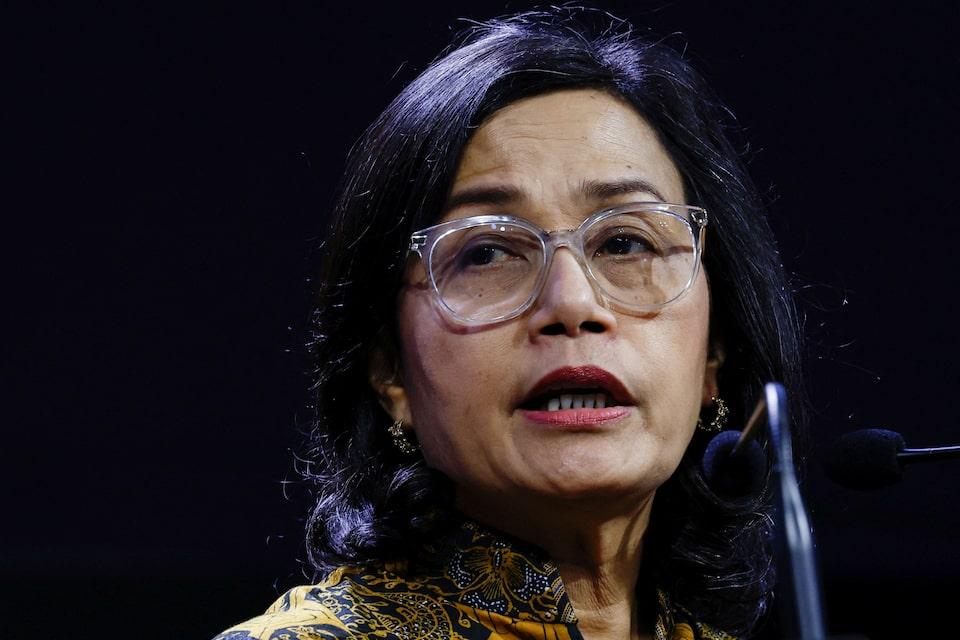
JAKARTA, March 18 (Reuters) - Indonesia's finance minister on Tuesday denied rumours of her imminent resignation and said she remained focused on her job and would continue to manage the state budget deficit at 2.53% of GDP this year, amid a plunge in the stock market. Indonesian stocks fell as much as 7.1% on Tuesday and the rupiah slid to a two-week low against the dollar, pressured by concerns over the government's fiscal strategy and growth prospects a day before a central bank review of monetary policy. Sign up here. The drop also led to a 30-minute trading halt on breaching the 5% mark, underscoring mounting concerns about President Prabowo Subianto's ambitious spending plans. The drop also follows rumours of the resignation of Sri Mulyani Indrawati, which she dismissed on Tuesday. "We are here, we are responsible," she told a press conference. "I will not step down." The stock plunge is due to investor concerns over the share movement of Indonesia's state-owned companies, she said, adding investor trust remains strong and that improving tax revenues should calm the market. Previously, Indonesia's chief economic minister said on Tuesday the country's economic fundamentals are strong and volatility in the stock market is common. Jakarta shares (.JKSE) , opens new tab hit 6,011.842 points, its lowest since September 2021, before paring losses to trade down 4% by 0646 GMT. It closed down 3.84% on Tuesday. The benchmark confirmed bear market territory on February 28 after falling more than 20% from its September 19 peak. https://www.reuters.com/markets/asia/indonesia-economic-fundamentals-strong-despite-market-falls-minister-says-2025-03-18/