2025-03-18 07:45
Poland, Baltics say they need to protect their borders Finland may follow their lead Comes as Ukraine and Russia may agree ceasefire 1997 landmine ban was global disarmament landmark Red Cross 'gravely concerned' by the move VILNIUS/WARSAW, March 18 (Reuters) - NATO members Poland, Lithuania, Latvia and Estonia plan to withdraw from the Ottawa convention banning anti-personnel landmines due to the military threat from their neighbour Russia, the four countries said on Tuesday. Quitting the 1997 treaty, which has been ratified or acceded to by more than 160 nations, will allow Poland and the three Baltic countries to start stockpiling and using landmines again. Sign up here. "Military threats to NATO member states bordering Russia and Belarus have significantly increased," the countries' defence ministers said in a joint statement. "With this decision we are sending a clear message: our countries are prepared and can use every necessary measure to defend our security needs." The planned withdrawal was done to allow the effective protection of the region's borders, Lithuanian Defence Minister Dovile Sakaliene said in a separate statement. All four countries share borders with Russia. Poland, Lithuania and Latvia also share borders with Moscow's ally Belarus. The announcement comes as Ukraine and Russia may be on the brink of concluding a 30-day ceasefire and may move towards a more permanent end to the three-year-old conflict sparked by Russia's invasion of Ukraine. Poland and the Baltics are concerned that an end to the war in Ukraine could lead Russia to re-arm and target them instead. All four were under Moscow's dominion during the Cold War. GLOBAL DISARMAMENT The 1997 Ottawa Convention was one of a series of international agreements concluded after the end of the Cold War to encourage global disarmament. Anti-landmine campaigners won the Nobel Peace Prize that same year. Mines have killed or maimed tens of thousands of civilians across the globe, many of them long after conflicts have ended. The International Committee of the Red Cross said it was "gravely concerned" by the move. "Reintroducing these appalling weapons would be a deeply troubling step backward," Cordula Droege, ICRC's Chief Legal Officer, told Reuters. "Anti-personnel mines have limited military utility but devastating humanitarian consequences." Russia, the United States, China, India and Israel are among the countries who have not signed or ratified it. In 2008, the Convention on Cluster Munitions - explosive weapons that release smaller submunitions over a vast area - was adopted. Like landmines, they do not discriminate between combatants and civilians. The United States, which did not sign that convention, in 2023 transferred cluster munitions to Ukraine to help it defend itself against Russia. FINLAND COULD FOLLOW Other countries could follow Poland and the Baltics in using anti-personnel landmines again. Finland, the last EU state to sign the Ottawa Convention, in 2012, has said it was mulling pulling out of the treaty too, citing Russia's use of such weapons in Ukraine as the reason. Finland shares a 1,340 km (833 mile) border with Russia. "We have examined very closely through intelligence how Russia operates in Ukraine, specifically their mass use of infantry and also their mass use of mines," Finnish Defence Minister Antti Hakkanen told Reuters in December. "This infantry issue is one thing that argued for the fact that it's worth examining the use of anti-personnel mines," he said. The Finnish parliament's defence committee chair Jukka Kopra said on Tuesday the decision by Poland and the Baltics was "good and wise". Poland said it could withdraw from the Ottawa Convention by passing legislation through parliament and securing the president's approval, followed by formal notification to the U.N. The withdrawal would take effect six months later. In Estonia, the government needs to propose the law and parliament needs to vote on it, its foreign ministry said. (This story has been corrected to change 'deeply concerned' to 'gravely concerned' in the last bullet point) https://www.reuters.com/world/europe/poland-baltic-nations-pull-out-landmines-convention-2025-03-18/

2025-03-18 07:35
MILAN, March 18 (Reuters) - Allocation to U.S. stocks saw the biggest drop ever in March with concerns over stagflation, trade wars and end of U.S. exceptionalism driving a "bull crash" in sentiment, a survey of investors from BofA Global Research showed on Tuesday. Global investors raised their allocation to cash to 4.1% from 3.5%, ending a "sell signal" triggered in December, with the speed of the downturn in sentiment being "consistent with end of equity correction", BofA said. Sign up here. Global growth expectations saw the second biggest drop on record, but, at the same time, allocation to euro zone stocks was the highest since July 2021, with banks becoming the world's favourite sector, according to the survey. The survey included 171 participants with $426 billion of assets under management. https://www.reuters.com/markets/bull-crash-drives-biggest-ever-drop-us-equity-allocation-bofa-2025-03-18/
2025-03-18 06:55
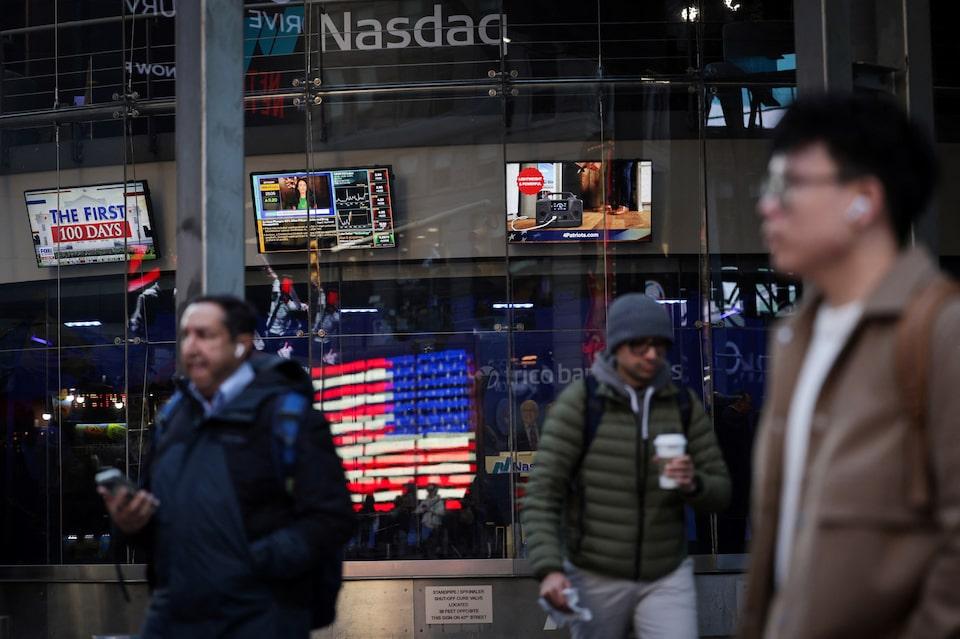
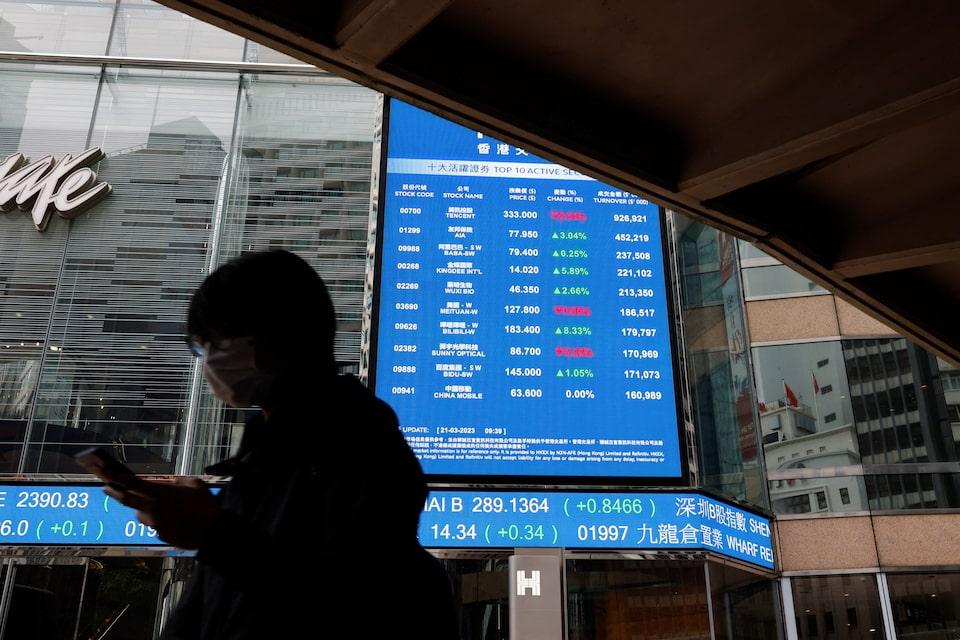
Israeli strikes on Gaza revives Middle East tensions Germany passes debt overhaul Putin agrees to hold off targeting Ukrainian energy assets Gold hovers above $3,000 NEW YORK, March 18 (Reuters) - Wall Street ended sharply lower and gold surged to record highs on Tuesday as the U.S. Federal Reserve convened for its two-day monetary policy meeting while economic uncertainty mounted. In the Middle East, a round of Israeli missile attacks on the Gaza Strip killed over 400 people, feeding investor jitters about that region. Sign up here. But other geopolitical tensions eased after the Kremlin announced Russian President Vladimir Putin had agreed to a proposal from U.S. President Donald Trump to stop targeting Ukrainian energy targets for the next 30 days. A vote by Germany's parliament to overhaul government spending caused the euro to gain against the dollar, boosted European stocks and sent German shares to near-record highs. "The truth is Europe has lagged significantly in terms of economic growth and productivity," said Ryan Detrick, chief market strategist at Carson Group in Omaha. "With President Trump in the White House, Europe might be realizing that they might need to do some things more on their own to stimulate their economy." All three major U.S. stock indexes posted steep losses, with weakness in tech-related megacap stocks dragging the tech-laden Nasdaq down 1.7%. "The word of the year in 2025 has clearly been uncertainty," Detrick added. "And we have seen rotation out of the United States and into other areas around the globe." "So today is almost a microcosm of the whole year." The U.S. Federal Reserve has gathered for its two-day monetary policy meeting, which is expected to culminate in the central bank leaving its key interest rate unchanged until further inflation progress is made and the effects of Trump's erratic tariff policies are known. A strong rebound in single-family housing starts and robust industrial output data provided some reassurance that the U.S. economy was not in danger of imminent recession. The Dow Jones Industrial Average (.DJI) , opens new tab fell 260.32 points, or 0.62%, to 41,581.31, the S&P 500 (.SPX) , opens new tab fell 60.46 points, or 1.07%, to 5,614.66 and the Nasdaq Composite (.IXIC) , opens new tab fell 304.55 points, or 1.71%, to 17,504.12. European shares edged higher and German stocks hovered near record highs as the German parliament approved a debt reform package to boost Europe's biggest economy. So far this year, European stocks have outperformed their global counterparts. Europe's broad FTSEurofirst 300 index (.FTEU3) , opens new tab rose 12.49 points, or 0.57%. MSCI's gauge of stocks across the globe (.MIWD00000PUS) , opens new tab fell 3.64 points, or 0.43%, to 839.86. The pan-European STOXX 600 (.STOXX) , opens new tab index rose 0.61%, while Emerging market stocks (.MSCIEF) , opens new tab rose 14.14 points, or 1.25%, to 1,145.58. MSCI's broadest index of Asia-Pacific shares outside Japan (.MIAPJ0000PUS) , opens new tab closed higher by 1.2%, to 595.37, while Japan's Nikkei (.N225) , opens new tab rose 448.90 points, or 1.20%, to 37,845.42. Treasury yields fell as traders bet Fed Chair Jerome Powell will adopt a relatively dovish tone when he speaks at the conclusion of the central bank's policy meeting on Wednesday. The yield on benchmark U.S. 10-year notes fell 1.9 basis points to 4.287%, from 4.306% late on Monday. The 30-year bond yield fell 1 basis point to 4.589% from 4.599% late on Monday. The 2-year note yield, which typically moves in step with interest rate expectations for the Federal Reserve, fell 1.1 basis points to 4.042%, from 4.053% late on Monday. The dollar weakened while the euro gained ground in the wake of Germany's debt overhaul. The dollar index , which measures the greenback against a basket of currencies including the yen and the euro, fell 0.22% to 103.23, with the euro up 0.23% at $1.0947. Against the Japanese yen , the dollar strengthened 0.06% to 149.3. The Mexican peso strengthened 0.13% versus the dollar at 19.933. The Canadian dollar weakened 0.01% versus the greenback to C$1.43 per dollar. In cryptocurrencies, bitcoin fell 1.99% to $82,306.09. Ethereum declined 1.55% to $1,905.74. Crude oil prices turned lower after Russia-Ukraine peace talks helped counter concerns over instability in the Middle East. U.S. crude fell 1.01% to settle at $66.90 per barrel, while Brent settled at $70.56 per barrel, down 0.72% on the day. Gold prices touched a record high as the safe-haven metal benefited from a flare-up of geopolitical tensions and lingering uncertainties about Trump's tariff plans. Spot gold rose 1.14% to $3,035.56 an ounce. https://www.reuters.com/markets/global-markets-wrapup-1-2025-03-18/
2025-03-18 06:48
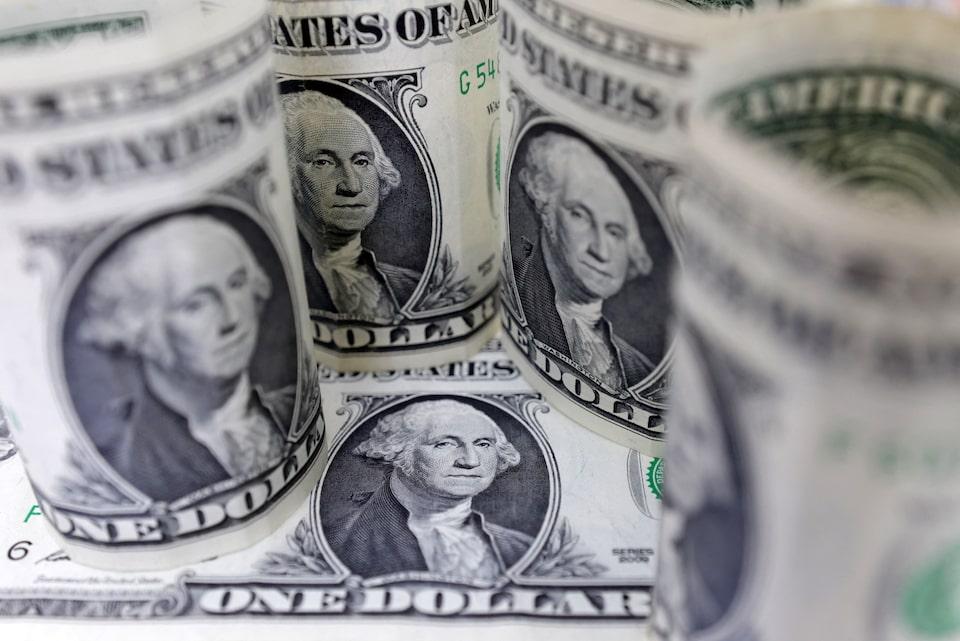
German parliament approves Merz's historic spending surge Central bank meetings this week focus on forward guidance Fed expected to hold rates NEW YORK, March 18 (Reuters) - The dollar eased against the euro on Tuesday as Germany's parliament approved plans for a massive spending surge on Tuesday and as the Federal Reserve kicked off its March policy meeting that could offer clues to the path of U.S. interest rates. The euro was 0.2% higher at $1.0945, after hitting $1.0954 earlier in the session, its highest since October 10. Sign up here. The German parliament's approval of plans for a massive spending surge throws off decades of fiscal conservatism in hopes of reviving economic growth and scaling up military spending for a new era of European collective defence. "Germany, and by extension the euro zone, getting their fiscal act together is not only long overdue, but supports the bull case for the common currency over the medium-term," Michael Brown, senior research strategist at Pepperstone, said. The euro also found support earlier after data showed German investor morale improved more than expected in March. More broadly, currency market moves were largely muted on Tuesday as investors awaited policy announcements from major central banks, including from the Federal Reserve on Wednesday. While analysts expect the Fed to hold its monetary policy stance amid persistent inflation concerns, investors will be looking to new economic projections from Fed officials for evidence of how U.S. central bankers view the likely impact of Trump administration policies. "The SEP (Summary of Economic Projections) will be the most interesting aspect, I imagine, with near-term inflation expectations likely nudged higher, and growth projections marked down a touch, though conviction behind those forecasts is going to be lacking, amid the ever-changing macro outlook," Brown said. The greenback hit a two-week high against the yen before paring gains to trade about unchanged on the day at 149.165 yen, ahead of Wednesday's policy decision by the Bank of Japan. BOJ policymakers are expected to discuss just how much of a risk the escalating U.S. trade war poses to Japan's economy. "We would expect this adjustment in the pricing of the terminal rate to be maintained following the BoJ meeting," said Lee Hardman, senior currency analyst at MUFG, referring to market expectations that rose from around 0.90% at the end of 2024 to close to 1.20%. Elsewhere, the Australian dollar slipped 0.4% to $0.6358 after rising to its highest in about a month on Monday. Bitcoin , the world's largest cryptocurrency by market cap, was down 2.5% at $81,922. https://www.reuters.com/markets/currencies/dollar-stuck-near-5-month-low-struggles-shake-off-growth-concerns-2025-03-18/
2025-03-18 06:43
ZURICH, March 18 (Reuters) - The Swiss National Bank greatly reduced its activity in foreign currency markets during 2024, according to data published on Tuesday, as the central bank relied instead on interest rates to steer monetary policy. The SNB bought foreign currency worth 1.2 billion Swiss francs ($1.4 billion) in 2024, its annual report said, with its purchases slowing to a trickle in the fourth quarter. Sign up here. The data suggested the SNB bought 88 million francs' worth of foreign currency in the last three months of the year, after buying 1.11 billion francs worth in the previous nine months. The full-year figure contrasts sharply with the 132.9 billion Swiss francs of foreign currencies sold by the SNB during 2023 as the bank sought to boost the franc as a shield against imported price rises. "While the SNB had sold foreign currency in 2022 and 2023 to tighten monetary conditions, it announced at the monetary policy assessment in December 2023 that it was no longer focusing on foreign currency sales," the SNB said. The strategy was effective, with Swiss inflation running at 1.1% during 2024, in the middle of the central banks' targeted rate for annual price rises of 0-2%. Economists said the decline in currency market activity by the SNB meant it was happy with the level of the Swiss franc and instead favoured interest rates to steer inflation. During 2024 the SNB cut rates at each of its four meetings from 1.75% at the start of the year to 0.5% in December. Analysts forecast a 25 basis point cut at its next meeting on Thursday. "There was no need for forex interventions by the SNB at all last year," said Karsten Junius, an economist at J. Safra Sarasin. "The Swiss franc was not misaligned with fundamentals and fairly valued. "Instead the SNB chose to control inflation through interest rates, which is the key tool for them now rather than forex purchases and sales." (This story has been refiled to add a missing word in paragraph 9) https://www.reuters.com/business/finance/swiss-national-bank-bought-forex-worth-12-billion-francs-2024-2025-03-18/

2025-03-18 06:41
TAIPEI, March 18 (Reuters) - Taiwan will maintain anti-dumping duties on stainless steel from China and South Korea for five years, its finance ministry said on Tuesday. The decision reaffirms an existing policy that all manufacturers and exporters from China and South Korea are subject to anti-dumping duty rates of 38.11% and 37.65%, respectively, the ministry said in a statement. Sign up here. The decision follows a government investigation and takes immediate effect, it said. Taiwan has levied such duties since 2013 and has completed a second periodic review to consider sunsetting the policy. The ministry said, however, that the review concluded: "There was insufficient evidence to show that continuing the measures would have a significant negative impact on Taiwan's overall economic interests." https://www.reuters.com/markets/commodities/taiwan-maintain-anti-dumping-duties-stainless-steel-china-south-korea-5-years-2025-03-18/