2025-03-18 06:36
JAKARTA, March 18 (Reuters) - Indonesia will raise its palm oil export levy to between 4.5% and 10% of the crude palm oil reference price, up from 3% to 7.5%, to finance a mandated increase in the amount of the oil used in biodiesel, a plantation fund official said on Tuesday. Indonesia raised the mandatory amount of palm oil in its biodiesel mix to 40% this year from 35%. It is studying increasing it to 50% in 2026, as well as a 3% blend for jet fuel next year, as it seeks to curb fuel imports. Sign up here. Kabul Wijayanto, director at the Plantation Fund Agency, which is in charge of collecting and distributing the export levy, said authorities would impose the new rates three days after the regulation is issued. Wijayanto said the regulation was being processed by the law ministry. The agency was expected to distribute 35.47 trillion rupiah ($2.15 billion) for the biodiesel subsidy this year. The increase in the crude palm oil levy to 10% from 7.5% was flagged by the government late last year, but has so far not been enacted. More refined palm oil products are charged lower levy rates. ($1 = 16,470 rupiah) https://www.reuters.com/business/energy/indonesia-plans-raise-palm-oil-export-levy-45-10-official-says-2025-03-18/

2025-03-18 06:24
LITTLETON, Colorado, March 18 (Reuters) - The United States' power grid has been singled out as a glaring weakness within its power system, with aging lines and transformers deemed unable to handle the rapid further jumps to both power supply and demand expected in the coming years. Several major networks have already teetered near collapse as they struggled to accommodate record volumes of renewable energy supplies alongside surging electricity demand from data centers, electric vehicles, homes and businesses. Sign up here. And with new transmission corridors requiring roughly a decade to build, power analysts have identified the grid as a critical bottleneck that may limit not just the growth of power supplies but also the overall economy. Plans to reshore power-hungry factories and spur overall expansions in U.S. manufacturing may be put in jeopardy by tight power supplies and by any resulting rises in power costs that eat into corporate profit margins. However, several innovative solutions are already available that could allow grid operators to sharply boost transmission volumes over existing networks and ensure that U.S. power supplies continue to grow as needed. Below are some key grid-centric solutions already available for mass deployment that may enable U.S. grids to handle rapidly rising power loads without the need for new or expanded transmission networks. DYNAMIC LINES One of the key constraints facing grid operators is that networks are often considered to have a fixed distribution capacity that cannot be exceeded for long without outage risk. However, certain stretches of every network frequently face wide swings in their carrying capacity depending on the weather, as bouts of windy conditions can help to cool transmission lines and allow for sharply higher distribution loads. Estonia-based Gridraven, which is expanding into the U.S., has pioneered the use of weather models and grid power flow forecasts that allow grid operators to boost transmission capacity by 30% without any new physical infrastructure. The firm's mix of hyper-local wind speed measurements and load assessments provides grid firms with what is known as Dynamic Line Ratings (DLR), which give grid operators signals on when they can safely push more power through network stretches. Widespread deployment of DLR could allow for grid firms to maximize the bandwidth of their existing grids and dispatch smarter and more dynamic power flows that can exceed current demand needs and accommodate future demand growth. PREEMPTIVE CARE VIE Technologies is another firm helping utilities to extract more power from existing networks by helping to avert critical system interruptions. The California-based firm uses a mix of proprietary sensors and artificial intelligence models to warn grid operators of potential issues with critical equipment, such as transformers. There are an estimated 80 million transformers within the U.S. power system, according to the National Renewable Energy Laboratory (NREL). Transformers transfer power and adjust voltage levels from one circuit to another across power grids, playing a vital role in keeping the lights on across the country. However, the average age of U.S. transformers is over 40 years, according to NREL, and their mechanical parts are prone to wear and tear that can be difficult to assess ahead of a breakdown. By deploying sensors on transformers, utilities can get alerts on specific imminent issues - such as changes to current bias, overheating, and insulation loss - that can allow for speedy fixes by utility engineers. Preemptive transformer maintenance can in turn allow for grid operators to avoid critical shutdowns and costly post-problem replacements, and avert the need to join the already years-long waiting lists for new large-scale transformers. DISTRIBUTED STORAGE The deployment of networks of batteries as a source of back-up power for utilities is also allowing grid operators to accommodate swings in network needs. Battery energy storage systems (BESS) are rapidly expanding in popularity, with nearly 12 gigawatts of BESS capacity deployed in 2024, according to the Business Council for Sustainable Energy. Most of the growth in BESS capacity is among utilities seeking to store surplus clean power from solar and wind farms for later deployment when demand levels rise. However, residential battery systems are also experiencing rapid growth, and can offer additional grid stability when contracts with homeowners allow for local utilities to gain access to the power stored within them. Base Power, with operations in Texas, leases battery systems to homeowners for a fixed cost, and sells the power stored in their batteries to utility networks during peak demand periods. This revenue model allows Base to offer homeowners a relatively cheap battery system that protects them from outages, and gives utilities access to a growing network of distributed battery capacity that can provide additional power when needed. SMARTER MATERIALS AND PLANNING Grid operators are also upgrading the materials and planning software used within their current systems to help boost output and minimize outages. DexMat, a materials manufacturer, is working with utilities to replace old steel cables that are prone to sagging with its more conductive and lighter cables made from aluminum and carbon that require fewer support towers. Amperon, which produces AI-driven power flow forecasts, allows grid operators to more accurately predict peak power needs and optimize energy flows within existing assets. Combined with continuous improvements already deployed across U.S. grid systems, the above solutions offer the means to increase the carrying load of the current U.S. grid and prime the national system for further growth in the years ahead. The opinions expressed here are those of the author, a market analyst for Reuters. https://www.reuters.com/markets/commodities/innovators-prime-creaky-us-power-grid-lift-higher-loads-maguire-2025-03-18/

2025-03-18 05:54
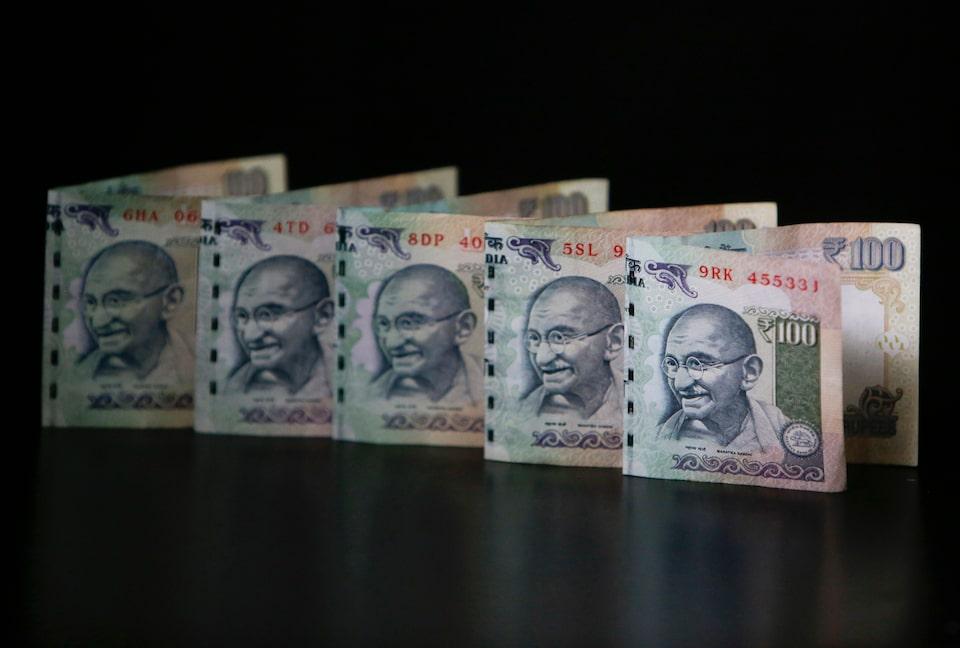
MUMBAI, March 18 (Reuters) - The Indian rupee logged modest gains in early trade on Tuesday, aided by mild dollar inflows, helping the currency avoid a decline in most regional peers, although bids from state-run banks limited the currency's gains. The rupee was at 86.68 against the U.S. dollar as of 11:15 a.m. IST, up 0.1% on the day. Sign up here. The local currency has strengthened for three consecutive sessions, aided by a broadly softer dollar amid concerns about a growth slowdown in the United States on the back of erratic trade policy changes. Easing demand to buy dollars at the daily reference rate, called the fix, has also lifted the rupee, alongside dollar sales by foreign banks, a senior trader at a bank said. State-run banks were spotted bidding for dollars though, four traders said, keeping a lid on further gains. Meanwhile, the dollar hovered near a five-month low against major peers after data on Monday showed U.S. retail sales rebounded in February but the growth was well below expectations. A string of soft U.S. economic data, coupled with uncertainty about the inflationary impact of tariffs, has prompted investors to rethink their approach, pushing the dollar index down by about 5% so far this year. In recent sessions, "sustained dollar selling from exporters and foreign banks, alongside a broadly weaker greenback," have aided the rupee, FX advisory firm IFA Global said in a note. The firm expects the rupee to trade in the 86.55-86.80 range in the near term. Meanwhile, dollar-rupee far forward premiums dipped ahead of the U.S. Federal Reserve's policy decision and economic projections due on Wednesday. The one-year implied yield was down 4 basis points at 2.13%. https://www.reuters.com/markets/currencies/rupee-ticks-up-state-run-banks-dollar-bids-cap-gains-2025-03-18/
2025-03-18 05:54
Israeli strikes kill over 400 in Gaza Gold scales to a fresh record high of $3,038.26/oz Fed expected to hold rates steady on Wednesday March 18 (Reuters) - Gold prices rose 1% to hit a fresh record high on Tuesday, anchored above the $3,000/oz mark, as rising Middle East tensions and trade uncertainties due to U.S. President Donald Trump's tariff plans fueled demand for the safe-haven asset. Spot gold hit a peak of $3,038.26 per ounce and by 12:00 p.m. ET (1600 GMT) was up 1.05% at $3,032.96 an ounce. Prices climbed above $3,000 for the first time on March 14. Sign up here. U.S. gold futures settled 1.2% higher at $3,040.80. Bullion, which had a stellar run last year, has maintained its momentum this year as well, gaining over 15% year-to-date and hitting record highs 14 times. "The escalation in the Middle East tensions – as Israel launched military strikes on Hamas targets in Gaza, which threatens to undermine the ceasefire – has injected a new bid into gold," said Nicky Shiels, head of metals strategy at MKS PAMP SA. Israeli airstrikes killed more than 400 people in Gaza, threatening a two-month ceasefire. Meanwhile, Donald Trump has floated a series of U.S. tariff plans, including a flat 25% duty on steel and aluminum that came into effect in February, as well as reciprocal and sectoral tariffs that he said will be imposed on April 2. Gold is traditionally regarded as a safe-haven investment during periods of economic or geopolitical instability. Investors will now closely watch Trump's talks with Putin, where he is expected to push for a Ukraine ceasefire, as well as the Federal Reserve's monetary policy meeting on Wednesday. Traders expect the Fed to keep interest rates unchanged on Wednesday, while they see nearly a 66% chance of a rate-cut in June, according to the CME Group's FedWatch Tool , opens new tab. "If gold holds above $3,040, the next resistance level is projected at $3,080 as an extreme scenario," said Razan Hilal, market analyst at City Index. Silver gained 0.4% to $33.96 an ounce, after hitting its highest level since late October. "We may see stronger gains in silver over the next couple of weeks as it is playing catch-up," said Jim Wyckoff, senior analyst at Kitco Metals. Platinum fell 0.1% to $999.15, and palladium was steady at $965.56. https://www.reuters.com/markets/commodities/gold-scales-record-peak-rises-above-3000-again-tariff-uncertainty-fuels-safe-2025-03-18/

2025-03-18 05:33
A look at the day ahead in European and global markets from Tom Westbrook A phone call between Donald Trump and his Russian counterpart Vladimir Putin is on markets' radar this morning as the U.S. pushes for a ceasefire and peace deal in Ukraine - ahead of a slew of central bank meetings later in the week. Sign up here. The leaders' conversation takes place in a moment of calm for traders, with stocks stabilising and progress to peace likely to send European gas prices down and the euro higher. Putin's demands seem familiar, but Trump said they would be talking about land, power plants and "dividing up certain assets" and that he thinks agreement is possible. The European Union's foreign policy chief, Kaja Kallas, said on Monday the conditions demanded by Russia to agree to a ceasefire showed Moscow does not really want peace. Trade in the Asia session was driven by another burst of enthusiasm for China, which has been an unlikely beneficiary of Trump's rattling of U.S. markets and growth expectations. The latest push came from the release of another surprisingly weak U.S. retail sales report, and the White House confirming reciprocal tariffs will come into effect on April 2 - putting pressure on the dollar and hoisting gold . At the same time China has announced some childcare subsidies and other consumer-friendly measures, while data on Monday showed small signs of a pickup in retail spending. The Hang Seng (.HSI) , opens new tab notched a three-year peak and its almost 23% rise for the year so far is easily the largest of any major market. Gains were broad with miners, automakers, tech and retail stocks higher. The Shenzhen shares of electric-vehicle maker BYD (002594.SZ) , opens new tab leapt to a record as the company unveiled a new platform it says can recharge electric cars as quickly as pumping gas. The New Zealand dollar was also at three-month highs with short-sellers seemingly spooked by New Zealand's exposure to China's consumers via dairy exports. On investors' radar will be Nvidia's (NVDA.O) , opens new tab annual software developer conference, where CEO Jensen Huang, who will be delivering the keynote address on Tuesday, is expected to defend his nearly $3 trillion chip company's dominance as pressure mounts on its biggest customers to rein in the costs of artificial intelligence. At the conference this week, Nvidia is also expected to reveal details of a chip system called Vera Rubin, the successor to its Blackwell chips. Central bank meetings in Japan, the U.S., Britain, Sweden and Switzerland round out the week. Key developments that could influence markets on Tuesday: -Trump-Putin phone call -German ZEW surveys https://www.reuters.com/markets/europe/global-markets-view-europe-2025-03-18/

2025-03-18 04:46
March 18 (Reuters) - ANZ raised its zero to 3-month gold price forecast to $3,100 per ounce and 6-month forecast to $3,200 per ounce, according to a research note on Tuesday. Gold prices surpassed the significant $3,000 mark on Tuesday for the second time, setting a new high, as investors sought cover from economic concerns fuelled by U.S. President Donald Trump's tariff policies. Sign up here. For gold "we maintain our bullish view, amid strong tailwinds from escalating geopolitical and trade tensions, easing monetary policy, and strong central bank buying," the bank said. Traditionally viewed as a safe asset against geopolitical instability, gold has gained over 14% so far this year. Bullion has hit a record high 14 times. "As for the gold market, fear of import tariffs has tightened liquidity in the London spot market, as supply flows to the U.S. This has triggered arbitrage trades, with a widening spread between Comex futures and London spot," ANZ said. "We see this supply dislocation taking some time to normalise and keeping silver prices volatile." However, industrial demand is likely to be resilient despite tariff-related headwinds, analysts at the bank said in the research note, adding that investment demand will be crucial for raising silver’s price. The bank noted that in the short term silver will trade within the $34-$36 per ounce range. Spot silver gained 0.1% to $33.89 an ounce as of 0422 GMT. https://www.reuters.com/markets/commodities/anz-raises-6-month-gold-forecast-3200-per-ounce-2025-03-18/