2025-03-18 04:28
TEGUCIGALPA, March 17 (Reuters) - A plane crashed just off the Caribbean coast of Honduras on Monday night minutes after taking off from Roatan Island, killing seven people, while 10 others were pulled out from the wreckage alive, authorities said. The Jetstream aircraft operated by Honduran airline Lanhsa was carrying 14 passengers and three crew members, according to the country's transport minister, who said the wreckage was found about 1 kilometer (0.6 mile) off the island's coast. Sign up here. According to the flight manifest shown by local media, the passengers included a U.S. national, a French national and two minors. The plane was scheduled to fly to La Ceiba airport on the Honduran mainland. Roatan fire captain Franklin Borjas confirmed the death toll, while both police and fire officials detailed the rescue efforts underway. Well-known Garifuna musician Aurelio Martinez Suazo was among the dead, according to fire officials. Dramatic video uploaded to social media by the national police showed officers and other rescue workers carrying survivors onto a rocky coastline, some in stretchers, as a nearby boat shone a bright light amid the darkness. The cause of the crash was not immediately clear. The airline did not respond immediately to a request for comment. Borjas told Reuters the survivors were transported to a nearby hospital, while also confirming that the crash took place shortly after the plane's takeoff from the island. Roatan, the largest of the Bay Islands just off the Honduran coast, is a popular tourist attraction and famed for its vibrant coral reefs. Borjas noted that adverse conditions complicated the search and rescue efforts. "It's been difficult to access the accident (site) because there are 30 meters (98 ft) of rocks and you can't get there while walking or swimming," he said. "The divers helping with the rescue have zero visibility," he added. https://www.reuters.com/world/americas/fatalities-reported-after-honduras-plane-crash-says-local-police-chief-2025-03-18/

2025-03-18 04:10
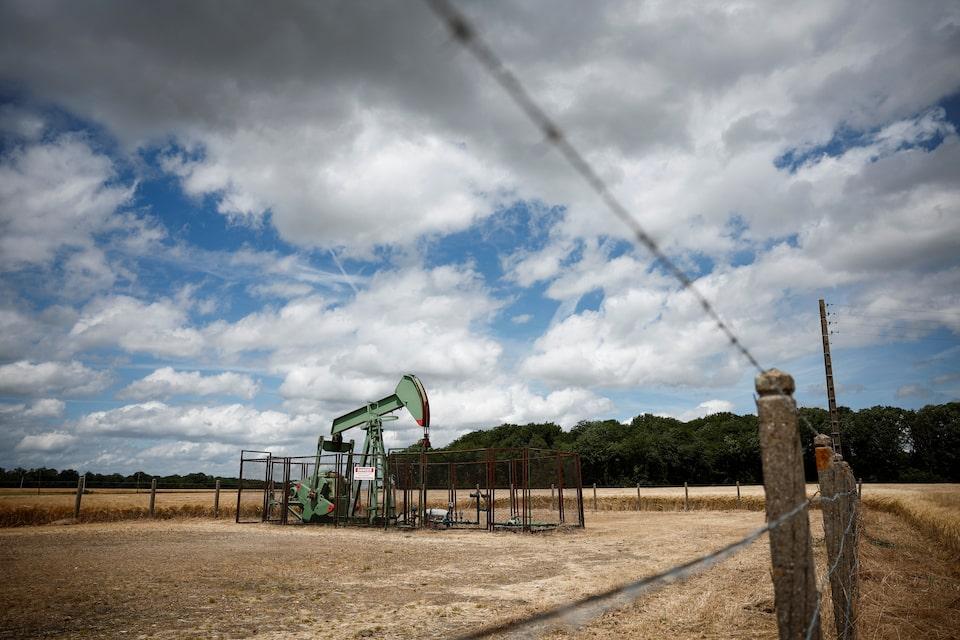
U.S. strikes on Houthis, Israel's in Gaza up Mideast tensions Trump tariff wars threaten global demand China economic data suggests rosier oil consumption outlook LONDON, March 18 (Reuters) - Oil prices rose more than 1% on Tuesday to their highest levels since the beginning of the month, supported by instability in the Middle East and China's plans for more economic stimulus. Brent futures climbed 91 cents, or 1.3%, to $71.98 a barrel by 1200 GMT, while U.S. West Texas Intermediate crude futures also rose 91 cents, 1.4%, to $68.49. Sign up here. Oil prices gained support from President Donald Trump's vow to continue the U.S. assault on Yemen's Houthis unless they end their attacks on ships in the Red Sea. Trump said on Monday he would hold Iran responsible for any attacks carried out by the Houthi group that it backs in Yemen. Meanwhile, Israeli air strikes in Gaza killed at least 200 people, Palestinian health authorities said, as attacks on Tuesday ended a weeks-long standoff over extending a ceasefire that halted fighting in January. "Along with U.S. strikes on the Houthis in Yemen, several factors provided support to the market," ING analysts said in a research note. "China unveiled plans to revive consumption, while Chinese retail sales and fixed asset investment growth came in stronger than expected." The state council, or cabinet, unveiled on Sunday a special action plan to boost domestic consumption, with measures such as increasing incomes and offering childcare subsidies. Crude oil throughput in China, the world's biggest crude importer, rose 2.1% in January and February from a year earlier, supported by a new refinery and Lunar New Year holiday travel, official data showed on Monday. The OECD said on Monday that Trump's tariffs would drag down growth in the United States, Canada and Mexico, and weigh on global energy demand. "With global supply surging and tariffs and trade wars set to hit global demand, we remain of the view that prices will head lower and eventually reach the mid $60s," said Robert Rennie, head of commodity and carbon strategy at Westpac. Further adding to global supply, Venezuela's state-run PDVSA has put together three operational scenarios indicating it plans to continue producing and exporting oil from its joint venture with Chevron after the U.S. major's licence expires next month, according to a company document reviewed by Reuters on Monday. Also in focus were talks between Trump and Russian President Vladimir Putin about ending the Ukraine war, due to take place on Tuesday between 1300 and 1500 GMT. Markets believe a potential peace negotiation would involve the easing of sanctions on Russia and the return of its crude supply to global markets, weighing on prices. In Nigeria, a blast struck the Trans Niger oil pipeline, its owner confirmed on Tuesday. The pipeline can transport around 450,000 barrels a day from onshore fields to the Bonny export terminal. https://www.reuters.com/business/energy/oil-prices-muted-slowdown-worries-offset-china-data-mideast-risks-2025-03-18/
2025-03-18 02:47
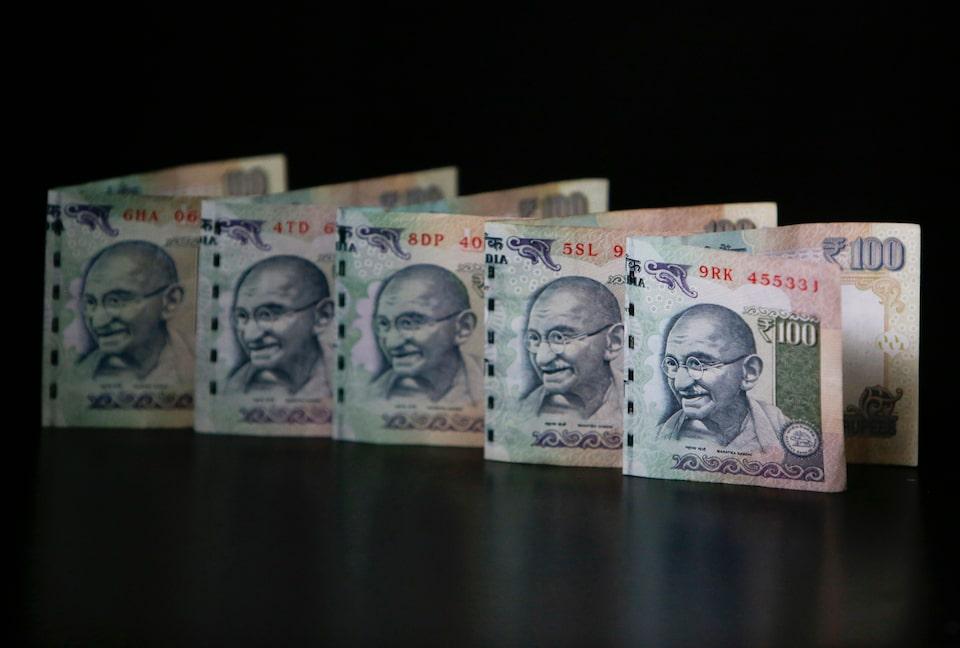
MUMBAI, March 18 (Reuters) - The Indian rupee may look to extend its recent string of gains on Tuesday, as the dollar wallows near a 5-month low against its major peers amid fears of a slowdown in the world's largest economy. The one-month non-deliverable forward indicates that the rupee will open at around 86.75 to the U.S. dollar compared with its previous close of 86.80. Sign up here. The rupee has strengthened for three consecutive sessions on the back of a softer dollar and a pick up in exporters' activity ahead of the end of India's financial year on March 31. Concerns about U.S. President Donald Trump's erratic trade policies have negatively impacted investors' outlook on the United States and weighed on the dollar, which is down over 4% against major peers this month. Softer economic data is starting to hint at the impact, with weaker-than-expected U.S. retail sales data for February reported on Monday, after a survey last week showed that consumer sentiment sunk to a near 2-1/2-year low in March. Meanwhile, India's merchandise trade deficit narrowed sharply to a more than 3-year low of $14.05 billion last month as imports fell amid rising global uncertainty. "While this number in itself is positive for the Indian Rupee ... if yesterday’s smaller trade deficit data is at least partly indicative of softer domestic demand trends in India, this may continue to weigh on equity and foreign capital inflows moving forward," MUFG Bank said in a note. Persistent outflows from local stocks have been a consistent drag on the local unit, with foreign portfolio investors having pulled out over $16.5 billion this year so far. Expectations of rate cuts by the Indian central bank alongside uncertainty about the impact of reciprocal tariffs from the U.S. are likely to keep the rupee biased lower with weakness likely to be more front-loaded in the first half of 2025, MUFG Bank said. KEY INDICATORS: ** One-month non-deliverable rupee forward at 86.99; onshore one-month forward premium at 24 paisa ** Dollar index at 103.51 ** Brent crude futures up 0.3% at $71.3 per barrel ** Ten-year U.S. note yield at 4.29% ** As per NSDL data, foreign investors sold a net $98.4 million worth of Indian shares on March 13 ** NSDL data shows foreign investors bought a net $51.1 million worth of Indian bonds on March 13 https://www.reuters.com/markets/currencies/rupee-may-look-extend-winning-run-growth-worries-hobble-dollar-2025-03-18/
2025-03-18 00:42
LAUNCESTON, Australia, March 18 (Reuters) - China's iron ore and steel sectors are caught between expectations that conditions are about to improve and the reality that much of the current data is fairly soft. The raft of data on Monday underscored this dynamic, with the National Bureau of Statistics reporting declines in China's property prices, investment and sales. Sign up here. January–February data showed property investment and sales fell 9.8% and 5.1% year-on-year, respectively, while new construction starts plummeted 29.6% following a 23.0% drop in 2024. New home prices fell 4.8% in February from a year earlier, adding to the data that underlined that the key property sector has so far failed to respond to Beijing's stimulus efforts. The weak data weighed on iron ore prices, with futures on the Singapore Exchange dropping 1.1% to close at $102.65 a metric ton on Monday. This is still up from this year's low of $97.31 hit on Jan. 6, but also down almost 5% from the peak of $107.81 reached on Feb. 12. China's main domestic iron ore contract on the Dalian Commodity Exchange also eased on Monday, ending at 781.50 yuan ($108.09) a ton, down from 787.50 on March 14 and some 6.6% below this year's high of 839 yuan from Feb. 21. The Dalian contract has traded in a fairly narrow range since October, anchored at 800 yuan a ton, as the market awaits clear signals about the state of China's economy, producer of just over half of the world's steel. The problem is that every time the market starts believing that Beijing's efforts to increase growth are bearing fruit, a reality check is delivered in the form of soft data. The weak property numbers came at the same time that the government ramped up efforts to stimulate consumer demand, with Beijing announcing at the weekend that it aims to "vigorously boost consumption". While the announcement lacked details, one area that was fleshed out was the expansion of the trade-in scheme, whereby consumers can upgrade appliances and vehicles using government subsidies. At the margin this should be positive for steel demand as many appliances such as fridges and dishwashers are made from the metal, as are vehicles. But cars and durable goods account for only about 17% of China's steel demand, according to data from iron ore miner BHP Group (BHP.AX) , opens new tab, while building construction accounts for 24% and infrastructure a further 17%. This means that even if the manufacturing side of the steel equation performs well, it won't be enough to stimulate demand unless construction also starts to pick up. STEADY STEEL Steel output in the first two months of 2025 was somewhat mixed, with official data showing production of 166.3 million tons of crude steel, down 1.5% from the January-February period in 2024. Daily output was about 2.82 million tons, which was up from the 2.45 million in December and also above the 2.75 million average for 2024 as a whole. The question is whether steel output in the first two months should have been even higher than it was given the 6.7% jump in exports to 16.7 million tons. Steel makers boosted outbound shipments as part of efforts to cash in ahead of the imposition of a 25% tariff on all steel and aluminium imports to the United States, one of new President Donald Trump's signature tariff policies. The start of the U.S. tariff on March 8 may lead to lower imports, but the impact may be not as bad as feared for steel exporters as U.S. steel makers are limited in how quickly they can increase production, meaning that steel consumers will be forced to continue importing and paying the tariffs. For now, the level of uncertainty is high in the steel sector as it waits to see if Beijing can spark some growth momentum and also how Trump's tariffs will play out over the next few months. The views expressed here are those of the author, a columnist for Reuters. https://www.reuters.com/markets/asia/chinas-steel-iron-ore-swing-between-hopeful-outlook-grim-reality-russell-2025-03-18/

2025-03-17 23:50
Pork, chicken plants allowed to run faster under waivers USDA says faster speeds improve efficiency Agency plans rulemaking to formalize speed increases CHICAGO/WASHINGTON, March 17 (Reuters) - The Trump administration said on Monday it plans to permanently allow U.S. poultry and pork processing plants to operate more quickly, raising concerns among advocacy groups about worker health and food safety. The U.S. Department of Agriculture decision is a victory for meat companies and industry associations such as the National Chicken Council, which have advocated for faster processing line speeds. Sign up here. However, it adds to health concerns about slaughterhouse workers, who often perform repetitive tasks with sharp knives and toil in extreme heat or cold. USDA will start a process to make permanent higher speeds that it allows at some facilities under waivers, according to a statement. Chicken plants with waivers can process up to 175 birds per minute, compared to a previous limit of 140 birds. The agency also will extend waivers, allowing facilities to "meet demand without excessive government interference," the statement said. USDA's announcement cited a lack of direct links between processing speeds and workplace injuries, but research shows that meatpacking workers face a greater risk of serious harm. Worker unions and other advocacy groups have long argued that greater speeds threaten food safety and pose a higher risk of stress injuries and accidents for workers. Immigrants and undocumented workers often fill meatpacking jobs. "Increased line speeds will hurt workers – it's not a maybe, it's a definite," said Stuart Appelbaum, president of the Retail, Wholesale and Department Store Union, which represents 15,000 poultry workers. In his first term, President Donald Trump in 2019 issued a rule that allowed pork plants to run processing lines as quickly as they wanted. A federal judge blocked the rule in 2021 after a challenge from worker unions. The Biden administration in 2023 allowed six pork plants to operate faster in a trial program for which USDA collected data on worker injuries. Making the higher speeds permanent will increase stability for pork producers, the National Pork Producers Council industry group said. USDA-funded data, released in January, found pork and chicken plant workers face higher risks than other manufacturing workers for musculoskeletal disorders, such as carpal tunnel syndrome. Among six pork plants, higher line speeds were associated with greater risks for workers at one plant and lower risks at another, while line speeds did not make a statistically significant difference at four facilities, according to the data. There was no association between greater speeds and higher risks for poultry workers, the data showed. Data from the Bureau of Labor Statistics indicate occupational illness cases reported in the animal slaughtering and processing industry were six times higher than the average for all industries in 2022. https://www.reuters.com/world/us/trump-administration-aims-make-faster-meat-processing-permanent-2025-03-17/

2025-03-17 23:46
Proposal to impose a 10% withholding tax on profits sent abroad Taxation on high incomes to involve monthly levy on dividends Income tax reform proposal to be presented on Tuesday BRASILIA, March 17 (Reuters) - Brazil's government will propose a 10% tax on corporate profits and dividends sent abroad to help offset revenue lost from an expanded tax exemption for individuals with lower incomes, two sources with knowledge of the matter said on Monday. The measure would deal a blow to multinationals with subsidiaries in Brazil, which now benefit from exemptions on remittances under a 1995 corporate income tax law that the government is looking to amend. Sign up here. The finance ministry did not immediately respond to requests for comment. The presidential palace said it has scheduled a presentation of the tax reform proposal for Tuesday at 11:30 a.m. in Brasilia (1430 GMT). In 2024, total profits and dividends sent abroad from Brazil amounted to $69.7 billion, compared to inflows in the same category of $24.1 billion, according to central bank data. President Luiz Inacio da Silva's government has insisted that its commitment to expand the income tax exemption for individuals - one of the leftist leader's key moves to halt his sliding popularity - would be offset fiscally. However, the details of the exemption and the offset remained unclear, fueling investor concerns about its impact on public finances in a country grappling with rising debt and mandatory expenditures. The government estimates that its proposal to expand an income tax exemption to benefit individuals earning up to 5,000 reais monthly will have a fiscal impact of 25.84 billion reais ($4.54 billion) in 2026, 27.72 billion reais in 2027, and 29.68 billion reais in 2028, added the sources. Currently, individuals earning up to 2,824 reais per month are exempt from income tax. TAXING THE WEALTHY The sources told Reuters the taxation on corporate profits and dividends sent abroad will complement a previously announced minimum effective tax rate on individuals earning more than 600,000 reais per year. Those rates would gradually increase to 10% for those making over 1.2 million reais annually, said the sources. In November, the government had proposed a sliding rate topping out at income of 1 million reais. According to one of the sources, the proposal includes a 10% withholding tax on the total amount of profits and dividends distributed above 50,000 reais per month from a legal entity to a single individual beginning in January 2026. This monthly tax will act as an advance, with taxpayers able to seek refunds for any excess payments when they calculate their annual tax liability under the new minimum tax system for the wealthy. Starting in 2027, based on earnings from 2026, taxpayers will pay this minimum tax on total annual income exceeding 600,000 reais. This amount will encompass all income, including those subject to exclusive or final taxation, as well as exempt income. Capital gains from transactions on the stock exchange or in over-the-counter markets must be included. Exceptions apply to other types of capital gains, as well as amounts received as inheritance or gifts in advance for heirs. ($1 = 5.6870 reais) https://www.reuters.com/world/americas/brazil-tax-overseas-profits-high-incomes-offset-tax-exemption-boost-2025-03-17/