2025-03-17 11:33
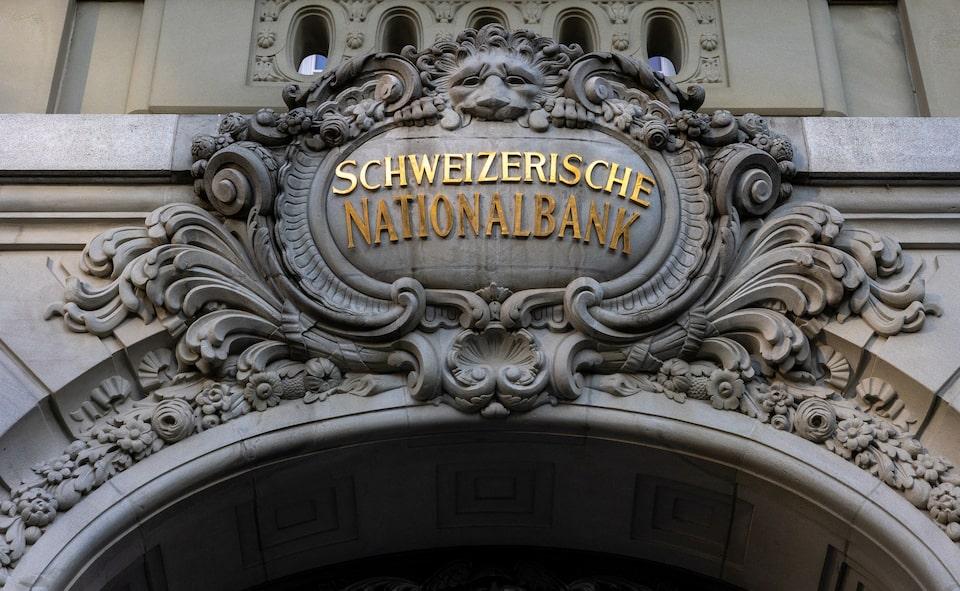
BENGALURU, March 17 - The Swiss National Bank will cut its main policy rate by a quarter percentage point on March 20 to 0.25% and hold it there until at least 2026, according to most economists polled by Reuters, who also said the risk of the rate turning negative again was low. Since the SNB's surprise 50 basis point rate cut in December, inflation has declined further toward the lower bound of the central bank's target range of 0-2%, hitting a near four-year low of 0.3% in February and leaving the door open for another cut. Sign up here. However, persistent Swiss franc weakness could reignite price pressures in the near term. Rising optimism around euro zone growth prospects thanks to an expected infrastructure and defence spending boom in Germany has boosted the euro. The common currency hit a more than six-month high of 0.9662 against the franc on Friday after German Chancellor-in-waiting Friedrich Merz reached an agreement with the Greens on a historic debt deal. A near 90% majority of economists, 28 of 32, in a March 12-17 Reuters survey predicted the SNB will cut its key interest rate by 25 bps on Thursday to 0.25%. The rest expected no move. "Current conditions suggest that another rate cut would support the nascent improvement in growth momentum and would be useful to anchor the medium-term inflation rate closer to 1%," said Karsten Junius, chief economist at J. Safra Sarasin. "However, stronger growth in the euro area usually leads to a stronger euro and a higher demand for Swiss exports...We consider risks of a recession or deflation as rather low. Zero or even negative interest rates are therefore not necessary." Nearly 60% of forecasters, 19 of 32, said rates would still be at 0.25% by year-end. Ten said they would fall to 0% and three expected them to remain at the current 0.50%. Swiss inflation, currently the lowest among G10 economies, is forecast to average 0.6% in 2025 and 0.8% in 2026. The U.S.-led trade war, which Switzerland has mostly avoided so far, may have an impact on inflation but the direction is unclear. The Swiss economy is predicted to grow at a steady 1.3% pace this year and 1.5% next, poll medians showed. In response to an additional question, all but two of 15 economists said the risk of negative rates was low. "Previously there had appeared to be a reasonable chance of the SNB cutting to zero or below, but those chances now look slim," said Adrian Prettejohn, Europe economist at Capital Economics. "Recent fiscal announcements by the European Union and Germany, which have pushed up German bond yields, (mean) the SNB can maintain a larger rate differential without needing to resort to further interest rate cuts." Markets are currently pricing in two more European Central Bank rate cuts this year. (Other stories from the Reuters global economic poll) https://www.reuters.com/markets/rates-bonds/swiss-national-bank-seen-cutting-rates-25-bps-risk-negative-rates-low-2025-03-17/
2025-03-17 11:27
PARIS, March 17 (Reuters) - The United States reported a first outbreak of H7N9 bird flu on a poultry farm since 2017, the World Organisation for Animal Health said on Monday, citing U.S. authorities. Highly pathogenic avian influenza, commonly called bird flu, has spread around the globe in the past years, including the U.S., leading to the culling of hundreds of millions of poultry. Sign up here. https://www.reuters.com/business/healthcare-pharmaceuticals/us-reported-first-outbreak-h7n9-bird-flu-farm-since-2017-woah-says-2025-03-17/

2025-03-17 11:11
March 17 (Reuters) - The U.S. Department of Justice filed a motion last week to extend two deadlines in U.S. Steel (X.N) , opens new tab and Nippon Steel's (5401.T) , opens new tab lawsuit against the Committee on Foreign Investment (CFIUS), a regulatory filing showed on Monday. The two companies in January jointly filed a lawsuit against CFIUS, which scrutinizes foreign investments for national security risks, after it recommended that a merger between the companies be rejected on national security grounds. Sign up here. In the lawsuit against CFIUS, U.S. Steel and Nippon Steel have alleged that then U.S. President Joe Biden prejudiced the committee's decision and violated the companies' right to a fair review. They claimed that Biden did so to win the favor of the United Steelworkers (USW) union in the swing state of Pennsylvania, where U.S. Steel is headquartered, in a bid for re-election. The motion from the DoJ calls for extending briefing deadlines in the CFIUS lawsuit for 21 days, and rescheduling the oral argument to the week of May 12 from April 24. The aim of the extension is to allow the government more time to complete its ongoing discussions with the steel companies on the merger, and eliminate the litigation against CFIUS, the filing by U.S. Steel showed. In February, U.S. President Donald Trump said that he would not mind if Nippon Steel took a minority stake in U.S. Steel. Following his comment, a Japanese government spokesperson said that Nippon Steel was considering proposing a bold change in its previous approach of seeking to buy U.S. Steel. Nippon Steel also tried to schedule a meeting between Vice Chairman Takahiro Mori and U.S. Commerce Secretary Howard Lutnick, according to a report in February. However, no deal has been inked yet. U.S. Steel and Nippon Steel have consented to the motion, but it still remains subject to court approval. https://www.reuters.com/markets/commodities/doj-files-motion-extend-deadlines-us-steel-nippon-steels-cfius-lawsuit-2025-03-17/

2025-03-17 10:58
LONDON, March 17 (Reuters) - What matters in U.S. and global markets today By Mike Dolan , opens new tab, Editor-At-Large, Financial Industry and Financial Markets Sign up here. Friday's sharp bounce on Wall Street flattered a rough week, but stock futures were back in the red again early today as investors continue to fret about the impact of all the economic policy upheaval on American households. I'll review what's moving global markets this morning and then explore how the Trump administration's potential plan to weaken the dollar could take Wall Street down with it. Today's Market Minute * Oil prices struck a two-week high on Monday, U.S. stock futures slid while those in Asia charged higher. * U.S. President Donald Trump said he has no intention of creating exemptions on steel and aluminum tariffs and said reciprocal and sectoral tariffs will be imposed on April 2. * There are "no guarantees" there will not be a recession in the United States, although there could be an adjustment, Treasury Secretary Scott Bessent said in an interview that aired on Sunday. * China's State Council unveiled on Sunday what it called a "special action plan" to boost domestic consumption, featuring measures including increasing residents' income and establishing a childcare subsidy scheme. * The United States will keep attacking Yemen's Houthis until they end attacks on shipping, the U.S. defense secretary said on Sunday, as the Iran-aligned group signaled it could escalate in response to deadly U.S. strikes the day before. U.S. retail under scrutiny Monday's U.S. retail sales update for last month will be in sharp focus today, despite consensus forecasts for a brisk rebound in shopping after a weather-related drop in January. Once that's out, the Atlanta Federal Reserve , opens new tab will update its closely-watched 'GDPNow' model, where the current estimate is for an alarming first-quarter economic contraction of 2.4%. Meanwhile, Donald Trump's new administration appears to have no intention of slowing the pace of policy disruption, but is instead telling Americans to brace themselves for a bumpy ride. Treasury Secretary Scott Bessent on Sunday again refused to rule out a recession, adding that stock market corrections like the one the S&P 500 (.SPX) , opens new tab recorded last week were "healthy". "We are going to have a transition, and we are not going to have a crisis," Bessent told NBC's "Meet the Press". Otherwise, it's a big week for central banks, with the Fed, Bank of Japan and Bank of England all meeting, However, no major policy moves are expected by any of them. The Fed is highly unlikely to change interest rates given all the shifting policy sands. But investors will scrutinize the updated economic and policy rate projections and try to assess whether there could be a pause in the rundown of the Fed's balance sheet. Fed policymakers currently expect two rate cuts this year, with futures markets half priced for a third. Ten-year Treasury yields were firmer to start the week, and the dollar (.DXY) , opens new tab was steady. Overseas, stocks in Europe and Asia were mostly up on the day. The latest sweep of Chinese economic updates showed that retail and industry numbers for the first two months of the year were above forecasts, but ongoing deflation in home prices continues. Beijing's latest consumption stimulus plan was also in focus, but mainland Chinese shares bucked the regional trend and ended the day lower. In Germany, last week saw an agreement among the mainstream political parties to push ahead with the massive fiscal stimulus and defence reboot. Now attention will turn to the actual vote on Tuesday. Although court challenges to the plans are underway, the vote is expected to pass. Now, I'd like to explore how all of the volatility on Wall Street in recent weeks may be related to the Trump administration's plans for the dollar. Dollar stops insulating U.S. stocks Seemingly erratic U.S. policymaking may be weakening the dollar as much as any potential 'Mar-a-Lago accord' could have hoped, but risks taking U.S. asset prices down with it. As U.S. trade and political alliances are sundered and Americans start to fret about an economic downturn, foreign investors in the United States are having to rethink some basic assumptions. Deutsche Bank strategist George Saravelos points out that in early 2025, overseas investors, who have for years been happy to hold U.S. dollar assets without hedging the currency, have had a rude awakening. Even though first-quarter losses for S&P 500 stocks (.SPX) , opens new tab are about 6% in dollar terms, unhedged European investors have suffered almost twice that - as the euro has surged 5% against the dollar amid a defense-related reboot of German and euro fiscal policy. Similarly, year-to-date losses of less than 1% in popular exchange-traded funds in U.S. Treasuries are magnified to more than 5% for euro-based investors. What's more, unhedged U.S. equity losses for European investors are now on par with the quarterly hit taken after Russia's Ukraine invasion in 2022 and other inflationary forces sparked bruising U.S. interest rate rises. And, outside the pandemic, these hits haven't been matched since the quarterly loss recorded when Donald Trump's first trade war with China unfolded in 2018. Beyond that, you have to go all the way back to the banking collapse of 2008 for a worst three months for unhedged European investors. Every equity market has periodic hiccups of course, but they usually happen across markets. Not so this year. European funds soaked in U.S. losses this quarter may wince at the sight of euro equities surging 10% by contrast. CORRELATION BREAKDOWN Saravelos's main point is that the positive correlation between U.S. equity declines and dollar weakness is new and alarming, as the greenback's 'haven' status has typically seen it appreciate during times of equity market stress in the past and softened the underlying blow for those overseas. It has not responded that way this year, a change in behaviour that appears to reflect wider concerns about what's happening stateside. If that safety factor is now gone - in part due to the policy fog and uncertainties coming from Washington - then some of the 'exceptional' attractions of U.S. investment may go too. "If this correlation breakdown between U.S. equities and the dollar continues, it will open up a more structural discussion among European - and global - asset managers on the diversification benefits of unhedged risky-asset dollar exposure," the Deutsche analyst told clients. "By extension, a sizeable net reduction of dollar exposure would be on the cards." 'GIGANTIC RESTRUCTURING' To what extent that's already underway is now for markets to work out with just over two weeks until the end of the first quarter, after which Trump's 'reciprocal' tariff hikes will kick in and potentially hit Europe hard - likely eliciting even more retaliation. A key question in many investors' minds is likely whether Trump's reworking of economic and political alliances is less 'chaos' than a deliberate gamble to reduce the value of the dollar and restore competitiveness to U.S. industry. This has led to speculation about 'grand bargains' that would force domestic demand stimulus and greater consumption in other parts of the world, thereby reducing others' dependence on America as the world's banker and unwinding dollar overvaluation in the process. Europe's rush to spend and re-arm this month due to weakening U.S. military support for the region may well be viewed as a Trump victory in that respect. But there may be a big price to pay at home for that 'win', despite the new administration's insistence that short-term market pain is worth enduring to rebalance the American and world economies. Even if you think that's a desirable direction of travel in the long run, the fact that America's investment deficit to the rest of the world is now in the region of $24 trillion dollars suggests there could be a far more painful repricing of U.S. assets ahead alongside a weaker currency. What that repricing means for U.S. GDP - which Bank of America points out rose 50% in nominal terms over the past five years - is another question. And while some think there will simply be short-term market disruptions counted in weeks or months, others are not so sure. "The administration thinks that high tariffs will lead to massive capital investments in the U.S., thus leading to high-paying jobs and higher revenue for the federal government," Stifel's Chief Washington Policy Strategist Brian Gardner recently said. "Regardless of what one thinks of the merits of this policy, it would require a gigantic restructuring of the global economy which will take several years to achieve." Buying market dips in that environment will be very brave. Chart of the day Nervy eyes are now trained on the U.S. consumer after a turbulent first few months of Donald Trump's new administration, and the latest surveys reflect this anxiety. The University of Michigan's monthly series showed overall household sentiment index hit a 28-month low in March, with a wide dispersion depending on the political affiliation of the respondents. But perhaps surprisingly, even Republican voters were more downbeat this month. Today's events to watch * U.S. February retail sales, New York Federal Reserve's February manufacturing survey, March NAHB housebuilder survey, January retail/business inventories * Atlanta Fed updates its "GDPNow" model on Q1 growth * OECD economic outlook update * European Central Bank President Christine Lagarde speaks Opinions expressed are those of the author. They do not reflect the views of Reuters News, which, under the Trust Principles , opens new tab, is committed to integrity, independence, and freedom from bias. https://www.reuters.com/markets/us/global-markets-view-usa-2025-03-17/
2025-03-17 10:50
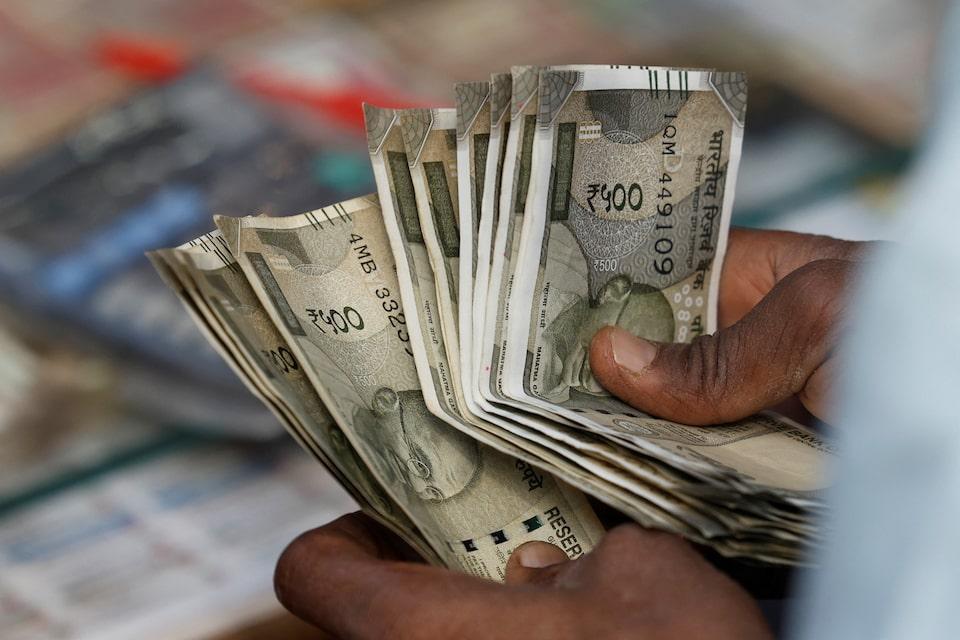
MUMBAI, March 17 (Reuters) - The Indian rupee strengthened for the third consecutive session on Monday, helped by dollar sales by exporters and foreign banks, coupled with a broadly softer greenback that hovered near a five-month low against its major peers. The rupee closed at 86.80 against the U.S. dollar, up 0.2% on the day. The currency rose to a peak of 86.7625, its highest since February 24, before trimming gains. Sign up here. Other Asian currencies were mostly rangebound, while the dollar index was down 0.2% 103.5, lingering close to a five-month low hit last week. The rupee was aided by dollar sales by foreign banks and exporters during the session, a trader at a mid-sized private bank said. Exporters are likely to stay active in the run-up to the end of India's financial year on March 31, the trader said. Meanwhile, India's merchandise trade deficit (INTRD=ECI) , opens new tab eased to $14.05 billion in February, data released on Monday showed. The deficit is the lowest since August 2021 and came in well below the $21.65 billion forecast in a Reuters poll. A broadly weaker dollar has also helped lift the rupee by about 0.8% so far in March, although the local unit has lagged most of its regional peers this month. Concerns about a slowing U.S. economy amid escalations in trade policies have weighed on the dollar, U.S. bond yields and equities. The S&P 500 (.SPX) , opens new tab confirmed a correction last week and futures indicated that it is was likely to open in the red on Monday. The focus on Monday will be on U.S. retail sales data for cues on how consumers are faring in the world's largest economy. "Any downside surprise today probably risks weaker equities, lower US interest rates and a weaker dollar," ING Bank said in a note. https://www.reuters.com/markets/currencies/rupee-continues-winning-run-exporter-foreign-banks-dollar-sales-help-2025-03-17/
2025-03-17 10:21
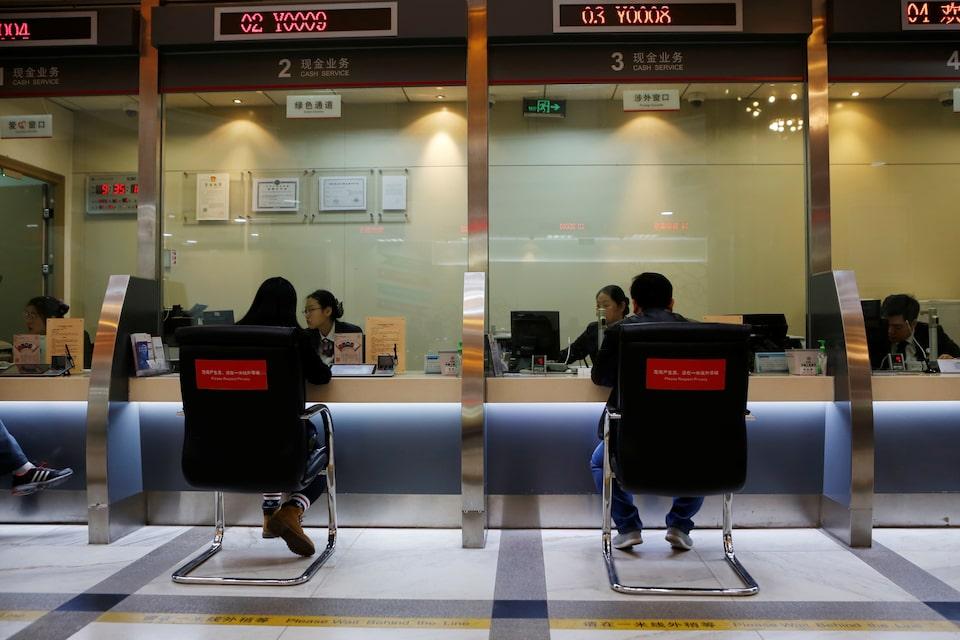
SHANGHAI/SINGAPORE, March 17 (Reuters) - Foreign investors are rushing into Chinese interbank debt instruments as mainland yields rise, seeking to exploit the advantage of favourable currency conversion rates and the refuge offered by the market's low correlation with the rest the world. U.S. dollar investors in particular are snapping up negotiable certificates of deposit (NCDs) -- popular short-term debt instruments issued between banks for their financing needs -- as the hedged return on these exceeds that on U.S. Treasuries. Sign up here. WHY IT'S IMPORTANT Foreign investors have not increased holdings of Chinese government bonds since September 2024 after a year of consistent purchases as the yuan weakened and the carry trade turned less attractive. But they have increased holdings of NCDs since December, signalling a slight turn in capital flows into China and providing the yuan a buffer as a Sino-U.S. trade war simmers. BY THE NUMBERS Foreign investors held 1.14 trillion yuan ($157.51 billion)worth of NCDs at the end of February, the highest on record and marking the third consecutive month of buying. The yield on one-year NCDs has jumped around 40 basis points (bps) this year to around 2%, while 10-year sovereign yields rose 20 bps to 1.89%. Dollar investors also earn 2.8% when they swap their cash into yuan, which means NCD investments earn 4.8% versus just around 4% on one-year Treasuries. QUOTES "Global investors are trying to seek something that is very decorrelated... The price action is completely different to the rest of the world. That mindset attracts some of the flow back to China," said Cary Yeung, head of greater China debt at Pictet Asset Management. Rising local yields, a favourable hedging environment, and the prospect of U.S. interest rate cuts render Chinese bonds attractive for investors, said Wei Li, head of China multi-asset investments at BNP Paribas. ($1 = 7.2378 Chinese yuan renminbi) https://www.reuters.com/markets/asia/foreign-investors-lured-high-yielding-chinese-bank-debt-2025-03-17/