2025-03-17 07:41
March 17 (Reuters) - South African thermal coal exporter Thungela Resources (TGAJ.J) , opens new tab said on Monday its 2024 profit declined 29% on the back of lower prices for the fossil fuel. Thungela's profit for the year through December 2024 fell to 3.544 billion rand ($194.79 million) from 4.97 billion rand previously. Sign up here. Thermal coal prices remained soft during the year due to subdued demand in Europe, where milder winter conditions resulted in high coal and gas stock levels. The company produced 13.6 million tons of coal from its South African mines, above its expected range of 11.5 million tons and 12.5 million tons, thanks to improved freight rail performance at state-owned logistics company Transnet. The miner, which acquired Ensham mine in Australia to mitigate the risk posed by South Africa's logistics bottlenecks, said the Queensland mine produced 4.1 million tons of coal during 2024. Thungela declared a final dividend of 11 rand per share, bringing the total payout for 2024 to 13 rand, compared to 20 rand in 2023. ($1 = 18.1943 rand) https://www.reuters.com/world/africa/coal-miner-thungela-reports-29-profit-drop-weak-prices-2025-03-17/

2025-03-17 07:15
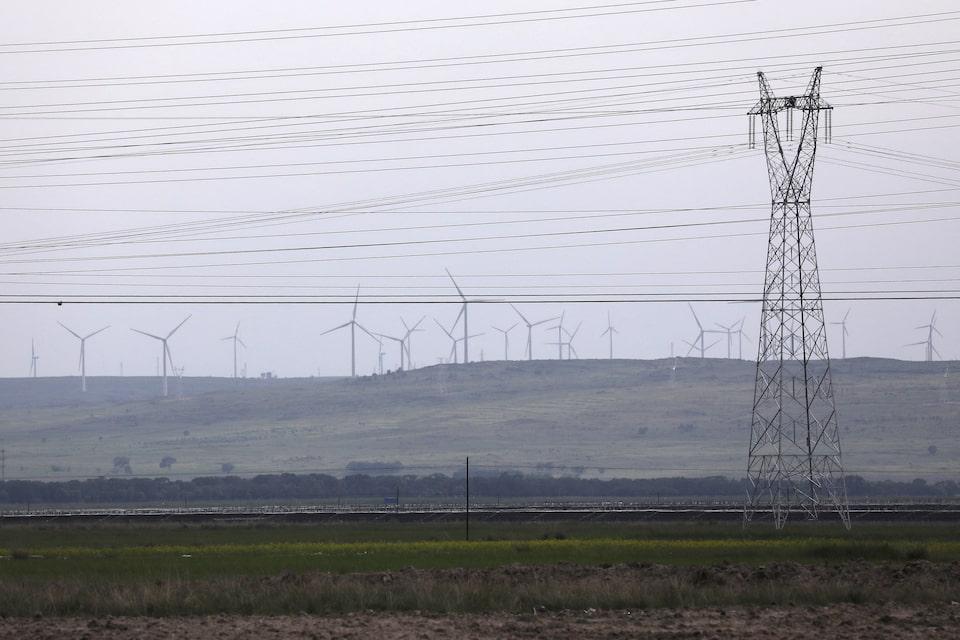
BEIJING, March 17 (Reuters) - Thermal power generation in China, fuelled mainly by coal, fell at the beginning of the year, down in both January and February, official data showed, one of only a handful of times it has declined during that period in more than two decades. China's power generation dipped by 1.3% to 1.49 trillion kilowatt-hours (kWh) in the first two months of the year, according to data from the National Bureau of Statistics (NBS) on Monday. Sign up here. Outside of 2020, at the start of COVID-19, and 2009 - following the global financial crisis - this was the first time power demand has fallen since at least 1998. An unseasonably warm winter has weighed on demand. Last year was China's warmest since comparable records began more than six decades ago, according to meteorological data. China's mostly coal-powered thermal power generation led the decline, falling 5.8% in January and February, to 1.02 trillion kilowatt-hours (kWh). Natural gas-fired power plants also contribute a small portion to thermal power generation. The data is combined for both months to smooth out the effects of the Lunar New Year. Hydropower, China's second-largest power source, rose 4.5% to 146.1 billion kWh, while solar and wind power generation grew 27% and 10%, respectively, during the period. Renewable generation may have increased by more than the data suggests, however, as the NBS reports omit a portion of generation from China's small-scale renewables, such as distributed solar. The NBS data showed power generation grew 6.4% in the first half of 2024, for example, but London-based think tank Ember, using data from the National Energy Administration, said that electricity output rose 7.3% in the same period. China's thermal power generation rose 1.5% for 2024 as a whole, although that was the slowest growth rate in nine years outside of the COVID pandemic. Coal consumption rose in line with the increase in thermal power generation, up 1.7% on the year according to an industry association. While most of China's coal is consumed in the power sector, it is also used in industrial applications and for heating. https://www.reuters.com/world/china/chinas-thermal-power-generation-down-58-year-on-year-jan-feb-2025-03-17/
2025-03-17 06:56
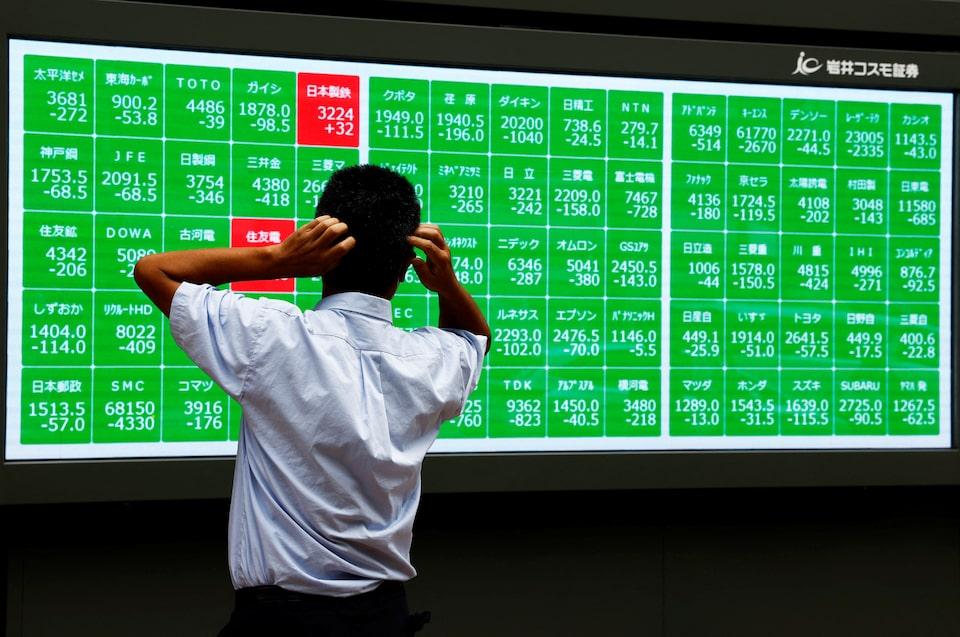
US retail data shows underlying consumer resiliency Oil prices hover at two-week highs on Yemen attacks, China data German debt reform, Russia-Ukraine talks boost European stocks NEW YORK, March 17 (Reuters) - Wall Street stocks ended higher and gold held near $3,000 per ounce on Monday after mixed economic data and ahead of talks between U.S. President Donald Trump and Russian President Vladimir Putin aimed at ending the Ukraine war. Over the weekend, U.S. strikes against Yemen's Houthi movement threatened to escalate tensions in the oil-rich Middle East, driving crude prices higher on supply fears. Sign up here. All three major U.S. stock indexes were in positive territory, with weakness in Tesla (TSLA.O) , opens new tab, Nvidia (NVDA.O) , opens new tab and Amazon.com (AMZN.O) , opens new tab shares holding the Nasdaq's gains in check. Trump said he would speak with Putin on Tuesday to discuss a potential Russia-Ukraine cease-fire proposal, which could alleviate some geopolitical uncertainty. "There has been a pretty big selloff, so some sort of a rebound, is to be expected and I think that's part of what we're seeing," said Oliver Pursche, senior vice president at Wealthspire Advisors, in New York. "And the prospect of Russia and Ukraine developing a cease-fire that could end up leading to a more permanent peace, it's positive for markets, not just in the U.S. but globally." Weaker-than-expected U.S. retail sales data was at least partially attributable to cheaper gasoline; a solid rebound in online receipts and an upside surprise in the core measure showed underlying consumer strength. "We had relatively weaker than expected (retail sales) for February, which would tend to indicate less inflationary pressures that would potentially offset the effect of tariffs," Pursche added. The U.S. Federal Reserve and other central banks , opens new tab are expected to convene for policy meetings this week, but are largely expected to keep to the sidelines until the ramifications of Trump's multi-front tariff war can be further assessed. The Dow Jones Industrial Average (.DJI) , opens new tab rose 353.44 points, or 0.85%, to 41,841.63, the S&P 500 (.SPX) , opens new tab rose 36.18 points, or 0.64%, to 5,675.12 and the Nasdaq Composite (.IXIC) , opens new tab rose 54.58 points, or 0.31%, to 17,808.66. European shares extended their rally as Germany's debt reform plans helped to boost confidence that Europe's largest economy will increase spending and kick-start growth. Investors were also focused on the outcome of Ukraine-Russian cease-fire talks, which could translate to lower energy costs for Europe. European stocks have handily outperformed their global counterparts so far this year. Europe's broad FTSEurofirst 300 index (.FTEU3) , opens new tab rose 18.02 points, or 0.83%. MSCI's gauge of stocks across the globe (.MIWD00000PUS) , opens new tab rose 7.35 points, or 0.88%, to 843.49. The pan-European STOXX 600 (.STOXX) , opens new tab index rose 0.79%, while Emerging market stocks (.MSCIEF) , opens new tab rose 12.69 points, or 1.13%, to 1,132.30. MSCI's broadest index of Asia-Pacific shares outside Japan (.MIAPJ0000PUS) , opens new tab closed higher by 1.25%, to 588.94, while Japan's Nikkei (.N225) , opens new tab rose 343.42 points, or 0.93%, to 37,396.52. The U.S. Treasury yield curve flattened amid mixed retail sales data, while shorter-dated yields rose on worries that the U.S. economy will soften while the Fed holds its restrictive policy rate steady. The yield on benchmark U.S. 10-year notes fell 1 basis points to 4.299%, from 4.308% late on Friday. The 30-year bond yield fell 2.3 basis points to 4.5919% from 4.615% late on Friday. The 2-year note yield, which typically moves in step with interest rate expectations for the Federal Reserve, rose 3.3 basis points to 4.048%, from 4.015% late on Friday. The dollar hovered near a five-month low against the euro as uncertainties arising from Trump's trade policies kept investors cautious on the dollar. The dollar index , which measures the greenback against a basket of currencies including the yen and the euro, fell 0.33% to 103.39, with the euro up 0.38% at $1.092. Against the Japanese yen , the dollar strengthened 0.29% to 149.05. The Mexican peso < MXN=> weakened 0.08% versus the dollar at 19.953. The Canadian dollar strengthened 0.6% versus the greenback to C$1.43 per dollar. Crude oil prices were supported by supply concerns arising from the U.S. vow to continue its attacks targeting Iran-aligned Houthis in Yemen, while encouraging economic data from China supported the demand side of the coin. U.S. crude rose 0.60% to settle at $67.58 per barrel, while Brent settled at $71.07 per barrel, up 0.69% on the day. Gold gained ground, hovering around the $3,000 level it breached for the first time last week as investors focused on this week's rate decision from the Federal Reserve. Spot gold rose 0.56% to $3,000.76 an ounce. U.S. gold futures rose 0.23% to $3,001.50 an ounce. https://www.reuters.com/markets/global-markets-wrapup-1-2025-03-17/
2025-03-17 06:55
NEW DELHI, March 17 (Reuters) - India's wholesale inflation (INWPI=ECI) , opens new tab in February rose to 2.38% year-on-year, from 2.31% in January on higher prices of some vegetables and fruits, government data released on Monday showed. The wholesale inflation, a proxy for producer prices, was higher than the 2.36% projected by economists in a Reuters poll. Sign up here. Inflation pressures in the South Asian country have been easing in recent months as favourable weather has helped vegetable output and improved supplies, raising expectations for more interest rate cuts in the coming months. India's retail inflation fell below the central bank's 4% target in February mainly due to a decline in vegetable prices, government data showed last week. Wholesale food prices rose 5.94% in February, after rising 7.47% in January. Vegetable prices fell 5.80%, compared to an 8.35% rise in the prior month. However, prices of potatoes and onions, along with fruits, rose between 21% and 48%. Cereal prices rose 6.77% in February, against a 7.33% rise a month earlier. Prices of manufactured products, which account for about 64% of the wholesale price index, increased 2.86% after rising 2.51% rise in January. Meanwhile, fuel and power prices dropped 0.71% year-on-year, compared with a 2.78% drop in January. https://www.reuters.com/world/india/indias-february-wholesale-inflation-238-yy-2025-03-17/

2025-03-17 06:53
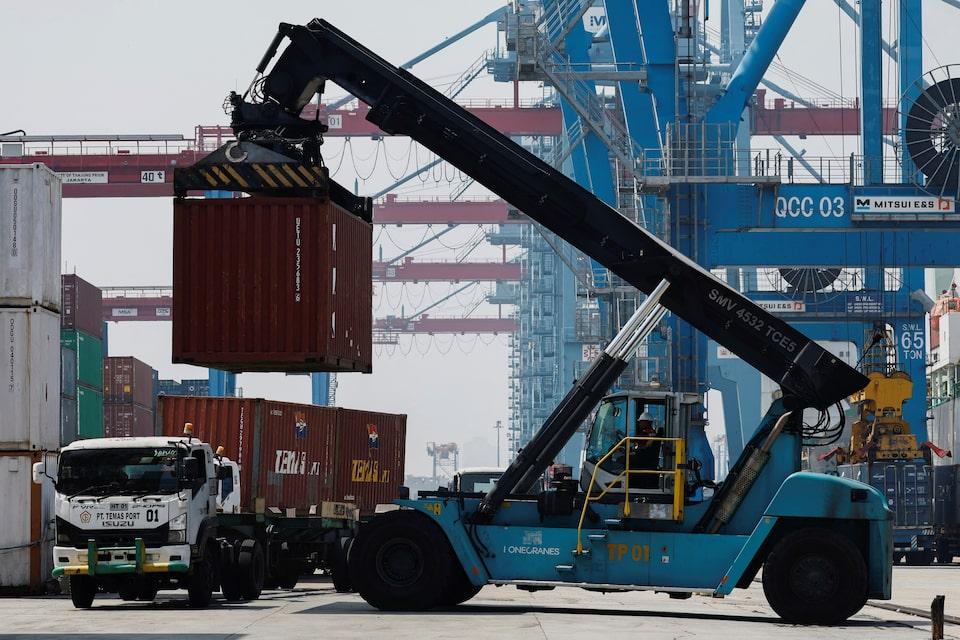
Feb surplus of $3.12 bln bigger than $2.45 bln in poll Exports +14.1% y/y, vs +9.1% seen in poll Imports +2.3% y/y, vs +0.6% in poll Palm oil exports up almost 90% to $2.3 bln in Feb JAKARTA, March 17 (Reuters) - Indonesia's trade surplus was bigger than expected in February as a surge in palm oil shipments bolstered exports, data showed on Monday, extending a strong start to the year even as the spectre of tariff wars dimmed the outlook for global trade. On top of the uncertainty created by U.S. tariffs, changes to Indonesia's domestic policy settings could also hurt mining shipments in the months ahead, some economists warned. The February surplus of $3.12 billion was larger than the $2.45 billion forecast by analysts in a Reuters poll, and followed an upwardly revised $3.49 billion surplus in January, the statistics department said. Sign up here. Exports rose 14.05% in February from a year earlier to $21.98 billion, quicker than the 9.10% rise expected by analysts in the poll. The value of crude and refined palm oil exports jumped nearly 90% in February from a year earlier to $2.27 billion. Prices of the edible oil have risen in recent months on expectations of tight supply. In volume terms, shipments rose by an annual 45% to 2.06 million metric tons. Exports of precious metals, jewellery and nickel metals also rose, helping offset a drop of nearly 20% in coal exports, which the statistics bureau said was due to both lower prices and volumes, as well as a 6% decline in oil and gas shipments. By value, February coal exports were worth $2.08 billion, the lowest in three years. Imports by Southeast Asia's largest economy were $18.86 billion in February, up 2.30% on a yearly basis, compared with a 0.6% increase expected in the poll, supported by a 24% surge in vehicles and spare parts imports. Hosianna Situmorang, an economist with Bank Danamon, said the trade data outlook would be coloured by Jakarta's proposal to hike royalty rates across commodities like coal, nickel, copper, gold and tin, which came as some commodity prices were declining. "These measures add financial strain to the mining sector ... potentially weakening Indonesia's trade surplus and deterring investment," she said. Exports of coal and nickel metals made up nearly 20% of total shipments last month. Bank Permata's economist Josua Pardede said imports would likely rise further due to the government's pro-growth policy, while exports would struggle amid escalating trade war tensions. The trade data will be among a host of economic indicators the central bank considers in its monthly review of monetary policy later this week. Bank Indonesia is likely to keep rates unchanged to focus on currency stability, a separate Reuters poll showed. https://www.reuters.com/markets/asia/indonesias-february-exports-jump-1405-yy-above-forecast-2025-03-17/
2025-03-17 06:52
OBR March 26 forecast 'crucial' credibility test: investors UK is G7 economy most vulnerable to market shocks Traders view fiscal rule like a currency peg: BofA Britain's twin deficits, hot money flows a vulnerability LONDON, March 17 (Reuters) - Britain's public finances, strained by growing debt and sluggish growth, face a crucial test this month that investors say could prompt another market shock to an economy that is increasingly reliant on fickle foreign funds. Finance minister Rachel Reeves will deliver an update on the public finances on March 26, based on an assessment by the Office for Budget Responsibility, Britain's fiscal watchdog. Sign up here. Reeves says her fiscal rules, which aim to balance day-to-day spending against revenues and reduce public sector net financial liabilities as a share of the economy in future years, are non-negotiable. But investors fear Britain risks falling into a painful trap in which enforcing those rules - through spending cuts or higher tax - hurts the investment needed to improve long-term growth. Britain has the biggest current account deficit among advanced economies, bar the United States. And capital flows from the rest of the world have increasingly taken the form of short-term money, rather than stickier forms of capital such as direct investment. That reliance on short-term capital, which can be pulled away easily in a sell-off, has been greater in Britain than for any other major advanced economy running a current account deficit, Reuters calculations show. Bank of America strategist Kamal Sharma said Reeves' fiscal rules risked becoming a target for traders, similar to exchange rate pegs during the late 1990s Asian crisis. "A big question for many countries is how do you grow your economy to the extent where you can reduce your debt profile? Now the UK is certainly at the forefront on that issue," said Sharma. "As the Asia crisis and the recent tumult in the UK and France have shown, markets have tended to gravitate towards some form of notional anchor - be it fixed exchange rates or fiscal rules." Felipe Villarroel, partner, portfolio management at TwentyFour, agreed there were some similarities between the UK fiscal rules and a currency peg - even if comparisons with emerging markets were overstated. "It is a bit dramatic. The UK is still a highly rated sovereign nation," Villarroel said. But he added that markets could still test the rule. "The similarities are having a hard rule that you tell people you are going to abide by no matter what," he said. "When the situation evolves and it looks like you will have to break (the rule) then the consequence could be a lot of market volatility." Britain's economy expanded just 0.1% in the fourth quarter of 2024 and output declined unexpectedly in January. The Bank of England last month halved its 2025 growth forecast to 0.75%. "It's an economy that seems to have lost the ability to grow," said former Bank of England policymaker Willem Buiter. "The reason that people are worried about the budget in the UK is that the prospects for generating greater revenues, given tax rates, are extremely poor." VULNERABLE A sharp selloff in bonds and sterling in January - when markets around the world worried about U.S. President Donald Trump's programme - highlighted the vulnerabilities in UK markets. Last week's surge in German government borrowing costs also dragged UK gilt yields higher. Outflows from UK stock funds hit an eight-month high in February, Lipper data showed, while the domestically-focused UK FTSE 250 share index (.FTMC) , opens new tab is down roughly 5% since the end of January. And while U.S. Treasury bond prices have increased compared with a month ago as Trump's policy plans raised growth fears, gilts - which usually track Treasuries closely - have sold off. Brexit turmoil and the 2022 "mini-budget" episode under former prime minister Liz Truss briefly brought some comparisons from investors between Britain and emerging markets. Prime Minister Keir Starmer and Reeves promised before July 2024's election that they would bring stability back. But the 10-year gilt yield has also shown more volatility over the last six months - measured by its standard deviation - than any other Western European equivalent. Asked if she was worried about a possible adverse market reaction to her March 26 statement, Reeves said she would not give a running commentary on preparations. "We took the action that was necessary in October to secure our public finances," she told Reuters on the sidelines of a recent G20 summit in South Africa, referring to the Labour government's first budget. Reeves says she will act if needed to meet her budget rules. REEVES' REACTION BNP Paribas said the market might view drastic action on March 26 as panicky. Instead, Reeves could commit to spending cuts in the near future and possibly even tax measures later in the parliament. "Ultimately, we think the government will take a combined approach, not reacting too quickly to market pressures, nor putting all its eggs in one basket," BNP Paribas economist Dani Stoilova said. Van Luu, head of currency and fixed income strategy at Russell Investments, said sterling and government debt would react better to spending cuts than tax hikes. "It's a political choice in the end, what the government does, but market participants would certainly prefer spending cuts," he said. Artemis fixed income manager Liam O'Donnell said gilts were not unattractive at current yields. "But the most important swing factor," he said, "is the lack of fiscal room available to the Labour government." https://www.reuters.com/world/uk/britains-growth-risks-put-bond-investors-high-alert-2025-03-17/