2025-03-14 19:35
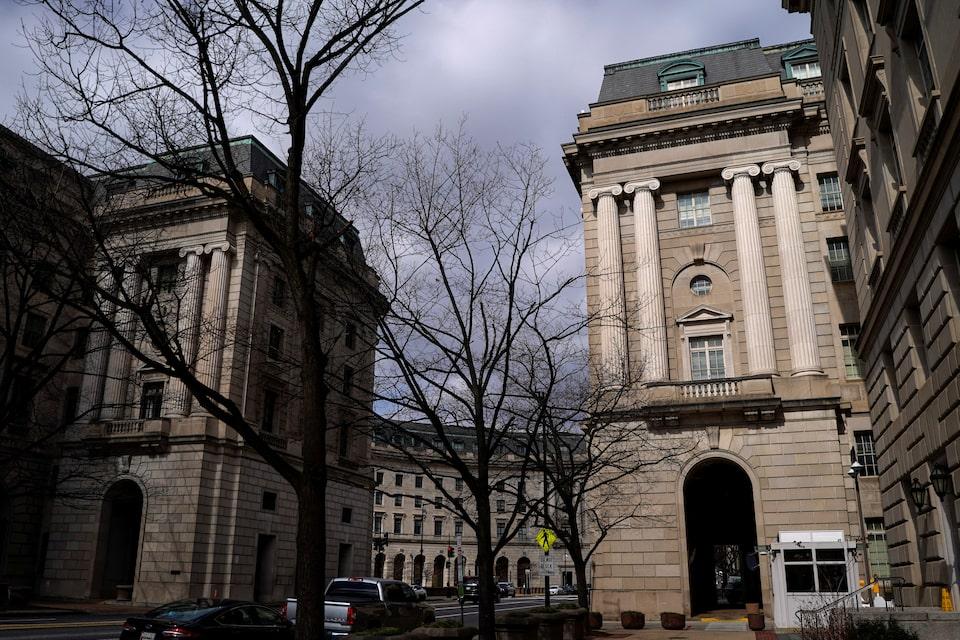
IRS to assess investment costs vs outcomes, official says IRS to 'realign' workforce, no staff cut target identified AI to play bigger role in collecting taxes, Bessent says WASHINGTON, March 14 (Reuters) - The U.S. Internal Revenue Service is taking a "strategic pause" in its technology modernization investments to re-evaluate its operating approach in light of new artificial intelligence technologies, a senior IRS career technology official said on Friday. The agency will review a number of technology modernization initiatives that have been taken in recent years, including the new Direct File free filing system for tax returns that was launched last year under the Biden administration, the official told reporters. Sign up here. As the Trump administration prepares a second wave of mass firings at federal government agencies, a person familiar with IRS plans told Reuters that the tax collection agency was planning to eliminate 20% to 25% of its 100,000-strong workforce. The IRS official said the agency did not have a specific number of staff cuts in mind as a result of the technology pause, but said there would be an opportunity to "realign the workforce to those new ways of doing business." U.S. Treasury Scott Bessent has said numerous times that the IRS will be able to rely on "the great AI revolution" to improve tax collections and customer service. He has not named a specific budget or staff reduction goal. The official said IRS technology has been built over many decades, often with many external contractors. "Unfortunately, this often means that a large investment yields a small outcome," said the official, who spoke to reporters on condition of anonymity. He added that the review "will help us overcome the challenges we've observed and experienced, untangle from multiple integrator solutions, situations and solutions, and realign us to achieve the technological modern state we've been pursuing for many years." The official added that the evaluation has not affected the 2025 tax filing season, with IRS systems continuing to accept tax returns and send out refund payments. The pause marks another shift away from the original $80 billion in IRS investment funding over a decade that was included in the 2022 Inflation Reduction Act, mainly a clean energy subsidy law. Clawing back those investments in modernization, customer service and tax collections has been a target of Republicans in Congress, who argued that the funding was aimed at harassing taxpayers. Subsequent stop-gap government funding measures have whittled that down by as much as half. Technology upgrades over the past two years included new scanning technology to automate the processing of paper returns, AI customer assistance chatbots, and initial investments to replace aging computer systems based on 1960s-era technology architecture. The Treasury under the Biden administration last year estimated that the IRS funding, including from technology improvements, would yield $561 billion new revenue over a decade. https://www.reuters.com/technology/artificial-intelligence/us-irs-re-evaluate-modernization-investments-light-ai-technology-2025-03-14/
2025-03-14 19:33
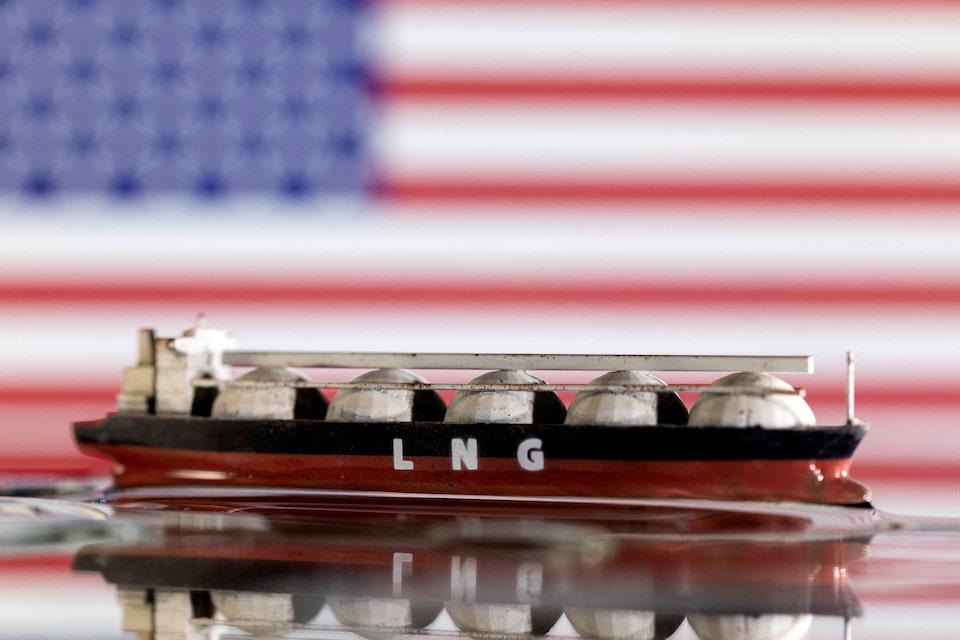
HANOI, March 14 (Reuters) - Vietnamese and Americans firms have signed a series of deals on energy and minerals during a visit to the United States by Vietnam's trade minister, state media and one of the firms said on Friday. Vietnamese companies are in talks with U.S. firms to buy American crude oil and LNG, said state-controlled PetroVietnam Power, which is a signatory to one of the deals and has executives accompanying the minister on the trip. Sign up here. Vietnamese trade minister Nguyen Hong Dien is in the United States to discuss trade cooperation, as the Southeast Asian country scrambles to avoid reciprocal tariffs that the Trump administration has threatened globally to reduce America's trade deficit. PetroVietnam Power in a statement said it has signed a memorandum of understanding with GE Vernova to buy GE equipment for gas-fired power plants. It did not elaborate on the agreements signed, but said they valued at $4.15 billion. Reuters could not independently confirm that figure. Other deals include those between PetroVietnam Gas and Conoco Phillips and Excelerate and between Vietnamese oil refiner Binh Son and Kellogg Brown & Root, according to PetroVietnam Power and state media reports. Other agreements are between Vietnam's fuel trading firm Petrolimex and the U.S. Grains Council, Renewable Fuels Association, Growth Energy, and a mineral processing cooperation deal between Masan Group with U.S. International Development Finance Corp, they said. The trip came ahead of a deadline U.S. President Donald Trump has set next month for federal agencies to complete comprehensive reviews of a range of trade issues, including analyses of persistent U.S. trade deficits. In Asia, Vietnam, Taiwan, and Thailand are those most exposed to the possibility of increases in U.S. tariffs due to their high export-to-GDP ratios with the United States, according to a Reuters analysis. https://www.reuters.com/markets/deals/us-vietnam-firms-sign-deals-valued-415-bln-vietnamese-firm-says-2025-03-14/
2025-03-14 18:48
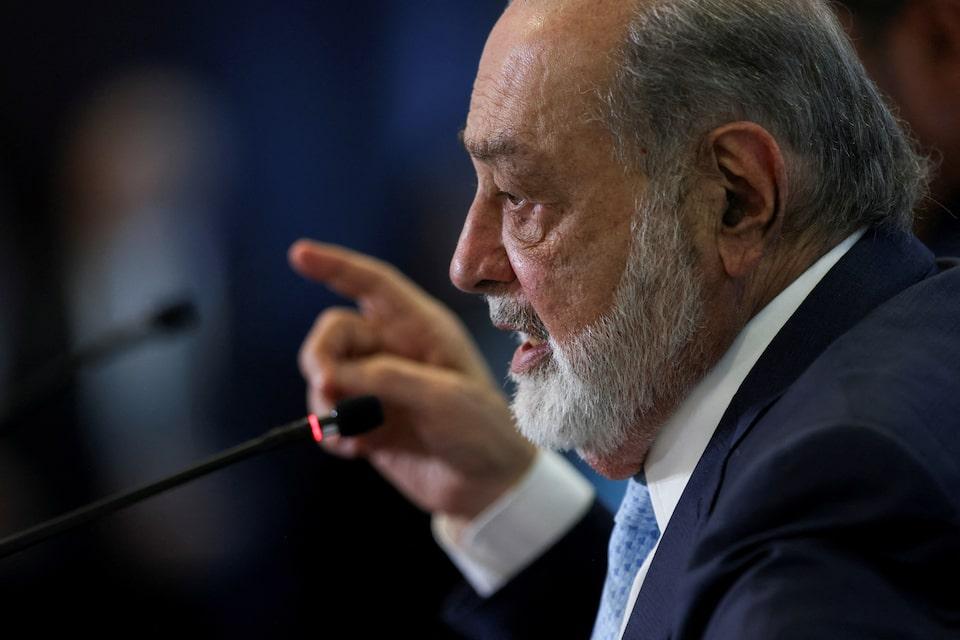
MEXICO CITY, March 14 (Reuters) - Mexican state energy company Pemex is in talks with Carlos Slim which could see the billionaire tycoon help bankroll two of the country's most promising crude oil and natural gas fields, sources familiar with the matter told Reuters. The negotiations, which have not been previously reported, indicate Slim's growing clout in Mexico's struggling energy sector, expanding his business empire which already spans telecommunications, banking, insurance, retail and hospitality. Sign up here. Slim, one of the world's richest people, has built close relations with the leftist government and avoided the public clashes that occasionally broke out between former President Andres Manuel Lopez Obrador and big business. Talos Mexico, in which Slim is a majority investor, Harbour Energy, and Pemex are in advanced discussions to jointly operate Zama, a deepwater project in the Gulf of Mexico, a senior government source said. The tycoon is also a eyeing participation in the country's most important onshore natural gas field, Ixachi, the government source and two other sources said. While Pemex is the current operator of Zama, which has yet to start producing, the source said talks were leaning towards a joint operating agreement, meaning Pemex would cede some control - a rare model for the state company. Pemex owns 50.43% of Zama while Talos Mexico and Harbour Energy own 17.4% and 32.2% respectively. Pemex did not respond to a request for comment, while Grupo Carso - through which Slim owns the stake in Talos Mexico - declined to comment. Linda Cook, the company's CEO, said last week on call with investors that there would likely be changes to the way Zama is operated, without giving details. Harbour Energy referred Reuters to Cook's comments in response to questions about the talks. Grupo Carso would contribute the much-needed capital, the source said, adding "only minor details" still needed to be agreed. The funding would come through Talos Mexico, they added. The financial terms of the possible deal were not clear. It comes after a long-running feud over who would operate Zama between Pemex and a private consortium of companies led by Houston-based Talos Energy. Talos, which in 2017 discovered Zama's oil deposits in the first major discovery by a foreign company after a landmark energy reform, wanted to operate the deepwater Gulf of Mexico project, but Mexico's authorities gave Pemex the right instead. Talos has since sold down its position in Talos Mexico, which owns the stake Zama, selling 80% to Zamajal, a company owned 90% by Grupo Carso. KEY GAS FIELD Slim is also in early talks about investing in the country's most important gas discovery in more than a quarter of a century, Ixachi, in Veracruz state, said two sources with direct knowledge of the discussions and the government source. Its production is currently sent to the Papan plant, which was specifically built for it. Pemex has been contemplating building a second plant, of similar capacity, to help process up to 345 million cubic feet of gas per day, one of the sources said, with its cost running into nearly half a billion dollars. Papan sweetens and dehydrates the sour wet natural gas that comes to the surface at Ixachi, and then further conditions it to produce liquefied petroleum gas that is used in Mexico for heating and cooking. Grupo Carso and Ideal - a construction company also owned by Slim, expressed interest in financing the second plant, the source said. It could also involve an investment into the expansion of a separation battery, Perdiz, which gas from liquid hydrocarbons. Slim's participation in Ixachi would likely be under a so-called mixed contract, the government source added. Recently approved by Congress, mixed contracts allow Pemex to partner with private companies in exploration and production, so they can complement financing and expertise, while the state company retains ownership of the resources. President Claudia Sheinbaum has vowed to guard the legacy of her predecessor and mentor Lopez Obrador, a resource nationalist who strengthened Pemex at the expense of private companies. But Sheinbaum faces a tough reality, needing to keep the world's most indebted energy company afloat at a time when production has slumped to a four-decade low and new discoveries have largely disappointed. "Slim's upper hand is that he gets along with all governments," said Alexia Bautista, a former Mexican diplomat who now is the country's lead analyst for political risk consultancy Horizon Engage. "He knows how to cultivate relationships with all Mexican presidents, including with Andres Manuel Lopez Obrador, with whom there were some frictions, and now with Claudia Sheinbaum, and then reap the benefits of it," Bautista said. Bautista said he has shown to be pragmatic - and more flexible than others in the sector. Last year, Slim and Pemex agreed to develop the country's first deepwater natural gas field, Lakach, which has been abandoned twice before because of high cost. https://www.reuters.com/business/energy/mexican-tycoon-slim-eyes-two-pemexs-key-fields-gaining-clout-energy-sector-2025-03-14/
2025-03-14 18:32
Central bank's chief economist sees January GDP growth at 4% Effects of U.S. tariffs should be limited, he says Bank again held rate in 'neutral territory' Inflation indicators remain in target range March 14 (Reuters) - Peru's economy likely expanded some 4% in January, the central bank's chief economist, Adrian Armas, said in a call on Friday, in line with analysts' forecasts and a day before the government is set to publish the monthly figure. The South American nation has been bouncing back from a recession entered in 2023, when the economy contracted 0.4%. The economy grew 3.3% last year, and the government now expects to end 2025 with growth of around 4%, which would place Peru among the region's fastest-growing economies. Sign up here. Armas said uncertainty over the United States' wide-ranging, on-and-off tariff announcements was creating a more volatile and uncertain global climate. "There is fear about the future of the North American economy," he said. However, Armas added that while Peru's manufacturing and agricultural sectors could see more impact than other industries, the effect on Peru should be limited. "Our (agricultural) products are complementary," he said. "They enter the North American market during seasons in which there is no local production due to climate factors." Regarding Peru's key mining sector, Armas said potential U.S. tariffs would likely not have a strong impact on the major supplier of copper, as exporters could sell the highly sought commodity in other markets. This week, a top U.S. trade official said President Donald Trump would add copper to its trade protections, a move intended to revive local mining and refining capabilities but that analysts say could cost domestic industry dearly. Armas spoke a day after Peru's central bank held its key interest rate at 4.75%, where it has been since the start of this year, considering it "neutral territory" while inflation indicators hover within the bank's 1% to 3% target range. Analysts polled by the central bank late last month were more upbeat about inflation than earlier this year, Armas said, predicting that price increases would end 2025 at 2.28%, down from the 2.37% estimated in January and well within the target range. The bank has said it will make future adjustments to its benchmark rate based on its tracking of inflation data and its derivatives. https://www.reuters.com/world/americas/peru-central-bank-sees-economy-growing-4-january-2025-03-14/
2025-03-14 16:54
Canadian dollar gains 0.4% against the greenback For the week, the currency heads for a 0.1% decline Wholesale trade rises 1.2% in January Bond yields ease across the curve TORONTO, March 14 (Reuters) - The Canadian dollar strengthened against its U.S. counterpart on Friday as equity markets rebounded and Mark Carney was sworn in as the country's prime minister, with the currency notching its second straight weekly gain. The loonie was trading 0.6% higher at 1.4360 per U.S. dollar, or 69.64 U.S. cents, after trading in a range of 1.4356 to 1.4447. Sign up here. "It's a bit higher, mostly because U.S. equities are seeing a slight rebound," said Howard Du, an FX Strategist at BofA Securities. U.S. stocks rose after a broad selloff on Wall Street earlier this week as investors assessed the fallout of tariff policies on economic growth, while new data signaled deteriorating consumer sentiment and a surge in inflation expectations. Canada is a major producer of commodities, including oil, so the loonie tends to be sensitive to the signal stocks send about the economic outlook. The swearing in of Carney as Canada's prime minister puts a former central banker in charge of the country and its economy. "The market sees it as modestly positive for Canada and the Canadian dollar," Du said. "But overall it's still going to be the global macro dynamic, tariffs, that drive dollar-CAD." For the week, the currency gained 0.1% even as the trade war between the U.S. and other countries, including Canada, heated up and after the Bank of Canada cut its benchmark interest rate further to support the economy. Domestic data showed that wholesale trade grew 1.2% in January from December and that manufacturing sales were up 1.7%. The price of oil settled nearly 1% higher at $67.18. Canadian bond yields edged higher across the curve as U.S. Treasury yields climbed. The 10-year was up 1.5 basis points at 3.066%. https://www.reuters.com/markets/currencies/canadian-dollar-pares-weekly-decline-equities-rebound-2025-03-14/
2025-03-14 15:08
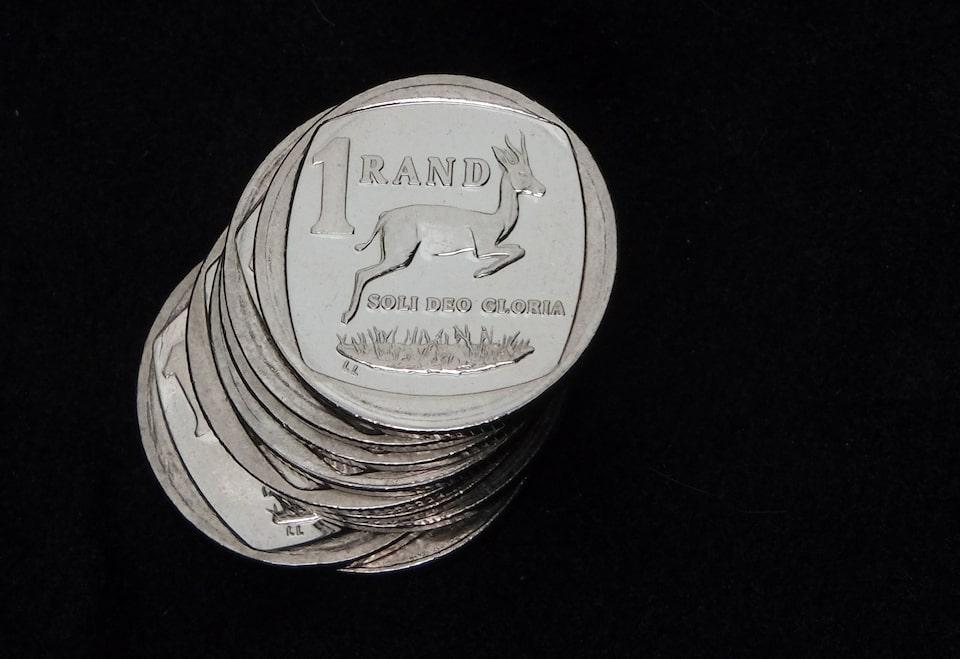
JOHANNESBURG, March 14 (Reuters) - South Africa's rand gained on Friday due to record high gold prices that were driven by investors seeking safe haven assets amid worries over a global trade war. At 1457 GMT, the rand traded at 18.1850 against the dollar , about 0.7% firmer than its previous close. The South African currency had fallen earlier this week on domestic political tensions sparked by a revised national budget. Sign up here. "The rand is ending the week on a strong note, bolstered by global market sentiment rather than domestic developments, despite uncertainty surrounding the ratification of the proposed budget," said Zain Vawda, market analyst at MarketPulse by OANDA. Gold surged on Friday as investors piled on to a historic rally in the safe haven asset to seek cover from economic uncertainty sparked by U.S. President Donald Trump's tariff war. Trump's policies have unsettled global markets after he threatened a 200% tariff on wine, cognac and other alcohol imports from Europe, escalating a global trade war that has worried financial markets and raised recession fears. The rand's strength has more to do with the record gold price and strong commodity prices than anything relating to the budget, said Roy Topol, portfolio manager at Cratos Capital. The commodity-backed rand often takes cues from global drivers like U.S. policy, but failed to capitalise on the dollar's weakness for much of this week amid domestic political and budgetary spats. Finance Minister Enoch Godongwana tabled the 2025 budget on Wednesday, in which he proposed raising value-added tax (VAT) by 0.5-percentage-point this year, followed by another 0.5-point hike next year. Major political parties publicly rejected this proposal, after rebuffing Godongwana's initial 2-percentage-point VAT hike three weeks ago. Analysts said budget uncertainty raises fiscal risk which slows interest rate cut expectations. Investors will next week focus on the South African Reserve Bank's interest rate decision. A poll by Reuters on Friday found that the central bank will likely keep interest rates steady as global trade risks and battles over the national budget keep policymakers in wait-and-see mode. On the Johannesburg Stock Exchange, the blue-chip Top-40 (.JTOPI) , opens new tab index closed up 1%. South Africa's benchmark 2030 government bond was weaker, with the yield up 5.5 basis points to 9.165%. https://www.reuters.com/markets/currencies/south-african-rand-jumps-gold-high-boosts-commodity-backed-currency-2025-03-14/