2026-01-12 11:25
Uber faces over 3,000 similar lawsuits, but trial is first in US federal court Outcome could impact resolution of remaining lawsuits Uber argues drivers are independent contractors, says it is not liable for their actions Jan 12 (Reuters) - Uber (UBER.N) , opens new tab is set to face trial this week in Phoenix, Arizona, in a lawsuit brought by a woman who says she was sexually assaulted by a driver she booked through the app. The trial will be the first test of Uber's efforts to shield itself from liability for alleged assaults committed by its drivers, with thousands of cases pending in U.S. federal court. Sign up here. Oklahoma resident Jaylynn Dean sued Uber in 2023, one month after her alleged assault in Arizona. She said Uber was aware of a wave of sexual assaults committed by its drivers but had failed to take basic actions to improve the safety of its riders. Such assertions have long dogged the company, drawing headlines and Congressional scrutiny. Uber is facing more than 3,000 lawsuits over similar claims that have been consolidated in federal court. The verdict in Dean's lawsuit, which is considered a "bellwether" or test case for the litigation, could be used to determine the value of the lawsuits for any potential settlement or resolution of the cases en masse. The outcome of the litigation could weigh on Uber's balance sheet and complicate its relationships with regulators and investors who have closely tracked its safety record. Uber has argued it should not be held liable for criminal conduct by drivers who use its platform, saying that its background checks and disclosures about assaults are sufficient. The company maintains that its drivers are independent contractors rather than employees, but that regardless of their classification it cannot be responsible for actions that fall outside the scope of what could reasonably be considered their duties. Representatives for Dean declined to comment. In a statement before the trial, a spokesperson for Uber said it takes every report of sexual assault very seriously and the company is continuing to invest in new technology to help prevent harm. "Safety is foundational at Uber, and our commitment to help protect people on the platform will never stop," the spokesperson said. TEST CASE ON LIABILITY Dean's lawsuit said she was intoxicated when she hired an Uber driver to take her from her boyfriend's home to her hotel. The driver asked her harassing questions on the ride before stopping the car and raping her, Dean alleges in the lawsuit. In addition to the cases in federal court, the company is facing more than 500 additional cases in California state court. The company won the only trial , opens new tab to take place thus far over the claims in California state court in September after a jury found that Uber was negligent in terms of the measures it put in place to protect the woman's safety, but that the negligence was not a substantial factor in causing her harm. Uber has faced numerous safety controversies, including allegations of lax driver vetting and a culture critics said prioritized growth over passenger protection. The company has made safety a central talking point in recent years, publishing U.S. Safety Reports that detail reported sexual assaults, rolling out features such as in-app ride verification, video and audio recording of rides, anomaly detection, and partnering with survivor advocacy groups to reform driver training. Uber rival Lyft (LYFT.O) , opens new tab is facing similar lawsuits in both state and federal court, although there is no coordinated federal litigation for those claims. Uber sought to delay the trial in Dean's case after accusing her attorneys of tainting the jury pool with an ad campaign that said Uber was notified of a sexual crime almost every eight minutes. Uber said the campaign's claims were categorically false. U.S. District Judge Charles Breyer, who is overseeing the mass litigation and will hear Dean's case, denied the motion, allowing the trial to move forward. https://www.reuters.com/sustainability/society-equity/uber-faces-sexual-assault-trial-arizona-that-puts-its-safety-record-under-2026-01-12/

2026-01-12 11:25
Dollar falls, stocks slip on Trump-Powell spat Market moves show Fed independence worries - portfolio manager The technocratic Fed we knew is fading - analyst SINGAPORE/LONDON, Jan 12 (Reuters) - A U.S. Justice Department investigation at the Federal Reserve and a combative response by chair Jerome Powell have sharply raised the stakes in a long-running dispute that has put the independence of the world's most powerful central bank openly on the line, investors said. In a strongly worded statement on Sunday, Powell disclosed a probe that threatened him with criminal indictment over a building renovation project, saying it was a "pretext" to gain political influence over the Fed to lower interest rates faster. Sign up here. President Donald Trump told NBC that he had no knowledge of the Justice Department's actions, but renewed his attacks on Powell that have grown more frequent and pointed as the Fed has chosen to cut rates more slowly than he would have liked. The investigation and Powell's pointed response sharply escalate a row that market observers fear risks upending the independence of the Fed, a bedrock of U.S. economic policy and a cornerstone of its financial system. "With his frontal attack on the Fed, Donald Trump is once again undermining confidence in the independence of the American central bank," Jens Suedekum, chief adviser to German Finance Minister Lars Klingbeil, told Reuters. "The United States itself will suffer the greatest disadvantages." TRUMP'S PRESSURE ON FED RISKS 'UNINTENDED CONSEQUENCES' The growing rift also highlights how heavily the Trump administration's efforts to reshape institutions from the military to the judiciary are now coming to bear on a pillar of U.S. financial strength. The U.S. dollar was on Monday set for its largest daily fall against a basket of major currencies in three weeks . Gold shot to a record high, U.S. stock futures dropped and long-dated U.S. Treasury yields rose sharply . "Fed Chair Powell has deviated from his previous approach to Trump's threats, this time choosing to directly address the elephant in the room - that the Fed is not moving rates as the president would like," said Damien Boey, portfolio manager at Wilson Asset Management in Sydney. "Gold has strengthened, equities have wobbled, and the yield curve has steepened a little. These moves have been broadly consistent with the playbook for an attack on the Fed's independence," he said. The ability of central banks to move, at least in setting interest rates, without political interference is considered a key tenet of modern economics - insulating monetary policymakers so they can make decisions for long-run stability. For investors, trust in U.S. institutions forms part of the so-called "exorbitant privilege" that the country enjoys in financial markets as the issuer of the world's reserve currency and recipient of billions of dollars in capital inflows. Karl Schamotta, chief market strategist at Corpay in Toronto pointed to "unintended consequences" of leaning on the Fed. "By trying to influence the central bank through aggressive legal threats against individual officials, the administration could drive inflation expectations higher, erode the dollar's safe-haven role, and trigger a sharp rise in long-term bond yields that raises borrowing costs across the American economy." "Pouring gasoline everywhere and then playing with matches tends not to work out well," he said. 'TECHNOCRATIC FED IS FADING FROM VIEW' Powell's pushback is in some sense a parting shot, since his term as chair is due to end in May, and Trump has already promised his nominee as successor will be "someone who believes in lower interest rates, by a lot". But his stand will be a frame for any replacement and serve as a yardstick for shifts in the Fed's approach. Richard Yetsenga, ANZ's group chief economist, said that for the U.S. financial markets in their entirety, the operation of all three of the Fed's policy arms is likely to be in flux - rates, the balance sheet and banking sector regulation. "It's definitely too early (to tell), but the trends seem quite clear ... the technocratic Fed, as we have understood it over the past few decades, is fading from view," he said. Meanwhile, investors, already starting to wonder whether their portfolios are over-allocated to the U.S., are on notice about the new kinds of risks the Trump administration is ushering in. "The market has shaken off so much noise around the Fed and Fed independence and I think is probably likely to do it again, but at some point things will break," said Christopher Hodge, chief U.S. economist for French investment bank Natixis. To be sure, the market moves were small on Monday and some saw little clear consequence for interest rates and even as a sign that Trump actually lacked influence over the Fed. Goldman Sachs' chief economist Jan Hatzius on Monday told the bank's annual strategy conference in London that the threat of a criminal indictment would add to doubts about central bank independence, but he expected the Fed to continue to make decisions based on data. "I have no doubt that (Powell) in his remaining term as chair is going to make decisions based on the economic data and not be influenced one way or the other, cutting more or refusing to cut on the back of data that could push in that direction," he said. https://www.reuters.com/business/investors-anxious-over-make-or-break-fight-fed-2026-01-12/
2026-01-12 11:10
NEW DELHI/SINGAPORE, Jan 12 (Reuters) - Vitol and Trafigura have started discussions on Venezuelan crude oil sales with refiners in India and China for cargoes to be delivered in March, several trade sources said on Monday. The global commodities traders confirmed on Friday they had struck agreements with the U.S. government to help market stranded Venezuelan oil, days after the interim government in Caracas agreed to export up to 50 million barrels of crude oil to the U.S. Sign up here. Their marketing efforts will accelerate the sale of Venezuelan oil under the U.S. programme, allowing the OPEC producer to resume exports which have been halted since the ouster of President Nicolas Maduro. The trading firms are scrambling to secure ships, moving swiftly to sell the Venezuelan oil, with Trafigura's CEO saying it will load its first cargo for the U.S. this week. INDIAN REFINERS, PETROCHINA Vitol is approaching Indian state refiners to sell the oil, two of the sources said. The trader offered a cargo at a discount of $8-$8.50 a barrel to ICE Brent on a delivered basis to one, one of the sources said. Refiners Indian Oil Corp (IOC.NS) , opens new tab and Hindustan Petroleum Corp (HPCL.NS) , opens new tab would consider buying Venezuelan oil, sources told Reuters last week. Neither responded to requests for comment. Reliance Industries (RELI.NS) , opens new tab said it would consider resuming purchases of Venezuelan crude if sales to non-U.S. buyers are permitted under U.S. regulations. Vitol and Trafigura have also approached PetroChina, exploring interest from the Chinese state refiner which was a major buyer of Venezuela's heavy sour Merey crude as well as fuel oil before U.S. sanctions started, three sources said. "The traders may first tap the big state oil traders rather than teapots," one of them said, referring to independent refiners in China which typically buy cheap sanctioned oil. PetroChina did not immediately respond to a request for comment. Vitol declined to comment. Trafigura said it is providing logistical and marketing services to facilitate the sale of Venezuelan oil, but declined to comment on the discussions. SECOND-HALF MARCH DELIVERY Another source said Vitol and Trafigura are offering cargoes for delivery in the second half of March. On Sunday, Vitol loaded the first cargo of naphtha from the U.S. to Venezuela onto the Panamax-sized Hellespont Protector, which is expected to arrive at Venezuela's Port of Jose on January 28, shipping data on Kpler showed. Naphtha is used to thin Venezuela's heavy crude oil and make it easier to move and process. The imminent resumption of Venezuelan oil exports has offset concerns of a potential supply disruption in Iran to cap gains in global oil futures. https://www.reuters.com/business/energy/vitol-trafigura-offer-venezuelan-oil-indian-chinese-refiners-march-delivery-2026-01-12/
2026-01-12 10:55
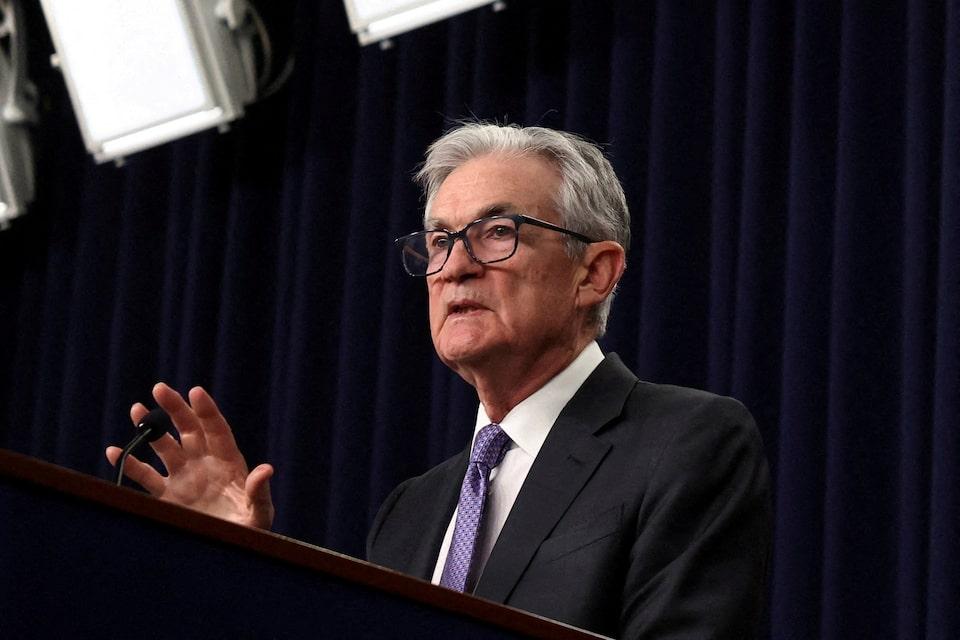
LONDON, Jan 12 (Reuters) - Goldman Sachs' chief economist Jan Hatzius said on Monday that a criminal indictment threat facing Federal Reserve chief Jerome Powell would reinforce worries about the U.S. central bank's independence, but he expected the Fed to continue to make decisions based on data. U.S. President Donald Trump's administration has ramped up its pressure on the Fed, threatening to indict Powell over comments to Congress about a building renovation project, an action Powell called a "pretext" by the administration to gain more influence over interest rates which Trump wants cut dramatically. Sign up here. "Obviously there are more concerns that Fed independence is going to be under the gun, with the latest news on the criminal investigation into Chair Powell really having reinforced those concerns," Hatzius said at Goldman Sachs' annual global strategy conference in London. Hatzius is a member of Goldman Sachs' management committee and his comments are the first public remarks by a senior Wall Street executive since news of the potential probe into Powell emerged. "I have no doubt that he (Powell) in his remaining term as chair is going to make decisions based on the economic data and not be influenced one way or the other, cutting more or refusing to cut on the back of data that could push in that direction," Hatzius said. Goldman has pushed back its forecast for Fed rate cuts and now expects two 25-basis-point reductions in June and September 2026 instead of the previously anticipated moves in March and June. The shift in rate expectations follows Friday's softer non-farm payrolls data and reflects signs of a gradually weakening labor market, alongside stronger-than-expected GDP growth and fading tariff impacts. Hatzius repeated these forecasts in his presentation on Monday, and said he thought the risks to the Fed rate forecasts were to the downside. He added that some decline in tariffs driven by affordability concerns in the run-up to November mid-term elections was likely, and perhaps also if the Supreme Court rules to strike down tariffs. The U.S. Supreme Court is expected to issue its next rulings on Wednesday as several major cases remain pending including the legality of Trump's sweeping global tariffs. "President Trump and his administration have ways of substituting for that but maybe they won’t substitute 100%, either because it’s more difficult or because of these affordability concerns," Hatzius said. https://www.reuters.com/business/finance/goldman-sachs-chief-economist-says-fed-decisions-will-not-be-swayed-by-powell-2026-01-12/
2026-01-12 10:29
MUMBAI, Jan 12 (Reuters) - The arbitrage opportunities between onshore and offshore markets alongside an expected pick up in corporate participation are likely to help the Reserve Bank of India's $10 billion foreign-exchange swap sail through smoothly, bankers said. Bids for the swap will be submitted by banks in the first half of Tuesday, and the results will be declared later in the day. Sign up here. It involves the RBI buying dollars and injecting rupees in the first leg, which will be settled on Friday, before reversing the transaction three years later. The operation will inject $10 billion of rupee liquidity, part of measures unveiled by the central bank last month. The announcement of the swap helped rein in a surge in dollar-rupee forward premiums in late December. "The swap should sail through, with bids likely north of $15 billion. An arbitrage of about 25–30 basis points (between the 3-year offshore and onshore rates) will draw in offshore players," a senior treasury official at a foreign bank said. An FX salesperson at another foreign bank said he has been pitching the opportunity to clients, emphasizing the relative value on offer from the spread between onshore and offshore rates. Both spoke on condition of anonymity since they are not authorised to speak to the media. The Reserve Bank of India's smaller $5 billion swap of the same tenor last month saw limited corporate participation, bankers said. "This time, taking into account the longer window between the announcement and the auction, we expect corporate participation to be higher on a relative basis,” a trader at a large private-sector bank said. The main point of debate among bankers is where the cut-off will be. Some expect a cut-off well below market levels, similar to the previous auction while others say they expect a result closer to prevailing levels. The 3-year FX forward swap points were last at 7.27 rupees. "These swap auctions are a great way to distribute the RBI's forward short basket in a way that minimises rollover risk and market distortion through lumpy FX and open market operations," said Tanay Dalal, senior vice president for business and economic research at Axis Bank. "With FX smoothing likely to continue, these swaps will likely be able to absorb excess USD supply in the near end," Dalal said. https://www.reuters.com/world/india/rbis-10-billion-fx-swap-sail-through-arbitrage-corporate-demand-bankers-say-2026-01-12/
2026-01-12 09:49
Greenland shoots up investor worry list Gold, defence stocks first on the buy list But longer-term trades more complicated, investors say LONDON/NEW YORK, Jan 12 (Reuters) - Investors have piled fresh bets on gold and European defence stocks in response to U.S. President Donald Trump's threats to take control of Greenland, fearing a geopolitical rift that could end NATO, shatter the global order and damage the dollar. Although gains in both are expected to continue regardless of what happens to Greenland, investors face the dilemma of how to position for any longer-term fallout. Sign up here. Trump wants to gain control of the Danish territory, through a purchase or even military means, while Greenland does not want to be part of the U.S., a stance supported by Europe and Canada. While investors have previously largely ignored these aspirations, the U.S. seizure of Venezuela's Nicolas Maduro in a surprise military raid has suddenly made them more tangible. For investors hoping for less risk after last year's tariff turmoil, the news makes for an uncomfortable start to 2026. Trump has also weighed intervening in unrest in Iran, while the U.S. administration's threat to indict Federal Reserve Chair Jerome Powell has reignited concerns about its independence. Gold jumped more than 4% last week after Maduro's capture and hit a new record high on Monday. European defence stocks (.SXPARO) , opens new tab hit fresh all-time highs on Monday and last week posted their biggest weekly jump in over five years, with a 10% gain. "You look at gold prices and they are just screaming that markets are concerned about geopolitical risk," Matthew Miskin, co-chief investment strategist at Manulife John Hancock Investments, said of the most recent rise in bullion. Non-yielding gold is traditionally seen as a safe haven for investors during wider market uncertainty or volatility. Many investors have already been calling for a large exposure to gold, including hedge fund manager Ray Dalio, who last year noted a big relative underperformance by U.S. stocks. GLOBAL ORDER IN QUESTION? U.S. ambitions on acquiring Greenland could have far-reaching implications, not just for NATO but also efforts to end war in Ukraine and China's tensions with Japan and Taiwan. If the U.S. forcibly took Greenland from fellow NATO member Denmark, it would likely not only mark the end of the military alliance but the wider balance of power, analysts say. "It would call into question much more the global order that's essentially largely been established since Bretton Woods II, (or) the end of World War Two, when NATO was created," said Steve Kolano, CIO at Integrated Partners. If Europe must rely less on the U.S. for its defence, it is no surprise that investors are buying European defence stocks, a sector that's more than tripled since Russia's 2022 invasion of Ukraine. German tank maker Rheinmetall (RHMG.DE) , opens new tab rallied 19% last week, while Sweden's Saab (SAABb.ST) , opens new tab surged 22%. "With the rhetoric about Greenland, the rally is being sustained," said Jeremie Peloso, chief European strategist at BCA Research. POLITICAL RISK HARD TO PRICE Beyond buying gold and defence stocks, other trades are more difficult for investors to pick. "Political (and) geopolitical risk is very hard to price and markets typically do a very poor job of it, given that these are big-impact, but low-probability events," said Idanna Appio, portfolio manager at First Eagle Investments, who does own some gold as a hedge against geopolitics. "If you're positioning your portfolio for something that has a 1%, 5% chance of being realized, then you're already sort of saying: 'well, 95% of the time I'm going to be wrong.'" That helps explain why there has been little broader impact, with world stocks at near record highs and Danish government bonds rallying alongside European peers. Denmark's closely managed crown currency has been weakening, but rate differentials are a major factor and it is still close to the central rate at which it is pegged to the euro . WHERE'S SAFETY? Things could change quickly if the U.S. took a military approach to Greenland, which Cresset Capital CIO Jack Ablin said, unlike Venezuela, "would be a big deal, sparking risk aversion in equities and (the) dollar". Traders reacted immediately when Moscow acted on its Ukraine threats, sparking major moves in oil, the euro and stocks. "If the U.S. were to seize Greenland by force, or maybe not by force, but under some sort of coercion, ... you would have a rally towards Treasuries, you'd have a selloff in European government bonds, which quality investors wouldn't see as a haven," said Natixis' head U.S. economist Christopher Hodge. Investors reckon that short-term, the dollar and Treasuries would benefit from a rush to safety. However, a breakdown in transatlantic relations could see that U.S. pull fade and a return of worries about the dollar's status, which flickered around last April's tariff announcement. It is too soon to see any signs of that shifting on the back of the U.S. action in Venezuela or its Greenland threats, with some saying it could prompt money to move out of the U.S. "I remain nervous that actions that are seen as the U.S. breaking the rules of the road, could lead to shifts in asset allocation, bringing money back to Europe, back to Asia," said First Eagle's Appio. https://www.reuters.com/business/aerospace-defense/trump-greenland-threat-triggers-search-shelter-beyond-gold-defence-2026-01-12/