2025-03-14 07:41
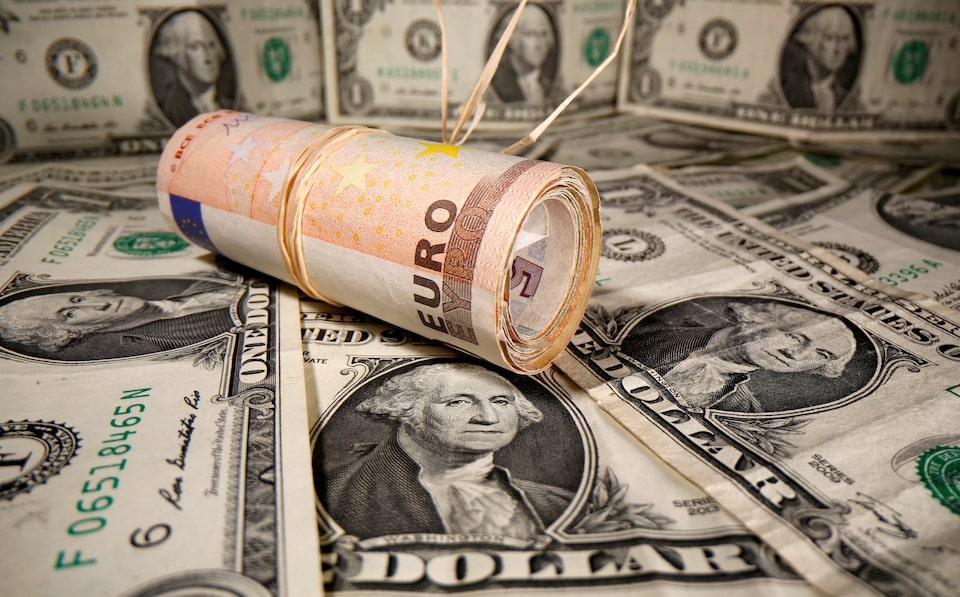
LONDON, March 14 (Reuters) - Donald Trump's second presidency is having a dramatic impact on currencies around the world, though not in the way investors anticipated just a few months ago. The dollar has weakened this year against all other developed market currencies, except Canada's, on concern that tariff uncertainty is harming the U.S. economy. Sign up here. "Tariffs, generally speaking, tend to be good for the dollar," said Barclays FX strategist Lefteris Farmakis. "But when they are applied against very close trading partners, they can harm confidence in the U.S." U.S. recession risks are growing and investors also see reasons to buy the likes of the euro, Swedish crown and Japanese yen in their own right. Here's a look at some of stand-out movers. 1/ EURO TRANSFORMED Germany's historic proposal to ramp up defence and infrastructure spending have catapulted the euro higher. It posted its biggest weekly gain versus the dollar since 2009 last week and is set for its best quarter since 2022, with a 5% rise. At around $1.09 , the euro is at its highest since the November 5 U.S. election. BofA sees further gains to $1.15 by end-2025. The euro has also risen against sterling and the Swiss franc. , The European Central Bank approaching the end of its easing cycle and Europe's increased defence spending has changed the outlook for the euro in a fundamental way, said Kenneth Broux, head of corporate research FX and rates at Societe Generale, noting U.S. tariffs remained a risk to euro gains. 2/ GO THE YEN Another big gainer has been the yen, some 6% stronger against the dollar so far this year thanks to higher Japanese rates and safe-haven flows during turbulent times. "If you want to hedge against the risk of slowdown in the U.S. you go to Japan because of the risks for lower U.S. Treasury yields," said Barclay's Farmakis. The yen is particularly sensitive to changes in the gap between U.S. and Japanese borrowing costs. Yen-positive developments at home meanwhile include companies meeting union demands for substantial wage increases. That could push the Bank of Japan to accelerate rate hikes, lifting the yen's appeal after four straight years of declines. Speculators have mounted their biggest ever wager that the Japanese yen will continue to rise. 3/ UNFRIENDLY NEIGHBOUR Pressure on currencies in Canada and Mexico, the two largest U.S. trading partners, has abated but is unlikely to disappear soon , . ING says current trading levels suggest a 2% risk premium is priced into the Canadian dollar, half the peak risk premium seen in early Feb when it hit 22-year lows versus the greenback. Mexico's peso has appreciated 5% from three-year lows hit last month against the dollar. At around 20.10 per dollar, the peso has moved back towards pre-U.S. election levels. Trump's suspension of 25% tariffs imposed on most goods from Canada and Mexico are positive. But universal steel and aluminium tariffs took effect Wednesday, drawing retaliation from Canada - the biggest foreign supplier of steel and aluminium to the U.S. - and encouraging another Bank of Canada rate cut. No surprise that implied volatility in Canada's dollar remains elevated . 4/ NOT SO FRAGILE CHINA China's yuan was expected to suffer more than most currencies from Trump's policies. Some expected Beijing would allow its closely-managed currency to weaken to mitigate the impact of tariffs, as it did during Trump's first presidency, particularly in the trade war of 2018 and 2019. China has been hit by more tariffs than most, but the yuan, on and offshore, has strengthened this year to trade around 7.25 yuan per dollar. , BofA said one reason Chinese authorities haven't encouraged a weaker exchange rate against the dollar is that other emerging Asian currencies have strengthened more than the yuan, supporting Chinese exporters. "China is still achieving a relative trade weighted depreciation of the yuan against its key trading partners, despite modest yuan appreciation against the dollar," it said. 5/ CROWNED IN GLORY One currency that has surged against the dollar, and perhaps gone under the radar, is Sweden's crown. It has strengthened 9% to near 10 crowns per dollar, the firmest since late 2023, and has even held its own against a resurgent euro. , A strong performance for European shares, Ukraine-Russia ceasefire hopes and improved Swedish economic prospects explain the outperformance, analysts said. In addition to its sensitivity to European stocks, the crown is also benefiting from a surge in defence stocks. As a share of gross domestic product, Sweden is overrepresented among European defence stocks, notes Societe Generale. https://www.reuters.com/markets/currencies/big-currency-winners-2025-so-far-do-not-include-dollar-2025-03-14/
2025-03-14 07:17
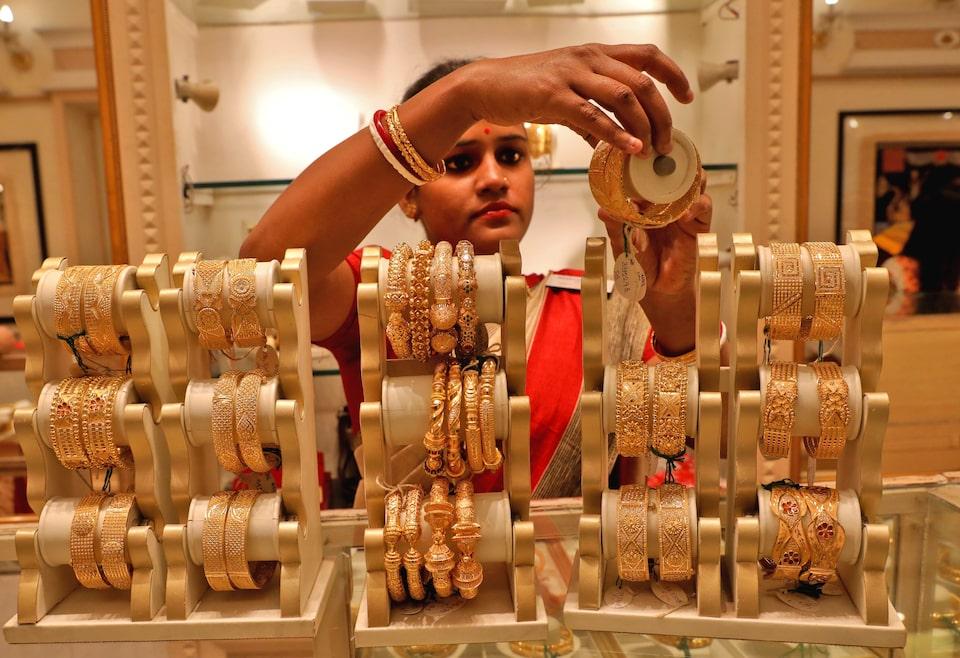
Jewellers not keen on building high-cost inventory - dealer Domestic gold prices in India hit record high of 87,886 rupees China prices at $1 discount and $18 premium March 14 (Reuters) - Gold discounts in India widened this week to their highest point in nearly eight months, as a surge in prices to a record high dampened demand, while customers in other key hubs also remained on the sidelines. "Jewellers all over are seeing fewer customers. Demand's taken a big hit because of rising prices," said a Chennai-based bullion dealer. Sign up here. Domestic gold prices hit a record high of 87,886 rupees per 10 grams on Thursday. Indian dealers this week offered a discount of up to $39 an ounce over official domestic prices, including 6% import and 3% sales levies, up from a discount of $10 to $21 last week. "Jewellers are not keen on building high-cost inventory at the end of the financial year, as they are busy closing accounts," said a Mumbai-based dealer with a bullion-importing bank. India's financial year runs from April until March 31. India's gold imports are set to tumble 85% in February from year-ago levels, reaching their lowest levels in 20 years, as demand is dampened by record-high bullion prices. In China, the world's largest consumer, gold traded at a discount of $1 to an $18 premium over spot prices . Meanwhile, dealers in Hong Kong charged premiums ranging from par to $2 per ounce . "China's market is wavering between a discount and a premium," Standard Chartered analyst Suki Cooper said in a note. "The physical market has provided a weaker footing for gold ... China's markets have slowed amid high prices, underscoring the macro drivers." In Japan, bullion was sold between a discount of $3 and a premium of $0.5, a trader said. "The market has been choppy and volatile due to Trump's policies, and it seems investors stay on the sidelines till the trend is clear," said a Japanese trader. In Singapore, gold traded between a $0.50 discount and a $3 premium, a trader said. https://www.reuters.com/markets/commodities/asia-gold-discounts-india-hit-8-month-high-record-prices-weigh-demand-2025-03-14/
2025-03-14 07:16
March 14 (Reuters) - Sterling lost some ground versus the dollar on Friday after data painted a grim picture of the British economy, and it softened against the euro as prospects of a German debt deal lifted the shared European currency. The British pound fell as much as 0.25% to $1.2918 before clawing its way back up to $1.2943. But it was still not far off its four-month peak of $1.2990 hit on Wednesday. Sign up here. British gross domestic product contracted unexpectedly by 0.1% in January compared with December. A Reuters poll of economists had forecast a monthly expansion of 0.1%. Analysts said they do not expect the weak reading to lead to the Bank of England turning dovish on interest rates. The British public's expectations for inflation in the long run rose in February to their highest level in more than five years, a Bank of England survey showed on Friday, likely underscoring its cautious approach to cutting rates. "For GBP we do think the weaker growth data is an important reminder that UK cyclical and fiscal dynamics may continue to be more challenging than elsewhere," said Dominic Bunning, global forex strategist at Nomura. The euro rallied on Friday as German Chancellor-in-waiting Friedrich Merz reached an agreement with the Greens on a massive increase in state borrowing in Europe's largest economy, sources close to the negotiations said. That sent the euro up 0.5% on the pound to 84.225 pence. Analysts have seen the pound as a relative safe haven as U.S. Donald Trump escalates a global trade war, due to the more balanced trading position between Britain and the U.S. Unlike the European Union, Britain has refrained from announcing tit-for-tat tariffs against the U.S. after Trump's steel and aluminium tariffs came into force on Wednesday. After enjoying its biggest weekly gains against the dollar in more than two years last week, sterling is set to eke out another 0.1% rise this week. https://www.reuters.com/markets/currencies/sterling-edges-lower-after-uk-economy-unexpectedly-contracts-january-2025-03-14/

2025-03-14 07:16
March 14 - The European Union’s efforts to limit Russia’s war chest will likely continue to intensify despite news of a potential ceasefire with Ukraine, as the EU must now shoulder more responsibility for its own security given the rupture in the transatlantic alliance. Yet the bloc continues to overlook one of the Kremlin’s critical revenue channels: fertilisers. Russian fertiliser exports to the EU surged by over 33% in 2024 alone, reaching 6.2 million tonnes worth over €2.2 billion. This trade, exempt from sanctions, generated an estimated €550 million in tax revenue for the Russian state. Poland, by far the biggest buyer of Russian fertilizers, saw purchases more than double in 2024. Sign up here. The war in Ukraine disrupted global energy markets, which significantly reduced the EU’s domestic fertilizer production. The price of natural gas, the main input commodity for the production of fertilizers, surged to record high levels following the onset of the conflict, and at one point, roughly 70% of ammonia production capacity in Europe was either shut down or idled. Russian producers have successfully tapped this supply gap to expand sales to the most vulnerable markets. While the EU has diminished Russian natural gas imports from 40% of the total in 2021 to around 10% after the halt in the Ukrainian gas transit at the end of 2024, Russia has taken advantage of its enormous gas production surpluses to successfully replace part of the gas export revenues with fertilisers sales. This increase in Russian fertilizer sales is not confined to Europe. Globally, Russian companies have capitalised on post-invasion price volatility by offering fertilisers at steep discounts of over 20%, enabling them to capture greater market share. Nowhere is this more evident than in Latin America , opens new tab, where agricultural exports are a core economic driver. Brazil has become the world’s largest market for Russian fertilisers, accounting for 25% of Moscow’s global sales (around $4 billion per year). Russia’s fertiliser strategy appears to mirror its historical use of natural gas exports: it leverages supply dependence to secure strategic influence. By embedding itself in global food production chains, Moscow has gained new geopolitical leverage, particularly in regions like Latin America and South Asia that are highly exposed to agricultural shocks. Any future disruption in Russian fertiliser exports, whether from sanctions or market shifts, could have severe implications not just for regional economies, but for global food prices. STRATEGIC LOOPHOLE The fertilizer dependence goes two ways, though. The Russian fertilizer industry is heavily reliant on exports, with 64% of its production sold abroad. However, the shifting dynamics of the global fertiliser market have opened a strategic loophole allowing several large Russian companies to profit by effectively controlling the fertilizer trade with the European Union. These leading Russian producers – Uralchem, Acron Group and EuroChem – are consequently flush with cash and expanding aggressively. EuroChem recently opened a $1 billion fertiliser plant in Brazil, while Uralchem is building major new production facilities in Russia’s Perm region. The European fertiliser industry, meanwhile, continues to struggle. Domestic producers face higher labour costs, stricter environmental regulations, and weaker policy support. To level the playing field, European manufacturers have called for a more forceful response. The industry organization Fertilisers Europe has proposed an immediate tariff floor of 30%, which would increase every six months. But some European producers argue that a response now may be too late as Russia has already seized nearly a third of the EU’s fertiliser import market, up from just 17% in 2022. This has placed domestic producers at a competitive disadvantage and deepened the bloc’s exposure to geopolitical risk. The EU is also pursuing structural change. The European Commission is reviewing regulatory constraints under its Nitrates Directive , opens new tab to enable greater use of manure-based fertilisers while addressing environmental concerns such as nitrogen runoff. However, such transitions will take time, and Russian producers’ grip on the market is continuing to expand now. The fertiliser trade has become a critical blind spot in Europe’s sanctions regime. But limiting Russian fertiliser revenues could become a geopolitical necessity now that the bloc can no longer depend on U.S. support in any efforts to pressure Moscow. Inaction may no longer be an option. (The views expressed here are those of Martin Vladimirov, the Director of the Geoeconomics Program of the Center for the Study of Democracy (CSD)) https://www.reuters.com/markets/commodities/kremlins-fertilizer-cash-stream-is-blind-spot-eu-sanctions-vladimirov-2025-03-14/
2025-03-14 07:01
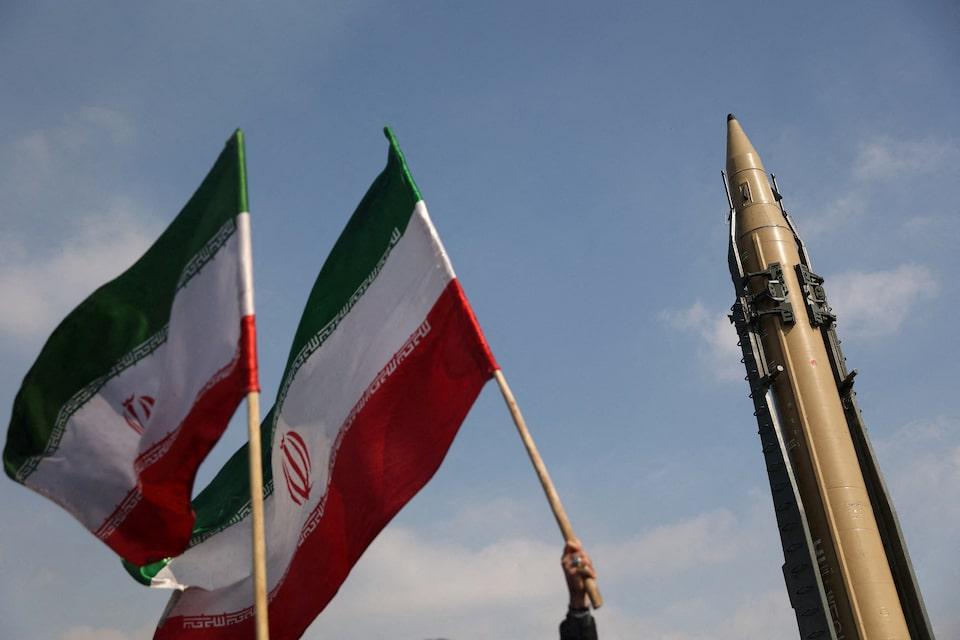
Iran has publicly rejected Trump's offer of nuclear talks Iran says Washington's demands 'excessive' Iran's leaders worried about worsening economy, officials say Iran wants sanctions eased to reduce protest risk, officials say March 14 (Reuters) - For Iran's clerical leaders, engaging with the "Great Satan" to hammer out a nuclear deal and ease crippling sanctions may for once be the lesser of two evils. Though it harbours deep mistrust of the United States, and President Donald Trump in particular, Tehran is increasingly concerned that mounting public anger over economic hardships could erupt into mass protests, four Iranian officials said. Sign up here. That's why, despite the unyielding stance and defiant rhetoric of Iran's clerical leaders in public, there is a pragmatic willingness within Tehran's corridors of power to strike a deal with Washington, the people said. Tehran's concerns were exacerbated by Trump's speedy revival of his first term's "maximum pressure" campaign to drive Iran's oil exports towards zero with more sanctions and bring the country's already fragile economy to its knees, they said. President Masoud Pezeshkian has repeatedly highlighted the severity of the economic situation in the Islamic Republic, stating that it is more challenging than during the Iran-Iraq war in the 1980s, and pointing this month to the latest round of U.S. sanctions targeting tankers carrying Iranian oil. One of the Iranian officials said leaders were concerned that cutting off all diplomatic avenues might further fuel domestic discontent against Ayatollah Ali Khamenei - given he is the ultimate decision maker in the Islamic Republic. "There is no question whatsoever that the man who has been the Supreme Leader since 1989 and his foreign policy preferences are more guilty than anybody else for the state of affairs," said Alex Vatanka, director of the Iran Program at the Middle East Institute think-tank in Washington. It was Iran's weak economy that pushed Khamenei to give tentative backing to the nuclear agreement , opens new tab struck with major powers in 2015, leading to a lifting of Western sanctions and an improvement in economic conditions. But then-President Trump's renewed onslaught against Iran after he pulled out of the nuclear pact in 2018 squeezed living standards once more. "The situation worsens daily. I can't afford my rent, pay my bills, or buy clothes for my children," said Alireza Yousefi, 42, a teacher from Isfahan. "Now, more sanctions will make survival impossible." Iran's foreign ministry did not respond to a request for comment. 'ON EQUAL TERMS' At the same time as upping the pressure on Iran with new sanctions and threats of military action, Trump also opened the door to negotiations by sending a letter to Khamenei proposing nuclear talks. Khamenei spurned the offer on Wednesday, saying repeatedly that Washington was imposing excessive demands and that Tehran would not be bullied into negotiations. "If we enter negotiations while the other side is imposing maximum pressure, we will be negotiating from a weak position and will achieve nothing," Iran's top diplomat Abbas Araqchi told the Iran newspaper in an interview published on Thursday. "The other side must be convinced that the policy of pressure is ineffective - only then can we sit at the negotiating table on equal terms," he said. One senior Iranian official said there was no alternative but to reach an agreement, and that it was possible, though the road ahead would be bumpy given Iran's distrust of Trump after he abandoned the 2015 deal. Iran has staved off economic collapse largely thanks to China, the main buyer of its oil and one of the few nations still trading with Tehran despite sanctions. Oil exports slumped after Trump ditched the nuclear deal but have recovered in the past few years, bringing in more than $50 billion in revenue in both 2022 and 2023 as Iran found ways to skirt sanctions, according to U.S. Energy Information Administration estimates. Yet uncertainty looms over the sustainability of the exports as Trump's maximum pressure policy aims to throttle Iran's crude sales with multiple rounds of sanctions on tankers and entities involved in the trade. PUBLIC ANGER SIMMERS Iran's rulers are also facing a string of other crises - energy and water shortages, a collapsing currency, military setbacks among regional allies and growing fears of an Israeli strike on its nuclear facilities , opens new tab - all intensified by Trump's tough stance. The energy and water sectors are suffering from a lack of investment in infrastructure, overconsumption driven by subsidies, declining natural gas production and inefficient irrigation, all leading to power blackouts and water shortages. The Iranian rial has shed more than 90% of its value against the dollar since the sanctions were reimposed in 2018, according to foreign exchange websites, officials and lawmakers. Amid concerns about Trump's tough approach, Iranians seeking safe havens for their savings have been buying dollars, other hard currencies, gold or cryptocurrencies, suggesting further weakness for the rial, according to state media reports. The price of rice has soared 200% since last year, state media has reported. Housing and utility costs have spiked sharply, climbing roughly 60% in some Tehran districts and other major cities in recent months, driven by the rial's steep fall and soaring raw material costs, according to media reports. Official inflation hovers around 40%, though some Iranian experts say it is running at over 50%. The Statistical Center of Iran reported a significant rise in food prices, with over a third of essential commodities increasing by 40% in January to leave them more than double the same month the previous year. In January, the Tasnim news agency quoted the head of Iran's Institute of Labor and Social Welfare, Ebrahim Sadeghifar, as saying 22% to 27% of Iranians were now below the poverty line. Iran's Jomhuri-ye Eslami newspaper, meanwhile, said last week that poverty rates stood at around 50%. "I can barely cover the rent for my carpet shop or pay my workers' salaries. No one has the money to buy carpets. If this continues, I will have to lay off my staff," Morteza, 39, said by phone from Tehran's Grand Bazaar, giving only his first name. "How do they expect to solve the economic crisis if they refuse to talk to Trump? Just talk to him and reach a deal. You cannot afford pride on an empty stomach." NUCLEAR RED LINE Based on Iranian state media reports, there were at least 216 demonstrations across Iran in February, involving retirees, workers, healthcare professionals, students and merchants. The protests largely focused on economic hardships, including low wages and months of unpaid salaries, according to the reports. While the protests were mostly small-scale, officials fear a deterioration in living standards could be explosive. "The country is like a powder keg, and further economic strain could be the spark that sets it off," said one of the four officials, who is close to the government. Iran's ruling elite is acutely aware of the risk of a resurgence of the unrest similar to the 2022-2023 protests over Mahsa Amini's death in custody, or the nationwide protests in 2019 over fuel price rises, the officials said. The senior Iranian official said there had been several high-level meetings to discuss the possibility of new mass protests - and potential measures to head them off. Nevertheless, despite the worries about potential unrest, Iranian officials said Tehran was only prepared to go so far in any talks with Trump, stressing that "excessive demands", such as dismantling Iran's peaceful nuclear programme or its conventional missile capabilities, were off the table. "Yes, there are concerns about more economic pressure, there are concerns about the nation's growing anger, but we cannot sacrifice our right to produce nuclear energy because Trump wants it," the senior official said. Ali Vaez, Iran project director at the International Crisis Group, said Iran's rulers believed that negotiating with Trump under coercion would signal weakness, ultimately attracting more pressure than reducing it. "That is why Ayatollah Khamenei seems to believe that the only thing that is more dangerous than suffering from sanctions is surrendering to them," he said. https://www.reuters.com/world/middle-east/irans-rulers-caught-between-trumps-crackdown-fragile-economy-2025-03-14/
2025-03-14 06:55
SEOUL, March 14 (Reuters) - South Korea has confirmed a foot-and-mouth disease case in a cattle farm, the first such outbreak in nearly two years, the agriculture ministry said on Friday. The case, the first in the country since May 2023, was reported in a cattle farm in the southwestern Jeollanam-do province, the ministry said in a statement, adding that about 180 cattle in the farm would be culled. Sign up here. The government has since raised the alert, stepping up disinfecting efforts in the region, according to the ministry. Foot-and-mouth disease causes fever and mouth blisters in cloven-hoofed ruminants such as cattle, swine, sheep and goats. https://www.reuters.com/business/healthcare-pharmaceuticals/south-korea-reports-first-foot-and-mouth-disease-case-nearly-two-years-2025-03-14/