2025-03-14 06:46
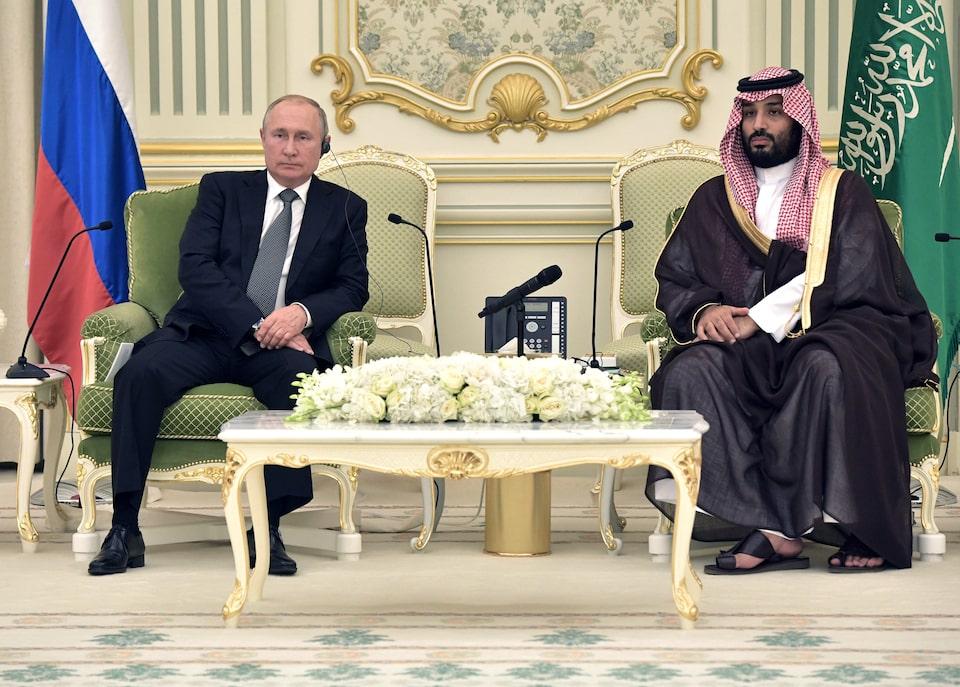
Canadian dollar strengthens as Mark Carney is sworn in as prime minister Dollar extends gains after inflation expectations pick up Yen softens after wage talks as market weighs BOJ rate hike timing Sterling weakens after UK GDP unexpectedly contracts in January NEW YORK, March 14 (Reuters) - The euro rose on Friday after German parties agreed on a fiscal deal that could boost defence spending and revive growth in Europe's largest economy. The dollar weakened against the euro but rose against the Swiss franc and the yen, underpinned by the likelihood the U.S. government will avert a shutdown over the weekend, extending gains as data showed inflation expectations picked up, suggesting the Federal Reserve will likely be patient in cutting interest rates. Sign up here. German Chancellor-in-waiting Friedrich Merz announced he had secured the crucial backing of the Greens for a massive increase in state borrowing. The deal will likely be approved by the outgoing parliament next week. It includes a 500 billion euro ($544.30 billion) fund for infrastructure and sweeping changes to borrowing rules. Dominic Bunning, head of G10 FX Strategy at Nomura, said he sees upside for the euro especially against the Swiss franc and British pound on prospects of German fiscal spending. "We expect the German fiscal reform to pass next week and the ECB holding rates steady in April, a more hawkish outcome than is currently priced in," Bunning said. "The USD leg may remain somewhat volatile as U.S. exceptionalism fears wane but tariffs pose some USD upside risks." The euro rose 0.27% to $1.087625. Against the pound , the euro gained 0.48% to 84.105 pence and rose 0.62% to 0.96260 against the Swiss franc . It is on track for a second straight week of gains against the dollar, pound, and the franc. The University of Michigan survey on Friday showed U.S. consumer sentiment plunged in March but inflation expectations soared on worries about the impact of President Donald Trump's sweeping tariffs. Consumers' 12-month inflation expectations jumped to 4.9% from 4.3% in February. Top U.S. Senate Democrat Chuck Schumer said on Thursday he would vote to advance a Republican stopgap funding bill, signaling that his party would provide the votes to avert a government shutdown. The dollar strengthened 0.35% to 0.885 Swiss franc and up 0.58% for the week. Against the Japanese yen , the dollar strengthened 0.48% to 148.50 and was up 0.30% this week. Japanese companies agreed to raise wages by 5.46% this year, topping both last year's preliminary and final figures and likely marking the highest pay hike in 34 years. The data is one important input into the Bank of Japan's decision-making. Economists and markets see the central bank standing pat at its meeting next week as policymakers gauge global risks. The pound weakened after the British economy unexpectedly contracted by 0.1% in January, but stayed not far below its four-month peak of $1.2990 hit on Wednesday. Sterling weakened 0.15% to $1.29310 but was on track for the second straight week of gains. On the back of the stronger euro, the dollar index , which measures the greenback against a basket of currencies including the yen and the euro, fell 0.08% to 103.75. It is on track for the second straight week of losses. "I think it's a combination of obviously the tariff stuff, which creates a lot of noise and a lot of volatility and then in the U.S. we have an end of a regime of a lot of fiscal stimulus with this administration trying to reduce government spending," said Brad Bechtel, global head of FX at Jefferies in New York. "At the same time, we have the EU going in the opposite direction and expanding fiscal spending by quite a lot." Ex-central banker Mark Carney was sworn in as prime minister of Canada on Friday and immediately said he could work with Trump, who has threatened to impose tariffs that could devastate the Canadian economy. The Canadian dollar strengthened 0.51% versus the greenback to C$1.44 per dollar. "A volatile week is ending with a small flurry of what traders interpret as good news: the US government isn't shutting down, China may seek to prop up its consumer sector further, Germany advanced toward fiscal reform, and Canada and the US turned down the heat of tariff discussions," Macquarie analysts led by Thierry Wizman wrote in a note. ($1 = 0.9186 euros) https://www.reuters.com/markets/currencies/dollar-holds-firm-euro-drifts-global-trade-tensions-escalate-2025-03-14/
2025-03-14 06:45
China equities rally as U.S. stocks fall over Trump trade war fears Global investors lured by relatively low prices, AI bets and prospect of more stimulus from Beijing Some investors maintain concerns about deflationary pressures, property crisis and trade tensions SINGAPORE/HONG KONG, March 14 (Reuters) - As U.S. President Donald Trump's wide-ranging trade war rouses fears of recession, global investors have found an unlikely new sanctuary: Chinese equities. Hong Kong's benchmark Hang Seng Index (.HSI) , opens new tab - where many major Chinese companies are listed - is up 17% since Trump entered the White House in January. Sign up here. That compares to an about 9% drop in the S&P 500 (.SPX) , opens new tab, which has also shed $4 trillion in market value from record highs last month. Trump's erratic pronouncement on tariffs and moves to slash federal government spending have challenged assumptions about the appeal of U.S. stocks, which have vastly outperformed most of their global counterparts since 2021. Investors have moved from believing in "TINA" - There is No Alternative to U.S. assets - to "TIARA" - There Is A Real Alternative - said Andy Wong, a senior Hong Kong-based executive at Pictet Asset Management. Much of the Chinese rally has been led by technology shares (.HSTECH) , opens new tab that have risen 29% so far in 2025, hitting their highest level in more than three years last week. Like many of the new China equities bulls, Wong said he sees opportunities in tech, defense and consumer-facing plays. A key reason for the optimism: Chinese stocks are cheap, trading 30% under their 2021 highs. The Hang Seng Index is priced at 7 times its projected 12-month earnings - a commonly used metric to value stocks - compared to 20 times for the S&P 500, according to LSEG data. To be sure, Chinese equities traded cheaply for a reason. Many investors were burned after a pandemic-era government crackdown on tech stocks and questions remain over the property market and the economy. Concerns about the concentration of power in the White House are magnified in Beijing, where President Xi Jinping has no serious political opposition. But investors see plenty of upside after a major rally in tech shares following AI startup DeepSeek's splashy debut of its R1 reasoning model. The prospect of fiscal stimulus that could lift consumption - long a drag for the Chinese economy - is another tailwind. While some of the renewed global interest in Chinese equities has come at the expense of U.S. stocks, investors are also moving out of South Korea and India's struggling markets, according to Reuters' interviews with more than a dozen fund managers and strategists. J.P. Morgan has seen a record amount of U.S. dollars and Chinese yuan being converted into Hong Kong dollars over the past few weeks, pointing to the force of money flowing into Hong Kong stocks, said Serene Chen, the firm's head of credit, currency & emerging market sales. She did not specify the amount or the time period. Leo Gao at Greenwoods Asset Management said that he sold all the U.S. companies in his portfolio in early February, shortly after the emergence of DeepSeek. The senior portfolio manager at one of Asia's largest hedge funds told investors in March that he was now especially bullish on China tech firms and other companies that cater to changing consumer habits. GOING TO CHINA Trump declined over the weekend to rule out the prospect of a recession for the world's largest economy, exacerbating market fears. Investors have also reacted negatively to the volatility of decision-making in the White House, which had issued last-minute delays on tariffs on Canada and Mexico. Slowing economic data is additionally raising doubts over whether U.S. growth can outpace the rest of the rich world for much longer. U.S. equities valuations are sky-high and susceptible to any hint of trouble. Trump has so far downplayed market turbulence and repeatedly said that "tariffs are going to make our country rich." China, meanwhile, has been rolling out stimulus and support measures for its economy and markets. In February, Beijing held a meeting between Xi and business leaders that investors widely took as a positive signal. "China is now the adult in the room," said Dong Chen, chief Asia strategist at Pictet Wealth Management. Foreign-based funds invested $3.8 billion in Chinese equities in February, after three straight months of withdrawals, data from Morgan Stanley showed. Kamal Bhatia, the New York-based chief executive of Principal Asset Management, said long-term investors like predictability. "Even very large sophisticated investors don't want to have their investment thesis change over three years," he said. Some investors noted the irony of a rally in the equities markets of Europe and China, which Trump has singled out as geopolitical rivals. "The pressure that the Trump administration is putting on foreign governments... has actually, in a lot of cases, resulted in outperformance from those countries," said Ross Mayfield, a U.S.-based investment strategist at Baird. A prospective fiscal bazooka in Europe after Trump cast doubt on his willingness to defend NATO allies has also fuelled share prices of defense companies in the region. European equities have long faced headwinds that include higher corporate tax rates, slow economic growth and a dearth of major tech firms. "As investors adjust to the narrative change, capital will flow away from the previously crowded winners," Pictet's Wong said. STRUCTURAL OR SHORT-TERM? Alongside concerns around China's corporate reporting standards, the deflationary pressures and a renewed trade war with U.S. weigh on sentiment. Stocks surged in September after Beijing unveiled stimulus measures but the rally quickly fizzled. "Still, people have traumatic experience with Chinese equities," said Pictet's Chen. "China used to be called uninvestible and so this deflationary kind of narrative still hasn't been completely dissipated." Bhatia said his clients are asking more about tactical allocations, an investment strategy that aims to take advantage of trends and economic changes with short-term bets. "The past ten days have made it very clear that it pays off to have a regionally diversified allocation strategy," said Lilian Haag, a senior portfolio manager at DWS. https://www.reuters.com/markets/asia/donald-trump-makes-chinese-stocks-somewhat-great-again-2025-03-14/
2025-03-14 06:38
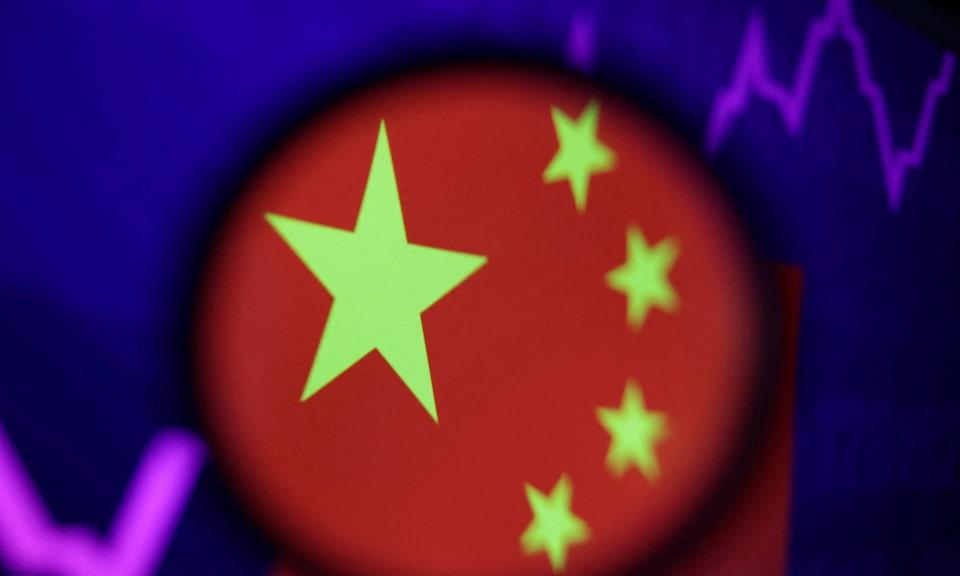
Global stock index shows biggest weekly loss since December Gold hits record high of $3,000/oz before paring U.S. stocks rise after confirming correction German bond yields rise on prospects of fiscal deal Investors remain nervous over escalating global trade tensions NEW YORK/ LONDON, March 14 (Reuters) - U.S. equities followed European stocks higher on Friday to end a bumpy week on a positive note, although safe-haven gold hit a record high with investors still showing some signs of anxiety about the economic impact of tariffs. German government bond yields and the euro rose on Friday, with German Chancellor-in-waiting Friedrich Merz saying he had secured crucial backing from the Greens for a massive increase in state borrowing. Sign up here. Germany's news helped boost U.S. Treasury yields, according to Garrett Melson, portfolio strategist at Natixis Investment Managers, who also attributed equity gains on Friday to the S&P 500 confirming it was in a correction on Thursday. "It's been a sharp decline from the highs in mid-February," said Melson. "You're seeing some signs of it at least getting an intermediate low and a little bit of a relief rally," he said. "There's not really anything meaningful in the way of news to really drive a rally other than just the technicals." On Wall Street, the Dow Jones Industrial Average (.DJI) , opens new tab closed up 674.62 points, or 1.65%, at 41,488.19 while the S&P 500 (.SPX) , opens new tab rose 117.42 points, or 2.13%, to 5,638.94 for its biggest one-day percentage gain since Nov. 6, the day after the U.S. election. The benchmark S&P index had finished Thursday more than 10% below its February record close after U.S. President Donald Trump threatened to impose a 200% tariff on European wine and spirit imports, the latest trade war escalation after Europe retaliated against U.S. tariffs on steel and aluminium. Last week the Nasdaq (.IXIC) , opens new tab confirmed it was in a correction, driven lower by tariff and growth uncertainties as well as high valuations for megacap tech stocks. The Nasdaq Composite (.IXIC) , opens new tab ended up 451.07 points, or 2.61% at 17,754.09 on Friday, for its biggest daily gain since November 6. MSCI's broadest gauge of global stocks (.MIWO00000PUS) , opens new tab rose 14.73 points, or 1.79%, to 836.32 on Friday, but still showed its biggest weekly fall since December. Earlier, the pan-European STOXX 600 (.STOXX) , opens new tab index closed up 1.14%. Spot gold breached $3,000 an ounce for the first time in early London trading, before losing ground to last trade down 0.17% to $2,982.72 an ounce. The precious metal is still up close to 14% year-to-date, as trade wars and growth worries boost its safe-haven appeal. In fixed income, the yield on the benchmark German 10-year Bunds was last at 2.876% after earlier rising as high as 2.936%. U.S. Treasury yields rose as the stock market recovery reduced safe-haven demand for U.S. government debt. The yield on benchmark U.S. 10-year notes rose 4.2 basis points to 4.318%, from 4.276% late on Thursday, while the 30-year bond yield rose 2.9 basis points to 4.6248%. The 2-year note yield, which typically moves in step with interest rate expectations for the Federal Reserve, rose 7 basis points to 4.023%, from 3.953% late on Thursday. "What you've had over the past week or two is a repricing of what's called the Trump put lower for equities, while at the same time, understanding that tariffs are probably here to stay in some form and aren't just a negotiating tactic," said Zachary Griffiths, senior strategist at CreditSights. In currencies, the euro gained broadly on optimism about Germany. Against the dollar, the euro was up 0.28% at $1.0882 while against the pound it gained 0.44% and rose 0.63% against the Swiss franc . Against the Japanese yen , the dollar strengthened 0.55% to 148.62. Against the Swiss franc , the greenback strengthened 0.33% to 0.885, supported by hopes the U.S. government would avoid a shutdown over the weekend. Oil prices rebounded 1% to end the week nearly unchanged as investors weighed the diminishing prospects of a quick end to the Ukraine war that could bring back more Russian energy supplies to Western markets. Brent crude futures settled 70 cents, or 1%, higher at $70.58 a barrel, after falling 1.5% in the previous session. U.S. West Texas Intermediate crude closed at $67.18 a barrel, up 63 cents, or 1%, after losing 1.7% on Thursday. Earlier in Asia, MSCI's broadest index of Asia-Pacific shares outside Japan (.MIAPJ0000PUS) , opens new tab had closed up almost 1% but lost almost 1.5% for the week. https://www.reuters.com/markets/global-markets-wrapup-1-2025-03-14/
2025-03-14 06:36
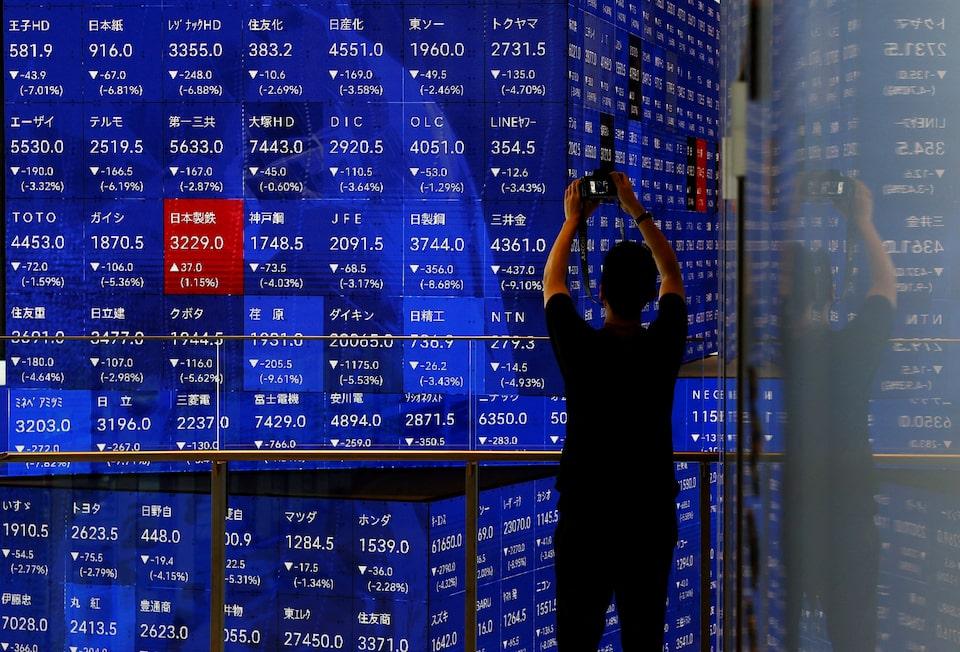
Sinopec and Zhenhua Oil halt Russian oil purchases due to sanctions concerns PetroChina and CNOOC reduce March-loading Russian oil volumes Independent refiners step in amid state firms' cutbacks SINGAPORE, March 14 (Reuters) - Chinese state oil companies are shying away from Russian oil this month, with two importers halting purchases while two others scaled back volumes as they assess compliance following recent U.S. sanctions on Moscow, multiple trade sources said. Russian oil supplies to top buyers India and China fell sharply following the January 10 sanctions by the former Biden administration targeting Russian producers Gazprom Neft (SIBN.MM) , opens new tab and Surgutneftegaz (SNGS.MM) , opens new tab as well as insurers and more than 100 vessels to curtail Moscow's oil revenue. Sign up here. While Russian shipments to the two Asian countries have rebounded after more non-sanctioned tankers joined the trade, China's state-run Sinopec (600028.SS) , opens new tab and Zhenhua Oil halted purchases of March-loading Russian oil due to concerns over dealing with the sanctioned firms, sources with knowledge of the matter said. The scaled-back buying by Chinese state players has weighed on Russian oil prices, eating into Moscow's revenue and putting additional pressure on Russia ahead of a possible ceasefire deal with Ukraine. A Beijing-based state oil source said his company ceased Russian oil deals as it undertakes more compliance checks and waits for a "clear picture" on a possible Russia-U.S. deal to end the Ukraine war. The company would resume purchases if talks lead to the U.S. easing or lifting sanctions on Russian oil, the person added, declining to be named or to identify their company as they are not authorised to speak with media. Surgutneftegaz and Gazprom Neft account for about a third of seaborne shipments of Russia's Far East flagship grade, ESPO blend. The two export about 1.2 million metric tons to China per month combined, or roughly 300,000 barrels per day (bpd). A trading executive close to a Russian supplier regularly dealing with Chinese state buyers said the companies were shunning oil produced by the newly sanctioned companies. "They are taking a break for now while contemplating if there are ways to work around," the executive added. China has said it opposes unilateral sanctions. Sinopec and Zhenhua Oil did not respond to requests for comment. Gazprom Neft and Surgutneftegaz did not reply to Reuters requests for comment. Independent refiners have stepped in to take up the slack, supporting prices for Russia's ESPO blend at a $2.50-$3 per barrel premium to ICE Brent on a delivered basis for March-loading cargoes, said the executive and two other traders. More recent transactions of April-loading cargoes were likely done at premiums of just above $2 a barrel, traders said. Prices differ for different oil producers and vessels, they added. Despite layers of Western restrictions aimed at curbing Moscow's revenue due to its war on Ukraine, Chinese state firms have been key clients of Russian oil, buying roughly half of Russia's shipments to China, or around 1.3 million bpd, with independent refiners taking the remainder. Russia is by far China's largest oil supplier, making up 20% of crude imports at the world's top importer. LOWER VOLUMES PetroChina (601857.SS) , opens new tab, a longstanding ESPO buyer from top Russian producer Rosneft (ROSN.MM) , opens new tab, however, continued with seaborne purchases in March but at lower volumes, two of the sources said. CNOOC, which regularly buys and trades Russian oil, has also cut back on March-loading volumes, traders said. PetroChina and CNOOC did not respond to requests for comment. In addition to seaborne imports, PetroChina continued lifting 800,000-900,000 bpd of Russian oil, mostly ESPO grade, via pipelines from Siberian fields under a long-term agreement. Sinopec, Asia's top crude buyer, has been filling in the gap on Russian imports with cargoes from West Africa, the Middle East and Brazil, traders said. https://www.reuters.com/business/energy/china-state-firms-curb-russian-oil-imports-sanctions-risks-sources-say-2025-03-14/
2025-03-14 06:34
Trade data due at 0400 GMT on March 17 JAKARTA, March 14 (Reuters) - Indonesia's trade surplus in February likely narrowed to $2.45 billion, despite a larger increase in exports and a small import growth, a Reuters poll showed on Friday, indicating that imports may have become costlier due to a weaker rupiah. Southeast Asia's largest economy has posted a monthly trade surplus since mid-2020, driven by a commodity boom. However, the size of these surpluses has been shrinking due to moderating commodity prices and weaker global demand. Sign up here. The median forecast of a dozen economists, surveyed by Reuters between March 10 and March 14, showed the surplus declined to $2.45 billion last month from $3.45 billion in January. Exports in February were expected to grow 9.1% year-on-year, much bigger than January's 4.7%, while imports were seen rising 0.6%, compared with a 2.67% contraction in January. At the start of February, the rupiah slid to its weakest level in more than seven months and continued to weaken against the U.S. dollar by the end of the month, reaching nearly a five-year low due to market reactions to U.S. trade policies. https://www.reuters.com/markets/asia/indonesias-trade-surplus-likely-narrowed-245-billion-february-2025-03-14/
2025-03-14 06:34
MOSCOW/RIYADH, March 14 (Reuters) - Russian President Vladimir Putin and Saudi Arabia's Crown Prince Mohammed bin Salman agreed on the importance of upholding their OPEC+ commitments and discussed moves to bring peace to Ukraine during a phone call, the Kremlin said late on Thursday. The leaders of the two countries reaffirmed their commitment to fulfilling their obligations under the OPEC+ agreement, the Kremlin said in a statement published after the call. Sign up here. Putin also thanked the crown prince for Saudi Arabia's mediation efforts when it came to hosting negotiations between Russian and U.S. diplomats in a meeting in February. The crown prince told the Russian President that his kingdom remains committed to facilitating dialogue and supporting a political resolution to the Ukraine crisis, the Saudi state news agency reported on Friday. https://www.reuters.com/world/putin-saudi-crown-prince-discuss-opec-agreements-ukraine-crisis-call-2025-03-14/