2025-03-14 06:29
MOSCOW, March 14 (Reuters) - Russian air defences repelled an attack by four drones flying towards Moscow, Mayor Sergei Sobyanin said on Friday, with no injuries reported in the capital or in an earlier attack on an oil complex in one of Russia's southern regions. "Emergency services are working at the site where debris came down," Sobyanin said on his official channel on the Telegram messaging app. Sign up here. Sobyanin did not mention Ukraine, but Kyiv has launched a steady stream of drone attacks on Russia since President Vladimir Putin sent tens of thousands of troops into Ukraine more than three years ago, most of them targeting energy and other infrastructure. Veniamin Kondratiev, the governor of Russia's southern Krasnodar region, said earlier that a Ukrainian attack had set a gasoline tank ablaze at the Tuapse oil complex on the shores of the Black Sea. Nobody had been hurt in the attack, he said. As many as 121 firefighters were battling to put out the flames, Kondratiev said, without saying if the site had been hit by a drone or a missile. The export-oriented Tuapse refinery, with a processing capacity of 240,000 barrels per day, produces naphtha, fuel oil, vacuum gasoil and high-sulphur diesel, mainly supplying China, Malaysia, Singapore and Turkey. Andrei Vorobyov, governor of the wider Moscow region, said three of the drones heading for Moscow had been brought down over his region. Debris had fallen on a construction site and a residential building under construction, he said. One of the drones had hit the roof of a multi-storey residential building in the west of Moscow, the RIA news agency reported, citing information from emergency services. The TASS news agency reported that debris had also fallen on a private house on the outskirts of Moscow. https://www.reuters.com/world/europe/russia-downed-four-drones-flying-towards-moscow-mayor-says-2025-03-14/

2025-03-14 05:39
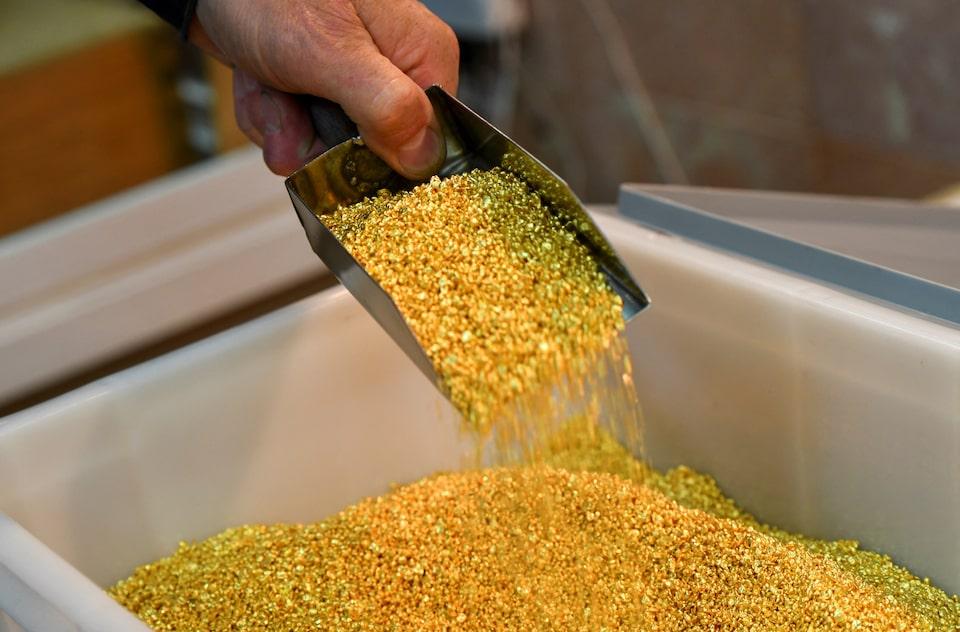
Cenbank gold buying will remain structurally higher, Goldman says Spot gold hits record high of $3,004.86 US central bank policy meeting due next week March 14 (Reuters) - Gold broke through the key $3,000 barrier on Friday for the first time as investors piled on to a historic rally in the safe-haven asset to seek cover from economic uncertainty sparked by U.S. President Donald Trump's tariff war. Spot gold hit an all-time high of $3,004.86 earlier in the session, before easing 0.1% to $2,986.26 as of 02:01 p.m. ET (1801 GMT) on profit taking. Sign up here. U.S. gold futures settled 0.3% higher at $3,001.10. Gold's surge past the $3,000 milestone was driven by "beleaguered investors seeking the ultimate safe-haven asset given Trump's tumult on stock markets," said Tai Wong, an independent metals trader. Traditionally viewed as a safe store of value during geopolitical turmoil, bullion has risen nearly 14% so far this year, driven in part by concerns over the impact of Trump's tariffs and a resultant selloff in stock markets. "Real asset money managers, particularly in the West, needed a strong stock market and economic slowdown scare to return to gold — and that's happening now," said Ole Hansen, head of commodity strategy at Saxo Bank. Gold has also been supported by central bank demand, with key buyer China building its bullion reserves for a fourth straight month in February. "Central banks continue record-level gold acquisitions, seeking to diversify away from an increasingly volatile U.S. dollar," said GoldCore CEO, David Russell. Expectations of monetary easing by the U.S. Federal Reserve have also helped zero-yield gold, with traders betting on cuts to resume in June. "There are good reasons for why investment demand is likely to remain robust... heightened geopolitical and geo-economic risk, higher inflation expectations, potentially lower rates and the uncertainty that markets are feeling," said Juan Carlos Artigas, global head of research at the World Gold Council. Goldman Sachs said in a note that there was upside risk to its $3,100 end-2025 base case scenario and to its $3,100-$3,300 forecast range as U.S. policy uncertainty may support investor demand. "We believe that central bank gold buying will remain structurally higher than before the freezing of Russian central bank reserves in 2022. We think this is the case even after a potential Russia-Ukraine ceasefire," the bank added. Elsewhere, silver was unchanged at $33.80 an ounce, platinum rose 0.1% to $995.20 and palladium firmed 0.6% to $963.76. https://www.reuters.com/markets/commodities/gold-mounts-record-summit-eyes-3000-peak-2025-03-14/
2025-03-14 05:34
A look at the day ahead in European and global markets from Rae Wee. Global stocks caught some much-needed relief on Friday after a week of heavy battering, momentarily putting aside worries over trade wars when top U.S. Senate Democrat Chuck Schumer signalled his party would provide the votes to avert a government shutdown. Sign up here. Traders reacted quickly to send stock futures higher: Nasdaq futures jumped more than 1% while S&P 500 futures climbed 0.8%, relatively big moves for Asian hours. MSCI's broadest index of Asia-Pacific shares outside Japan (.MIAPJ0000PUS) , opens new tab rose 1%. Europe similarly looked set for a strong opening, with EUROSTOXX 50 futures gaining 0.3% and DAX futures tacking on 0.5%. The market's touchiness towards news that had rarely stirred much reaction in the past suggested just how jittery investors had become. "If you're already in a haunted house and you're already rattled, then every little mouse will scare you," said Vishnu Varathan, Mizuho's head of macro research for Asia ex-Japan. In recent years markets have been largely unfazed by headlines surrounding U.S. government shutdowns, given that lawmakers routinely pass temporary spending bills to keep the government operating while they finish their work. But going into the week's end, global markets were reeling over fears of an impending U.S. recession and an escalating global trade war. Traders in London will wake up to the release of UK growth estimates for January due early in Europe's day. Expectations are for the economy to have grown 0.1% on a monthly basis, a slight slowdown from December's 0.4%. It's worth noting that Britain's relatively measured approach to U.S. trade ructions and the largely balanced trade position between the two have benefited the pound, which was on track for a second straight weekly gain. Over in the U.S., the University of Michigan Surveys of Consumers will be the key item to watch on Friday, given how U.S. President Donald Trump's tariff salvos are rattling businesses and consumers alike. Meanwhile, Chinese equities have emerged as an unlikely sanctuary for global investors seeking shelter from all the uncertainty in the United States. Hong Kong's Hang Seng Index (.HSI) , opens new tab is up 17% since Trump returned to the White House in January, compared with a drop of about 9% in the S&P 500 (.SPX) , opens new tab. Stocks in mainland China and Hong Kong surged again on Friday, led by consumer shares, after a northern Chinese city announced plans to boost birth rates. Investors are also awaiting a press conference next Monday by Chinese officials from the top planning agency and elsewhere for additional measures to enhance domestic consumption. Key developments that could influence markets on Friday: - UK GDP estimate (January) - UK industrial output (January) - U.S. University of Michigan Surveys of Consumers (March) https://www.reuters.com/markets/europe/global-markets-view-europe-2025-03-14/
2025-03-14 05:03
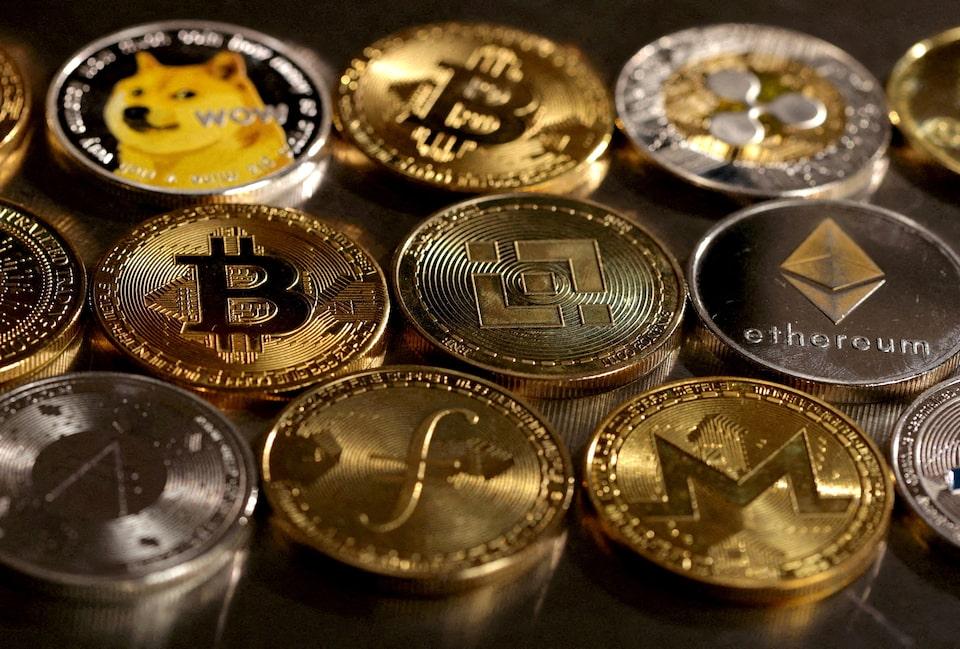
Crypto small but growing part of Russia's $192 bln oil trade, sources say Crypto used to smooth conversion of yuan and rupees to roubles Russian oil companies have used Tether, bitcoin and ether, sources say March 14 (Reuters) - Russia is using cryptocurrencies in its oil trade with China and India to skirt Western sanctions, according to four sources with direct knowledge of the matter. While Russia has publicly encouraged the use of crypto and last summer passed a law to allow digital currency payments in international trade, its use in the country's oil trade has not previously been reported. Sign up here. Some Russian oil companies are using bitcoin, ether and stablecoins such as Tether to smooth the conversion of Chinese yuan and Indian rupees to Russian roubles, the sources said, adding that it is a small but growing part of Russia's overall oil trade, which according to the International Energy Agency was worth $192 billion last year. All the sources declined to be identified due to the sensitivity of the matter. Cryptocurrencies have already helped enable countries under U.S. sanctions such as Iran and Venezuela to keep their economies running while avoiding use of the dollar, the preferred currency for transactions in the global oil market. Russia's move comes after Venezuela accelerated its use of digital currency in crude and fuel exports after Washington reimposed sanctions. Russia has set up a variety of systems and USDT (Tether) is just one of them, said a fifth source, a researcher at an investigations firm which tracks the use of cryptocurrencies for sanctions circumvention, who asked not to be named because of a non-disclosure agreement. The Russian central bank did not respond to a request for comment. It said last year that delays in payments due to sanctions had become a major challenge for the Russian economy. U.S. President Donald Trump is seeking to improve relations with Russia as he pushes for an end to the war in Ukraine, but whether sanctions will be lifted remains unclear. Reuters reported that the White House was drafting options for sanctions relief, but Trump posted on March 7 that he is strongly considering more sanctions on Russia. Crypto would likely continue to be used in Russian oil trading, one of the four sources said, even if sanctions are lifted and the dollar can be used again. It is a convenient tool and helps run operations faster, they added. In an example of how the trade works, a Chinese buyer of Russian oil pays a trading company acting as a middleman in yuan into an offshore account, two of the sources with knowledge of the transactions said. The middleman converts this into crypto and transfers it to another account and from there, it is sent to a third account in Russia and converted to roubles, they said. For one Russian oil trader's sales to China, crypto transactions are in the tens of millions of dollars per month, according to one of the sources who is familiar with the trader's operations. Traditional currencies still account for the bulk of Russia's oil transactions, analysts said, with other workarounds including the use of the UAE dirham, for example. One Russian crypto exchange, Garantex, was placed under U.S. sanctions in 2022 and by the European Union last month. The platform suspended services last week after Tether blocked digital wallets on its platform. Cryptocurrencies are one of multiple ways of getting around payment issues, according to one of the sources, who advises the Kremlin. Analysis by the UK's Royal United Services Institute and the Centre for Information Resilience and also supports that view. https://www.reuters.com/business/energy/russia-leans-cryptocurrencies-oil-trade-sources-say-2025-03-14/
2025-03-14 03:30
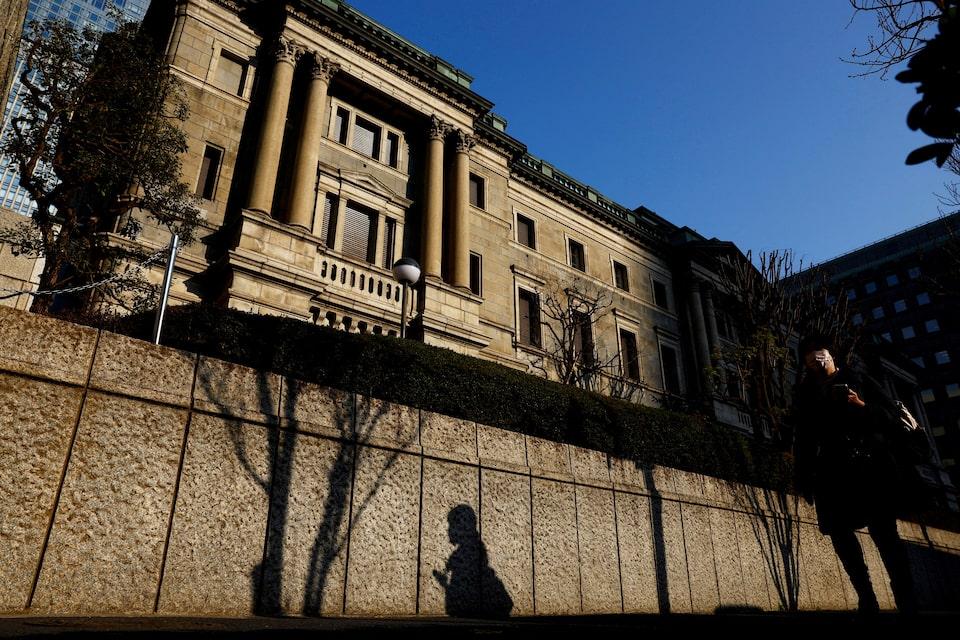
BOJ meets March 18-19, decision expected 0330-0430GMT Wednesday Board likely to keep short-term rates steady at 0.5% Debate to focus on positive domestic data, gloomy global outlook Markets focusing on hints on pace, timing of future rate hikes Governor Ueda to brief media 0630 GMT Wednesday TOKYO, March 14 (Reuters) - The Bank of Japan is set to keep interest rates steady next week and discuss just how much of a risk the escalating U.S. trade war poses to the export-reliant economy, which will be key to the timing of its next rate hike. The market rout and fears of a global slowdown caused by U.S. President Donald Trump's tariff policy are overshadowing wage and price data showing Japan is making progress towards durably achieving the BOJ's 2% inflation target. Sign up here. Having just raised interest rates in January, the BOJ is set to maintain its short-term policy rate at 0.5% at a two-day meeting that ends on Wednesday. With policy seen on hold, markets are focusing on Governor Kazuo Ueda's post-meeting briefing for clues on whether a darkening global outlook could affect the BOJ's rate-hike path. "Japan's economy and price developments appear on track, but overseas risks have risen," said a source familiar with the BOJ's thinking. "The heightening global uncertainty is a concern and could affect the BOJ's rate-hike timing," the source said, a view echoed by two more sources. Big Japanese firms this week offered bumper pay hikes in wage talks with unions for a third straight year, backing the BOJ's view that sustained wage gains will keep inflation durably around its 2% target. Many BOJ policymakers see risks to the price outlook skewed to the upside, sources have told Reuters, as firms continue to pass on rising raw material and labour costs - pushing headline inflation to a two-year high of 4% in January. But Trump's back-and-forth comments on tariffs have roiled markets and stoked fears of a U.S. recession, which could hit Japan's export-reliant economy and discourage firms from boosting spending, analysts say. Speaking in parliament this week, Ueda said he expects consumption to pick up but was "very worried" about uncertainty surrounding overseas economic developments. Last year's summer market rout, which came days after soft U.S. jobs data and the BOJ's July rate hike, still haunts the minds of policymakers, who back then had to soothe market jitters by downplaying the chance of a near-term rate hike. "This year's strong wage outcome and solid GDP justify normalising monetary policy as soon as in May," said Hiroki Shimazu, chief strategist at MCP Asset Management Japan. "But the BOJ probably wants to scrutinise overseas risks," he said. "If there's another big correction in the U.S. stock market, the BOJ could delay the next rate hike," he said. The BOJ raised short-term rates to 0.5% in January after ending a massive stimulus programme last year on the view Japan was on the cusp of durably achieving its 2% inflation target. It has signaled readiness to raise rates further if economic and price developments move in line with projections. The BOJ will next review its quarterly growth and price forecasts at a subsequent meeting on April 30-May 1, which will include for the first time projections extending to fiscal 2027. Over two-thirds of economists polled by Reuters expect the BOJ to hike rates to 0.75% in the third quarter, most likely in July. https://www.reuters.com/markets/asia/boj-debate-economic-risks-trump-trade-war-rates-seen-steady-2025-03-14/
2025-03-14 00:43
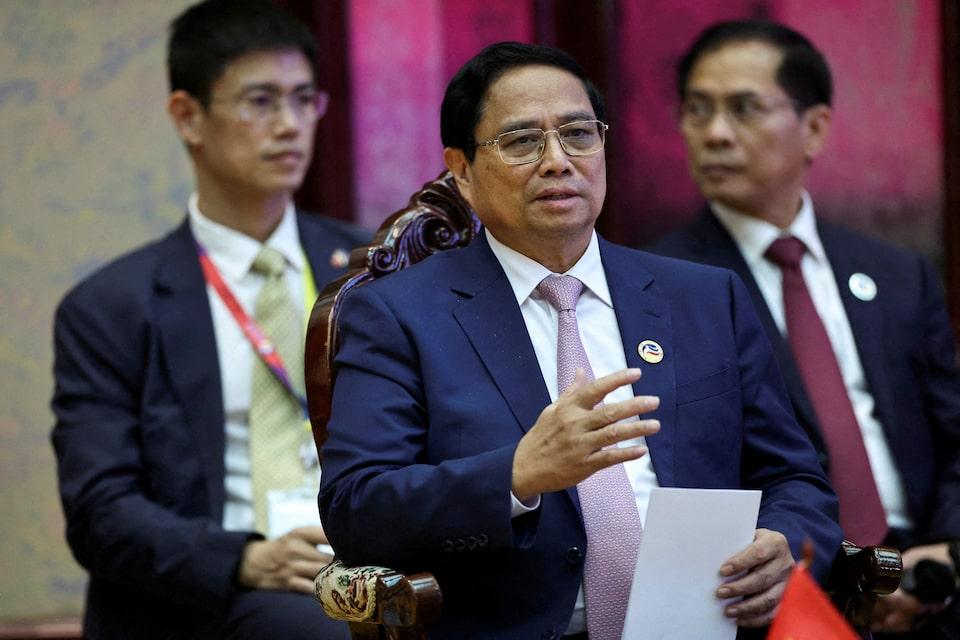
HANOI, March 14 (Reuters) - Vietnam is reviewing its duties on U.S. goods, including on liquefied natural gas, agriculture and high-tech products, Prime Minister Pham Minh Chinh told the U.S. ambassador to the country, a report on the government's website said. The Southeast Asian industrial hub, which is heavily reliant on exports to the United States and has a large trade surplus with Washington exceeding $123 billion in 2024, is scrambling to avoid reciprocal tariffs that the Trump administration has threatened globally to reduce America's trade deficit. Sign up here. Chinh said "relevant ministries, sectors and agencies are actively reviewing import tariffs on goods from the United States, encouraging increased imports of key U.S. products that Vietnam needs, especially agricultural products, liquefied gas and high-tech products," the report on the government portal said. Chinh met U.S. ambassador Marc Knapper on Thursday. A delegation led by Vietnam's trade minister Nguyen Hong Dien is currently in the United States and plans meetings with top trade and energy officials with the aim of reaching deals, according to a Vietnam's government document seen by Reuters. Vietnamese officials have repeatedly indicated their will to meet U.S. requests on reducing trade imbalances and facilitate U.S. business in the country, including by pledging a quick licensing process for Elon Musk's Starlink satellite services. Vietnamese imports of U.S. LNG have often been mentioned by Vietnamese and U.S. officials as a means to reduce the large trade gap, but no concrete steps have been taken yet. The Vietnamese fledgling LNG industry currently relies on short-term deals for small shipments, rather than multi-year contracts preferred by U.S. exporters. In February, the trade minister said Vietnam was ready to import more farm products from the United States. More than one-fourth of U.S. exports to Vietnam last year were agricultural products, mostly cotton, soybeans and tree nuts, for a total value of $3.4 billion, according to U.S. government data. Vietnam is also keen to import more U.S. high-tech products, including AI-grade chips, but faces restrictions on accessing the most advanced semiconductors under rules adopted by the Biden administration. https://www.reuters.com/world/asia-pacific/vietnam-reviewing-duties-us-lng-high-tech-products-pm-says-2025-03-14/