2025-03-14 00:25
March 14 (Reuters) - Russia's Rusal (RUAL.MM) , opens new tab, on Friday reported a near-three fold jump in its annual earnings, reflecting higher prices for both aluminium and alumina owing to a rise in demand for the products, which are critical in the race for decarbonisation. Hong Kong-listed Rusal, the world's largest aluminium producer outside China, posted a net profit of $803 million for the year ended December 31, 184.8% higher compared with the $282 million reported in the year-ago period. Sign up here. Rusal flagged that the transition towards greener forms of energy accelerated in 2024 amid tighter global emission standards, growing consumer demand for sustainable products and the rising importance of environmental, social and governance (ESG) criteria. Consumption of aluminium in the transportation industry remained the largest in 2024 and continued to gain pace despite a slip in overall vehicle production during the year. "The EV market is expanding due to stricter emissions regulations, government incentives, and advancements in battery technology," Rusal said in a filing to the Hong Kong exchange. The company — one of the few Russian firms left on any of the world's exchanges — noted that the development of charging infrastructure and an increase in consumer demand for sustainable transportation are fueling expansion in the EV market. Rusal said its results were prepared assuming that it would continue as a going concern but warned that ongoing geopolitical uncertainty, including potential sanctions imposed by the United States, European Union and other countries, may result in "significant limitations". https://www.reuters.com/markets/commodities/aluminium-giant-rusal-posts-near-three-fold-jump-annual-profit-2025-03-14/

2025-03-14 00:08
SAO PAULO, March 13 (Reuters) - Brazilian power firm Eletrobras reported on Thursday a near 25% increase in its fourth-quarter net profit from a year earlier to 1.11 billion reais ($191.4 million). The company also announced 1.8 billion reais ($310 million) in additional dividends to shareholders in a separate statement. Sign up here. WHY IT'S IMPORTANT Eletrobras is Latin America's largest utility by generating capacity. BY THE NUMBERS Adjusted earnings before interest, taxes, depreciation and amortization (EBITDA), adapted for local regulatory rules, came in at 5.1 billion reais in the three-month period to the end of December, down 6.4% from a year earlier. Net operational revenue stood at 12 billion reais in the quarter, up more than one-fifth year-on-year. ($1 = 5.7991 reais) https://www.reuters.com/business/energy/brazils-eletrobras-posts-55-fall-fourth-quarter-net-profit-2025-03-13/

2025-03-13 23:48
WASHINGTON, March 13 (Reuters) - Canadian ministers emerged from a lengthy, high-level meeting between Canada and the United States on Thursday without immediate relief from U.S. tariffs on Canadian imports, but they said the discussion was constructive and that talks would continue. Speaking to reporters at the Canadian embassy in Washington, Canadian Industry Minister Francois-Philippe Champagne said he and Finance Minister Dominic LeBlanc spoke about economic security and national security with U.S. Commerce Secretary Howard Lutnick, making clear the impact tariffs would have on both sides of the border. Sign up here. "I would say that we leave Washington, I think, better equipped in making sure that we can defend Canadian interests," Champagne said. LeBlanc said the two sides agreed to continue discussions. https://www.reuters.com/world/americas/meeting-with-lutnick-tariffs-was-constructive-canadian-ministers-say-2025-03-13/

2025-03-13 23:21
March 13 (Reuters) - Peru's central bank held its benchmark interest rate at 4.75% on Thursday, in line with analysts' expectations. Peru, which has one of the lowest interest rates in Latin America, has since September 2023 gradually eased the key lending rate from a high of 7.75%. Sign up here. In a statement, the central bank noted that its decision to hold the rate comes as it expects annual inflation in March to come toward the lower limit of its target range, before inching back up to the range's midpoint. Annual inflation in the world's third-largest copper producer came in at 1.48% in February, already at the lower end of the central bank's target range of 2%, plus or minus one percentage point. Prices rose 0.19% month-on-month in February. Meanwhile, annual core inflation, which strips out some volatile goods, is expected to hover around 2%, the central bank added. https://www.reuters.com/markets/rates-bonds/peru-central-bank-holds-benchmark-interest-rate-475-2025-03-13/

2025-03-13 23:10
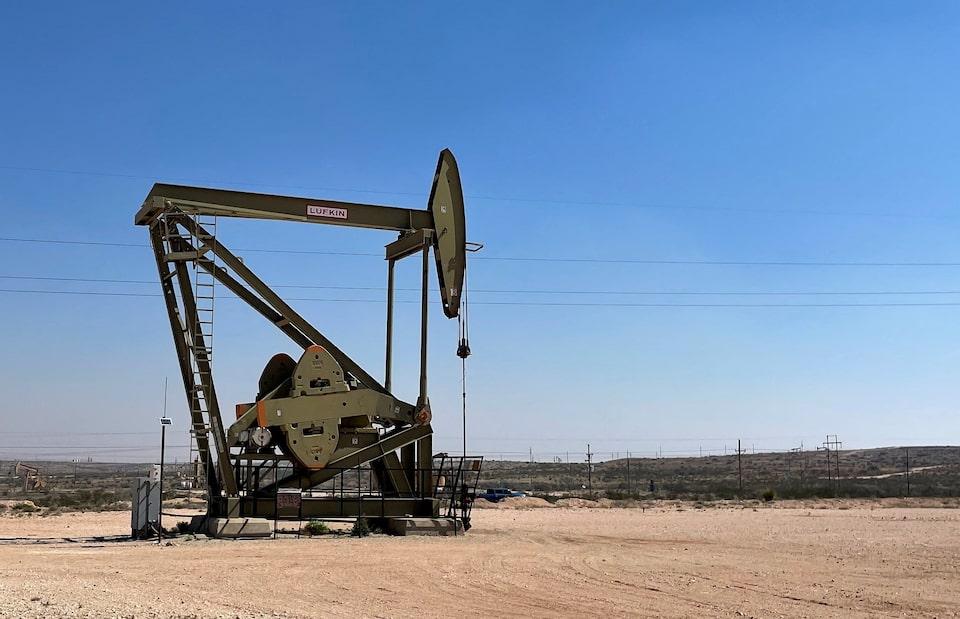
HOUSTON, March 13 (Reuters) - Artificial intelligence is speeding up oil and gas drilling and prompting companies to take a second look at places they had viewed as too difficult or expensive to develop, executives detailed during the CERAWeek conference in Houston. AI took center stage in many sessions at the world's largest energy gathering. Oil producers are seeking ways to remain profitable in an environment of plummeting oil prices and worries that U.S. President Donald Trump's tariffs could slow global energy demand. Sign up here. UK oil major BP (BP.L) , opens new tab is using AI to steer drill bits and predict potential problems in wells before they happen, said Ann Davies, BP's senior vice president of wells. "We are able to drill more wells per year and have a better capital allocation," she said. BP announced last month it would boost annual spending on oil and gas production as part of a major strategy shift to improve investor confidence. AI has helped U.S. oil producer Devon Energy (DVN.N) , opens new tab drill in areas where it was unfeasible before, said chief technology officer Trey Lowe in an interview. For example, the company can gather information about a fault in a formation, then drill on the other side to avoid it, he said. Chevron (CVX.N) , opens new tab is using AI-powered drones that fly over its shale operations in Texas and Colorado to remotely monitor potential problems like emissions leaks and alert field workers. In three months of testing drones through a partnership with autonomous drone company Percepto, Chevron reduced the amount of time that production was shut in for repairs or maintenance, said Russell Robinson, a deputy program manager of facilities and operations at Chevron, in an interview on the sidelines of the conference. The drones helped workers spend less time criss-crossing the shale field performing routine inspections, he said. "We've continued to have more assets that are running at a longer time, so this is all around just producing more oil or gas," he said, adding Chevron is evaluating whether to expand use of drones to monitor its refineries. Devon Energy has machine learning models monitoring each of its oil rigs across the U.S., Lowe said, adding the company has seen a 25% improvement in productive life of its oil and gas wells. AI is also speeding up offshore drilling. BP is evaluating vast amounts of seismic data in the Gulf of Mexico in just eight to 12 weeks with the help of AI, versus six to 12 months previously. This helps geoscientists determine where to drill a well and predict difficulties, a spokesperson said. While the oil and gas industry has used AI for years, recent advances like large-language models are revolutionizing the sector, said Chicheng Xu, founder of OpenPetro AI, a company building AI tools for the energy industry, and a former petrophysicist at Aramco. For example, building three-dimensional visualizations of features deep beneath the ocean floor would be time-consuming for humans, he said. "AI can dig through the data and find the features you want to see and visualize it to you. That's the real difference," Xu said. Cutting time and costs means gaining a competitive advantage. "Companies that don't deploy it (AI) will get left behind at this point," said Devon's Lowe. https://www.reuters.com/business/energy/ceraweek-ai-leading-faster-cheaper-oil-production-executives-say-2025-03-13/
2025-03-13 22:50
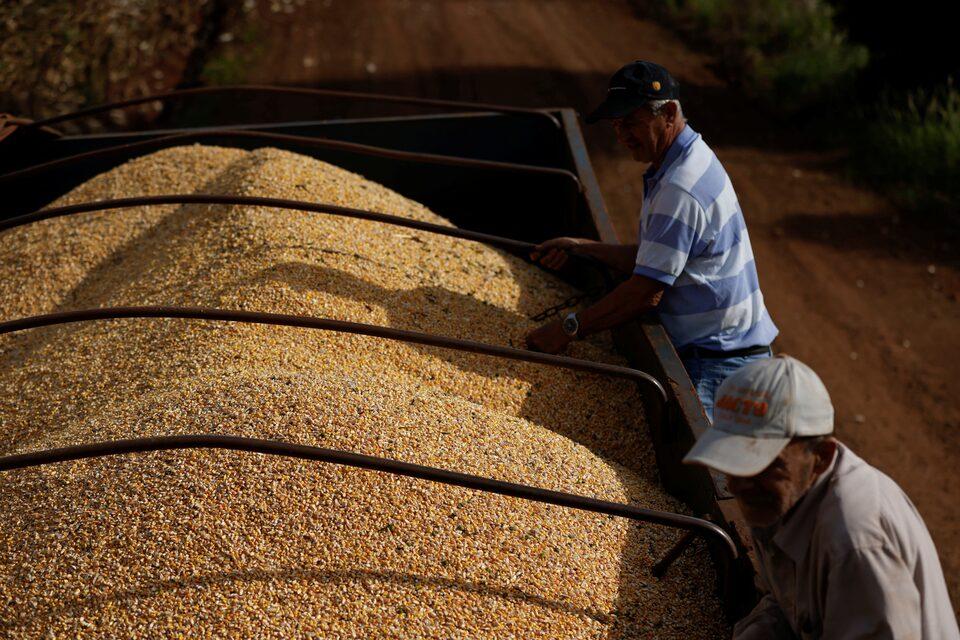
NAPERVILLE, Illinois, March 13 (Reuters) - According to its own statistics agency, Brazil’s corn supplies as of a few weeks ago hit the lowest levels in at least a quarter-century. But the U.S. Department of Agriculture does not expect a scenario like that to unfold until early next year. Sign up here. So which is it? The USDA-versus-Conab storyline is not new. Controversy erupted last year over the two agencies' highly varying estimates for Brazil’s soybean and corn harvests. On a broader scale, the explanation is straightforward. USDA and its Brazilian equivalent Conab hold differences across the balance sheet, spanning both production and demand. This means there is likely no “right” answer. But with available world corn supplies later this year projected to fall near three-decade lows when compared against demand, the trends in Brazil might be worth unpacking. VITAL REVIEW Before discussing forecasts, it is critical to understand the relevant time frames. For Conab, Brazil’s 2024-25 corn marketing year ends on January 31, 2026, while USDA’s ends one month later. This March-February Brazilian marketing year plays out on USDA’s world corn balance sheet, which reflects an aggregate of local marketing years. Therefore, USDA’s world corn stock estimates are not point-in-time but rather span a time frame of several months. That is different from how USDA handles its global soybean ledger, where Brazil and Argentina are shifted to an October-September marketing year. OPPOSING OUTPUT USDA on Tuesday maintained the 2024-25 Brazilian corn crop at 126 million metric tons, though it reduced the 2023-24 harvest by 3 million to 119 million tons. Conab on Thursday increased the 2024-25 crop by less than a million tons to 122.76 million and left last year unchanged at 115.7 million. These changes brought the agencies closer together. Combined over both crop years, USDA now holds a corn output estimate 6.5 million tons higher than Conab, down from 10.3 million last month. The figures never have to converge, though, because for the recent four years, USDA’s production numbers remain at least 2.5% above those of Conab. The deviation for the 2022-23 crop, which both agencies agree was Brazil’s largest-ever, still sits at 3.9%. BY THE NUMBERS Conab says supplies are tight now, whereas USDA expects them to be fairly tight a year from now. Conab’s data shows Brazilian corn stocks around 2 million tons for 2023-24, which ended six weeks ago. Both that figure and the associated stocks-to-use of 1.7% are the lowest in Conab’s history back to 1999-00. The Brazilian agency sees a recovery by next January to 5.5 million tons and 4.6%. That compares with decade-averages of about 10.5 million tons and 11%. As of February’s end, USDA believes that Brazil’s corn stocks totaled 7.5 million tons, down from 10 million in 2022-23 and similar to a decade-average. But it projects 2024-25 stocks plunging to a 23-year low of just under 3 million tons. That corresponds with a 2.2% stocks-to-use ratio, which would be a 42-year low in USDA’s database. The recent 10-year average is 7.8%. The one-month shift between the two agencies’ marketing years might explain part of the differences. Brazil typically exports no more than 4% of its annual volume in February, the month in question, though domestic consumption accounts for much more usage. USDA is more optimistic on Brazil’s corn exports than Conab. On average over 2023-24 and 2024-25, the U.S. agency has Brazil exporting about a third of what it produces, above Conab’s assumption near 30%. Recent exports do not give the appearance of abundant supply as monthly Brazilian shipments have been a bit below average. Future export potential depends on Brazil’s newly sown crop as well as the upcoming corn harvest in the United States, the top exporter. While the timing is a bit different, both agencies’ calls for well-below-average Brazilian corn supplies at some point within the year’s span certainly highlight the market's recent concerns about dwindling stockpiles, putting pressure on this year's crops to perform. Karen Braun is a market analyst for Reuters. Views expressed above are her own. https://www.reuters.com/markets/commodities/whats-behind-clashing-ideas-over-brazils-shrinking-corn-stocks-2025-03-13/