2025-03-13 21:07
HOUSTON, March 13 (Reuters) - The rapid development of AI data centers is intensifying concerns about how well an aging U.S. electrical grid can hold up to that demand, energy executives and regulators said at the CERAWeek conference in Houston this week. The build-out of Big Tech's giant computer warehouses, which at a single site can consume as much power as a mid-sized U.S. city, is propelling U.S. electricity consumption to record highs. Government agencies project data center demand will triple within the next three years, consuming 12% of the entire U.S. power supply. Sign up here. "What we're seeing today is unprecedented growth and the challenges the grid is facing are getting more pronounced," Samir Vora, a senior power generation executive at Mitsubishi Power Americas, said in an interview. Even as electricity demand swells, generators that run on fossil fuels are retiring. New generation and power lines often toil for years in interconnection queues, tightening the delicate supply-demand balance needed to avoid blackouts. "When it comes to the reliability of the electric grid, we have a rendezvous with reality," Mark Christie, who leads the Federal Energy Regulatory Commission (FERC), said at the conference on Thursday. Christie said that reality has become the most stark in the country's biggest electrical grid, PJM Interconnection, which covers 13 states and the District of Columbia. PJM's service area has the world's largest concentration of data centers, with member state Virginia routing about 70% of global internet traffic through the state. In its latest capacity auction, PJM announced prices that were more than 800% higher than the previous year, with the grid operator citing rising demand and shrinking supply. "I'm optimistic that this is a solvable problem but it is certainly not a trivial problem," Manu Asthana, CEO of PJM, said on a panel discussion. PJM projects its peak demand to grow from 152 gigawatts to 184 gigawatts by 2030, with nearly all of the additions coming from data centers, Asthana said. Without the quick addition of new power supply, supply and demand pinches will increasingly expand to other parts of the country, FERC's Christie said. "It's going to become more stark in other multi-state regions, too," he warned. https://www.reuters.com/business/energy/ceraweek-data-center-build-out-stokes-fears-overburdening-biggest-us-grid-2025-03-13/

2025-03-13 21:06
ORLANDO, Florida, March 13 (Reuters) - TRADING DAY Making sense of the forces driving global markets Sign up here. Well, that didn't last long. A wave of selling across global stocks on Thursday snuffed out any flickering hopes of stabilization or recovery from the previous day, as the latest salvo from U.S. President Donald Trump in the global trade war sent investors running for cover. After the European Union responded to blanket U.S. tariffs on steel and aluminum by imposing a 50% tax on American whiskey exports, Trump on Thursday threatened to charge a 200% tariff on imports of European wines and spirits. Thursday was a classic 'risk off' day - as they slammed stocks and riskier assets lower, investors scampered to the traditional safe-haven harbors of U.S. Treasuries, the dollar and gold, which surged to a new high just under $3,000 an ounce. There's a growing sense that Trump is willing to accept the economic and market damage his tariff policy is inflicting right now. Until investors can be convinced otherwise, the path of least resistance for equities and risk assets is probably to the downside, even though the selloff is getting pretty extreme. Today's Key Market Moves. Japanese futures are pointing to a fall of 0.7% at the open in Tokyo on Friday, and world markets can expect a rocky end to the week. Asia and Europe have performed relatively well in recent weeks, but the dam can't hold forever. On top of the trade chaos, investors are having to grapple with another potential worry from Washington - a partial U.S. government shutdown, which may come as soon as 12:01 a.m. local time on Saturday if lawmakers fail to agree on a stopgap funding bill. U.S. rates traders are now fully pricing in three quarter-point rate cuts this year from the Fed, attaching a roughly 40% probability to the first of those coming in May. Consumer price inflation on Wednesday and producer price inflation on Thursday were softer than expected, which helped fuel these increasingly dovish bets. But the deteriorating growth outlook is the main driver, and the steep losses on Wall Street will only intensify expectations that the Fed will act soon. Would this be the 'Fed put'? in action? Probably not, as most analysts reckon we're still a long way from policymakers providing the sliding market a backstop. But if the snowball turns into an avalanche, you never know. How low is the 'Fed put'? Every time a Wall Street selloff snowballs, fear of an avalanche revives talk of the "Fed put". The correction underway now is no different, but the bar for the central bank to provide the market a backstop is now likely a high one. The notion of the Fed put – the idea that the Federal Reserve will prop up falling asset prices with monetary easing or other tools – took root in the Alan Greenspan era (1987-2006) and has been embedded in investor psyche ever since. Part of the Fed's mandate, of course, is ensuring financial stability, so, in a sense, the Fed put has always existed and can always be used. The Global Financial Crisis of 2007-09 and the pandemic in 2020 are two examples of the Fed put in action. As strategists at HSBC point out, the Fed put doesn't have to be emergency rate cuts or QE. Adding a line in its policy statement that financial conditions have tightened considerably, for example, could calm the horses. The current selloff is obviously nothing like those crises. But that hasn't stopped speculation that further declines could soon get the Fed's attention, with the Nasdaq now deep in correction territory - 10% or more below the previous peak - and the S&P 500 flirting with it. There is good reason to be vigilant. The Trump administration's chaotic trade policy agenda is generating huge uncertainty for consumers, businesses and investors, and causing recession risks to rise. Some $5 trillion has been wiped off the value of U.S. stocks in less than a month, led by steep declines in Big Tech. The Roundhill equal-weighted 'Magnificent Seven' ETF is down 20% from its December peak. Given the concentration of stock ownership in the hands of the country's richest income decile, who now account for a record 50% of all consumer spending, weakness on Wall Street could quickly rip through the wider economy. Policymakers will also be paying close attention to financial conditions, which are now the tightest in nearly a year, according to Goldman Sachs' financial conditions index. This tightening is almost entirely due to the equity slump. OUT OF THE MONEY But the wider economic environment strongly suggests markets will have to fall much further or faster before triggering a policy response. While volatility across equities, bonds and some key currency pairs is the highest in months and rising, it remains significantly below levels typically associated with past market crises. The same goes for credit spreads. U.S. high-yield spreads widened beyond 300 basis points this week for the first time in six months, but that's still miles below the spreads of 800, 900 or even 2,000 bps witnessed over the last few decades. Liquidity also still seems, to coin a Fed term, ample. There are no gapping prices in key markets, trades can be executed smoothly, there is no sign of stress in funding markets, and the corporate bond primary market is still open for business. What's more, a market or economic downturn may not be as deflationary as previous slumps because any downturn now would likely be driven partly by the import tariffs President Donald Trump is threatening to impose – and tariffs risk increasing prices while hindering growth. A tumbling stock market and 'stagflation' would be extremely awkward for the Fed and potentially tie its hands. Strategists at HSBC reckon the strike price of any policy put - from the Trump administration or the Fed - is probably "some ways off still". The S&P 500's average downturn from peaks is 14%, and even then it still usually ends the year higher with no Fed put. The market is currently 10% off its peak. According to Treasury Secretary Scott Bessent, there is no "Trump put", and the president himself said last week he's "not even looking at the market." The Trump administration appears willing to let asset prices fall and growth slow as part of the "detox period" or "transition" towards a more private sector-based economy. Strategists at Morgan Stanley argue there's a "much greater likelihood of a Fed Put than a Trump Put," contrasting Trump and Bessent's statements with Chair Jerome Powell's recent remarks that the Fed has tools to deploy in case of extreme economic stress. That is probably true. But the strike price might be lower than many investors would like. What could move markets tomorrow? If you have more time to read today, here are a few articles I recommend to help you make sense of what happened in markets today. I'd love to hear from you, so please reach out to me with comments at [email protected] , opens new tab. You can also follow me at [@ReutersJamie and @reutersjamie.bsky.social.] Opinions expressed are those of the author. They do not reflect the views of Reuters News, which, under the Trust Principles , opens new tab, is committed to integrity, independence, and freedom from bias. Trading Day is also sent by email every weekday morning. Think your friend or colleague should know about us? Forward this newsletter to them. They can also sign up here. https://www.reuters.com/markets/global-markets-trading-day-2025-03-13/
2025-03-13 21:01
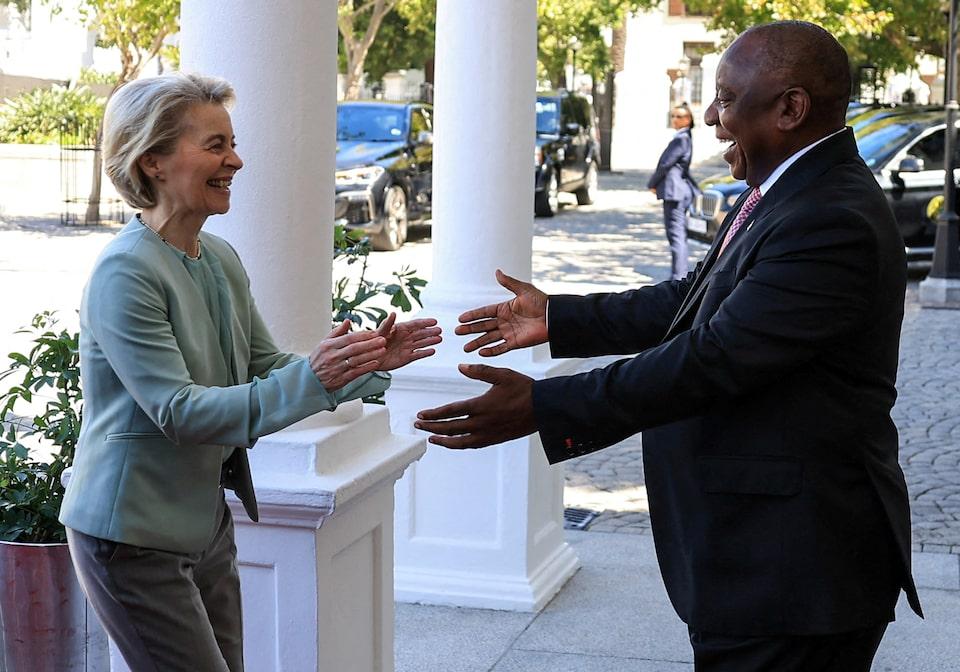
CAPE TOWN, March 13 (Reuters) - European Union leaders announced a 4.7 billion euro ($5.10 billion) investment package during a visit to South Africa on Thursday, at a time when both are on worse terms with the United States than they have been for decades. The European leaders said the visit was an opportunity to strengthen close ties with Africa's most advanced economy, coinciding with the latter's presidency of the Group of 20 nations, which U.S. officials have so far largely snubbed. Sign up here. U.S. President Donald Trump has stunned European leaders with his pivot towards Russia in the Ukraine war, upending U.S. policy since Moscow's full-scale invasion in 2022. His staunchly pro-Israel stance has brought him into conflict with South Africa over its genocide case against Israel at the World Court. The U.S. administration has also interposed itself in Europe and South Africa's domestic politics, criticising Europe for attempting to isolate the far right and ignoring voters' concerns about immigrants, while cutting aid to South Africa over its efforts to address historic racial land injustice. The EU trip was an opportunity to ameliorate ties, which soured when South Africa refused to outright condemn Russia's Vladimir Putin for invading Ukraine. European Commission President Ursula von der Leyen said South Africa had a vital role on the world stage as a leading voice of the Global South. "In a moment of increased confrontation and competition, we must strengthen our partnership further," she said. She said at talks with President Cyril Ramaphosa in Cape Town that Europe wanted to help the South African economy grow. "Europe understands your potential," she said, sitting alongside European Council President Antonio Costa. She cited clean hydrogen, where South Africa could make use of abundant raw materials and vast renewable energy potential. Ramaphosa said South Africa wanted Europe's support to transition to a low carbon economy and grow industry, and that it valued European support for multilateralism at a time of rising nationalism. "African relations with the European Union should be built on a mutually beneficial partnership," he said. ($1 = 0.9223 euros) https://www.reuters.com/world/africa/european-union-announces-47-billion-euro-investment-package-south-africa-2025-03-13/
2025-03-13 20:46
March 13 (Reuters) - The Trump administration approved a plan to expand a Montana coal mine and extend its life by 16 years, the Interior Department said on Thursday, a move aligned with President Donald Trump's goal to increase U.S. fossil fuel production. The Spring Creek Mine in Big Horn County is operated by the Navajo Transitional Energy Company. Sign up here. The expansion will allow 39.9 million tons of coal to be mined over the next 16 years. The approval marks a victory for the Spring Creek mine, which has sought for nearly two decades to boost production. Its expansion plans were stymied by a court order mandating a fresh federal environmental review. That analysis was published in January, days before Trump took office. The NTEC, which is wholly owned by the Navajo Nation, bought the mine in 2019 from bankrupt Cloud Peak Energy. NTEC was not immediately available for comment. https://www.reuters.com/business/energy/us-approves-expansion-montana-coal-mine-2025-03-13/

2025-03-13 20:46
March 14 (Reuters) - SoftBank (9434.T) , opens new tab plans to transform a former Sharp LCD panel plant in Japan into a data centre for operating artificial intelligence agents developed in collaboration with U.S.-based ChatGPT creator, OpenAI, according to a Nikkei report on Friday. The Japanese telecom giant intends to purchase the facility and part of the land at Sharp’s closed TV LCD factory in Osaka for about 100 billion yen ($677.05 million). Sign up here. The centre is expected to start operations in 2026 and will be one of the largest in Japan, boasting a power capacity of 150 megawatts. The partnership aims to commercialize OpenAI's AI agent model in Japan, with plans to train the model on client companies' data and offer customised AI agents. The investment is expected to be significant, potentially approaching 1 trillion yen ($6.77 billion), the Japanese media outlet reported. Softbank and OpenAI did not immediately respond to a Reuters request for comment. ($1 = 147.7000 yen) https://www.reuters.com/technology/softbank-openai-jointly-run-ai-agents-ex-sharp-lcd-plant-osaka-nikkei-reports-2025-03-13/

2025-03-13 20:38
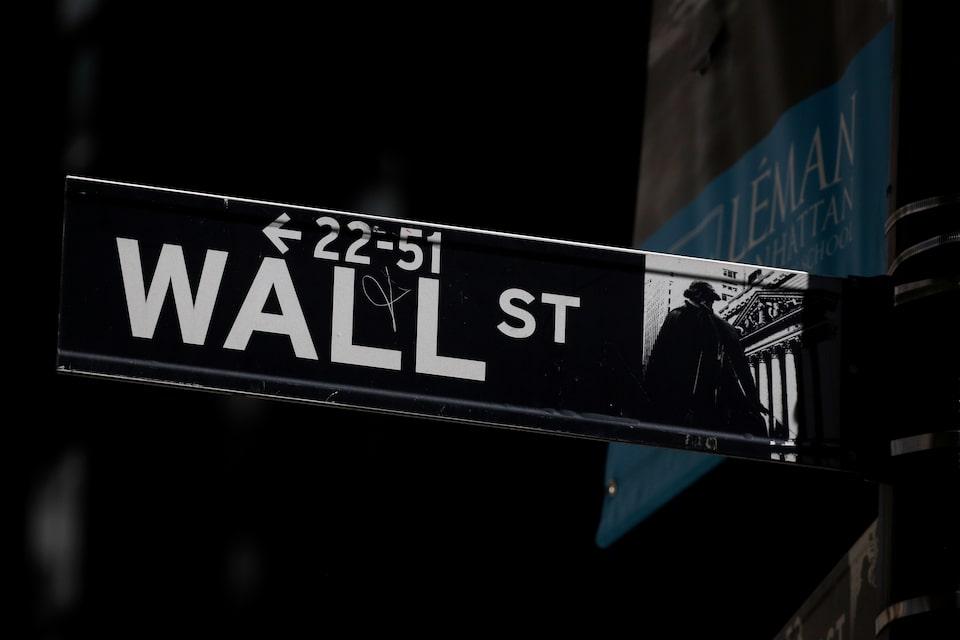
Feb PPI cooler than expected after upward Jan revisions Dollar General beats earnings expectations; guidance disappoints Intel gains after naming chip industry veteran Lip-Bu Tan CEO Adobe falls after dull quarterly revenue forecast Indexes off: Dow 1.30%, S&P 500 1.39%, Nasdaq 1.96% NEW YORK, March 13 (Reuters) - Wall Street ended sharply lower on Thursday and the S&P 500 confirmed it is in a correction after cool inflation data was overshadowed by fears that the escalating tariff war being waged by the United States against some of its biggest trading partners could reignite inflation and tip the economy into recession. In the latest episode of Trump's multi-front trade war, the European Union responded to blanket U.S. tariffs on steel and aluminum by imposing a 50% tax on American whiskey exports, prompting the president to threaten on Truth Social to charge a 200% tariff on imports of European wines and spirits. Sign up here. A broad selloff sent all three major U.S. stock indexes tumbling, with losses in tech and tech-related megacap shares dragging the Nasdaq nearly 2%. "Sentiment's terrible," Mike Dickson, head of research at Horizon Investments in Charlotte, North Carolina. "There's new tariff headlines every day, and that’s weighing on things." "And you’re seeing it most acutely in some of the more sensitive areas of the market like the fairly inflated Magnificent 7," Dickson added. "It doesn't feel great out there right now." The S&P 500 closed 10.1% below its February 19 record closing high, confirming the bellwether index has been in a correction since then. On March 6, the Nasdaq confirmed it is in a correction by closing 10.4% lower than its all-time closing high reached on December 16. The Dow Jones Transportation index (.DJT) , opens new tab, widely viewed as a barometer of U.S. economic health, closed 18.9% below its November 25 record closing high; dipping 20% or more below that level would confirm the index is in a bear market. "There's still a lot of uncertainty concerning the economy," said Chuck Carlson, chief executive officer at Horizon Investment Services in Hammond, Indiana. "Some of that uncertainty is certainly being driven by tariffs, but there's other uncertainty out there, and it's got investors thinking maybe the hard landing is happening after all." A Reuters/Ipsos poll of Americans conducted March 11-12 showed that 57% of poll participants believe Trump's moves to shake up the economy are too erratic, and 53% think the tariff war will do more harm than good. The Labor Department's Producer Price Index (PPI) appeared to echo Wednesday's CPI data, with cooler-than-expected readings appearing to confirm inflation remains on its meandering path downward as it approaches the U.S. Federal Reserve's 2% annual target. This, along with a tame jobless claims report, provided some assurance that, for now, inflation is headed in the right direction and the labor market is on solid footing. Markets were also eyeing the ongoing wrestling match on Capitol Hill as lawmakers scramble to pass a stop gap spending bill ahead of a fast-approaching deadline to avert a partial government shutdown. The Dow Jones Industrial Average (.DJI) , opens new tab fell 537.36 points, or 1.30%, to 40,813.57, the S&P 500 (.SPX) , opens new tab lost 77.78 points, or 1.39%, to 5,521.52 and the Nasdaq Composite (.IXIC) , opens new tab lost 345.44 points, or 1.96%, to 17,303.01. Among the 11 major sectors in the S&P 500, all but utilities (.SPLRCU) , opens new tab ended in negative territory, with communication services (.SPLRCL) , opens new tab and consumer discretionary (.SPLRCD) , opens new tab falling the most. Intel (INTC.O) , opens new tab jumped 14.6% after the chipmaker appointed industry veteran Lip-Bu Tan as its chief executive officer. Adobe (ADBE.O) , opens new tab dropped 13.9% after the software company forecast quarterly revenue in line with estimates. Discount retailer Dollar General (DG.N) , opens new tab reported disappointing same store sales estimates but provided upbeat quarterly results, sending its shares up 6.8%. Declining issues outnumbered advancers by a 2.54-to-1 ratio on the NYSE. There were 53 new highs and 315 new lows on the NYSE. On the Nasdaq, 1,159 stocks rose and 3,189 fell as declining issues outnumbered advancers by a 2.75-to-1 ratio. The S&P 500 posted no new 52-week highs and 35 new lows while the Nasdaq Composite recorded 21 new highs and 309 new lows. Volume on U.S. exchanges was 15.11 billion shares, compared with the 16.60 billion average for the full session over the last 20 trading days. https://www.reuters.com/markets/us/futures-slip-government-funding-bill-deadline-looms-growth-fears-persist-2025-03-13/