2025-03-13 20:21
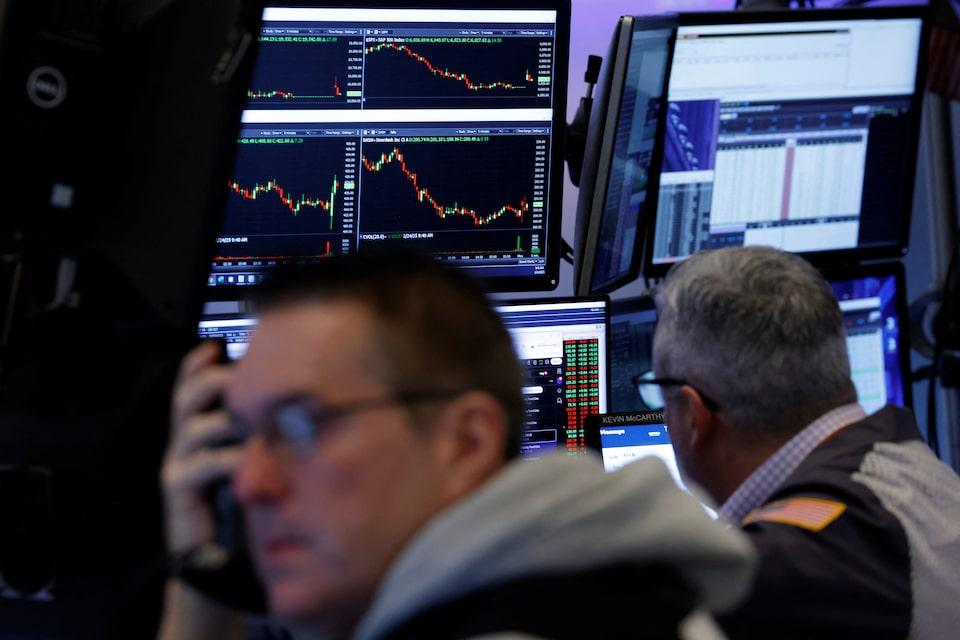
NEW YORK, March 13 (Reuters) - For the first time in over a year, the U.S. stock market is in a correction. The question now is whether the slide is set to get worse. The benchmark stock index closed down more than 10% from its February 19 closing high, meeting the widely used definition of a correction. The S&P 500's slide follows a similar drop for the tech-heavy Nasdaq Composite (.IXIC) , opens new tab index, which last week confirmed it was in a correction. Sign up here. The S&P 500's decline translates to a loss of about $5 trillion in market value from the February highs and marks a sharp about-face in sentiment from the start of the year when Wall Street was largely cheering much of Trump's agenda. The index last marked a correction in late 2023. Here is a look at how markets have fared, and what could lie in store for investors. MARKET CORRECTIONS Stock market corrections are fairly common, with the S&P 500 logging a correction 56 times since 1929, according to a Reuters analysis of data from Yardeni Research. Of these, only 22 morphed into bear markets, defined as a fall of 20% or more from most recent record highs, the data showed. Corrections, if they do not turn into a bear market, do much less damage to markets. Since 1929, corrections on average resulted in an average peak to trough decline of 13.8%, as opposed to an average decline of 35.6% during bear markets, the data showed. Still, investors can take their time piling back into stocks. The average correction lasts 115 days, Yardeni Research showed. The current correction has lasted 22 days so far. TARIFF TROUBLE The Trump administration's back-and-forth tariff moves against major trading partners like Canada, Mexico and China have played a key role in dampening investors' appetite for riskier assets. Investors and analysts worry that escalating trade tension could fan inflationary pressures and potentially stall economic growth, raising the specter of a recession. Uncertainty over tariffs has rattled investor nerves and sparked worries that the so called "Trump put" - the idea that counts on the president doing whatever it takes to keep the stock market happy - has gone missing. HAVEN HUNT Investors have reached for a variety of traditional safe havens in preparation for further market turmoil. The yen, long considered a safe haven due to Japan's large net foreign asset holdings and historically low interest rates, has risen 6.5% this year, amid a broad-based selloff in the dollar. The price of gold, considered a hedge against uncertainties, hit a record high on Thursday, having climbed more than 13% for the year. Increasing risk that the U.S. economy will stall has sent investors seeking the safety of U.S. Treasuries. The rally in bond prices has sent benchmark 10-year yields, which move inversely to bond prices, to 4.296%, down about 50 basis points since mid January. Even within stocks, investors have gravitated toward less risky parts of the market, with the S&P 500 Healthcare and Consumer Staples (.SPLRCS) , opens new tab sectors up 4.5% and 1.3% for the year, respectively. UNCERTAIN TIMES Rapidly evolving policy has increased uncertainty for businesses, consumers and investors, prompting a surge in caution. The U.S. Economic Policy Uncertainty Index, which analyzes newspaper articles with keywords related to economic and policy uncertainty, along with tax code changes and other economic data, recently jumped to its highest since July 2024. Higher policy uncertainty bodes ill not just for the stock market, but also for business investments and for consumer spending. On Monday, Delta Air Lines (DAL.N) , opens new tab, slashed its first-quarter profit estimates by half, and its CEO said the environment had weakened due to U.S. economic uncertainty. BEARS ROAR Individual investor pessimism over the short-term outlook for U.S. stocks is at a more than two-year high in the latest American Association of Individual Investors (AAII) Sentiment Survey. The change in sentiment has been accompanied by institutional investors slashing equity allocations. Investors' equity positioning dipped to slightly underweight for the first time since briefly hitting that level in August, Deutsche Bank analysts said in a note on Friday. Meanwhile, the Cboe Volatility Index (.VIX) , opens new tab, an options based measure of investor demand for protection against market declines has jumped to a 7-month high of 29.57, compared with its long-term median reading of 17.6. WHAT GOES UP... The "Magnificent Seven" stocks, which for the better part of the last two years led the market's gains, have largely struggled in 2025. With investors becoming more risk-averse, seeking safer investments, these tech and growth giants have experienced declines exceeding those of the broader market. The average "Mag 7" stock is down about 17% since the S&P 500 peaked on February 19, with Tesla down about 33%. With investors reducing their exposure to these once high-flying stocks, this correction could prompt a change in market leadership to other sectors. https://www.reuters.com/markets/wealth/sp-500-correction-six-charts-2025-03-13/
2025-03-13 20:19
MILAN, March 13 (Reuters) - Italy's Enel (ENEI.MI) , opens new tab may add a share buyback as a means of rewarding investors, the chief executive of one of Europe's biggest utilities said on Thursday after presenting 2024 results. The group last year cut its net debt to 2.4 times its core earnings from a 2.7 ratio in 2023 thanks to the completion of a wide-ranging asset disposal plan started in late 2022. Sign up here. Earnings before interest, taxes, depreciation and amortisation (EBITDA) excluding extraordinary items came in line with analyst consensus at 22.8 billion euros, up 4% versus 2023, boosted by renewable power generation. Asked by analysts whether it was time to shift from asset disposals to acquisitions, Enel CEO Flavio Cattaneo said the group would be selective in purchasing assets. "We only look at accretive M&A deals, otherwise we prefer to buy back our own shares," Cattaneo said. Enel will propose at the next shareholders meeting to approve a buyback programme worth up to 3.5 billion euros ($3.80 billion), the group said in its press release, adding it would pay a dividend of 0.47 euro per share, up from 0.43 euro per share in 2023. Enel shareholders could also approve an option to cancel acquired shares in order to allow the group to use buybacks as a way to increase the value of the remaining shares. Group ordinary net income rose to 7.1 billion euros, beating analyst expectations of 6.9 billion euros. The core profit from Enel's integrated business, which combines the performance of power generation and energy sales activity, rose 14% last year. The integrated business grew in Spain and Latin America, while it shrank in Italy where the group decided to lower retail power prices to retain customers in a highly competitive market. Core profit at the group's power distribution business increased by 8% compared with 2023. The group's capital expenditures fell to 11 billion euros from 13.6 billion euros in 2023, with investments in renewable energy projects dropping to 3.2 billion euros from 5.9 billion euros in 2023. ($1 = 0.9218 euro) https://www.reuters.com/markets/europe/italys-enel-reports-4-rise-2024-core-profits-ups-dividend-2025-03-13/

2025-03-13 20:17
WARSAW, March 13 (Reuters) - Polish central bank Governor Adam Glapinski said on Thursday there were no reasons for cutting interest rates at the moment due to the outlook for inflation and he did not think that the current level of rates was a barrier to economic growth. Poland's central bank, or NBP, left its main interest rate unchanged at 5.75% as expected on Wednesday. Sign up here. "The current strong increase in inflation, with still high wage dynamics, although decreasing, with increased core inflation and ongoing economic recovery and loose fiscal policy do not provide any grounds for lowering interest rates at the moment," he told reporters. "The current level of NBP interest rates is not a significant barrier to the development of the economy and investments." In an interview on Thursday evening, Poland's finance minister said it was basic macroeconomic knowledge that high borrowing costs hamper investments. "Higher interest rates have a negative impact on investments, on the ability of Poles to invest in the economy, and also on higher loan instalments ... This is not an evaluation of the NBP's actions, this is a statement of certain facts," Andrzej Domanski told public broadcaster TVP Info. "The fact is that interest rates in many European countries have already been significantly reduced, similarly in the United States. Not in Poland," he said. The Czech central bank resumed its rate cut cycle in February, while the Hungarian central bank has kept borrowing costs steady since September after easing worth a combined 11.5 percentage points. Last week the European Central Bank lowered its interest rates for the sixth time since June. Glapinski's stance has pitted the governor against Prime Minister Donald Tusk's ruling coalition, whose officials have repeatedly called for reductions in what they see as onerous borrowing costs weighing on the economy. On Wednesday, the NBP trimmed its inflation forecast for 2025 but raised its prediction for 2026 in its March projections, raising the risk that price growth could remain above the bank's target range throughout next year. Glapinski said during Thursday's conference that inflation would return to the central bank's target of 2.5% only in 2027 after ending 2025 at around 5% year on year, with core CPI at 4% throughout the year. Even though Glapinski sees no scope for rates cuts now, he said the central bank did start discussing when they could come. "The majority of the Council asked to say that almost all Council representatives - not all, but many - were analysing the possibility of a rate cut and when it could take place," he said. https://www.reuters.com/markets/rates-bonds/no-reasons-cutting-polish-interest-rates-now-central-bank-chief-says-2025-03-13/

2025-03-13 20:14
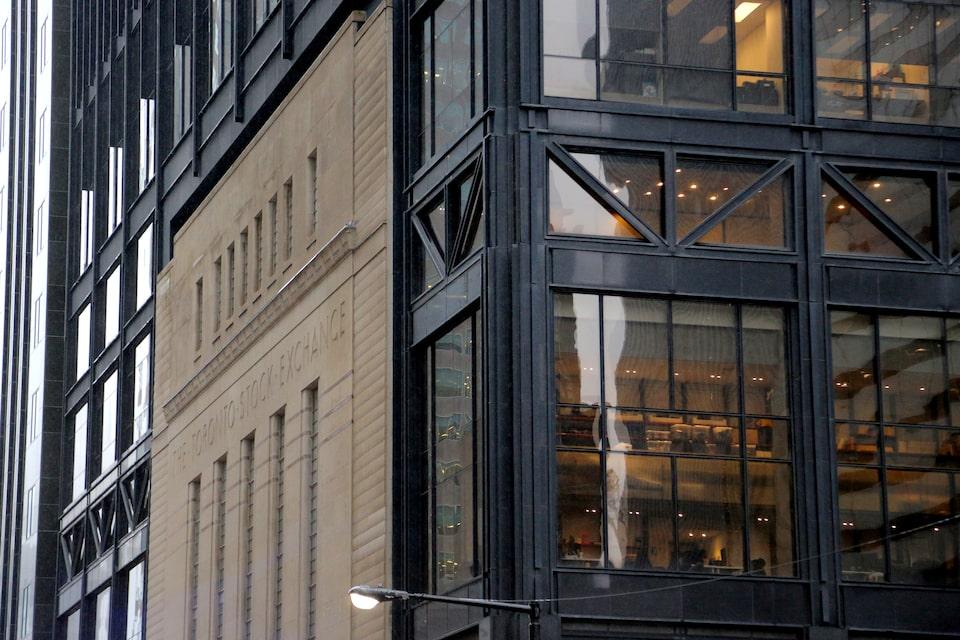
March 13 (Reuters) - Canada's main stock index fell on Thursday to a four-and-a-half-month low as investors grew more risk averse on signs of an escalating global trade war, technology leading broad-based declines among sectors. The Toronto Stock Exchange's S&P/TSX composite index (.GSPTSE) , opens new tab, ended down 220.11 points, or 0.90%, at 24,203.23, its lowest closing level since October 31. Sign up here. U.S. President Donald Trump threatened to escalate a global trade war with further tariffs on European Union goods, as major U.S. trading partners said they would retaliate for trade barriers already erected by the U.S. president. Wall Street also fell on fears that the trade war could reignite inflation and tip the U.S. economy into recession. On Wednesday, the Bank of Canada cut its benchmark interest rate by 25 basis points to 2.75% and warned of "a new crisis" as it tried to prepare the country's economy for the damage that tariffs could wreak. "Tariffs and the potential for a multi-front trade war between the U.S. and pretty much everyone else appear to be front of mind," said Colin Cieszynski, chief market strategist at SIA Wealth Management. Technology (.SPTTTK) , opens new tab fell 3.4% and heavily weighted financials (.SPTTFS) , opens new tab were down 1.3%. Energy lost 0.8% as the price of oil settled 1.7% lower at $66.55 a barrel. The only major sector to post gains was materials. It added 2.4% as gold jumped to a record high, approaching the $3,000 milestone, in a boost for metal mining shares. Shares of First Quantum Minerals Ltd (FM.TO) , opens new tab jumped 14.4% after Panama authorized the sale of copper concentrate at the company's shuttered Cobre Panama mine. https://www.reuters.com/markets/tsx-futures-slip-amid-escalating-global-trade-tensions-2025-03-13/
2025-03-13 19:51
SANTA CRUZ DE LA SIERRA, Bolivia, March 13 (Reuters) - In Bolivia's farm region of Santa Cruz, a worsening fuel shortage is starting to hit farmers' ability to harvest their crops, a concern for the embattled South American country where agriculture has become a key economic driver. The fuel scarcity, which has led to long lines at the pump, stems from a slide in foreign currency reserves over the last decade and dwindling local gas production that is reaching crisis levels. The situation is rattling the government of President Luis Arce, which has sought to cap prices with subsidies. Sign up here. "If there is no fuel, producers will go deeper into debt," said Joel Eizaguirre, a soybean producer in the lowland region of Santa Cruz, the main farm belt of the country. "We're going to be left with producers who will start to make other choices, and it's going to affect everyone." Jaime Fernando Hernandez, manager of oilseed and wheat group ANAPO, said that if there was not enough diesel for the farm machinery and tractors, then a large amount of food - including soy, corn and sorghum - could be lost. This would send ripples through the food chain and affect production of livestock, chicken, milk and eggs. "The impact in terms of productivity and food production could be truly catastrophic," he said. Bolivia's government, under growing pressure due to the dollar and fuel crisis, has moved to try to ease imports, letting state energy firm YPFB use cryptocurrency to pay for fuel cargoes and to pay companies. Farmer Eizaguirre said he would prefer to pay more for fuel than to not have enough, referring to the parallel exchange rate that has hit more than 11 bolivianos per dollar versus 6.86 at the controlled official rate amid the hard-currency shortage. "Personally, I'd rather have fuel cost 11 bolivianos than not have enough fuel to harvest our grain, or not be able to plant during this approaching winter," he said. https://www.reuters.com/markets/commodities/bolivias-soy-farmers-edge-fuel-shortage-hits-harvest-2025-03-13/

2025-03-13 19:47
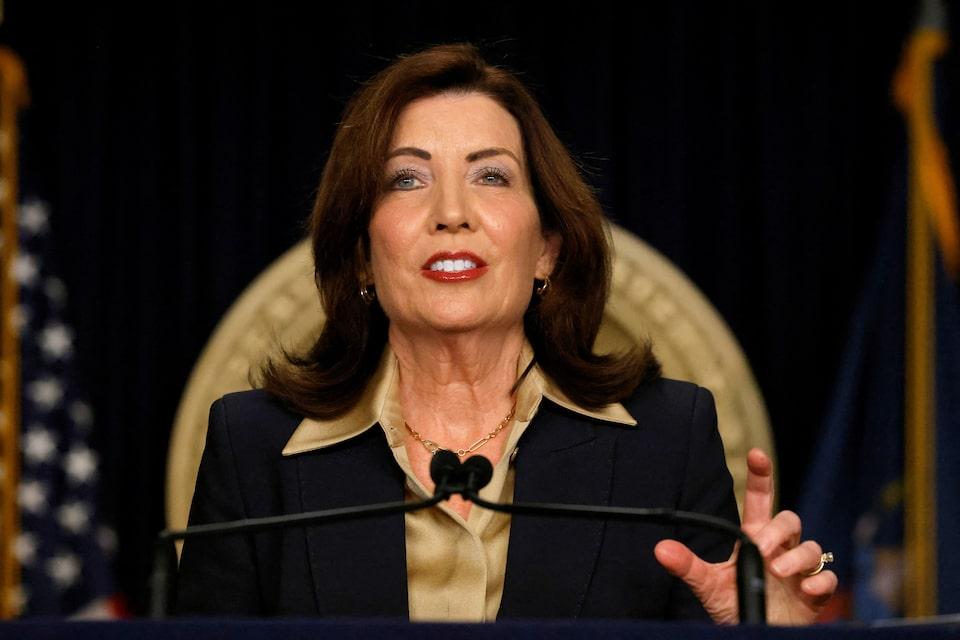
WASHINGTON, March 13 (Reuters) - Donald Trump will meet New York Governor Kathy Hochul on Friday morning, the U.S. president said, for talks that may include potentially reviving the Constitution natural gas pipeline in the Northeast. The pipeline would bring gas from Pennsylvania's drilling fields to New York, but Williams Cos (WMB.N) , opens new tab canceled the project in 2020 following opposition from politicians and environmentalists in New York. Sign up here. Trump said a pipeline would lower the region's energy prices. But it remains uncertain how it could be approved. "Kathy Hochul, very nice woman; she's coming in tomorrow morning at nine o'clock to meet me on that and other things," Trump told reporters in the Oval Office, in an apparent reference to the project. "I hope we don't have to use the extraordinary powers of the federal government to get it done. But if we have to, we will, but I don't think we'll have to." Such pipelines are a top priority for Trump and the leaders of his Energy Dominance Council co-chaired by Interior Secretary Doug Burgum and Energy Secretary Chris Wright. Representatives for Williams did not respond to a request for comment. Earlier this week, Hochul demanded Trump reverse U.S. tariffs on Canadian energy imports, arguing the tariffs and Canadian retaliatory actions threatened to drive up electricity and heating costs for New Yorkers. "I reached out to the president yesterday and said I want to carry on the conversation that we had in the Oval Office a couple weeks ago," Hochul told reporters. "I have a lot on my agenda. We talked about infrastructure, Penn Station. We talked about - he knows I want to talk about congestion pricing again. I want to talk about, you know, our concerns about energy in light of the tariffs." https://www.reuters.com/world/us/ny-governor-hochul-meet-with-trump-friday-trump-says-2025-03-13/