2025-03-13 19:28
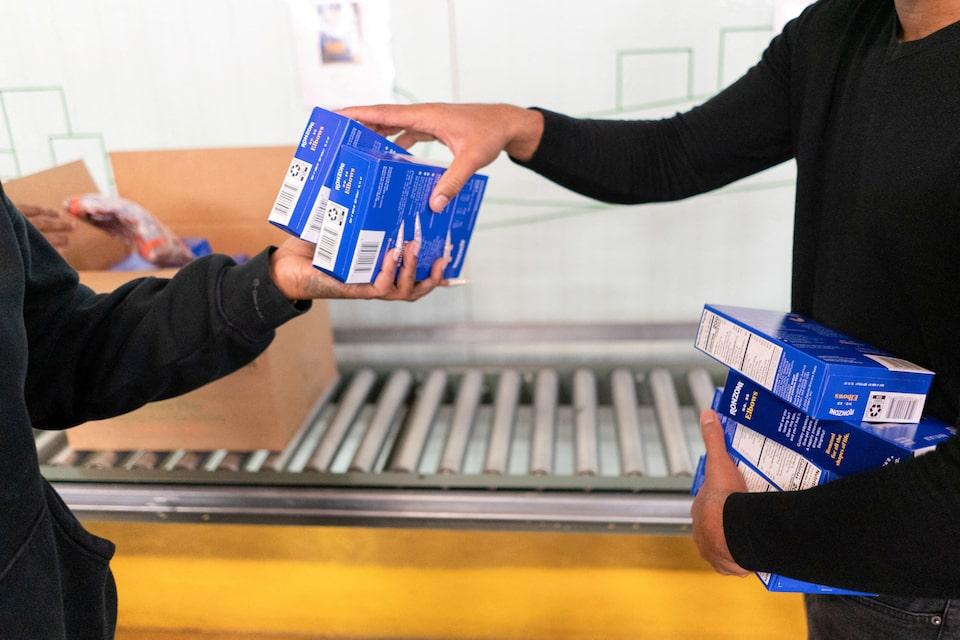
Senators say in letter cancellations would harm farmers Canceled programs have spent $2 billion on local food buying for schools, food banks Agriculture secretary has called programs 'nonessential' March 13 (Reuters) - Democrats in the U.S. Senate will ask the Department of Agriculture to reverse the cancellation of programs that have funneled more than $2 billion for local food purchases to schools and food banks, according to a copy of a letter seen by Reuters. The cancellation of the local food purchasing programs is the latest blow to farmers from the Trump administration's actions to slash government spending and staff. Farmers have already seen grants frozen by USDA, commodity sales for foreign aid disrupted and a trade war with the country's top agricultural trading partners. Sign up here. The letter will be sent to Agriculture Secretary Brooke Rollins from Senators Adam Schiff, Ben Ray Lujan, Amy Klobuchar, Jeanne Shaheen and others, according to a Senate aide. The cancellation of the Local Food Purchase Assistance Cooperative Agreement program and the Local Food for Schools program would harm farmers in every state, the letter says. "At a time of uncertainty in farm country, farmers need every opportunity to be able to expand market access for their products," it says. Klobuchar is the top Democrat on the Senate Agriculture Committee. Schiff and Lujan are also committee members. A USDA spokesperson said the agency does not plan to restart the programs but that Rollins "welcomes input on practical, viable approaches to nutrition programs moving forward." Rollins told Fox News on Wednesday that the money was "nonessential." The two programs were launched in 2021 to support the heavily disrupted food supply chain during the pandemic. The programs have together funneled more than $2 billion to states, territories and tribal governments since 2022, according to agency data. California and Texas have received the most money from the two programs, $230 million and $203 million respectively, according to an analysis by Reuters. Anti-hunger and school nutrition groups criticized the program cancellations. Jeff Marlow, president of the Food Bank of Eastern Oklahoma, said on social media that the cancellation of the LFPA program "will result in thousands of Oklahomans losing access to healthy food at a time when working families are already struggling with rising food costs." School nutrition professionals met with members of Congress this week to encourage them to oppose the program cuts, as well as other cuts to school meal programs proposed in the House budget plan, according to the School Nutrition Association. In a 2023 USDA study, 35% of school nutrition authorities said cost was a barrier to purchasing local food for meal programs. https://www.reuters.com/world/us/us-senators-urge-usda-reinstate-canceled-local-food-programs-2025-03-13/
2025-03-13 19:27
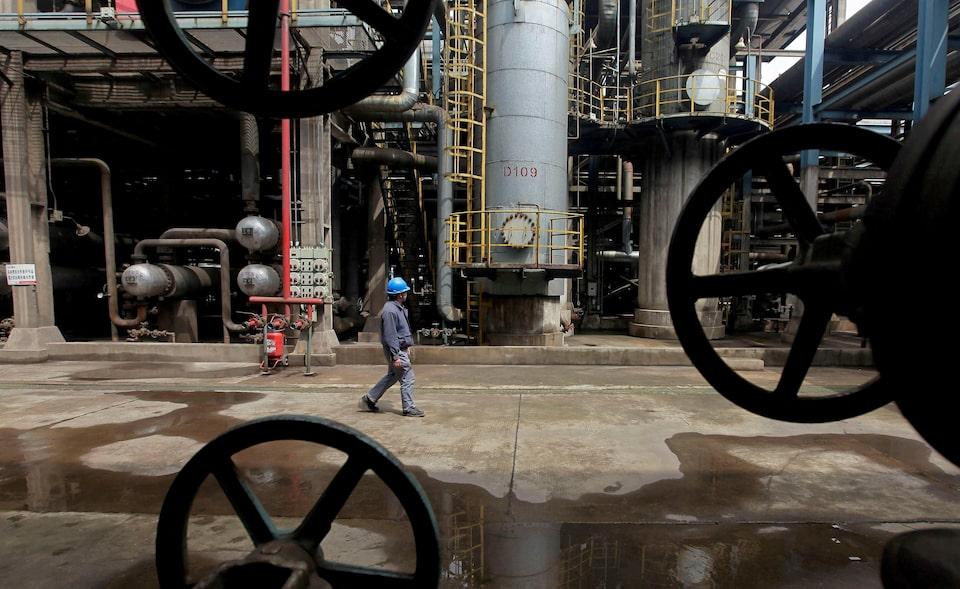
Macroeconomic concerns stemming from tariffs persist IEA report sees supply exceeding demand in 2025 Putin backs US ceasefire idea for Ukraine, says details must be sorted out CALGARY, March 13 (Reuters) - Oil prices fell over 1% on Thursday as markets weighed macroeconomic concerns, including the risk that tariff wars between the U.S. and other countries could hurt global demand as well as uncertainty stemming from a U.S. proposal for a Russia-Ukraine ceasefire. Brent futures settled $1.07, or 1.5%, lower at $69.88 a barrel. U.S. West Texas Intermediate crude futures fell $1.13, or 1.7%, to $66.55 a barrel. Sign up here. The International Energy Agency reported that global oil supply could exceed demand by around 600,000 barrels per day this year, with global demand now expected to rise by just 1.03 million bpd, off last month's forecast by 70,000 bpd. The report cited deteriorating macroeconomic conditions, including escalating trade tensions. On Thursday, U.S. President Donald Trump threatened to slap a 200% tariff on wine, cognac and other alcohol imports from Europe, opening a new front in a global trade war and sparking investor worries about stiffer trade barriers around the world's largest consumer market. Trade tensions have rattled investors, consumers and business confidence. U.S. stock indexes fell, dragging down oil market sentiment despite favorable fundamentals such as government data showing tighter-than-expected oil and fuel inventories, said Phil Flynn senior analyst with Price Futures Group. "It's creating this push-pull dynamic," Flynn said. "Do we focus on supply and demand, which still looks pretty bullish, or do we focus on tariffs?" The tariffs situation is the major factor weighing on the market's perception of oil demand growth in 2025, said Andrew Lipow, president of Houston-based Lipow Oil Associates. "The expectation is that the tariffs and retaliatory tariffs are going to ultimately impact the consumer," Lipow said. Also on Thursday, Russian President Vladimir Putin said Moscow agreed with U.S. proposals to stop fighting but any ceasefire should lead to a lasting peace and address root causes of the conflict. The market is weighing the potential for a short-term ceasefire between Russia and Ukraine, though UBS analyst Giovanni Staunovo said he "remains skeptical" that this would boost the availability of Russian oil. With Trump's stated commitment to cheaper oil, Citi analysts said their outlook for Brent by the second half of 2025 is $60 a barrel. On Wednesday, the Organization of the Petroleum Exporting Countries said Kazakhstan led a sizeable jump in February crude output by OPEC+. The producer group seeks to enforce adherence to agreed output targets, even as it intends to unwind production cuts. Worries about flagging jet fuel demand weighed further on markets, with JP Morgan analysts saying that U.S. Transportation Security Administration data showed "passenger volumes for March have decreased by 5% year-over-year, following stagnant traffic in February". However, the JP Morgan analysts added: "As of March 11, global oil demand averaged 102.2 million barrels per day, expanding 1.7 million barrels per day year-over-year and exceeding our projected increase for the month by 60,000 barrels per day." https://www.reuters.com/business/energy/oil-dips-economic-concerns-supply-demand-expectations-weigh-2025-03-13/
2025-03-13 18:47
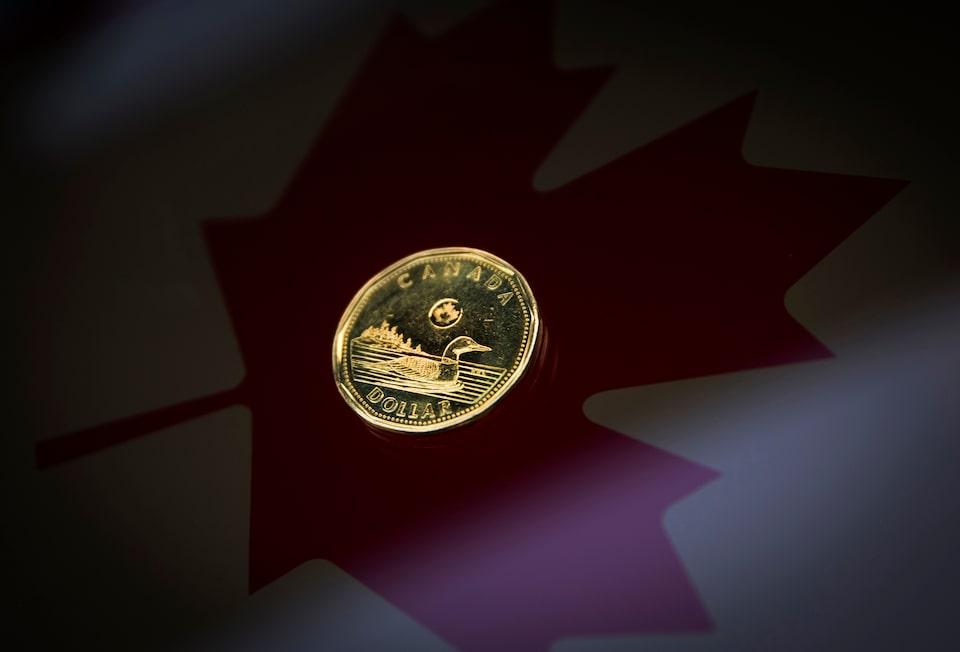
Canadian dollar falls 0.4% against the greenback Price of oil drops 1.6% Bond yields ease across the curve TORONTO, March 13 (Reuters) - The Canadian dollar weakened against the greenback on Thursday as oil prices fell and the latest escalation of the trade war between the United States and other countries, including Canada, weighed on investor sentiment. The loonie was trading 0.4% lower at 1.4425 per U.S. dollar, or 69.32 U.S. cents, but holding within the 1.4240 to 1.4543 range it has operated in since the beginning of March. Sign up here. Wall Street extended its recent losses after U.S. President Donald Trump threatened to impose additional tariffs on imports from the European Union. Trump's increased tariffs on all U.S. steel and aluminum imports took effect on Wednesday. Reciprocal tariffs are planned for April 2. "I think we're in this consolidation until we figure out what is actually going to go on and stick," said Darcy Briggs, a portfolio manager at Franklin Templeton Canada, adding that volatility could pick up once the reciprocal tariffs are implemented. Canada sends about 75% of its exports to the United States, including oil. U.S. crude futures fell 1.6% to $66.55 a barrel as investors weighed the risk a global trade war could hurt demand. Canadian bond yields eased across the curve, tracking moves in U.S. Treasuries. The 10-year was down 3 basis points at 3.042%, after earlier touching its highest level since February 24 at 3.136%. On Wednesday, the Bank of Canada cut its benchmark interest rate by 25 basis points to 2.75% but said it would "proceed carefully with any further changes," needing to assess both the upward pressures on inflation from higher costs in a trade war and the downward pressures from weaker demand. https://www.reuters.com/markets/currencies/canadian-dollar-weakens-trade-war-spooks-investors-2025-03-13/
2025-03-13 16:42
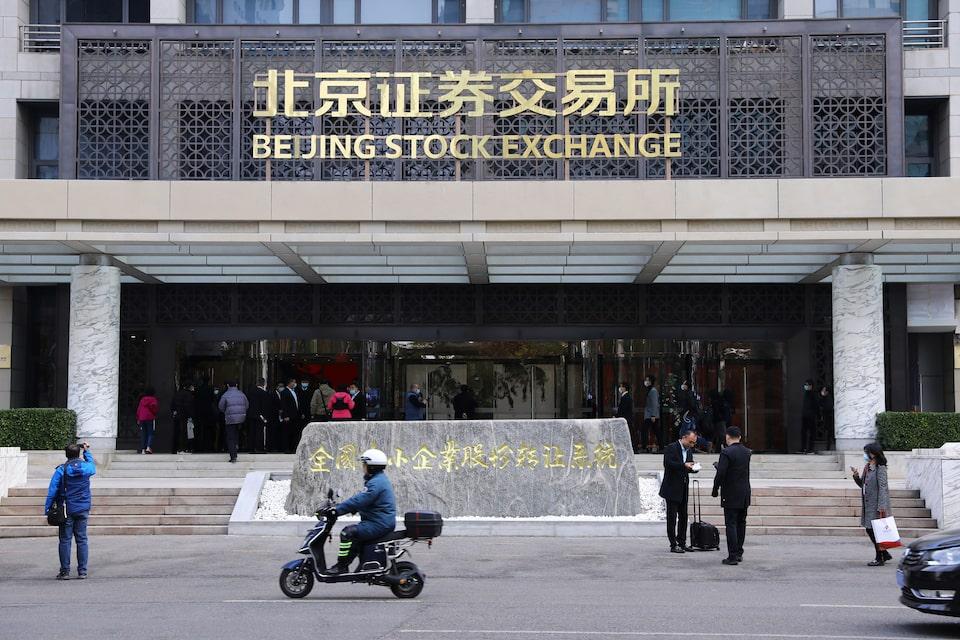
NEW YORK, March 13 (Reuters) - Foreigners added nearly $16 billion to their emerging market portfolios in February, with investors loading up on Chinese stocks as well as debt across developing economies, a report from a finance trade group said on Thursday. Chinese stocks sucked in $11.2 billion, but selling elsewhere meant emerging market equity portfolios saw a net outflow of $2.1 billion last month. The picture was the reverse in fixed income, where Chinese bonds posted a $15.1 billion outflow even as emerging market debt elsewhere raked in $33.2 billion. Sign up here. The overall $15.9 billion net inflow to emerging market portfolios last month compares with $21.2 billion in January and $27.8 billion in February 2024, according to data from the Institute of International Finance (IIF). The February inflow to Chinese equities was the largest for any month since September and the second largest in over two years. "The 'animal spirits' are being awakened with a recognition of the advances that Chinese companies made in diverse areas such as AI and electric vehicles," said Guilherme Valle, founding partner and portfolio manager at ABS Global Investments in an email exchange. "The combination of innovative business models and low valuations will continue to provide a favorable backdrop for Chinese equities," he said. The decoupling of Chinese stocks from the rest of emerging markets was evident in the February data, according to Jonathan Fortun, senior economist at the IIF. "However, caution around regulatory risks and geopolitical uncertainty remained evident," he added. A year-long rally in Chinese stocks has come to the fore in recent weeks as investors, eager to ditch Wall Street, bet on emerging market stocks from Beijing and beyond. The MSCI Chinese equity benchmark (.dMICN00000PUS) , opens new tab has rallied 40% over the past 12 months. However, year-to-date it is Colombia and Poland who are leading the gains in dollar-terms, boosted by their strengthening currencies. Despite having recently touched its highest in three years, the MSCI China index remains more than 40% below its 2021 peak. Analysts said this gives Chinese equities room to continue rallying, but also speaks to the longer term trend of reorganizing some supply chains around China, making other connected emerging markets more attractive. "Labor costs in China have now basically risen to the point where it is far cheaper to do business in places like Thailand or Indonesia, Vietnam or India," said Arjun Divecha, head of GMO Emerging Markets Equity. Divecha says he is bullish on Chinese equities though his firm recently launched an active ETF for investing in emerging markets beyond China. "These supply chains are moving, there's no question about it. So the growth opportunity for all kinds of players is actually massive." In its regional breakdown, the IIF report showed Latin America was the region with by far the largest inflows last month, funneling in $10.7 billion between equities and debt. Emerging Europe pulled in $4 billion and Asia $2.6 billion, while Africa and the Middle East saw a net outflow of $1.4 billion. https://www.reuters.com/markets/chinese-stocks-emerging-market-debt-see-large-inflows-february-says-iif-2025-03-13/
2025-03-13 14:40
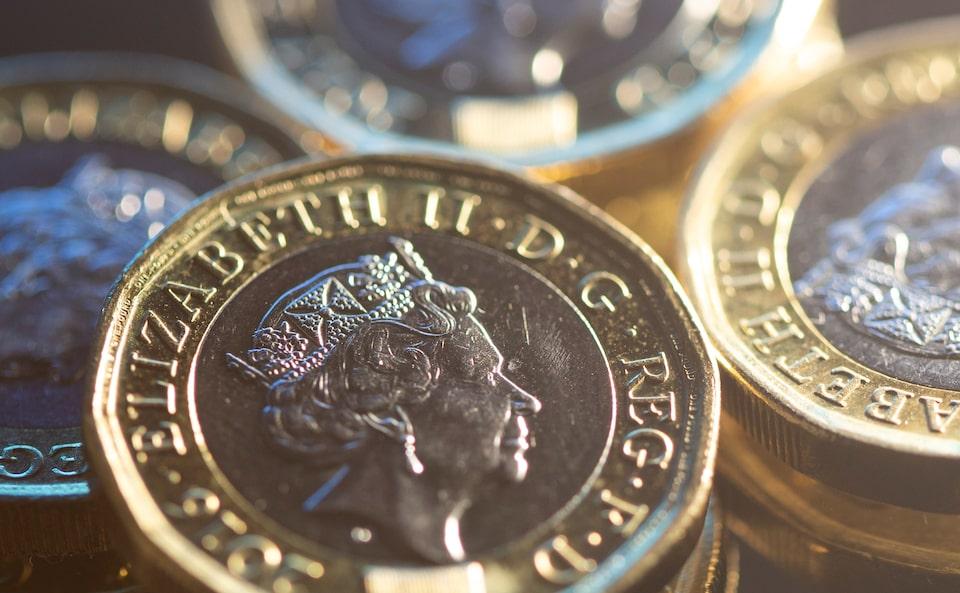
March 13 (Reuters) - The British pound fell slightly against a firmer dollar on Thursday but remained close to four-month highs, bolstered by the UK's relatively measured approach to U.S. trade ructions. The pound was last down 0.15% at $1.2941, having hit $1.299 on Wednesday, its highest level since November 7. Sign up here. "It's mostly a dollar story at the moment driving markets. Cable is easing back from almost touching 1.30, moving back towards 1.29," said Francesco Pesole, FX strategist at ING of Thursday's slight GBP weakness. Analysts highlighted Britain's largely balanced trade position with the U.S. as a supportive factor for the pound. While the EU and Canada retaliated against U.S. President Donald Trump's 25% tariffs on all steel and aluminium imports on Wednesday, Britain's government did not follow suit, though it said it was disappointed with the decision. "The important thing for GBP is that the UK has a trade deficit with the US and exports a lot more services than other countries, so is not as vulnerable to US tariffs as the European Union," said Michael Pfister, FX analyst at Commerzbank. Sterling has gained more than 6% against the dollar since Trump took office in January. On Thursday Trump threatened to slap a 200% tariff on all wines and other alcoholic products coming out of Europe if the European Union did not scrap its planned tax on American whiskey. Against the euro the pound was up 0.2% at 83.81 pence. https://www.reuters.com/markets/currencies/sterling-stays-near-four-month-highs-uk-avoids-tariff-tit-for-tat-2025-03-13/
2025-03-13 14:05
MOSCOW, March 13 (Reuters) - Moscow is unwilling for now to discuss the unblocking of foreigners' funds in Russia while its own sovereign and private assets remain frozen overseas, Deputy Finance Minister Ivan Chebeskov said on Thursday. Around $300 billion of Russian financial assets, such as major currencies and government bonds, were frozen abroad, mostly in Europe, shortly after Moscow sent troops into Ukraine in February 2022. Sign up here. Western countries are debating how best to exploit those assets beyond using the profits to guarantee loans to Ukraine. In response, Russia has diverted foreign-owned funds in Russia to type-C accounts, access to which is blocked unless Moscow grants a waiver. "We still have a large amount of gold and forex reserves and our private assets blocked by Western countries, in Western depositaries, primarily in Europe," Chebeskov told reporters at a financial forum on Thursday. Russia's blocking of assets was a countermeasure, he said, and while Moscow does not expect its funds to be released, it would be inadvisable to liberate any funds and securities held in Russia. "It is too early to talk about this," Chebeskov said. Chebeskov was repeating Moscow's known position, but as high-level Russia-U.S. talks take place, markets and investors are on the lookout for any indication as to how Russia might approach negotiations. In late 2022, the central bank estimated there were around 280 billion roubles ($3.23 billion) in type-C accounts, but Russia has since said the volume is comparable to the amount of Russian assets frozen abroad. Moscow has acknowledged that it cannot match the West's sovereign asset seizure and must target private capital instead. Sergei Shvetsov, head of the Moscow Exchange's supervisory board, said the removal of sanctions on Russia's financial infrastructure should be part of any negotiations with Western countries and proposed that foreigners' funds be released by allowing them to invest in Russian market securities. The U.S. Treasury, when imposing sanctions on Moscow Exchange (MOEX.MM) , opens new tab and its clearing agent, the National Clearing Centre (NCC), in June 2024, said it was "targeting the architecture of Russia's financial system". Russia is asking companies to propose which sanctions Moscow should seek to have lifted ahead of talks with Washington, two Russian business people told Reuters, identifying curbs that hamper cross-border payment flows as the most painful. Shvetsov said Russia must not grant foreigners free access to the Russian market without sanctions easing or its financial market sovereignty would be at risk. ($1 = 86.6955 roubles) https://www.reuters.com/world/europe/too-early-discuss-unblocking-foreign-funds-russia-finance-ministry-says-2025-03-13/