2025-03-13 13:48
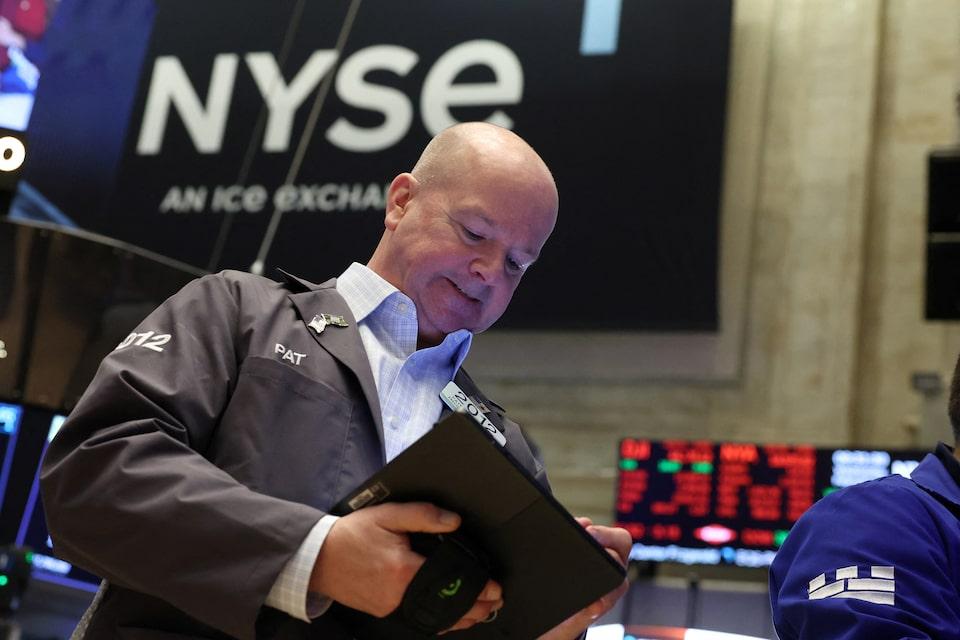
Investors pay premium for swaptions amid economic slowdown fears Demand for receiver swaptions reflects dire economic outlook Options market signals slowdown, not recession, strategist says NEW YORK, March 13 (Reuters) - Investors in U.S. interest rate options are paying a premium for trades that will pay off if there is a dramatic drop in interest rates, suggesting the derivatives market is pricing in a sharper slowdown than anticipated in the world's largest economy. This situation was a big turnaround from before the January 20 inauguration of U.S. President Donald Trump when traders in so-called "swaptions" were positioned for more tightening from the Federal Reserve due to the incoming administration's planned tariffs and expectations that it would increase fiscal spending. Sign up here. Transactional volume of swaptions, which are options on interest rate swaps, was nearly $700 billion in the week as of late February, Commodity Futures Trading Commission data showed. The underlying asset, the rate swap, measures the cost of exchanging fixed-rate cash flows for floating-rate ones, and vice versa. Swaps are used by investors to hedge interest rate risk, including exposure to Treasury securities. Market players said there has been increased demand for "receiver swaptions," where investors receive the fixed leg of a swap while paying the floating rate. The payoff would come when rates fall as the Fed tries to stimulate a decelerating economy by easing monetary policy. Receivers, as they are referred to, typically reflect a dire economic outlook, and are the opposite of "payer swaptions," a scenario in which investors buy the right to pay a fixed rate and receive a floating one. Demand for payer swaptions rises when the economy is strong and the Fed is raising rates to slow it down. Guneet Dhingra, head of U.S. rates strategy at BNP Paribas in New York, said the options market is assigning a higher probability of a drastic fall in interest rates, although it doesn't mean it's going to happen. "Those tail-risk probabilities have been elevated ever since Silicon Valley Bank went down in 2023. That risk has become more heightened in the last couple of weeks," Dhingra noted, referring to rare market-shaking events. Trump's policies on tariffs along with sweeping federal government job cuts under Elon Musk's Department of Government Efficiency (DOGE) have raised the prospect of a hard U.S. landing. Market participants feared that tariffs could raise prices for businesses and consumers, lift inflation, and undermine overall confidence, thwarting economic growth. Trump over the weekend declined to rule out that his trade policies would lead to a recession, but clarified on Tuesday that he does not see one happening. Treasury Secretary Scott Bessent, on the other hand, said last week that the U.S. economy may slow as it transitions away from public spending towards more private spending, calling it a "detox period." EXTREME SCENARIO Analysts said the price for protecting against an extreme scenario such as a drop of 100 basis points (bp) in swap rates in the near term has increased in the swaptions market. That shift suggests market players are preparing for the worst. A sharp fall in swap rates can only be triggered by a huge drop in the federal funds rate, currently at 4.33%, when the U.S. central bank undertakes sharp policy easing. The cost of protecting against a 100-bp plunge in one-year swap rates at the end of six months, for instance, had surged to 40.24 bps on Thursday, up from 32.30 bps on February 20, when it fell to its lowest reading since mid-December. The one-year swap rate was 4.036% on Thursday . While no one is forecasting a 100-bp near-term decline in one-year swap rates or the fed funds rate, BNP's Dinghra noted that the options market always takes into account the worst outcomes. "The options market is showing signs of an economic slowdown, but not a recession that causes the Fed to cut by hundreds of basis points," said Amrut Nashikkar, managing director of fixed income strategy at Barclays in New York. But he pointed out that there are indeed investors positioned for a tumble of 100 to 150 bps in one-year swap rates over a one-year period , . As the cost of near-term protection against a big drop in rates grew, implied volatility, a key input in option prices, also rose. The higher the volatility, the greater the uncertainty over a given period. The price of implied volatility of one-month options on one-year swap rates had risen to a four-month high of 23.8 bps on Monday, and was last at 20.36 bps. The increase in implied volatility is not surprising given exogenous risks on tariffs, including persistent geopolitical headwinds, said Srini Ramaswamy, managing director and head of derivatives strategy at J.P. Morgan in San Francisco. "Markets and the macroeconomy find themselves in a superposition between tariff-on and tariff-off states, which is creating considerable uncertainty and likely contributing to rising risk premium," resulting in intraday volatility creeping to its highest level in the last six months, Ramaswamy said. https://www.reuters.com/markets/us/us-swaption-investors-pay-steep-price-hard-landing-bets-2025-03-13/
2025-03-13 12:53
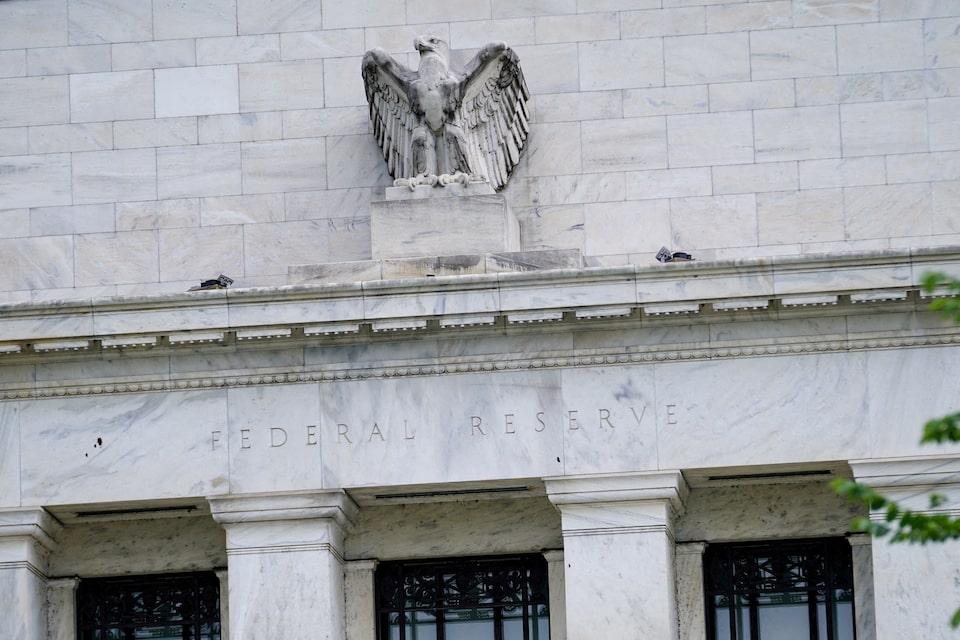
March 13 (Reuters) - The Federal Reserve is seen restarting interest-rate cuts in June, traders bet on Tuesday, as government data showed U.S. producer prices were unexpectedly flat last month and weekly jobless claims fell. Short-term interest-rate futures after the data were pricing about a 75% chance of a quarter-point reduction to the Fed's policy rate by June, little changed from what was seen prior to the data. They continue to price in a total of three rate cuts for the year. Sign up here. https://www.reuters.com/markets/us/fed-seen-course-june-start-2025-rate-cuts-after-data-2025-03-13/
2025-03-13 12:47
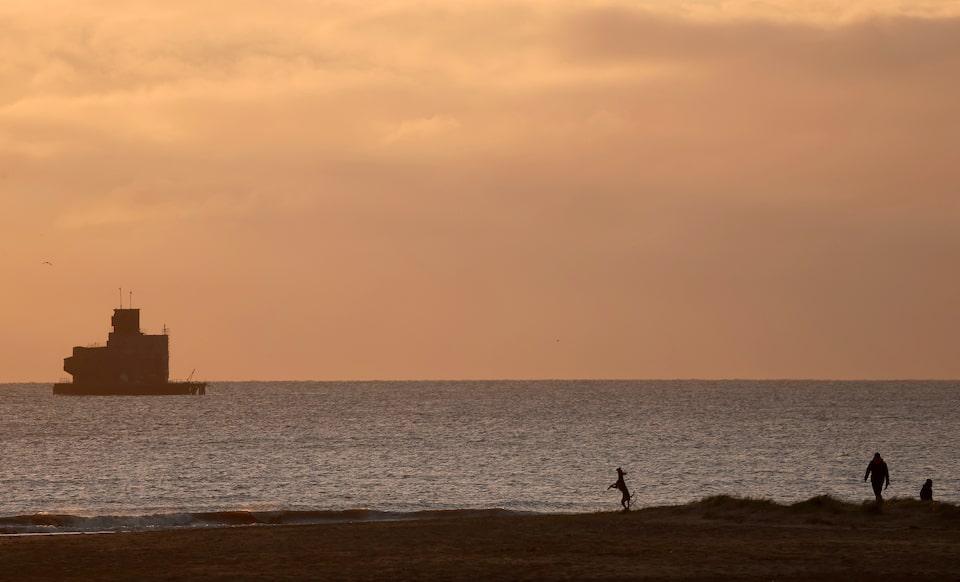
LONDON, March 13 (Reuters) - The aftermath of a tanker crash off the English coast earlier this week is "reasonably contained," British Prime Minister Keir Starmer said on Thursday as fears of an environmental disaster eased and focus turned to finding out how the incident happened. One crew member is presumed dead after the Solong, a Portuguese-flagged container ship, crashed at close to full speed on Monday into the Stena Immaculate, an anchored tanker that was carrying U.S. military jet fuel. Sign up here. The collision caused huge fires and explosions, and spilled jet fuel into the sea. The tanker remains at anchor with a gaping hole in its side, while the badly burnt container ship has been stabilised after early fears it could sink. "At the moment the situation is reasonably contained," Starmer said. "In terms of the cause of it, that's yet to be determined. There's a process in place ... but we have to get the bottom of it." Initial concerns of an environmental disaster have subsided with preliminary assessments showing the jet fuel had mostly burned off and there was no sign of other leaks from either ship. The Solong's captain, a Russian national, was in custody on suspicion of gross negligence manslaughter following his arrest on Tuesday. That offence relates to situations where a death results from a grossly negligent act or omission. A judge granted detectives an extra 36 hours to question the captain, local police said in a statement. All 36 other crew members from the vessels survived the incident and were brought to shore. Britain's Marine Accident Investigation Branch (MAIB) said in a separate statement it would lead the safety investigation, seeking to establish the cause of the incident and how to prevent similar crashes happening again. The MAIB said it would inspect both vessels and retrieve Voyage Data Recorders once it was safe to do so. Its inquiries would include looking at the "fatigue management" of crews, navigational practices and weather conditions. https://www.reuters.com/world/uk/uk-tanker-crash-aftermath-reasonably-contained-says-pm-starmer-2025-03-13/
2025-03-13 12:37
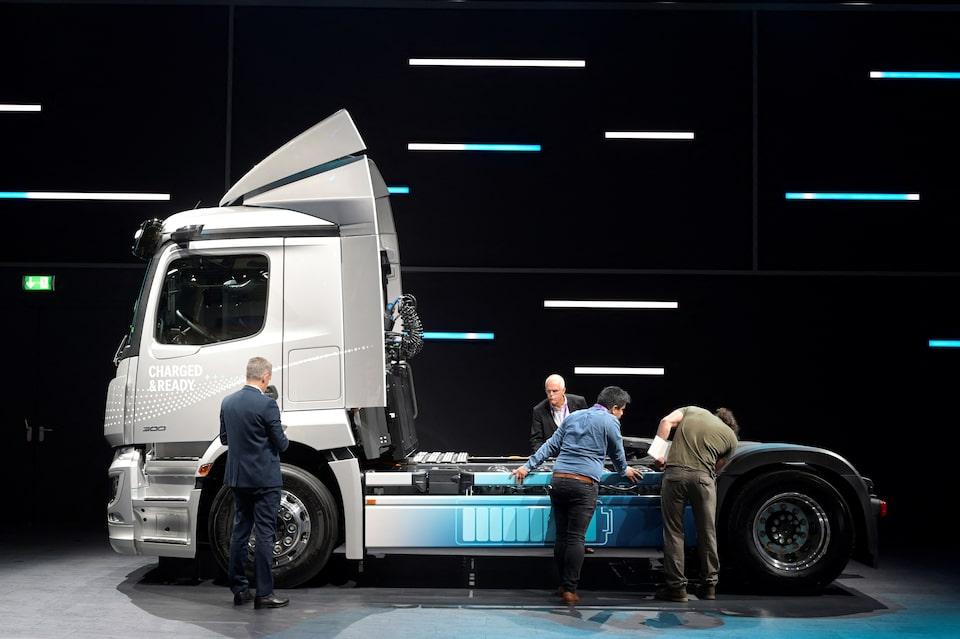
Truck makers hit by EPA move to reverse vehicle emission rules Analysts say decision to impact expected pre-buying Daimler's shares worst hit, down 5% March 13 (Reuters) - Shares in European truck makers fell on Thursday after the U.S. Environmental Protection Agency (EPA) said it would move to reverse the Biden administration's vehicle emissions rules. European truck makers' sales slowed last year from a record 2023. However, analysts said fleet firms had been expected to "pre-buy" trucks in the second half of this year and 2026 before the emissions rules took effect, but that was now unlikely. Sign up here. "Given the EPA's latest comments, the market likely assumes the tighter regulations will be reversed, meaning there is no longer an expectation of a pre-purchase surge," Pal Skirta, an analyst at German broker Metzler, told Reuters. Skirta, as well as a Daimler Truck (DTGGe.DE) , opens new tab spokesperson, told Reuters this was the main reason behind the drop in share prices. Daimler Truck was the biggest faller, down 5% and the worst performer on Germany's blue-chip index (.GDAXI) , opens new tab. "Our top management will elaborate in more detail on the subject tomorrow during our annual results conference," the spokesperson said. Arne Rautenberg, a fund manager at Union Investment which owns shares in Daimler, told Reuters the rollback would limit the expected buying cycle and therefore reduce expectations, at least for 2025. "This announcement is bad news not just from an ESG perspective but also from a fundamental perspective," he said. The EPA is also reconsidering a 2022 regulation that aims to drastically cut smog- and soot-forming emissions from heavy-duty trucks, saying the rule makes trucks more expensive. The United States is the most important market for Daimler, which has invested heavily in emission-free drive systems with a view to climate protection goals and corresponding regulations. Its Swedish rival Volvo Group (VOLVb.ST) , opens new tab considers North America its second largest market, accounting for over 30% of net sales. Shares of Volvo and Germany's Traton (8TRA.DE) , opens new tab, a Volkswagen subsidiary, were down around 3% by 1233 GMT. A Volvo spokesperson declined to comment on either the potential regulation change or the effect on demand, calling both speculation for now, but said it was following the political process. "It is normally much cheaper to produce in a demand-driven economy rather than a politically-driven economy," the spokesperson added. https://www.reuters.com/business/autos-transportation/european-truck-shares-fall-us-electric-vehicle-rules-reversal-2025-03-13/
2025-03-13 12:37
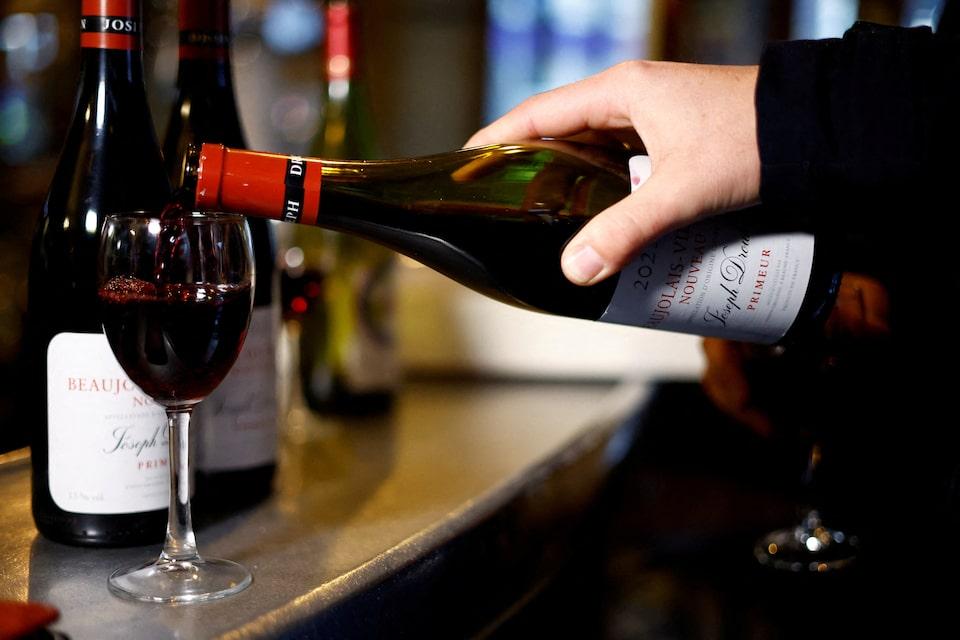
Trump will target European wine to protect US whiskey S&P 500 ended more than 10% below last month's record high US, Canada talks fail to reach breakthrough Steel and aluminum tariffs led to trade barriers for alcohol WASHINGTON, March 13 (Reuters) - U.S. President Donald Trump on Thursday threatened to slap a 200% tariff on wine, cognac and other alcohol imports from Europe, opening a new front in a global trade war that has roiled financial markets and raised recession fears. Stocks fell , opens new tab on the news, as investors worried that Trump would enact stiffer trade barriers around the world's largest consumer market. The S&P 500 finished the day more than 10% below its record high reached last month, confirming the benchmark index for U.S. stocks is in a correction. Sign up here. Trump's threat came in response to a European Union plan to impose tariffs on American whiskey and other products next month -- which itself is a reaction to Trump's 25% tariffs on steel and aluminum imports that took effect on Wednesday. The European Commission had no immediate comment on the move. Canada, a neighbor and close ally that is the biggest aluminum provider to the U.S., has also announced countermeasures to Trump's metals tariffs and has taken the dispute to the World Trade Organization. Talks between U.S. and Canadian officials on Thursday failed to produce a breakthrough. Trump has threatened to impose an array of trade penalties since returning to the White House in January, though he has postponed action on many of them. At an Oval Office meeting with NATO Secretary-General Mark Rutte later on Thursday, he said he would not back off from reciprocal tariffs he has vowed to impose on all trading partners on April 2. "We've been ripped off for years, and we're not going to be ripped off," he said. Alcohol is shaping up to be a key friction point in the brewing trade war. Some Canadian retailers have pulled American bourbon from their shelves as relations between the two countries have frayed and Trump has threatened to annex that country. U.S. Commerce Secretary Howard Lutnick met with Canadian Finance Minister Dominic LeBlanc and Ontario Premier Doug Ford on Thursday to discuss the metals tariffs, as well as economic and national security issues, the Canadian officials said. Following his meeting with Lutnick, Ford told reporters in Washington: "We had a very, very productive meeting ... we feel the temperature is being lowered, and we've also agreed that we're going to have another meeting next week." LeBlanc said Canadian officials have made clear that they will not reopen dairy provisions of the U.S.-Mexico-Canada trade agreement, a demand repeatedly made by Trump, who has railed against Canada's high tariffs on U.S. dairy products. But he said the issue was not discussed with Lutnick on Thursday. He said it was not particularly helpful to have the tariffs in place in the run up to a review of USMCA. Many of the EU's proposed countermeasures, worth 26 billion euros ($28.31 billion), would apply to products with little more than symbolic value, such as dental floss and bathrobes. But the proposed 50% duty on U.S. bourbon would be a significant hit for the industry, which has seen exports grow steadily since the United States lifted tariffs Trump imposed during his 2017-2021 term in office. The EU accounted for roughly 40% of all spirits exports in 2023, according to the Distilled Spirits Council of the United States, a trade group. Likewise, the United States accounts for 31% of EU wine and spirits exports, according to Eurostat. Trump's proposed 200% tax on European alcohol would create further headwinds for producers like Pernod Ricard (PERP.PA) , opens new tab, which has already cut its sales outlook due to Chinese duties imposed last year. INDUSTRY CALLS FOR MORE TOASTS, FEWER TARIFFS Industry officials on both sides of the Atlantic urged their leaders to de-escalate. "This cycle of tit-for-tat retaliation must end now!" said spiritsEurope, an industry trade group. Trump says tariffs are needed to revitalize U.S. industries shrunken after decades of globalization, and he has stacked his administration with officials who agree with those views. Treasury Secretary Scott Bessent said he was not worried about Wall Street volatility because the Trump administration is focused on a longer-term transformation of the U.S. economy. He warned that the EU has more to lose in a trade war, as it relies more on exports to the United States. "I would counsel these government leaders that they are on the losing side of this argument economically," he said on CNBC. Trump's barrage of threats has spooked investors, businesses and consumers. Producers of jets, coffee, clothing, autos and packaged foods are among the many businesses scrambling to assess their operations as Trump's actions threaten international supply chains. Even Tesla (TSLA.O) , opens new tab, owned by Trump adviser Elon Musk, argued in a letter to U.S. trade officials that the trade war could make it a target for retaliatory tariffs against the U.S. "As a U.S. manufacturer and exporter, Tesla encourages USTR to consider the downstream impacts of certain proposed actions taken to address unfair trade practices," the electric automaker said in a letter dated Tuesday. Some economists say the uncertainty threatens the health of the U.S. economy and raises the risk of recession. A Reuters/Ipsos poll released on Wednesday found that 70% of Americans expect Trump's tariffs to make regular purchases more expensive. Trump said his alcohol tariffs would help domestic producers. But U.S. importers and distributors said it would lead to lost sales, layoffs and shuttered businesses. https://www.reuters.com/markets/trump-threatens-200-wine-tariff-if-eu-does-not-remove-whiskey-tariff-2025-03-13/
2025-03-13 12:37
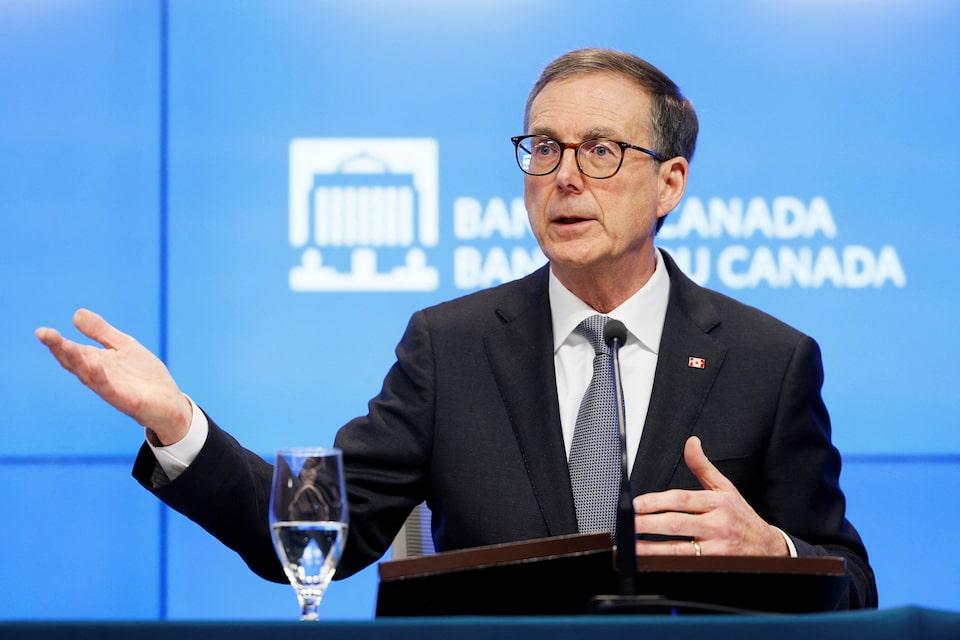
OTTAWA, March 12 (Reuters) - The Bank of Canada considered leaving its key policy rate at 3% ahead of a scheduled announcement before concluding it needed to cut for the seventh consecutive time, Governor Tiff Macklem said in an interview on Wednesday. The central bank trimmed its key policy rate by 25 basis points to 2.75% and raised concerns about inflationary pressures and weaker growth stemming from trade uncertainty and President Donald Trump's tariffs. Sign up here. "We did discuss the option of staying at 3% as well as cutting to 2.75%," Macklem said, adding that one approach was to wait until the uncertainty around tariffs eased a bit. However, since the bank felt that domestic demand was going to be impacted and inflation continued at be around 2%, "the most appropriate course of action was to cut the policy rate," he said. The BoC expects Gross Domestic Product in the first quarter to not be too far off from its forecast of an annualized 2% but the impact of the trade war might be more prominent in the second quarter, Macklem said. "I don't have a new forecast, but certainly in the near term, I expect, it will be weaker than what we forecast in January," he said about the GDP growth rate for Q2. Trump's tariff policies and threats have already hurt investment plans of businesses and consumer spending patterns. Tariffs are expected to reduce economic growth, increase job losses and spike inflation in the coming quarters. The U.S. imposed a 25% tariff on all steel and aluminum products on Wednesday and Canada retaliated with C$29.8 billion ($20.74 billion) of import duties on a wide array of goods from the U.S. Macklem assured that while these fluctuating moves were making monetary policy more complicated, he is confident the bank would maintain price stability over time for Canadians. "We can't let a tariff problem become an inflation problem," he said, but added he did not rule out unscheduled monetary policy intervention in case of a severe shock to the economy. When asked on the bank's diversity policy, Macklem said the bank would not abandon it, after the U.S. Federal Reserve in January scrubbed a "Diversity and Inclusion" section from its website. "Getting people with diverse perspectives, getting people that reflect the diversity of Canadians working at the Bank of Canada is good for the Bank of Canada," he said. He did not elaborate on the priorities of G7 meetings, which Canada is chairng this year, but said it would be much more effective if all the countries worked together instead of attacking each other. "Having the U.S. attack its allies with new trade, new tariffs, makes no sense to me," he said. ($1 = 1.4367 Canadian dollars) https://www.reuters.com/markets/rates-bonds/bank-canada-considered-leaving-rates-unchanged-governor-tells-reuters-2025-03-12/