2025-03-13 12:01
Russia to benefit from China tariffs on U.S. and Canada China may buy more Russian peas, wheat MOSCOW, March 13 (Reuters) - China is expected to step up imports of agricultural products from Russia in response to growing trade conflict with the U.S. and Canada, with trade in peas set to be one of the first to pick up. Last week China imposed import levies covering $21 billion worth of American agricultural and food products and on Saturday announced tariffs on some Canadian products including peas. Sign up here. "This is a great opportunity for Russia to replace a competitor in the Chinese market, but we have to remember that China has been buying lots of higher quality peas from Canada, so not all our peas will do," Sergei Pluzhnikov, head of Russian Pulses Analytics said. China became the largest importer of Russian yellow peas in the 2023/24 season, with shipments totalling 1.13 million tons, Rusgrain reported. Russia does not publish official export statistics. Some competition could come from Ukraine which earlier this month signed an agreement with China which could pave the way for pea exports. Russian wheat could also see a growth in sales helping the country move towards its goal of increasing exports of agricultural products by 50 per cent by 2030 relative to 2021. China is one of its most important customers. WHEAT HOPES The head of analysis at grain shipment company Rusagrotrans, Igor Pavensky, suggested that the new U.S. tariffs could lead to an expansion of China's imports of Russian spring wheat, possibly before the end of the 2024/25 season (July/June) Russia has overtaken the U.S. in wheat supplies for the first time this season, having shipped 275,000 tons to China, he noted. U.S. wheat exports to China so far this season totalled only 139,100 tons, as of Feb. 27, down from 995,600 tons in the same period a year ago, according to U.S. Department of Agriculture data. Wheat has been flowing from Siberia, which had accumulated high stocks, to Black Sea ports at a record pace aided by transport subsidies. "It is possible that in case of intensified purchases even before the end of the current season, China will start buying large shiploads of Russian wheat from the Black Sea ports", he said. Previously, wheat was exported to China almost entirely through border crossings and ports of the Far East. Andrei Sizov, head of the SovEcon agency, said trade conflict with the U.S. could help accelerate China's long-awaited decision to allow imports of Russian winter wheat. China banned winter wheat imports in the mid-1970s because of the presence of a fungal disease which can reduce crop yields and quality in some parts of Russia. There have been talks about lifting the ban but it remains in place. China does allowed spring wheat imports from Russia. Winter wheat, which has higher yields and is more profitable for farmers, accounts for about 70% of Russia’s total wheat harvest. https://www.reuters.com/markets/commodities/trade-quarrels-boost-russia-china-agricultural-trade-lobbies-analysts-say-2025-03-13/

2025-03-13 11:51
March 13 (Reuters) - Softer U.S. labor market conditions against the backdrop of trade-policy uncertainty have prompted Barclays to raise its expectations to two rate cuts by the Federal Reserve for the year from one. The brokerage is expecting two quarter-point rate cuts in June and September, it said on Thursday. It had earlier projected one 25-basis point cut in June. Sign up here. "The softer labor market causes us to add another rate cut, despite higher inflation," Barclays analysts said. The brokerage expects demand for workers to diminish along with slowing labor market activity this year. "We think that the relatively sharp slowdown in job gains will be accompanied by only a moderate rise in the unemployment rate, which would peak at 4.3% in October." This comes after, U.S. consumer prices increased less than expected in February. Data showed on Wednesday the consumer price index rose 0.2% last month after accelerating 0.5% in January, while economists polled by Reuters were expecting the CPI to gain 0.3%. Analysts at Barclays expect the first rate cut in June to "reflect indications of slower growth and rising unemployment" while the second rate cut in September to indicate "a rising unemployment rate and some signs of improvement in monthly inflation prints." Following the cut in September this year, Barclays expects the central bank to remain on an extended pause and resume its cutting cycle in March 2026. Barclays also lowered its Q4/Q4 2025 growth projections to 0.7% from 1.5% expected earlier. The Fed left its benchmark overnight interest rate in the 4.25-4.50% range in its January policy meeting, with Chair Jerome Powell saying there would be no rush to cut them again until inflation and jobs data made it appropriate. The Federal Open Market Committee (FOMC) is scheduled to meet again on March 18 and 19. https://www.reuters.com/markets/rates-bonds/barclays-expects-us-fed-deliver-two-rate-cuts-june-september-2025-03-13/

2025-03-13 11:50
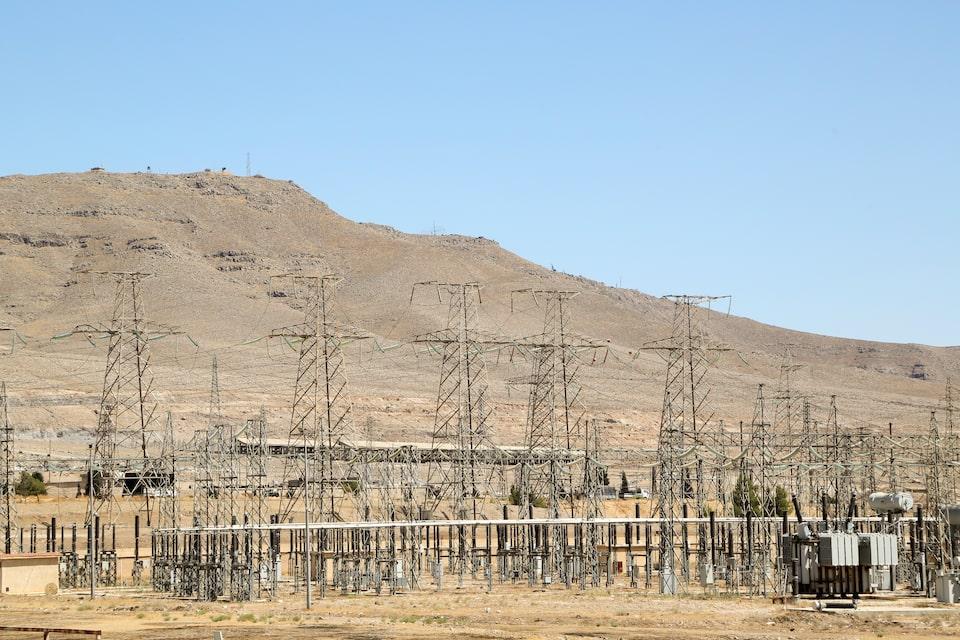
Syria suffers from power shortages, grid damage Would-be backers uncertain over sanctions waiver Qatar was major supporter of rebels who fought Assad BEIRUT, March 13 (Reuters) - Qatar is set to supply Syria with gas via Jordan to improve the nation's meager power supply, three people familiar with the matter said, in a move that a U.S. official said had Washington's approval. It would be the most significant tangible support for the new administration in Damascus by Qatar, one of the region's sternest opponents of the now-deposed Bashar al-Assad and strongest backers of the rebels-turned rulers who replaced him. Sign up here. A U.S. official said the gas deal had a nod of approval from Trump's administration without saying how this was communicated. The green light and efforts to encourage a deal between Kurdish forces in Syria's north and Damascus suggest the U.S. remains actively engaged in Syria, despite Washington moving more cautiously than European states to ease sanctions. The gas would be transferred from Jordan via a pipeline to the Deir Ali power plant in southern Syria, where it could boost power supply by up to 400 megawatts, two of the sources said. Two Jordanian officials said they were not aware of Qatari gas arriving by vessel in the next days. Another official said gas could be supplied, financed by Qatar. The U.S. State Department and Qatar's foreign ministry did not respond to an emailed request for comment. Syria suffers from severe power shortages, with state-supplied electricity available just two or three hours a day in most areas. Damage to the electricity grid means that generating or supplying more power is only part of the problem. Damascus used to receive the bulk of its oil for power generation from Iran, but supplies have been cut off since Islamist Hayat Tahrir al-Sham led the ouster of Tehran-allied former president Assad in December. The interim government has pledged to quickly ramp up power supply, partly by importing electricity from Jordan and using floating power barges that have yet to arrive. A Western diplomat briefed on the gas plan said it came as part of an effort by Doha to follow up political backing from Gulf Arab states including Saudi Arabia and Qatar with tangible help to support Syria's new rulers. "They are very keen to finally give something, even if it won't make a huge difference," the diplomat said. Gulf backing has largely not been matched by official, tangible assistance due to U.S. sanctions on Syria, despite a waiver issued in January that allowed for some transactions, including on energy. But the exemption did not remove any sanctions, and states and entities looking to engage with Syria have sought additional guarantees. Reuters reported last month that Qatar was holding off providing Syria's new rulers with funds to increase public sector pay due to uncertainty over whether the transfers would breach U.S. sanctions. https://www.reuters.com/business/energy/qatar-supply-gas-syria-with-us-nod-sources-say-2025-03-13/
2025-03-13 11:37
BERLIN, March 13 (Reuters) - A Peruvian farmer is getting his day in court in a landmark climate case against German energy giant RWE that could shake up how the effects of companies' emissions are litigated. The Higher Regional Court of Hamm will start a hearing on Monday between farmer Saul Luciano Lliuya and RWE. Sign up here. Lliuya is suing RWE for some 21,000 euros, arguing the company's emissions have contributed to the melting of Andean glaciers, causing a lake above his hometown to swell to dangerous levels. What is the case about? What is its legal foundation? And what does it mean for future climate lawsuits? WHAT IS THE CASE ABOUT? In 2015, Lliuya, backed by activist group Germanwatch, filed a lawsuit claiming RWE's greenhouse gas emissions have contributed to the melting of an Andean glacier which has raised the water level at Laguna Pacacocha, creating a significant flood risk to his home in the nearby town of Huaraz. Lliuya is demanding RWE contribute some 21,000 euros to an estimated $3.5 million cost of a flood defence project. He contends the company has contributed nearly 0.5% of global manmade greenhouse gas emissions since the industrial revolution, and should pay the equivalent fraction of flood protection costs in the area. WHY DID IT TAKE 10 YEARS TO COME TO A HEARING? The case was first filed at a regional court in the German city of Essen, where RWE is based. The court dismissed the claims, saying there were countless emitters of carbon dioxide worldwide and any risks from potential flooding as a result of the melting of glacial ice could not stem solely from RWE. Lliuya appealed against the decision with the higher regional court in Hamm, which admitted the case in 2017 and said it would seek evidence. A visit by court-appointed experts to study flood risks around the glacier was delayed until 2022 due to the COVID-19 pandemic. Over a year later, a 200-page expert opinion was available, which had to be examined by the two parties. WHAT IS THE LEGAL BASE OF THE CASE? The case is based on section 1004 of the Civil Law Code which states that if a property is interfered with, the owner may require the disturber to remove the interference. If the court confirms that the flood risk claimed by the plaintiff is real, it must determine in a second phase to what extent RWE's CO2 emissions have contributed to the risk of a glacial lake outburst flood. As a first step, the upcoming hearing will focus on the assessment of experts commissioned by the court. WHY HAS THE CASE GAINED SUCH INTEREST? If the court finds that glacier melting poses a flood risk and holds RWE responsible for its share of climate change, it would set a precedent for holding companies legally accountable for climate change. "The sum in dispute may be less than 20,000 euros but the precedent-setting potential is clear," according to Freshfields Bruckhaus Deringer's website, the law firm representing RWE in the case. Roda Verheyen, Lliuya's lawyer, said even if the court does not conclude there is a flood risk, its verdict would provide a base for further cases. WHAT DOES SCIENCE SAY ON THIS? In 2021, scientists at the University of Oxford and the University of Washington proved that the melting of a glacier in the Peruvian Andes was being caused by man-made global warming and was raising flooding risks for nearby residents. "As things are, there is ample proof that the science does apply in the Andes; we have absolutely no evidence to the contrary," Friederike Otto, a climate scientist at the Grantham Institute for Climate Change and the Environment. WHAT DOES RWE SAY ON THE CASE? RWE says Lliuya's complaint is unfounded, arguing a single emitter cannot be held responsible for global warming. The company has been transitioning from coal-fired power but still operates 7 lignite or brown coal power plants, accounting for 26.7% of its total power generation, down from 20 plants in 2020. It also runs 21 gas power plants across Germany, the Netherlands, the UK and Turkey. RWE’s CO2 emissions almost halved to 60.6 million tons in 2023 from 118 million tons in 2018, with further reductions expected, the company said. It aims to fully phase out lignite by 2030. https://www.reuters.com/sustainability/climate-energy/why-is-peruvian-farmer-taking-germanys-rwe-court-over-climate-change-2025-03-13/

2025-03-13 11:30
SAO PAULO, March 13 (Reuters) - Brazilian steelmaker CSN (CSNA3.SA) , opens new tab reported a fourth-quarter net loss related to what it called "still high volumes of financial expenses," but saw core earnings and revenues exceed market expectations. WHY IT'S IMPORTANT CSN is one of Brazil's largest steelmakers and miners. Sign up here. BY THE NUMBERS CSN had a net loss of 85 million reais ($14.66 million) in the October-December quarter, it said in a securities filing, sliding into the red after the 851 million real profit reported a year earlier. The company posted 3.33 billion reais in adjusted earnings before interest, taxes, depreciation and amortization (EBITDA), down 8% year-on-year but beating analysts' expectations of 2.87 billion reais, based on an LSEG poll. Net revenue totaled 12.03 billion reais, while analysts projected 11.8 billion reais. Steel sales rose 10.4% on a yearly basis, whereas iron ore sales were down 3.7%. KEY QUOTES "The steelmaking operation took another step in the process of normalizing operations and recovering profitability," CSN said, adding it achieved stronger volumes and higher prices, boosted by the domestic market, despite a weaker seasonality. The mining business had volumes impacted by the start of the rainy season, but "maintained a solid production pace and managed to benefit from the upward trajectory of iron ore prices," CSN said. MARKET COMMENTS Analysts at JPMorgan said that both CSN and its publicly traded mining division CSN Mineracao (CMIN3.SA) , opens new tab exceeded their forecasts for the quarter on better-than-expected costs, striking a positive outlook. "The beat was driven by strong performances from its key business units, mainly steel, mining and cement," JPMorgan said. "An upward revision of consensus estimates is expected." ($1 = 5.7989 reais) https://www.reuters.com/markets/commodities/brazils-csn-posts-q4-net-loss-core-earnings-beat-forecasts-2025-03-13/

2025-03-13 11:09
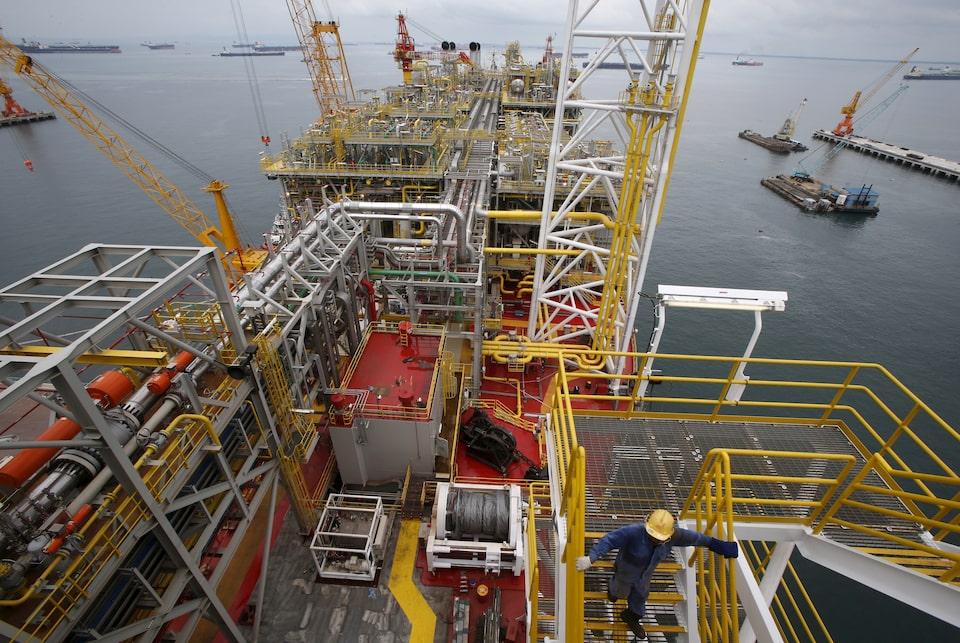
March 13 (Reuters) - Singapore's utilities firm Sembcorp Industries (SCIL.SI) , opens new tab said on Thursday it has terminated the gas sales deal its unit had signed to import piped natural gas (PNG) from the Mako gas fields in Indonesia, citing regulatory hurdles. The Temasek Holdings-backed firm said it failed to receive the required regulatory nods from Indonesia to go ahead with the agreement. Sign up here. "This will not affect Sembcorp's energy costs or its ability to meet gas supply requirements in Singapore" and will not have any material impact on earnings per share for 2025, it said in a statement. Sembcorp would instead utilize its own natural gas sources, including liquefied natural gas, to fulfill its needs. Last year in September, Sembcorp's unit, Sembcorp Gas Pte had inked , opens new tab a deal with three firms to import up to 111 billion British thermal units per day of PNG. The firms included West Natuna Exploration - a subsidiary of Indonesia-based Conrad Asia, London-listed oil and gas explorer Empyrean Energy PLC (EMEL.L) , opens new tab, and energy firm Coro Energy Duyung (Singapore) Pte. Sembcorp, which provides energy and urban solutions, saw its biggest earner - gas and related services segment report a 10% drop in its annual profit, earlier in February. https://www.reuters.com/markets/deals/singapores-sembcorp-industries-scraps-indonesia-gas-deal-due-regulatory-snags-2025-03-13/