2025-03-13 11:09
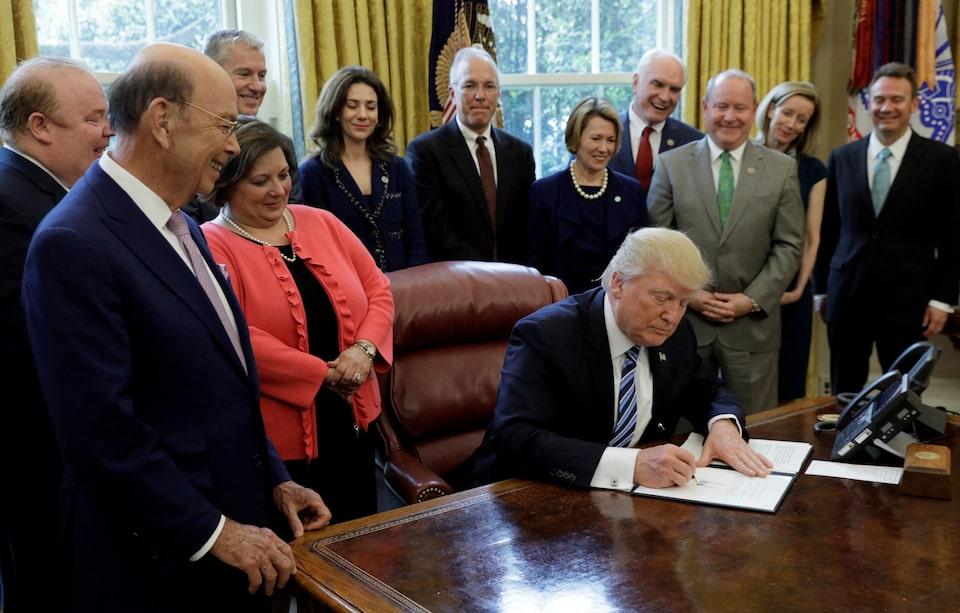
US Midwest aluminium premium up 60% since start of 2025 US lacks capacity to produce needed aluminium Aluminium likely to be diverted, potentially to Europe LONDON, March 5 (Reuters) - (This March 5 story has been corrected to change the country from Saudi Arabia to the United Arab Emirates in paragraph 12) Price premiums for aluminium on the physical market in the United States have surged to a record high due to the looming threat of tariffs on imports of the metal used in the transport, construction and packaging industries. Sign up here. U.S. President Donald Trump is planning to restore 25% tariffs on aluminium imports from March 12. Tariffs on most imports from Mexico and Canada took effect on Tuesday. Buyers on the physical market usually pay the London Metal Exchange benchmark aluminium price plus a premium which typically covers taxes, transport and handling costs. The U.S. Midwest duty-paid aluminium premium at above 40 U.S. cents a lb or nearly $900 a metric ton is up nearly 60% since the start of 2025 . "Ultimately, the U.S. is a net importer of aluminium ... Producers will not want to pay the tariff, they will try to pass on as much as they can to consumers," said Bank of America analyst Michael Widmer. "This leaves you with a market where aluminium units will potentially be diverted away from the United States." Widmer said the premium may have to rise to near 47 cents a lb to fully account for a 25% levy. U.S. aluminium import taxes will apply to Argentina, Australia, Canada, Mexico, European Union countries and the UK. Canadian smelters account for the bulk of primary and alloyed aluminium exports to the United States, 70% of 3.92 million tons last year, according to information provider Trade Data Monitor. "The US cannot produce all that aluminum, they don't have the capacity," said Eivind Kallevik, CEO at Norwegian aluminium producer Hydro in an interview after the company's fourth quarter results. "If the U.S. is going to keep manufacturing cars and other products, they will need to attract the metal. That means higher premiums and costs." The second largest exporter to the United States is the United Arab Emirates, not included in the list so far, with an 11% share, according to Trade Data Monitor. Analysts said aluminium produced in countries where import levies apply is likely to be diverted to Europe, where the duty-paid physical market premiums has dropped to 11-month lows at $240 a metric ton, down 35% since the start of 2025. https://www.reuters.com/markets/commodities/trumps-tariffs-drive-us-physical-market-aluminium-premiums-record-high-2025-03-05/
2025-03-13 11:06
LONDON, March 13 (Reuters) - What matters in U.S. and global markets today By Mike Dolan , opens new tab, Editor-At-Large, Financial Industry and Financial Markets Sign up here. From one crunch to another, markets are finding it hard to catch a break as we go from tit-for-tat trade wars one day to U.S. government shutdown fears the next. Today I'll take a look at how all of the U.S. policy uncertainty and diplomatic upheavals have sparked a conversation in global investment circles about trust and transparency in U.S. governance and how eroding that could undermine the U.S. position as the world's dominant investment destination. Find this and more on today's major market news below. Today's Market Minute Can't catch a break This week's U.S. metal tariff hikes and the instant retaliation from Europe and Canada are likely only the opening salvos in a global trade conflict that President Donald Trump appears intent on ratcheting up in less than three weeks' time. The rhetoric shows no sign of compromise. "Whatever they charge us, we're charging them," Trump told reporters at the White House. "We will not stand idly by," Canada's Finance Minister Dominic LeBlanc said of the latest tariffs moves. There is background tension in Europe too as Germany's dramatic fiscal reforms and defence reboot now need to pass through parliament, with the Green Party's necessary support still not secured. The Bundestag lower house of parliament will on Thursday hold the first reading of the proposal, which electrified European markets last week. A vote is due next Tuesday. Back stateside, the focus will be on the Senate. If it doesn't support the Republican-backed stopgap funding bill, a partial government shutdown could be triggered as soon as this weekend. The whole picture means U.S. stock futures have reversed all of Wednesday's modest bounce in the S&P500 (.SPX) , opens new tab. And stock benchmarks across Europe and Asia are also in the red. Meanwhile, Treasury yields pushed higher, batting away better-than-forecast consumer price inflation numbers on Wednesday, as the tentative stock market stabilisation reduced Federal Reserve easing bets once again. The dollar index (.DXY) , opens new tab was also off slightly. CPI numbers are now very much in the rear-view mirror for a Fed waiting to see the impact of tariff hikes, so today's producer price numbers should also have little market impact. But what could have quite a bit of market impact over the long term is the growing sense that the tumult in Washington could threaten the U.S. position as the world's safe haven. Exorbitant disruption risks undermining US 'privilege' There's something more than U.S. tariffs and recession risks gnawing at financial markets. There's the growing sense that the chaotic policy disruption in Washington is eroding the world's trust in U.S. institutions and its assets. Broken political alliances and economic wars with major trade partners are having many effects - not least heightened business uncertainty over what will happen next - but one of the most notable is the brewing investor concern that America could lose a chunk of its "exorbitant privilege". This term, first coined in the 1960s by then French finance minister Valéry Giscard d'Estaing, essentially refers to the benefits the U.S. gains from the outsize demand the world has for U.S. assets as a safe haven. The privilege hinges variously on the extensive use of the dollar internationally, the U.S. rule of law and institutional rigor as well as the projection of its soft power. The list is much longer than that, but you get the picture. The sheer size, depth and transparency of U.S. markets, in combination with the reliability and openness of its governance, have - for decades - given the U.S. a disproportionate slice of world capital and the cheaper financing that goes with that. Could Donald Trump's avowedly disruptive administration call all that into question and whittle this advantage away? Financing metrics, such as long-term U.S. borrowing costs, don't yet suggest that a major fracture is afoot. But U.S. equity prices have started to correct over the past month, even as the dollar has weakened - an ominous combination. Ultimately, though, the very fact that trust - or the lack thereof - is part of the U.S. conversation at all is the most remarkable thing. On Wednesday, JPMorgan's chief global economist Bruce Kasman spoke openly about the challenges during a roadshow in Singapore. He opined about how the U.S. secured its "exorbitant privilege", citing many of the reasons noted above and including things like the "integrity of information flow". The administration's cutbacks to government agencies and moves to disband the advisory committees assisting with data collection are also potentially jarring, he said. "All of those things are part of the uncertainties that have moved into U.S. policy, and that part of the risk in the outlook this year I don't think has been appreciated." 'Exorbitant burden'? Referring to exorbitant privilege, Kasman added: "The risk that stuff starts to come under pressure and becomes a structural issue in the markets is not something I would, by any means, underplay." This is likely what investors and strategists both within the United States and around the world have been thinking for weeks - even if relatively few have verbalized it. And Kasman is not alone in saying something. Writing about speculation surrounding the prospect of a "Mar-a-Lago Accord" to correct U.S. deficits and global imbalances, former Reserve Bank of India governor Raghuram Rajan , opens new tab questioned the diagnosis of Trump adviser Stephen Miran and said it was dangerous for America to play around with its exorbitant privilege. Rajan expressed doubt that reforming U.S. macroeconomic policy would somehow deter overseas savers from the U.S., thereby weakening an overvalued dollar or helping to cut U.S. deficits. "It is not clear where the Trump administration's current path of 'shock and awe' is supposed to lead," the former International Monetary Fund chief economist wrote in Project Syndicate this week. "The claim that the dollar's attractiveness is an exorbitant burden rather than an exorbitant privilege is unpersuasive, especially when those making such arguments are so reluctant to give up the burden," he said, referring to the administration's regular support for the dollar's global status while promoting policies that undermine it. "Markets are unnerved by the punishment that the administration, convinced that the U.S. is a victim, is willing to inflict on close allies," he concluded. "If such behavior reduces the attractiveness of the dollar, perhaps it really will become an exorbitant burden. But that is not a future that any American should want." It's good to remember that foreign holdings of U.S. financial assets nearly doubled over the past decade to some $60 trillion before the recent market ructions. Given the scale of this cross-border money, if faith in the U.S. truly is shaken, the outcome could make the year's market shakeout to date seem very small indeed. Chart of the day Stock markets have voted clearly over the past month on the brewing trade wars and lack of policy visibility in the U.S., as they've repeatedly hit the "sell" button. Regular voters now seem to be following suit. A Reuters/Ipsos poll found 57% of Americans think Trump is being too erratic in his efforts to shake up the U.S. economy, and 70% expect that tariffs will make goods more expensive. Today's events to watch * U.S. February producer price report, weekly jobless claims * Federal Reserve reports on financial health of U.S. households in its Flow of Funds update for 4Q2024 * Bank of France Governor Francois Villeroy de Galhau and Bundesbank President Joachim Nagel speak together in Paris * Germany's Bundestag holds first reading of budget reform proposal * U.S. Treasury sells $22 billion of 30-year bonds * U.S. corporate earnings: Dollar General, Ulta Beauty Opinions expressed are those of the author. They do not reflect the views of Reuters News, which, under the Trust Principles , opens new tab, is committed to integrity, independence, and freedom from bias. https://www.reuters.com/markets/us/global-markets-view-usa-2025-03-13/
2025-03-13 11:00
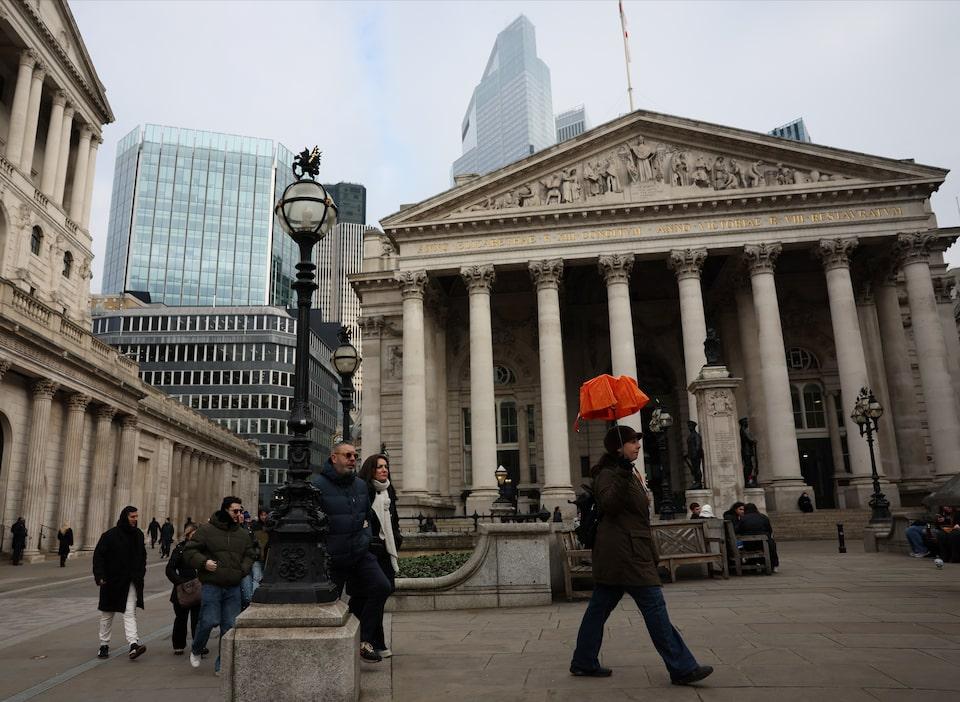
March 13 (Reuters) - The Bank of England on Thursday allotted a record 61.146 billion pounds ($79.18 billion) in seven-day funds in its weekly short-term repo operation, higher than a previous record of 58.208 billion pounds set last month. ($1 = 0.7722 pounds) Sign up here. https://www.reuters.com/world/uk/bank-england-allots-record-61-billion-pounds-short-term-repo-2025-03-13/
2025-03-13 10:53
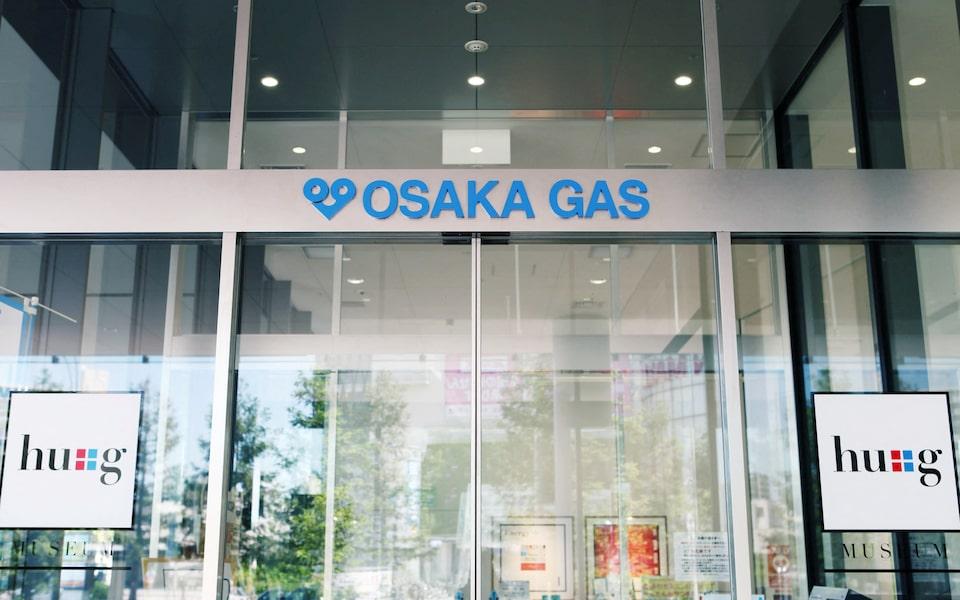
TOKYO, March 13 (Reuters) - Osaka Gas (9532.T) , opens new tab, Japan's second-largest city gas provider, said its domestic thermal power generation capacity will reach 3.2 gigawatts by 2026 with the planned launch of two 600-megawatt gas-fired power units in Himeji, western Japan. The company's current thermal power capacity stands at 2 GW. Sign up here. In its management plan for the 2025 fiscal year starting in April, and announced on Thursday, the utility said the No.1 600-MW unit of its Himeji power station will launch in January 2026, followed by the No.2 unit in May 2026. Earlier this month, Osaka Gas and its three partners, including the Development Bank of Japan, announced plans to build the No.3 622.6-MW gas-fired power unit in Himeji, aiming to begin operations in 2030. The project is intended to address the anticipated retirement of ageing thermal power plants across Japan and meet rising electricity demand, driven by the expansion of semiconductor factories and data centres, a spokesperson said. Osaka Gas also plans to launch two 75-MW biomass power stations in 2025, bringing the total number of its biomass plants to eight, with a combined capacity of 450 MW. Additionally, two energy storage plants with a combined capacity of 13 MW are set to become operational in the 2025 fiscal year, according to a company statement. Osaka Gas signed a 15-year sales and purchase agreement with Abu Dhabi National Oil Company in February for the supply of liquefied natural gas from ADNOC's Ruwais project. The company expects to pay a dividend of 105 yen ($0.7) per share for the 2025 fiscal year, up 10 yen from the current year's estimate, and is projecting a 13.4% increase in net profit to 127 billion yen. ($1 = 148.1400 yen) https://www.reuters.com/business/energy/osaka-gas-forecasts-domestic-thermal-power-capacity-hit-32-gw-by-2026-2025-03-13/
2025-03-13 10:36
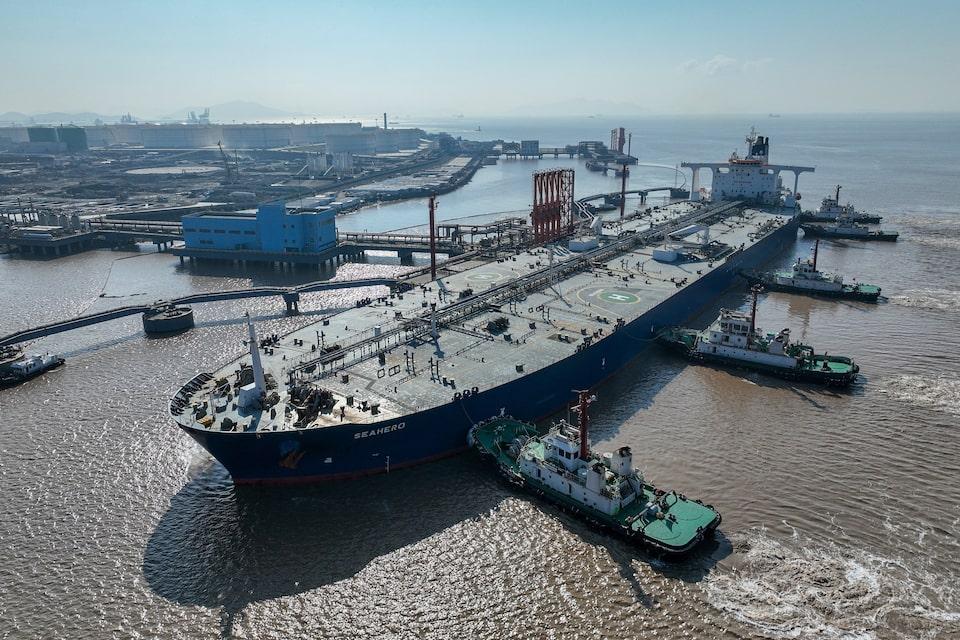
SINGAPORE, March 13 (Reuters) - Saudi Arabia's crude oil shipments to its biggest customer, China, are expected to drop to their lowest level in more than a year in April, trade sources said on Thursday, partly due to maintenance programmes at Chinese refineries owned by Sinopec. The OPEC producer allocated 34 million barrels of Saudi oil in April to its Chinese customers, down from 41 million barrels in the previous month, Reuters data showed. Sign up here. The drop in China's demand for Saudi oil comes despite the Organization of the Petroleum Exporting Countries and their allies, a group known as OPEC+, agreeing to proceed with their plan to raise production in April. Sinopec (600028.SS) , opens new tab plans to shut at least 700,000 barrels per day (bpd) of crude processing capacity from mid-March through May at subsidiaries including the Yangzi, Jiujiang and Gaoqiao refineries, according to data compiled by Reuters based on industry and trade sources. Saudi Aramco and Sinopec did not immediately respond to requests for comments. Crude oil markets in Asia are also stabilising after U.S. sanctions on Russia and Iranian oil disrupted trade in late 2024 and early 2025. China's imports of Russian Far East crude and Iranian oil are set to rebound in March as non-sanctioned tankers, drawn by lucrative payoffs, joined the trade replacing vessels under U.S. embargo, trade sources and analysts said. Russian oil supplies to India, the world's third largest oil importer, have also recovered this month. https://www.reuters.com/business/energy/saudi-crude-oil-supply-china-slump-april-sources-say-2025-03-13/
2025-03-13 10:30
BERLIN, March 13 (Reuters) - Olli Rehn, an ECB policymaker, said that the U.S. administration must be encouraged to avoid leveraging "unnecessary and very harmful" tariffs on Europe through a negotiations solution. "The simple conclusion is that we should aim at a negotiated solution," said the Finnish central bank governor at a policy panel in Berlin on Thursday. Sign up here. The European Union is set to impose counter tariffs on 26 billion euros' ($28 billion) worth of U.S. goods from next month, ramping up a global trade war in response to blanket U.S. tariffs on steel and aluminium, but said it remains open to negotiations. Rehn said the ECB is carefully monitoring how the Trump administration treats the independence of the U.S. Federal Reserve and added that he hoped the U.S. Congress could be counted on to maintain checks and balances on the issue. U.S. President Donald Trump's approach to cryptocurrencies is also on the ECB's radar, said Rehn, adding that it was monitoring whether there would be some involvement of taxpayers' money, and maybe links to stablecoins and thus links to the dollar-based system. If that were to be the case, "then this has quite serious potential to create systemic risks," he said. https://www.reuters.com/markets/europe/ecbs-rehn-says-us-administration-must-be-encouraged-avoid-very-harmful-tariffs-2025-03-13/