2025-03-13 07:25
DUBAI, March 13 (Reuters) - DP World, a Dubai-owned ports and logistics company, reported on Thursday a 28% drop in annual profit, citing higher finance costs and highlighting an uncertain outlook due to "geopolitical risks" and a "changing global trade landscape." Profit attributable to the owners, after separately disclosed items, dropped 27.9% to $591 million, down from $820 million a year earlier, DP World said in a statement, adding that revenue in 2024 grew 9.7% to $20 billion. Sign up here. Yemen's Houthis said on Tuesday they would resume attacks on Israeli ships passing through the Red and Arabian seas, the Bab al-Mandab Strait and the Gulf of Aden, ending a period of relative calm starting in January with the Gaza ceasefire. https://www.reuters.com/business/dp-world-flags-uncertain-outlook-after-annual-profit-slumps-28-2025-03-13/
2025-03-13 06:59
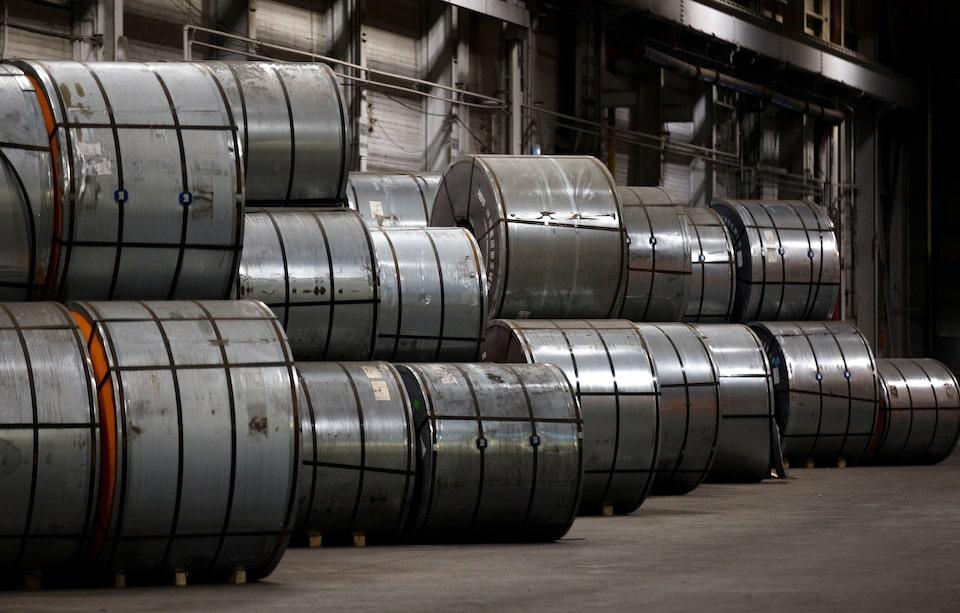
LAUNCESTON, Australia, March 13 (Reuters) - Dial out the noise and focus on the fundamentals is a tactic that may work best for global commodity markets as they navigate the mounting challenges posed by U.S. President Donald Trump's erratic and inconsistent trade policies. While the media focus on each headline-grabbing announcement and social media post about new and retaliatory tariffs from the U.S. leader and his administration, commodity markets are busy doing what they have done so well in the past, adapting to rapidly changing circumstances. Sign up here. For commodities it's important to make distinctions between those already being affected by Trump's trade policies, those likely to be in the future, and those unlikely to suffer direct impact, but which might feel second-round effects from a slowing world economy. The first group includes steel and aluminium, with Trump's 25% tariffs on all imports of the metals having started. The main impact is likely to be price increases for steel and aluminium in the United States, as domestic producers have limited scope to boost output significantly. That will force consumers of the metals to pay the tariffs, and they are also likely to face increases in the cost of U.S.-sourced metals as local producers raise prices to match those of competing imports. Over the longer term it is possible that U.S. aluminium and steel makers will increase capacity and output, or that foreign producers will build plants in the United States. But whether this happens depends very much on whether companies take the view that the tariffs are largely permanent, and if the U.S. economy will be strong enough to justify making the investments. For countries outside the United States there may be some re-ordering of trade flows as they seek to replace metals previously sold to the United States, but a far bigger risk is the threat of a synchronised global economic slowdown as tariffs cut trade flows, boost inflation and cut competitive advantages. Commodities in Trump's firing line include crude oil and copper, albeit from different perspectives. Trump has indicated he intends to put a tariff on copper imports, a move that is drawing copper inventories from Asia and Europe to the United States and increasing the price of U.S. copper relative to other global benchmarks. This a straight arbitrage play likely to wind down as soon as tariffs take effect, or not, depending on what Trump eventually decides. Disruption to the global copper market is likely to be limited, with the fate of China's economy this year more of a driver, since it is the world's biggest importer and processor of the metal. MILITARY METALS An example of looking at fundamentals and ignoring noise is reaction to Trump's reported plan to build metals refining facilities on U.S. military bases as he moves to ensure a secure supply of critical minerals. Trump is rightly concerned about China's control over much of the sourcing and processing of critical minerals, which include metals such as copper, lithium and cobalt, as well as minor metals such as tungsten and rare earths. But it is questionable whether the solution is to build refineries on military bases. The United States would still have to source the raw ores, often from foreign countries, and nothing Trump is doing would seem to be ensuring greater U.S. access to resources. Trump has effectively killed foreign aid, and with it much of his country's soft power, and his bullying tactics and tariffs on friend and foe alike are ruining the image and reputation of the United States. It would be hard to find a stauncher U.S. ally than Australia, but in the wake of Trump's tariffs on steel and aluminium, Prime Minister Anthony Albanese urged fellow citizens to buy local rather than U.S. goods. "Buy Bundy rather than some of the American products … You can make a difference," Albanese said in a radio interview on Thursday, referring to the renowned domestic rum. Australia has major reserves of numerous critical minerals, but with Trump treating the country as a trade enemy it is increasingly difficult to see cooperation on investment in developing mines and processing. Crude oil is another commodity that may be affected by Trump's policies, but more from a geopolitical view than tariffs. If Trump does try to use sanctions to force Iran's crude exports to near zero, this will tighten supply and be bullish for prices. If he does manage to secure a peace deal in Ukraine, it is likely to be on Russia's terms and result in an easing of sanctions, which may boost supply. There is also the risk that U.S. crude exports are included in retaliatory tariffs should the trade war continue to escalate, which would force a re-ordering of global flows. Liquefied natural gas (LNG), of which the United States is the biggest shipper, is also at risk of being sucked into trade wars, and this has already started with China's tariffs, which are likely to end Beijing's purchases of U.S. cargoes. One commodity quietly benefiting from Trump's decisions is gold, which has rallied to record highs as investors seek a safe haven. While Trump has not mentioned gold as a tariff target, it is worth remarking that much of the precious metal's current rally of about 15% since his November election victory to Wednesday's close of $2,932.06 an ounce, is built on buying by U.S. investors. From December to February, some 600 metric tons of gold was transferred to CME-approved vaults, says consultancy Metals Focus, which has tightened physical supply in the top-consuming region of Asia. In some ways gold is the poster child for how commodities should deal with Trump. Assess the risks, act accordingly and don't make too much noise about it. The views expressed here are those of the author, a columnist for Reuters. https://www.reuters.com/markets/commodities/commodities-tune-out-trumps-noise-trade-fundamentals-russell-2025-03-13/
2025-03-13 06:38
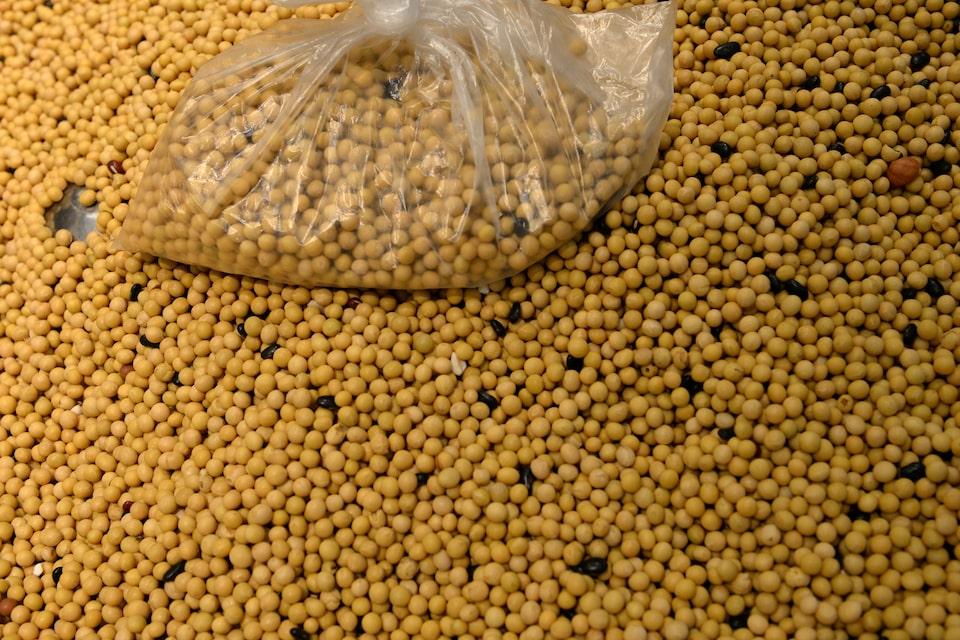
Brazilian harvest delays tighten China's soybean supplies Chinese processors suspend operations amid supply squeeze China's soybean imports expected to rise from April BEIJING/SINGAPORE, March 13 (Reuters) - China is poised to receive record soybean imports in the second quarter, traders and analyst said, after delayed Brazilian shipments and slow customs clearances have caused supply tightness that forced several processors to halt operations. The world's largest soybean buyer is forecast to import a record high of 31.3 million metric tons of the oilseed in the April to June period, alleviating supply pressure from smaller arrivals expected during March, according to the average of forecasts from five research and trading firms. Sign up here. That is a roughly 4.6% rise from 29.91 million tons imported during the second quarter of last year, as freshly harvested beans from Brazil's bumper crop flow into China. "South America soybean prices, particularly Brazilian new crop soybean, are more attractive than their counterpart, as such Chinese crushers have purchased rather large volumes of Brazilian new crop soybeans," said Cheang Kang Wei, assistant vice president at StoneX in Singapore. China's recent supply squeeze stems from buyers avoiding U.S. beans amid concerns over a trade war with Washington, along with delays in Brazil's harvest, the world's biggest soybean producer. Beijing retaliated last week against new U.S. tariffs by increasing duties on $21 billion worth of agricultural products, including soybeans. "The soybean shortage during this period has been more widespread and severe, prompting a growing number of soybean mills across the country to halt operations," said Liu Jinlu, agricultural researcher at Guoyuan Futures. MARCH IMPORTS TO DROP March imports are expected to shrink to a five-year low of 5.27 million tons, according to StoneX. Chinese firms imported a record 105 million tons of soybeans in 2024, but high crush rates to meet livestock feed demand and stockpiling ahead of U.S. President Donald Trump's January inauguration reduced inventories. According to data from consultancy Mysteel, soybean inventory at Chinese ports shrank to 4 million tons by March 7, a decrease of 600,700 tons from the previous week and down from 892,500 tons from the same period last year. "Soymeal stocks are pretty tight, which is reflected in prices but we expect the situation to ease from April," said one oilseed trader in Singapore. "Prices of soybean products will come under pressure." The March soybean crush is forecast at 5.84 million tons, a 10.1% decline from February and a 19.1% from a year earlier, StoneX's Cheang said. Tight supplies have driven crush margins in processing hub of Rizhao to more than 450 yuan ($62.19) per ton. A slower pace of customs clearance at Chinese ports added to the supply squeeze. China has in recent years increased the rate of quality inspections on imported soybean cargoes, lengthening clearing times and delaying discharge amid rising imports of the oilseed. Some shipments from the port to crushing plants can take between 20 and 25 days, up from 15 days typically, said a China-based trader. ($1 = 7.2356 Chinese yuan renminbi) https://www.reuters.com/markets/commodities/outlook-record-chinese-second-quarter-soybean-imports-may-ease-supply-tightness-2025-03-13/
2025-03-13 06:36
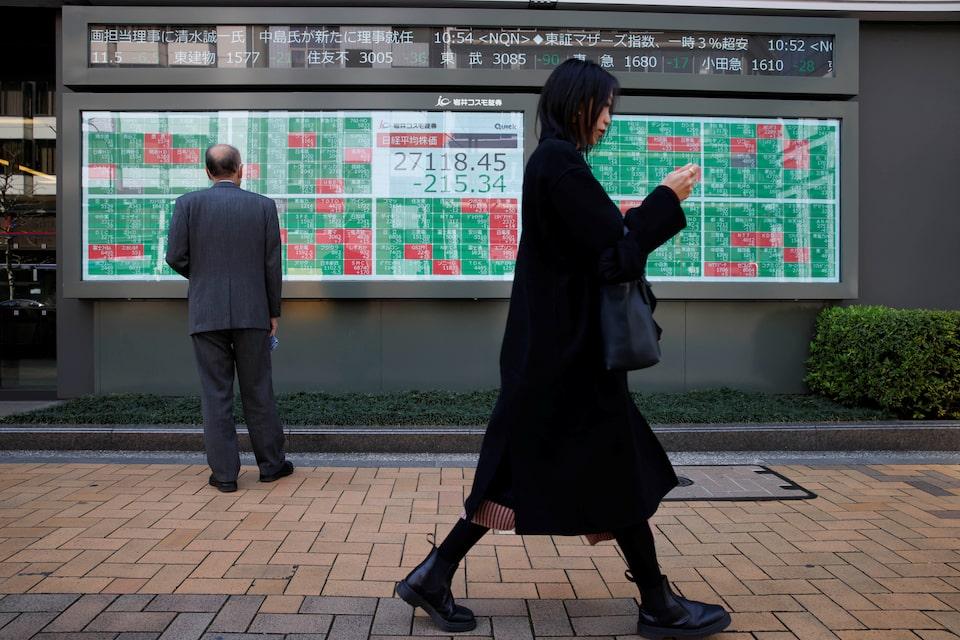
Wall Street indexes all lost 1%, S&P 500 confirms correction Trump's back and forth on tariffs weighs on sentiment US dollar down vs yen but up against euro, Swiss franc NEW YORK/LONDON, March 13 (Reuters) - (This March 13 story has been refiled to fix the day to Thursday, not Tuesday, in paragraph 1) Global equities sank on Thursday with the S&P 500 confirming it was in a correction while U.S. Treasury prices rose as investors fled for safer assets as they worried that global trade tensions would boost inflation and slow growth after U.S. President Donald Trump's latest tariff threats. Sign up here. On Thursday, for the first time, the benchmark S&P 500 (.SPX) , opens new tab finished more than 10% below its most recent record high close, achieved on February 19. In the latest in a long list of tariff threats, Trump said he would hit European beverage imports with duties of 200% if the EU does not remove U.S. whiskey surcharges. This was after his increased tariffs on all U.S. steel and aluminium imports took effect on Wednesday. Thursday's Labor Department's Bureau of Labor Statistics data showed U.S. producer prices (PPI) were unexpectedly unchanged in February and Wednesday's data showed consumer prices (CPI) rising more slowly than expected. But last month's trends did little to reassure investors who were bracing for the impact of trade wars on future inflation and growth. "If it wasn't for the trade war going on, the market would be up strongly" on the inflation data, said Tim Ghriskey, senior portfolio strategist at Ingalls & Snyder in New York. "Traders are focused on the trade war." "It seems like the (U.S.) administration is being very aggressive and promises at least at this point to be in it for the longer term and the personalities look unlikely to back down at least in the near term," said Ghriskey. On Wall Street, the S&P 500 (.SPX) , opens new tab fell 77.78 points, or 1.39%, to 5,521.52. The Dow Jones Industrial Average (.DJI) , opens new tab was also nearing a correction confirmation, ending down 537.36 points, or 1.30%, at 40,813.57 on Thursday, roughly 9.4% below its most recent record closing high. The Nasdaq Composite (.IXIC) , opens new tab fell 345.44 points, or 1.96%, to 17,303.01. The tech-heavy index was down more than 14% from its recent record after confirming a correction on March 6. Stock market corrections are fairly common, with the S&P 500 logging a correction 56 times since 1929, according to a Reuters analysis of data from Yardeni Research. Of these, only 22 morphed into bear markets, defined as a fall of 20% or more from most recent record highs, the data showed. MSCI's gauge of stocks across the globe (.MIWD00000PUS) , opens new tab fell 9.33 points, or 1.12%, to 821.52 on Thursday, putting it more than 7% below its most recent record high after earlier hitting his lowest level since September. The pan-European STOXX 600 (.STOXX) , opens new tab index earlier closed down 0.15% after rising 0.81% in the previous day's session. While the U.S. S&P 500 index is now down more than 6% for the year-to-date, European stocks have been faring better with support from government spending plans for defence and a potential Ukraine peace deal. Year-to-date the STOXX index is up 6.5% year to date, despite slipping in recent weeks. U.S. Treasury yields fell on Thursday as the equities selloff boosted demand for safe haven U.S. government debt with escalating trade wars between the United States and trading partners threatening to dent growth and boost inflation. The yield on benchmark U.S. 10-year notes fell 4.6 basis points to 4.27%, from 4.316% late on Wednesday while the 30-year bond yield fell 4.1 basis points to 4.59%. The 2-year note yield, which typically moves in step with interest rate expectations for the Federal Reserve, fell 4 basis points to 3.955%, from 3.995% late on Wednesday. In currencies, the U.S. dollar was a mixed bag, weakening against Japan's safe haven yen but gaining on the euro and the Canadian dollar. Against the Japanese yen , the dollar weakened 0.38% to 147.68. But the euro was down 0.33% at $1.085 while the Canadian dollar weakened 0.45% versus the greenback and against the Swiss franc , the dollar strengthened 0.14%. After rallying on Wednesday on a larger-than-expected draw in U.S. gasoline stocks, oil prices tumbled as traders weighed macroeconomic concerns and demand versus supply expectations. U.S. crude settled down 1.67%, or $1.13 at $66.55 a barrel and Brent settled at $69.88 per barrel, down 1.51% or $1.07 on the day. Gold prices raced to a record high within touching distance of the key milestone of $3,000 per ounce on Thursday, with momentum driven by elevated tariff uncertainty and bets on monetary policy easing by the U.S. Federal Reserve. Spot gold rose 1.73% to $2,982.84 an ounce. U.S. gold futures rose 1.51% to $2,983.50 an ounce. https://www.reuters.com/markets/global-markets-wrapup-1-2025-03-13/
2025-03-13 06:29
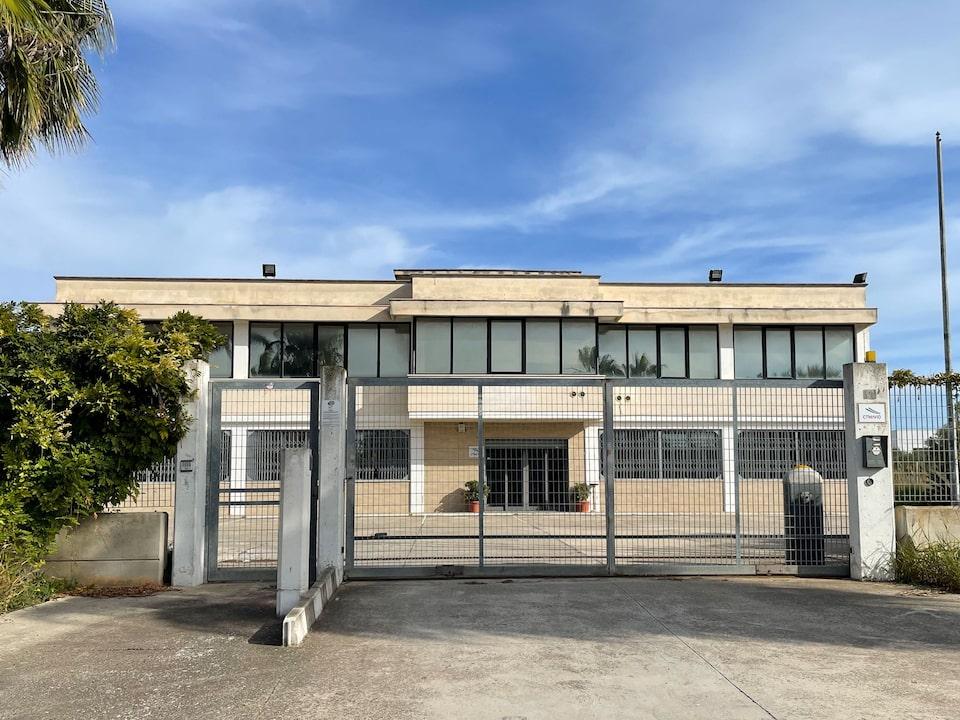
Italian sub-contractor supplied faulty parts for Boeing jets in 2017-20 via Leonardo - prosecutors Supplier passed repeated audits while allegedly using low-grade metals - court documents Alleged scam uncovered thanks to chance police find, sources say Industry experts call for random checks on aviation components BRINDISI, Italy, March 13 (Reuters) - On a Saturday morning in May, 2020, Italian police officers caught two men pouring chemical waste into the sewers in the southern port city of Brindisi, near a small plane components factory. Five years on, that routine pollution case has spiralled into a wide-ranging judicial investigation into how thousands of flawed titanium and aluminium parts manufactured in Italy ended up in nearly 500 Boeing 787 jets still in use. Sign up here. The probe focuses on how tiny aero-part-maker Manufacturing Process Specification (MPS) allegedly defrauded clients by using cheaper and weaker metals to make floor fittings and other plane parts. Company executives deny the charge. A preliminary hearing on the case was due to open in Italy on Thursday, but was postponed at the last minute until May 15. Boeing (BA.N) , opens new tab has repeatedly said that there is no immediate safety risk. U.S. regulators, meanwhile, are preparing technical guidance for airlines to detect and replace any bad parts, without opting for the emergency orders reserved for the most pressing cases. But the precarious chain of events that led detectives to the alleged scam, including the surprise pollution find, raises broader questions about the failure by the aerospace industry's own voluntary audit system to detect sub-standard components. Detectives were already investigating MPS' owners over the bankruptcy of their previous firm. But after catching two MPS workers dumping polluting liquids next to the factory, police broadened their enquiries to the Brindisi firm's raw material purchases, three investigative sources said. With the help of whistleblowers, police found that MPS and its predecessor company had bought very small quantities of the prescribed metals required for 787 jets, including a tough titanium alloy, switching instead to cheaper and less resilient pure titanium, they said. Prosecutors allege that for four years parts made with the wrong type of metal flowed into the aerospace supply chain via Italian group Leonardo (LDOF.MI) , opens new tab, which builds two fuselage sections for the Boeing 787 at its nearby Grottaglie plant. The case , opens new tab comes as Boeing tries to move beyond a separate safety and quality crisis that triggered financial and management upheaval and layoffs. The rest of the industry is also grappling with sporadic issues with rogue parts. Despite using low-quality metals, the now defunct MPS passed audits by three different certification bodies or private auditors between 2017 and 2021, according to a Reuters review. None of these audits involved a physical check of the floor fittings, which are structural components of a jet, the news agency found. While news of the alleged metal switch at Boeing's Italian subcontractor made international headlines in October 2021, details of MPS' auditing process, as well as the number of weak floor fittings installed, have not been previously reported. For its review, Reuters consulted confidential Italian police and prosecutors' documents, judicial seizure decrees, copies of records from an aerospace supplier database and spoke to four people with direct knowledge of the investigation. Half a dozen investigators, lawyers and certification experts told Reuters the case raises doubts about whether controls, including third-party audits, are robust enough to ensure below-grade parts do not end up in commercial jets. "It is extremely worrying that there were no preventive checks on the type of material used to build these parts," said Danilo Recine, vice-president of Italy's ANPAC pilot union. INSPECTIONS The FAA has not grounded any 787 planes but issued a draft notice last year that, when finalised, will require airlines to inspect jets for flawed parts and replace them. Its proposed notice potentially covers almost 500 jets but until the inspections are carried out it is impossible to know how many parts are on which jets, it said in the May 2024 draft. The FAA declined to elaborate. It noted only that a period for collecting comments from airlines had ended. Contacted by Reuters, Leonardo said in a statement that prosecutors are treating it as a victim in the case. Boeing, which has also been granted the status of victim, declined comment on specifics of the case but said it had a "comprehensive quality management system," which includes audits of suppliers. "This complements additional audits by certification bodies, suppliers and others within the industry" it added. MPS, and its predecessor Processi Speciali, used to make several plane parts for Leonardo, including the fittings connecting the beams supporting the Boeing 787 cabin floor to the fuselage. It also supplied other aerospace firms. After performing material inspections on the components, investigators allege MPS manufactured 539 below-grade floors for Boeing that were supplied via Leonardo, according to a confidential document prepared by prosecutors. The faulty floor fittings ended up in as many as 477 jets still in service, the document said, a handful more than the potential population of affected jets cited by the FAA. In the event of an emergency landing, the lower-quality floor fittings could lead to a collapse of the jet's floor, aerospace experts who tested the parts on behalf of prosecutors said in the document. The FAA has raised a similar worst-case scenario, adding it would need multiple adjacent parts to fail simultaneously. In their final report, Italian prosecutors accuse MPS' head of quality, the company's owner and three relatives of fraud and breach of airplane safety rules. Two other workers are accused of polluting soil and water. "(They) have put flight security in danger by producing and delivering to Leonardo ... structural aerospace parts made, not with contracted titanium alloy, but pure titanium – which has structural strength that is largely lower to that of the prescribed alloy," the report says. In total, prosecutors have said MPS or its predecessor supplied around 6,000 parts using the wrong kind of metal, although the vast majority are not structural components. Francesca Conte, a lawyer for MPS' owner, said the supplier had worked in partnership with Leonardo and obtained all necessary certifications. "If there were any anomalies, they would have been immediately evident". Conte and the lawyers for the other defendants said there was evidence to be presented during the trial that would prove their clients were not responsible for the alleged crimes. WEAK CHECKS To become a Boeing or Airbus (AIR.PA) , opens new tab supplier, parts makers must be audited for their quality management systems under an aerospace chapter of the ISO global standards organisation. Those involved in certain special processes like welding or electro-plating also need a U.S.-based approval called NADCAP. Industry records reviewed by Reuters show that MPS and its predecessor won approvals from three auditing bodies under the ISO-based aerospace standard for quality systems. The last certification was awarded in May 2021. Leonardo said in an emailed statement it had learnt about issues with MPS components at the end of 2020 from Boeing. Asked how it vetted contractors, Leonardo said that MPS first had to qualify to enter its and Boeing's suppliers' lists. The group said that it had also carried out subsequent checks of MPS using "documents made available by the supplier." The audits were conducted both independently and in joint teams with Boeing, the Italian company added. "Any fraudulent behaviour cannot be detected by these checks," Leonardo said. However, since last year, the company has begun doing extra tests on chemical and physical characteristics of "significant components", it added. The lack of spot physical checks baffled police, according to a source in the investigation. "The problem of faulty parts was found out in 2020," the source said. "If quality controls had worked, then it would not have been discovered so late." "NEED FOR A REGULATORY FRAMEWORK" Under the voluntary oversight system for quality management, private auditors known as certification bodies check whether an aerospace firm has the right processes, machines and skilled workers to carry out its tasks to the correct standards. Random physical tests are typically only included if a company needs a quality certificate for specific products. But Christopher Paris, founder of consultancy Oxebridge Quality Resources, said the MPS case demonstrated the need for tougher oversight of the pyramid of controls, including not only the independent auditors but accreditation bodies that vet them. "There is a need for a regulatory framework," he said. None of the auditors or various industry bodies is targeted by the Italian investigation. ACCREDIA, which is responsible for accrediting auditors in Italy, said existing rules were "robust and well-structured" and stressed that the job of the audits is not to root out crime. Sitting at the top of the system of voluntary controls is the Industry Aerospace Quality Group, a global body. IAQG President Eric Jefferies said in a statement to Reuters that it is actively working on updates to existing standards. "However, the outcomes of any quality management system implementation ultimately rest with the certified organization," he said. https://www.reuters.com/business/aerospace-defense/how-faulty-parts-boeings-787-jets-flew-below-radar-italy-2025-03-13/
2025-03-13 06:03
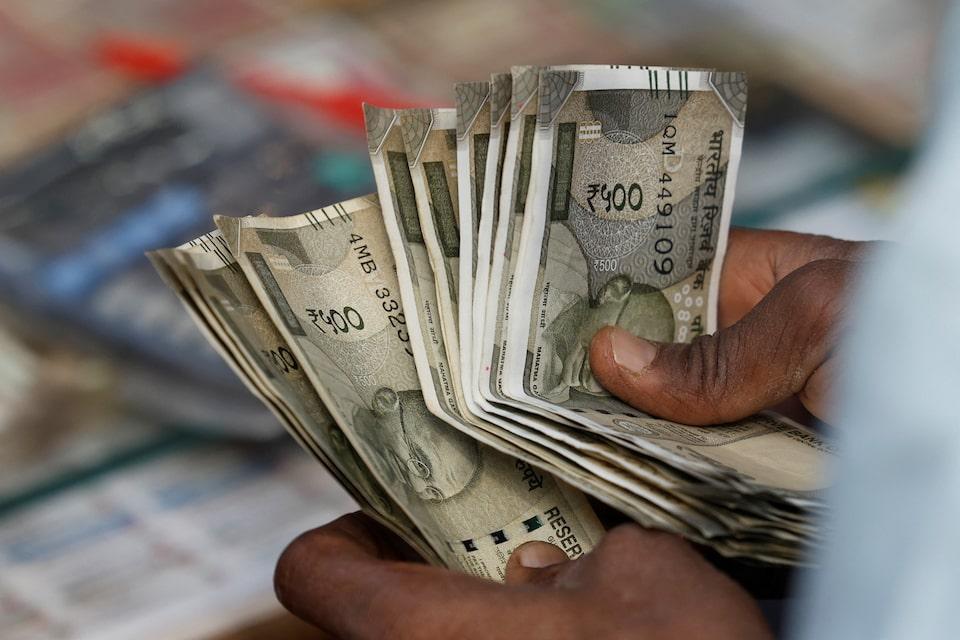
MUMBAI, March 13 (Reuters) - The Indian rupee rose on Thursday as traders cut short bets against the currency as it strengthened from a key technical level, although trading volumes were thinner due to a technical outage on the London Stock Exchange Group's (LSEG) foreign exchange trading platform. The rupee rose to 87.0550 as of 11:10 a.m. IST, up 0.2% on the day. Sign up here. Financial technology and data provider LSEG's foreign exchange trading platform is facing technical issues in India, which has dampened volumes, according to traders. LSEG did not immediately respond to a Reuters email seeking comment. "Usually it (USD/INR) moves higher when technical issues impact liquidity but failure to hold onto technical support near 87.20 has sparked a slight pullback," a trader at a mid-sized private bank said. Pointing to the weakness in the dollar, the trader said that the rupee may also be benefiting from participants closing out short bets against the currency. Meanwhile, India's retail inflation data on Wednesday showed that consumer prices eased below 4% for the time in six months in February, opening the door to further rate cuts by the central bank. While pressure on the currency can often delay easing cycles in emerging markets, analysts do not expect that to hamper rate reductions in India currently. A weaker currency can hamper inflows into Indian debt and can bring forth imported inflation but "on both these counts, the risks are manageable for India at this juncture," DBS Bank said in a note. The bank expects the Reserve Bank of India to cut rates by another 50 basis points this year and said it would not be surprised if the central bank changes its monetary policy stance to "accommodative" from "neutral" in April. Asian currencies were trading mixed on Thursday, while the dollar index was nearly flat at 103.6. (This copy has been corrected to add dropped words in paragraph 1) https://www.reuters.com/markets/currencies/rupee-strengthens-trading-volumes-thinned-by-technical-outage-2025-03-13/